

The History of the Decline and Fall of the Roman Empire (in 6 vols.)
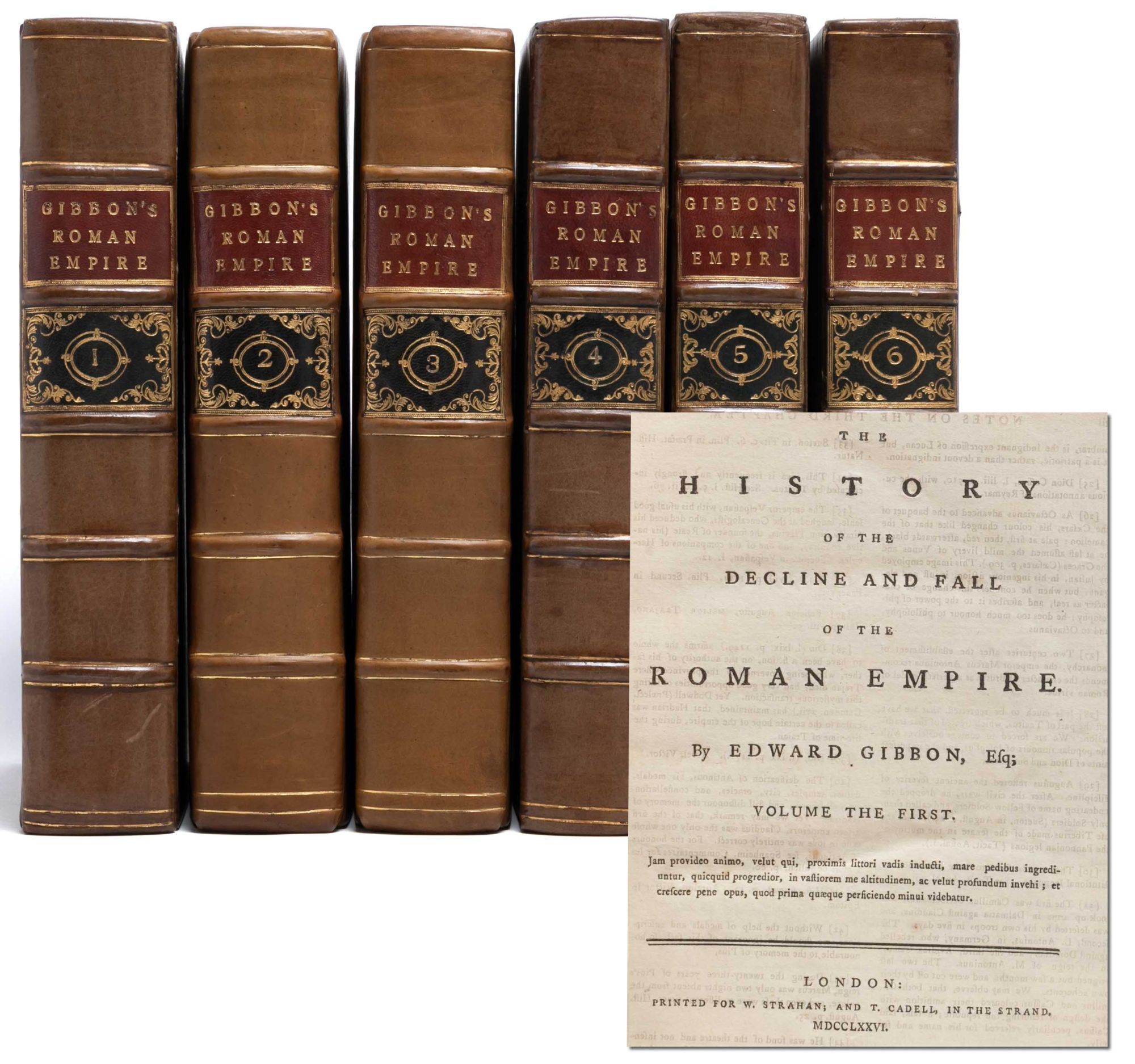
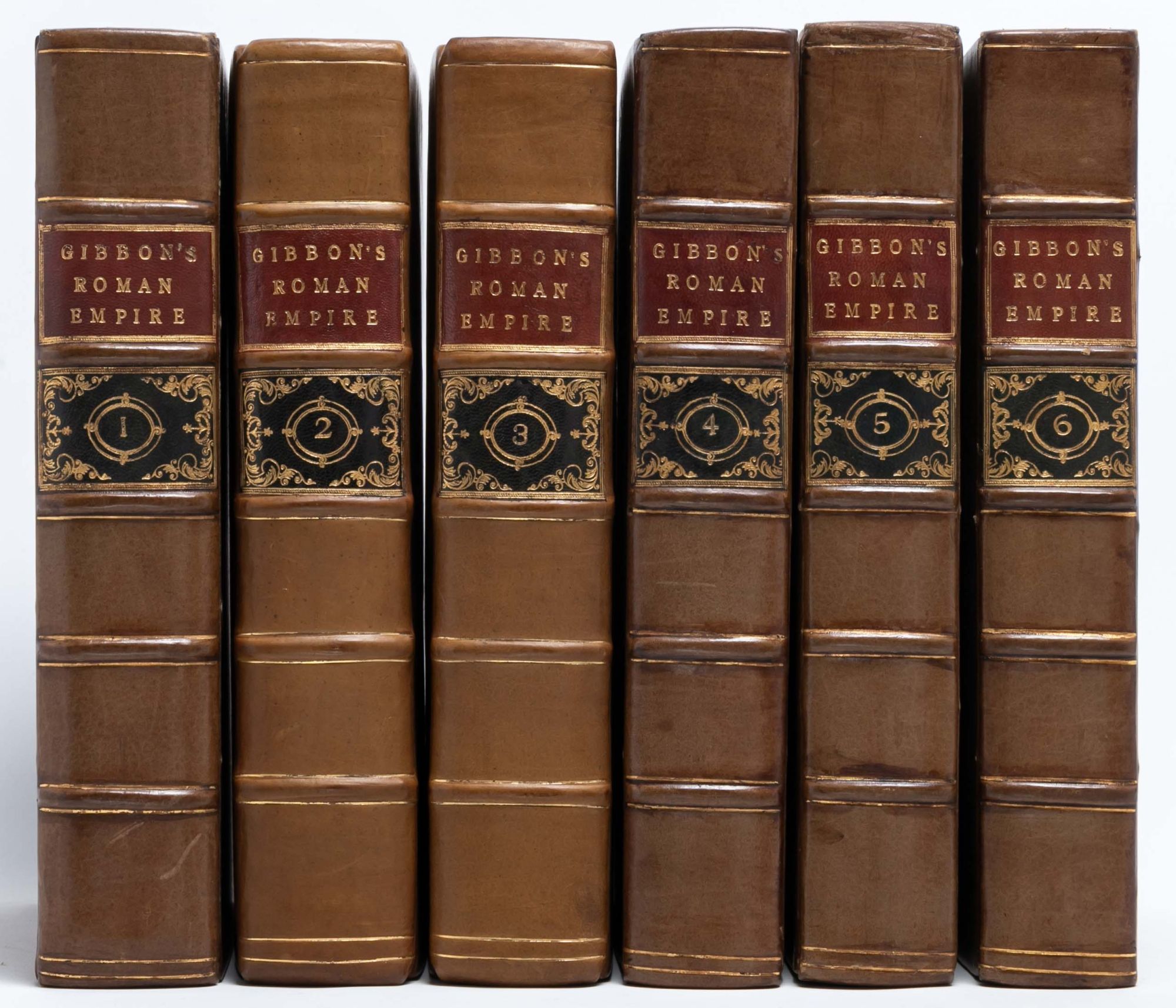
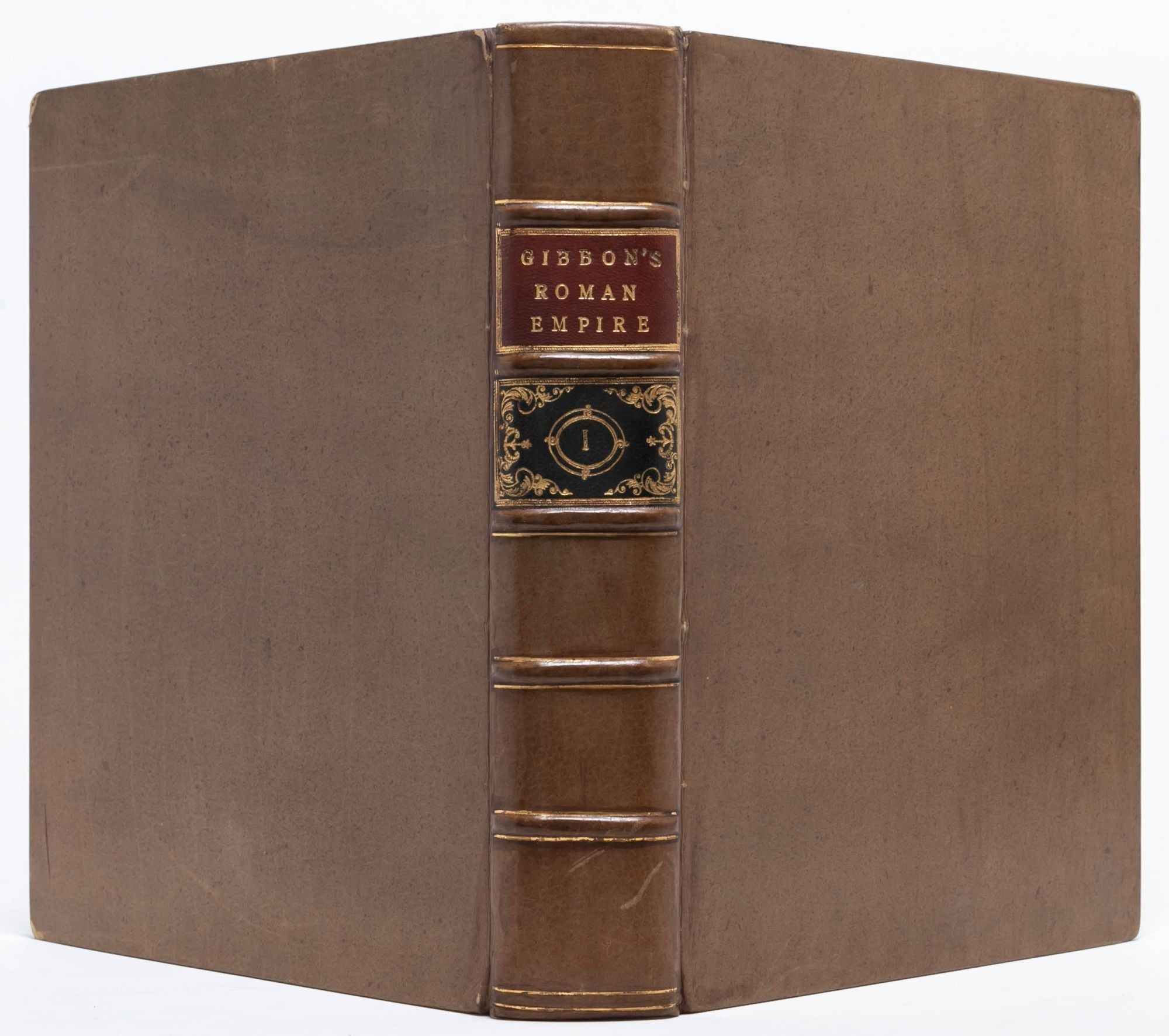


- London: W. Strahan and T. Cadell in the Strand, 1788
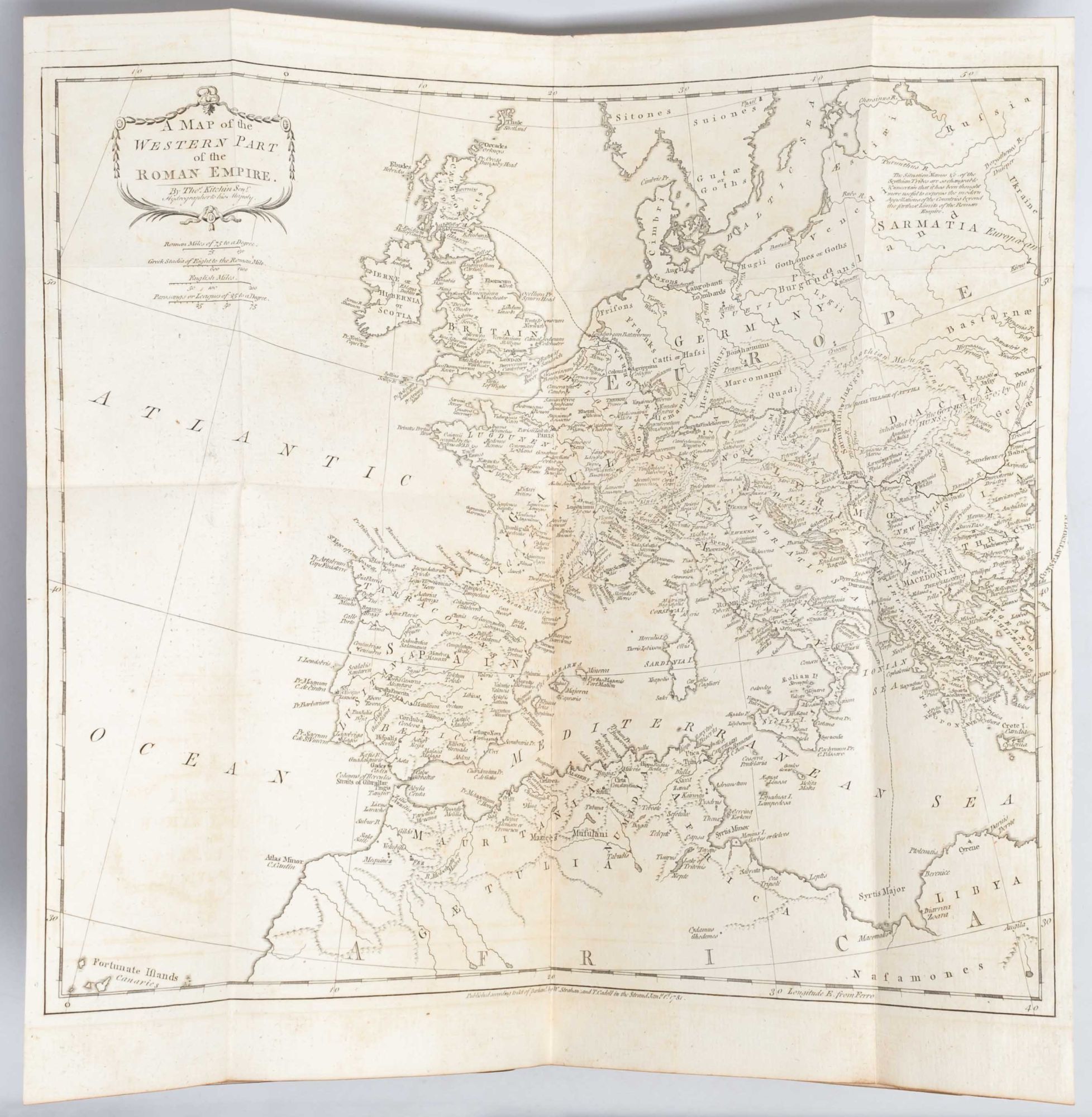
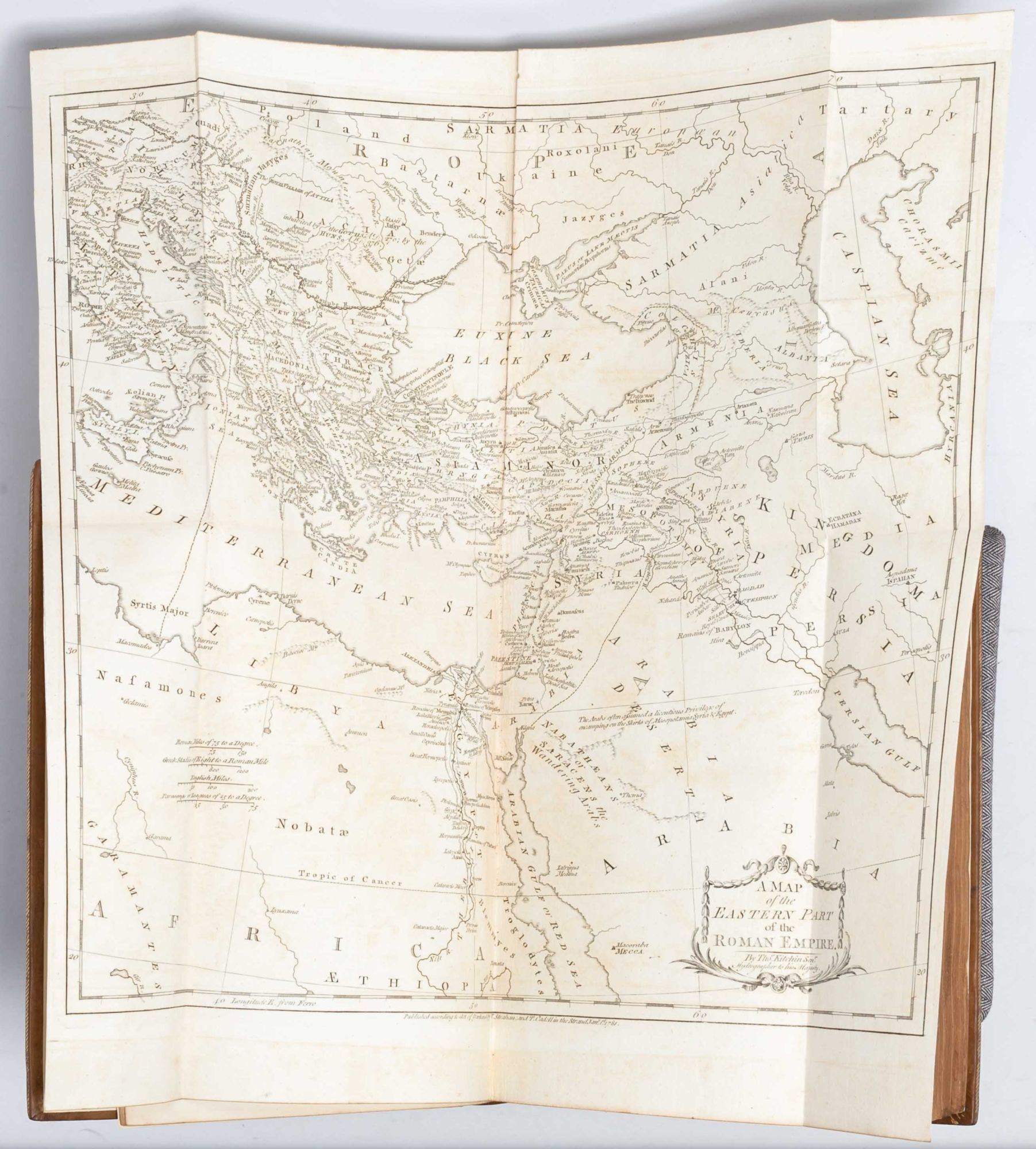
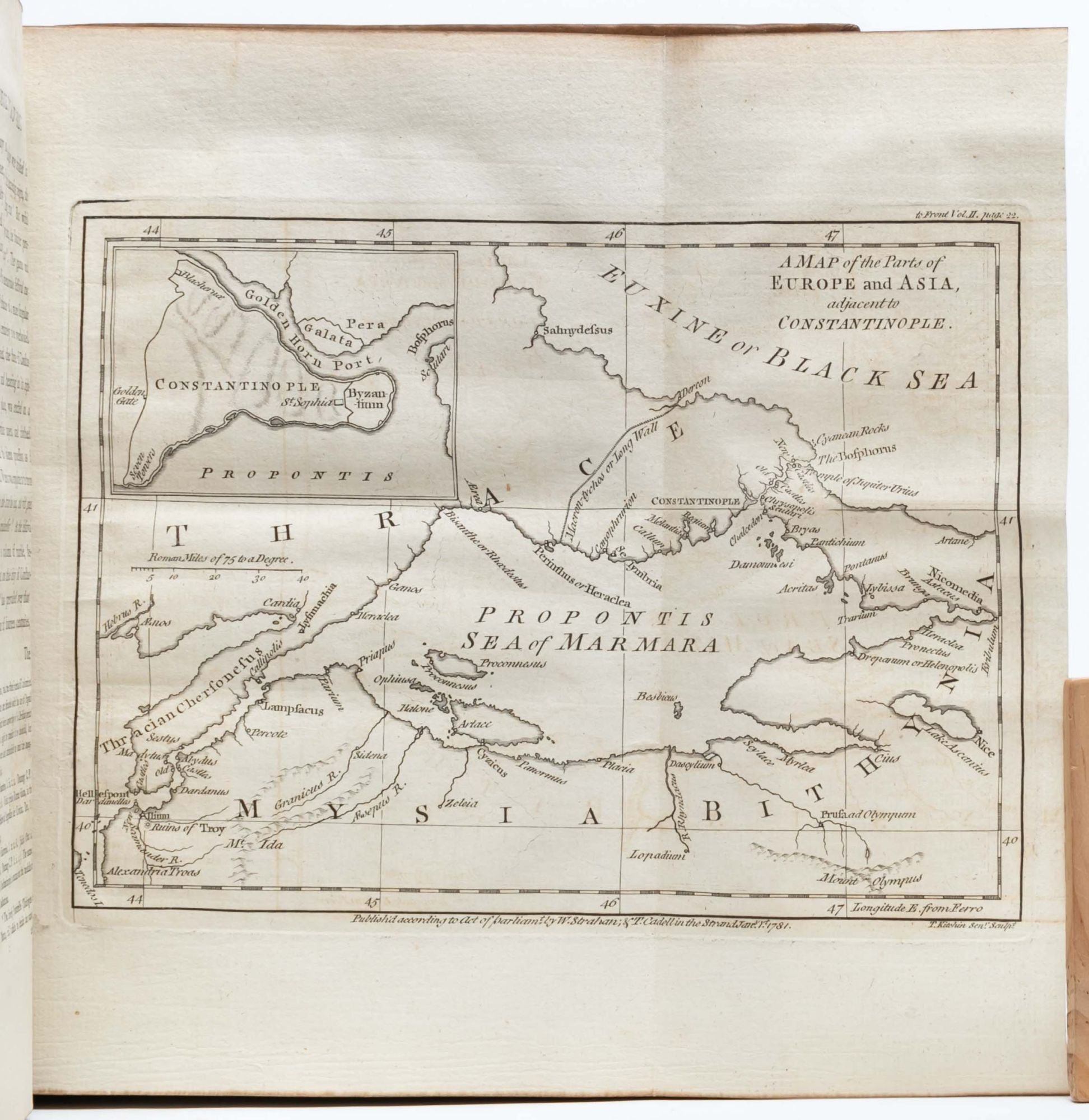
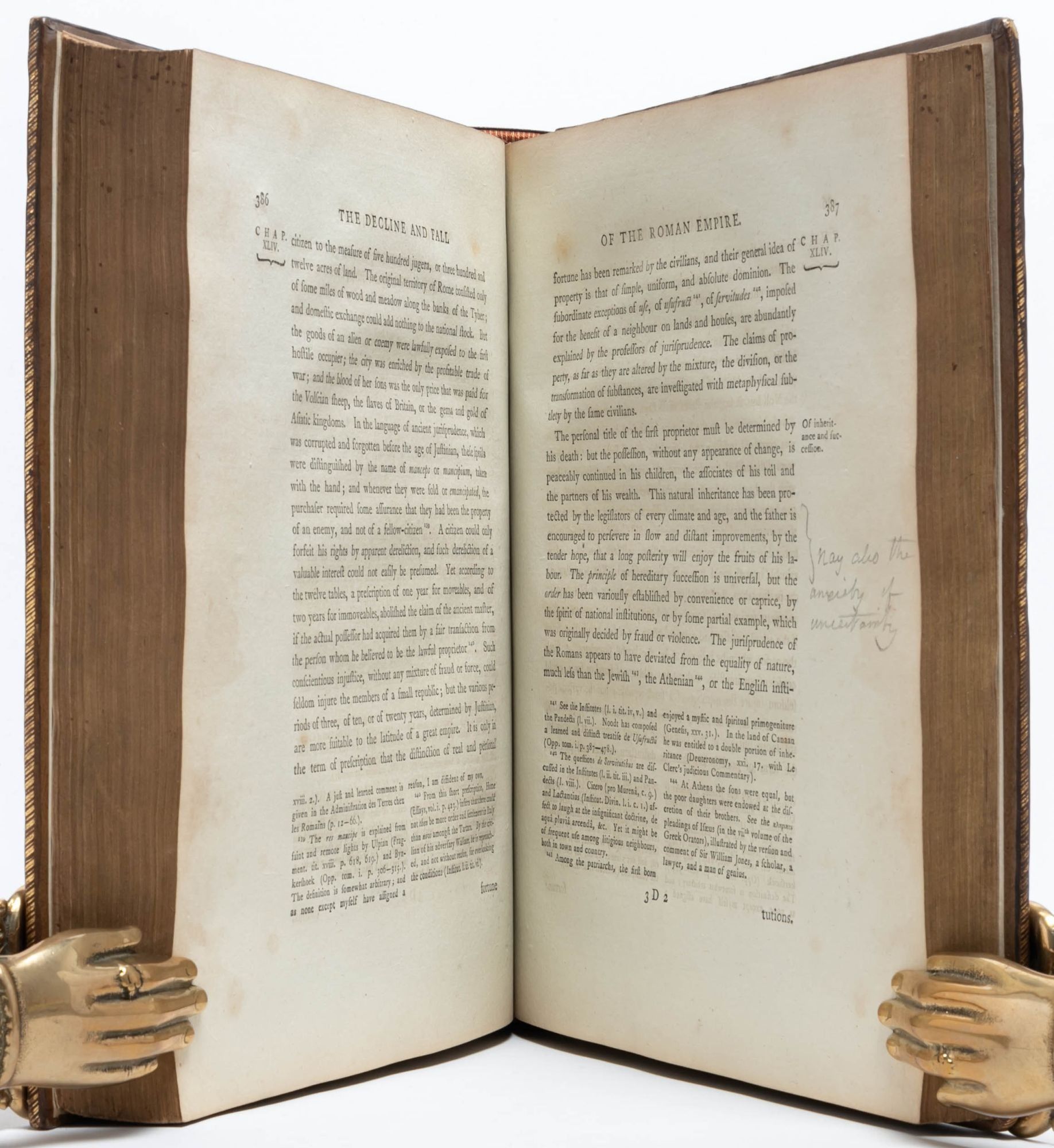
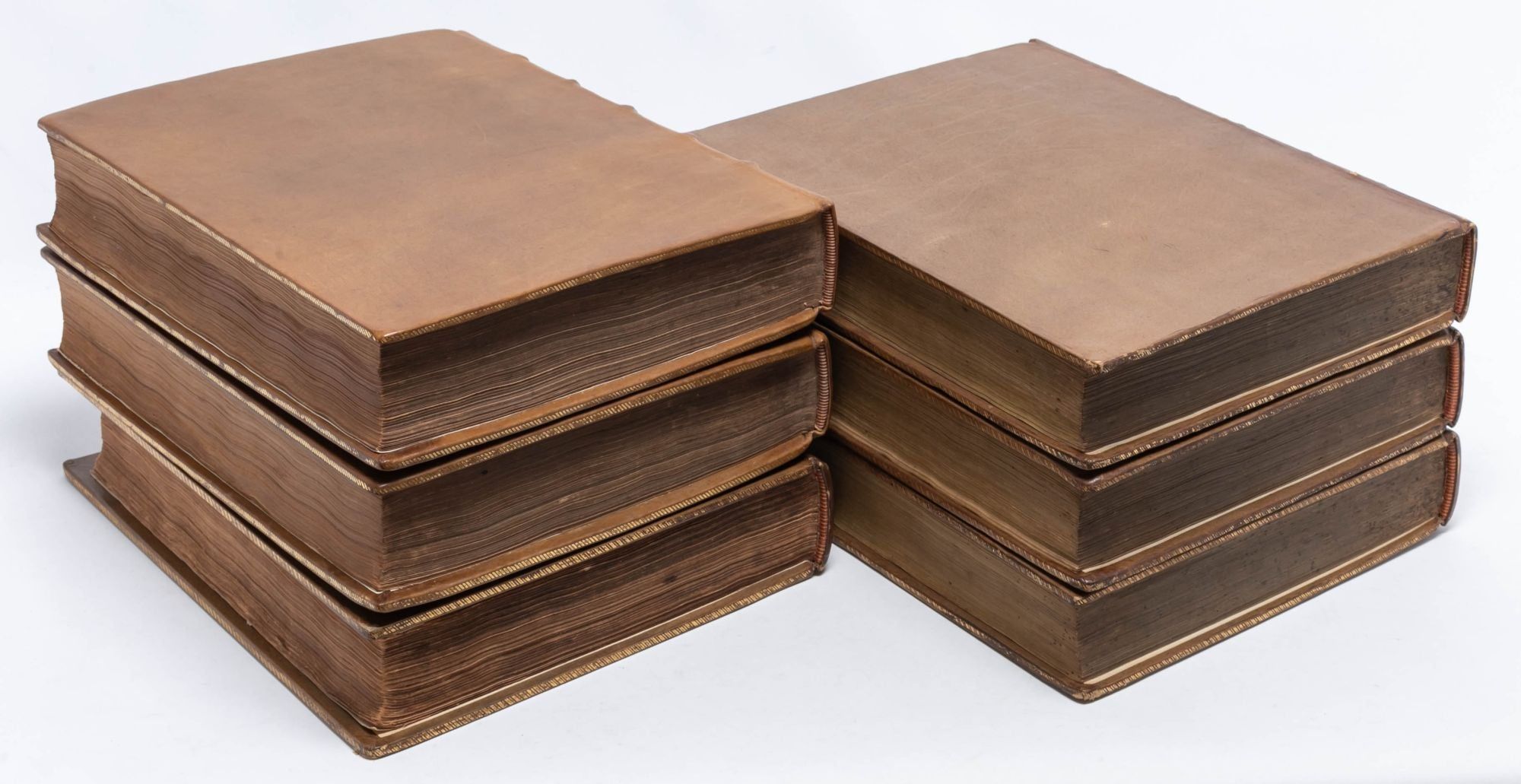
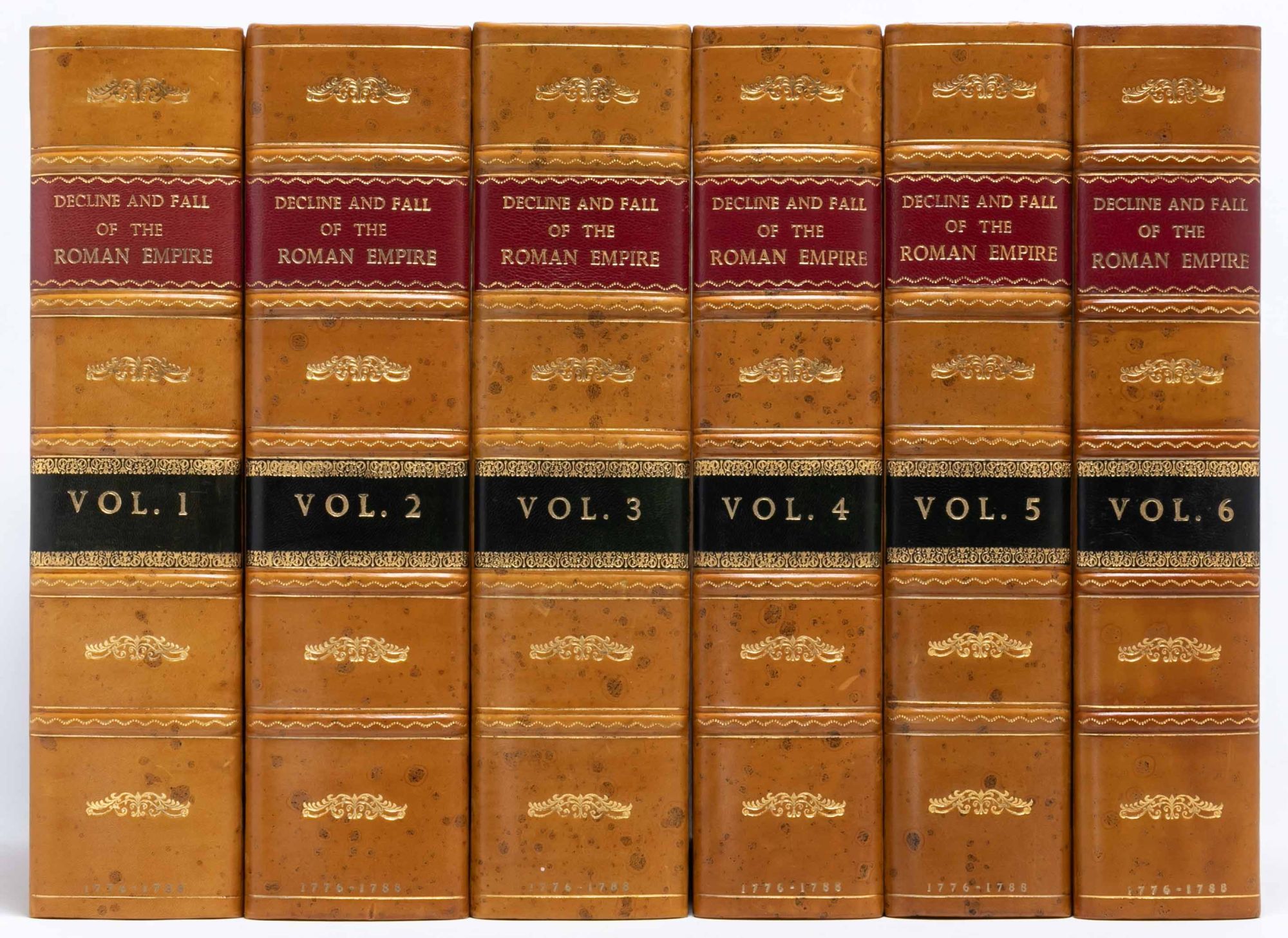
London: W. Strahan and T. Cadell in the Strand, 1788. First editions. First state of volume one (with all errata uncorrected and cancels as called for). Six volumes, quarto (volume one 264 x 213 mm., others 271 x 216 mm.) Modern full speckled calf to style. One volume with the book label of Dr. Sydney Ross (1915 - 2013), professor at Rensselaer Polytechnic Institute. Engraved portrait frontispiece by Hall after Joshua Reynolds (dated February 1, 1780) bound into volume two, as issued; two engraved maps in volume two; one engraved map in volume three (Western map bound into volume two and Eastern map bound into volume three). Complete with all half titles. Bindings in excellent condition overall. Various levels of foxing throughout, generally light to moderate, some leaves heavier. Early owner’s name on the title page to volume one, Robert Nicholson. A modern reader (possibly Dr. Ross) has made extensive marginal notations in pencil in volumes four through six as he engaged with the text. All bindings uniform in size, but the text block to volume one a bit shorter than the other volumes. Clearly a set that was made up at the time of rebinding. Each volume housed in a full speckled calf clamshell box. Very Good.
With the cancel leaves and uncorrected errata as called for by Norton: volume one with cancels X4 and a4 (so signed), errata leaf uncorrected and bound at the beginning (leaves a and a2 bound out of order in the Notes), with the two leaves of advertisements at the end; volume two with cancels G1 and Ll1, errata leaf; volume three with p. 177 correctly numbered, p. 179 line 18 with uncorrected spelling of “Honorious,” errata leaf; volume four with cancels H3 and L2; volume six with errata for volumes four to six on 4Uv.
“This masterpiece of historical penetration and literary style has remained one of the ageless historical works which...maintain their hold on the layman and continue to stimulate the scholar...Gibbon brought a width of vision and a critical mastery of the available sources which have not been equalled to this day” (PMM). Scholars continue to discuss how Gibbon participates in eighteenth century trends of genre blurring and bending, using paradigms of the romance novel alongside emerging modern scholarship to create a fascinating and readable history. Others note how “Gibbon’s work occupies a peculiar position in the political and economic climate of the late eighteenth century because of its subject matter. The majority of the political structures considered in the Decline and Fall are absolutist monarchies dominated by the figure of the sacred king” – a major contrast to the rise of democracies and the calls for economic mobility being made across Europe and the United States (Cosgrove). An epic history in an incredibly addictive form.
Grolier English 58; Norton 20, 23, 29; Printing and the Mind of Man 222; Rothschild 942.
With the cancel leaves and uncorrected errata as called for by Norton: volume one with cancels X4 and a4 (so signed), errata leaf uncorrected and bound at the beginning (leaves a and a2 bound out of order in the Notes), with the two leaves of advertisements at the end; volume two with cancels G1 and Ll1, errata leaf; volume three with p. 177 correctly numbered, p. 179 line 18 with uncorrected spelling of “Honorious,” errata leaf; volume four with cancels H3 and L2; volume six with errata for volumes four to six on 4Uv.
“This masterpiece of historical penetration and literary style has remained one of the ageless historical works which...maintain their hold on the layman and continue to stimulate the scholar...Gibbon brought a width of vision and a critical mastery of the available sources which have not been equalled to this day” (PMM). Scholars continue to discuss how Gibbon participates in eighteenth century trends of genre blurring and bending, using paradigms of the romance novel alongside emerging modern scholarship to create a fascinating and readable history. Others note how “Gibbon’s work occupies a peculiar position in the political and economic climate of the late eighteenth century because of its subject matter. The majority of the political structures considered in the Decline and Fall are absolutist monarchies dominated by the figure of the sacred king” – a major contrast to the rise of democracies and the calls for economic mobility being made across Europe and the United States (Cosgrove). An epic history in an incredibly addictive form.
Grolier English 58; Norton 20, 23, 29; Printing and the Mind of Man 222; Rothschild 942.