

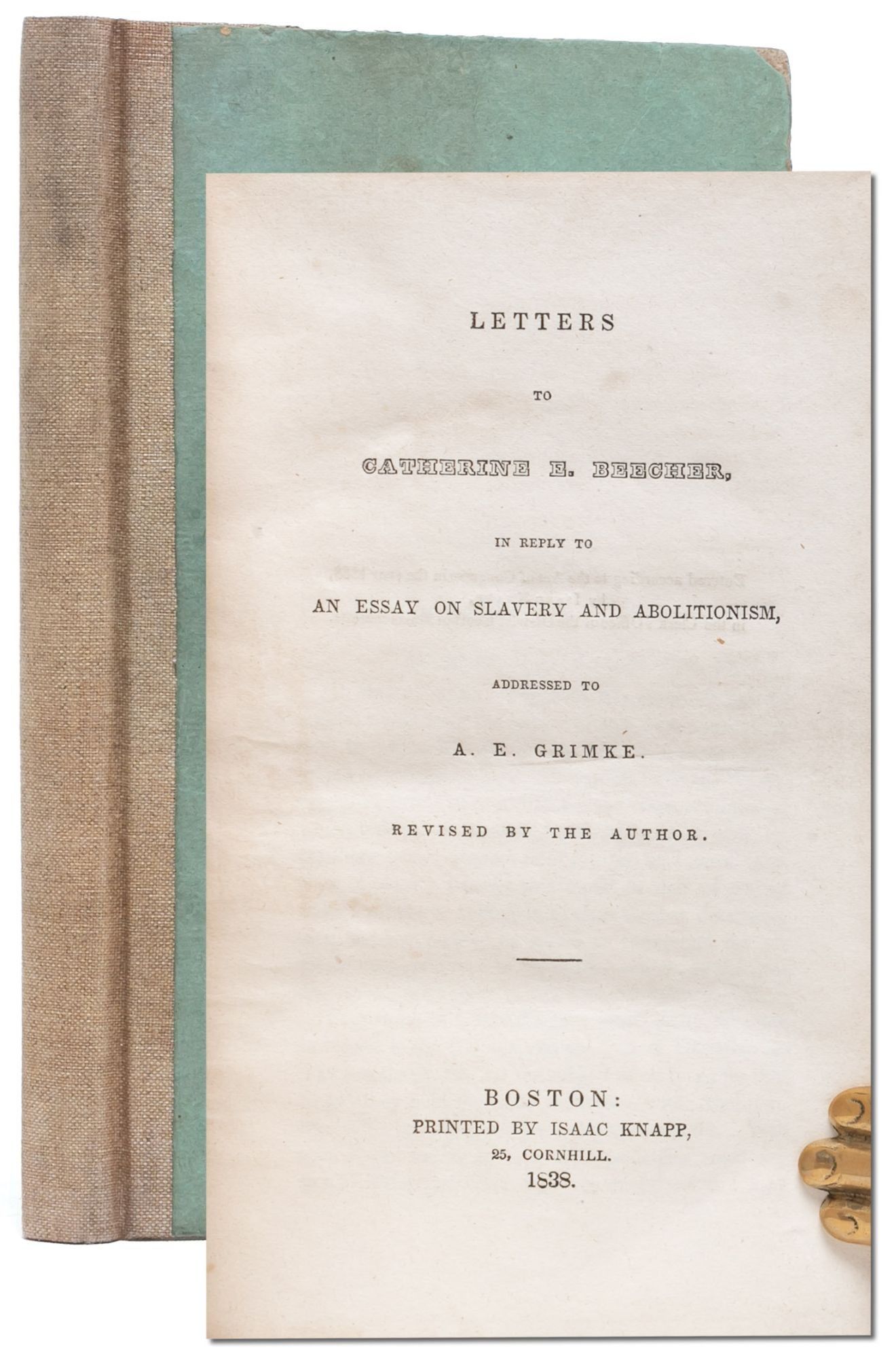
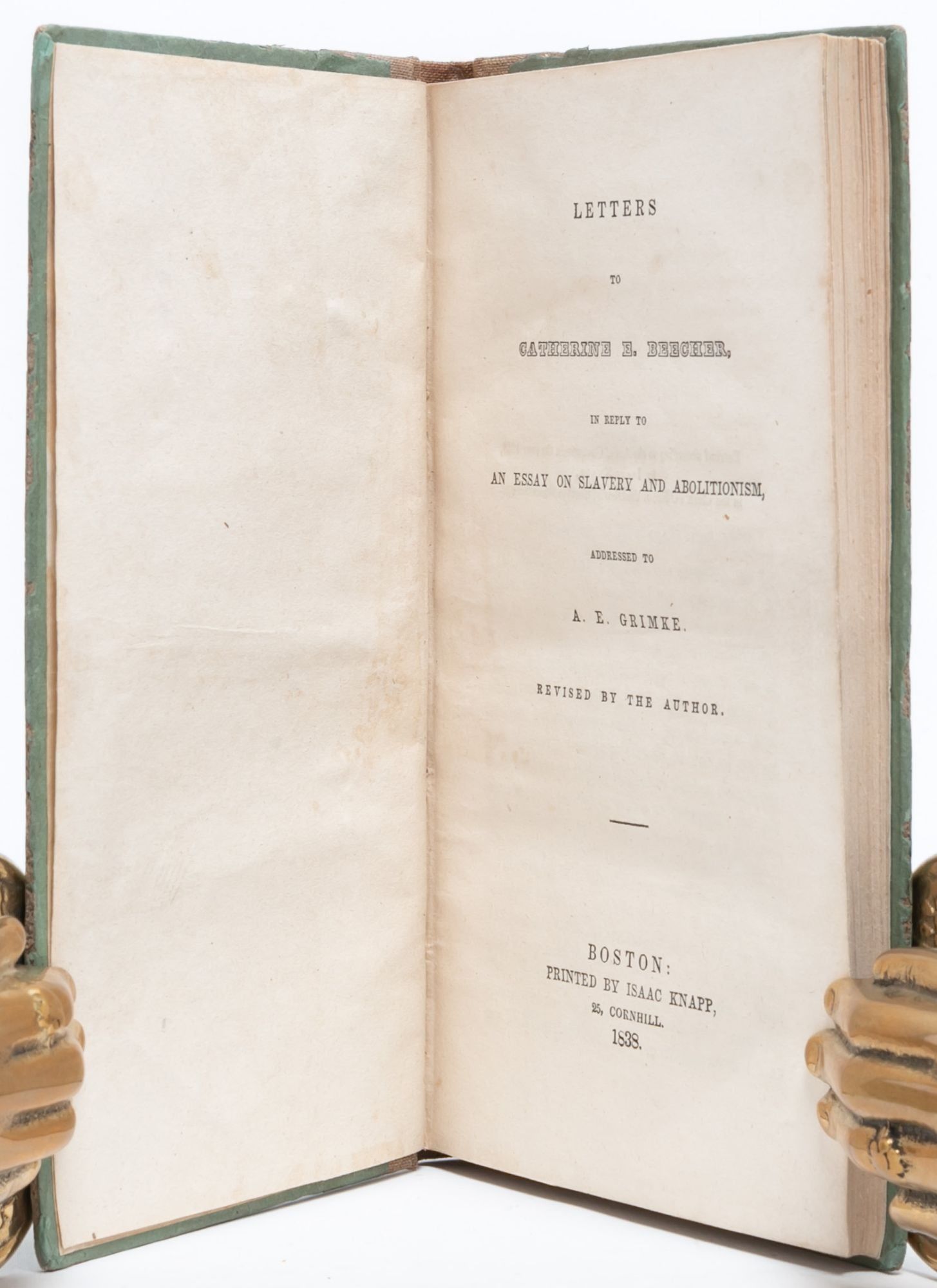
Letters to Catherine E. Beecher in Reply to an Essay on Slavery and Abolitionism, Addressed to A. E. Grimke. Revised by the Author

- Boston: Printed by Isaac Knapp, 1838
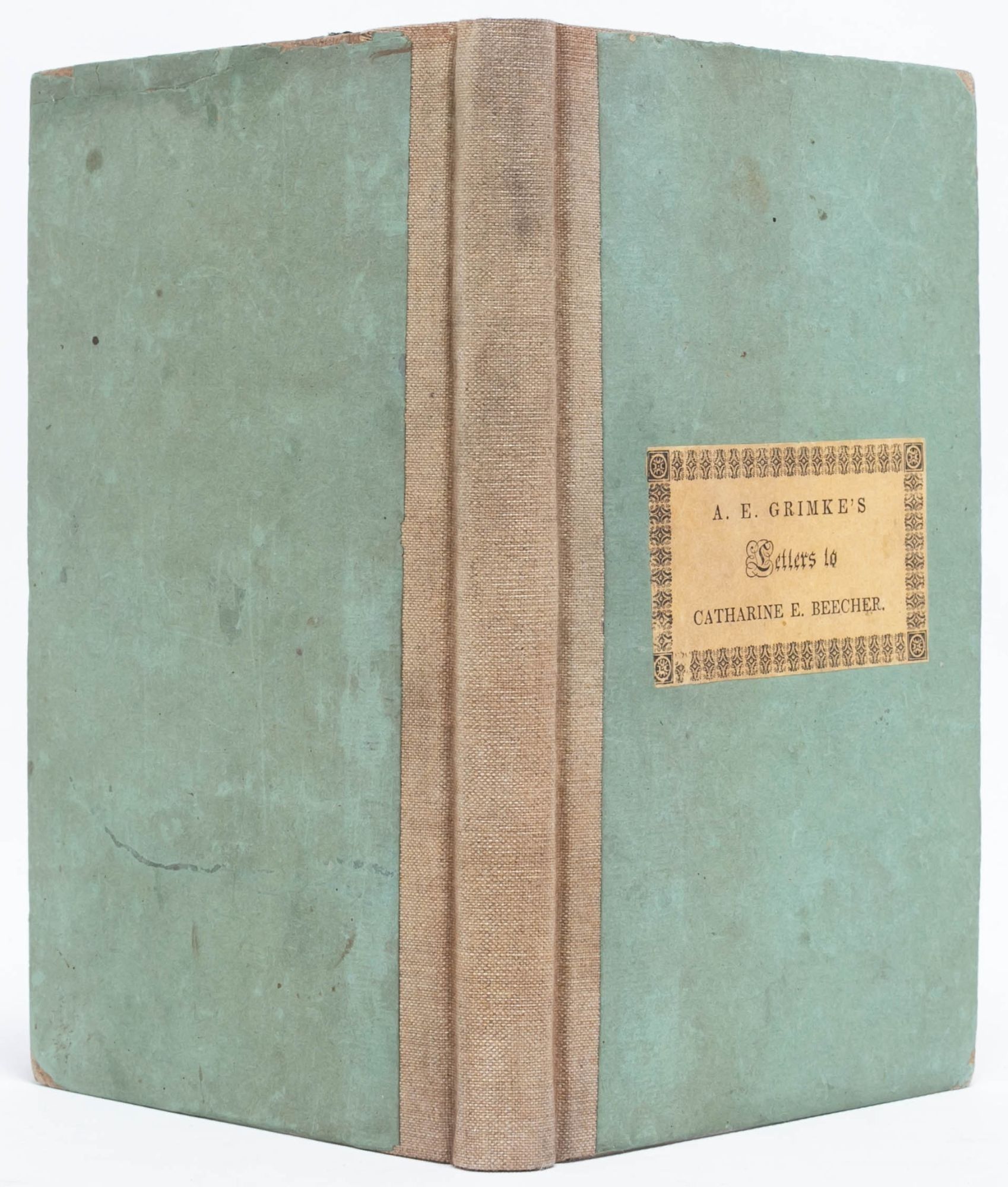
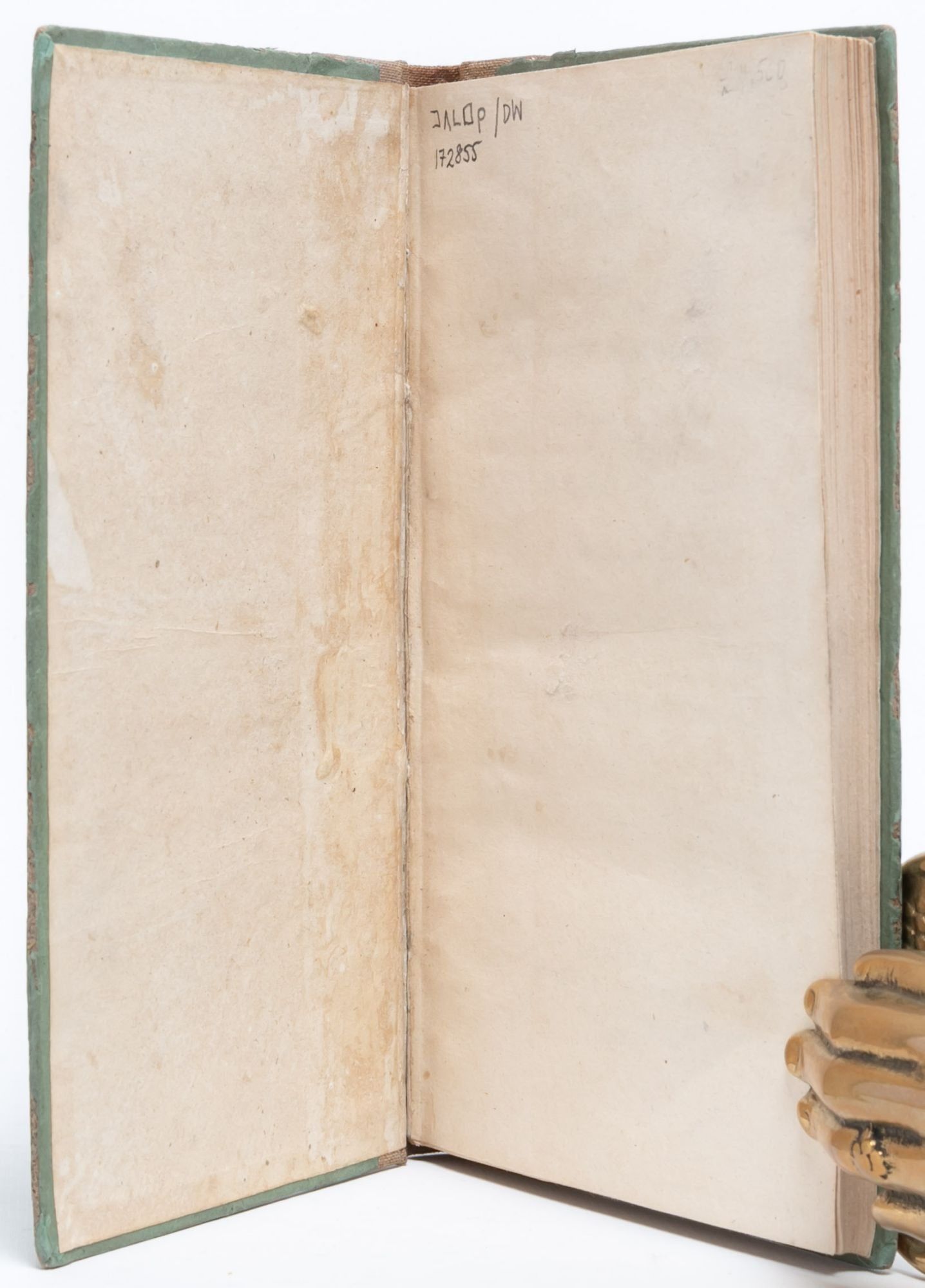
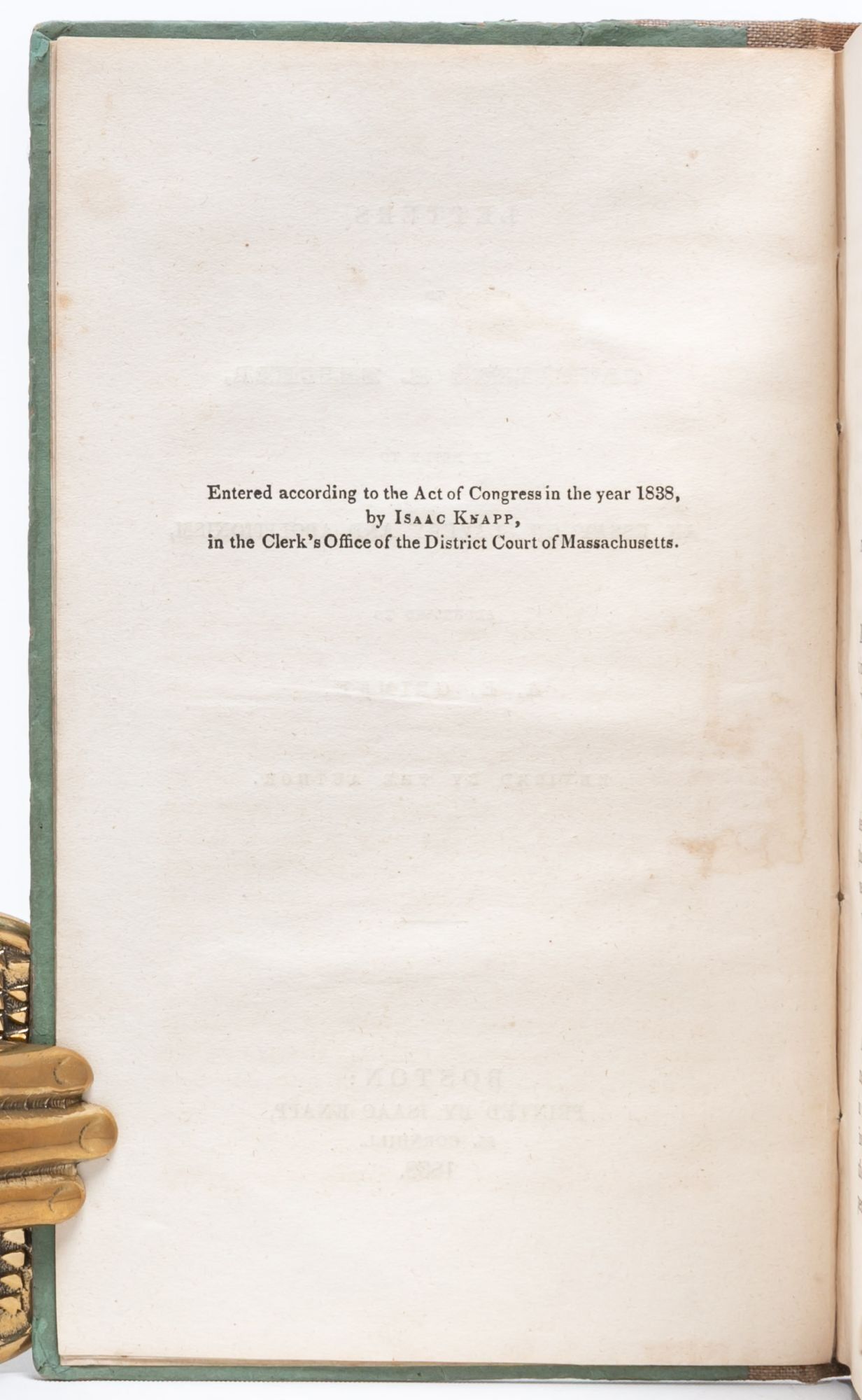
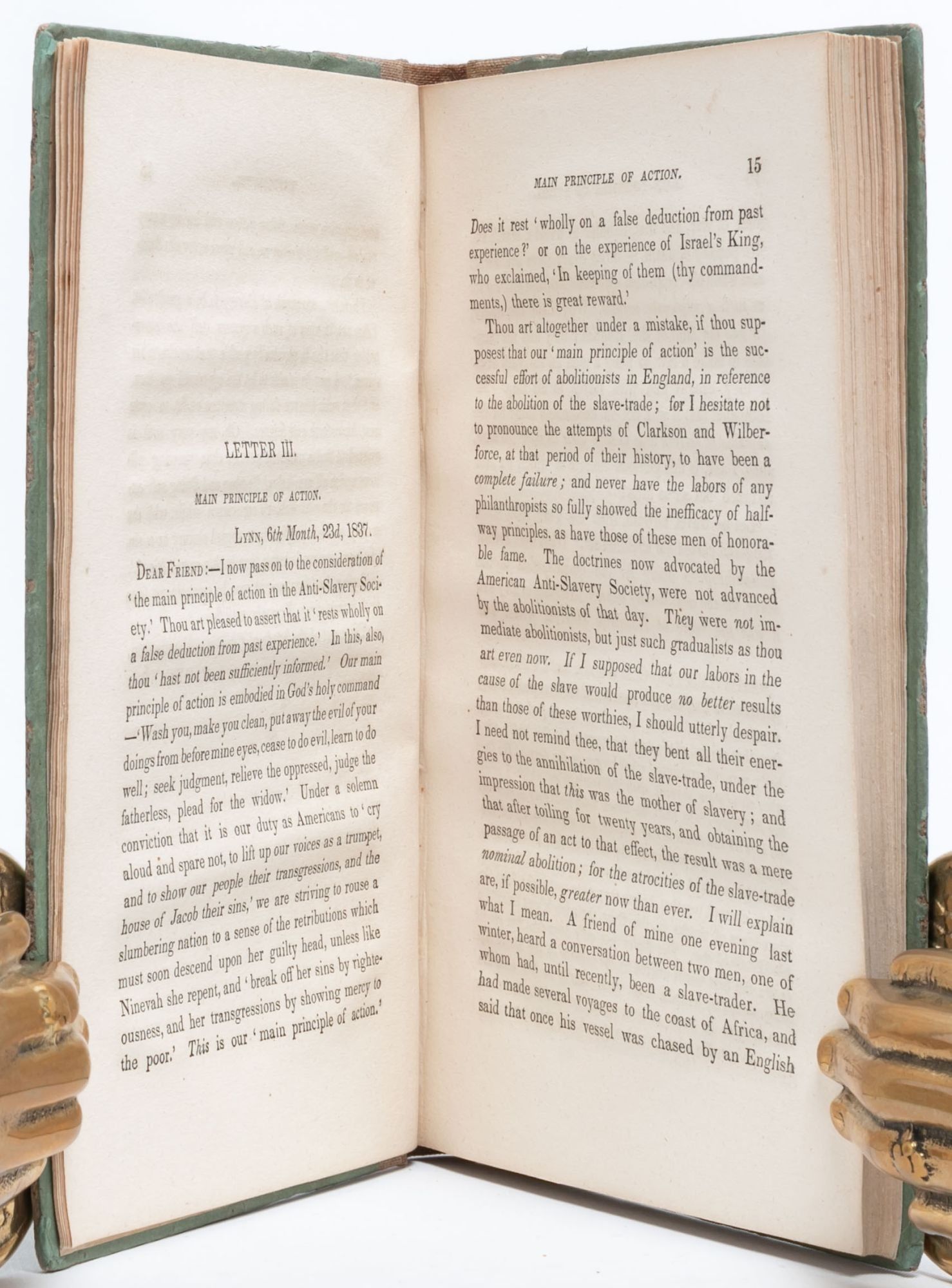
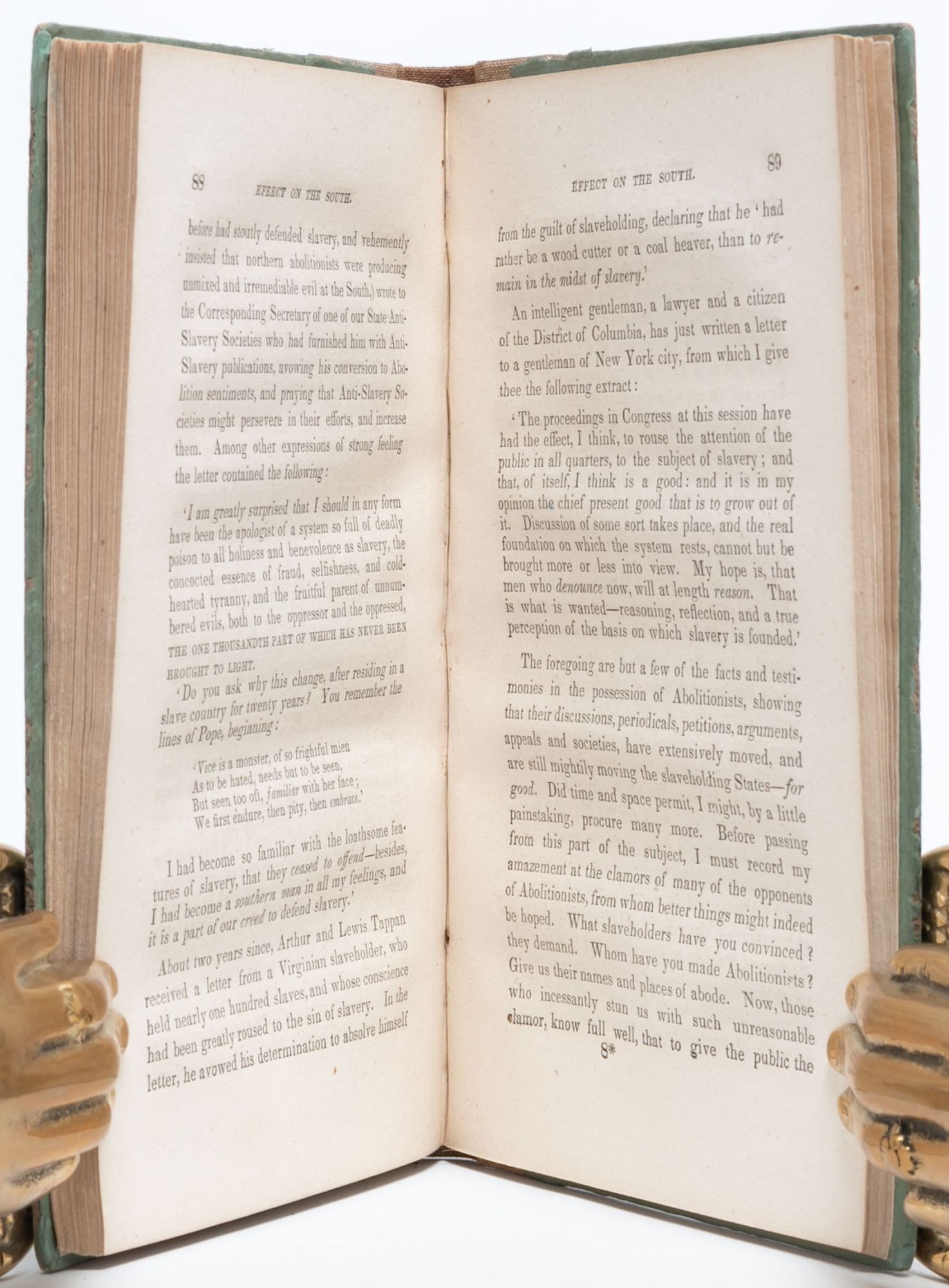
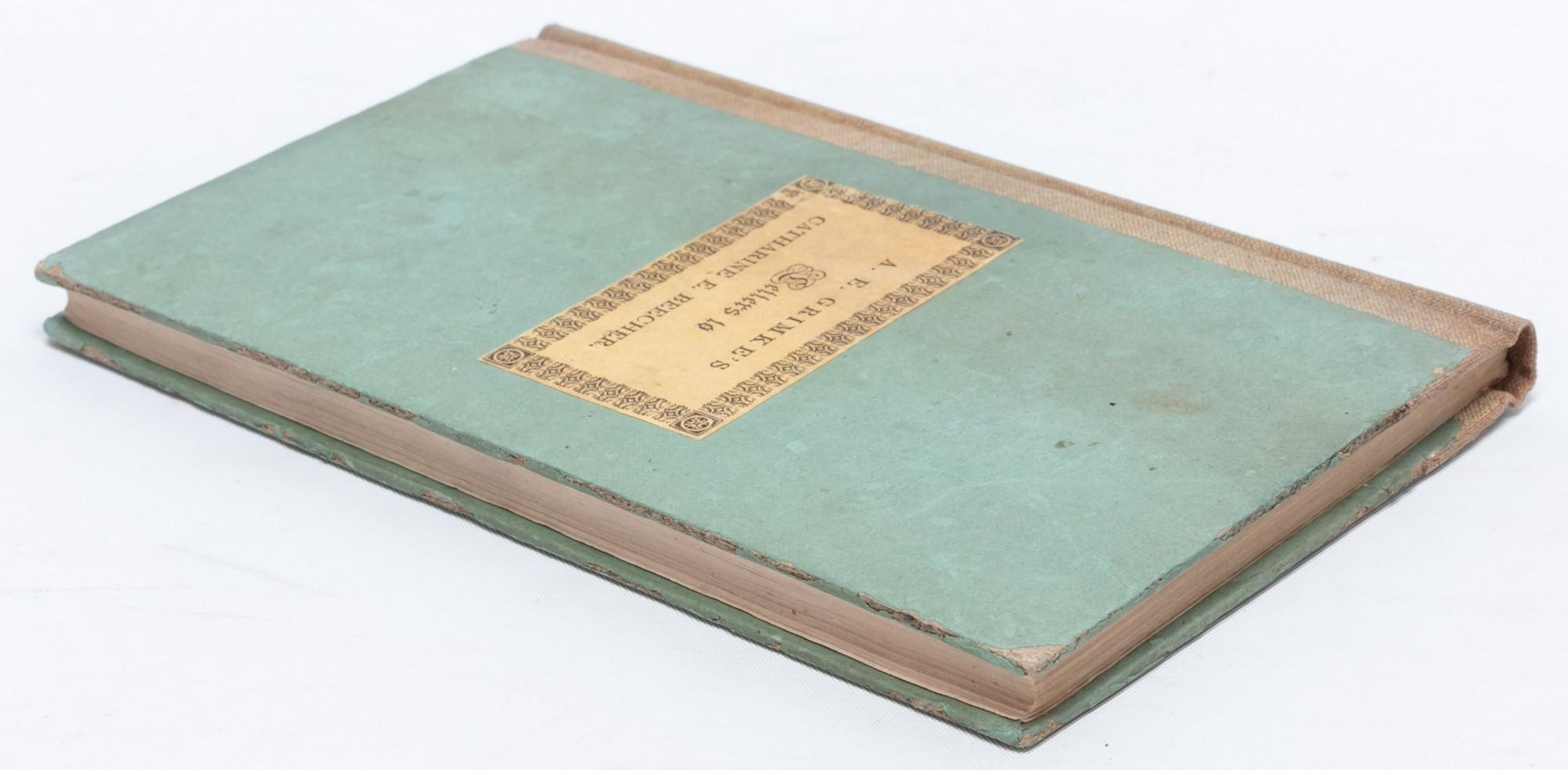
Boston: Printed by Isaac Knapp, 1838. First edition. Very Good. Octavo (177 x 107 mm). Contemporary blue boards, neatly rebacked to style in beige buckram, original yellow printed paper label on front cover. Binding a little soiled but presenting smartly, recased, corners and inner hinges expertly repaired, contents crisp and clean: a very good copy.
An activist for universal human rights, Angelina Grimké was one of the only white Southern women to fight simultaneously for abolition and women’s equality. Having witnessed first hand the savage injustices of racism and sexism in South Carolina, she moved to the North in her adulthood and dedicated her life to advancing equality. Letters to Catherine Beecher became her most famous work, as it arose out of the debate regarding women’s place within the abolition movement. In direct response to Beecher’s argument that women’s naturally subordinate role should prohibit their public activism, Grimké published a text that laid critical groundwork for the intersectional feminism of today. “In the preamble of that instrument [the U.S. Constitution] the great objects for which it was framed are declared to be ‘to establish justice, to promote the general welfare, and to secure the blessings of liberty to us and to our posterity.’ The slave laws are violations of these fundamental principles…I have found the Anti Slavery cause to be the high school of morals in our land—the school in which human rights are more fully investigated, and better understood and taught, than in any other....Human beings have rights, because they are moral beings: the rights of all men grow out of their moral nature; and as all men have the same moral nature, they have essentially the same rights. These rights may be wrested from the slave, but they cannot be alienated.... Now if rights are founded in the nature of our moral being, then the mere circumstances of sex does not give to man higher rights and responsibilities, than to women.... To suppose that it does, would be to break up utterly the relations, of the two natures...exalting the animal nature into a monarch, and humbling the moral into a slave.” For Grimké and the racially diverse group of Northern abolitionist men and women with whom she worked, the oppression of African Americans and of women were critically linked, and justice could only occur when both groups were recognized as fully human under the law.
Sabin 28854. Krichmar 466. Very Good.
An activist for universal human rights, Angelina Grimké was one of the only white Southern women to fight simultaneously for abolition and women’s equality. Having witnessed first hand the savage injustices of racism and sexism in South Carolina, she moved to the North in her adulthood and dedicated her life to advancing equality. Letters to Catherine Beecher became her most famous work, as it arose out of the debate regarding women’s place within the abolition movement. In direct response to Beecher’s argument that women’s naturally subordinate role should prohibit their public activism, Grimké published a text that laid critical groundwork for the intersectional feminism of today. “In the preamble of that instrument [the U.S. Constitution] the great objects for which it was framed are declared to be ‘to establish justice, to promote the general welfare, and to secure the blessings of liberty to us and to our posterity.’ The slave laws are violations of these fundamental principles…I have found the Anti Slavery cause to be the high school of morals in our land—the school in which human rights are more fully investigated, and better understood and taught, than in any other....Human beings have rights, because they are moral beings: the rights of all men grow out of their moral nature; and as all men have the same moral nature, they have essentially the same rights. These rights may be wrested from the slave, but they cannot be alienated.... Now if rights are founded in the nature of our moral being, then the mere circumstances of sex does not give to man higher rights and responsibilities, than to women.... To suppose that it does, would be to break up utterly the relations, of the two natures...exalting the animal nature into a monarch, and humbling the moral into a slave.” For Grimké and the racially diverse group of Northern abolitionist men and women with whom she worked, the oppression of African Americans and of women were critically linked, and justice could only occur when both groups were recognized as fully human under the law.
Sabin 28854. Krichmar 466. Very Good.