

The California and Oregon Trail: Being Sketches of Prairie and Rocky Mountain Life
- New York: George P. Putnam, 1849
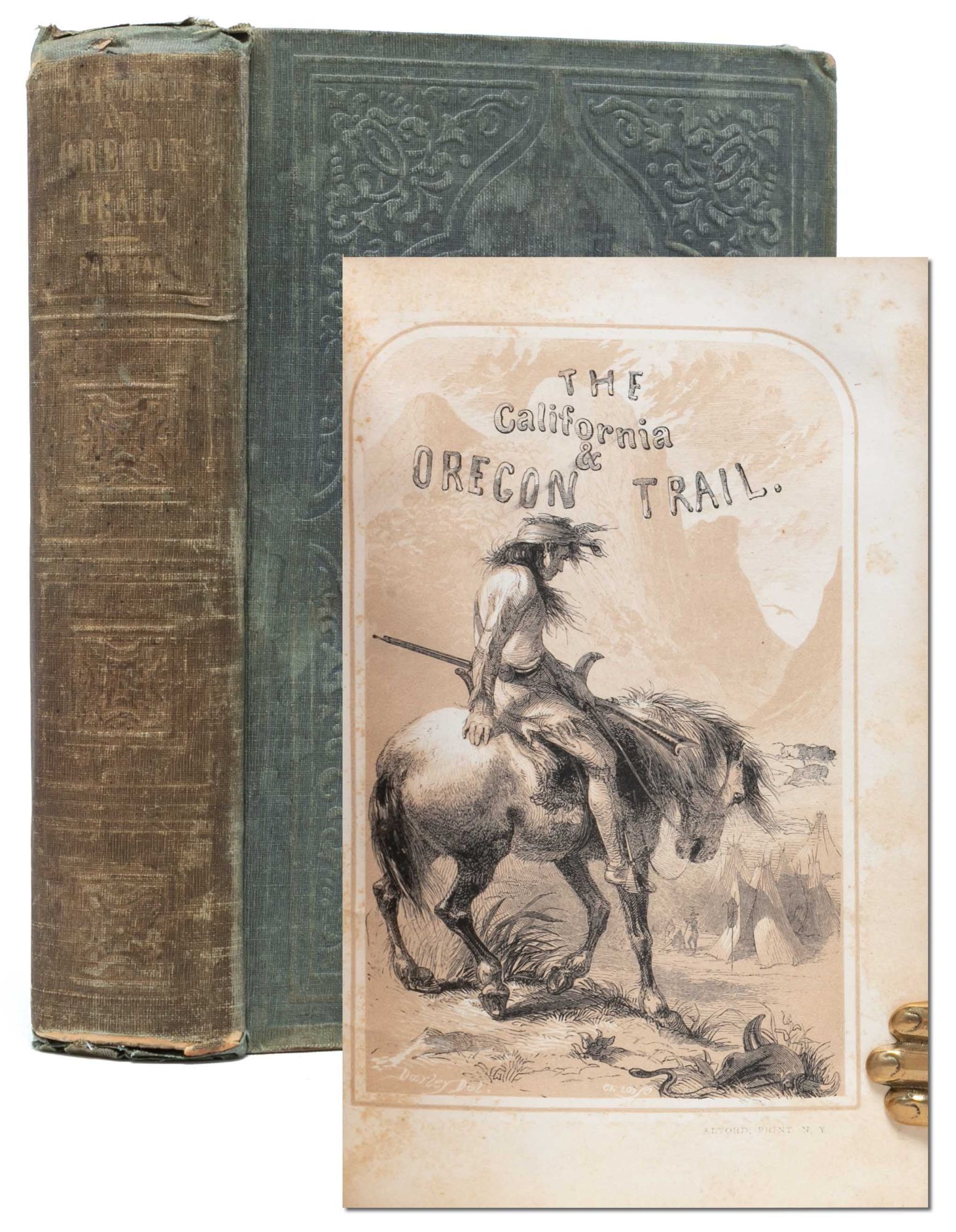
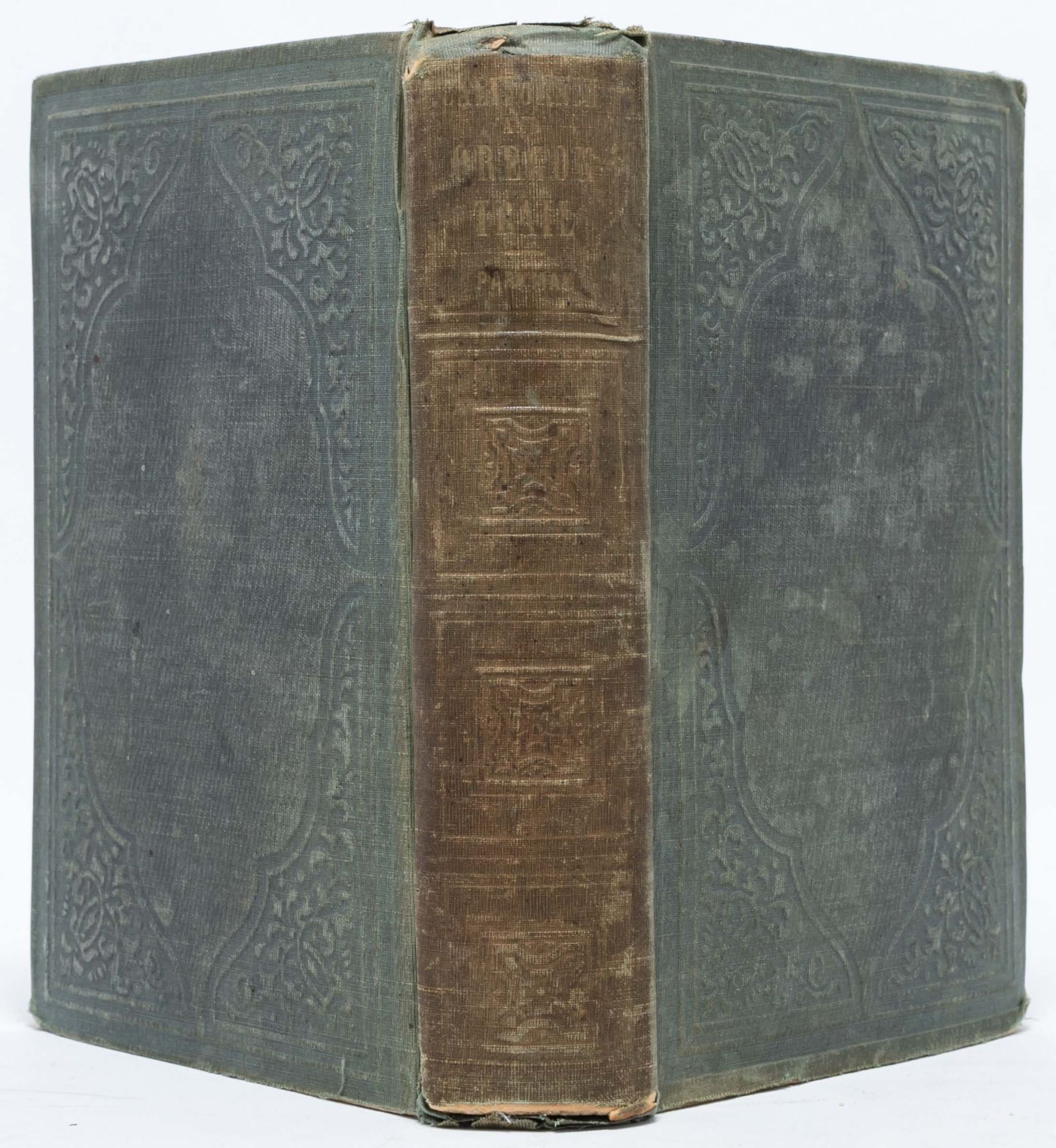
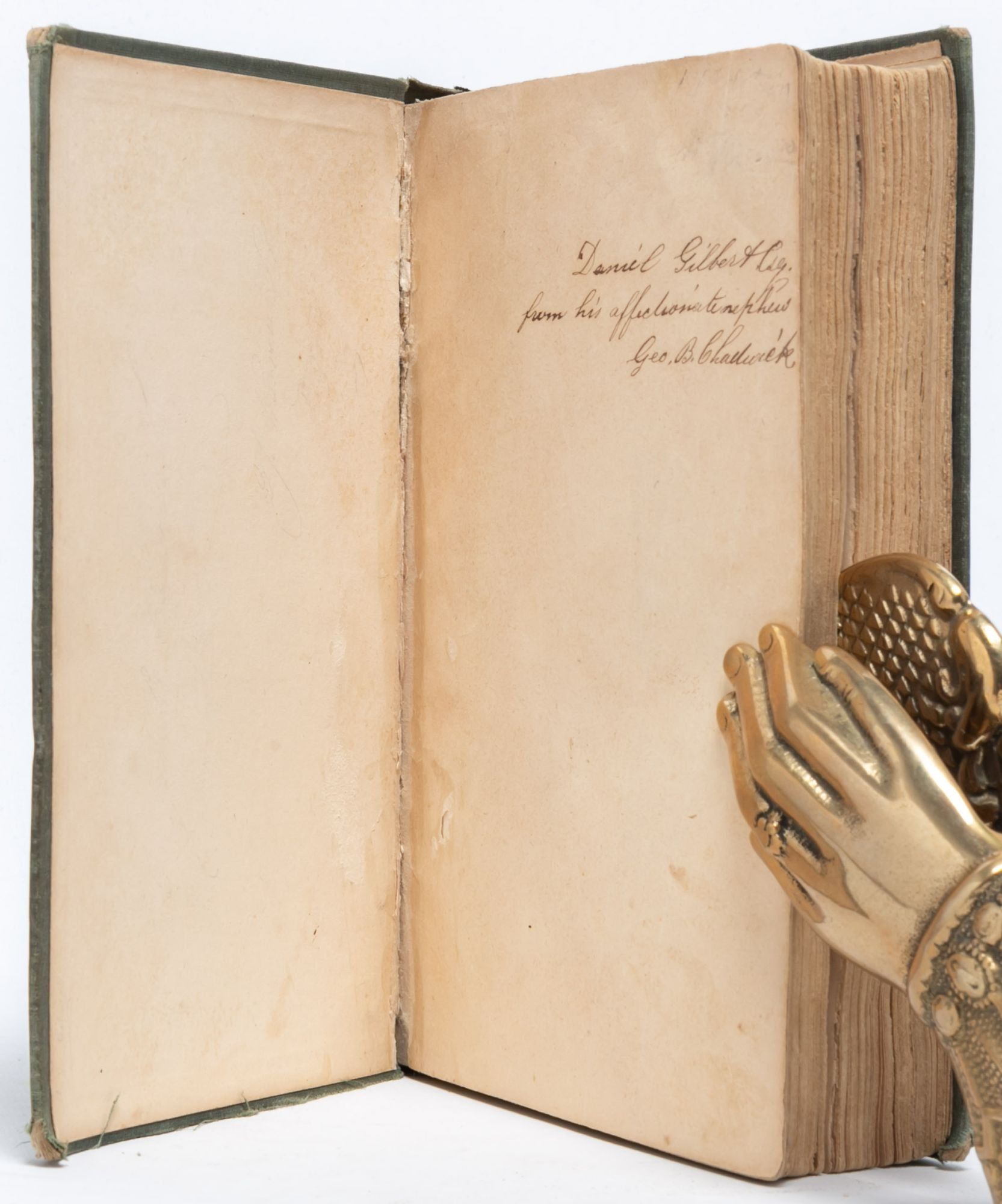
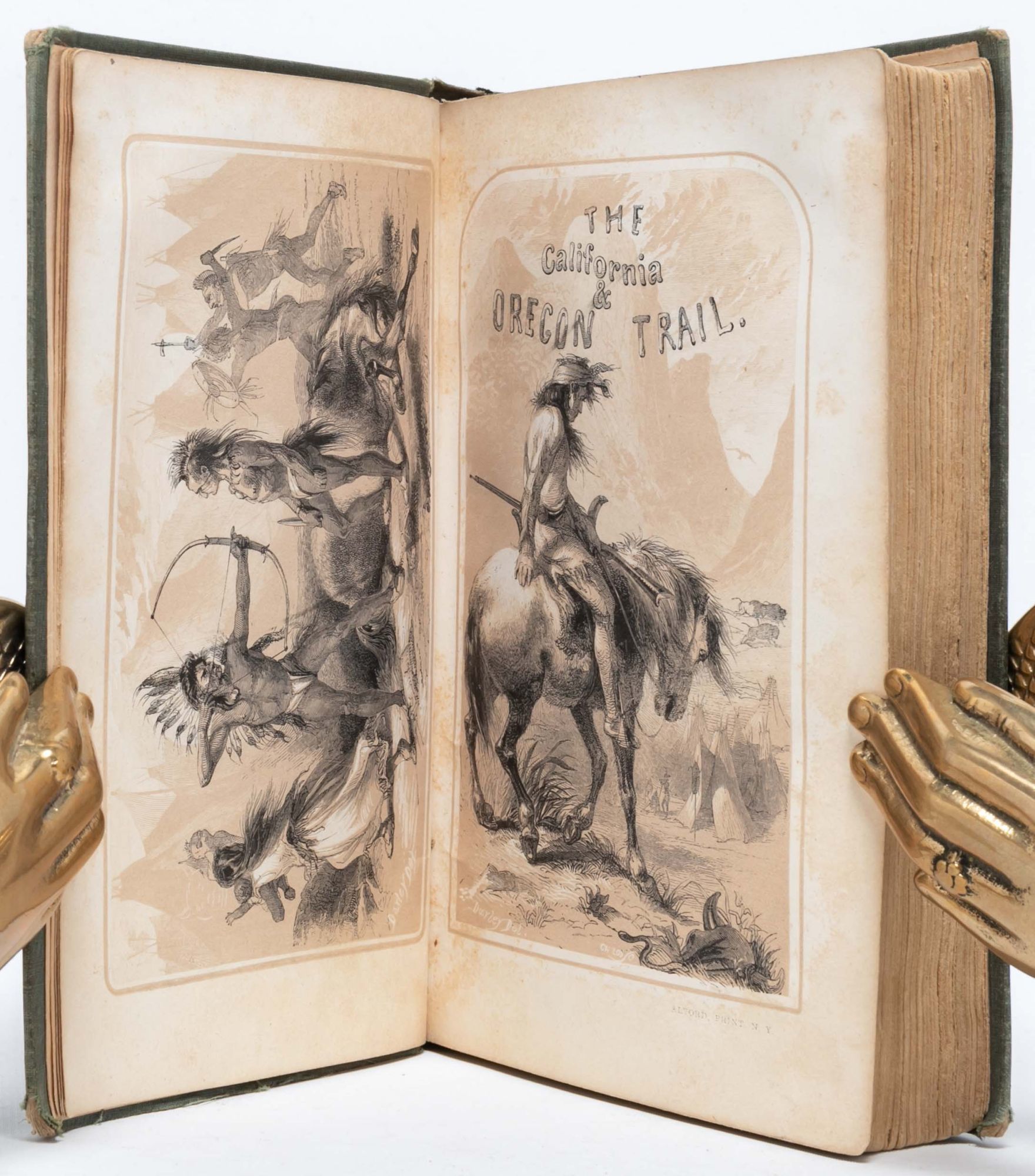
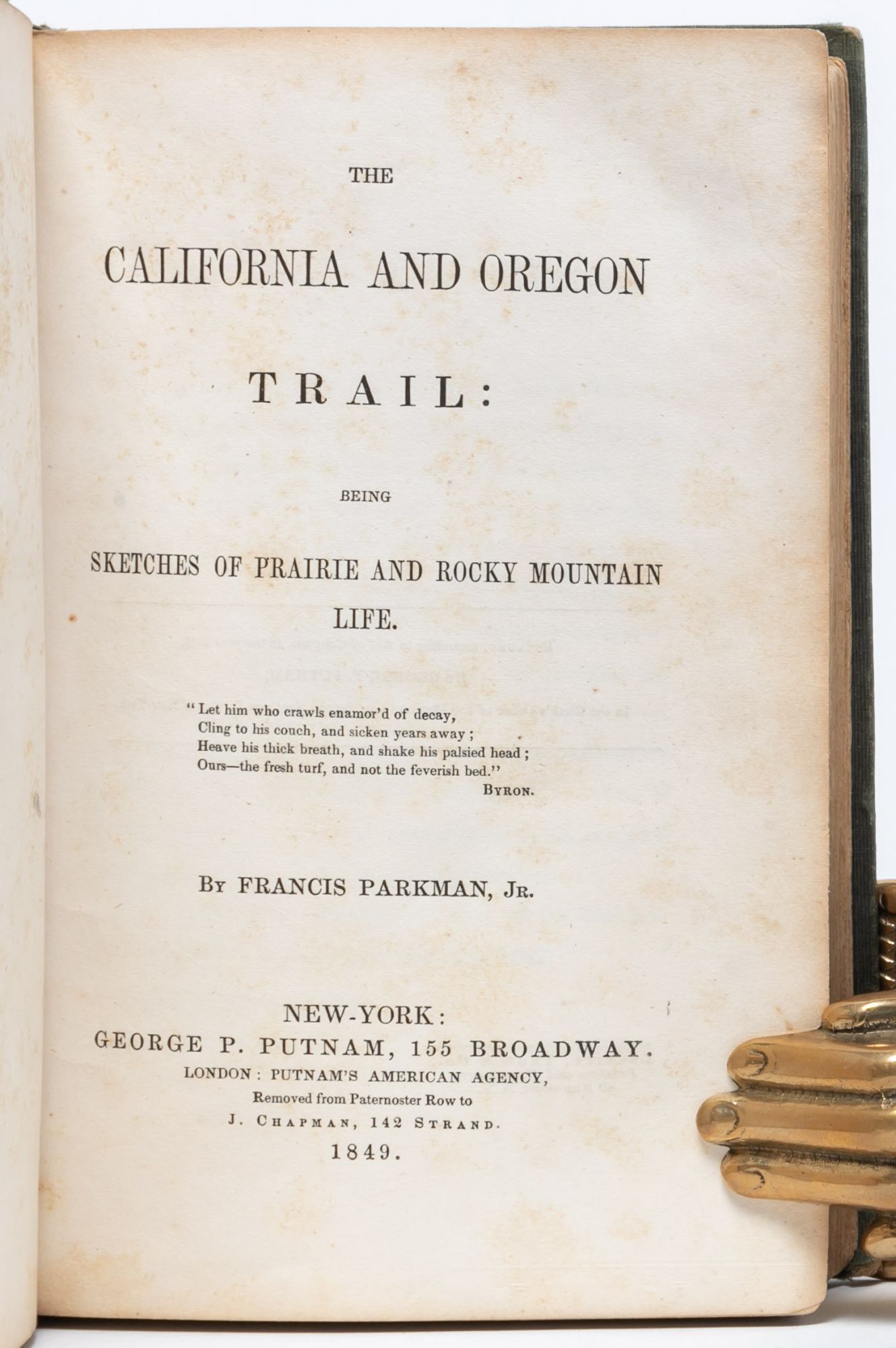
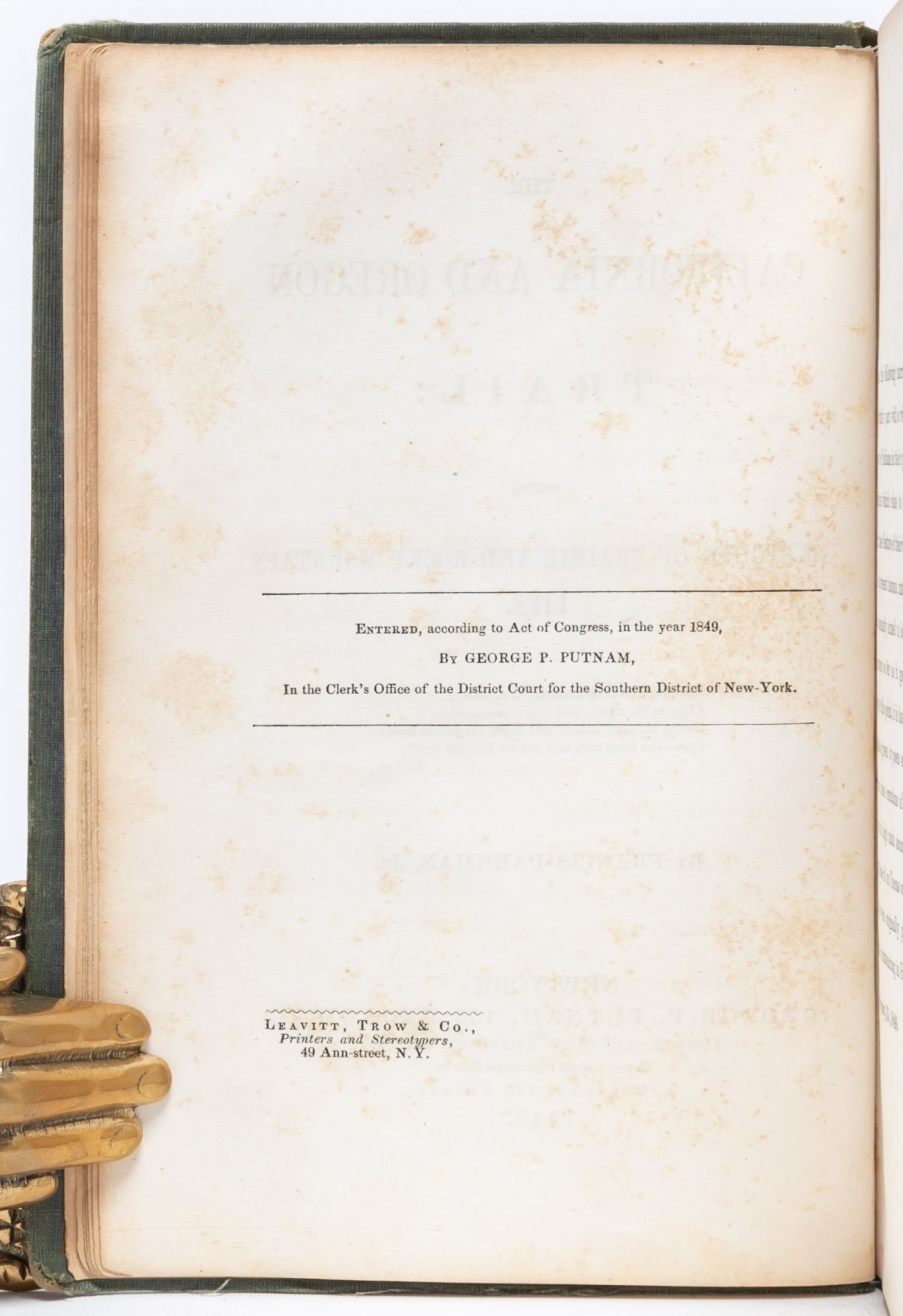
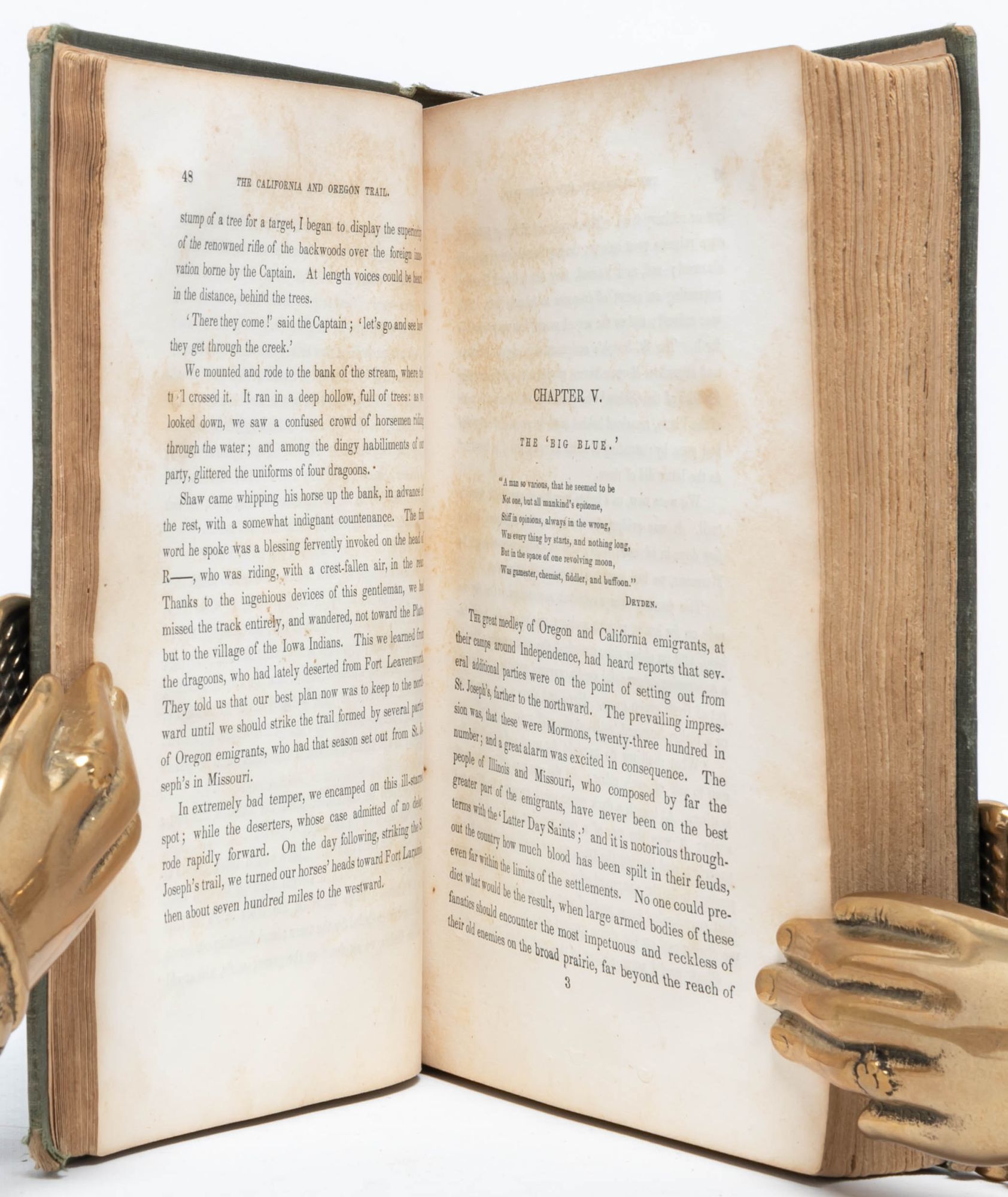
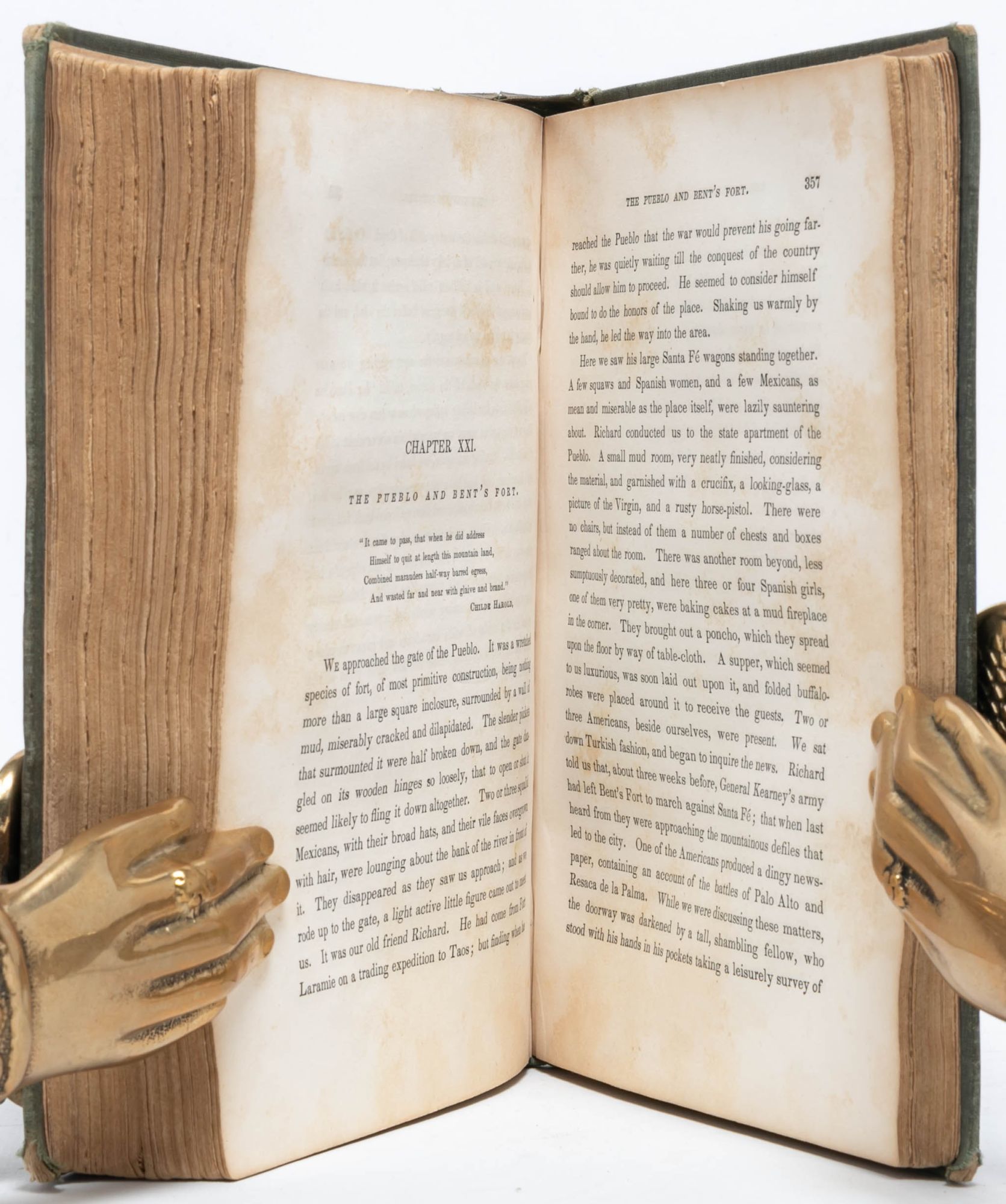
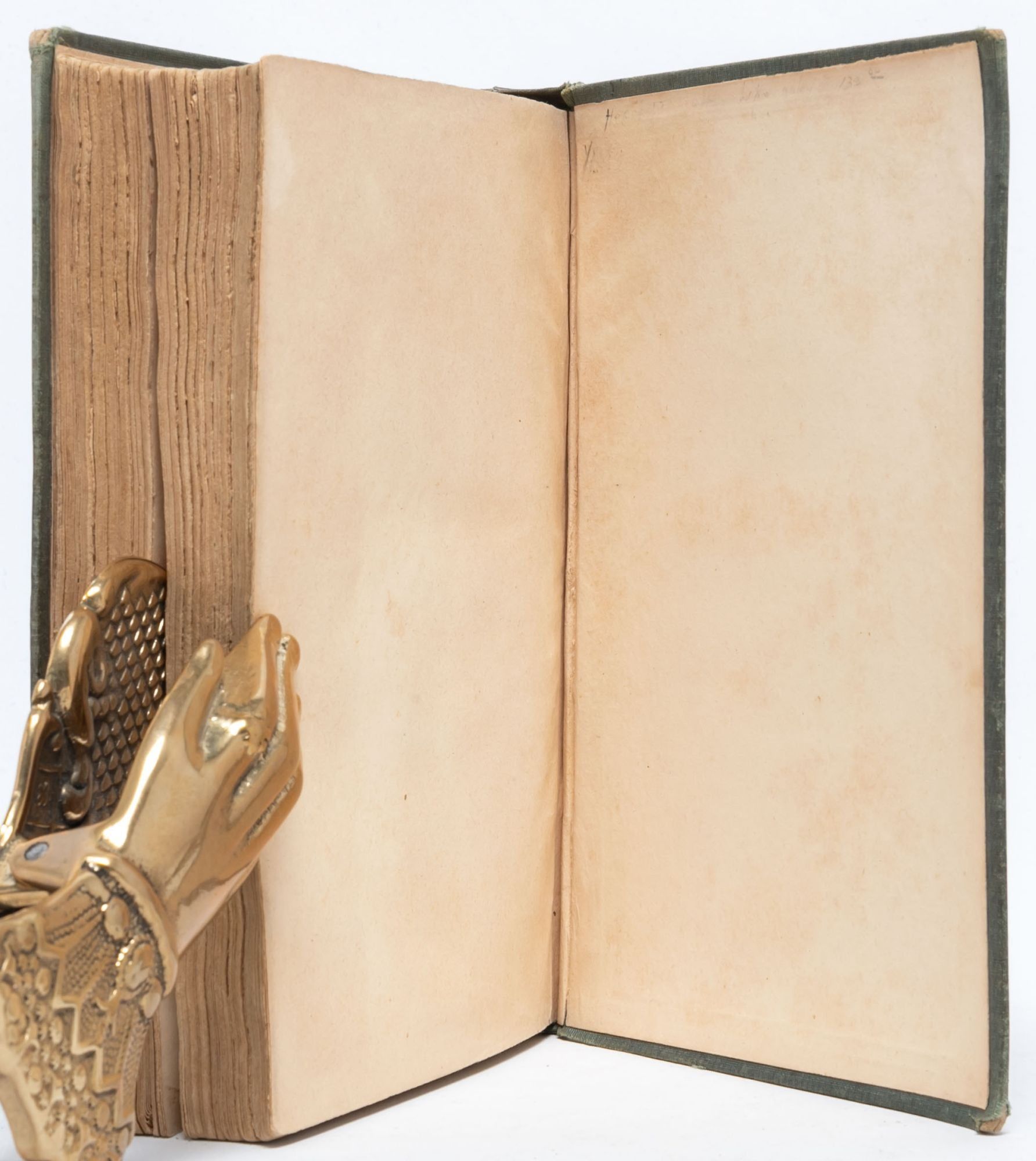
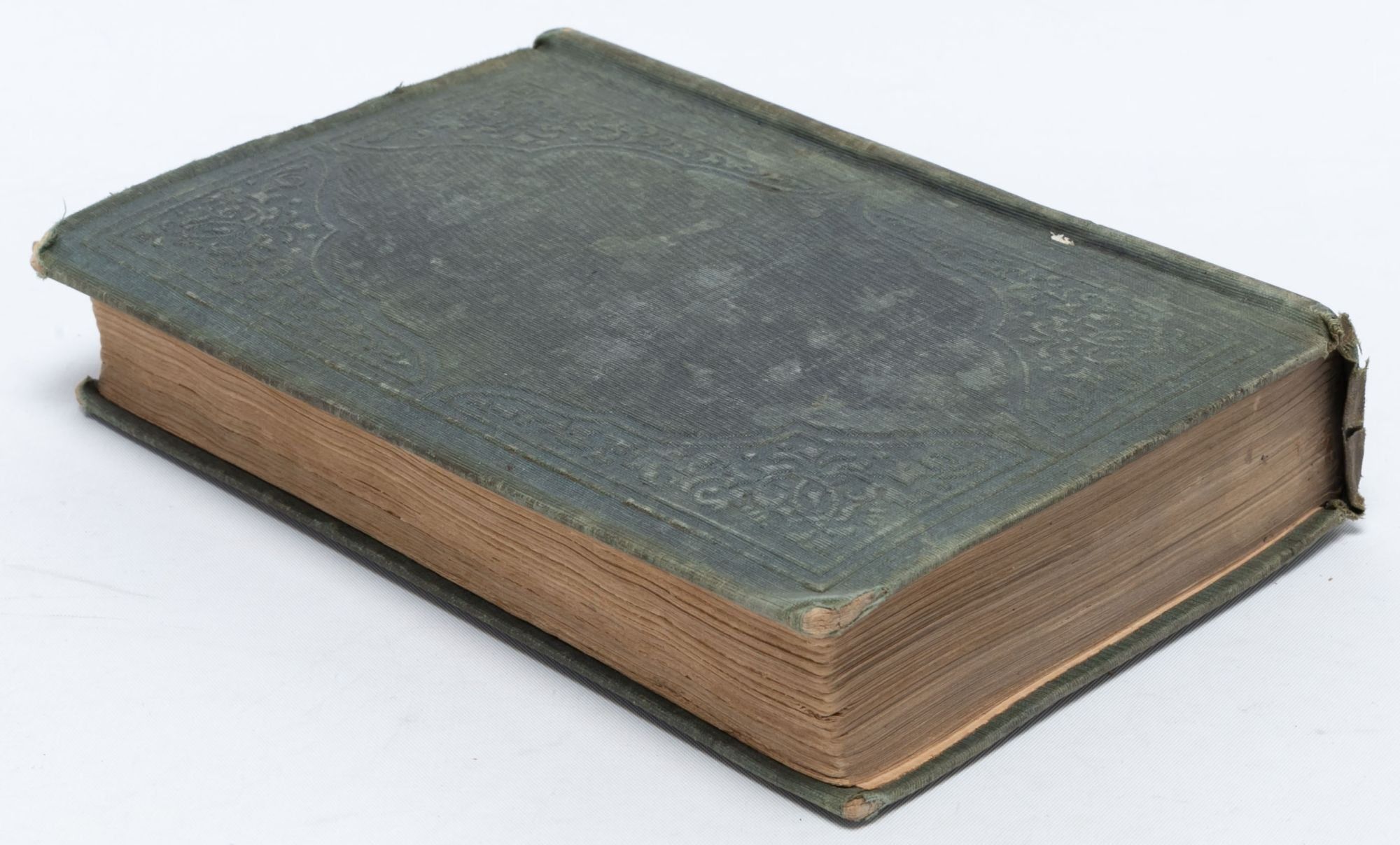
New York: George P. Putnam, 1849. First edition. Very Good. Publisher’s blindstamped green cloth. Octavo. [2, ads], 448, [8, ads] pp. Complete with two-page engraved decorative title. Binding "A" (author's name in sans serif typeface on spine, noted only in the first printing), terminal catalogue "B" (not affecting priority, BAL 15446). A very good, tight copy. Some rubbing and fraying to edges of boards, minor loss of cloth at the spine ends. Contemporary ink gift inscription to front flyleaf. Light to moderate foxing throughout. Front inner joint cracked with an early repair.
A firsthand account of a summer on the Oregon Trail by “the preeminent American historian of his generation” (Boston Athenaeum). Francis Parkman (1823 – 1893), who undertook the voyage when he was just twenty-three, spent two months on the trail, during which he hunted buffalo with members of the Oglala Lakota Nation and recorded many other scenes of life in the west. Printing and the Mind of Man calls the buffalo hunt "[T]he portion of the narrative which is not only the most vivid, but also of greatest historical value... Parkman has given us a unique picture of life in a Sioux village before it was changed and eventually destroyed by contact with the white man" (PMM 327).
Parkman “is revered to this day for his Oregon Trail…In its final form The Oregon Trail (entitled The California and Oregon Trail in 1849 and then Prairie and Rocky Mountain Life in 1852, before it took on its present title in 1872) is valuable for three main reasons. First, it accurately reports the observations of a daring young man from the East on a western trek three years before the gold rush of 1849 made Americans more interested in the Far West. Second, it is a fascinating chapter in the life of one of America’s foremost historians, depicting freedom from the confining East and exploits on the Great Plains and in the Rocky Mountains. Parkman’s bracing account bears comparison with the best of American nonfictional, book-length narratives, including, for example, Richard Henry Dana, Jr.’s Two Years before the Mast, Henry David Thoreau’s Walden, Mark Twain’s Roughing It, and Ernest Hemingway’s Green Hills of Africa. And third, The Oregon Trail displays enduring, organic literary art. It has a sonata-like form: the young hero, as in a myth, leaves the known East; steps across the threshold into the unknown; meets several challenges while living with Native Americans; observes, becomes experienced, then almost sadly begins his return; and at last tries to go home again but finds himself permanently changed” (Robert L. Gale, American National Biography).
Parkman’s work was both popular and well-respected in his day: Theodore Roosevelt, an admirer of his writing, dedicated The Winning of the West (1889 – 1896) to Parkman, “to whom Americans who feel a pride in the pioneer history of their country are so greatly indebted.” His life’s work was the seven-volume France and England in North America (1865-1892), a comprehensive history that ranges from late-sixteenth-century Huguenot attempts to settle what is now Florida to mid-eighteenth-century clashes between Native tribes and encroaching European settlers. Both in the Oregon Trail and his later works, he combined the realistic and the romantic: “Parkman sets his character portrayals, as well as his dramatic narrative events, against a panoramic backdrop…He knew nature in its varied moods, having hunted in rugged New England forests, camped along the Oregon Trail, and taken primitive means of transportation to numerous military outposts in search of archival materials. He had a true poet’s ability…” (Gale). Despite modern criticisms that Parkman’s prejudices against indigenous people, Catholics, and the French colored his representation of fact, his writing is still admired for its clarity and for his ability to balance historical record with literary appeal.
Parkman was also a trustee of the Boston Athenaeum for thirty-five years, during which he assisted in the development of some of its collections. Towards the end of the Civil War, Parkman recognized that Confederate publications – including fragile newspapers, pamphlets, and other ephemera – were endangered by the war, and began collecting the works on his trips to the South. It was in large part due to his efforts that the Boston Athenaeum now holds one of the most extensive collections of Confederate imprints in the world.
BAL 15446. Flake-Draper 6101. Grolier 100 Influential American Books, 58. Howes P97. Printing and the Mind of Man, 327. Wagner-Camp 170. Very Good.
A firsthand account of a summer on the Oregon Trail by “the preeminent American historian of his generation” (Boston Athenaeum). Francis Parkman (1823 – 1893), who undertook the voyage when he was just twenty-three, spent two months on the trail, during which he hunted buffalo with members of the Oglala Lakota Nation and recorded many other scenes of life in the west. Printing and the Mind of Man calls the buffalo hunt "[T]he portion of the narrative which is not only the most vivid, but also of greatest historical value... Parkman has given us a unique picture of life in a Sioux village before it was changed and eventually destroyed by contact with the white man" (PMM 327).
Parkman “is revered to this day for his Oregon Trail…In its final form The Oregon Trail (entitled The California and Oregon Trail in 1849 and then Prairie and Rocky Mountain Life in 1852, before it took on its present title in 1872) is valuable for three main reasons. First, it accurately reports the observations of a daring young man from the East on a western trek three years before the gold rush of 1849 made Americans more interested in the Far West. Second, it is a fascinating chapter in the life of one of America’s foremost historians, depicting freedom from the confining East and exploits on the Great Plains and in the Rocky Mountains. Parkman’s bracing account bears comparison with the best of American nonfictional, book-length narratives, including, for example, Richard Henry Dana, Jr.’s Two Years before the Mast, Henry David Thoreau’s Walden, Mark Twain’s Roughing It, and Ernest Hemingway’s Green Hills of Africa. And third, The Oregon Trail displays enduring, organic literary art. It has a sonata-like form: the young hero, as in a myth, leaves the known East; steps across the threshold into the unknown; meets several challenges while living with Native Americans; observes, becomes experienced, then almost sadly begins his return; and at last tries to go home again but finds himself permanently changed” (Robert L. Gale, American National Biography).
Parkman’s work was both popular and well-respected in his day: Theodore Roosevelt, an admirer of his writing, dedicated The Winning of the West (1889 – 1896) to Parkman, “to whom Americans who feel a pride in the pioneer history of their country are so greatly indebted.” His life’s work was the seven-volume France and England in North America (1865-1892), a comprehensive history that ranges from late-sixteenth-century Huguenot attempts to settle what is now Florida to mid-eighteenth-century clashes between Native tribes and encroaching European settlers. Both in the Oregon Trail and his later works, he combined the realistic and the romantic: “Parkman sets his character portrayals, as well as his dramatic narrative events, against a panoramic backdrop…He knew nature in its varied moods, having hunted in rugged New England forests, camped along the Oregon Trail, and taken primitive means of transportation to numerous military outposts in search of archival materials. He had a true poet’s ability…” (Gale). Despite modern criticisms that Parkman’s prejudices against indigenous people, Catholics, and the French colored his representation of fact, his writing is still admired for its clarity and for his ability to balance historical record with literary appeal.
Parkman was also a trustee of the Boston Athenaeum for thirty-five years, during which he assisted in the development of some of its collections. Towards the end of the Civil War, Parkman recognized that Confederate publications – including fragile newspapers, pamphlets, and other ephemera – were endangered by the war, and began collecting the works on his trips to the South. It was in large part due to his efforts that the Boston Athenaeum now holds one of the most extensive collections of Confederate imprints in the world.
BAL 15446. Flake-Draper 6101. Grolier 100 Influential American Books, 58. Howes P97. Printing and the Mind of Man, 327. Wagner-Camp 170. Very Good.