

Steel's New Chart of the Coast of Brazil, Including a Plan of Rio Janeiro [blue-backed engraved maritime chart, annotated in manuscript by U.S. naval officer David Conner, showing the courses of the War of 1812 voyages of the USS Hornet]
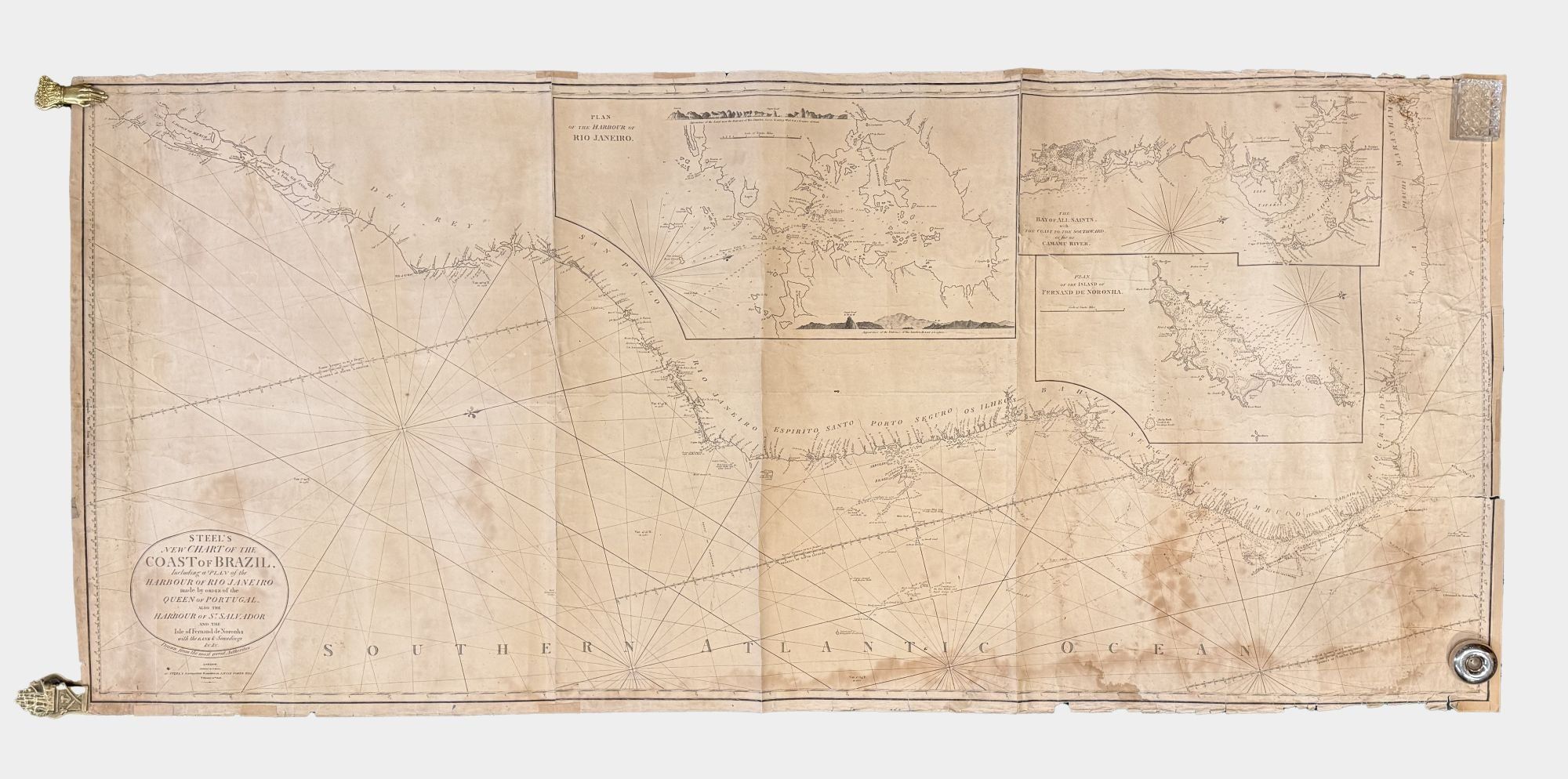
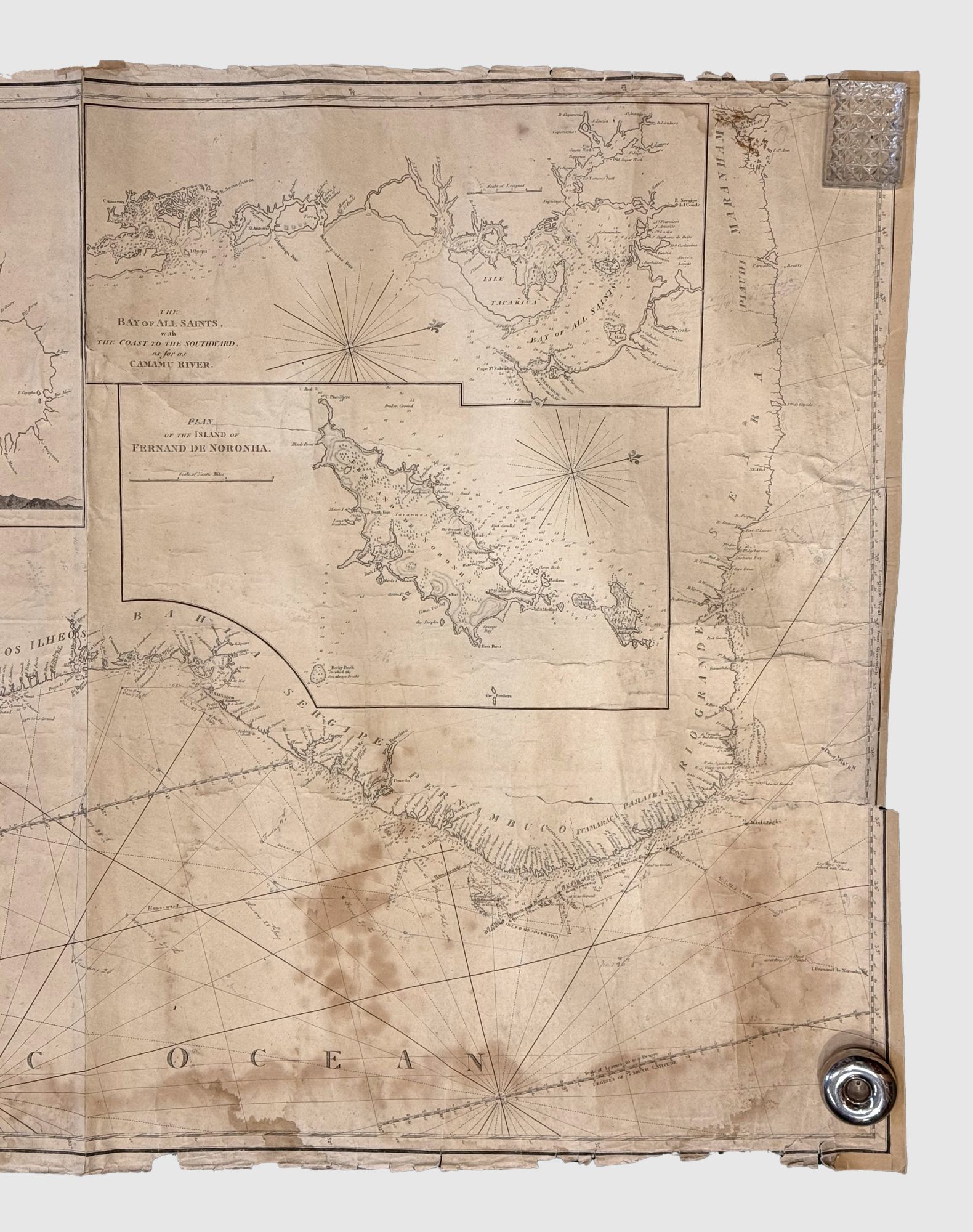
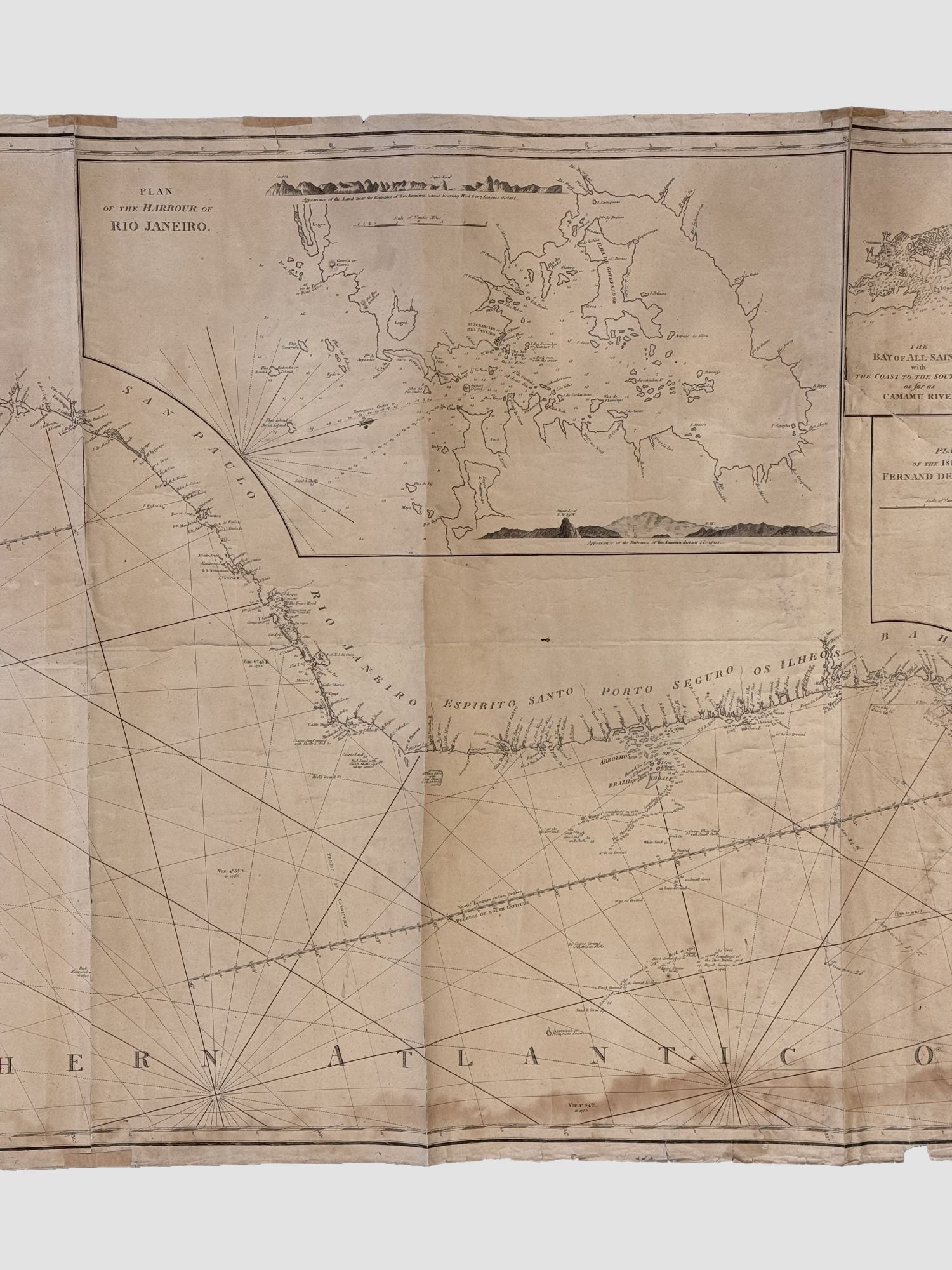
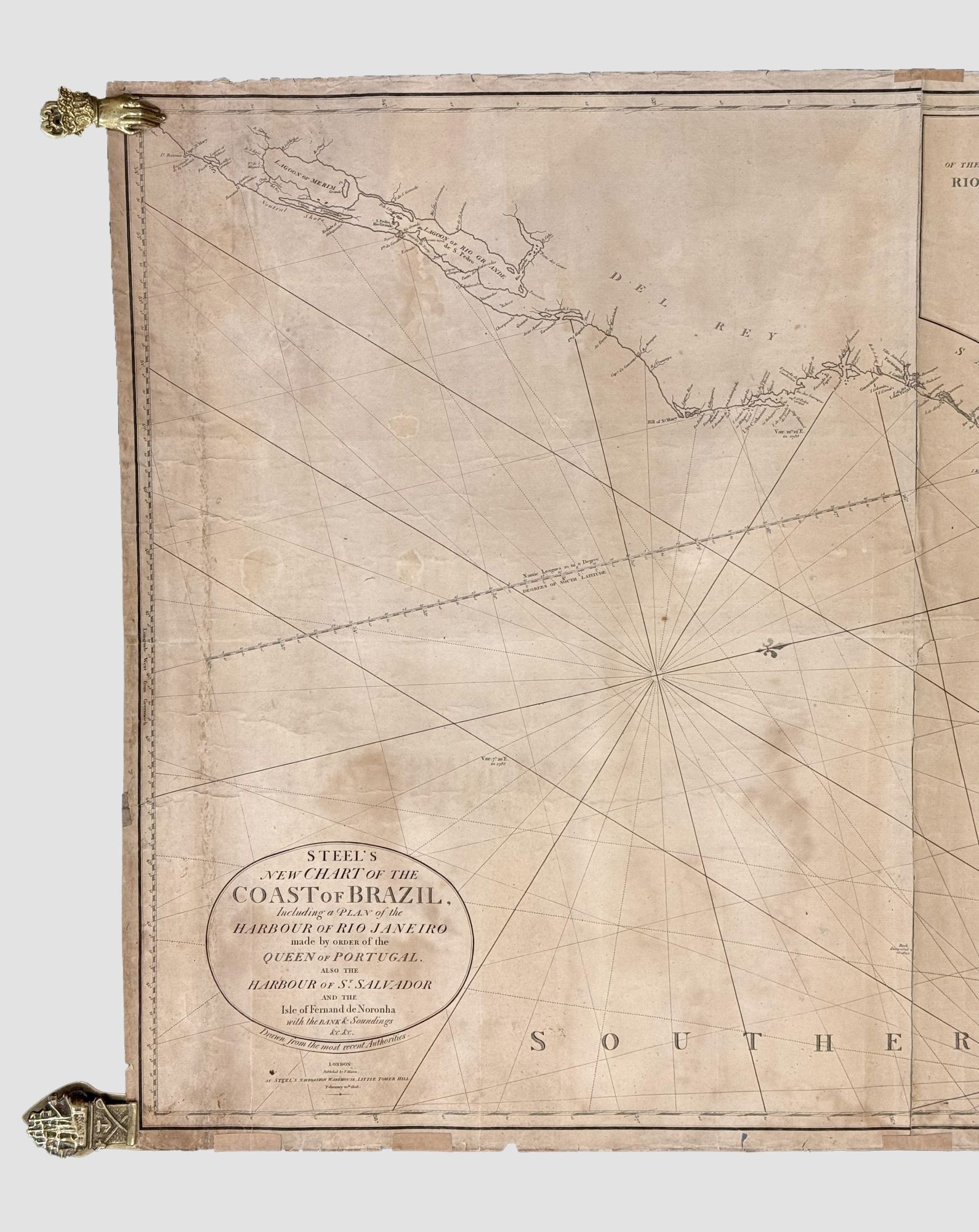
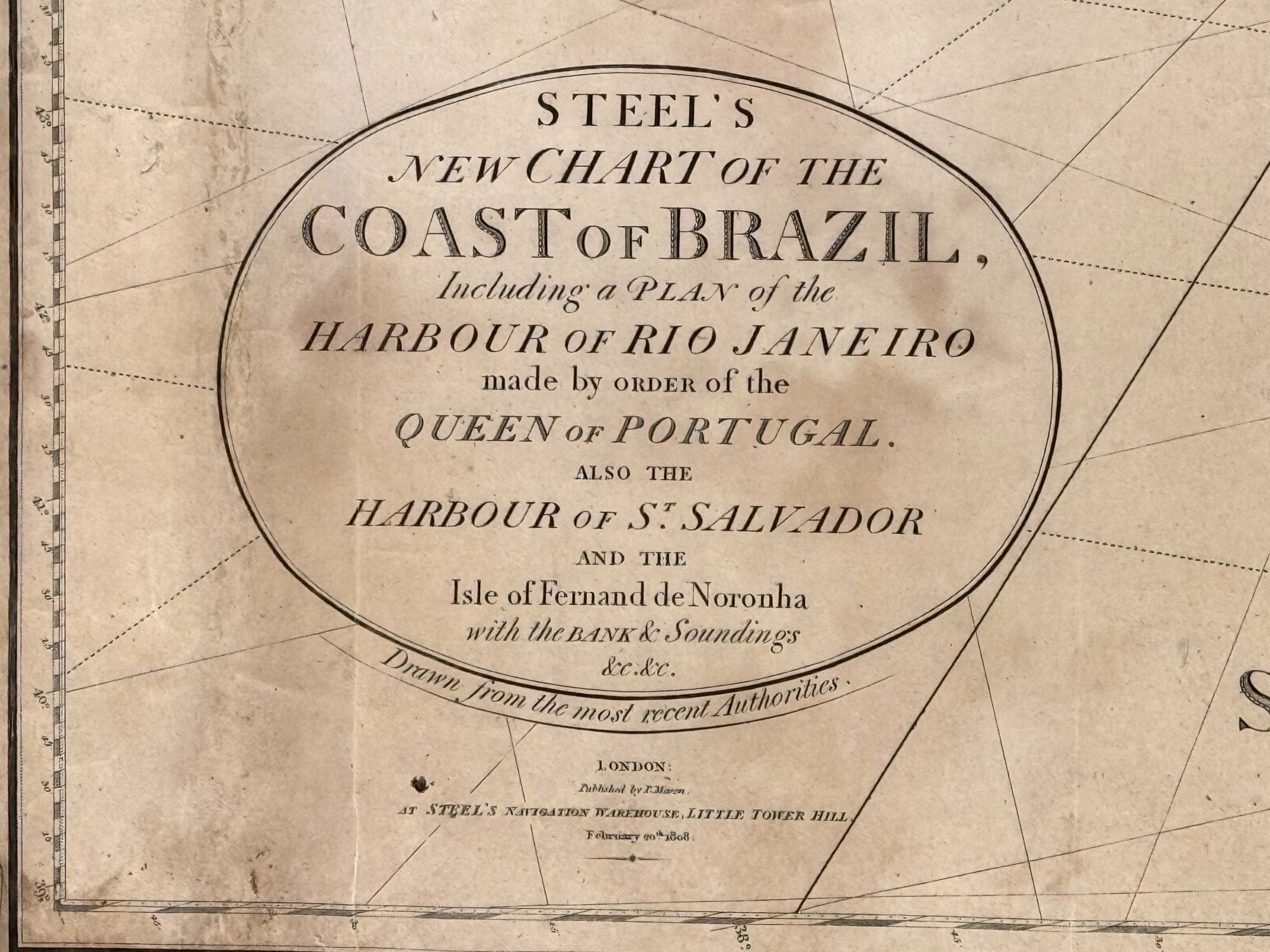
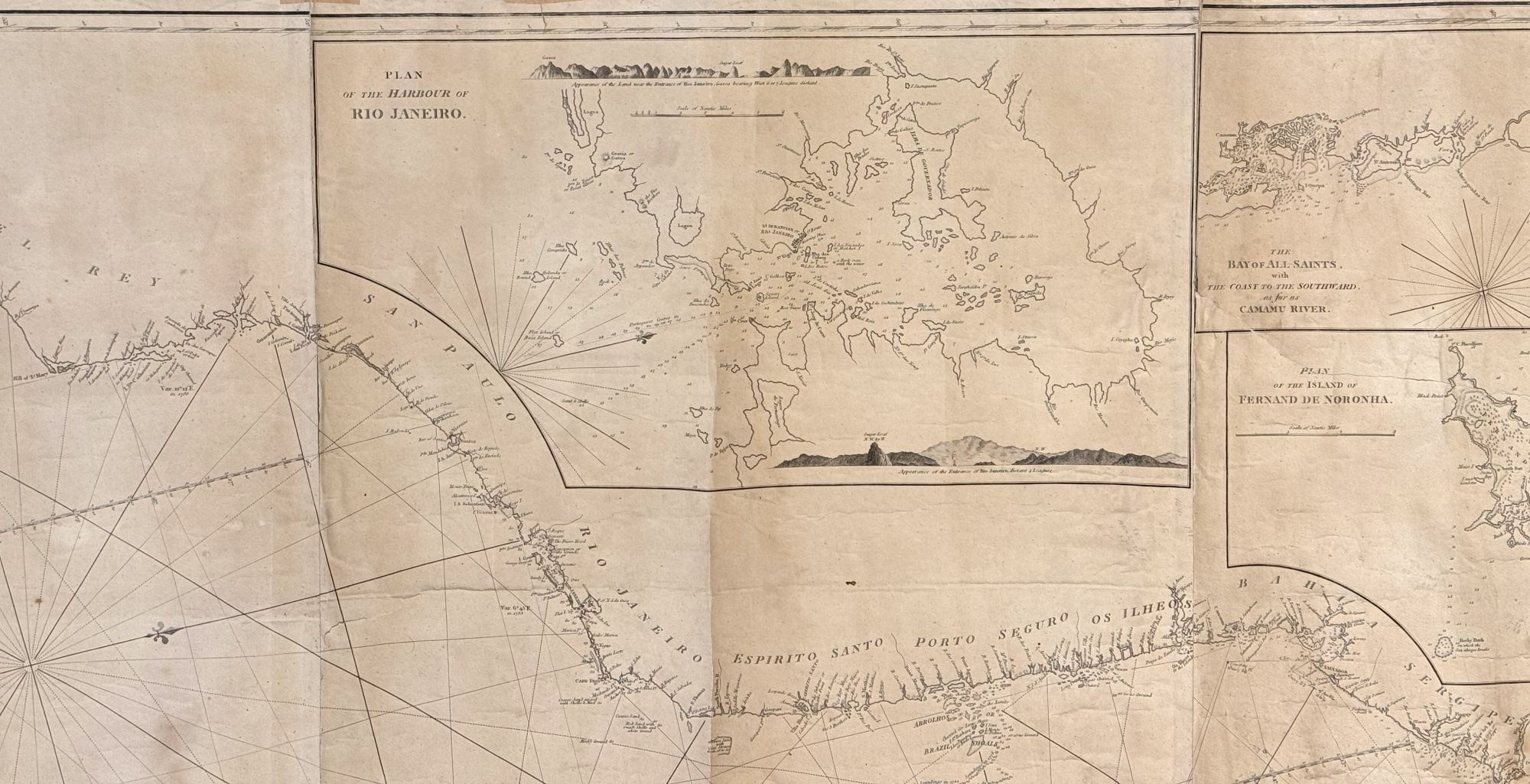
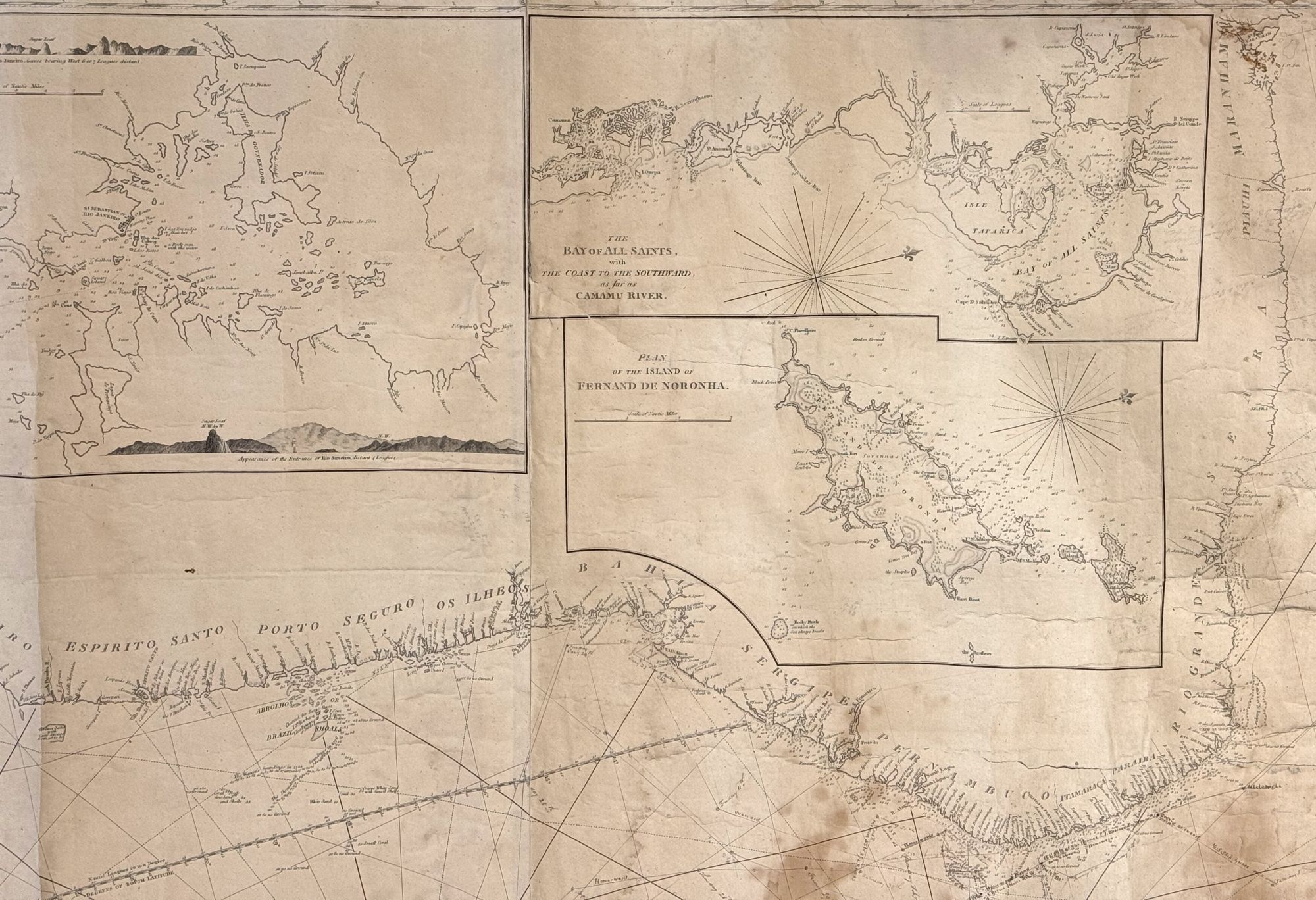
- Blue-backed sea chart. Insets of the harbor of Rio, the Bay of All Saints and the Island of Fernand Noronha. Manuscript annotati
- London: P. Mason at Steel's Navigation Warehouse, 1808
London: P. Mason at Steel's Navigation Warehouse, 1808. Blue-backed sea chart. Insets of the harbor of Rio, the Bay of All Saints and the Island of Fernand Noronha. Manuscript annotations by Conner plotting the course of the USS Hornet in the War of 1812. Approx. 31 x 70 inches. Tape repairs on verso, some staining. Manuscript note on verso by Philip Syng Physick Conner. Blue-backed sea chart. Insets of the harbor of Rio, the Bay of All Saints and the Island of Fernand Noronha. Manuscript annotations by Conner plotting the course of the USS Hornet in the War of 1812. Approx. 31 x 70 inches. Pennsylvania native David Conner joined the navy as a midshipman in 1809 and during the War of 1812 served with distinction aboard the USS Hornet, where he rose to the rank of first lieutenant during the war. He participated in action aboard the Hornet against the HMS Peacock in February 1813 and in the March 1815 capture of HMS Penguin and was awarded two medals of valor. In 1817 he was commissioned first lieutenant under Captain Biddle aboard the USS Ontario for its voyage to the Pacific. He would eventually rise to the rank of Commodore, commanding the blockade of the Gulf Coast during the Mexican War, and responsible for landing Scott's army at Vera Cruz.
On October 26, 1812, the frigate USS Constitution and sloop USS Hornet left Boston to raid British shipping along the coast of South America. The Hornet sailed under the command of famed American naval captain James Lawrence, best remembered for his order "Don't give up the ship" in the June 1813 battle between the Shannon and the Chesapeake. After a couple months cruising the waters off the coast of Brazil, on February 24, 1813, the USS Hornet engaged the HMS Peacock off the mouth of the Demerary River. Exchanging broadsides, the Hornet's cannons shot true damaging the British ship. Outmaneuvering the Peacock downwind, the Hornet approached from the stern firing and forced the Peacock, which had lost her captain and taken heavy casualties, to strike. The American ship sent on a boarding party, but the Peacock quickly sank.
This large sea chart, oriented with north to the east, depicts the coast of Brazil from Sao Luis, Maranhao to the Lagoon Merim and is profusely annotated by Conner charting the cruise of the Hornet off the coast between December 1812 and February 1813, i.e. the movements of the ship prior to the engagement with the Peacock. Included in the manuscript additions is evidence of the brief blockade of the English frigate Bonne Citoyenne at Salvador, where Lawrence challenged the ship to single ship combat with the Hornet but had to abandon the blockade upon the arrival of a British line of battle ship. "Running up the coast, she took on January 6, 1813 the schooner Ellen, loaded with dry goods ... On the fourth of February, off Pernambuco, she seized the brig Resolution, ten guns, carrying coffee, fustic, etc. from Rio to Marnaham and a nice little purse containing 23,000 in specie. This the Hornet put intop her opwn pocket and then burnt the brig" (Conner). After several more weeks of cruising, the Hornet engaged the Peacock.
On June 18, 1914, auctioneer Stan V. Henkels sold the books, papers, journals and log books from the younger Conner's library, which included Lt. David Conner's original logs of the voyage of the USS Ontario (now at the Library of Congress, MSS84251). The present map was not included in that sale; however, it appeared within lot 71 at Parke Bernet on May 25, 1971. Conner, Philip Syng Physick. "The Hornet's Sting and Wing" in The New England Magazine, Vol. XXIII, No. 3 (Nov. 1900), pp. 268-274
On October 26, 1812, the frigate USS Constitution and sloop USS Hornet left Boston to raid British shipping along the coast of South America. The Hornet sailed under the command of famed American naval captain James Lawrence, best remembered for his order "Don't give up the ship" in the June 1813 battle between the Shannon and the Chesapeake. After a couple months cruising the waters off the coast of Brazil, on February 24, 1813, the USS Hornet engaged the HMS Peacock off the mouth of the Demerary River. Exchanging broadsides, the Hornet's cannons shot true damaging the British ship. Outmaneuvering the Peacock downwind, the Hornet approached from the stern firing and forced the Peacock, which had lost her captain and taken heavy casualties, to strike. The American ship sent on a boarding party, but the Peacock quickly sank.
This large sea chart, oriented with north to the east, depicts the coast of Brazil from Sao Luis, Maranhao to the Lagoon Merim and is profusely annotated by Conner charting the cruise of the Hornet off the coast between December 1812 and February 1813, i.e. the movements of the ship prior to the engagement with the Peacock. Included in the manuscript additions is evidence of the brief blockade of the English frigate Bonne Citoyenne at Salvador, where Lawrence challenged the ship to single ship combat with the Hornet but had to abandon the blockade upon the arrival of a British line of battle ship. "Running up the coast, she took on January 6, 1813 the schooner Ellen, loaded with dry goods ... On the fourth of February, off Pernambuco, she seized the brig Resolution, ten guns, carrying coffee, fustic, etc. from Rio to Marnaham and a nice little purse containing 23,000 in specie. This the Hornet put intop her opwn pocket and then burnt the brig" (Conner). After several more weeks of cruising, the Hornet engaged the Peacock.
On June 18, 1914, auctioneer Stan V. Henkels sold the books, papers, journals and log books from the younger Conner's library, which included Lt. David Conner's original logs of the voyage of the USS Ontario (now at the Library of Congress, MSS84251). The present map was not included in that sale; however, it appeared within lot 71 at Parke Bernet on May 25, 1971. Conner, Philip Syng Physick. "The Hornet's Sting and Wing" in The New England Magazine, Vol. XXIII, No. 3 (Nov. 1900), pp. 268-274