

The Peoples of Kenya

- Hardcover
- New York and London: A Helen and Kurt Wolff Book; Harcourt Brace Jovanovich, 1967
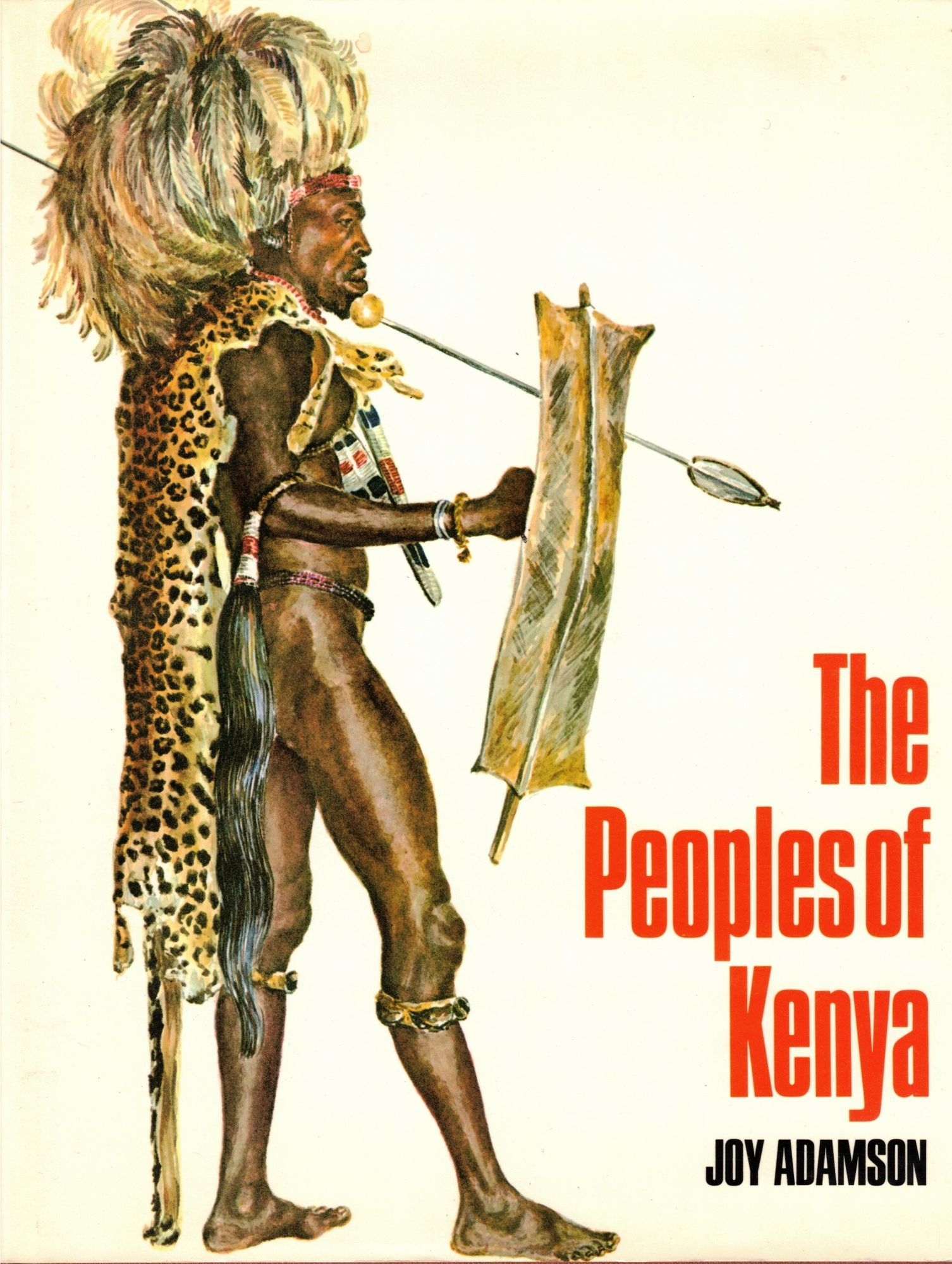
New York and London: A Helen and Kurt Wolff Book; Harcourt Brace Jovanovich, 1967. Early printing. Hardcover. Very Good/Very Good +. 400pp. Quarto [29 cm] Brown paper over boards with black lettering on the backstrip and a black ink stamped design on the front cover. Map endpapers. The covers are a trifle cocked. With the illustrated dust jacket showing little wear. In the publisher's original thin card slipcase, in very good condition, with moderate edgewear. From the dust jacket-
"Joy Adamson is known to millions by her books describing the story of Elsa, the Kenya lioness, and her cubs. This volume tells of another and equally remarkable experience. It reveals her gift as an artist and shows that she is as interested in people as she is in animals. A talented painter of flowers, when she first came to Kenya she made many paintings of the flora of the country. But soon she wanted to portray also the African tribesmen, with their traditional ornaments. The undertaking demanded courage, endurance, tact, and a great capacity for work. She would need to spend a long time in isolated places, often among people not immediately willing to pose as models...
"After she started off on her own financial risk, the Kenya authorities commissioned her to make a comprehensive pictorial record of the traditional costumes of the African tribes. She spent six and a half years traveling and living among the different peoples of Kenya. During that period she created a unique record of ornamental costumes fast disappearing under the impact of modern life.
"Joy Adamson is known to millions by her books describing the story of Elsa, the Kenya lioness, and her cubs. This volume tells of another and equally remarkable experience. It reveals her gift as an artist and shows that she is as interested in people as she is in animals. A talented painter of flowers, when she first came to Kenya she made many paintings of the flora of the country. But soon she wanted to portray also the African tribesmen, with their traditional ornaments. The undertaking demanded courage, endurance, tact, and a great capacity for work. She would need to spend a long time in isolated places, often among people not immediately willing to pose as models...
"After she started off on her own financial risk, the Kenya authorities commissioned her to make a comprehensive pictorial record of the traditional costumes of the African tribes. She spent six and a half years traveling and living among the different peoples of Kenya. During that period she created a unique record of ornamental costumes fast disappearing under the impact of modern life.