

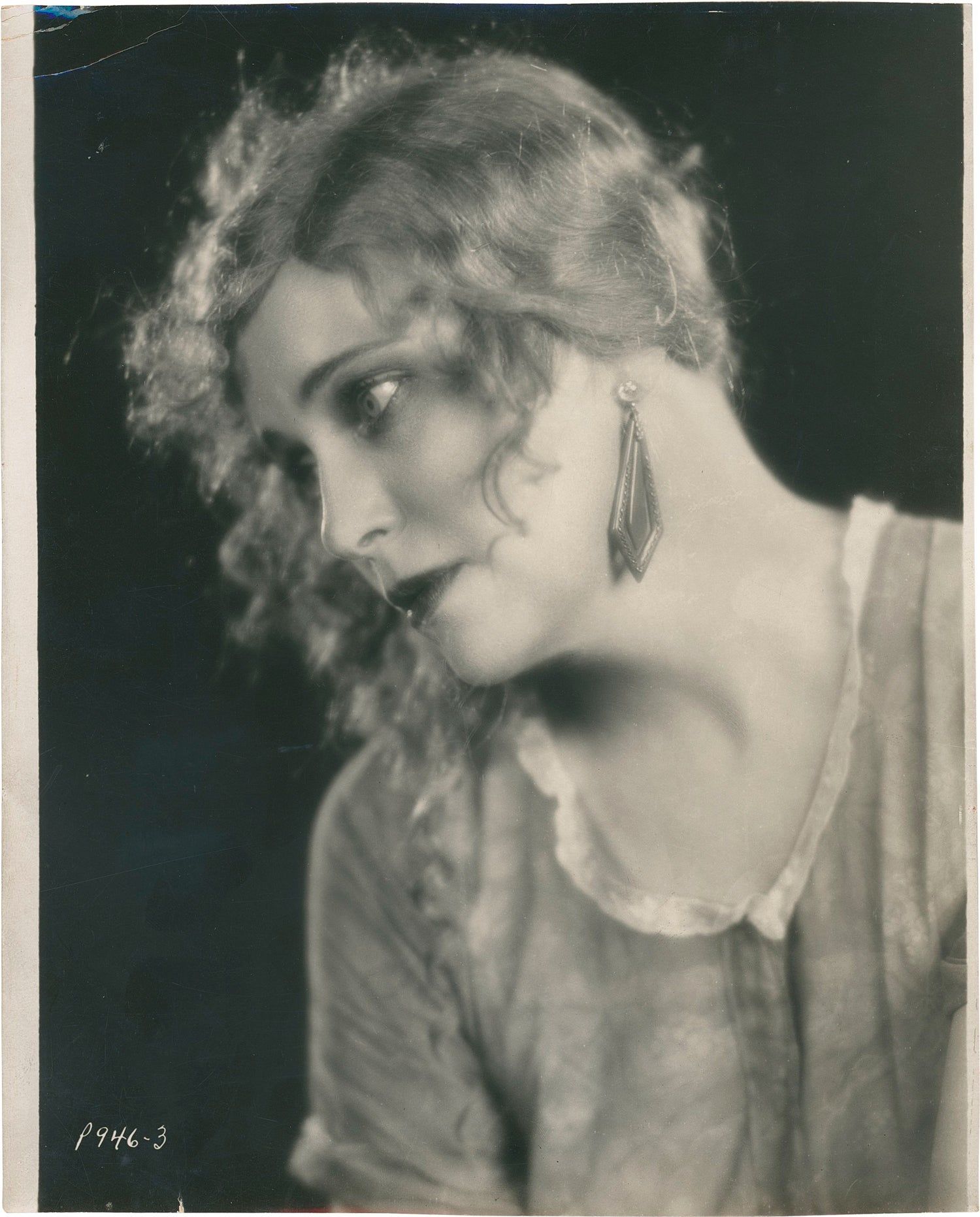
Original photograph of Olga Baclanova, circa 1920s
- N.p.: N.p., 1920
N.p.: N.p., 1920. Vintage borderless portrait photograph of Russian-American actress Olga Baclanova, circa 1920s.
From the collection of artist and author Duncan Hannah.
Duncan Hannah was a key figure in the burgeoning New York underground arts scene, befriending Andy Warhol and his superstars, Lou Reed, Allen Ginsberg, Patti Smith, Salvador Dali, and many others. A graduate of the Parsons School of Design, his paintings were exhibited in the influential 1980 Times Square Show alongside work by Keith Haring and Jean-Michel Basquiat, and several of his paintings are held in the permanent collection of the Metropolitan Museum of Art.
Born in Moscow, Olga Baclanova appeared in Russian silent films through the late 1910s and early 1920s, eventually emigrating to the United States in 1925. There, she appeared in her two best-known films, Paul Leni's "The Man Who Laughs" (1928) and Tod Browning's "Freaks" (1932). The advent of talkies was difficult for Baclanova due to her thick Russian accent, and she was largely relegated to supporting parts by the 1930s.
7.5 x 9.5 inches. Very Good plus, lightly creased at the top left corner.
From the collection of artist and author Duncan Hannah.
Duncan Hannah was a key figure in the burgeoning New York underground arts scene, befriending Andy Warhol and his superstars, Lou Reed, Allen Ginsberg, Patti Smith, Salvador Dali, and many others. A graduate of the Parsons School of Design, his paintings were exhibited in the influential 1980 Times Square Show alongside work by Keith Haring and Jean-Michel Basquiat, and several of his paintings are held in the permanent collection of the Metropolitan Museum of Art.
Born in Moscow, Olga Baclanova appeared in Russian silent films through the late 1910s and early 1920s, eventually emigrating to the United States in 1925. There, she appeared in her two best-known films, Paul Leni's "The Man Who Laughs" (1928) and Tod Browning's "Freaks" (1932). The advent of talkies was difficult for Baclanova due to her thick Russian accent, and she was largely relegated to supporting parts by the 1930s.
7.5 x 9.5 inches. Very Good plus, lightly creased at the top left corner.