

Nexus; A Brief History of Information Networks from the Stone Age to AI
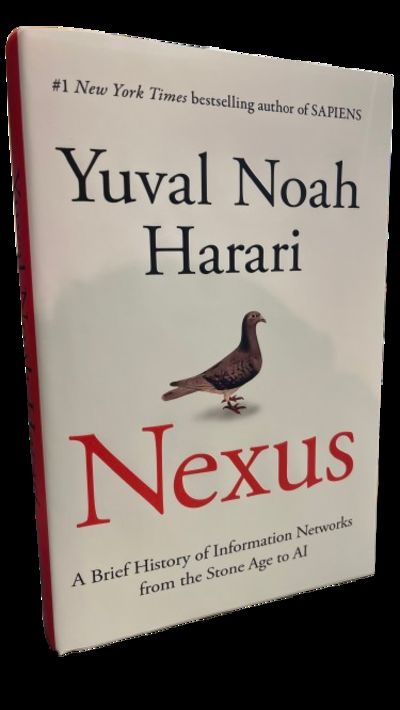
- Hardcover
- Manhattan, NY: Penguin Random House, 2024
Manhattan, NY: Penguin Random House, 2024. First Edition. Hardcover. New/New. 492 pp. Octavo [24.3 cm]. White boards. Title, author, and publisher stamped in red on spine. From the publisher: "Yuval Noah Harari returns with a major new book that explores humanity’s voyage into the Information Age – Nexus: A Brief History of Information Networks from the Stone Age to AI. Looking through the long lens of human history, he considers how the flow of information has made and unmade our world, and provides an essential background to understanding the threats and promises of today’s AI revolution.
We are living through the most profound information revolution in human history. To understand it, we need to understand what has come before. We have named our species Homo sapiens, the wise human – but if humans are so wise, why are we doing so many self-destructive things? In particular, why are we on the verge of committing ecological and technological suicide? Humanity gains power by building large networks of cooperation, but the easiest way to build and maintain these networks is by spreading fictions, fantasies, and mass delusions. In the 21st century, AI may form the nexus for a new network of delusions that could prevent future generations from even attempting to expose its lies and fictions. However, history is not deterministic, and neither is technology: by making informed choices, we can still prevent the worst outcomes. Because if we can’t change the future, then why waste time discussing it?
We are living through the most profound information revolution in human history. To understand it, we need to understand what has come before. We have named our species Homo sapiens, the wise human – but if humans are so wise, why are we doing so many self-destructive things? In particular, why are we on the verge of committing ecological and technological suicide? Humanity gains power by building large networks of cooperation, but the easiest way to build and maintain these networks is by spreading fictions, fantasies, and mass delusions. In the 21st century, AI may form the nexus for a new network of delusions that could prevent future generations from even attempting to expose its lies and fictions. However, history is not deterministic, and neither is technology: by making informed choices, we can still prevent the worst outcomes. Because if we can’t change the future, then why waste time discussing it?