

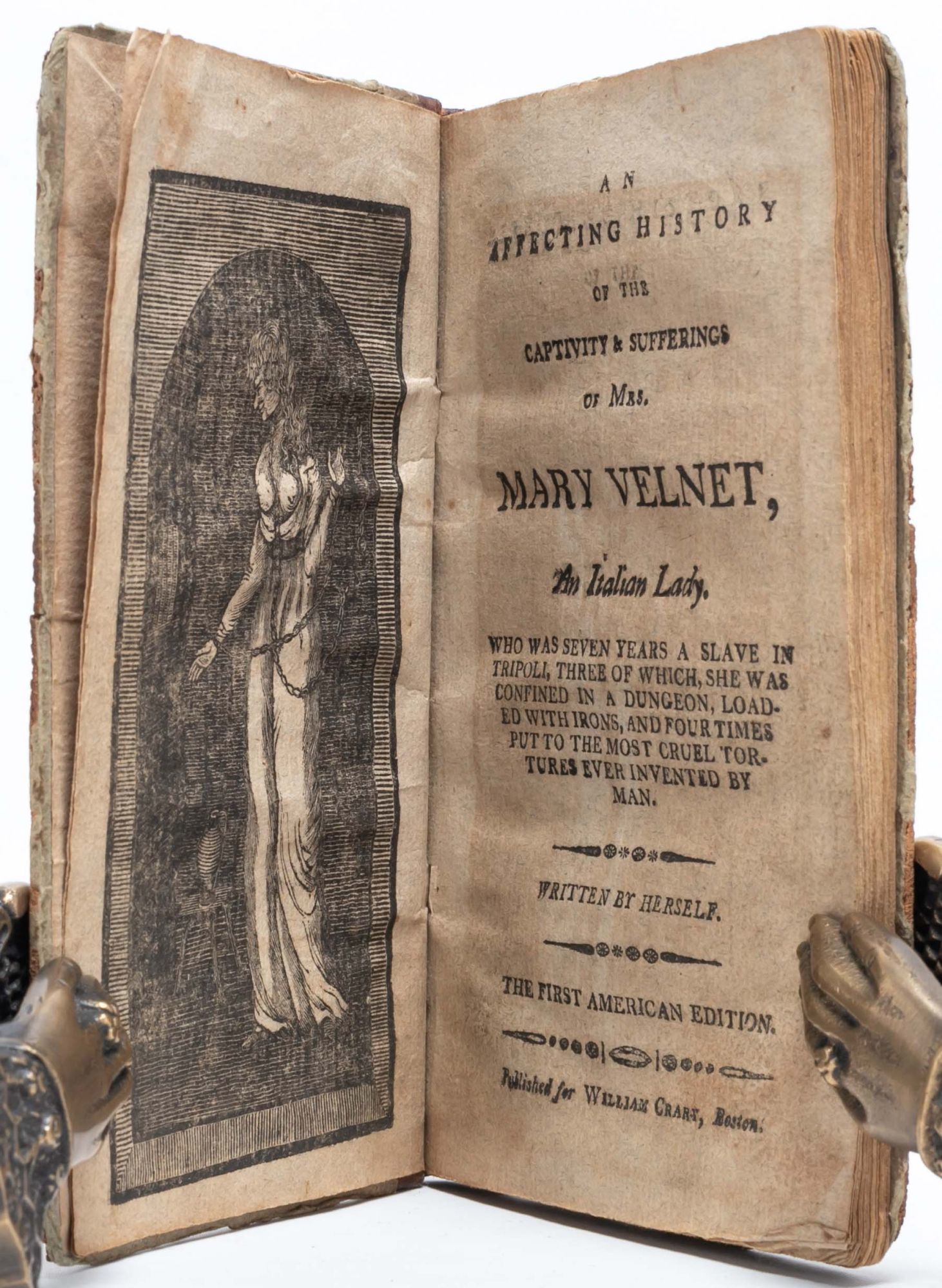
An Affecting History of the Captivity and Suffering of Mrs. Mary Velnet, the Italian Lady. Who was seven years a slave in Tripoli…written by herself

- Boston: William Crary, 1804
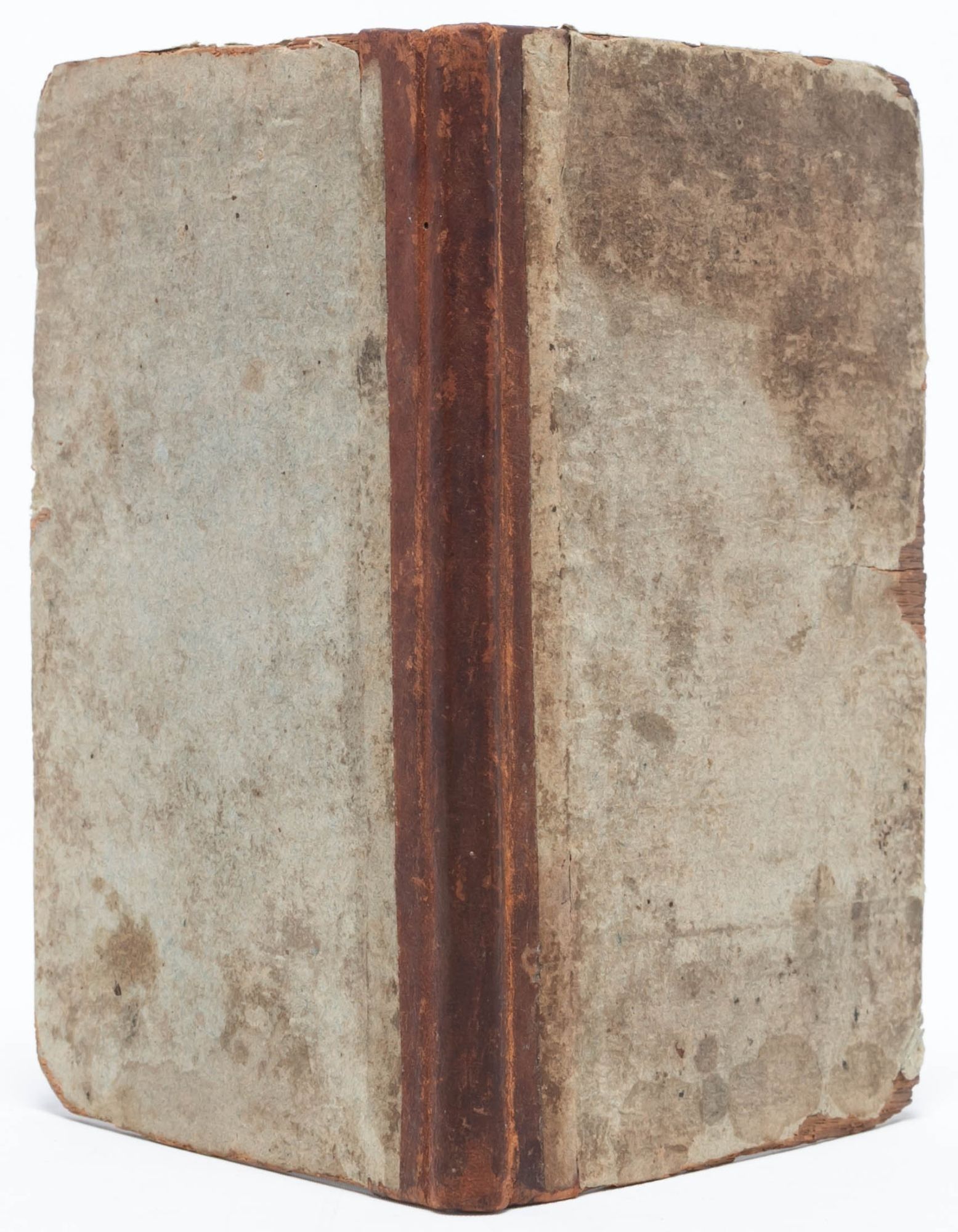
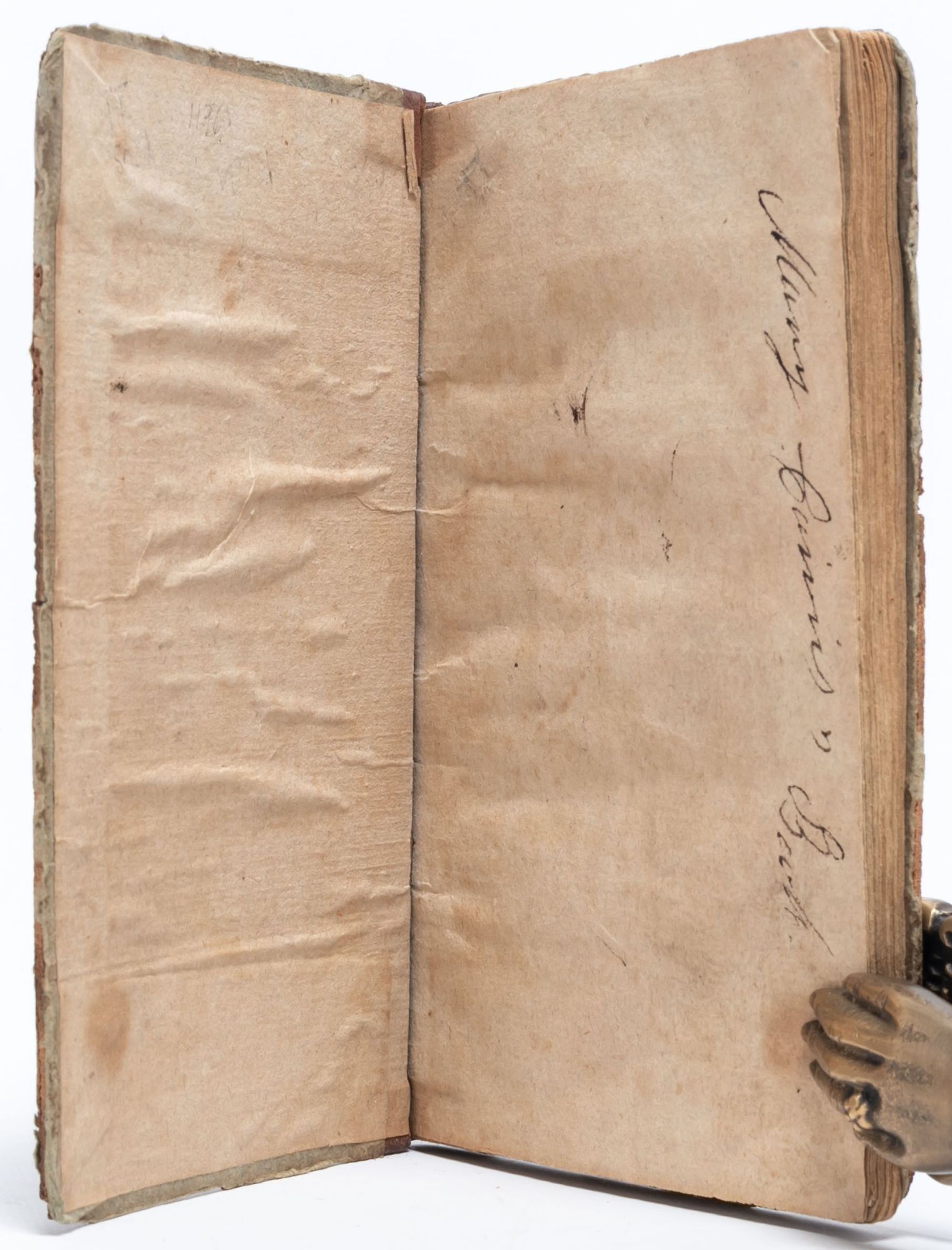
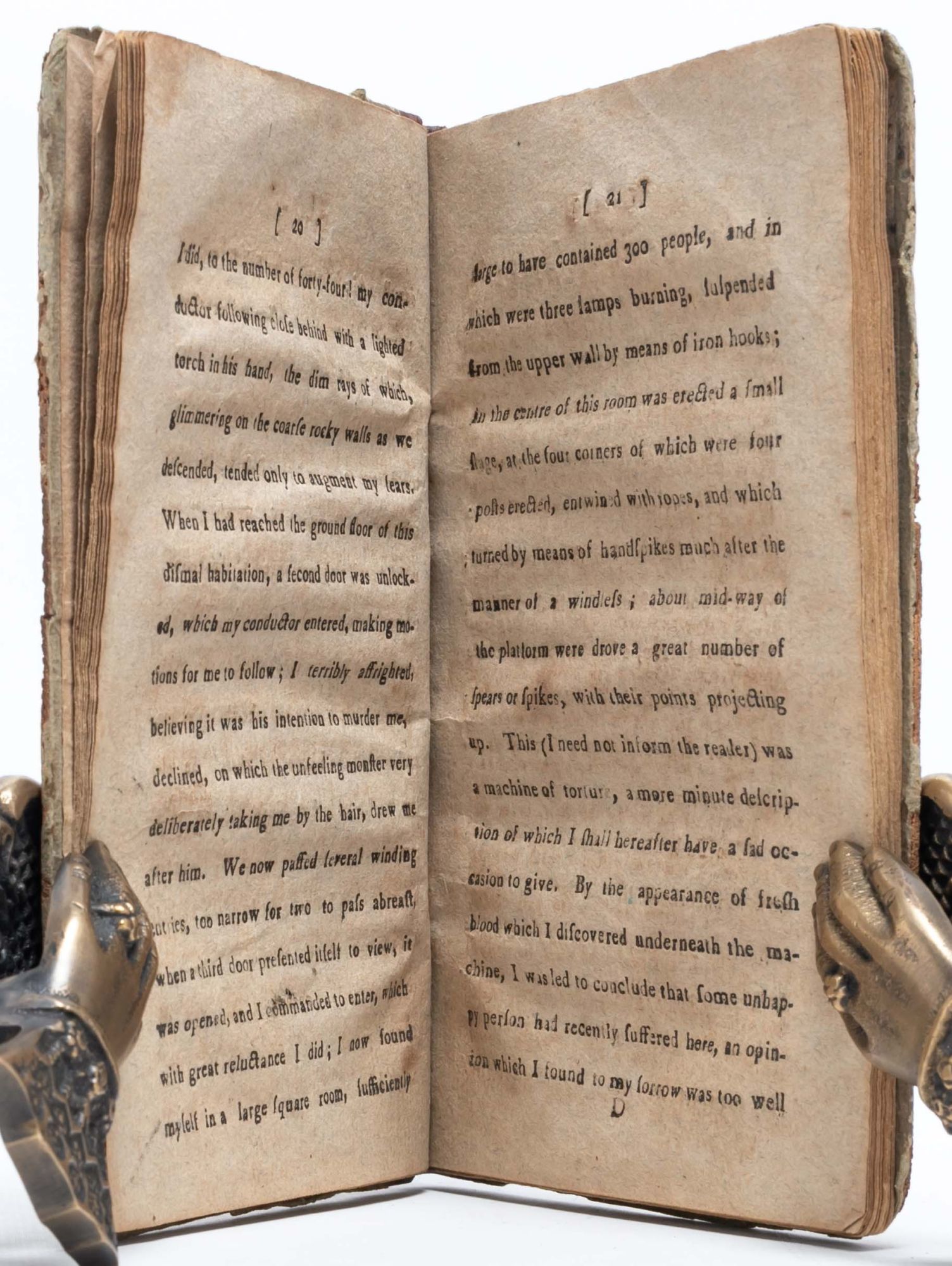
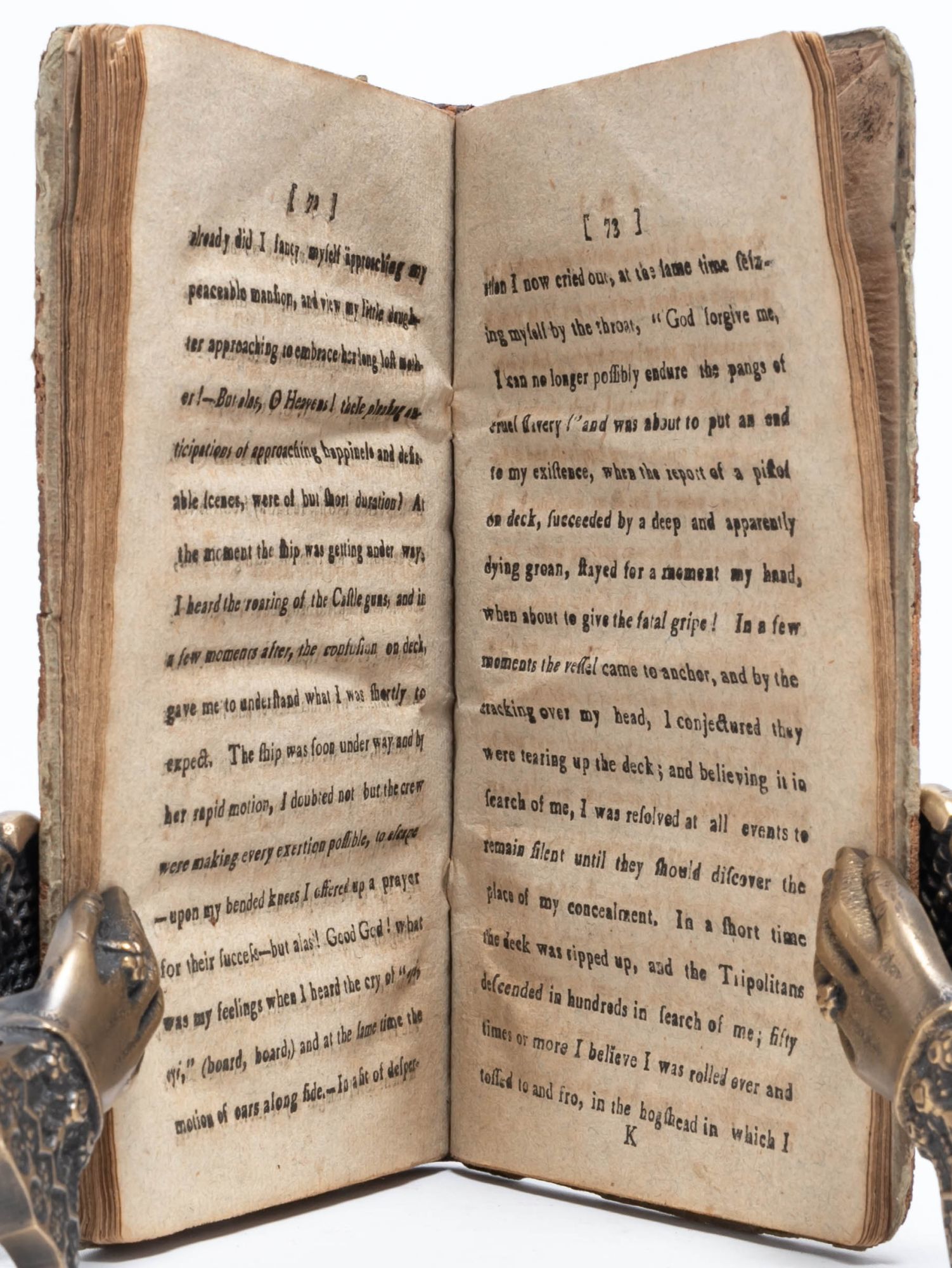
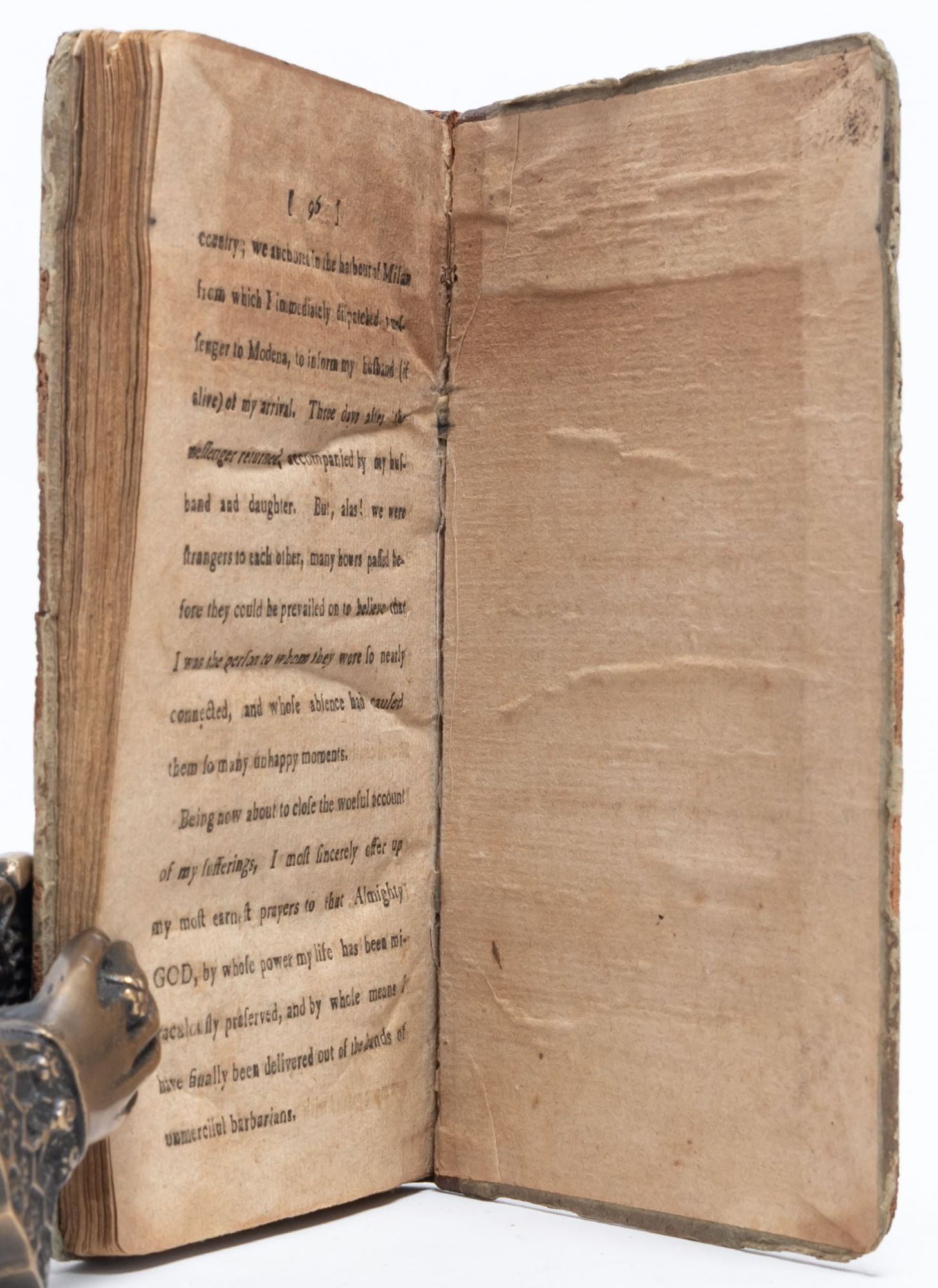
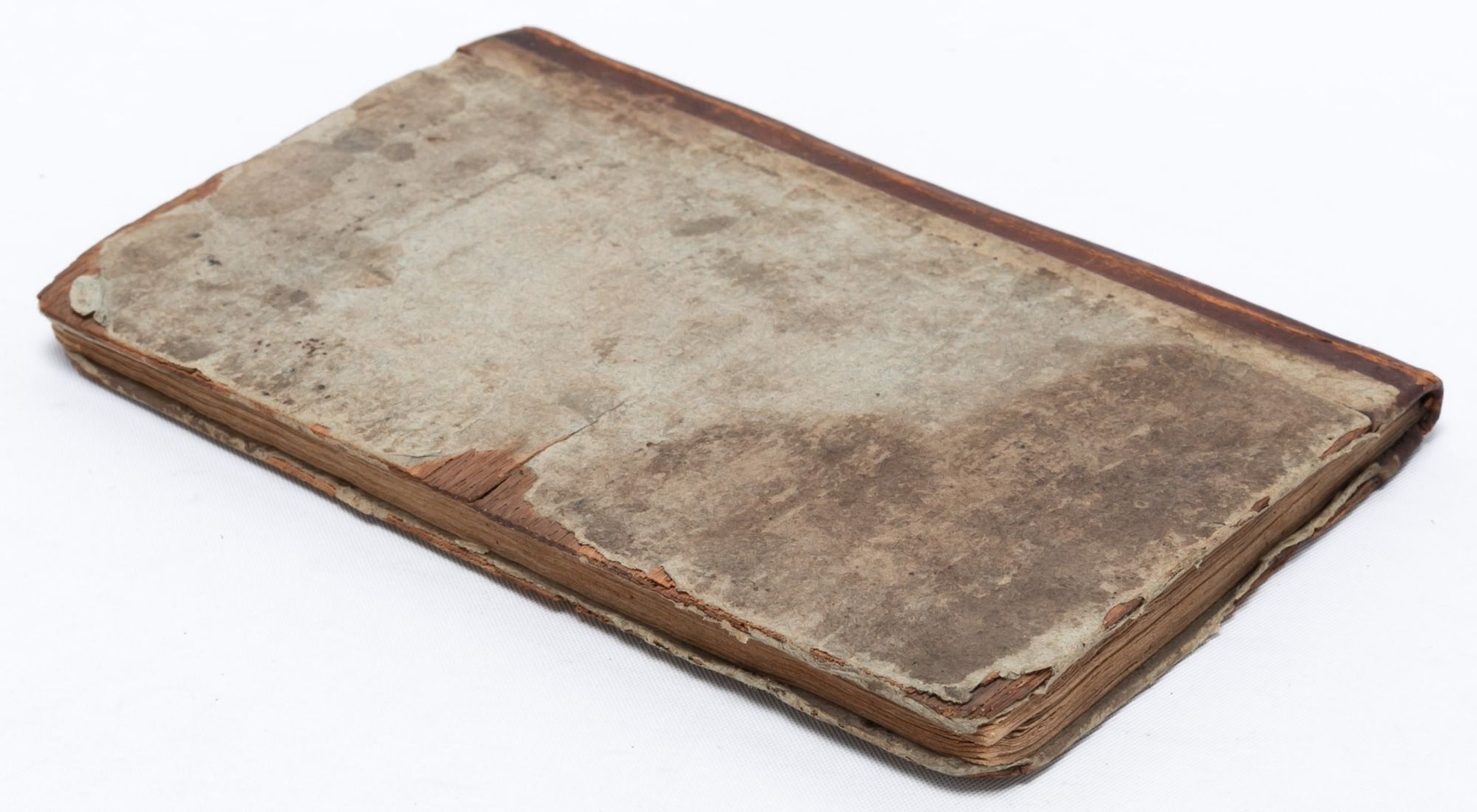
Boston: William Crary, 1804. First edition. Good. Publisher’s quarter brown calf over paper-covered wooden boards. Twelvemo. 96 pp. With the frontispiece (a partial nude of the titular character). Complete aside from lower flyleaf. Paper toned and wearing away from boards at edges. A woman’s contemporary ink ownership inscription to front free endpaper. Browning to leaves throughout. A Good copy of an uncommon and unusual book that has not appeared at auction in the last two decades. Note that, though the title-page reads “First American Edition,” and the story purports to be the firsthand narrative of the real Mary Velnet, it is “almost certainly fiction,” and was published exclusively in the United States (Baepler). This obfuscation indicates the appeal that the titillating story had as an authentic narrative of a woman's suffering, much in the same way that later nineteenth-century narratives of white women being captured by Native tribes almost universally presented themselves as factual.
As the story goes, Mary Velnet was born to a wealthy family in Modena, Italy in 1774. She married the French merchant Henri Velnet, who “was deeply engaged in the East India trade,” in 1785 (at the age of eleven), and traveled to Canton (now Guangzhou) with her husband in 1794. After three years in China, Velnet and her husband intend to sail back to Europe, but their ship wrecked on the coast of Tripoli. Velnet was captured and sold into slavery in Tripoli, where she remained for seven years. During those seven years, she was tortured, forced to help the Tripolitan forces during a battle with the Swedish navy, attempted suicide in prison, and was eventually rescued after her freedom was bought by the French government. The graphic descriptions of torture and execution, mostly of women, would not be out of place in a modern horror novel, but the tropes of the nineteenth-century “white captive” genre are fully present in this work: the sexualized suffering of a captive woman who has been stolen from a life of wealth and privilege; the brutality of the foreign captors (in this case, Libyan, Algerian, and Turkish slave traders); and the sensationalist framing of the narrative ending in Velnet’s rescue by her white countrymen. Mary Velnet's story is unusual, however, as an early example of a North African captive narrative told from the perspective of a woman, and it was a source text for at least two other popular narratives: those of Maria Martin (1807) and Mary Gerber (1819).
Conflicts with North Africa loomed large in the American imagination at the time, evidenced in part by the story of Mary Velnet and other contemporary captive narratives. The present work, which was published in the midst of the First Barbary War (between the Regency of Tripoli, the United States, and Sweden), was probably inspired by the 1803 shipwreck of the American frigate Philadelphia. The Philadelphia, captained by William Bainbridge, ran aground in the harbor of Tripoli, and was captured along with its full crew of over three hundred sailors. The Tripolitan government demanded a ransom of nearly $1.7 million dollars for the return of the prisoners, though they eventually settled for $60,000, leading to the return of the prisoners.
American Antiquarian Society, 289204. Shaw & Shoemaker, 7652. Not in Wright. Also see Paul Baepler’s White Slaves, African Masters: An Anthology of American Barbary Captivity Narratives (1999). Good.
As the story goes, Mary Velnet was born to a wealthy family in Modena, Italy in 1774. She married the French merchant Henri Velnet, who “was deeply engaged in the East India trade,” in 1785 (at the age of eleven), and traveled to Canton (now Guangzhou) with her husband in 1794. After three years in China, Velnet and her husband intend to sail back to Europe, but their ship wrecked on the coast of Tripoli. Velnet was captured and sold into slavery in Tripoli, where she remained for seven years. During those seven years, she was tortured, forced to help the Tripolitan forces during a battle with the Swedish navy, attempted suicide in prison, and was eventually rescued after her freedom was bought by the French government. The graphic descriptions of torture and execution, mostly of women, would not be out of place in a modern horror novel, but the tropes of the nineteenth-century “white captive” genre are fully present in this work: the sexualized suffering of a captive woman who has been stolen from a life of wealth and privilege; the brutality of the foreign captors (in this case, Libyan, Algerian, and Turkish slave traders); and the sensationalist framing of the narrative ending in Velnet’s rescue by her white countrymen. Mary Velnet's story is unusual, however, as an early example of a North African captive narrative told from the perspective of a woman, and it was a source text for at least two other popular narratives: those of Maria Martin (1807) and Mary Gerber (1819).
Conflicts with North Africa loomed large in the American imagination at the time, evidenced in part by the story of Mary Velnet and other contemporary captive narratives. The present work, which was published in the midst of the First Barbary War (between the Regency of Tripoli, the United States, and Sweden), was probably inspired by the 1803 shipwreck of the American frigate Philadelphia. The Philadelphia, captained by William Bainbridge, ran aground in the harbor of Tripoli, and was captured along with its full crew of over three hundred sailors. The Tripolitan government demanded a ransom of nearly $1.7 million dollars for the return of the prisoners, though they eventually settled for $60,000, leading to the return of the prisoners.
American Antiquarian Society, 289204. Shaw & Shoemaker, 7652. Not in Wright. Also see Paul Baepler’s White Slaves, African Masters: An Anthology of American Barbary Captivity Narratives (1999). Good.