

Letter from a White Officer Commanding an African-American Regiment in the Civil War to His Sister, Discussing Pay and Her Husband’s Disappearance
- Single letter, four 5 x 8 inch pages folded
- Petersburg, Virginia , 1864
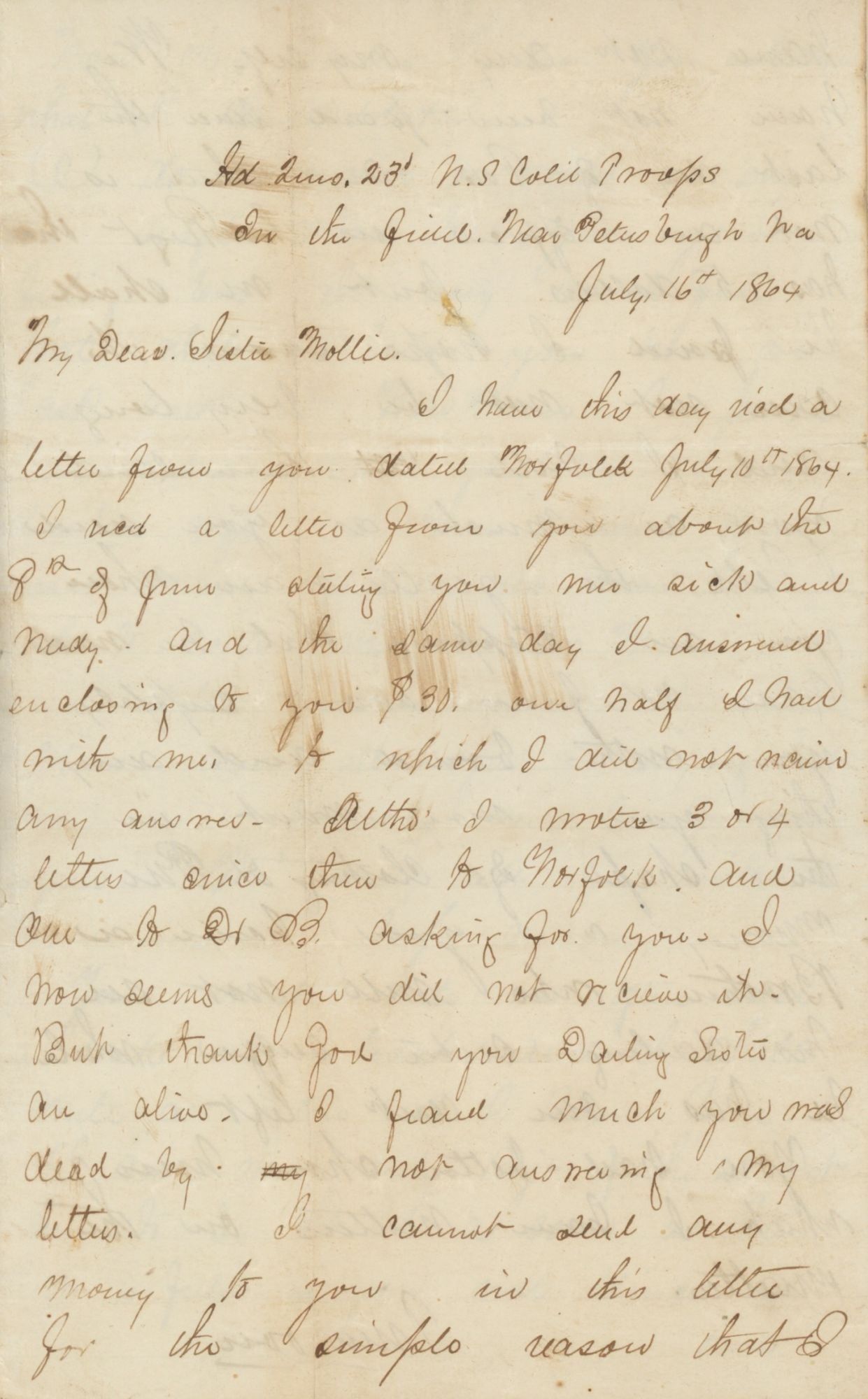
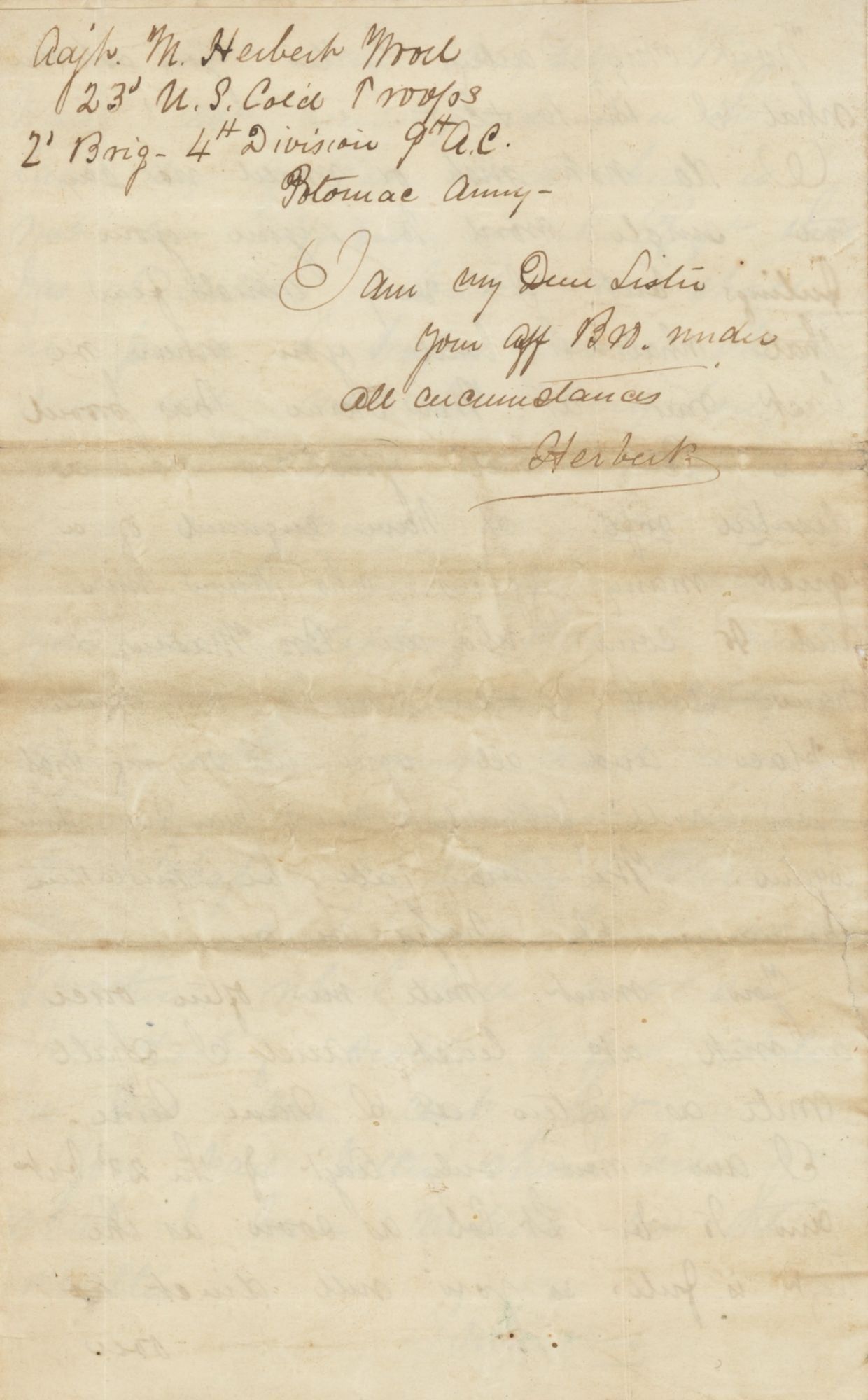
Petersburg, Virginia, 1864. Single letter, four 5 x 8 inch pages folded. Toning and some tears at folds, overall excellent condition. M. Herbert Wood (c. 1839–deceased) was an officer of the 23rd Regiment, United States Colored Infantry, during the American Civil War. This regiment, which consisted of African-American enlisted men with white officers, was part of the 4th Division of the IX Corps, organized at Camp Casey, Virginia. Wood may also have served in the 25th Ohio regiment. A newspaper account from the time alleges that Wood, a Mainer, had married an Alabama woman who owned a considerable number of enslaved people, and then “sold the negroes, pocketed the proceeds, turned abolitionist, abandoned his wife and child [and] went back to Maine” before joining the Union army.[1] Following the Civil War, Wood purportedly asked President Andrew Johnson for a position, but was denied after testifying that he would side with Congress over the President, presumably concerning Reconstruction.
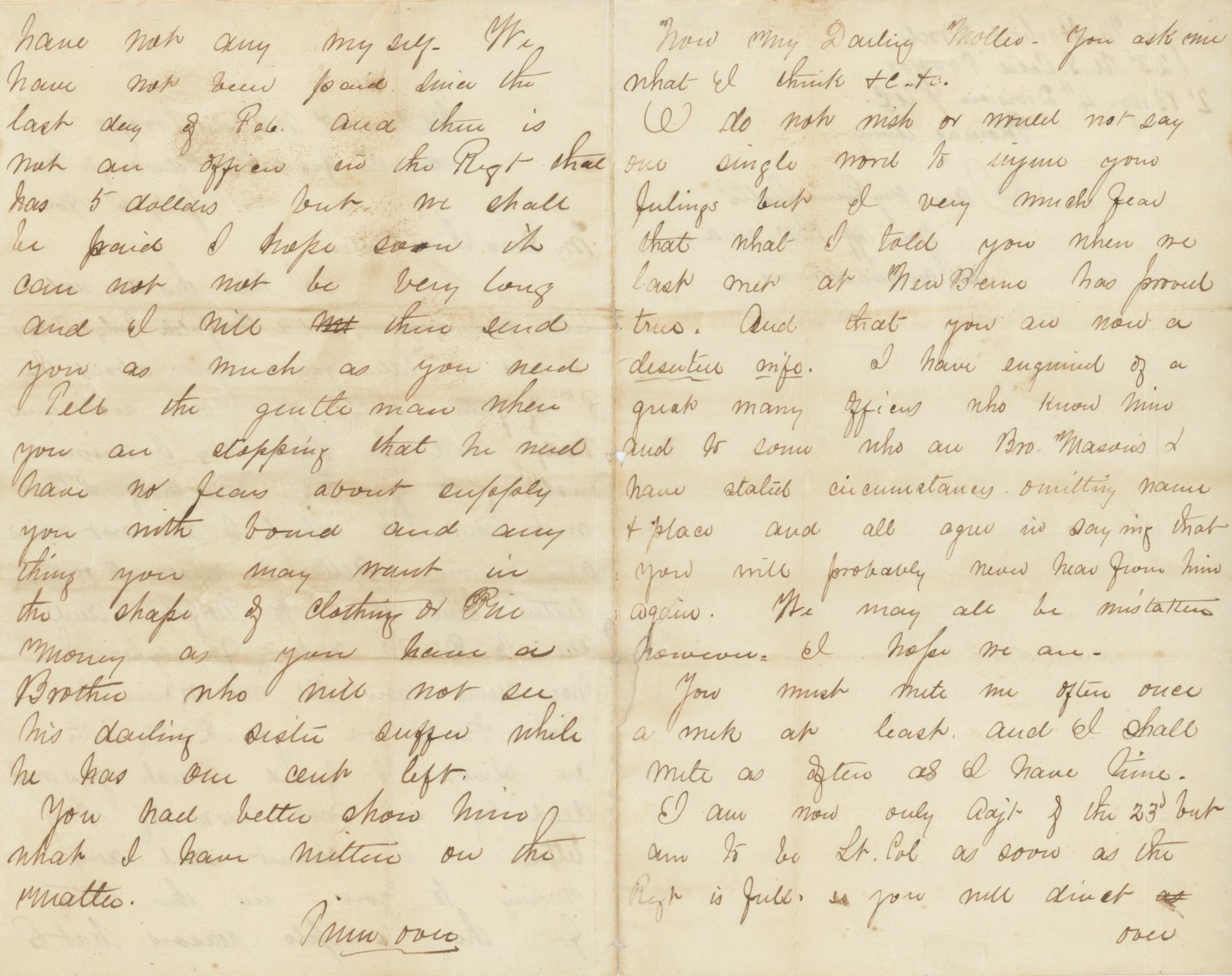
This letter to Wood’s sister Mollie is dated July 16, 1864, after the Battle of Spotsylvania Court House and shortly before the Battle of the Crater in which the 23rd suffered significant casualties. Wood describes the Regiment’s dire financial situation, apparently having gone months without pay:
“I cannot send any money to you in this letter for the simple reason that I have not any myself. We have not been paid since the last day of Feb and there is not an officer in the Regt that has 5 dollars but we shall be paid I hope soon it cannot be very long and I will then send you as much as you need.”
He also informs Mollie of some sad intelligence about her husband:
“I do not wish or would not say one single word to injure your feelings but I very much fear that what I told you when we last met at New Berne has proved true. And that you are now a deserter’s wife. I have enquired of a great many officers who know him and to some who are Bro. Masons & have stated circumstances omitting name & place and all agree in saying that you will probably never hear from him again. We may all be mistaken however I hope we are.”
The Civil War saw quite a high desertion rate on both sides, though many men eventually returned to their posts, voluntarily or otherwise.
[1] “A Specimen of the Impeachment of Witnesses”, The Louisville Daily Journal, April 15, 1868.
This letter to Wood’s sister Mollie is dated July 16, 1864, after the Battle of Spotsylvania Court House and shortly before the Battle of the Crater in which the 23rd suffered significant casualties. Wood describes the Regiment’s dire financial situation, apparently having gone months without pay:
“I cannot send any money to you in this letter for the simple reason that I have not any myself. We have not been paid since the last day of Feb and there is not an officer in the Regt that has 5 dollars but we shall be paid I hope soon it cannot be very long and I will then send you as much as you need.”
He also informs Mollie of some sad intelligence about her husband:
“I do not wish or would not say one single word to injure your feelings but I very much fear that what I told you when we last met at New Berne has proved true. And that you are now a deserter’s wife. I have enquired of a great many officers who know him and to some who are Bro. Masons & have stated circumstances omitting name & place and all agree in saying that you will probably never hear from him again. We may all be mistaken however I hope we are.”
The Civil War saw quite a high desertion rate on both sides, though many men eventually returned to their posts, voluntarily or otherwise.
[1] “A Specimen of the Impeachment of Witnesses”, The Louisville Daily Journal, April 15, 1868.