

Poems by a Young Civilian Conservation Corps Member, Mainly about Life at The CCC’s Fort Knox Camp
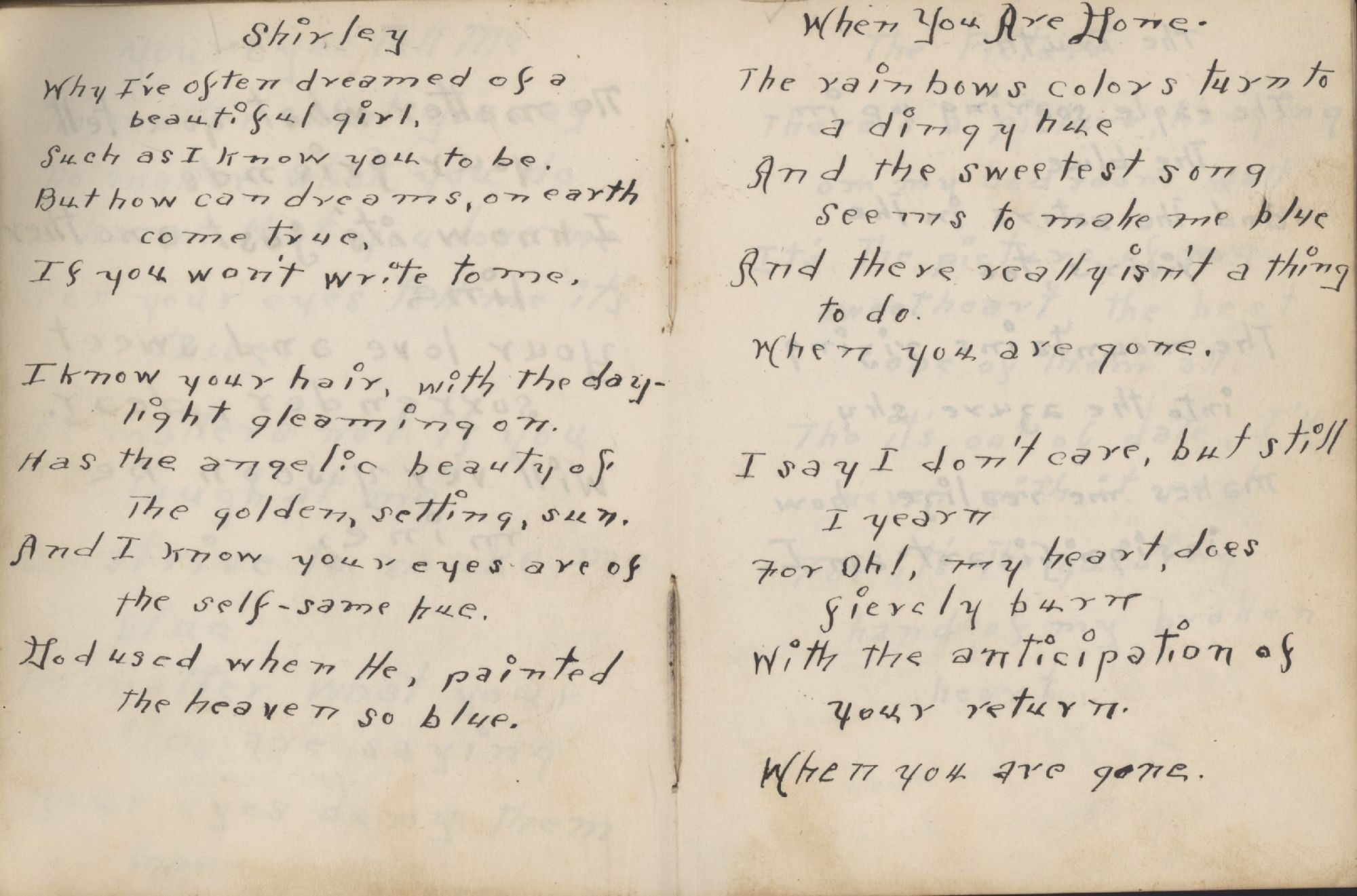
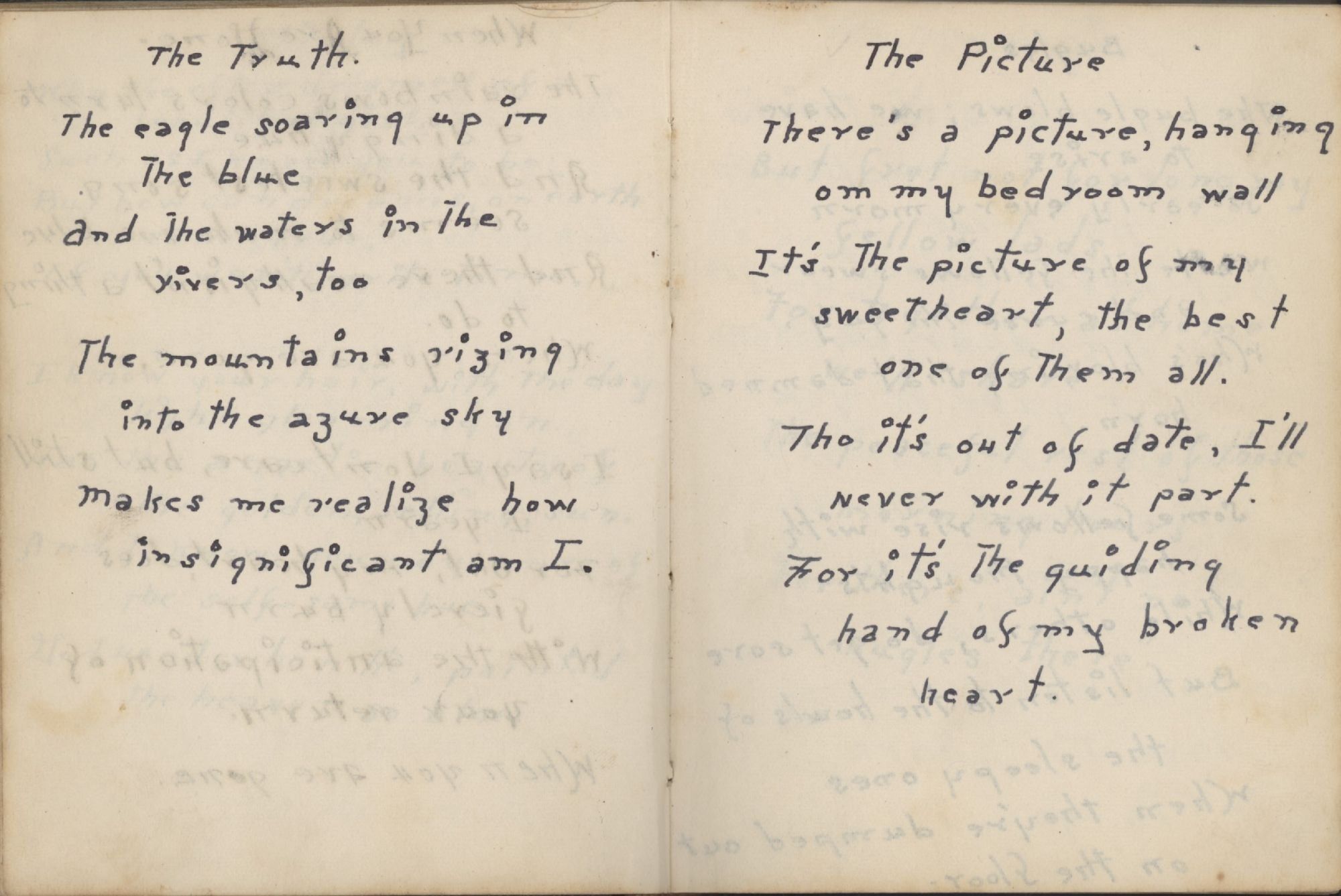
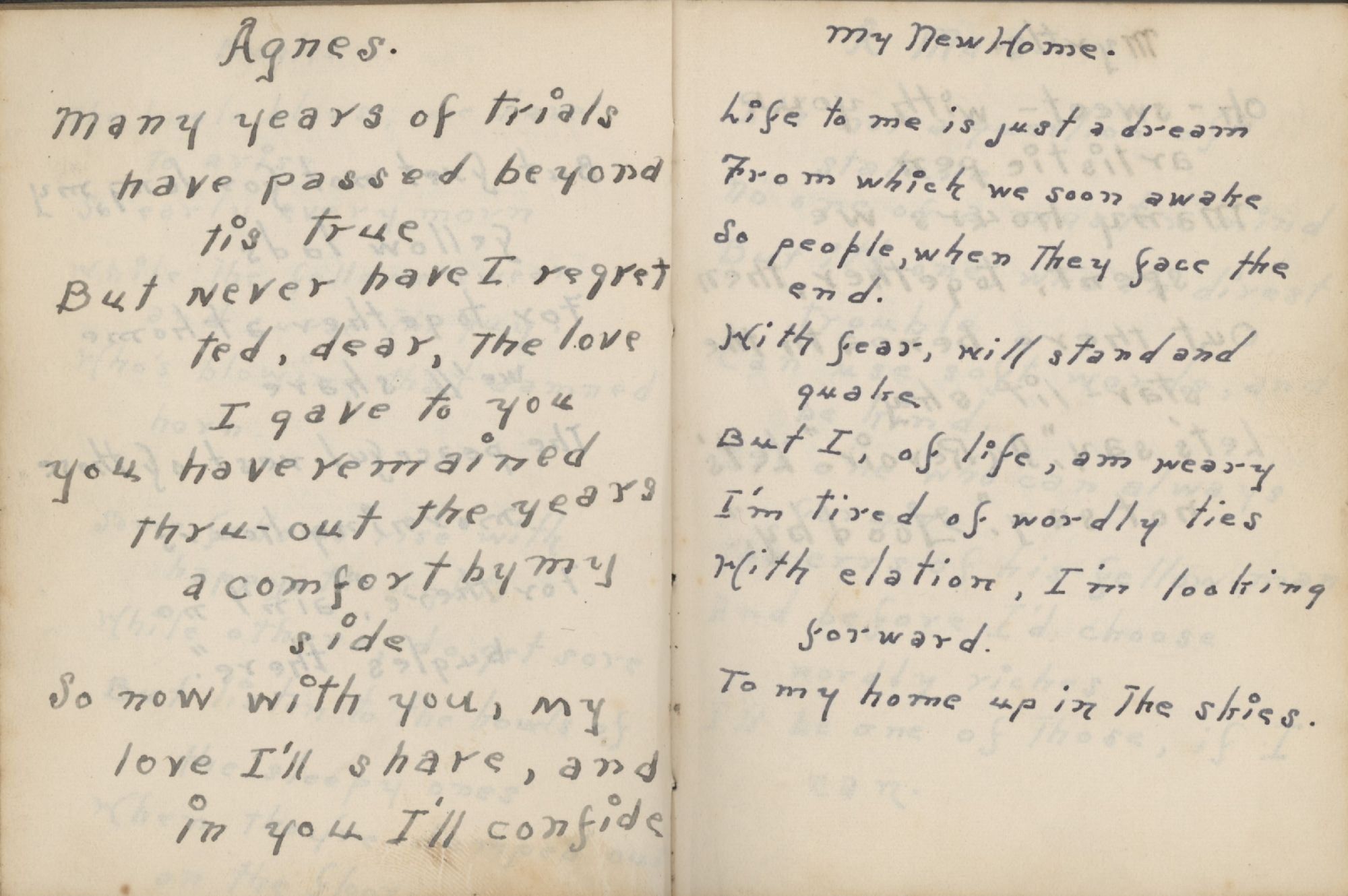
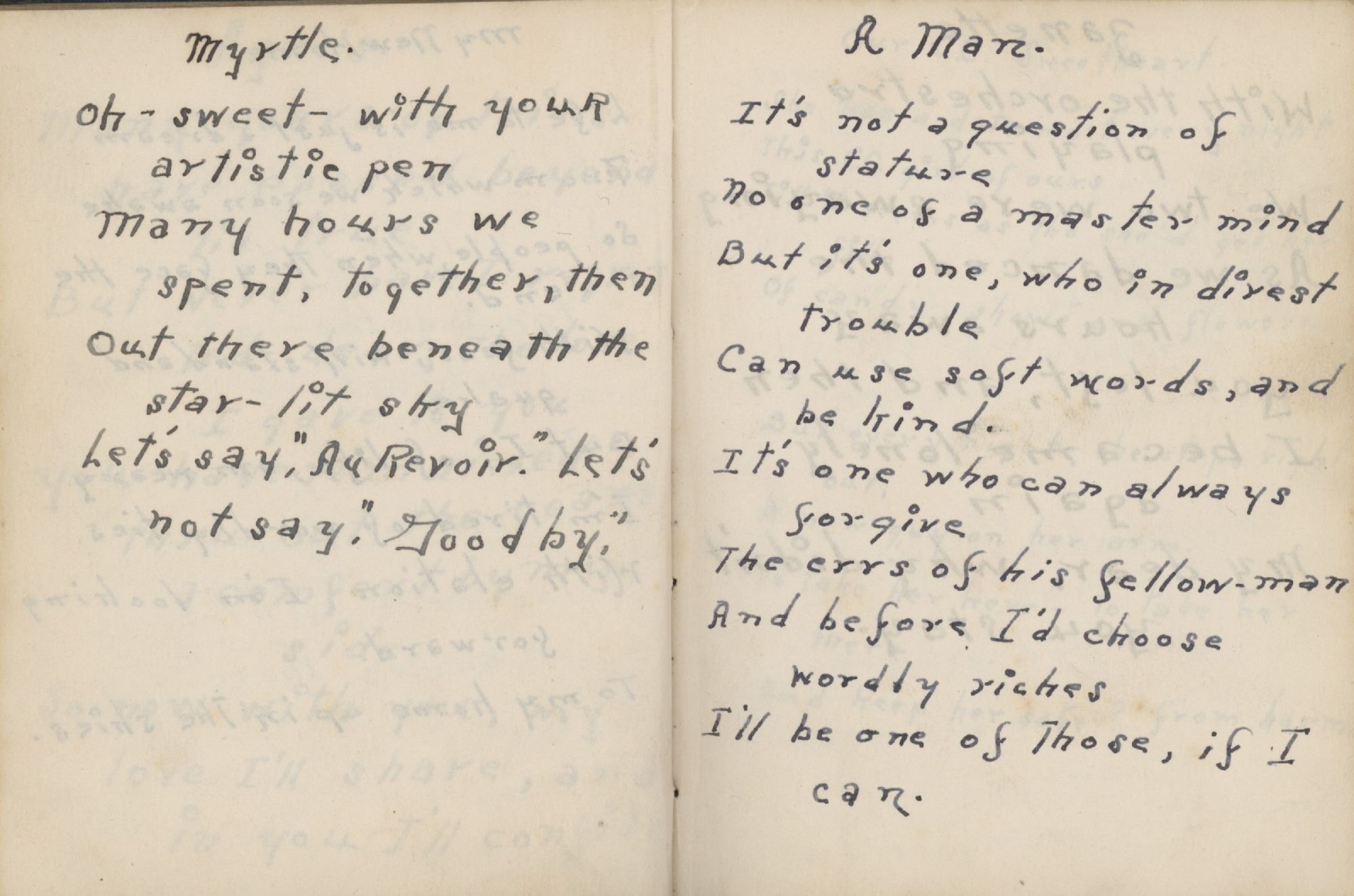
- One 4 x 5.5 inch notebook; approximately 150 handwritten pages, with many more blank
- Fort Knox, Kentucky , 1930
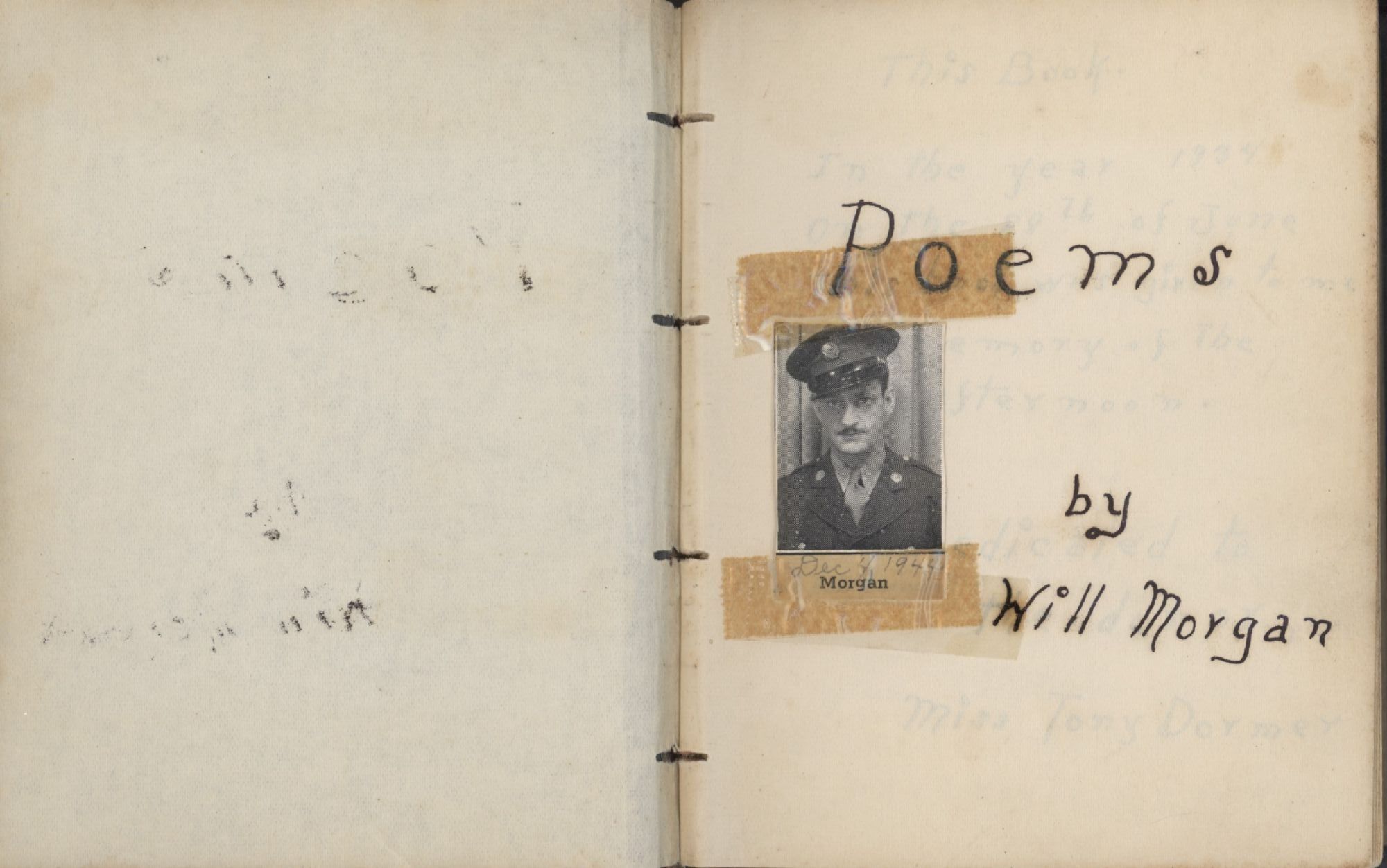
Fort Knox, Kentucky, 1930. One 4 x 5.5 inch notebook; approximately 150 handwritten pages, with many more blank. Light wear to binding, foxing to top page edges, else fine; near fine overall. The Civilian Conservation Corps was a New Deal work relief program that ran from 1933 to 1942 and provided manual labor jobs to young men hit by the Great Depression. The men lived in camps and were provided with meals, clothing, medical care, and small salaries, and performed conservation-related work on federal lands, especially national forests. Will Morgan was a CCC member living at Fort Knox, Kentucky. Fort Knox was the first stop for CCC enrollees, and most were sent on to other locations. At first, the CCC was open to men ages 18 to 25; given when the poems were written, Morgan would have been born between 1909 and 1916.
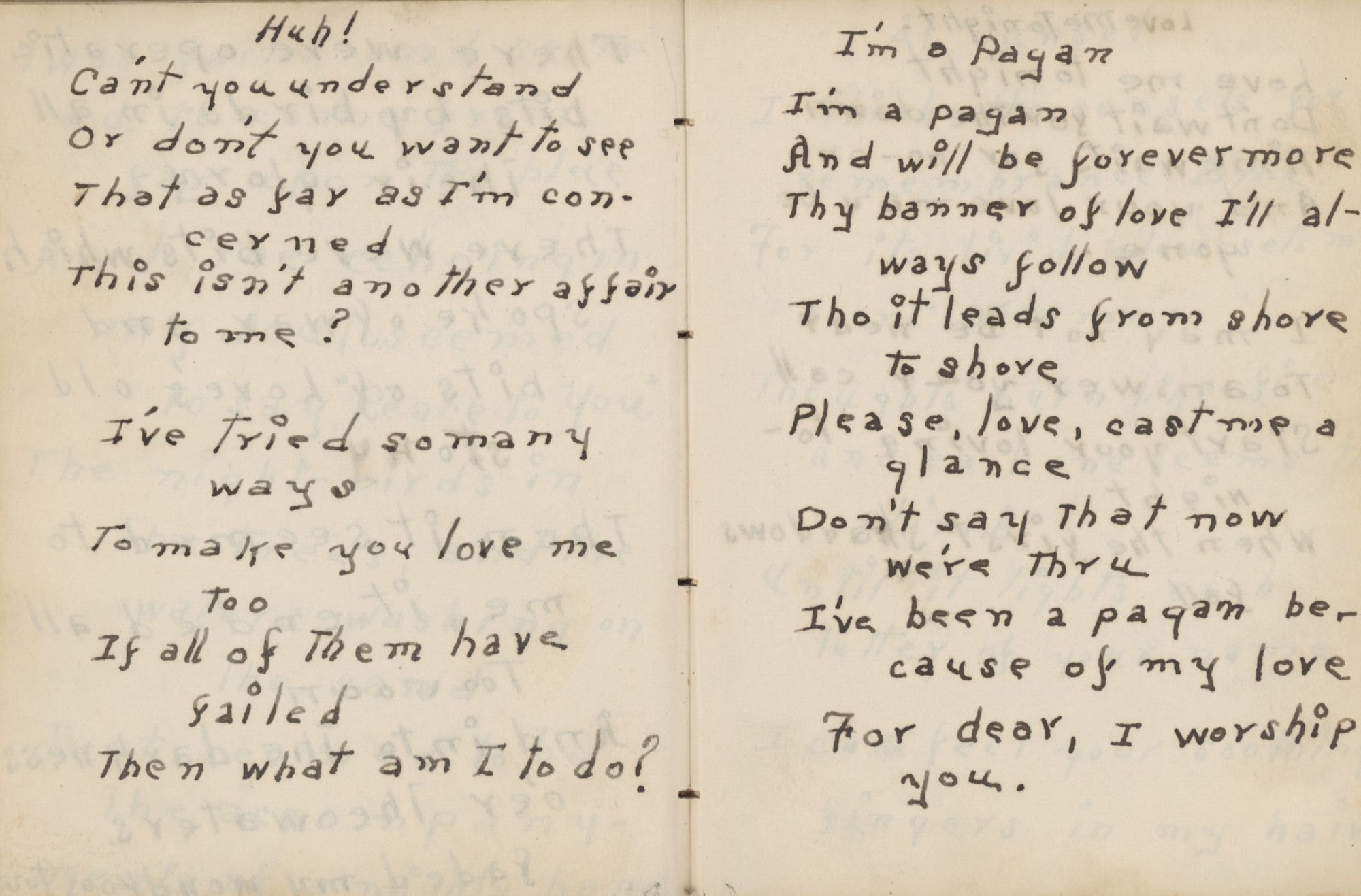
Many of the poems are love poems for various women, or Morgan’s observations about life and meaning; the poems about the CCC are of primary interest. These often complain about life and work at Fort Knox. The labor is difficult—Morgan seems to have mainly been chopping down trees—and the conditions are far from luxurious:
“I've got the C.C. blues/ By doing what the C.C.'s do./ Wearing shoes as big as a pack/ Wading in mud up to my neck/ The whole world's mud to me, by heck./ For I've got those C.C. blues.” (“C.C. Blues”)
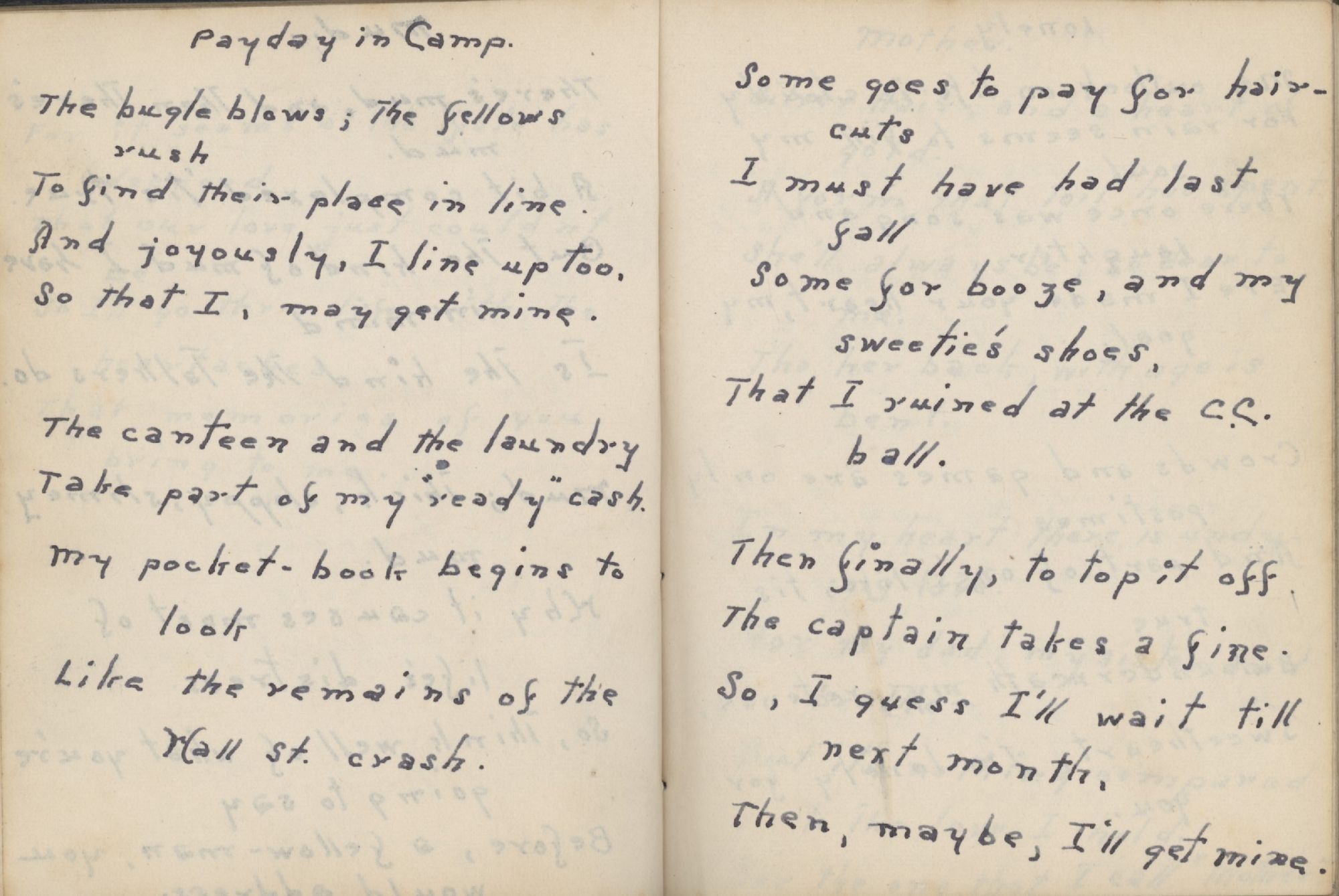
And, though the men received paychecks, they were small and most of the money went back into expenses:
“The canteen and the laundry/ Take part of my ‘ready’ cash./ My pocket-book begins to look/ Like the remains of the Wall St. crash./ [...] Then finally, to top it off/ The captain takes a fine./ So, I guess I'll wait till next month,/ Then, maybe, I'll get mine.” (“Payday in Camp”)
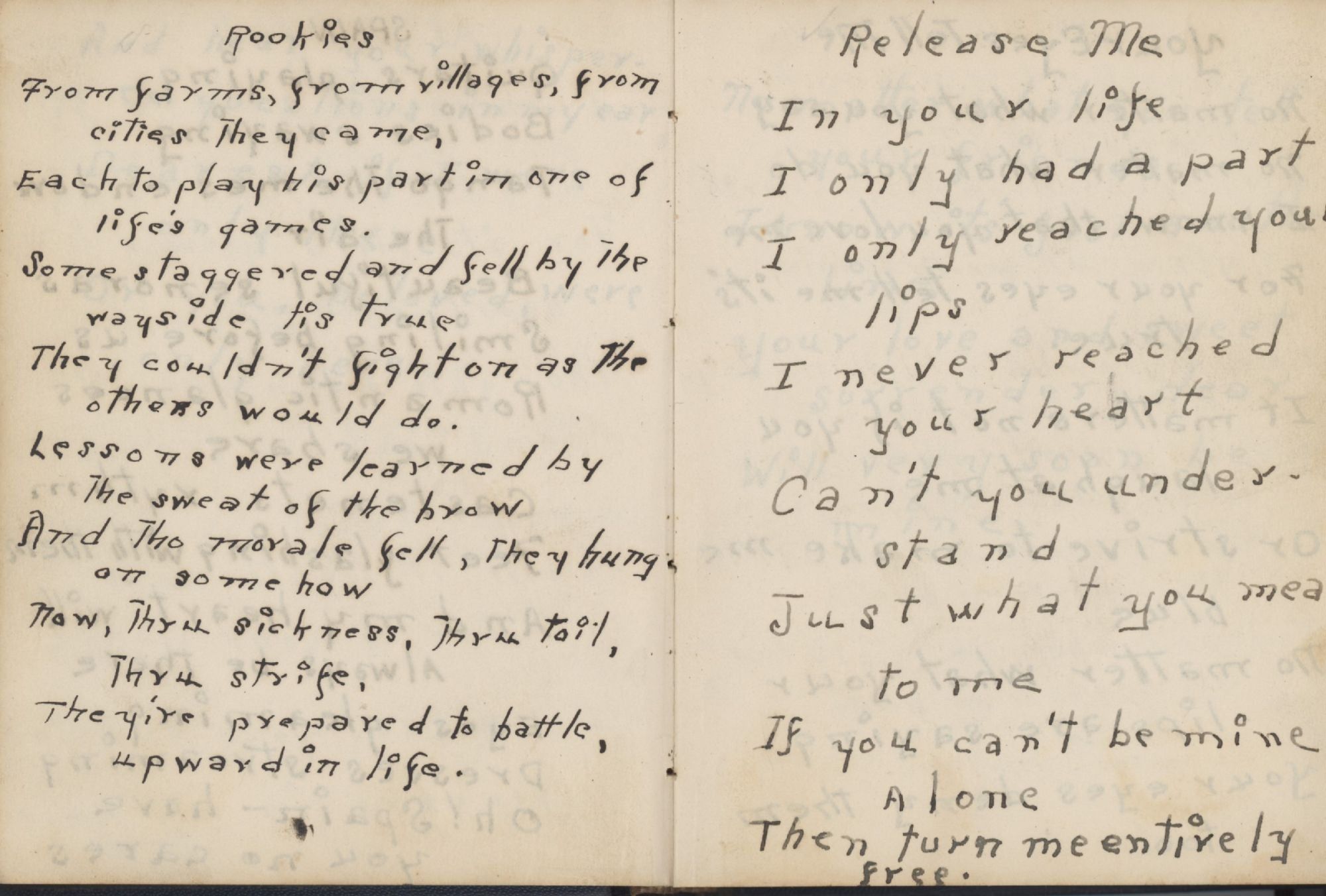
Nonetheless, Morgan apparently got a lot out of his time with the Corps, and felt “prepared to battle, upward in life” (“Rookies”). For all the hardships, Morgan writes:
“The C.C.’s have taught me,/ One, outstanding thing./ That’s, to take, with a smile,/ Whatever, the day may bring./ [...] When camp days are over/ For life, I’ve formed a plan/ Thru summer sun, or winter snow/ It’s the smile that makes the man.” (“Keep Smiling”)
Still, on leaving Camp Knox, he remarked: “Tho now "Adieu," to "Hell with you" as soon as we are gone” (“Good by Camp Knox”).
Overall, a charming first-person account of one young man’s experience as a “C.C. boy.”.
Many of the poems are love poems for various women, or Morgan’s observations about life and meaning; the poems about the CCC are of primary interest. These often complain about life and work at Fort Knox. The labor is difficult—Morgan seems to have mainly been chopping down trees—and the conditions are far from luxurious:
“I've got the C.C. blues/ By doing what the C.C.'s do./ Wearing shoes as big as a pack/ Wading in mud up to my neck/ The whole world's mud to me, by heck./ For I've got those C.C. blues.” (“C.C. Blues”)
And, though the men received paychecks, they were small and most of the money went back into expenses:
“The canteen and the laundry/ Take part of my ‘ready’ cash./ My pocket-book begins to look/ Like the remains of the Wall St. crash./ [...] Then finally, to top it off/ The captain takes a fine./ So, I guess I'll wait till next month,/ Then, maybe, I'll get mine.” (“Payday in Camp”)
Nonetheless, Morgan apparently got a lot out of his time with the Corps, and felt “prepared to battle, upward in life” (“Rookies”). For all the hardships, Morgan writes:
“The C.C.’s have taught me,/ One, outstanding thing./ That’s, to take, with a smile,/ Whatever, the day may bring./ [...] When camp days are over/ For life, I’ve formed a plan/ Thru summer sun, or winter snow/ It’s the smile that makes the man.” (“Keep Smiling”)
Still, on leaving Camp Knox, he remarked: “Tho now "Adieu," to "Hell with you" as soon as we are gone” (“Good by Camp Knox”).
Overall, a charming first-person account of one young man’s experience as a “C.C. boy.”.