

Large Photographic Archive of the US Military in the Philippines, Likely Immediately Predating World War II, Including Many Photographs of Indigenous Tribes and Daily Life for Filipinos
- pproximately 205 photographs: twenty 5 x 7” and smaller, eighteen 3.75 x 5.5” and smaller, and 167 2.5 x 3.5” and smaller.
- Philippines and San Francisco , 1940
Philippines and San Francisco, 1940. pproximately 205 photographs: twenty 5 x 7” and smaller, eighteen 3.75 x 5.5” and smaller, and 167 2.5 x 3.5” and smaller. Most are glued into a scrapbook with some loose. Some photographs bent or with tears; some marked with pencil. Generally very good. The US’s military presence in the Philippines is long-standing, beginning in 1898 with the Spanish-American War, which ended that year with a treaty that sold the islands to the US. The Philippines was then an American colony until the country’s independence was recognized by the US in 1946. In 1947, the two countries signed the Military Bases Agreement, allowing the US to keep military bases in the Philippines for a period of 99 years; this was finally overturned in 1991 and the bases were closed by 1992. However, agreements signed in 1999 and 2014 allowed US troops to move freely through the Philippines and allowed the US government to build and operate military facilities.
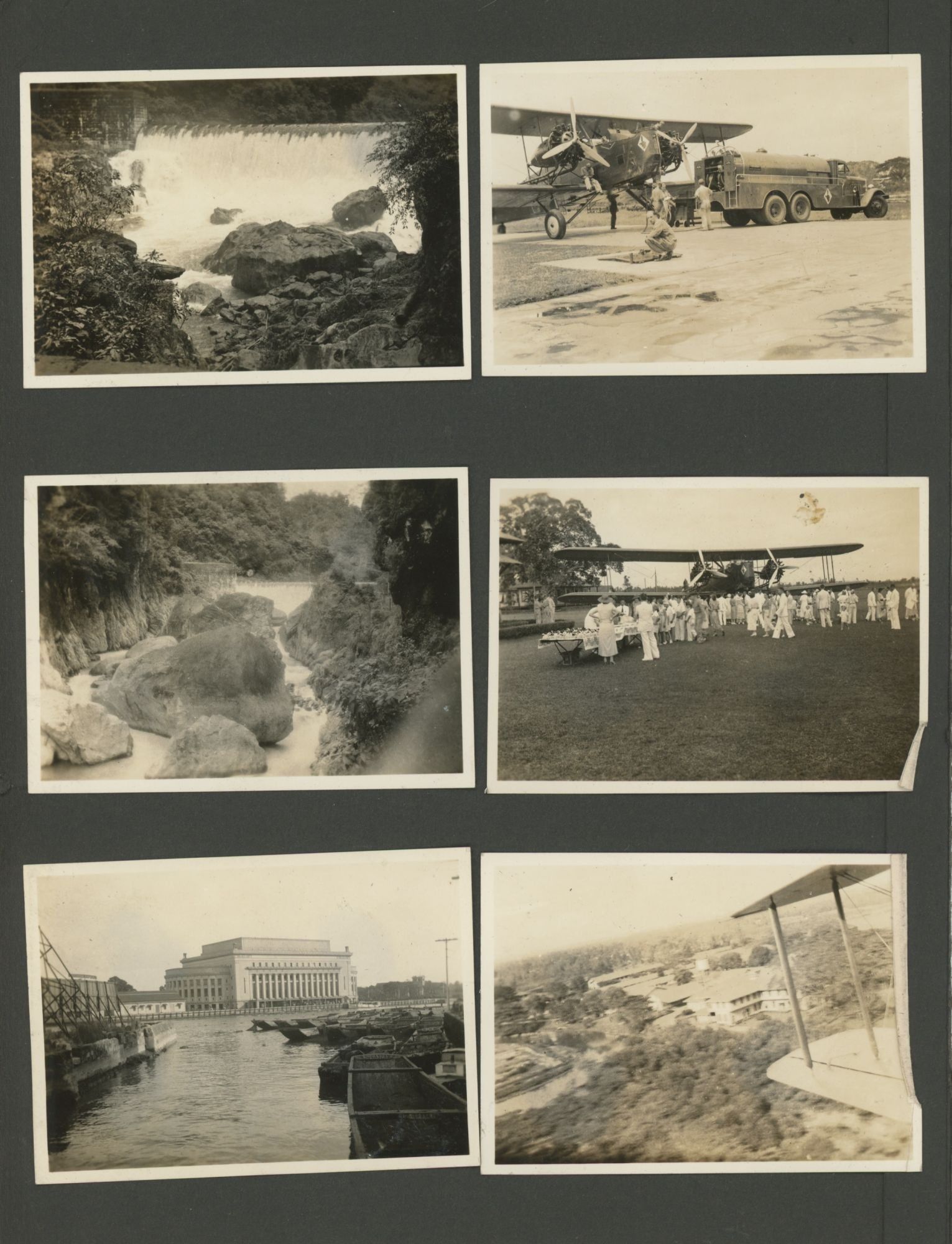
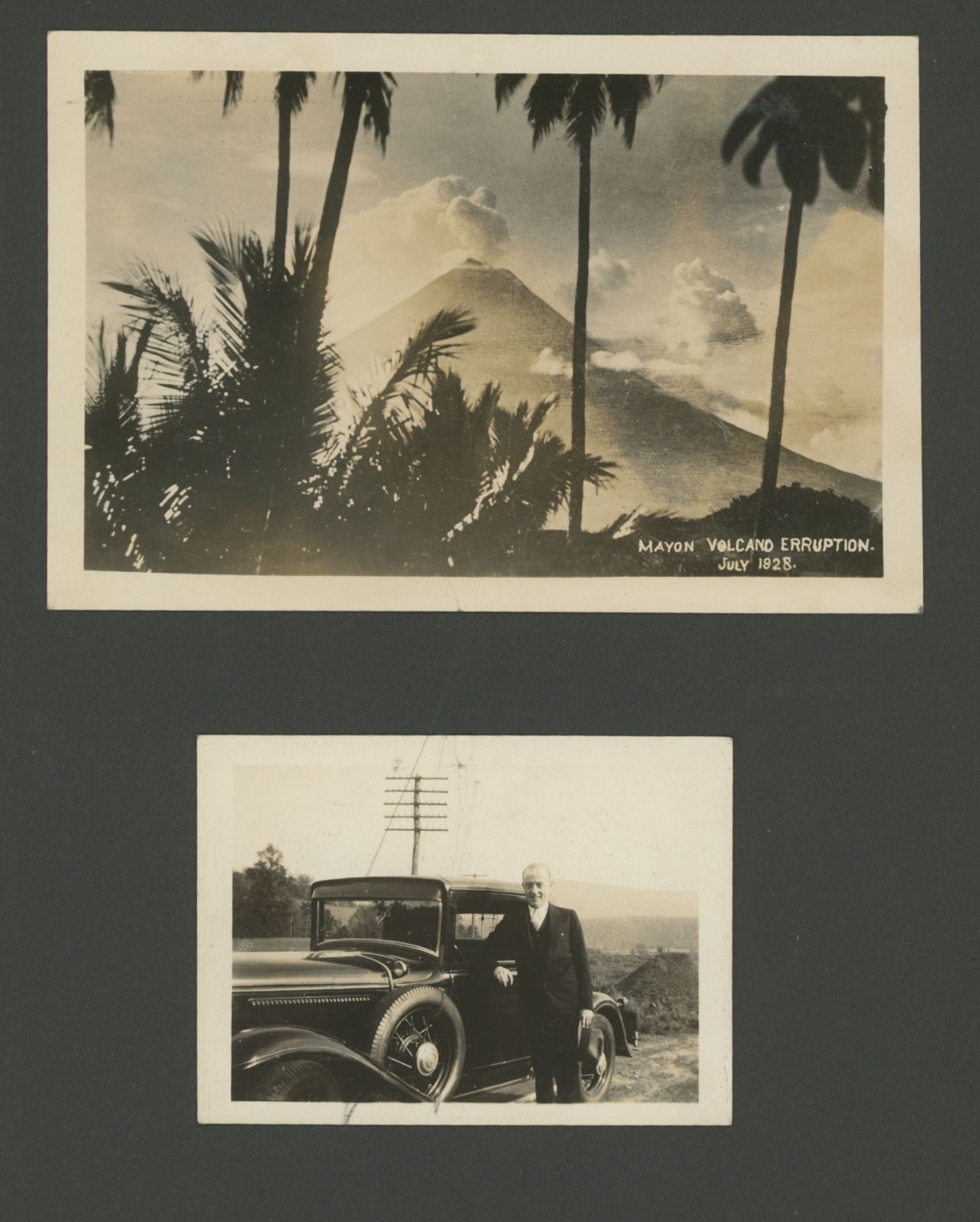
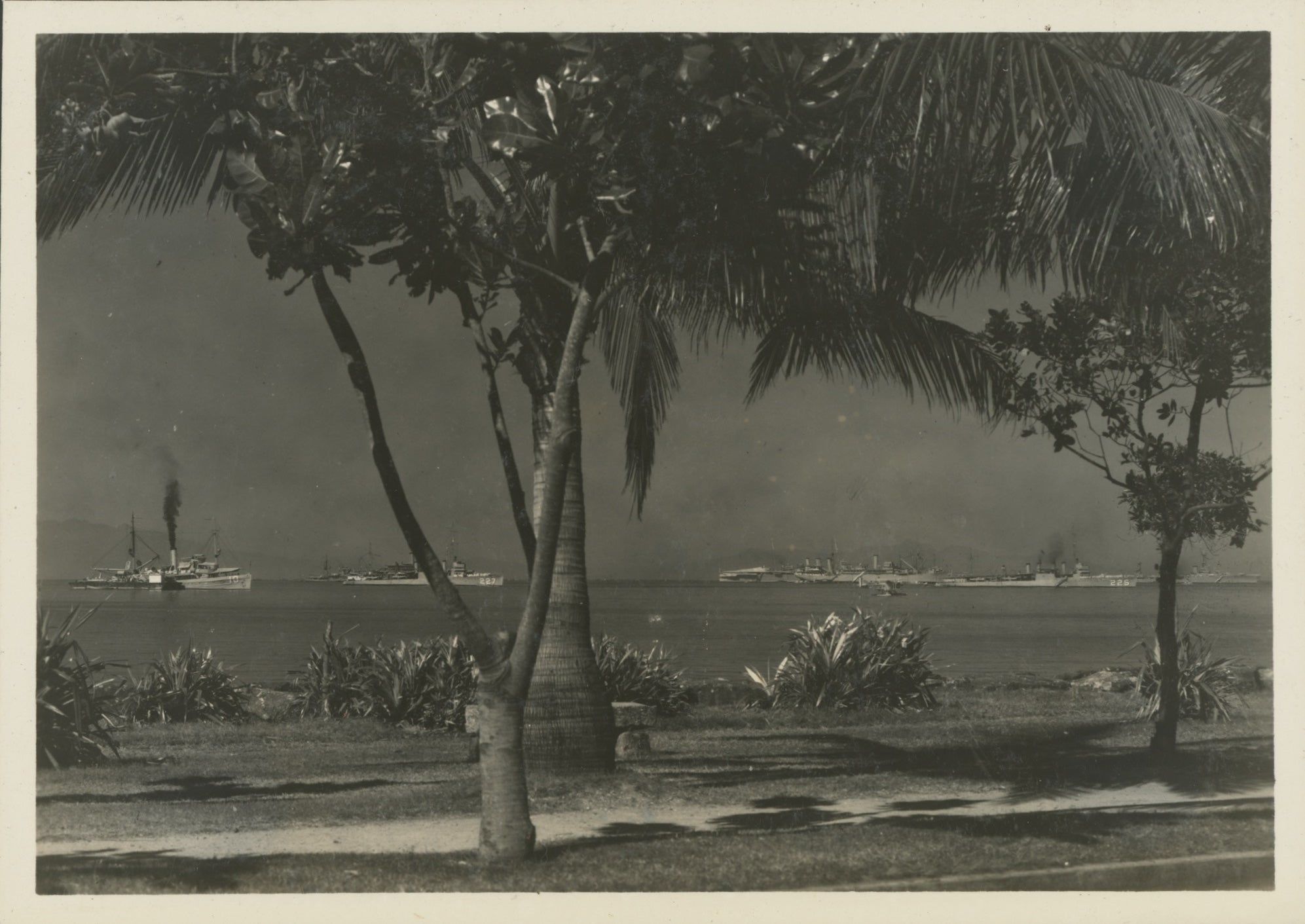
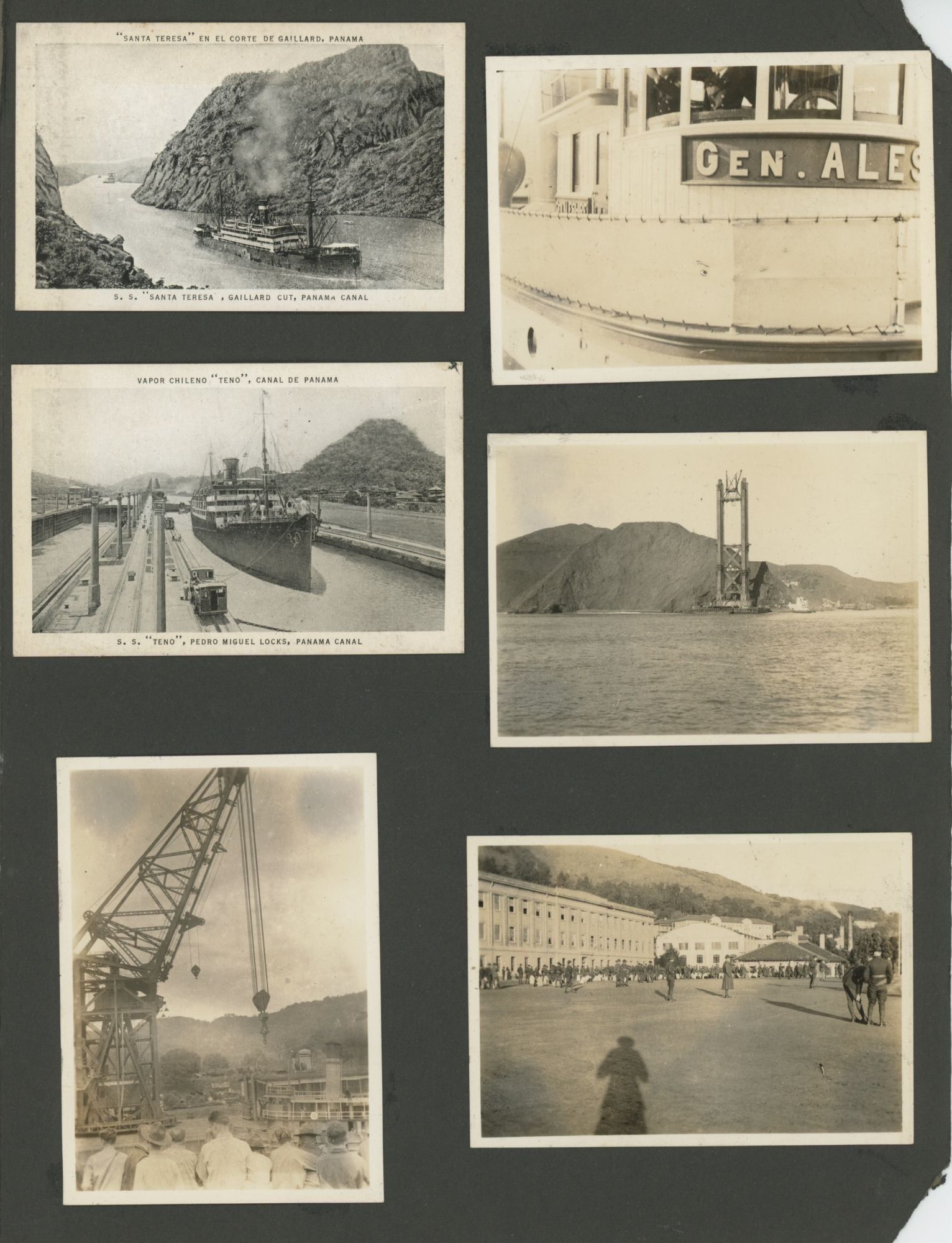
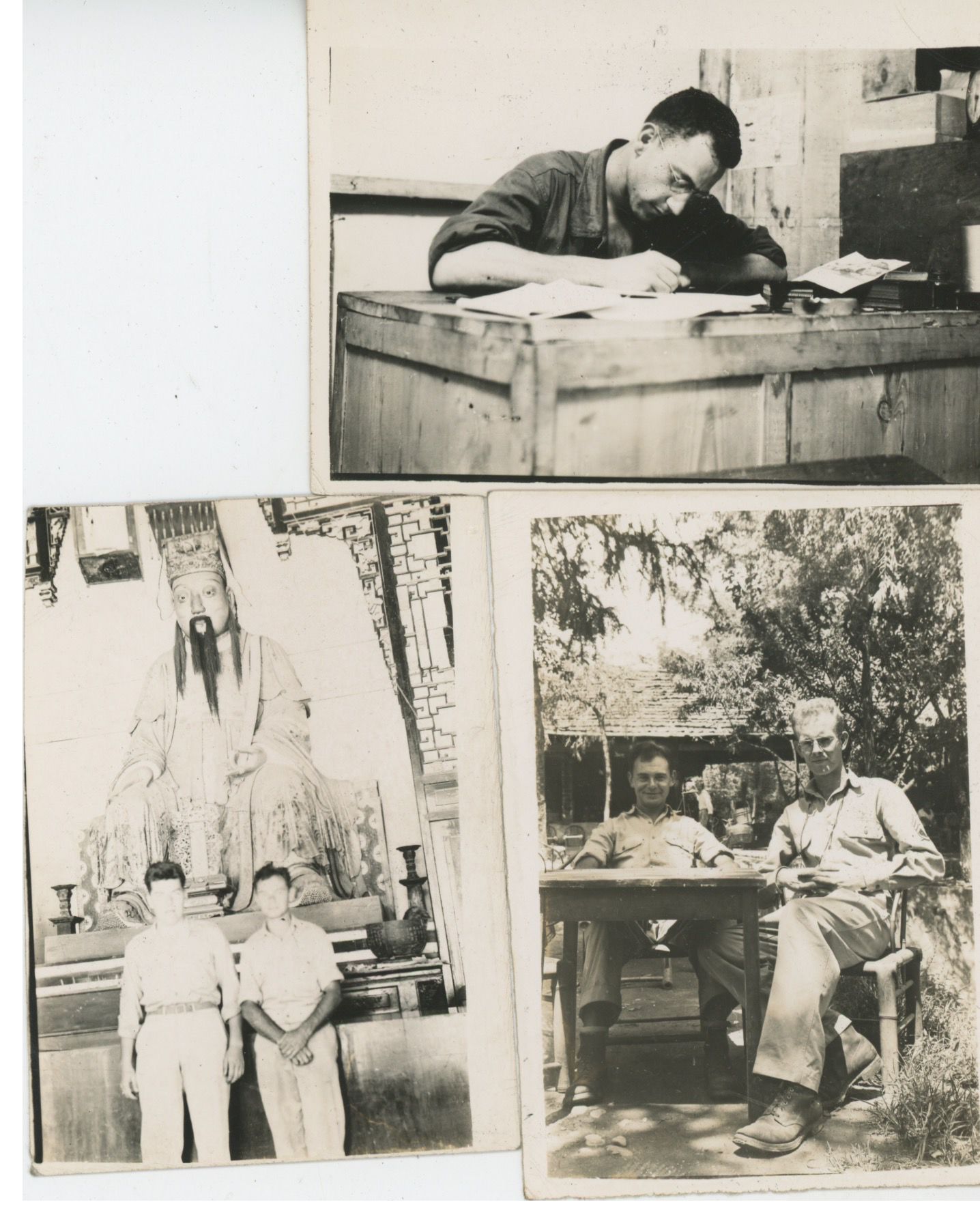
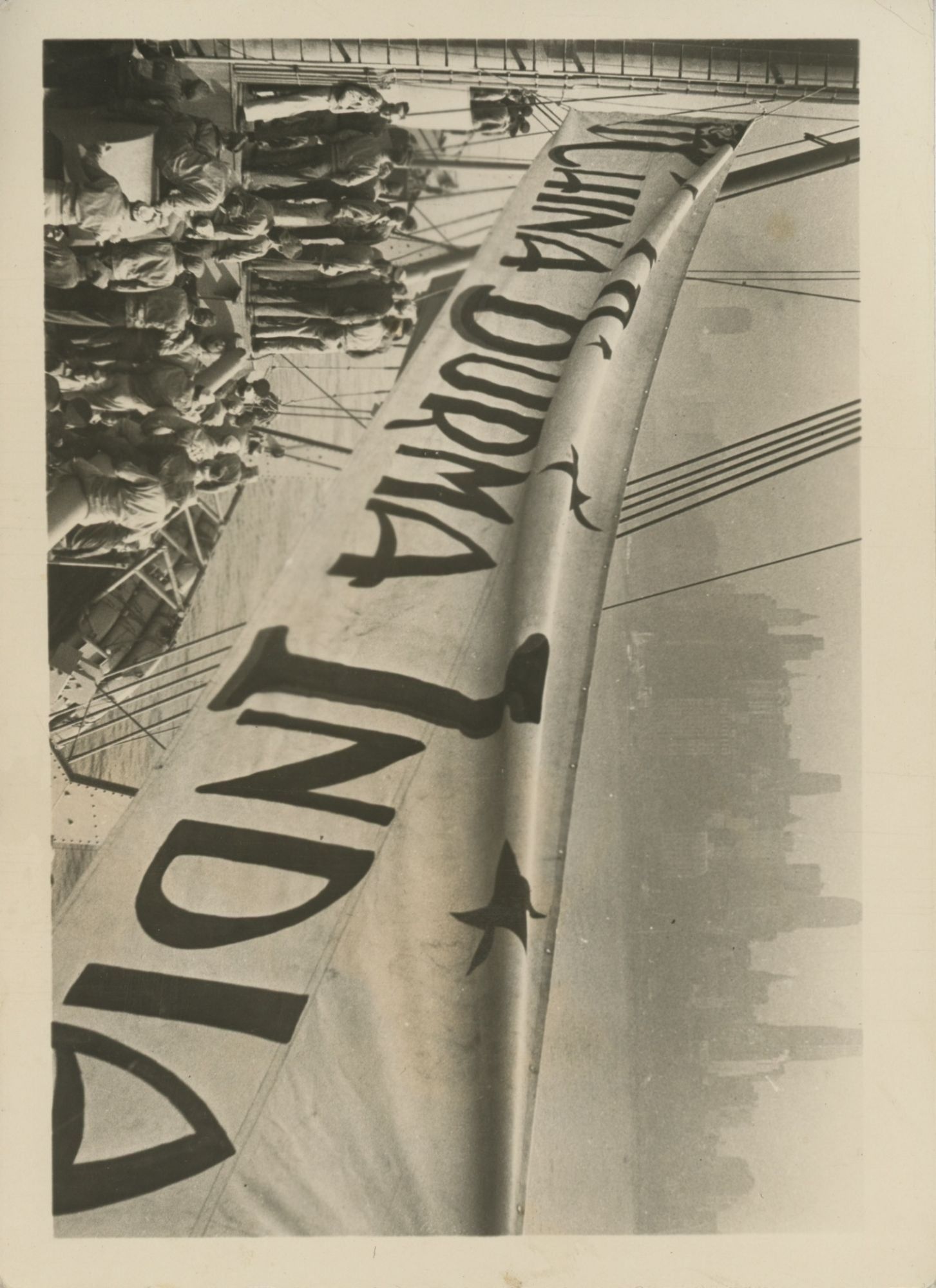
Offered here is a large archive of photographs likely belonging to—and likely with many taken by—an American soldier stationed in the Philippines. These were probably mainly taken in the 1930s, as a photograph appears to show the Golden Gate Bridge under construction. Some are possibly from World War II, as one photograph shows men standing on a ship under a large banner reading “CHINA BURMA INDIA”. However, they are mostly unlikely to have been taken during the war, as there is also a photograph of a pristine-looking Manila Central Post Office – the building was severely damaged during the fighting against the Japanese in the Battle of Manila, and was rebuilt in 1946.
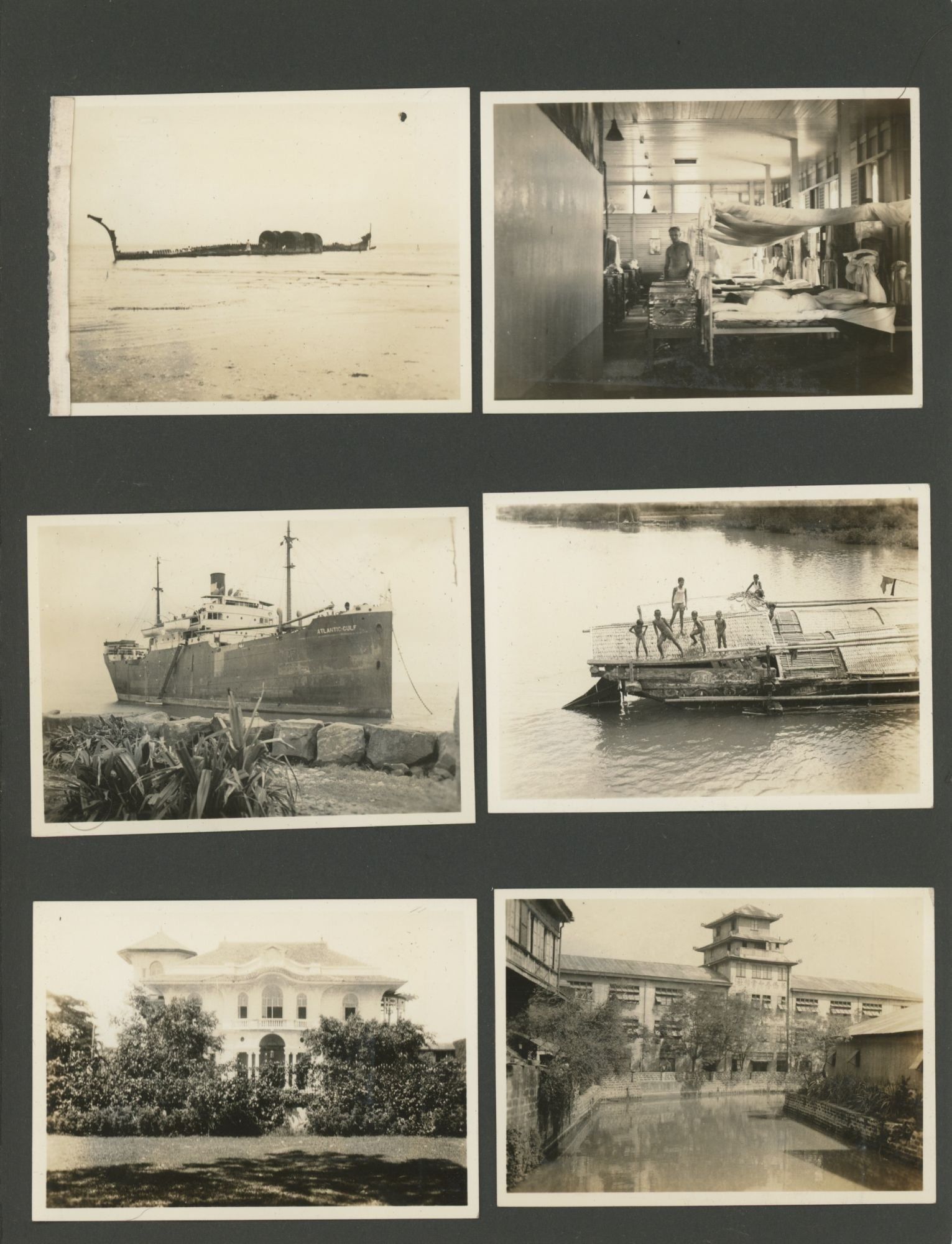
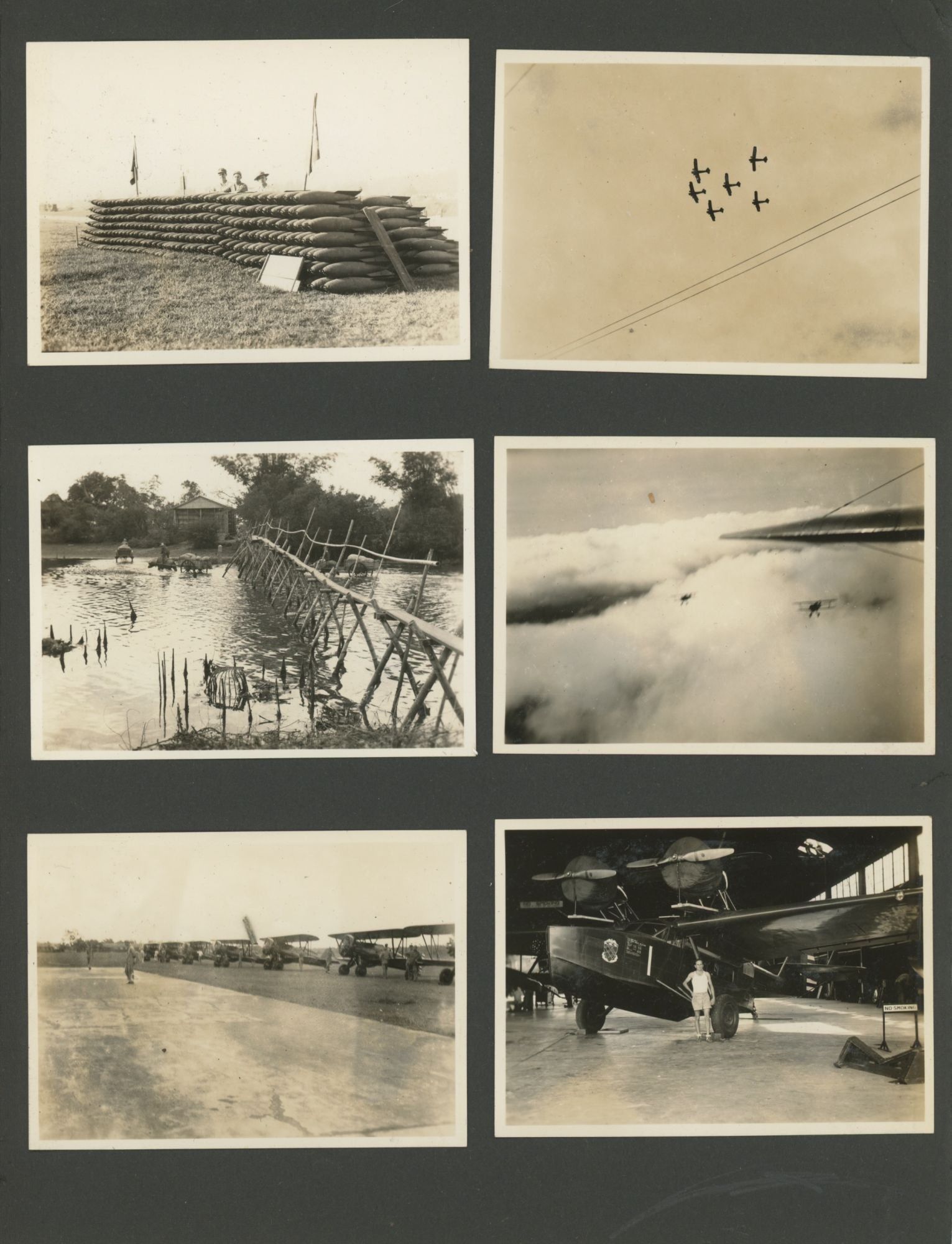
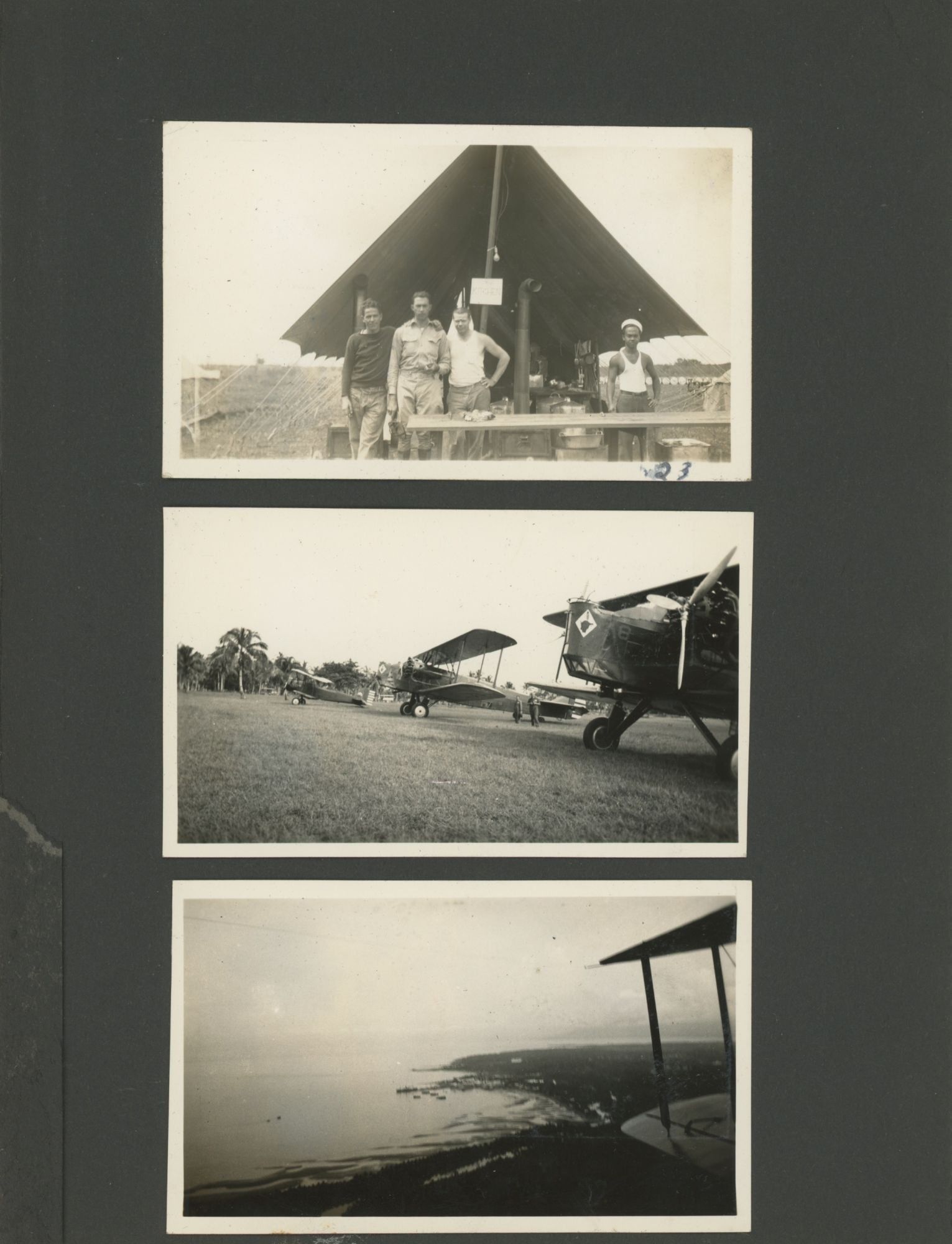
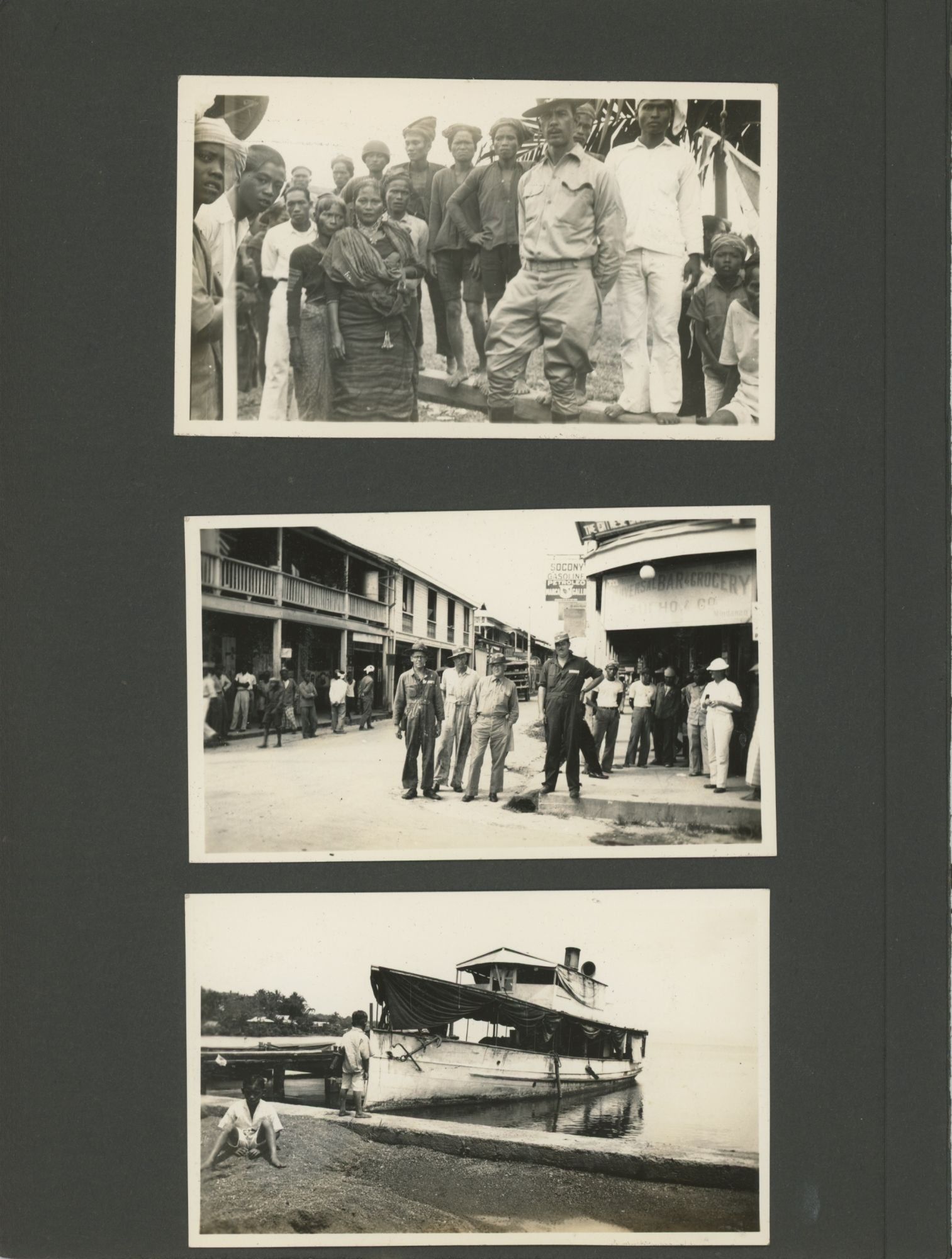
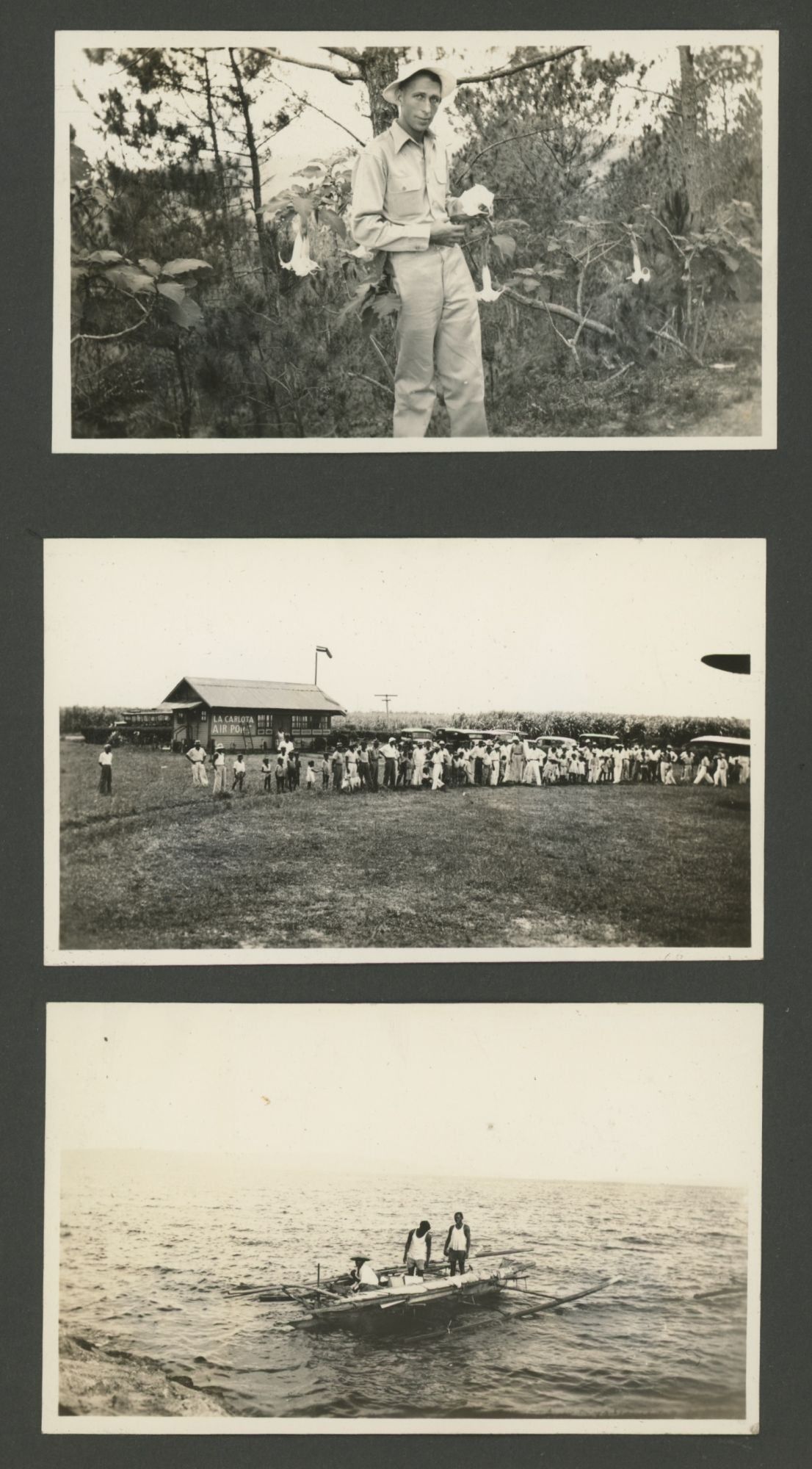
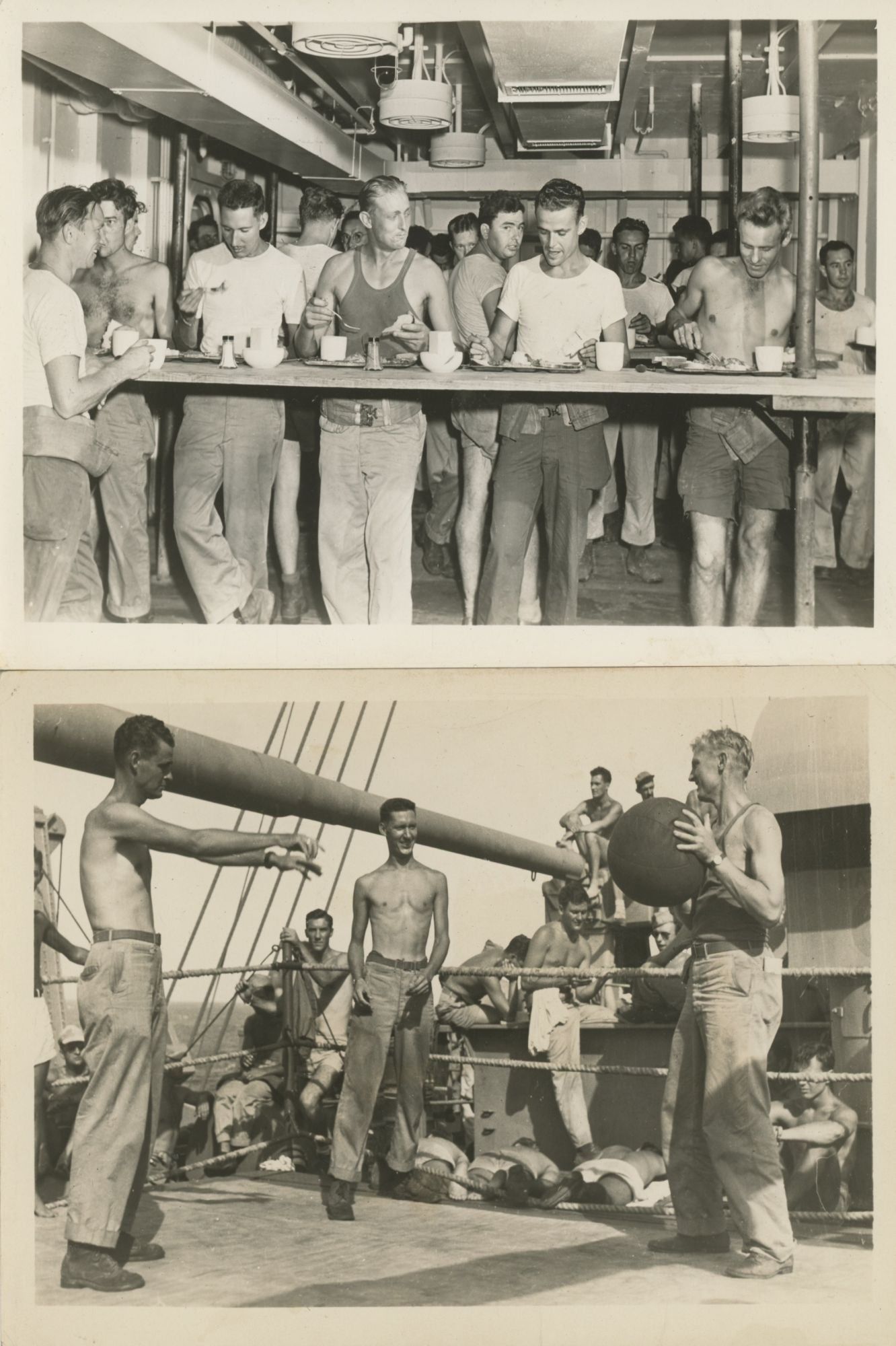
In the archive are a mix of military photographs—generally of planes, ships, and life aboard them—and shots of Philippine life and scenery. One interesting scrapbook page places a photograph of a massive American steamer next to a shot of a wooden riverboat. Aboard the riverboat, young Filipino boys pose and smile for the camera. The military shots emphasize the US’s outsized power: a man poses next to and is dwarfed by a seaplane; three men stand behind a chest-high pile of artillery; planes fly in formation straight overhead; men and women eat a lunch spread under the hulking wings of a plane parked on a lawn.
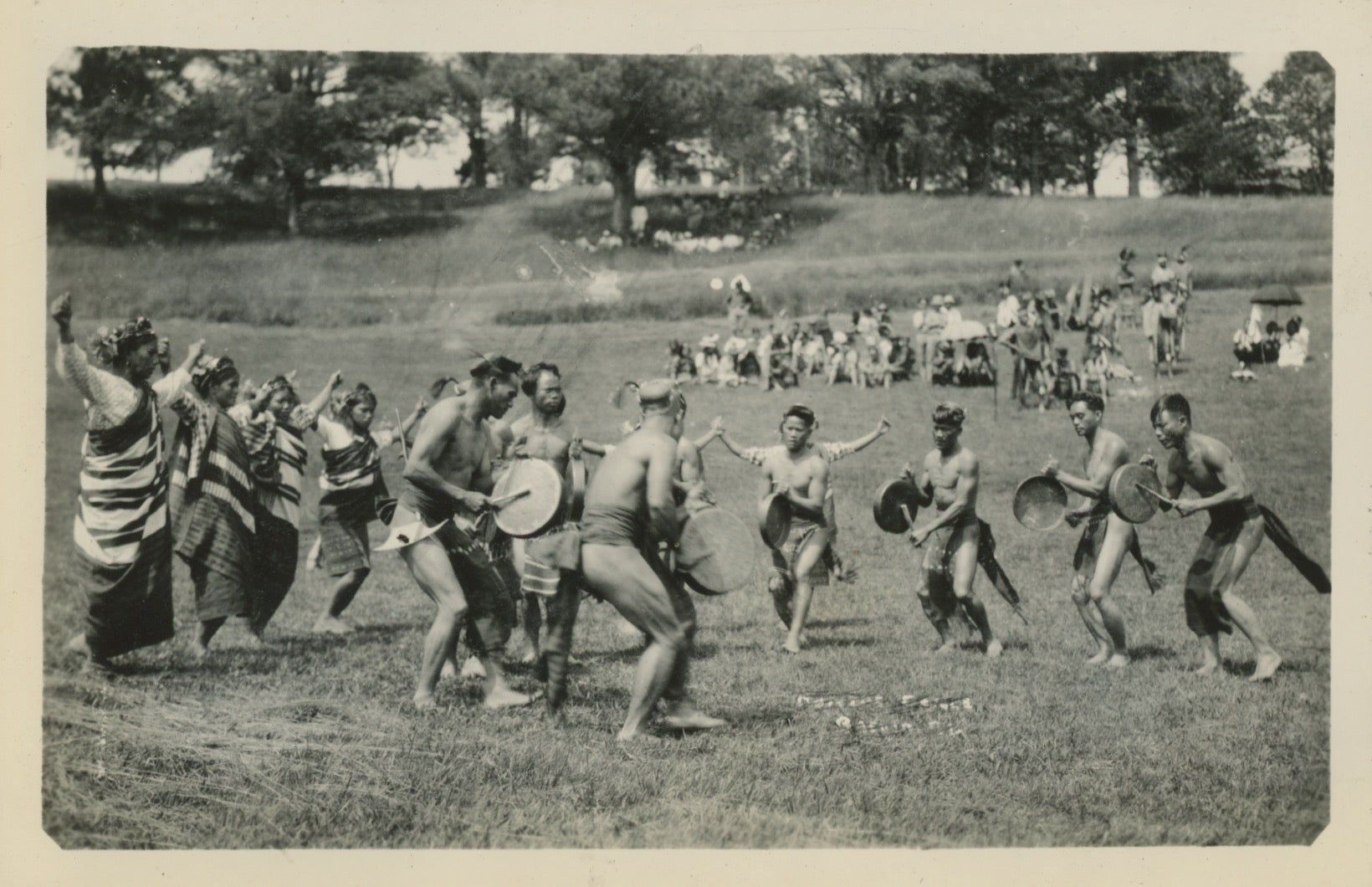
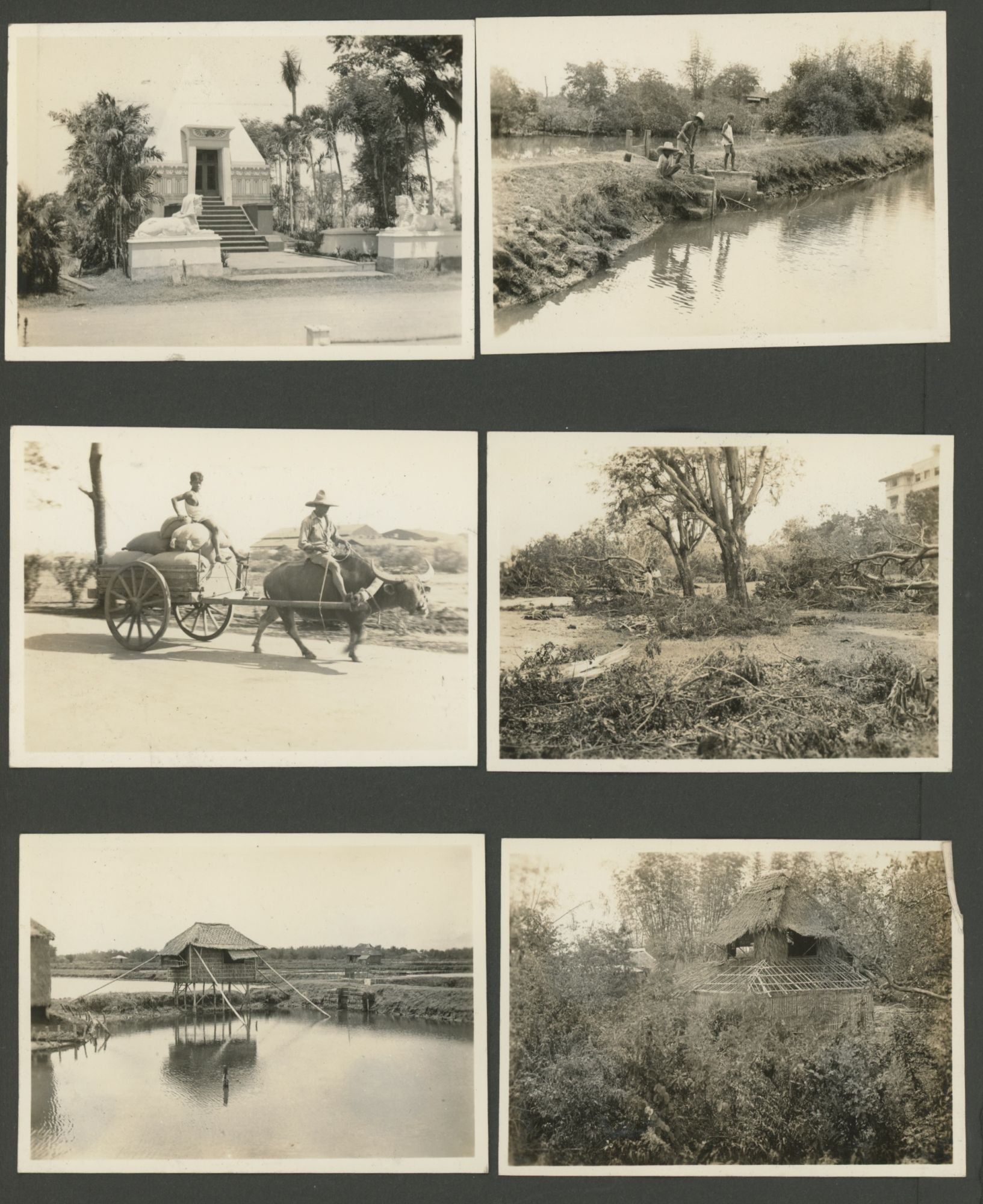
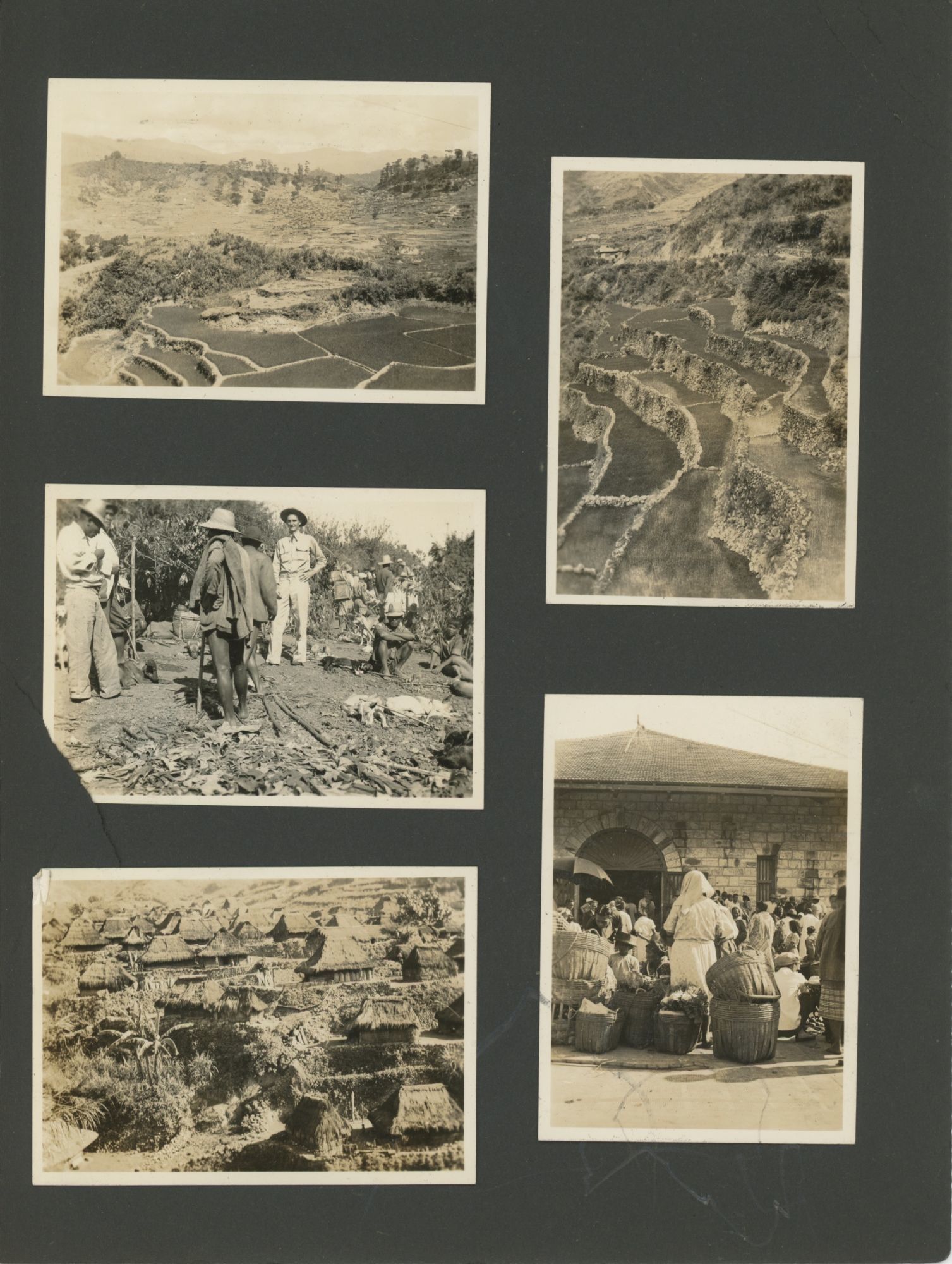
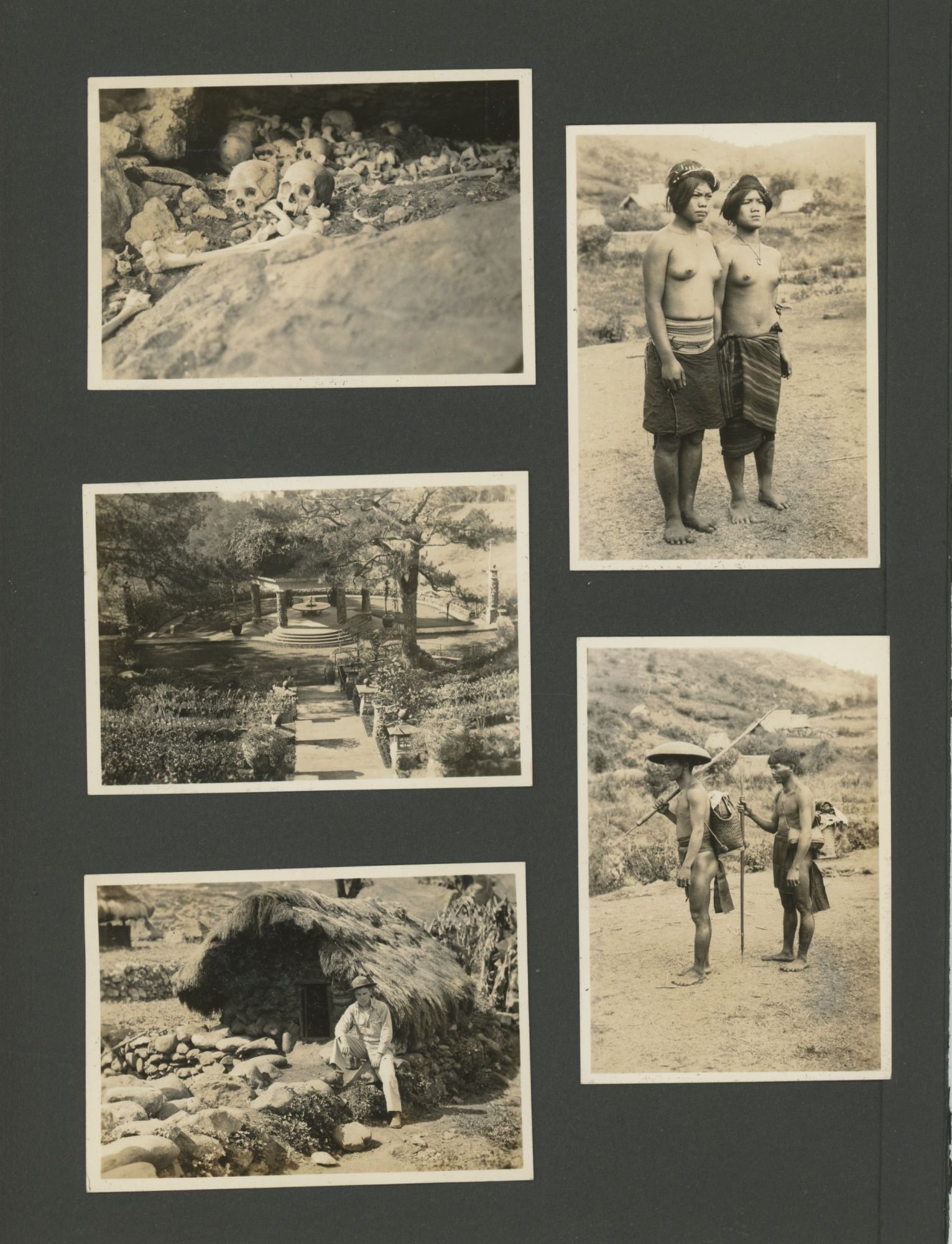
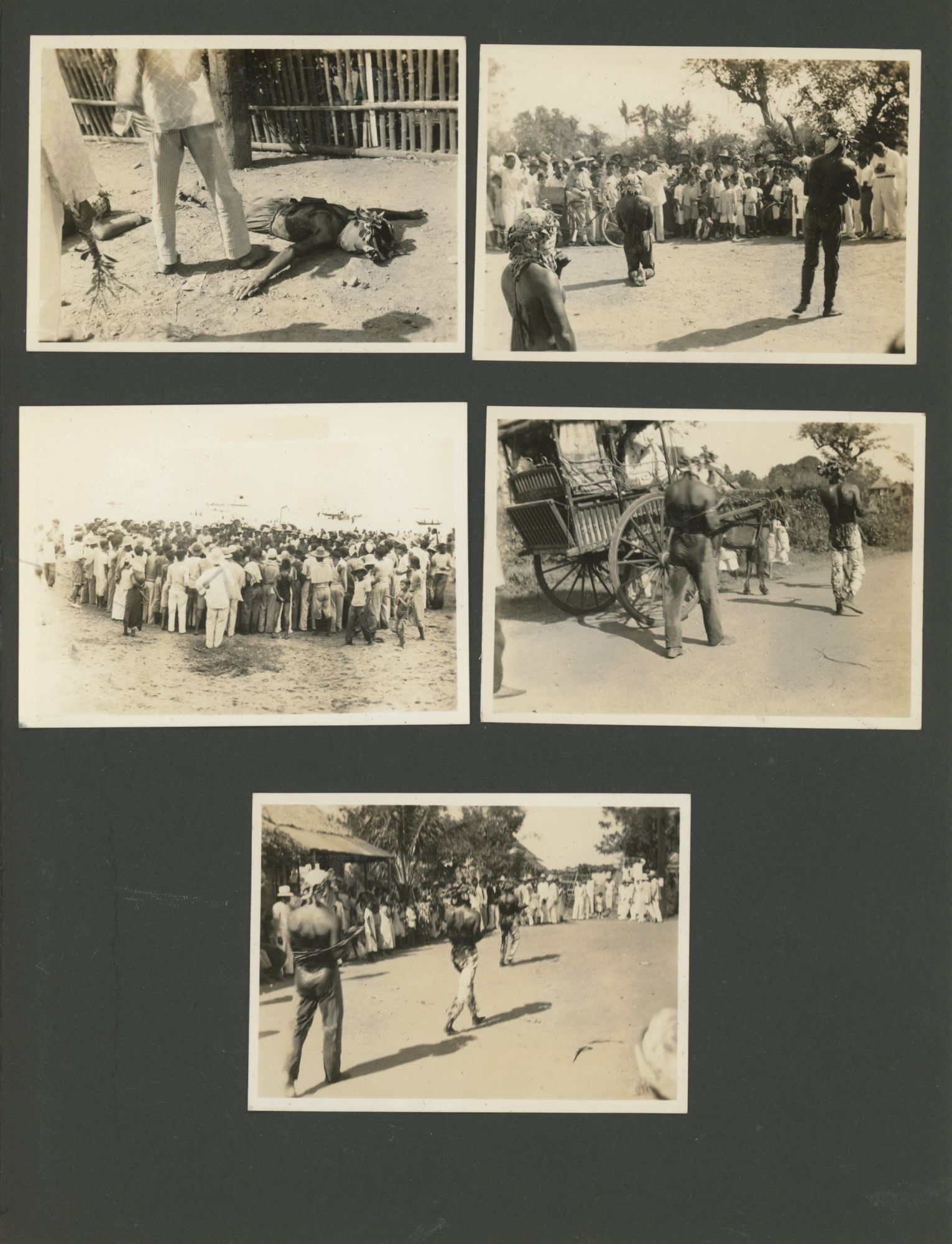
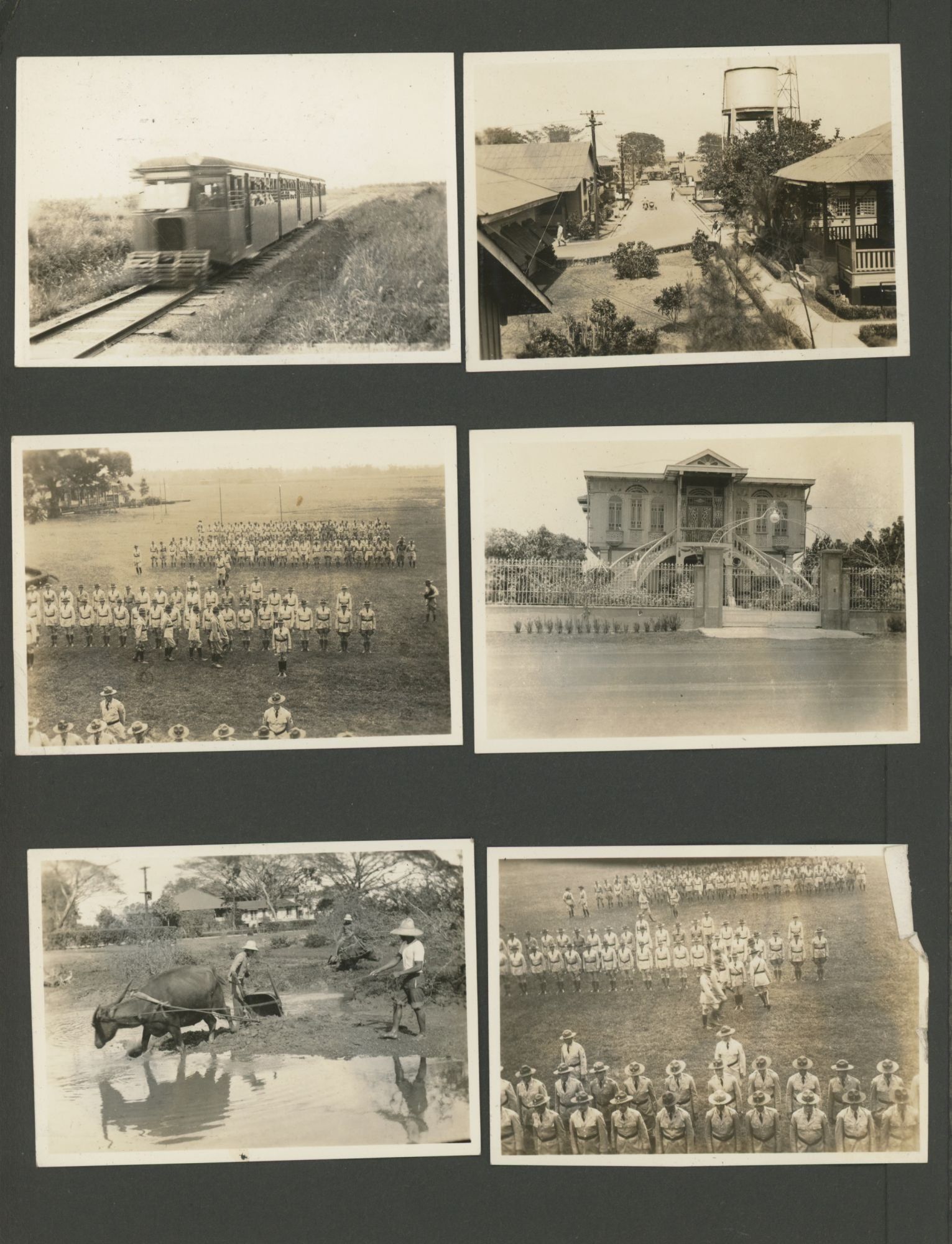
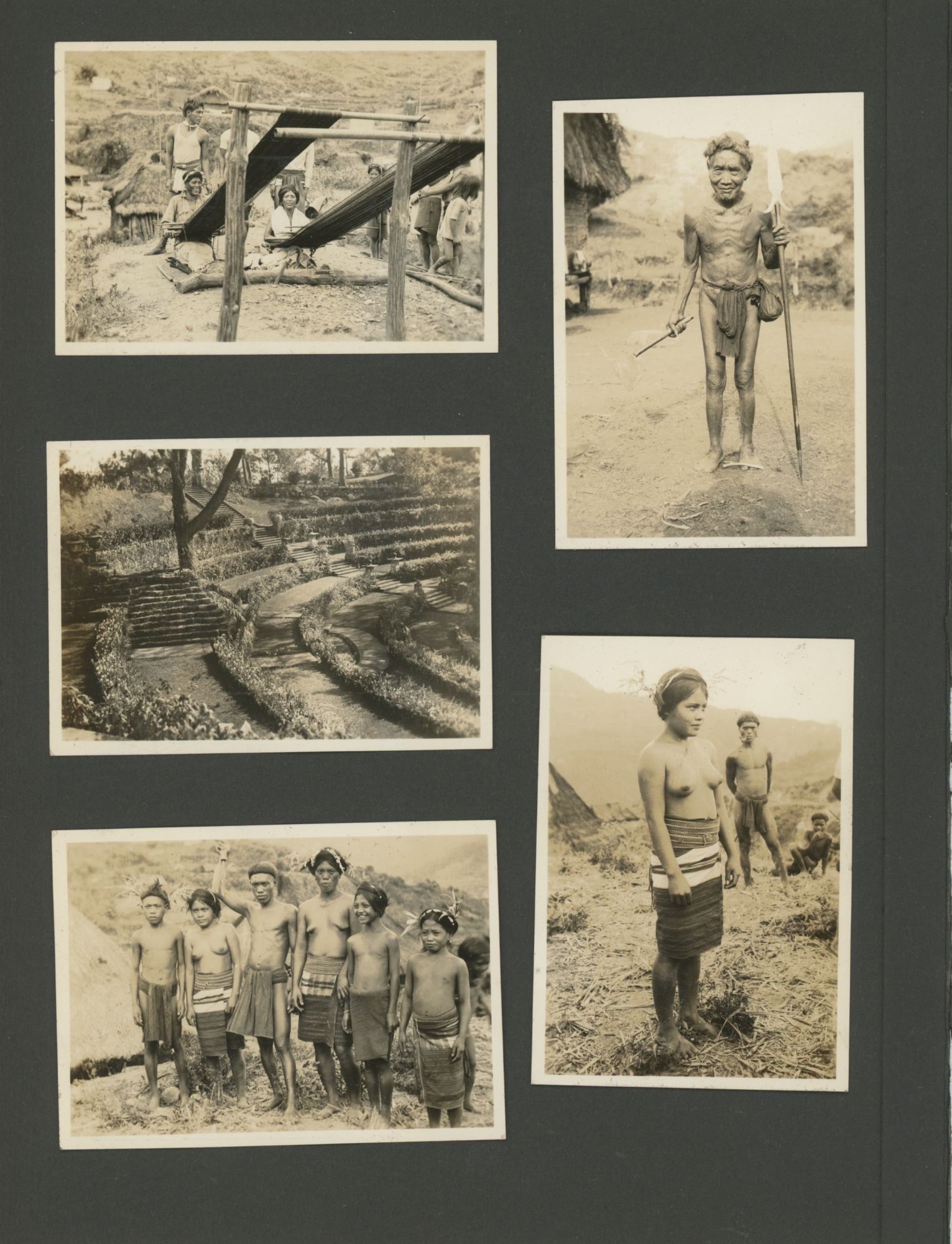
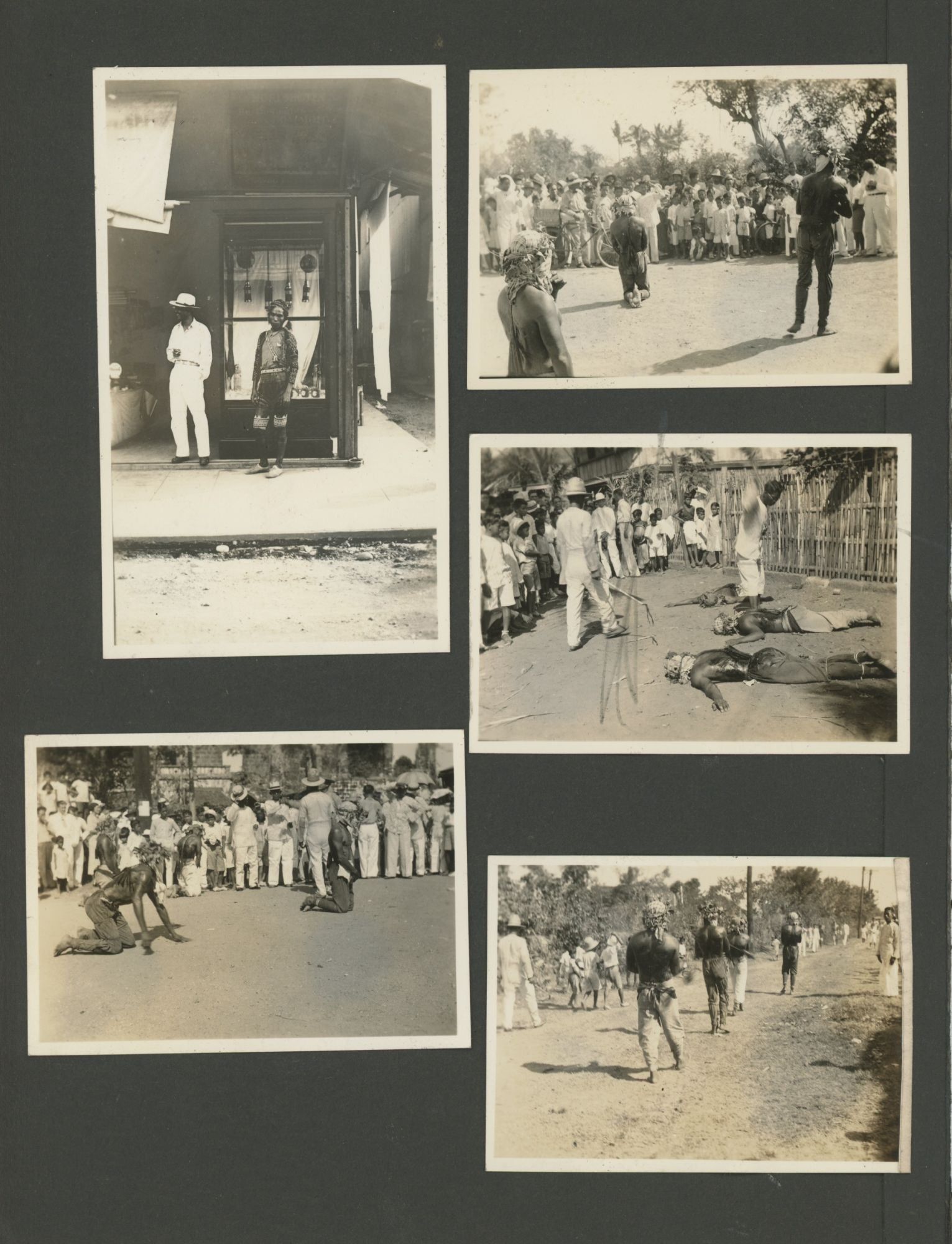
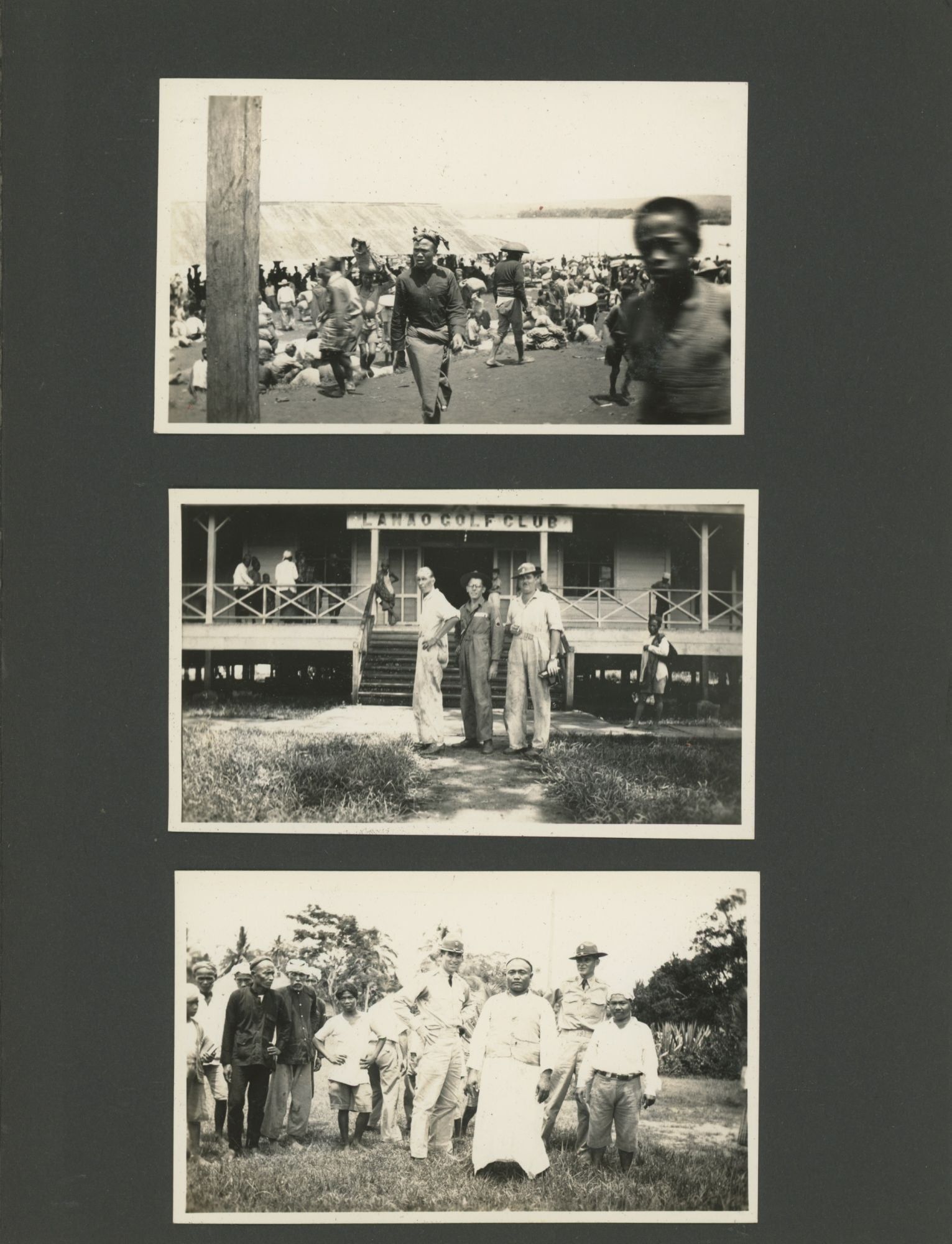
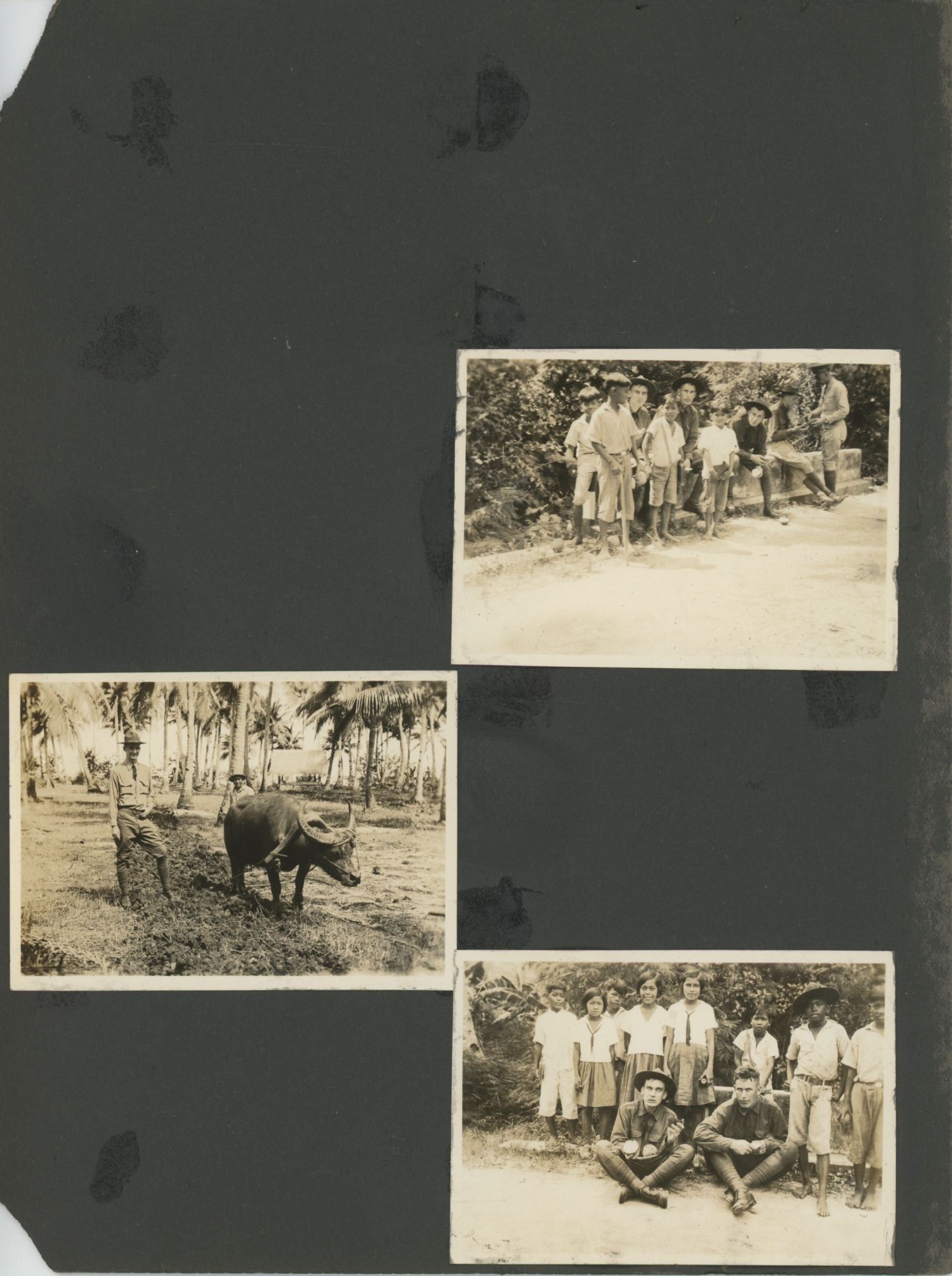
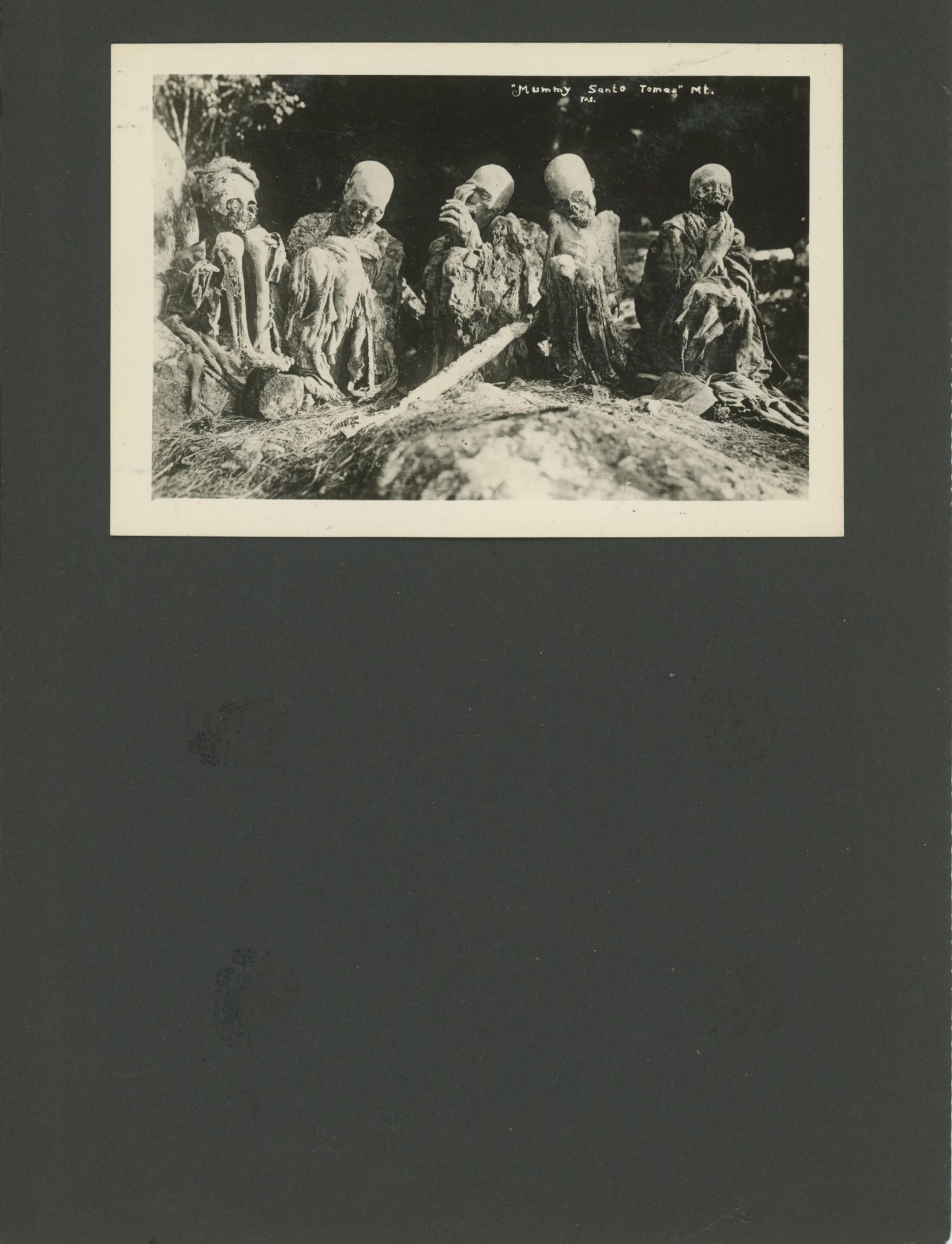
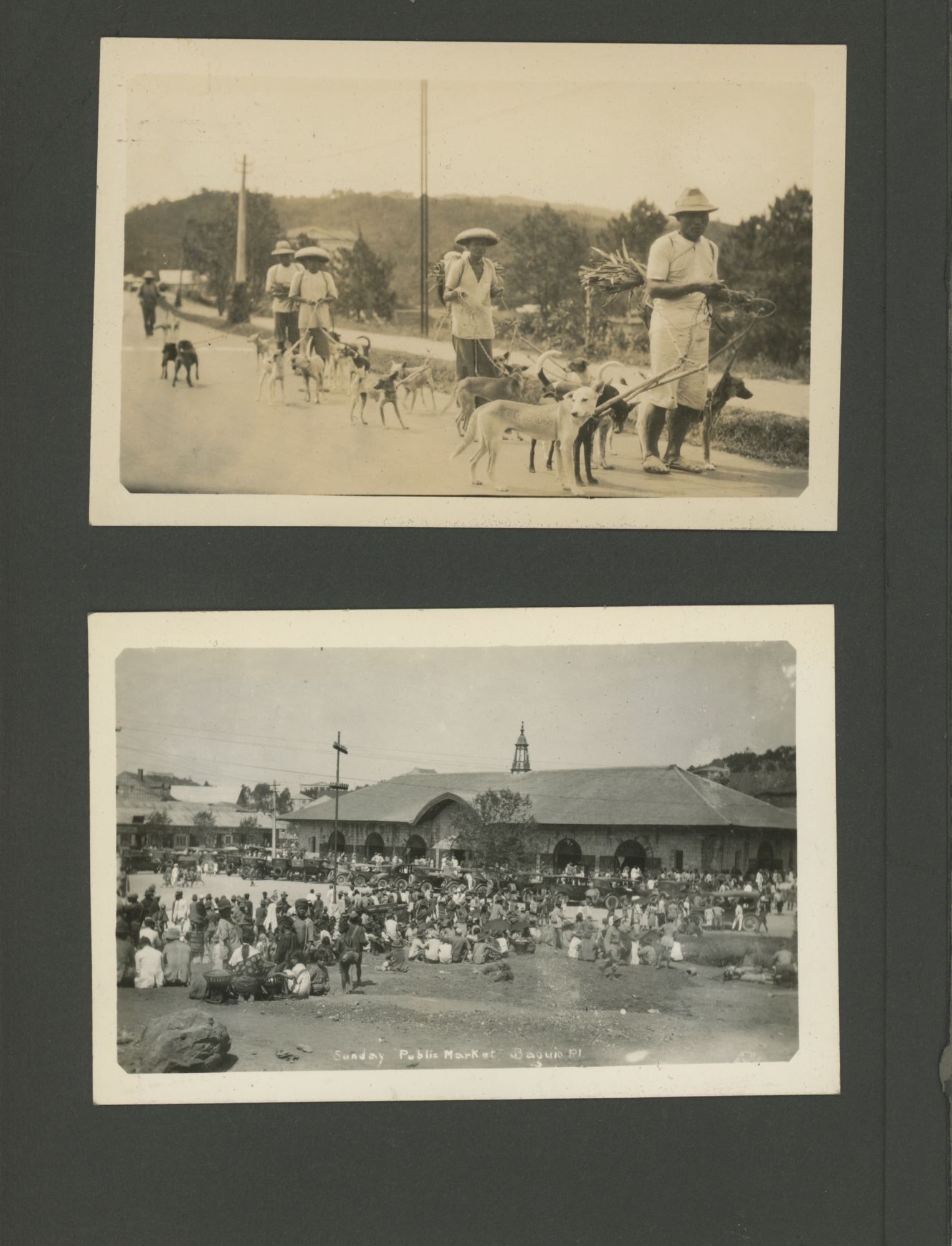
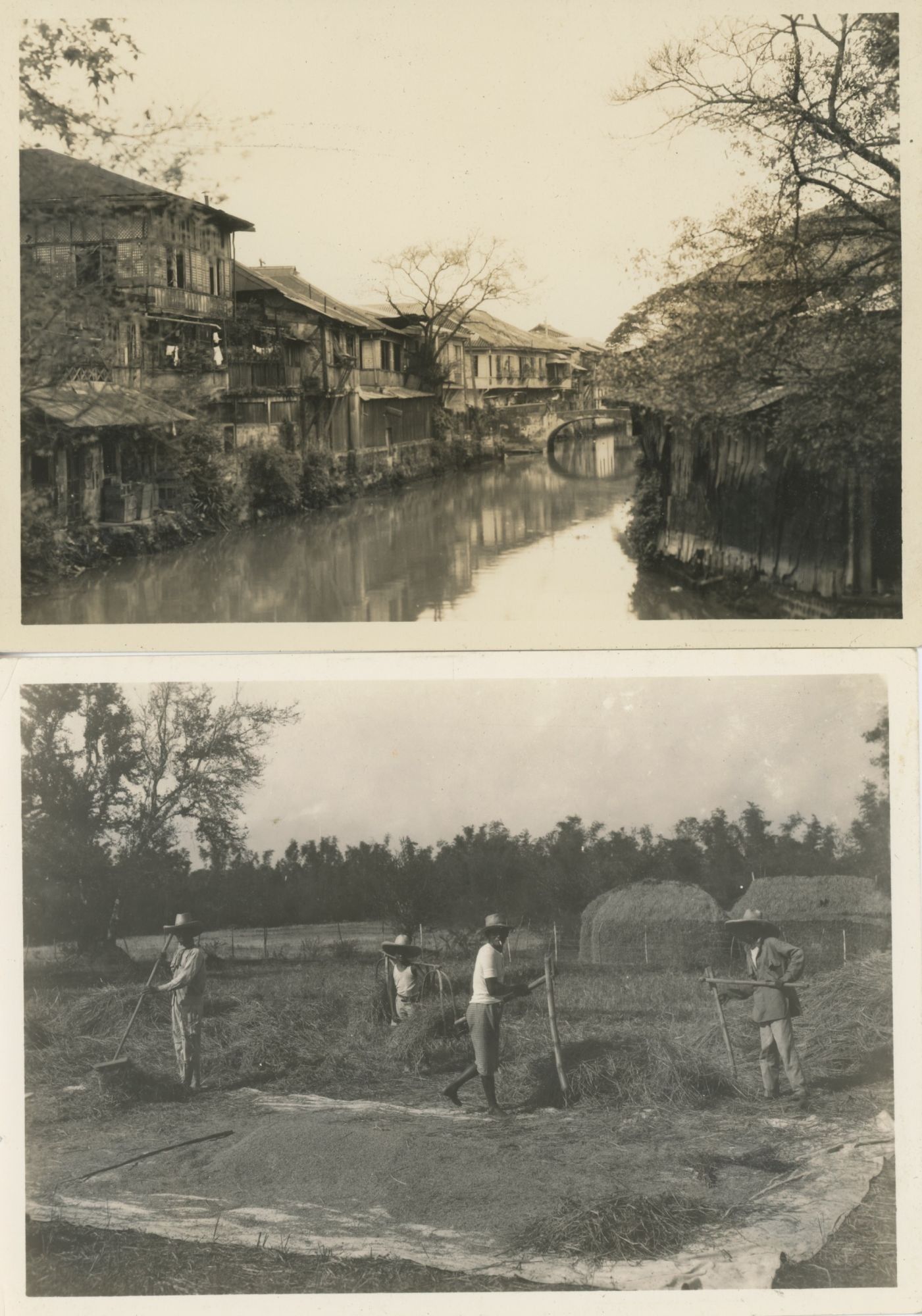
The shots of Filipino life show the modernization of a largely agrarian society. On the one hand there are rice paddies, huts with straw roofs, plows and carts pulled by oxen. Women weave on large outdoor looms, young people pose in traditional dress, a smiling man stands wearing a loincloth and holding a spear, and a circle of men and women dance around with drums. On the other hand, a long line of cars is parked outside the Sunday market in Baguio, men pose outside the Lanao Golf Club, a train speeds by the camera, and the neoclassical Manila Central Post Office watches over the wooden rowboats in the Pasig River. One set of photos shows penitents, or magdarame, performing the Good Friday practice of self-flagellation. As an audience looks on, men in hoods, many with crowns woven from plants, whip themselves or are whipped. Though the Catholic Church in the Philippines discourages it, these mortifications continue to be practiced to this day.
Of interest to scholars of the Philippines’ American colonial period, particularly for its documentation of ordinary Filipino life during this transitional time.
Offered here is a large archive of photographs likely belonging to—and likely with many taken by—an American soldier stationed in the Philippines. These were probably mainly taken in the 1930s, as a photograph appears to show the Golden Gate Bridge under construction. Some are possibly from World War II, as one photograph shows men standing on a ship under a large banner reading “CHINA BURMA INDIA”. However, they are mostly unlikely to have been taken during the war, as there is also a photograph of a pristine-looking Manila Central Post Office – the building was severely damaged during the fighting against the Japanese in the Battle of Manila, and was rebuilt in 1946.
In the archive are a mix of military photographs—generally of planes, ships, and life aboard them—and shots of Philippine life and scenery. One interesting scrapbook page places a photograph of a massive American steamer next to a shot of a wooden riverboat. Aboard the riverboat, young Filipino boys pose and smile for the camera. The military shots emphasize the US’s outsized power: a man poses next to and is dwarfed by a seaplane; three men stand behind a chest-high pile of artillery; planes fly in formation straight overhead; men and women eat a lunch spread under the hulking wings of a plane parked on a lawn.
The shots of Filipino life show the modernization of a largely agrarian society. On the one hand there are rice paddies, huts with straw roofs, plows and carts pulled by oxen. Women weave on large outdoor looms, young people pose in traditional dress, a smiling man stands wearing a loincloth and holding a spear, and a circle of men and women dance around with drums. On the other hand, a long line of cars is parked outside the Sunday market in Baguio, men pose outside the Lanao Golf Club, a train speeds by the camera, and the neoclassical Manila Central Post Office watches over the wooden rowboats in the Pasig River. One set of photos shows penitents, or magdarame, performing the Good Friday practice of self-flagellation. As an audience looks on, men in hoods, many with crowns woven from plants, whip themselves or are whipped. Though the Catholic Church in the Philippines discourages it, these mortifications continue to be practiced to this day.
Of interest to scholars of the Philippines’ American colonial period, particularly for its documentation of ordinary Filipino life during this transitional time.