

The Young Cripple and His Job [and] City Planning for Girls. Social Service Monographs No. 4 [and] No. 5
![The Young Cripple and His Job [and] City Planning](https://d3525k1ryd2155.cloudfront.net/h/022/446/1657446022.0.x.jpg)

- Chicago: University of Chicago Press, 1928
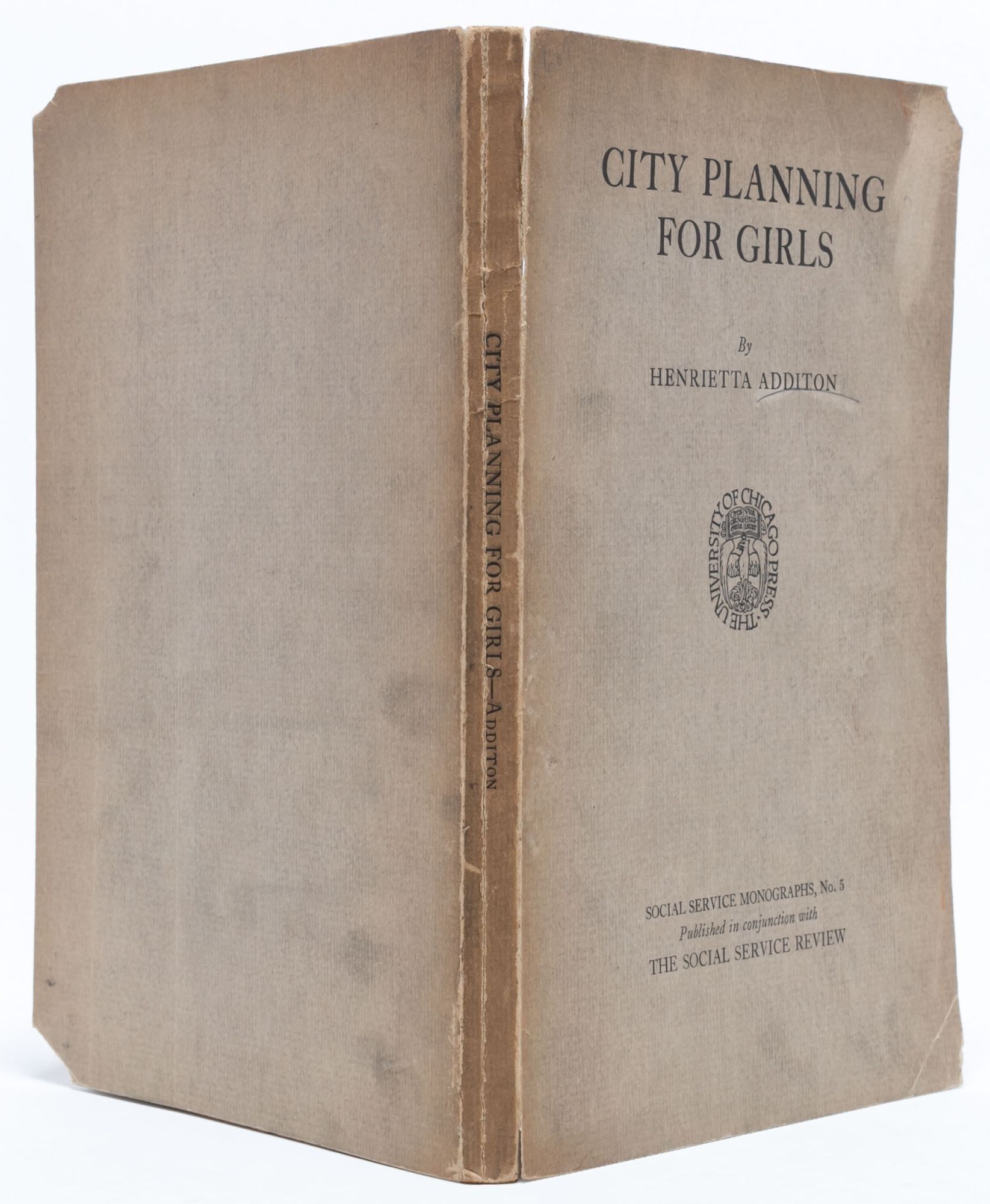
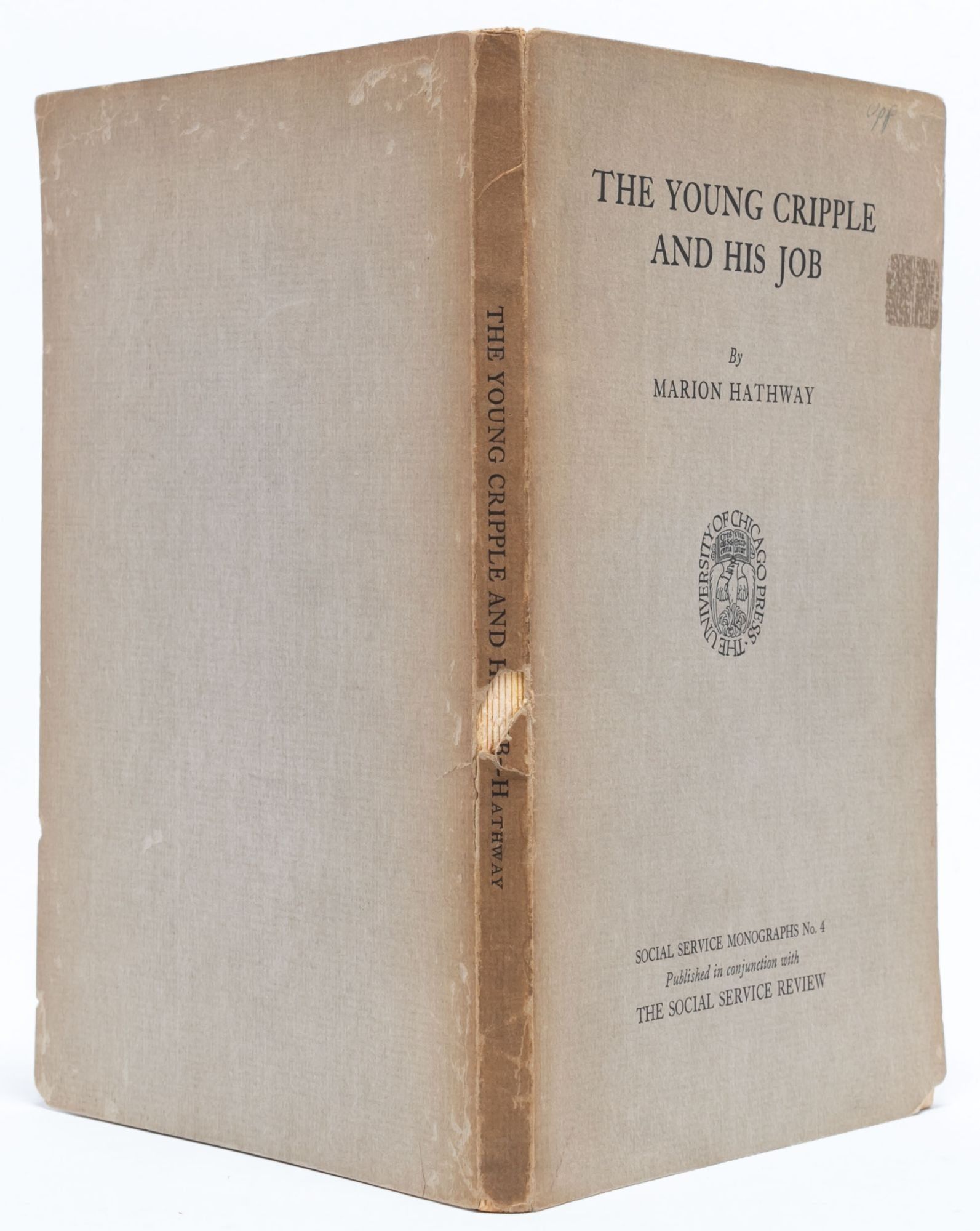
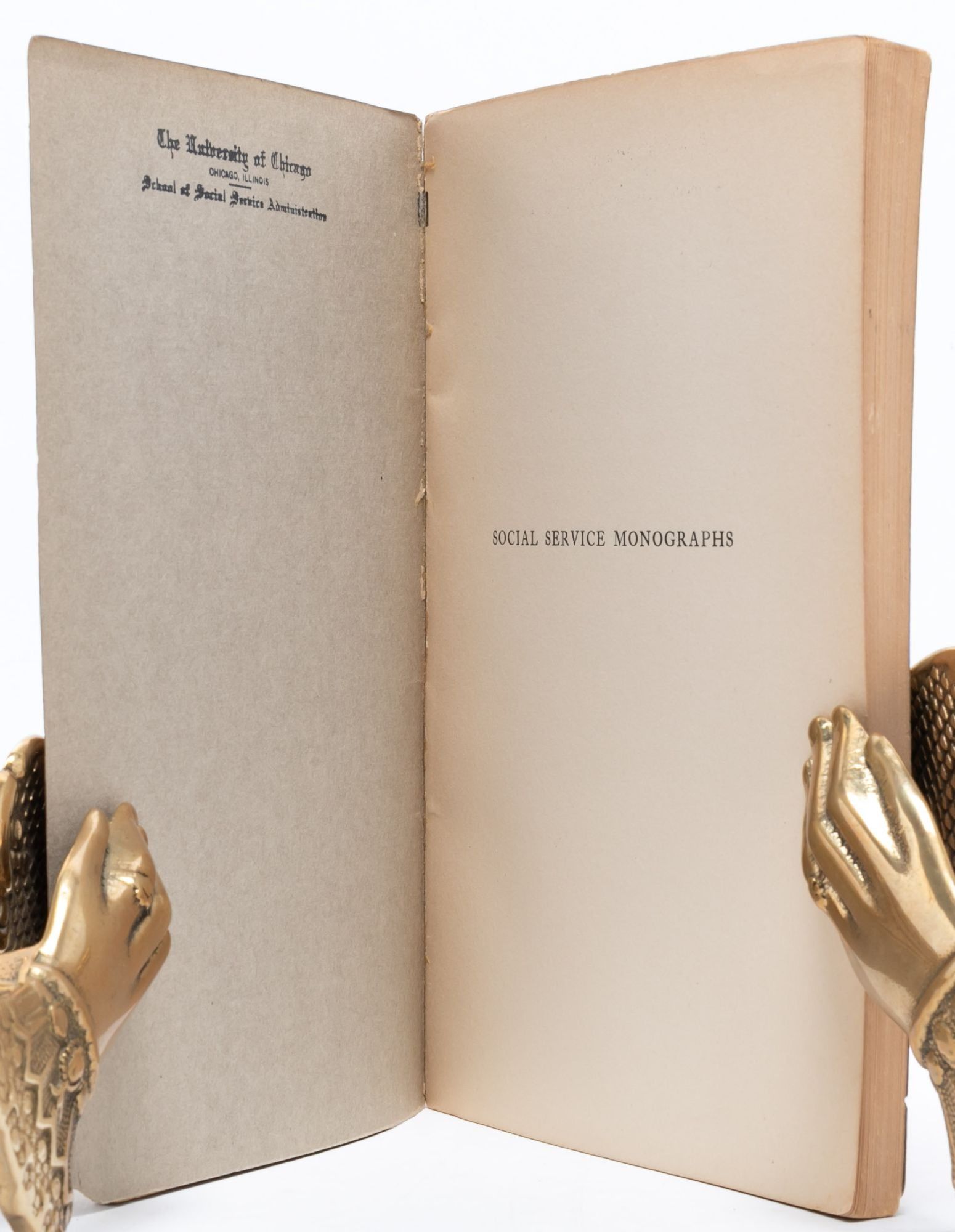
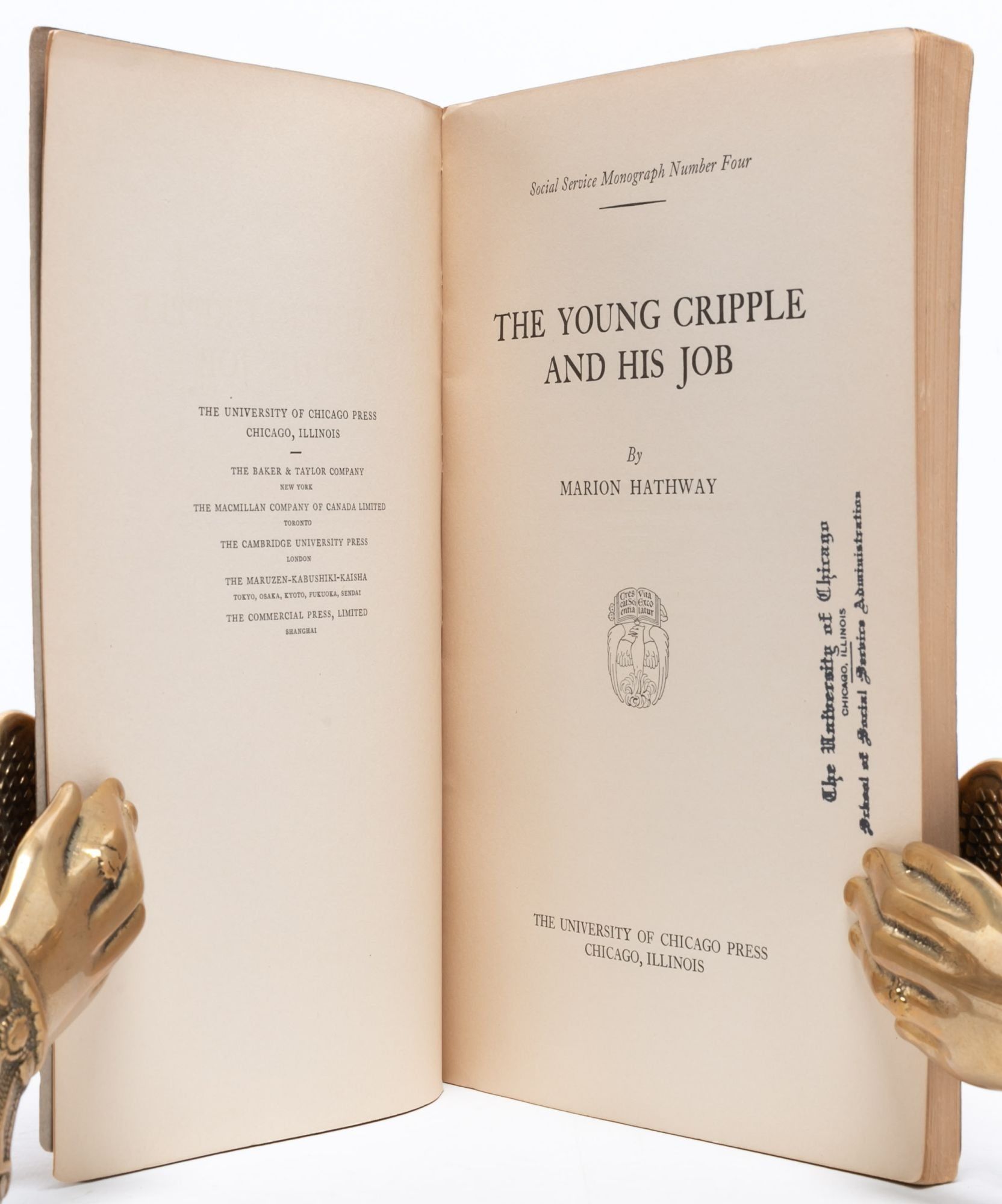
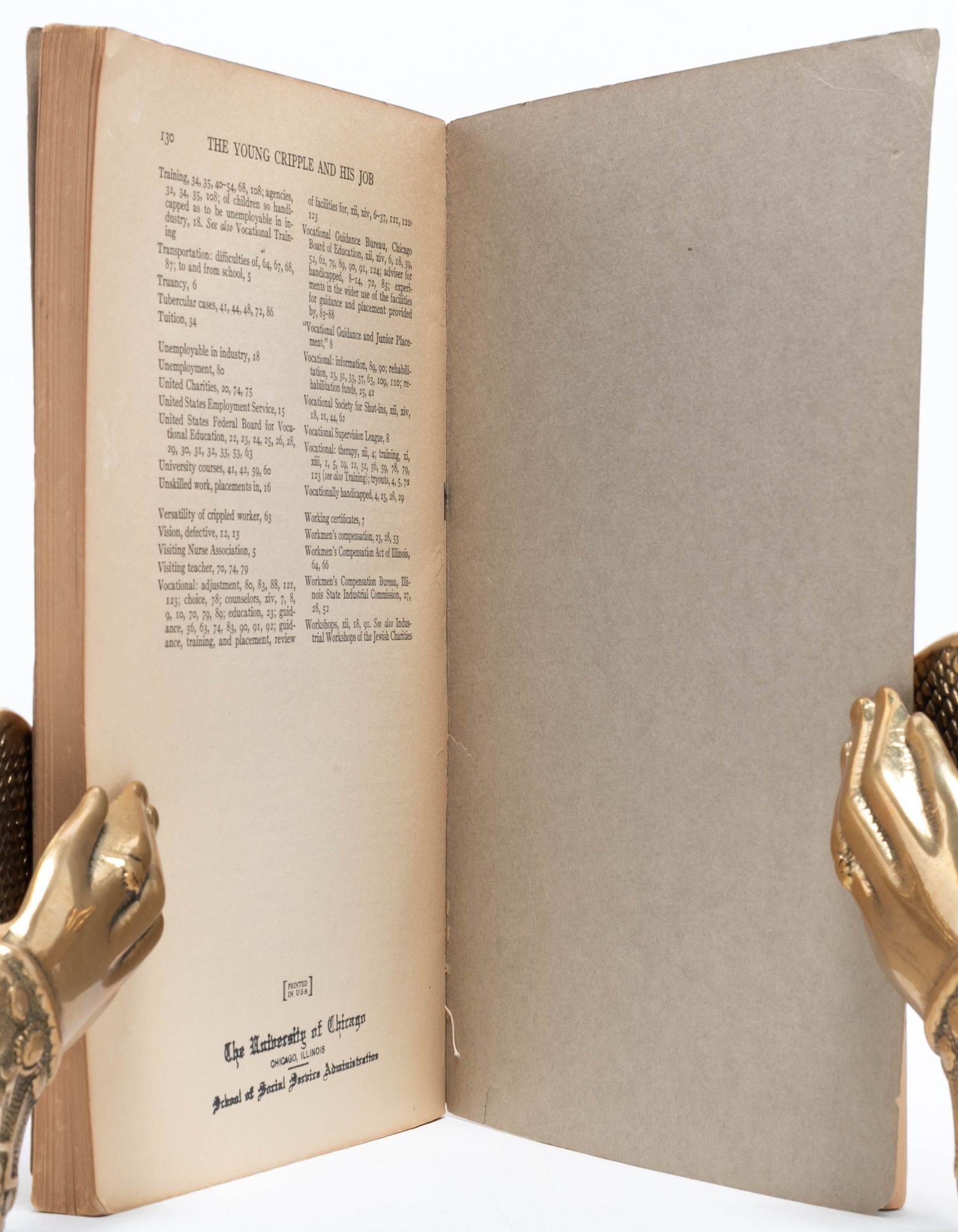
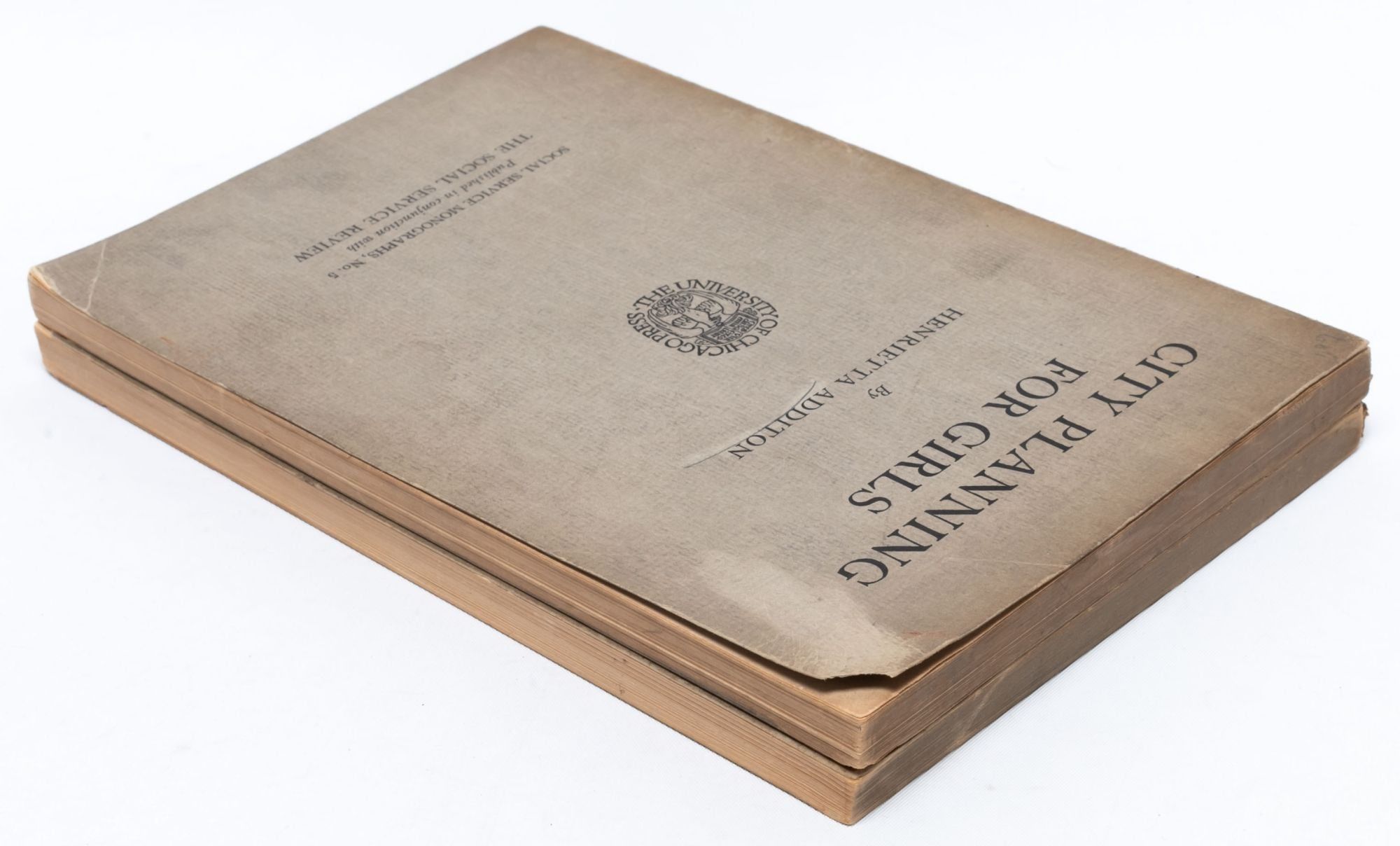
Chicago: University of Chicago Press, 1928. First edition. Very Good. Both issues in publisher's stiff paper wrappers. xiv, 130; vii, [3], 150 pp. One issue with an editor's preface by Sophonisba P. Breckinridge (1866 – 1948). The Young Cripple with chip to spine and a bit of chipping to edges; small adhesive stain to front cover; and library ink stamps of the University of Chicago to inside of front wrapper, first leaf, and last leaf. Dustsoiling and a pencil mark to wrappers of City Planning, with small chip to two corners and front wrapper starting. Still a Very Good set.
About a dozen issues of the Social Service Monographs series were published by the University of Chicago between 1927 and 1930, beginning with The Bail System in Chicago. The series was edited by Sophonisba P. Breckinridge, an activist, writer, and social scientist who was involved with Jane Addams' Hull House project. In her preface to The Young Cripple, Breckinridge credits Jane A. Neil, president of the Spalding School for Crippled Children, as well as several other women in healthcare, social work, and activism, for their support of the Social Service Monograph series.
Marion Hathway (1895 – 1955) was a social worker, educator, and leftist organizer who earned her master's degree from the University of Chicago in 1927. The Young Cripple and His Job was her thesis, published here as part of the Social Service Monographs Series (VCU Libraries). Hathway studied the cases of fifty disabled young men in Chicago—she surveyed them on their education, mental health, work skills, ethnicity (many were from immigrant backgrounds), and the details and causes of their disabilities—to determine how to improve their educational and employment resources. The year after completing her master's degree, Hathway began working on her Ph.D. at the University of Chicago under Breckinridge and Dean Edith Abbott (1876 – 1957); she published her thesis as The Migratory Worker and Family Life in 1934. Hathway found roles as a social worker and professor in Illinois, Washington, Hawai'i, and Puerto Rico, though she ultimately spent much of her life in Pennsylvania, where she taught at the University of Pittsburgh and at Bryn Mawr. While teaching at the university in 1951, she received criticism in the press for her involvement in labor organizing, with a Pennsylvania Superior Court judge accusing her of "teaching young folks that there is something wrong with this country." The judge demanded that the state of Pennsylvania cut off all aid to the University of Pittsburgh if Hathway was not fired; ultimately, no legal action was taken, and Hathway remained in her role. Hathway's lifelong commitment to social work motivated her participation in numerous professional organizations in the field, and she served on the boards of both the American Association of Social Workers and the American Association of Schools of Social Work.
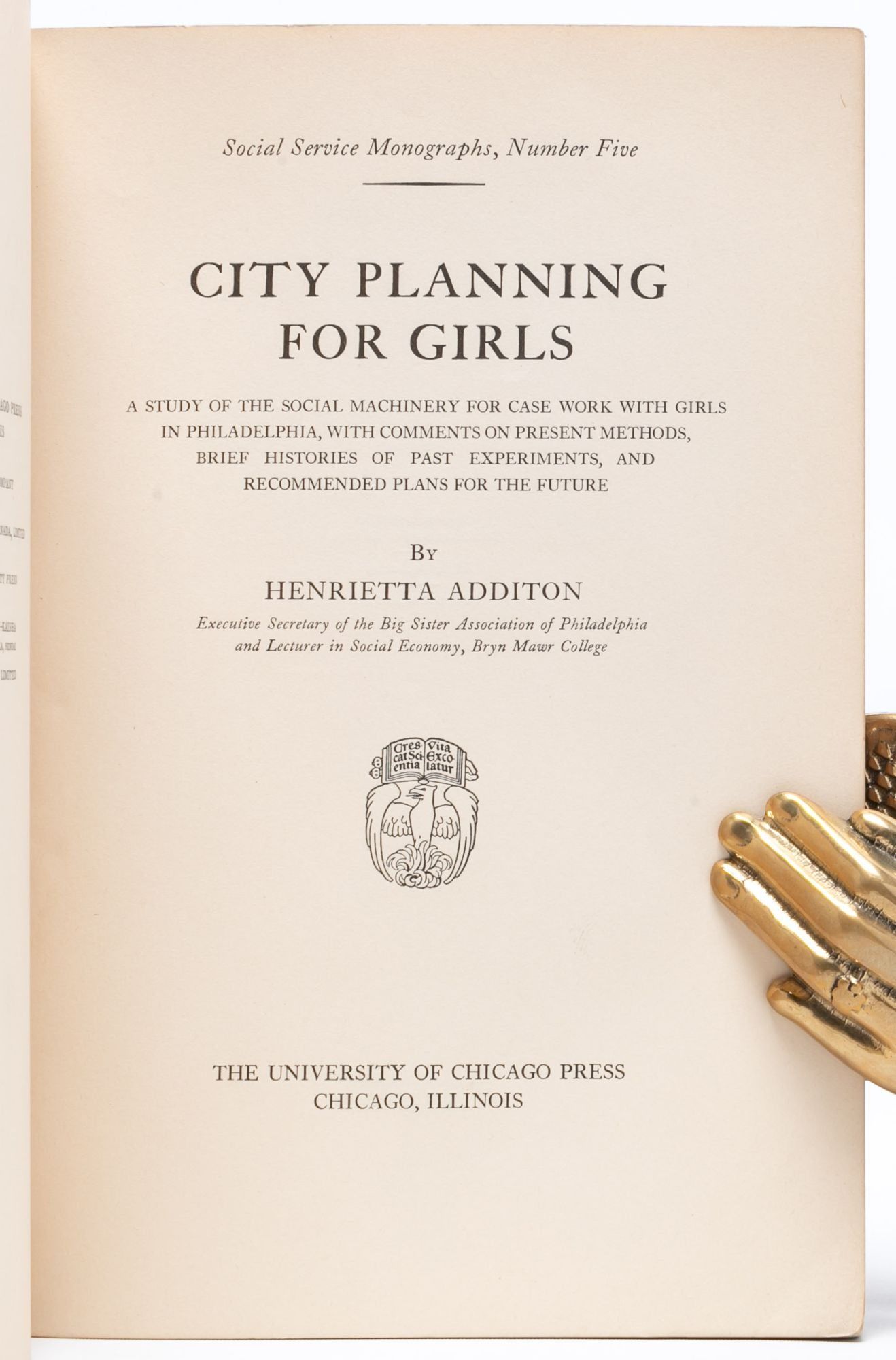
Henrietta Silvis Additon (1887 – 1973) was a social worker educated at the University of Pennsylvania whose advocacy centered around women and girls in the prison system. City Planning For Girls is a study of marginalized young women in urban areas that seeks to answer the question of "why girls go wrong": in essence, how economic and social forces result in young women entering the sex trade, being arrested, or experiencing homelessness. Additon analyzed the cases of twenty young women (each reported here with details of their health, socioeconomic class, employment experience, sexual backgrounds, etc.) to develop remedies for their disenfranchisement. At the time this monograph was published, Additon was serving as Executive Secretary of the Big Sister Association of Philadelphia and was a Lecturer in Social Sciences at Bryn Mawr College. In the early 1930s, however, she served as the Deputy Police Commissioner who lead the NYPD Crime Prevention Bureau (later the Juvenile Aid Bureau). Additon, who was skeptical of the effectiveness of prisons, was a reformer: she sought to make as few arrests as possible and to instead reduce crime by increasing public recreational spaces, providing resources to families, and barring young people from "breeding spots of delinquency" like theaters and dance halls (Perry). City Planning for Girls reflects Additon's interest in diverting young women from the justice system and seeking non-carceral solutions to what she identified as economic and social (rather than individual) problems.
American National Biography; VCU Libraries Social Welfare History Project; Perry, Elizabeth I. After the Vote: Feminist Politics in La Guardia's New York (2019). Very Good.
About a dozen issues of the Social Service Monographs series were published by the University of Chicago between 1927 and 1930, beginning with The Bail System in Chicago. The series was edited by Sophonisba P. Breckinridge, an activist, writer, and social scientist who was involved with Jane Addams' Hull House project. In her preface to The Young Cripple, Breckinridge credits Jane A. Neil, president of the Spalding School for Crippled Children, as well as several other women in healthcare, social work, and activism, for their support of the Social Service Monograph series.
Marion Hathway (1895 – 1955) was a social worker, educator, and leftist organizer who earned her master's degree from the University of Chicago in 1927. The Young Cripple and His Job was her thesis, published here as part of the Social Service Monographs Series (VCU Libraries). Hathway studied the cases of fifty disabled young men in Chicago—she surveyed them on their education, mental health, work skills, ethnicity (many were from immigrant backgrounds), and the details and causes of their disabilities—to determine how to improve their educational and employment resources. The year after completing her master's degree, Hathway began working on her Ph.D. at the University of Chicago under Breckinridge and Dean Edith Abbott (1876 – 1957); she published her thesis as The Migratory Worker and Family Life in 1934. Hathway found roles as a social worker and professor in Illinois, Washington, Hawai'i, and Puerto Rico, though she ultimately spent much of her life in Pennsylvania, where she taught at the University of Pittsburgh and at Bryn Mawr. While teaching at the university in 1951, she received criticism in the press for her involvement in labor organizing, with a Pennsylvania Superior Court judge accusing her of "teaching young folks that there is something wrong with this country." The judge demanded that the state of Pennsylvania cut off all aid to the University of Pittsburgh if Hathway was not fired; ultimately, no legal action was taken, and Hathway remained in her role. Hathway's lifelong commitment to social work motivated her participation in numerous professional organizations in the field, and she served on the boards of both the American Association of Social Workers and the American Association of Schools of Social Work.
Henrietta Silvis Additon (1887 – 1973) was a social worker educated at the University of Pennsylvania whose advocacy centered around women and girls in the prison system. City Planning For Girls is a study of marginalized young women in urban areas that seeks to answer the question of "why girls go wrong": in essence, how economic and social forces result in young women entering the sex trade, being arrested, or experiencing homelessness. Additon analyzed the cases of twenty young women (each reported here with details of their health, socioeconomic class, employment experience, sexual backgrounds, etc.) to develop remedies for their disenfranchisement. At the time this monograph was published, Additon was serving as Executive Secretary of the Big Sister Association of Philadelphia and was a Lecturer in Social Sciences at Bryn Mawr College. In the early 1930s, however, she served as the Deputy Police Commissioner who lead the NYPD Crime Prevention Bureau (later the Juvenile Aid Bureau). Additon, who was skeptical of the effectiveness of prisons, was a reformer: she sought to make as few arrests as possible and to instead reduce crime by increasing public recreational spaces, providing resources to families, and barring young people from "breeding spots of delinquency" like theaters and dance halls (Perry). City Planning for Girls reflects Additon's interest in diverting young women from the justice system and seeking non-carceral solutions to what she identified as economic and social (rather than individual) problems.
American National Biography; VCU Libraries Social Welfare History Project; Perry, Elizabeth I. After the Vote: Feminist Politics in La Guardia's New York (2019). Very Good.