

The Master and Margarita
- Hard Cover
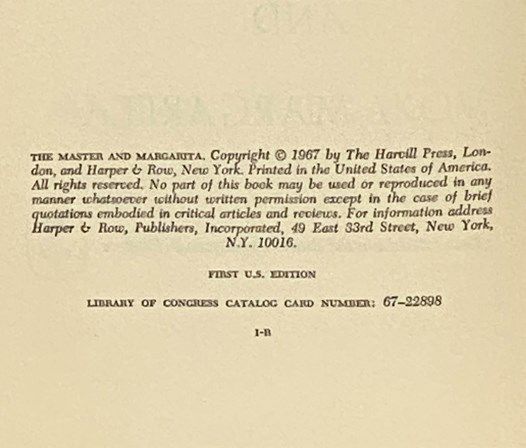
- New York: Harper & Row, 1967
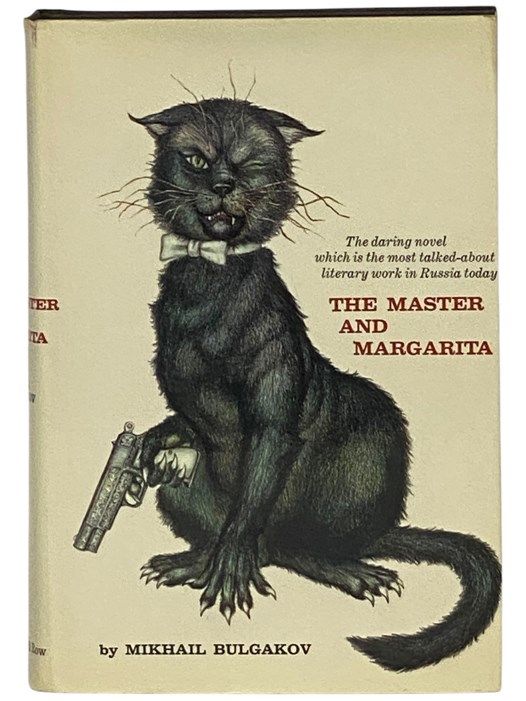
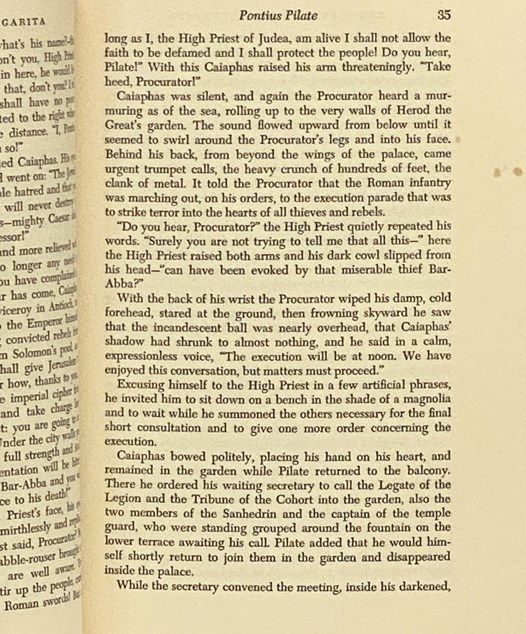
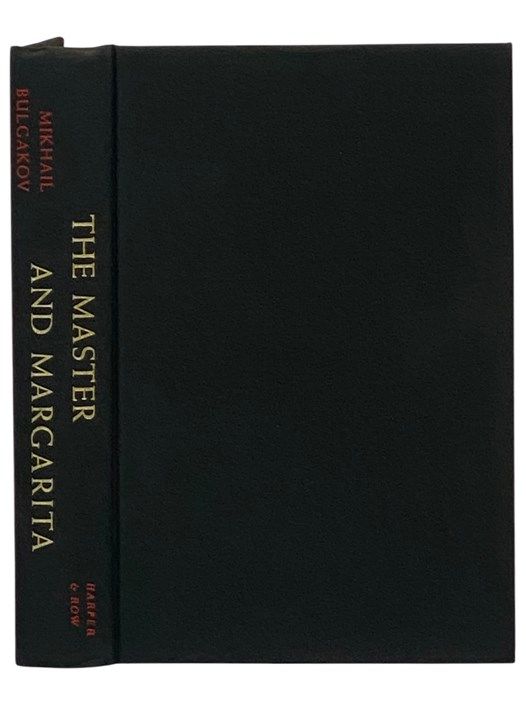
New York: Harper & Row, 1967. First American Edition. Hard Cover. Near Fine/Near Fine. 8x5x1. Mayer, Mercer. First U.S. edition. A few minor blemishes to jacket spine edges, three small spots to fore edge margin of p. 35. 1967 Hard Cover. vi, 394 pp. 8vo. Somewhat of a publishing oddity, in that two U.S. editions were released in the same year: the Harper & Row edition translated by Michael Glenny (offered here) and a Grove Press edition translated by Mirra Ginsburg. Both are still in print in paperback editions, which indicates that each has its own merits. In terms of dust jacket art, though, this Harper edition featuring a one-eyed cat wearing a bow-tie and holding a pistol is much more interesting than the Grove, which shows an image of a face in red and black. Kirkus Reviews discusses the tenor of each translation: "The battle of competing translations, a new publishing phenomenon which began with One Day in the Life of Ivan Denisovich, now offers two rival American editions of Mikhail Bulgakov's The Master and Margarita. Mirra Ginsburg's (Grove Press) version is pointedly grotesque: she delights in the sharp, spinning, impressionistic phrase. Her Bulgakov reminds one of the virtuoso effects encountered in Zamyatin and Babel, as yell as the early Pasternak's bizarre tale of Heine in Italy. Translator Michael Glenny, on the other hand, almost suggests Tolstoy. His (Harper & Row) version is simpler, softer, and more humane. The Bulgakov fantasy is less striking here, but less strident, too. Glenny: 'There was an oddness about that terrible day... It was the hour of the day when people feel too exhausted to breathe, when Moscow glows in a dry haze...' Ginsburg: 'Oh, yes, we must take note of the first strange thing... At that hour, when it no longer seemed possible to breathe, when the sun was tumbling in a dry haze...' In any case, The Master and Margarita, a product of intense labor from 1928 till Bulgakov's death in 1940, is a distinctive and fascinating work, undoubtedly a stylistic landmark in Soviet literature, both for its aesthetic subversion of 'socialist realism' (like Zamyatin, Bulgakov apparently believed that true literature is created by visionaries and skeptics and madmen), and for the purity of its imagination. Essentially the anti-scientific, vaguely anti-Stalinist tale presents a resurrected Christ figure, a demonic, tricksy foreign professor, and a Party poet, the bewildered Ivan Homeless, plus a bevy of odd or romantic types, all engaged in socio-political exposures, historical debates, and supernatural turnabouts. A humorous, astonishing parable on power, duplicity, freedom, and love." "A mysterious stranger appears in a Moscow park. Soon he and his retinue have astonished the locals with the magic show to end all magic shows. But why are they really here, and what has it got to do with the beautiful Margarita, or her lover, the Master, a silenced writer? A carnival for the senses and a diabolical extravaganza.