

African Homicide and Suicide
- 1960
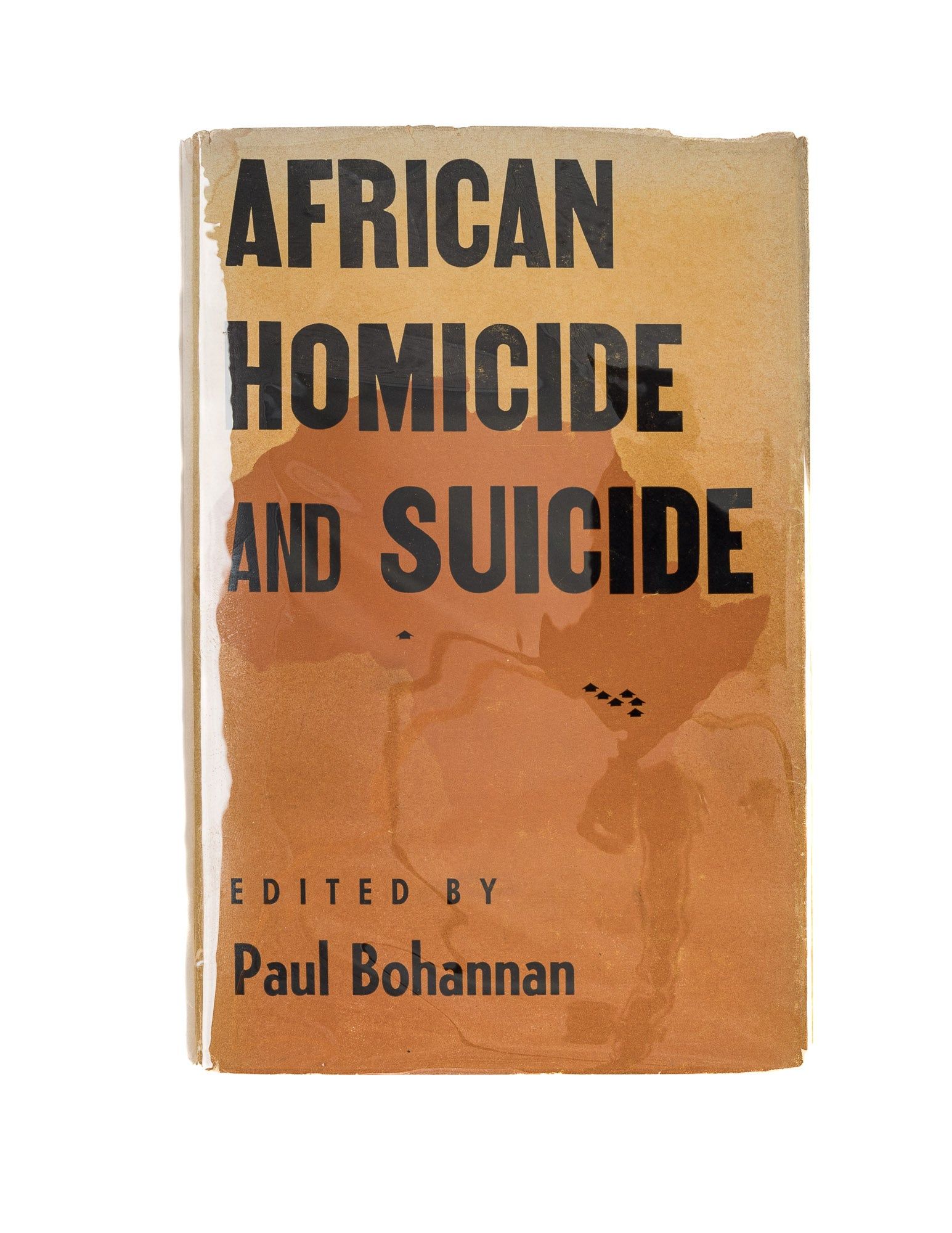
1960. Princeton University Press, 1960.. Princeton University Press, 1960. Bohannan, Paul. African Homicide and Suicide. Princeton: Princeton University Press, 1960. xviii, 270 pp. Illustrations. Publisher's cloth hardcover in worn and soiled price clipped dust jacket. Internally clean. $35. * A collection of ethnographic case studies exploring the cultural contexts of homicide and suicide in several traditional African societies. The book aims to move beyond simple statistics by showing how killings and self-inflicted deaths are understood and responded to within different social structures. The volume is comprised of contributions from various anthropologists detailing specific tribal societies. Bohannan himself contributed a chapter on homicide among the Tiv of central Nigeria. Other included societies are the Gisu and Basoga of Uganda. The analysis emphasizes the relationship between homicides and the social institutions in which they occur, particularly the family and domestic sphere. By examining "culpable homicides," or acts deemed wrong by the society, Bohannan identifies points of stress and conflict within the social structure. The studies reveal that while patterns of violence within domestic institutions are often similar, the reasons for killing differ considerably in non-domestic settings. The book explores how different cultures classify homicides, distinguishing between culpable and non-culpable types, such as the killing of witches or thieves. The included ethnographic accounts also detail the cultural views and beliefs surrounding suicide. For example, the Gisu people saw suicide as a result of uncontrollable "temper" and viewed it as evil and contagious. This book is a significant contribution to legal anthropology, particularly in how it documents and analyzes indigenous legal systems and their responses to violence. The analysis is built on case histories collected by the researchers.