

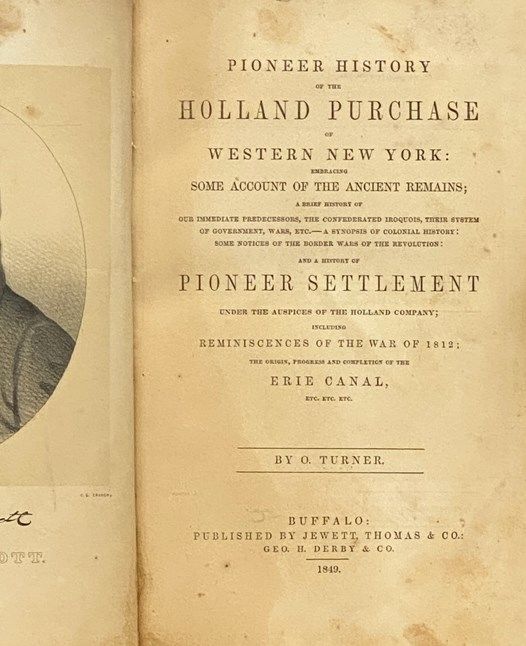
Pioneer History of the Holland Purchase of Western New York, Embracing Some Account of the Ancient Remains; A Brief History of Our Immediate Predecessors, the Confederated Iroquois, Their System of Government, Wars, Etc. - A Synopsis of Colonial History:
- Half-Leather
- Buffalo: Jewett, Thomas & Co.: Geo. H. Derby & Co, 1849
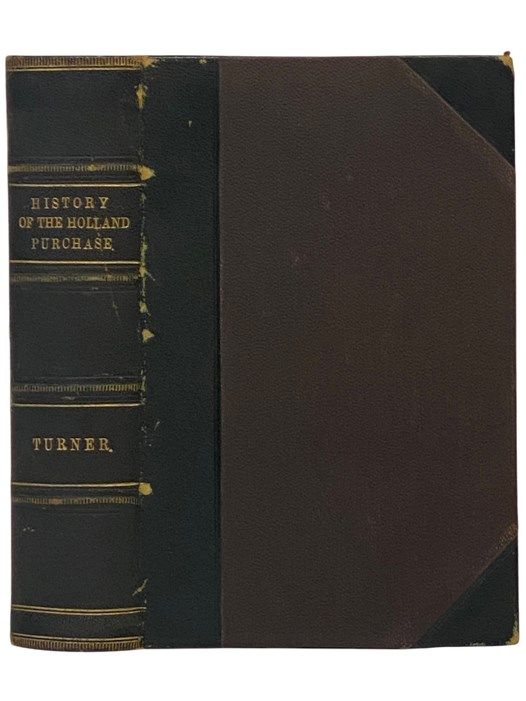
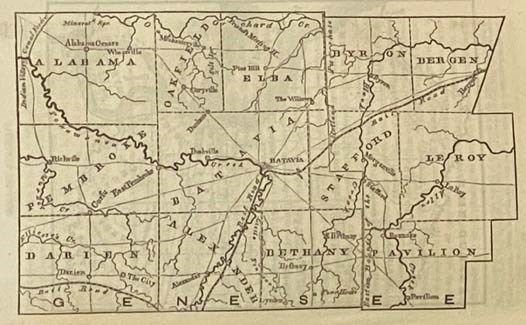
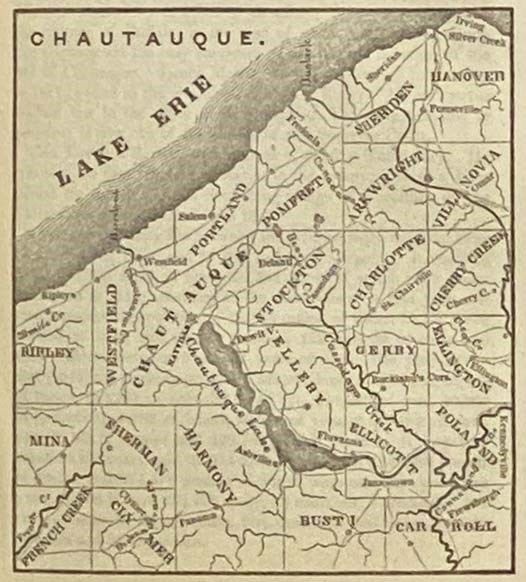
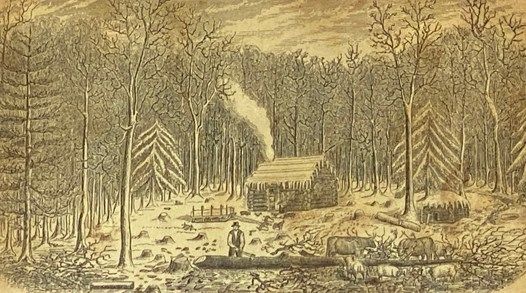
Buffalo: Jewett, Thomas & Co.: Geo. H. Derby & Co, 1849. First Edition. Half-Leather. Very Good/No Jacket. 0x0x0. First edition (Sabin 97491; Howes T-426). Likely rebound, for two reasons: we usually see this in cloth, and a Rochester book binder plate (Creed & Wilson) appears on the front endpaper. Edges a bit rubbed, tear across one illustrated plate, moderately foxed throughout, pencil name on front endpaper. 1849 Half-Leather. xvi, 666 pp. 8vo. 4 plates, 10 portraits, and 8 maps. Leather spine and corners over pebbled cloth boards, gilt titles. "The Holland Purchase is a large tract of land in what is now western portion of the U.S. state of New York. It consisted of about 3,250,000 acres (13,000 km²) of land from a line approximately 12 miles (19 km) to the west of the Genesee River to the present western border and boundary of New York State. The land bought by Holland Land Company was formed in 1796 by Wilheim Willink and a group of fellow Dutch bankers from Robert Morris. The bankers initially had hired trustees in the United States, because it was not legal at that time for them to directly own the property. Robert Morris, however, prevailed upon the New York Legislature to repeal that ordinance, which it did shortly thereafter. This area of western New York today is sometimes known as Genesee Country or the Niagara Frontier to distinguish it from the Finger Lakes region. A sales office for the Holland Land Company was opened in 1801 by surveyor and agent Joseph Ellicott in Batavia where land was sold until 1846 when the company was dissolved. Some plots of land were given to persons upon condition that they establish improvements, such as inns and taverns, to encourage growth. The office still exists and is a museum of the Holland Purchase, designated a National Historic Landmark. In 1802, the entire Holland Purchase, as well as the 500,000 acre (2,000 km²) Morris Reserve immediately to the east, was split off from Ontario County and constituted Genesee County. In the 40 years after it was erected, Genesee County was repeatedly split to form all or parts of the counties of Allegany (1806), Niagara (1808), Cattaraugus (1808), Chautaqua (1808), Erie (1821), Monroe (1821), Livingston (1821), Orleans (1824), and Wyoming (1841)." -- Wikipedia FULL TITLE: Pioneer History of the Holland Purchase of Western New York, Embracing Some Account of the Ancient Remains; A Brief History of Our Immediate Predecessors, the Confederated Iroquois, Their System of Government, Wars, Etc. - A Synopsis of Colonial History: Some Notices of the Border Wars of the Revolution: and a History of Pioneer Settlement under the Auspices of the Holland Company; Including Reminiscences of the War of 1812; the Origin, Progress and Completion of the Erie Canal, Etc., Etc. Etc.