

Ships That Pass in the Night [Inscribed and Signed to Clarence Darrow]
- SIGNED
- London: Lawrence and Bullen, 1900
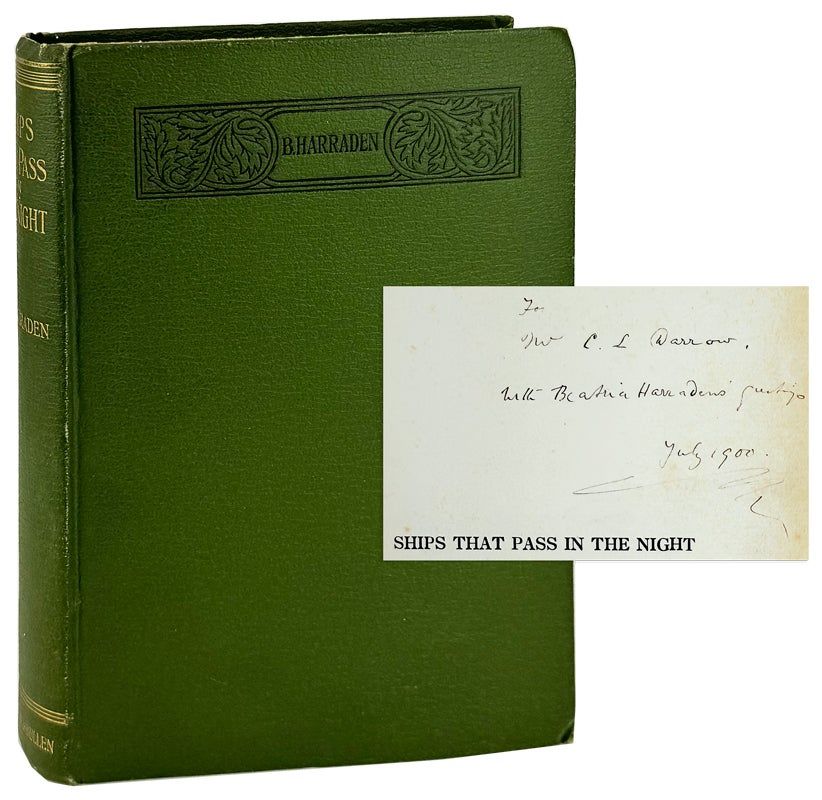
London: Lawrence and Bullen, 1900. Very Good. London: Lawrence and Bullen, 1900. Twentieth Edition. Octavo (19.5cm); publisher's green decorative cloth, upper cover stamped in black, gilt-lettered spine, black glazed endpapers; viii,200,12pp. Light shelf wear, corners bumped, spine a bit cocked, else a Very Good and sound copy. Inscribed and signed "For Mr C S Darrow, with Beatrice Harraden's greetings / July 1900."
The suffragist author's first novel, preceded only by a children's book a few years earlier. This romance, which coined the term "two ships passing in the night," was an overnight success, selling a million copies and reinforcing that the Victorian hunger for tales of true love thwarted by a beautiful death is bottomless. Sadly Harraden saw none of the riches from her book's success, having sold the rights to her publishers for practically nothing and while she went on to write many more novels, none of them enjoyed the same success as her first.
This copy inscribed to the young labor lawyer Clarence Darrow who in 1900 would have been between marriages. Whether he and Harraden ever met is up for debate, though she did travel to California dodging a lifetime of ill health. Darrow was sympathetic to the cause of woman's suffrage for which Harraden expended much of her energy--she was active back in England with the Women's Social and Political Union and the Women Writers' Suffrage League.
Years later, after his success serving as the defense in the Scopes Monkey Trial, Darrow wrote his memoir "The Story of My Life," in which he pays homage to his mother. "She was an ardent woman's-rights advocate, as they called the advanced woman seventy years ago." He also credited her with saving the family from penury.
A moving association of a long-forgotten best-seller.
References:
Clarence Darrow, "The Story of My Life."
American National Biography
Oxford Dictionary of National Biography.
The suffragist author's first novel, preceded only by a children's book a few years earlier. This romance, which coined the term "two ships passing in the night," was an overnight success, selling a million copies and reinforcing that the Victorian hunger for tales of true love thwarted by a beautiful death is bottomless. Sadly Harraden saw none of the riches from her book's success, having sold the rights to her publishers for practically nothing and while she went on to write many more novels, none of them enjoyed the same success as her first.
This copy inscribed to the young labor lawyer Clarence Darrow who in 1900 would have been between marriages. Whether he and Harraden ever met is up for debate, though she did travel to California dodging a lifetime of ill health. Darrow was sympathetic to the cause of woman's suffrage for which Harraden expended much of her energy--she was active back in England with the Women's Social and Political Union and the Women Writers' Suffrage League.
Years later, after his success serving as the defense in the Scopes Monkey Trial, Darrow wrote his memoir "The Story of My Life," in which he pays homage to his mother. "She was an ardent woman's-rights advocate, as they called the advanced woman seventy years ago." He also credited her with saving the family from penury.
A moving association of a long-forgotten best-seller.
References:
Clarence Darrow, "The Story of My Life."
American National Biography
Oxford Dictionary of National Biography.