

Collection of Mining-Related Materials Belonging to California Mining Broker James Ireland

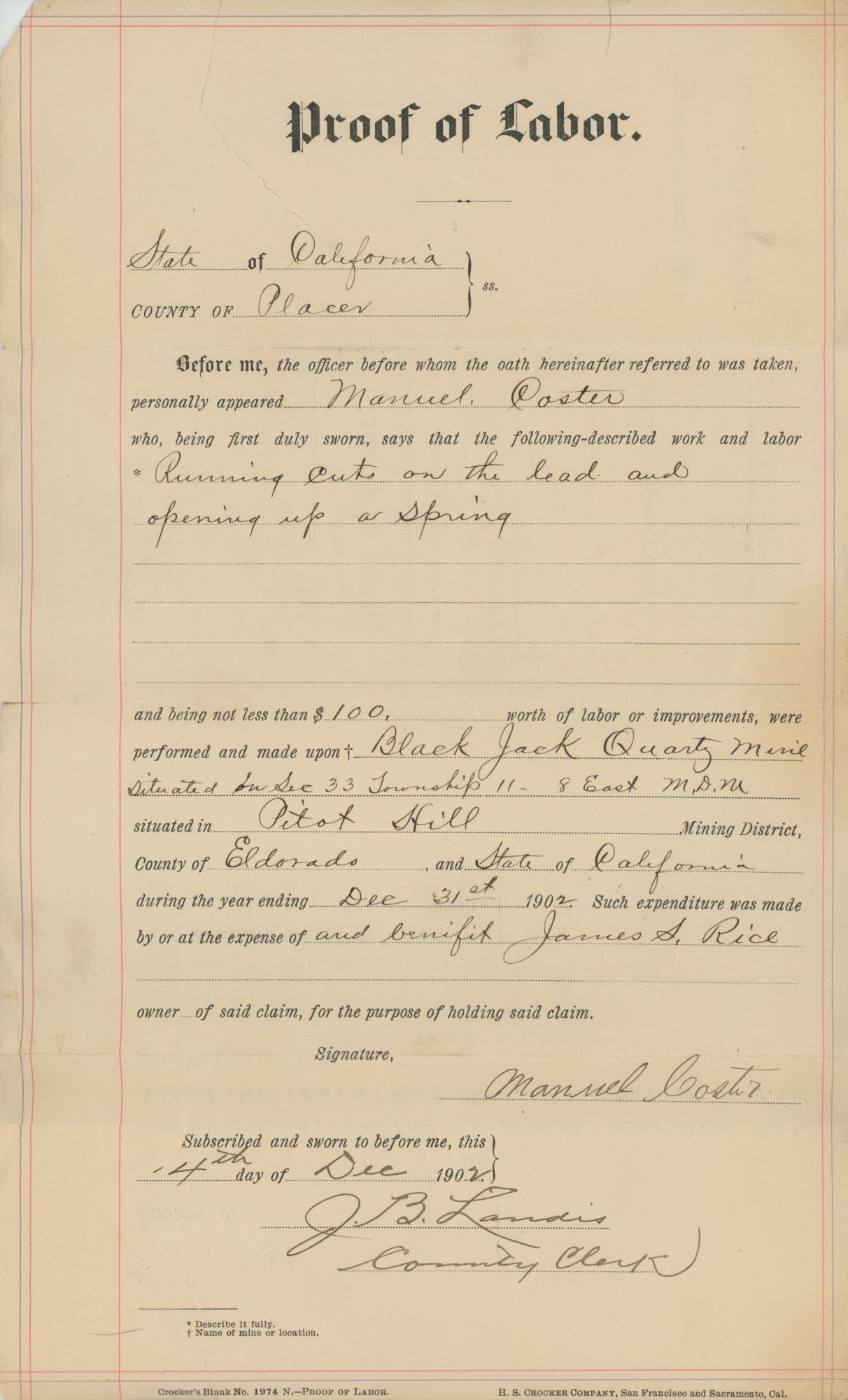
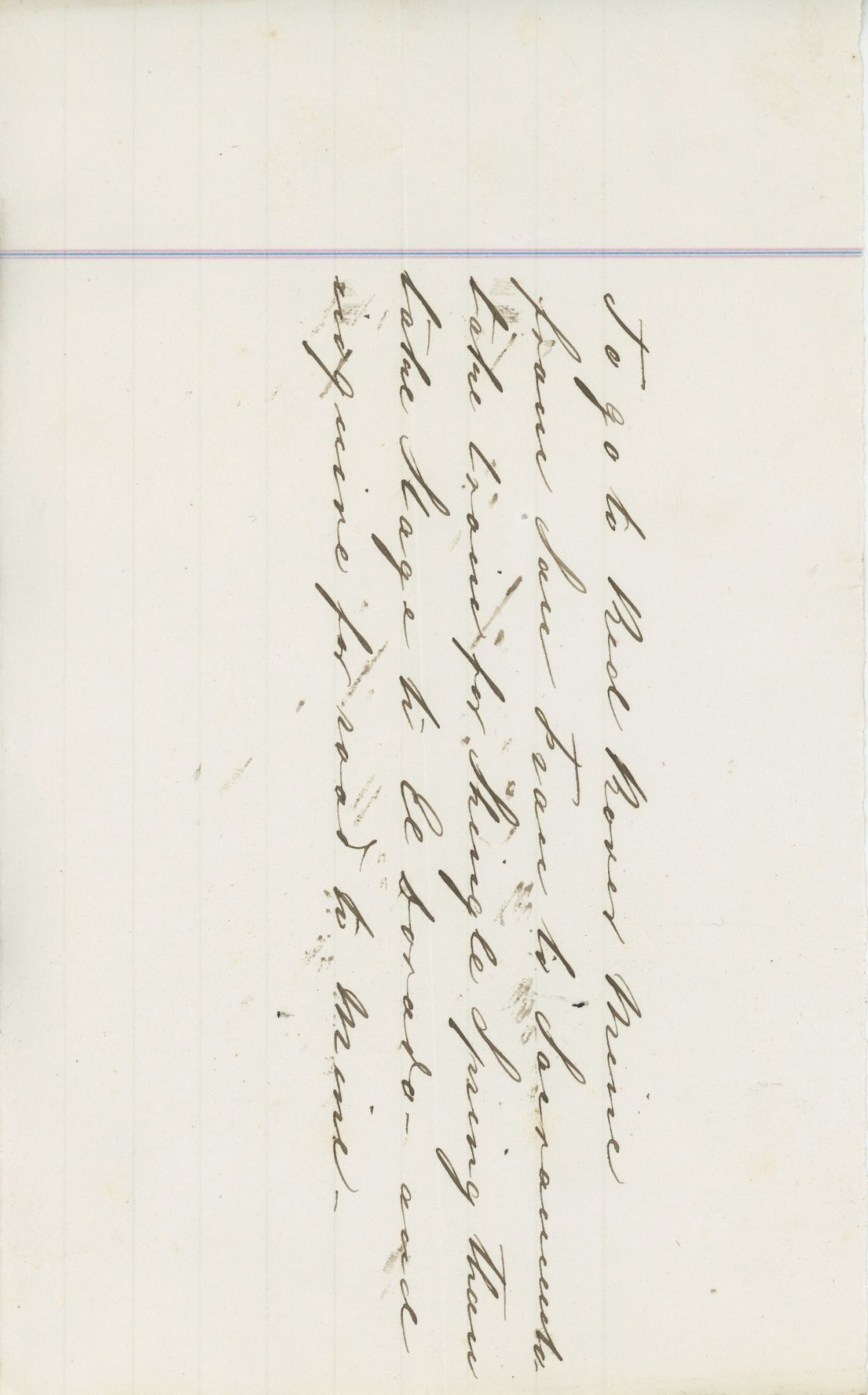
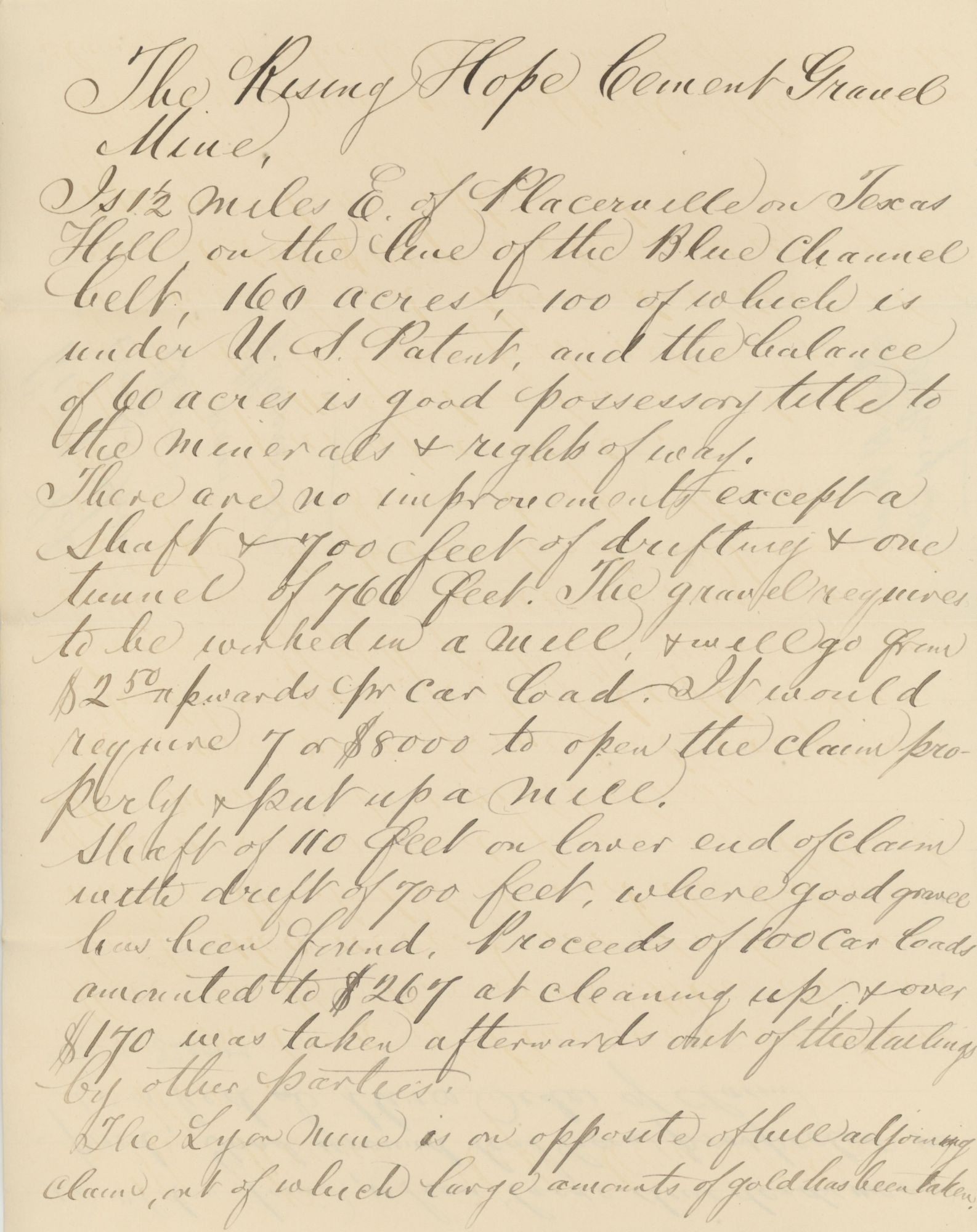
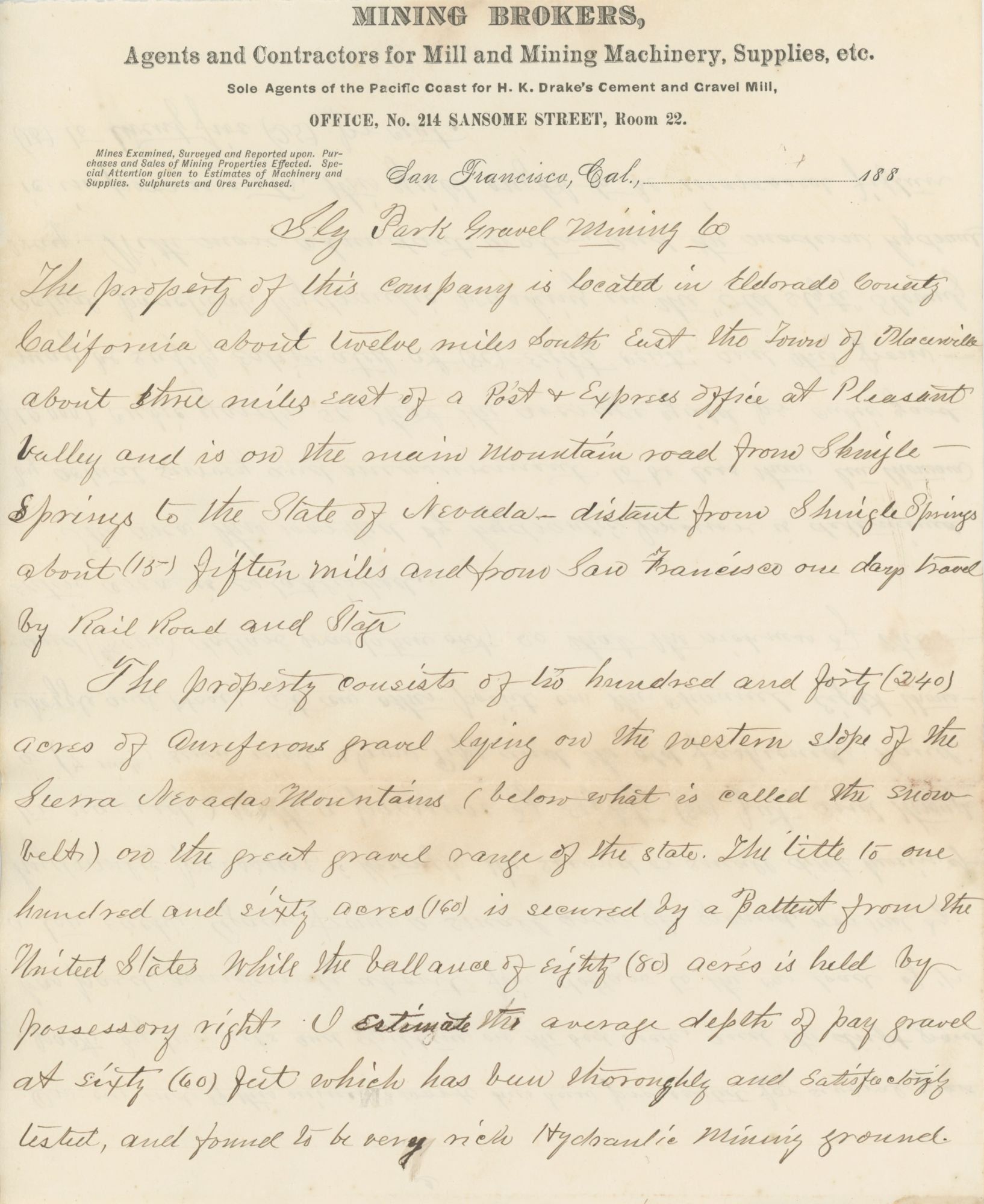
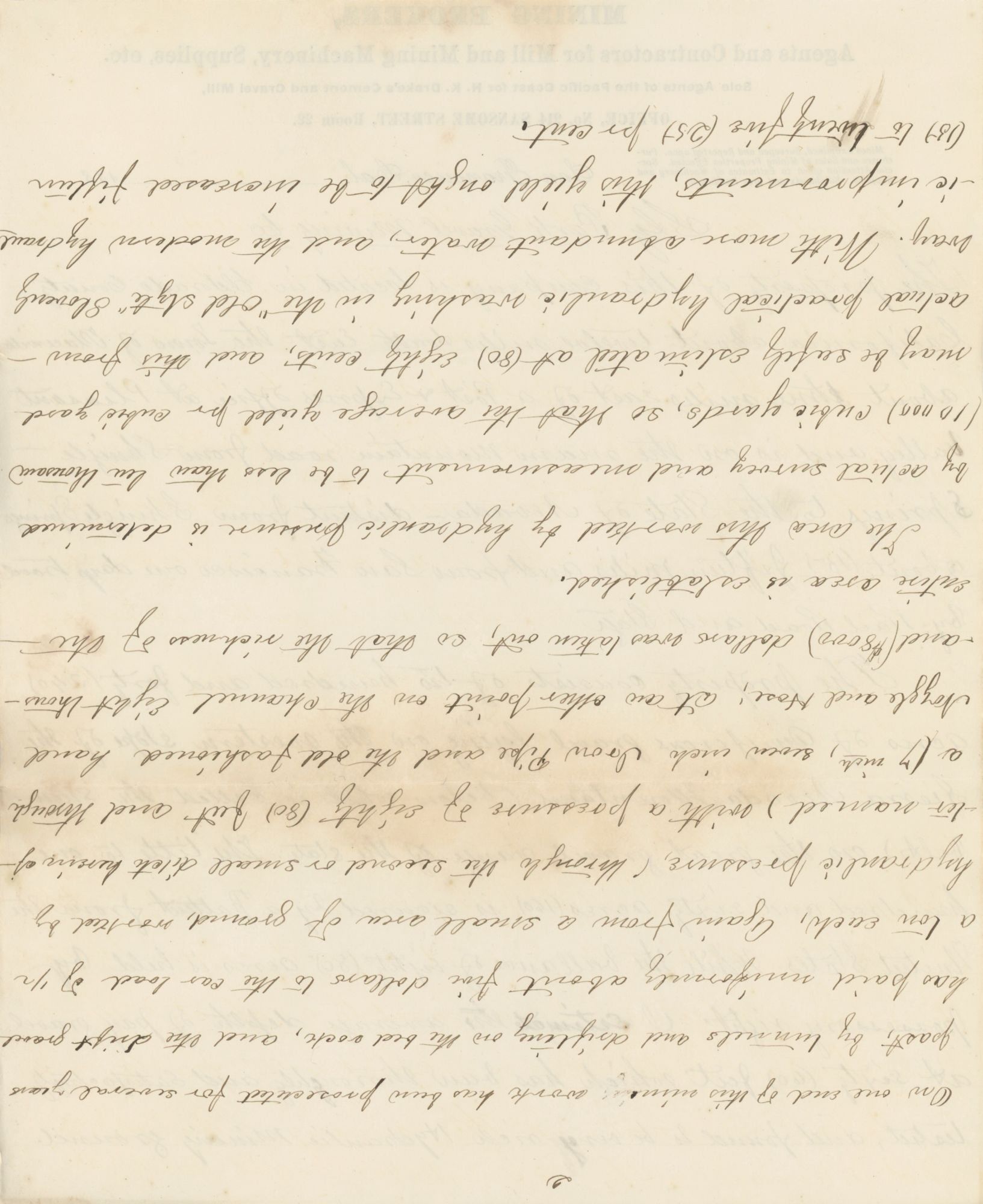
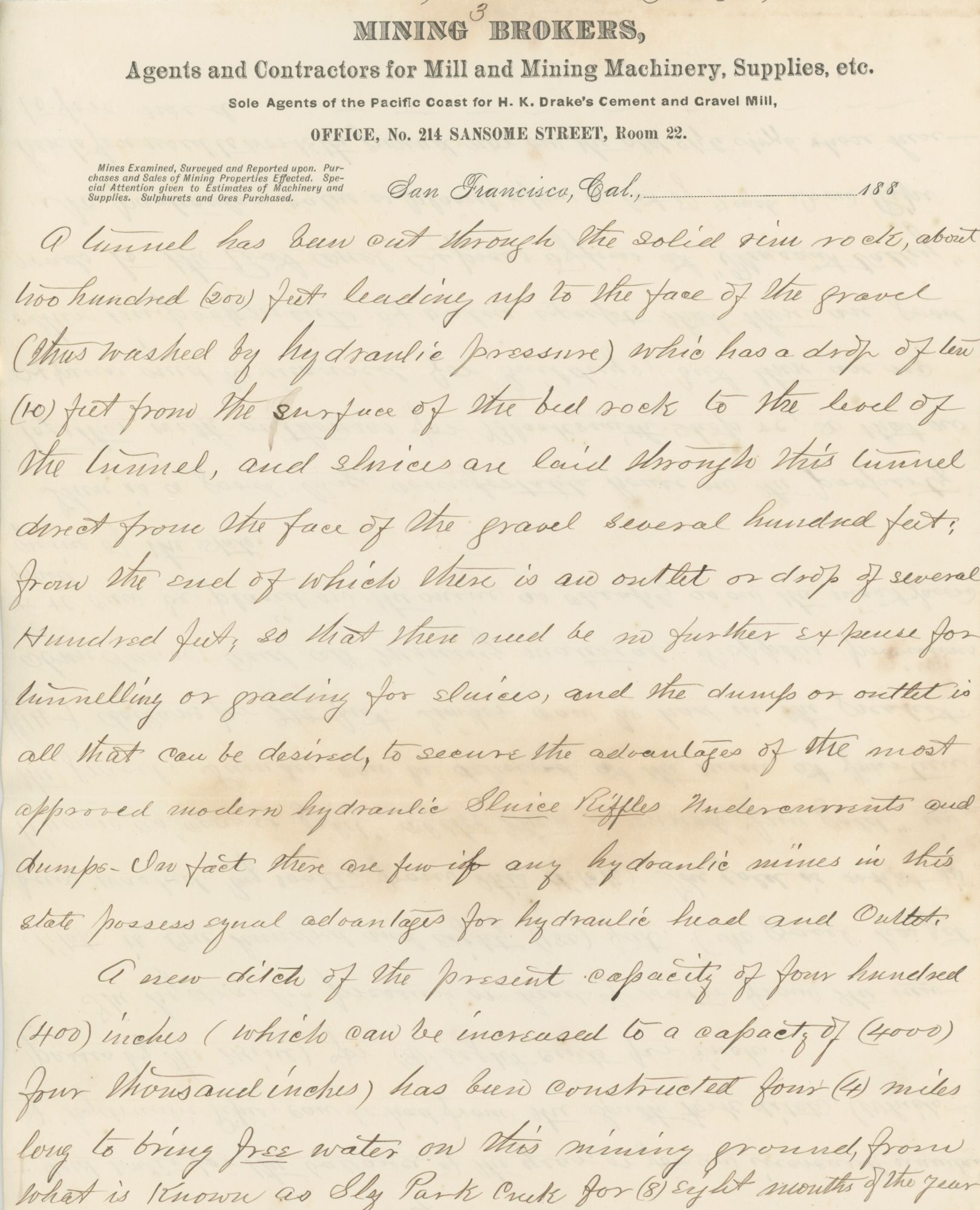
- Sixteen items, mainly letters and descriptions of mining claims which total thirty-seven handwritten pages. Of the written pages
- El Dorado County, California , 1902
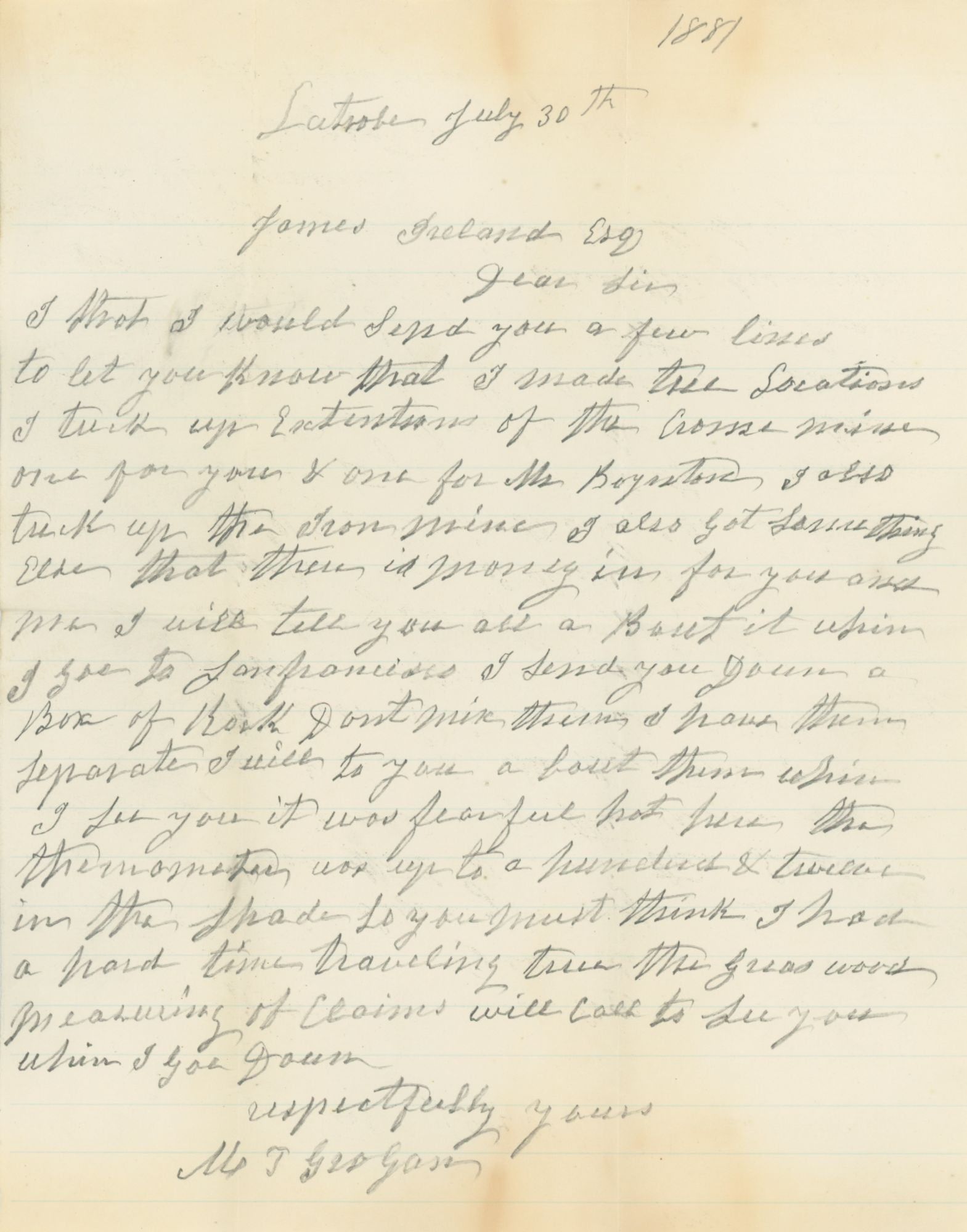
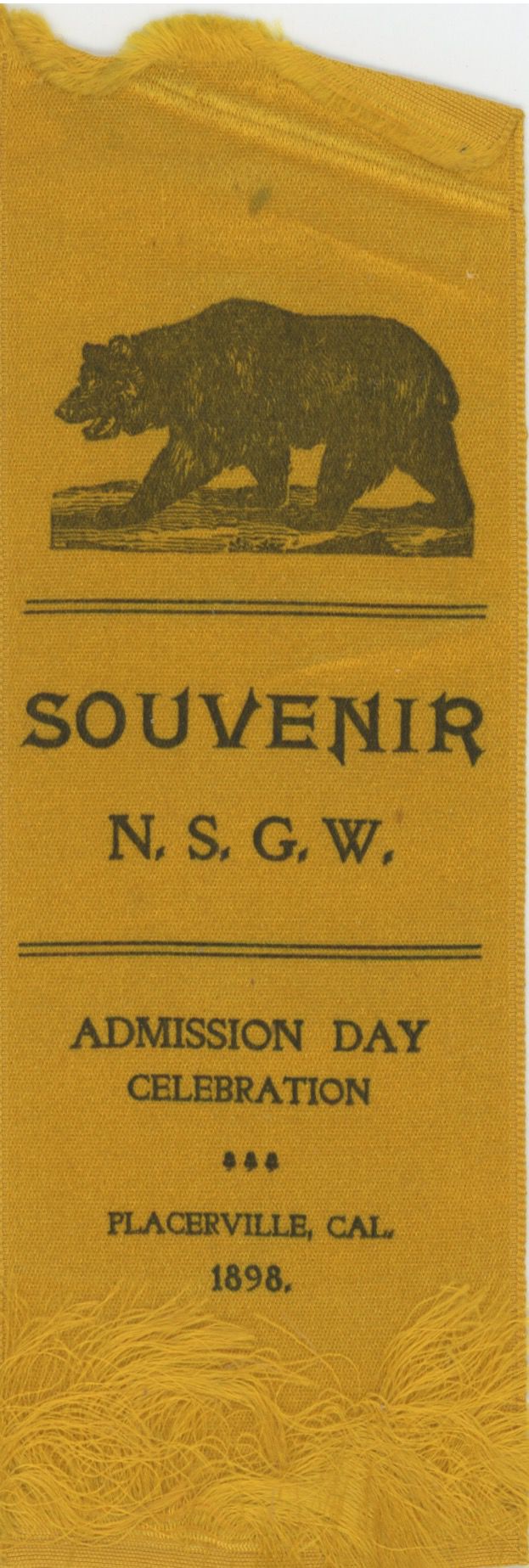
El Dorado County, California, 1902. Sixteen items, mainly letters and descriptions of mining claims which total thirty-seven handwritten pages. Of the written pages: one 7 ½ x 7 ½ inch, three 8 x 5 inch, twenty 8 x 10 inch, seven 8 x 12 ½ inch, and six 8 x 14 inch. Items date between 1879 and 1902, with seven items undated. One empty envelope from “Brinckmann Quartz Crusher and Furnace Company” and one souvenir ribbon for the Placerville “Admission Day Celebration” by the Native Sons of the Golden West, 1898. Some items with tearing and staining, mostly not affecting legibility; overall very good to near fine.. James Ireland (c.1830–deceased) worked as a mining broker in the late 19th century in California. Records suggest that he was an immigrant from Scotland, meaning that he was probably not a member of the Native Sons of the Golden West, despite the ribbon in this collection; a fraternal organization celebrating the California Gold Rush, the Native Sons did not offer membership to those born outside the state until 2024. Ireland seemed to have lived in San Francisco and Oakland, but his mining interests were in El Dorado County. Most famously the home of Sutter’s Mill, the county currently has nearly 2,600 mines on record with the USGS and sits near the northern end of the “Mother Lode” of gold-bearing quartz that runs along 120 miles of the Sierra Nevadas.
Offered here is a small collection of Ireland’s materials relating to various mining prospects, mainly descriptions of mines, presumably for soliciting interest in purchasing them. These include the Church Union and Red Rover mines outside of Diamond Springs, the Dry Gulch gravel mine near Pleasant Valley, the Argonaut mine in Greenwood, and the Sly Park gravel mine, probably near Pollock Pines. The descriptions give details about the locations, whether the land is under patent, what improvements there are, the mine’s per-ton financials, likely costs for necessary improvements like mills, and so on.
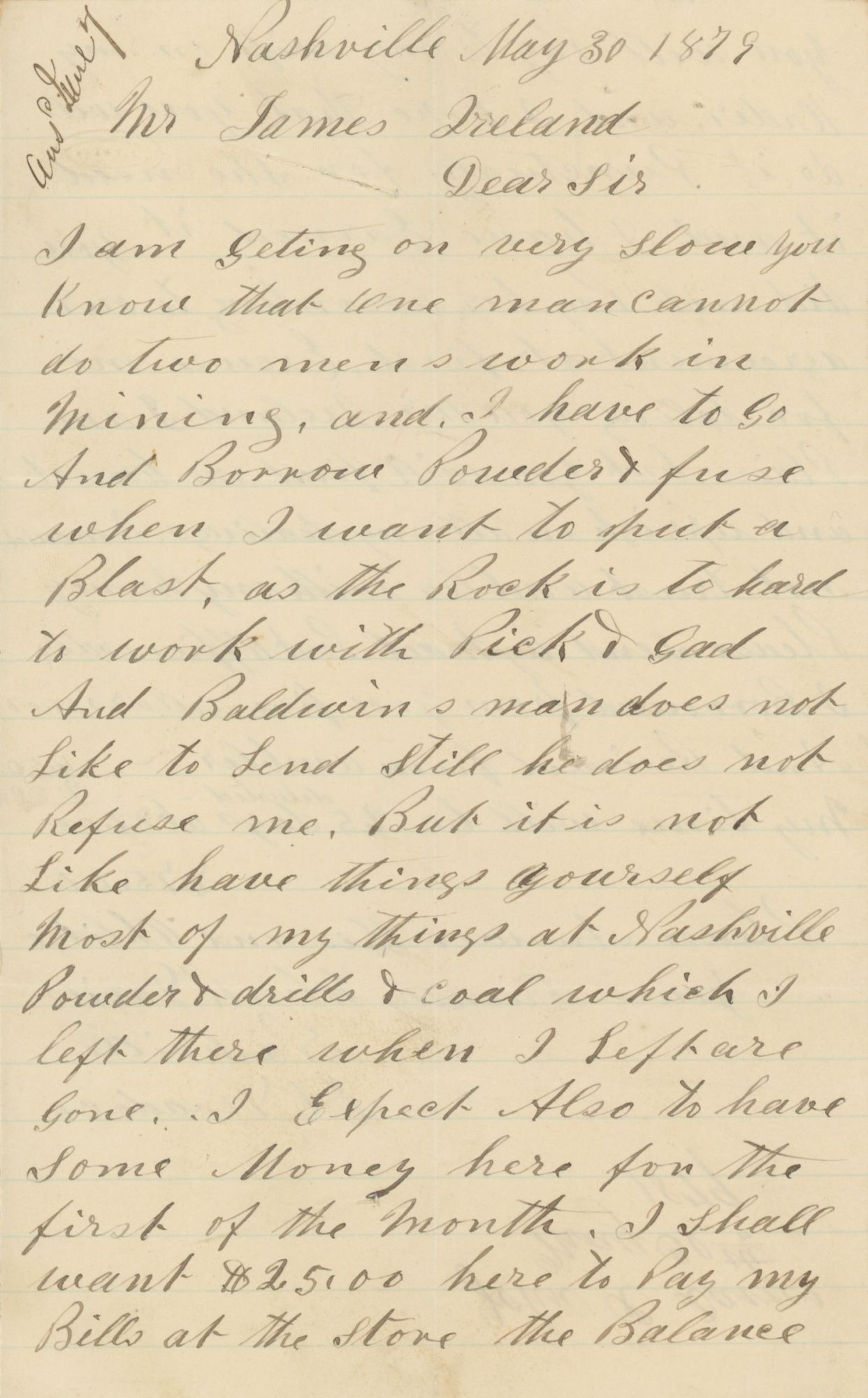
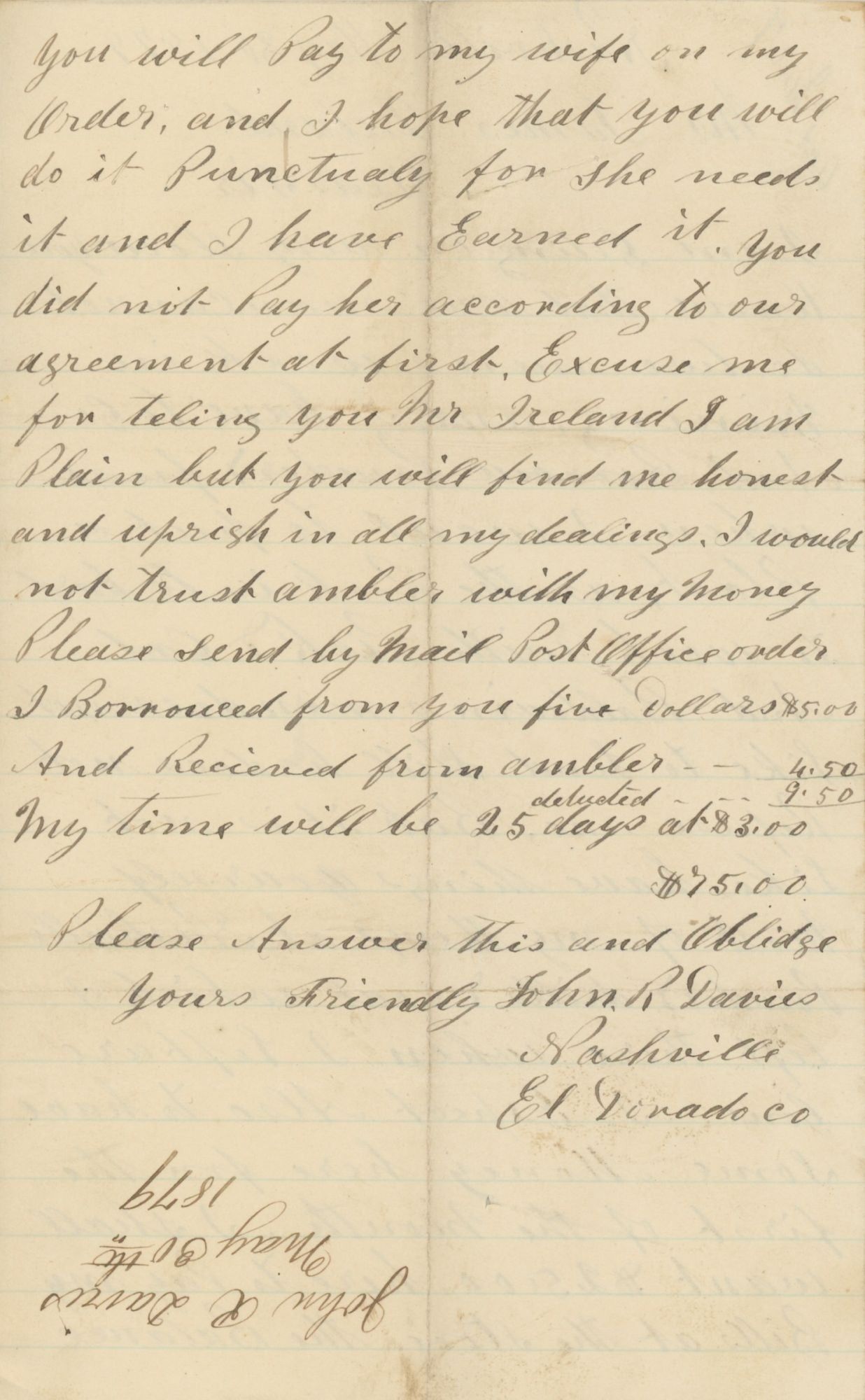
Some material pertains to mines that Ireland seemed to already own or have financial stakes in. In Shingle Springs, he managed to purchase a mine for “no money”; the previous owners were “not at all anxious to sell at the figures agreed upon” but conceded that “if the money is paid within the time agreed upon the mine shall be yours” (September 23, 1879). Ireland also owned or managed at least one mine in Nashville, though in 1879 he seems to have left his worker there in the lurch. The worker, John R. Davies, writes:
“I am geting on very slow you know that one man cannot do two mens work in mining, and I have to Go and Borrow Powder + fuse when I want to put a Blast [...] Most of my things at Nashville Powder + drills + coal which I left there when I left are gone. I Expect Also to have some Money here for the first of the Month. I shall want $25.00 here to Pay my Bills at the store the Balance you will Pay to my wife on my Order, and I hope that you will do it Punctualy for she needs it and I have Earned it. you did not Pay her according to our agreement at first.” (May 30, 1879)
Of interest to scholars of Californian gold mining after the gold rush, especially for its detailed descriptions of lesser-known mining claims.
Offered here is a small collection of Ireland’s materials relating to various mining prospects, mainly descriptions of mines, presumably for soliciting interest in purchasing them. These include the Church Union and Red Rover mines outside of Diamond Springs, the Dry Gulch gravel mine near Pleasant Valley, the Argonaut mine in Greenwood, and the Sly Park gravel mine, probably near Pollock Pines. The descriptions give details about the locations, whether the land is under patent, what improvements there are, the mine’s per-ton financials, likely costs for necessary improvements like mills, and so on.
Some material pertains to mines that Ireland seemed to already own or have financial stakes in. In Shingle Springs, he managed to purchase a mine for “no money”; the previous owners were “not at all anxious to sell at the figures agreed upon” but conceded that “if the money is paid within the time agreed upon the mine shall be yours” (September 23, 1879). Ireland also owned or managed at least one mine in Nashville, though in 1879 he seems to have left his worker there in the lurch. The worker, John R. Davies, writes:
“I am geting on very slow you know that one man cannot do two mens work in mining, and I have to Go and Borrow Powder + fuse when I want to put a Blast [...] Most of my things at Nashville Powder + drills + coal which I left there when I left are gone. I Expect Also to have some Money here for the first of the Month. I shall want $25.00 here to Pay my Bills at the store the Balance you will Pay to my wife on my Order, and I hope that you will do it Punctualy for she needs it and I have Earned it. you did not Pay her according to our agreement at first.” (May 30, 1879)
Of interest to scholars of Californian gold mining after the gold rush, especially for its detailed descriptions of lesser-known mining claims.