

Accounting Ledger for the American Exchequer Gold Mining Company, 1866–1868
- 7 ½ x 12 inch ledger book, 33pp with many more blank. Front cover near detached and back cover detached, missing spine, some st
- Eureka South, CA , 1868
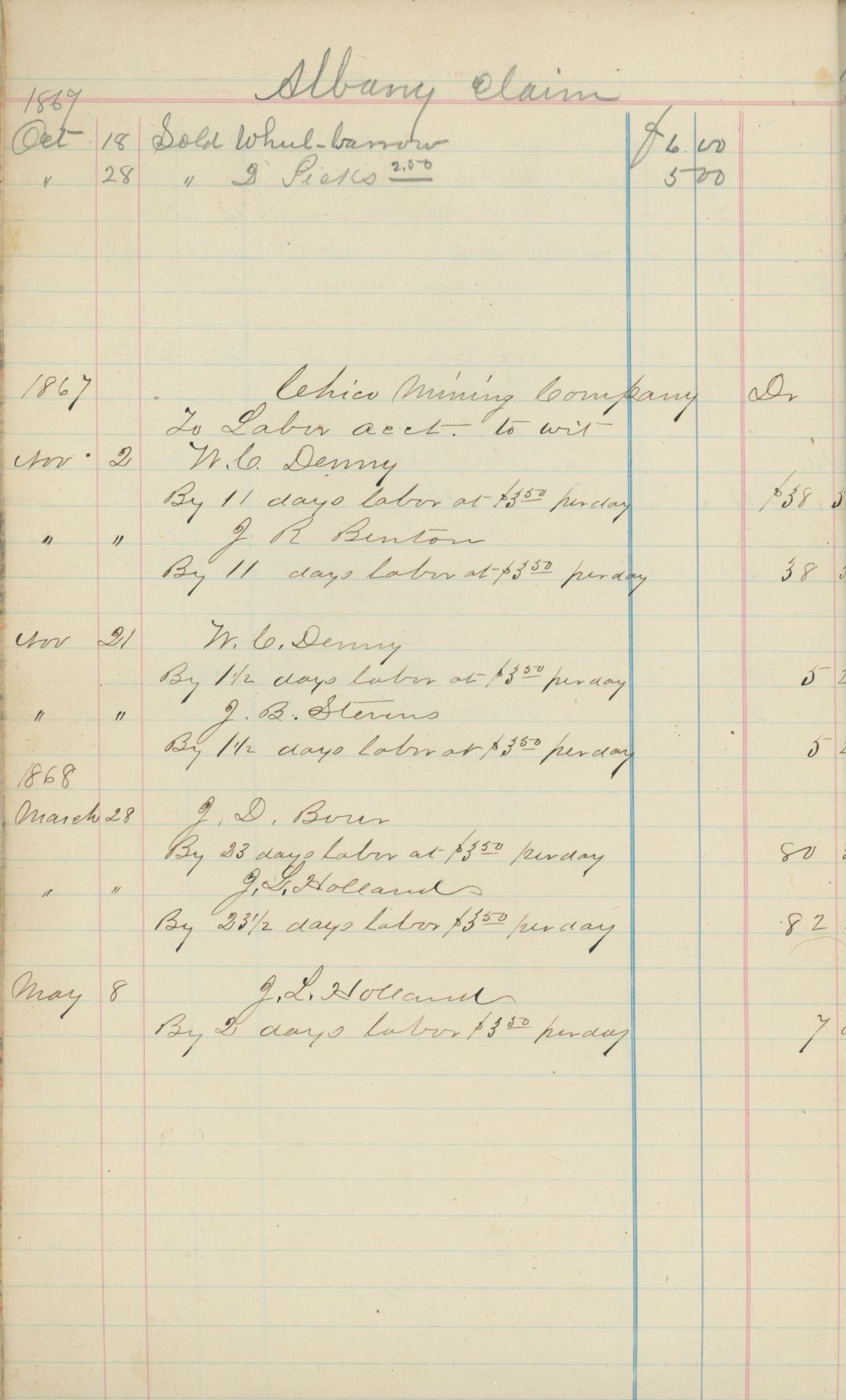
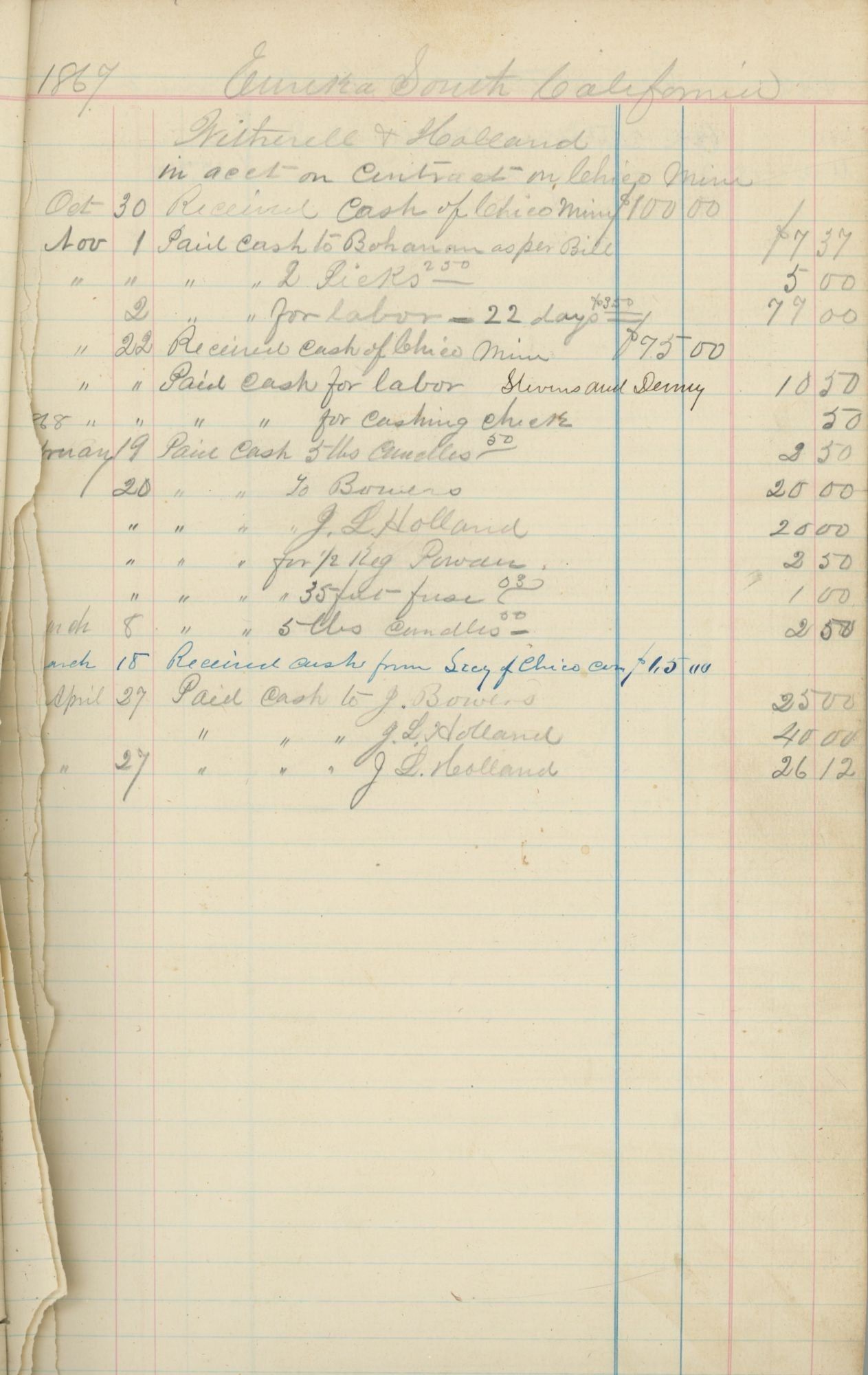
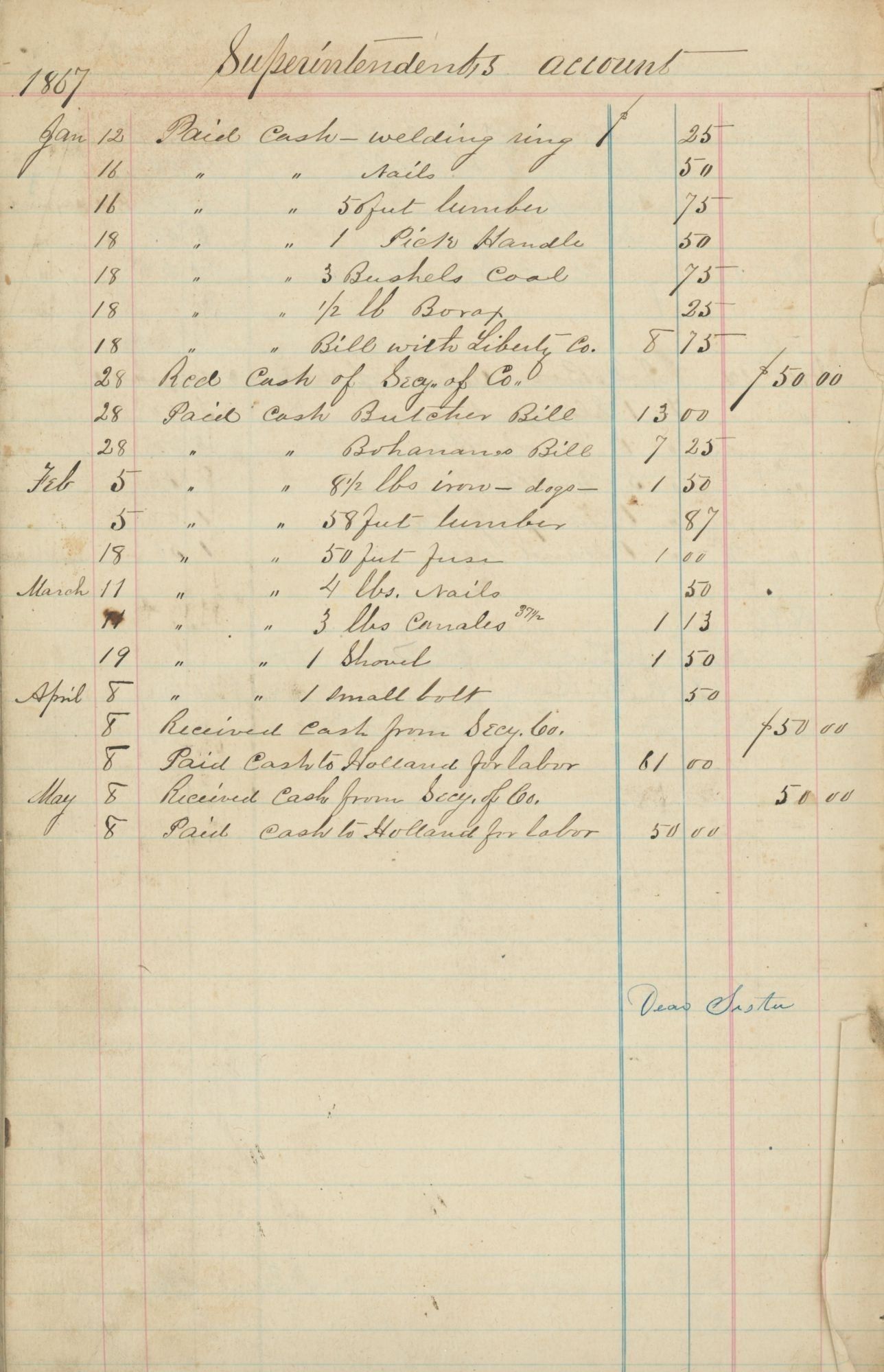
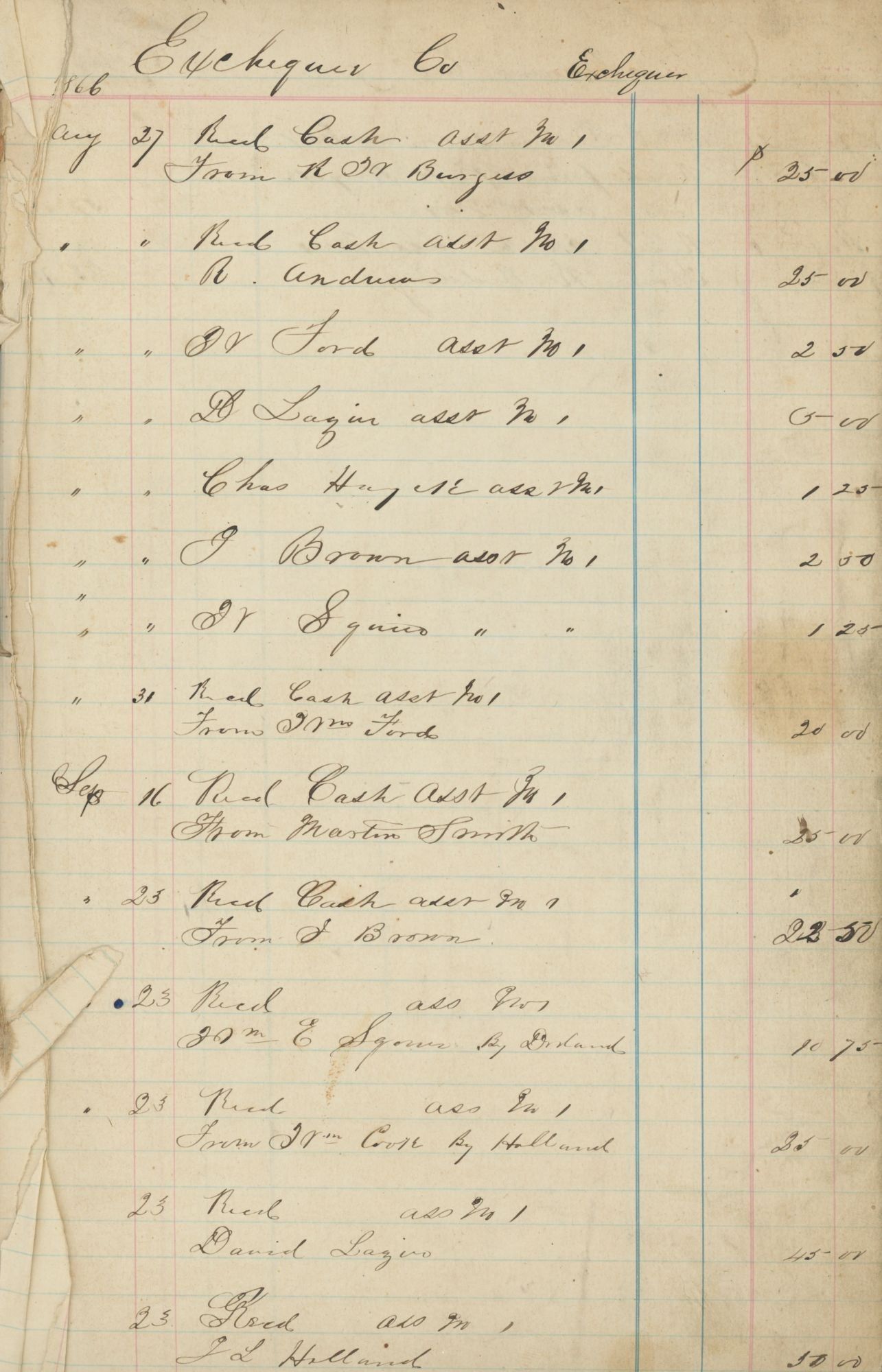
Eureka South, CA, 1868. 7 ½ x 12 inch ledger book, 33pp with many more blank. Front cover near detached and back cover detached, missing spine, some staining of inside pages. Many inside pages torn out. Overall good to very good.. An accounting ledger with some annual meeting notes of the American Exchequer Gold Mining Company, based in Eureka South, California, dating between 1866 and 1868. Eureka South was a small, remote mining community, with a population of about 400 people during the peak of its diggings’ productivity – now called Graniteville, it had a population of twelve as of 2022.
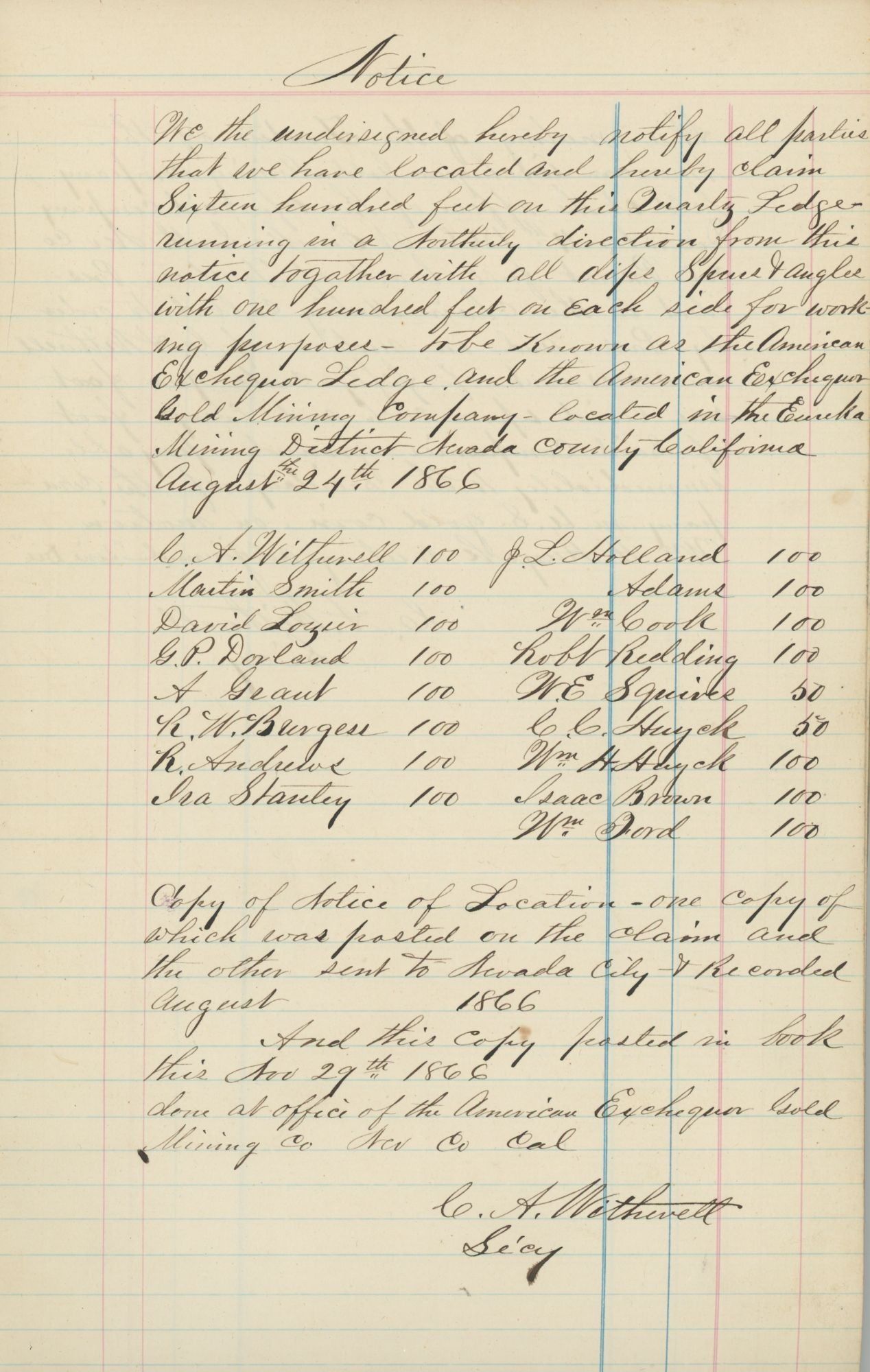
According to a copy of the company’s notice of location for its mine in Eureka South, recorded in this ledger in November 1866, the company was founded on August 24th of that year, following the discovery of a quartz ledge. A history of Nevada County describes 1866 as the year of the “revival of the quartz excitement of 1851” in Eureka South.[1] Before this, as the surface diggings began to dry up, people had begun to abandon the town; with the quartz excitement, the population swelled from twenty to 400 in a few months.
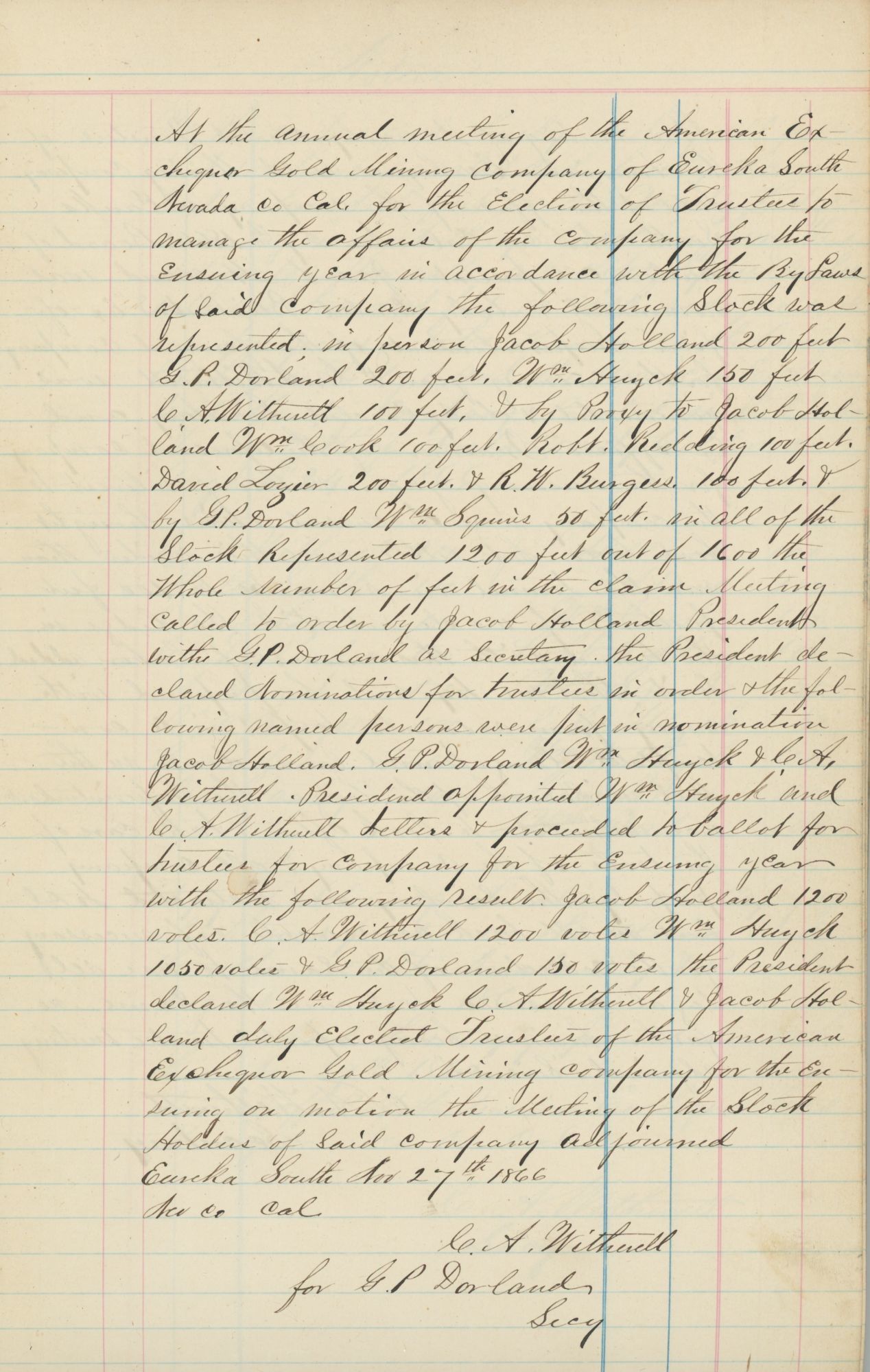
However, it does not seem as if the “American Exchequer Ledge”, as they named the quartz vein in the location notice, proved very productive. The minutes of the company’s 1866 annual meeting state:
“matters of interest to the company were discussed + ‘twas thought best to do but little more this winter than run the tunnel in some 50 to 100 feet further + if we do not strike the ledge in the tunnel with this amount of labor added to it, that we try and be prepared with money from ass[ess]ments to put in a contemplated long tunnel down in the Hill in search of the Ledge.” (November 27, 1866)
Otherwise, the ledger lists specific locations or other companies and associated expenses, including “Albany claim” and the “Chico Mining Company”, from whom American Exchequer bought the Chico mine; and wages and purchases, such as hiring a horse for locating claims and “Whiskey for [the] boys” (costing $4). Of interest to historians of mining and Northern California.
[1] Harry Laurenz Wells, History of Nevada County, California (Thompson & West: 1880), 62–63.
According to a copy of the company’s notice of location for its mine in Eureka South, recorded in this ledger in November 1866, the company was founded on August 24th of that year, following the discovery of a quartz ledge. A history of Nevada County describes 1866 as the year of the “revival of the quartz excitement of 1851” in Eureka South.[1] Before this, as the surface diggings began to dry up, people had begun to abandon the town; with the quartz excitement, the population swelled from twenty to 400 in a few months.
However, it does not seem as if the “American Exchequer Ledge”, as they named the quartz vein in the location notice, proved very productive. The minutes of the company’s 1866 annual meeting state:
“matters of interest to the company were discussed + ‘twas thought best to do but little more this winter than run the tunnel in some 50 to 100 feet further + if we do not strike the ledge in the tunnel with this amount of labor added to it, that we try and be prepared with money from ass[ess]ments to put in a contemplated long tunnel down in the Hill in search of the Ledge.” (November 27, 1866)
Otherwise, the ledger lists specific locations or other companies and associated expenses, including “Albany claim” and the “Chico Mining Company”, from whom American Exchequer bought the Chico mine; and wages and purchases, such as hiring a horse for locating claims and “Whiskey for [the] boys” (costing $4). Of interest to historians of mining and Northern California.
[1] Harry Laurenz Wells, History of Nevada County, California (Thompson & West: 1880), 62–63.