

Archive of Correspondence of the Beauman Family and Friends, Concerning Their Daily Lives and Family Affairs in Early 20th-Century Texas, Illinois, and Northern California
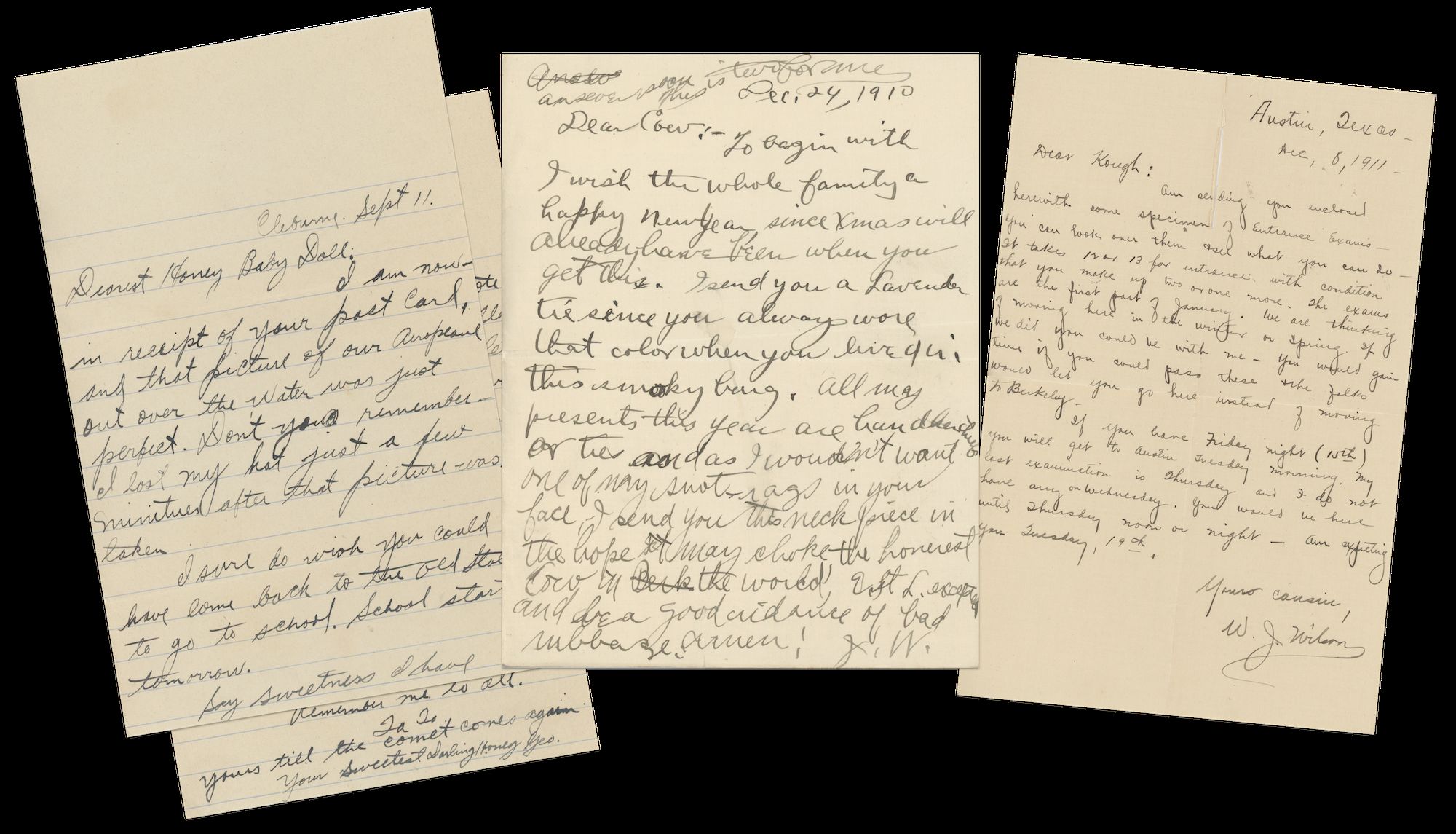
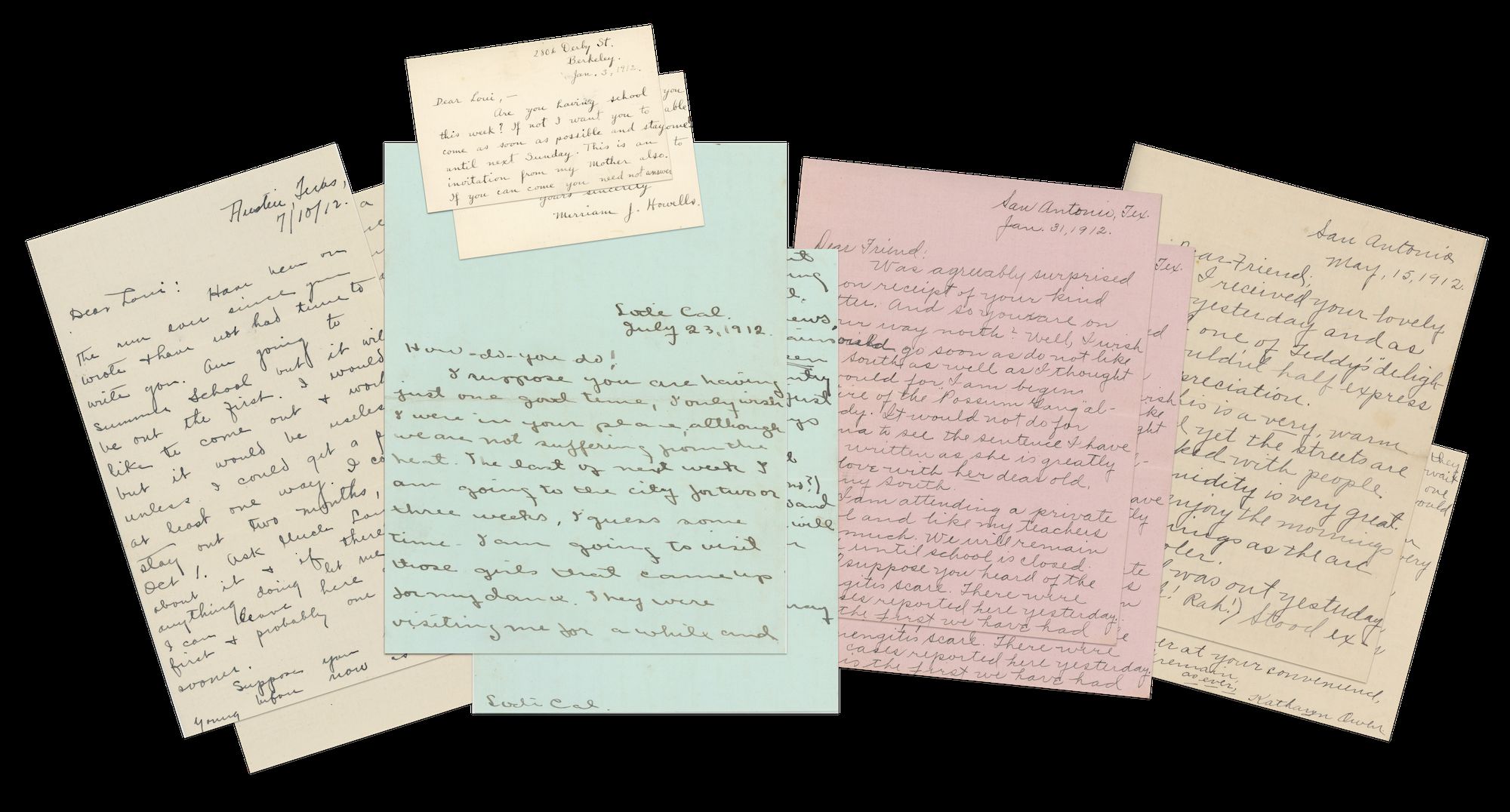
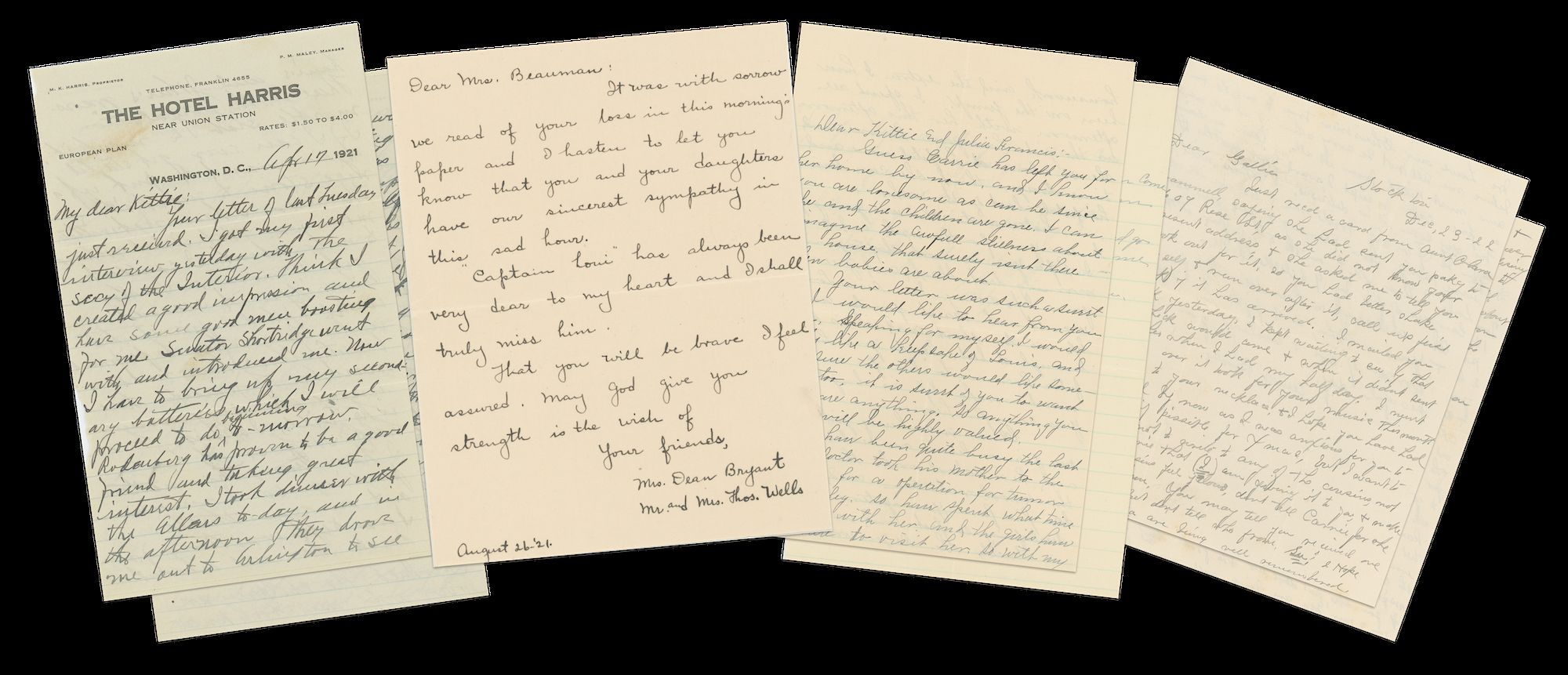
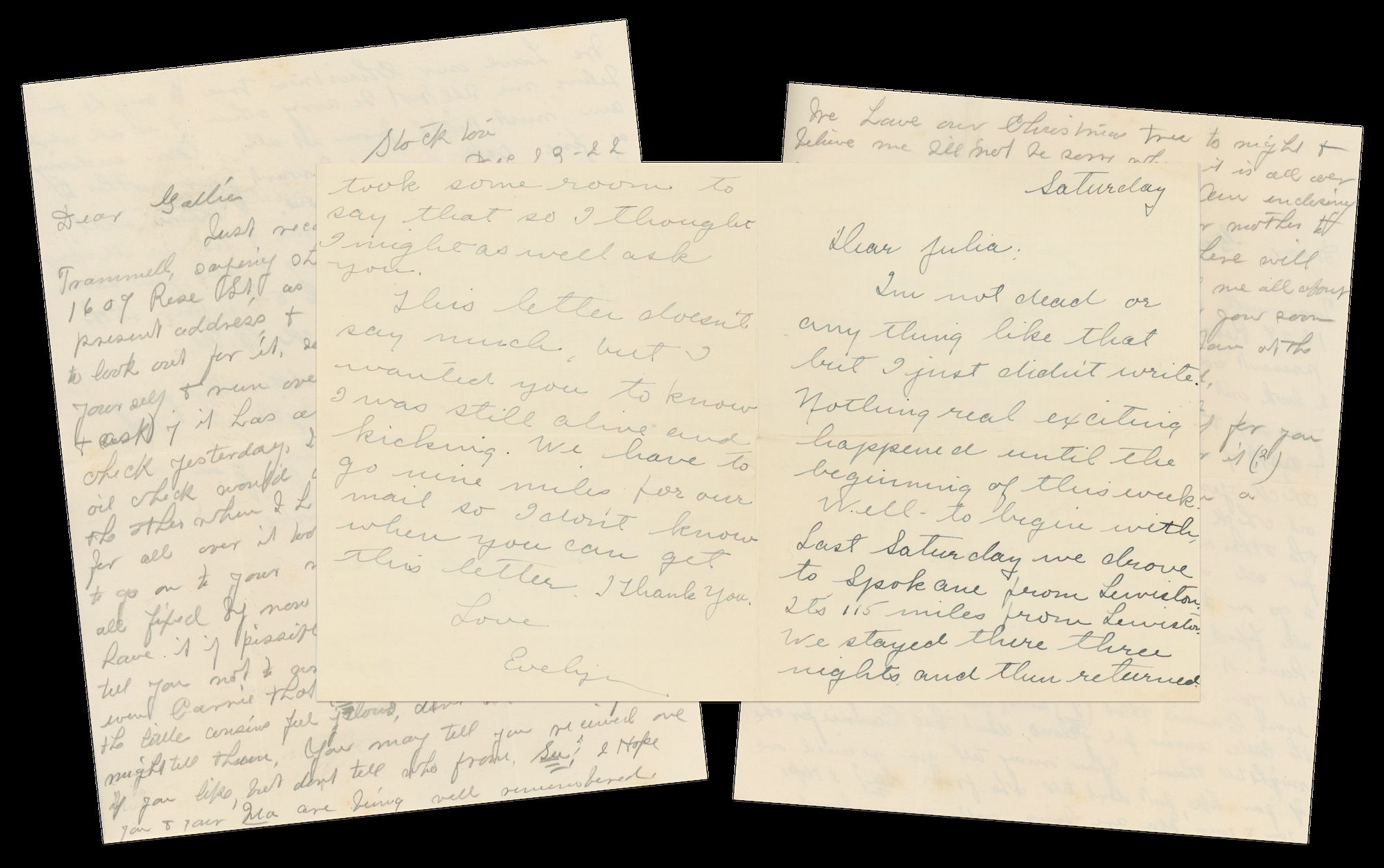
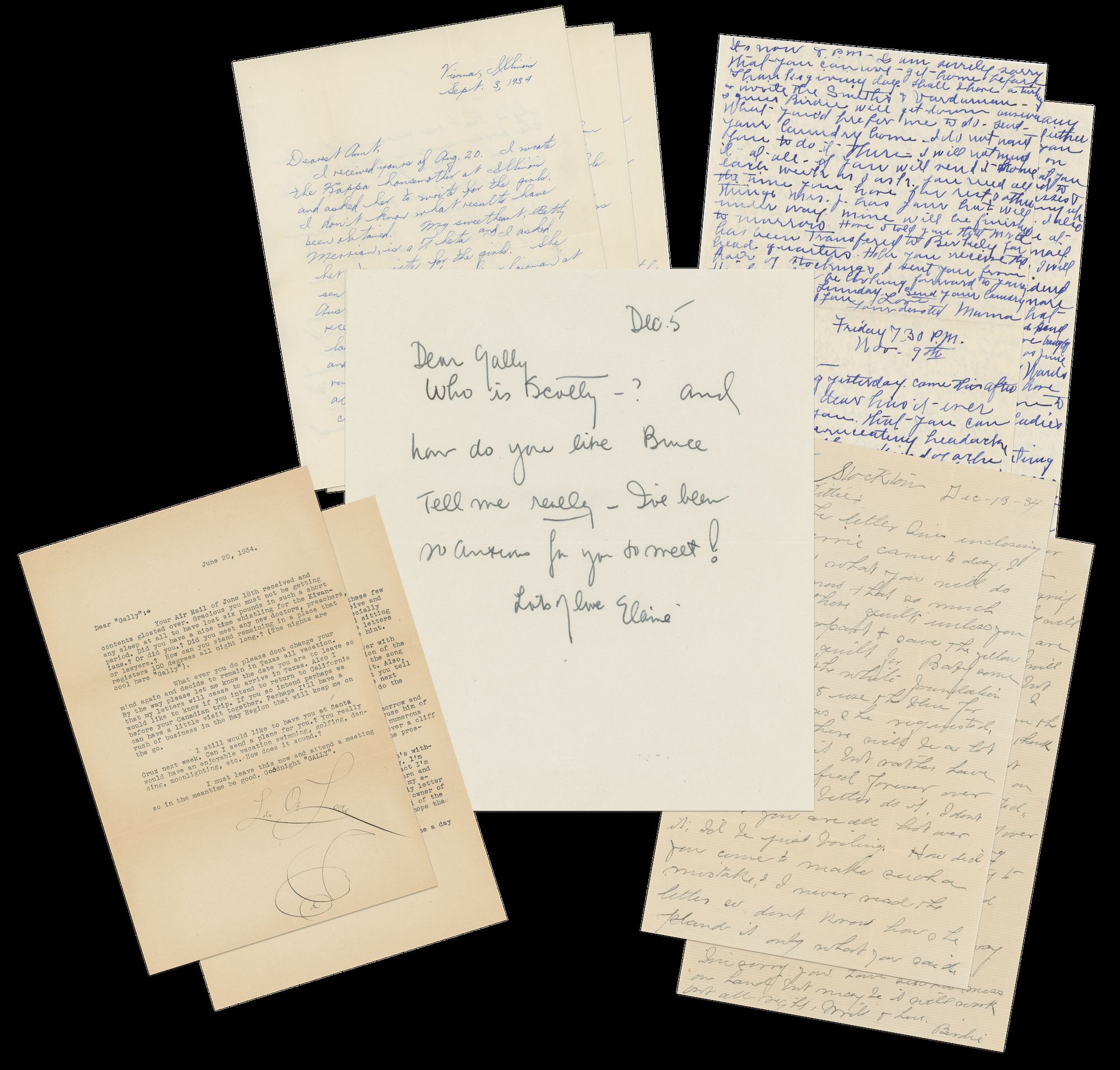
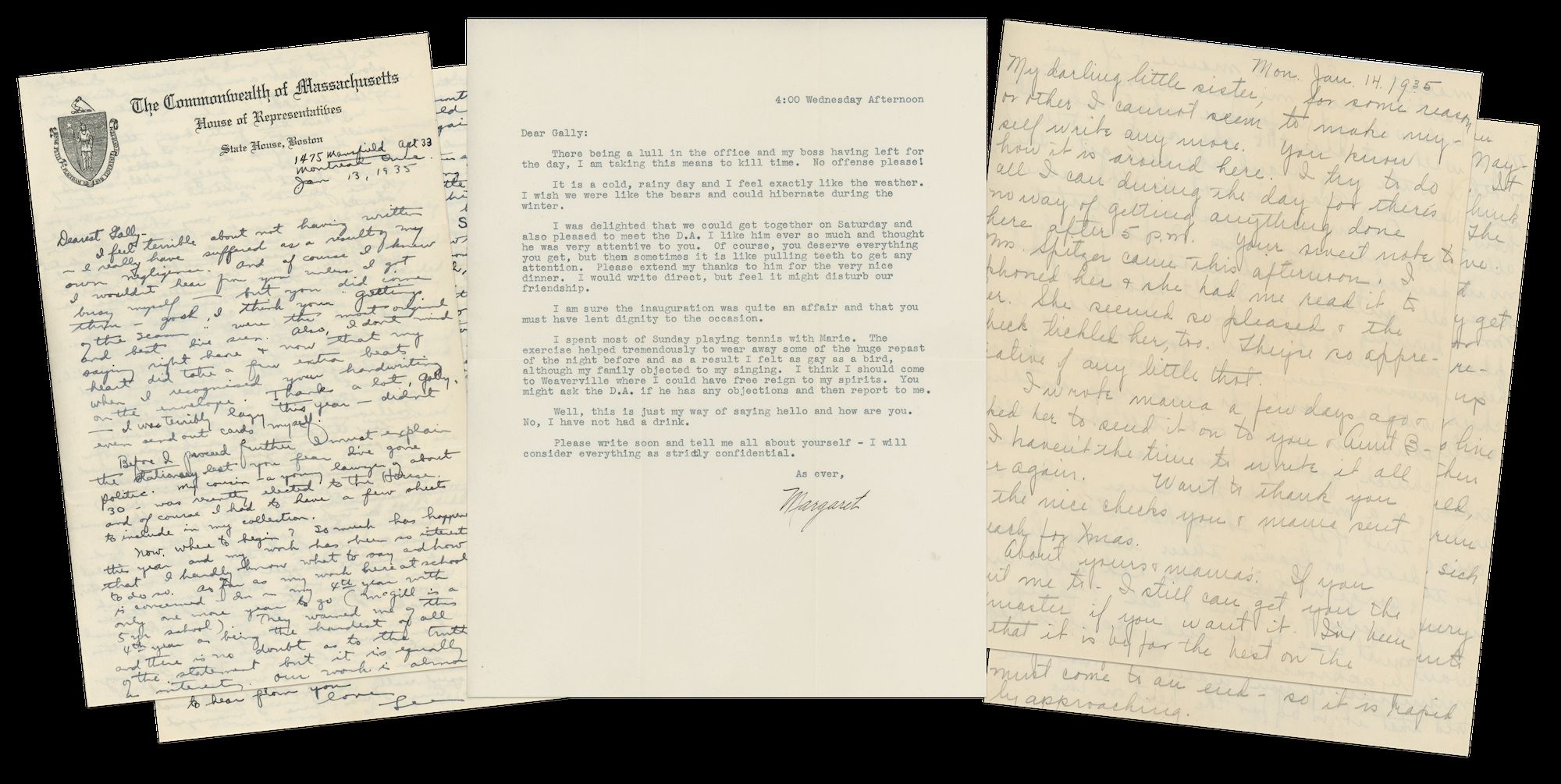
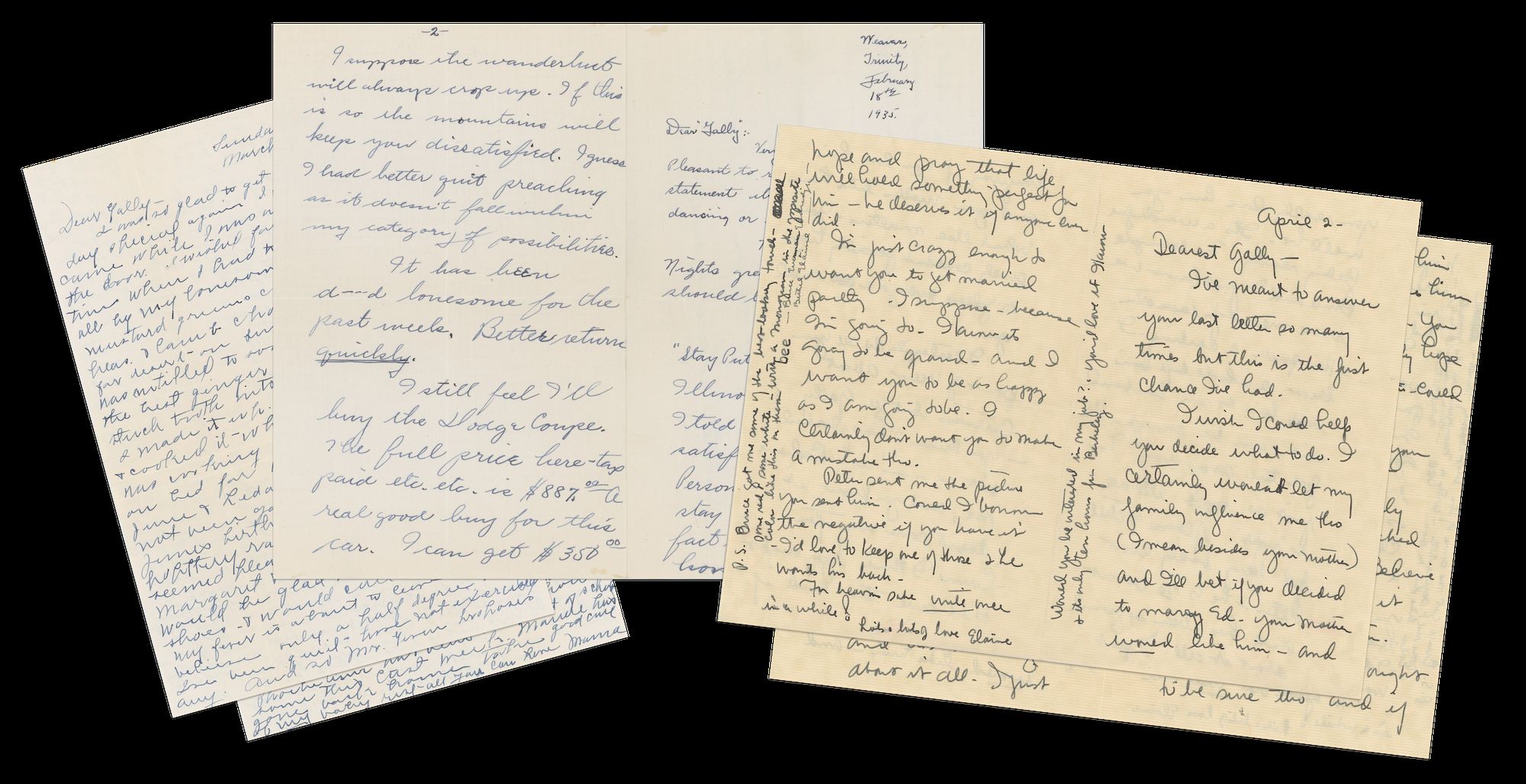
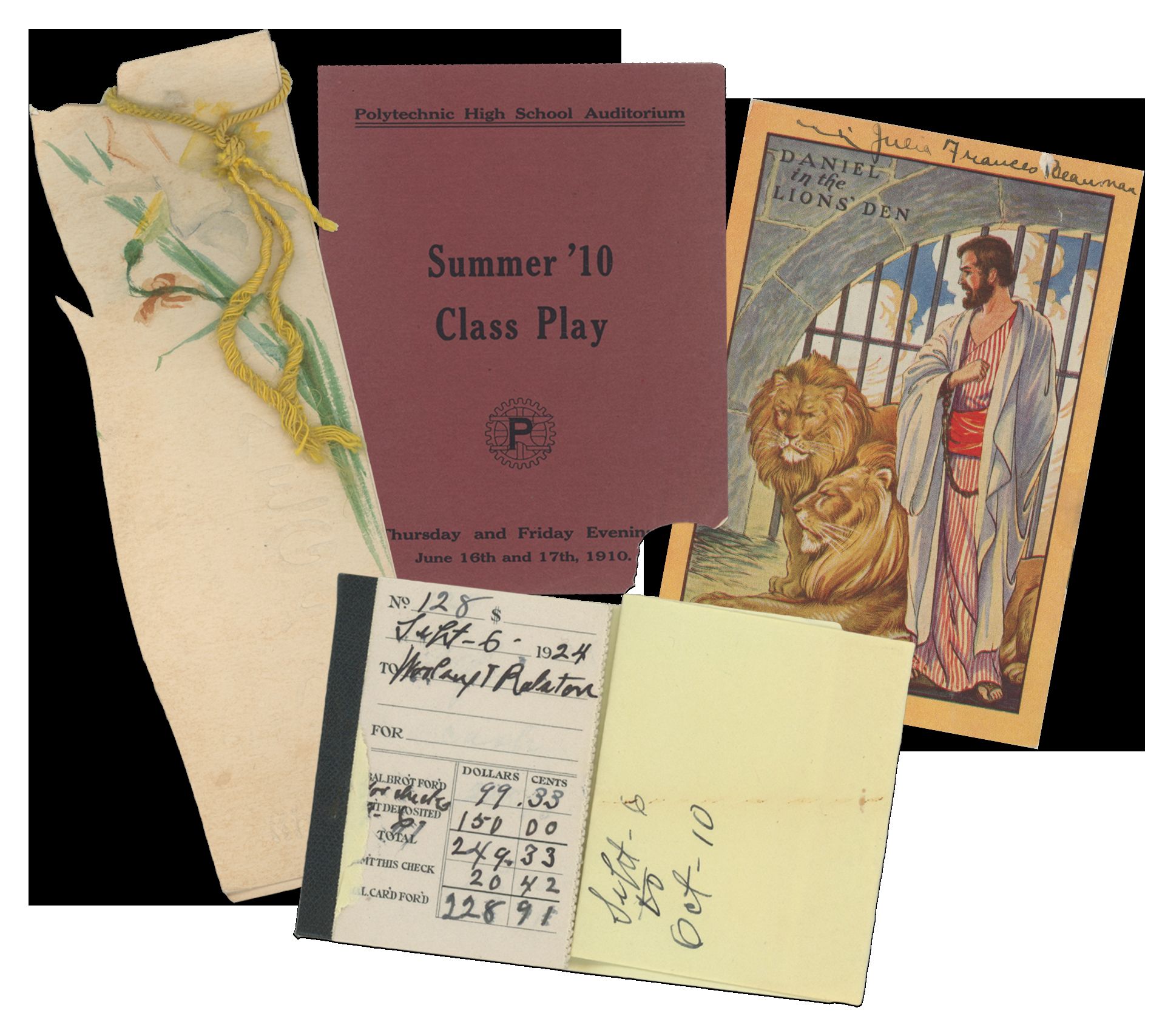
- 369 pieces: fourteen empty envelopes, 108 pieces of unsorted ephemera, and 247 letters. Of the letters, twenty-one are undated;
- California, Texas, Illinois, and others , 1935
California, Texas, Illinois, and others, 1935. 369 pieces: fourteen empty envelopes, 108 pieces of unsorted ephemera, and 247 letters. Of the letters, twenty-one are undated; three date from 1851–1909; nineteen from 1910–11; thirty-five from 1912; thirteen from 1913–17; forty-two from 1921; thirteen from 1922–24; sixty-eight from 1934; and thirty-three from 1935. Overall very good to near fine.. The Beaumans were a family from southern Texas who relocated to East St. Louis, Illinois, some time before 1908, and some of whom would later live in California. Captain Loui Beauman (1868–1921) was a military engineer, Mason, and member of the Society of American Military Engineers. He and his wife Kittie Woodruff (1867–1959) had three children survive to adulthood: Carrie Beauman (1893–1982), Second Lieutenant Loui Beauman (1894–1918)—a Marine killed at 23 in a seaplane accident—and Julia Frances “Gally” Beauman (1908–1974).
Offered here is a large correspondence archive belonging to the Beaumans; mainly addressed to Gally (119 letters), the younger Loui (seventy letters) and Kitty (fifty-two letters); and written by a wide variety of friends and family, including Kitty (fifty-one letters), Carrie (eighteen letters), Katharyn Owen of San Antonio (sixteen letters), and Gally’s future husband, Edwin J. Regan of Weaverville, California (twenty-three letters). Regan (1906–1996) was at the time running for District Attorney of Trinity County, and would go on to hold that position before resigning in 1948 in favor of a State Senatorship, followed by a judgeship on the Third Appellate Court of Appeal.
Most of the early letters in the group are addressed to the younger Loui Beauman, and their concerns include his friends’ jobs constructing railroads, hiding their controversial “ragging” dancing from chaperones, and which fraternity Beauman should join at the University of California. The fraternity issue is particularly contentious within the family; the elder Beauman tells his son that “I will not be pleased to hear that you have joined any of the fraternities” (September 20, 1912). The younger Beauman settled on Zeta Psi.
After the passing of both father and son, most of the letters are addressed to Kitty and Gally Beauman. Edwin Regan writes to Gally about his campaign for District Attorney, which made him “worried and discouraged and down on the world” (August 3, 1934); Regan felt that “ability means nothing to [the voters], the sole issue is whether or not I am a ‘city guy’ or not” (July 30, 1934). Another common topic is the family’s concern for Carrie Beauman, whose marriage to Arthur Levefre, Jr., was becoming increasingly abusive. The couple lived in Houston, far from the remaining family who were now in Berkeley and Weaverville.
Though the family very rarely commented on politics—even including the Great Depression, which was in full swing during the writing of nearly half of these letters—there is one event that enthused Carrie Beauman too much for her not to mention. This was the suppression by the KKK of alleged brewing race riots in Houston:
“We came near a bad race riot [last week]. All the militia residents, Light Guards + ex-soldiers were called out. There were over 5000 armed white men on the main streets + negro sections. Arthur slept with his clothes on + 4 loaded guns. We all piled in one room. Believe me, the Ku Klux Klan is doing efficient work. That’s twice in the last 10 days that they’ve ‘operated on’ [the] beasts. I’m tickled to death to know that there are a few fearless + just + honorable men left to meet [sic] out justice to these criminals. By the time this happens half a dozen times some of this crime wave will subside. If the paid officers of the law wont meet the emergency – then it’s time for the upright citizens to take a hand. I am tickled to death over this!” (May 1, 1921)
Overall an intimate look at the lives and affairs of an ordinary American family in the early twentieth century.
Offered here is a large correspondence archive belonging to the Beaumans; mainly addressed to Gally (119 letters), the younger Loui (seventy letters) and Kitty (fifty-two letters); and written by a wide variety of friends and family, including Kitty (fifty-one letters), Carrie (eighteen letters), Katharyn Owen of San Antonio (sixteen letters), and Gally’s future husband, Edwin J. Regan of Weaverville, California (twenty-three letters). Regan (1906–1996) was at the time running for District Attorney of Trinity County, and would go on to hold that position before resigning in 1948 in favor of a State Senatorship, followed by a judgeship on the Third Appellate Court of Appeal.
Most of the early letters in the group are addressed to the younger Loui Beauman, and their concerns include his friends’ jobs constructing railroads, hiding their controversial “ragging” dancing from chaperones, and which fraternity Beauman should join at the University of California. The fraternity issue is particularly contentious within the family; the elder Beauman tells his son that “I will not be pleased to hear that you have joined any of the fraternities” (September 20, 1912). The younger Beauman settled on Zeta Psi.
After the passing of both father and son, most of the letters are addressed to Kitty and Gally Beauman. Edwin Regan writes to Gally about his campaign for District Attorney, which made him “worried and discouraged and down on the world” (August 3, 1934); Regan felt that “ability means nothing to [the voters], the sole issue is whether or not I am a ‘city guy’ or not” (July 30, 1934). Another common topic is the family’s concern for Carrie Beauman, whose marriage to Arthur Levefre, Jr., was becoming increasingly abusive. The couple lived in Houston, far from the remaining family who were now in Berkeley and Weaverville.
Though the family very rarely commented on politics—even including the Great Depression, which was in full swing during the writing of nearly half of these letters—there is one event that enthused Carrie Beauman too much for her not to mention. This was the suppression by the KKK of alleged brewing race riots in Houston:
“We came near a bad race riot [last week]. All the militia residents, Light Guards + ex-soldiers were called out. There were over 5000 armed white men on the main streets + negro sections. Arthur slept with his clothes on + 4 loaded guns. We all piled in one room. Believe me, the Ku Klux Klan is doing efficient work. That’s twice in the last 10 days that they’ve ‘operated on’ [the] beasts. I’m tickled to death to know that there are a few fearless + just + honorable men left to meet [sic] out justice to these criminals. By the time this happens half a dozen times some of this crime wave will subside. If the paid officers of the law wont meet the emergency – then it’s time for the upright citizens to take a hand. I am tickled to death over this!” (May 1, 1921)
Overall an intimate look at the lives and affairs of an ordinary American family in the early twentieth century.