

Sears Township Assessment Ledger Book, 1880
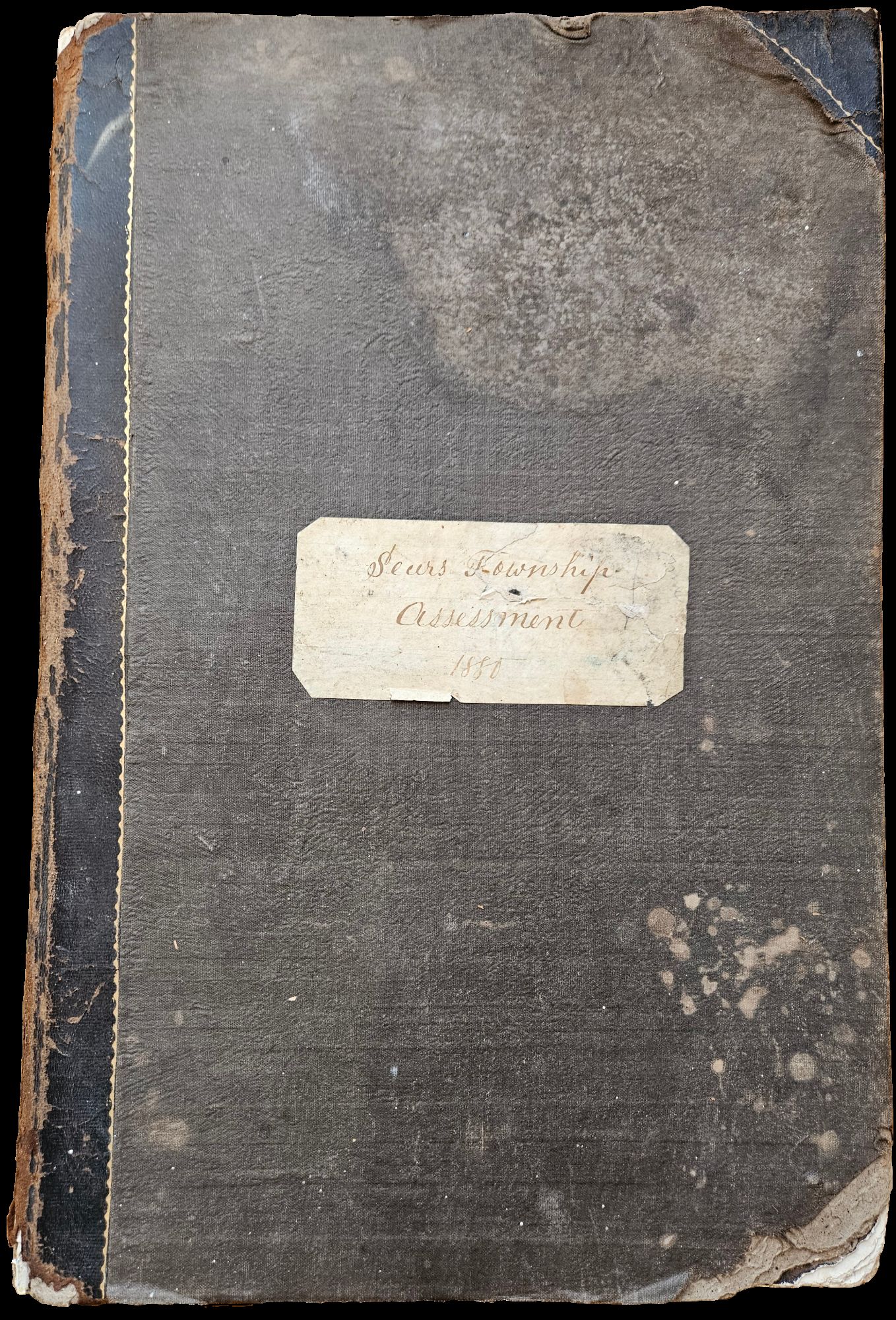
- 10 ½ x 16 inch ledger, seventy-five pages
- Sears Township, California , 1880
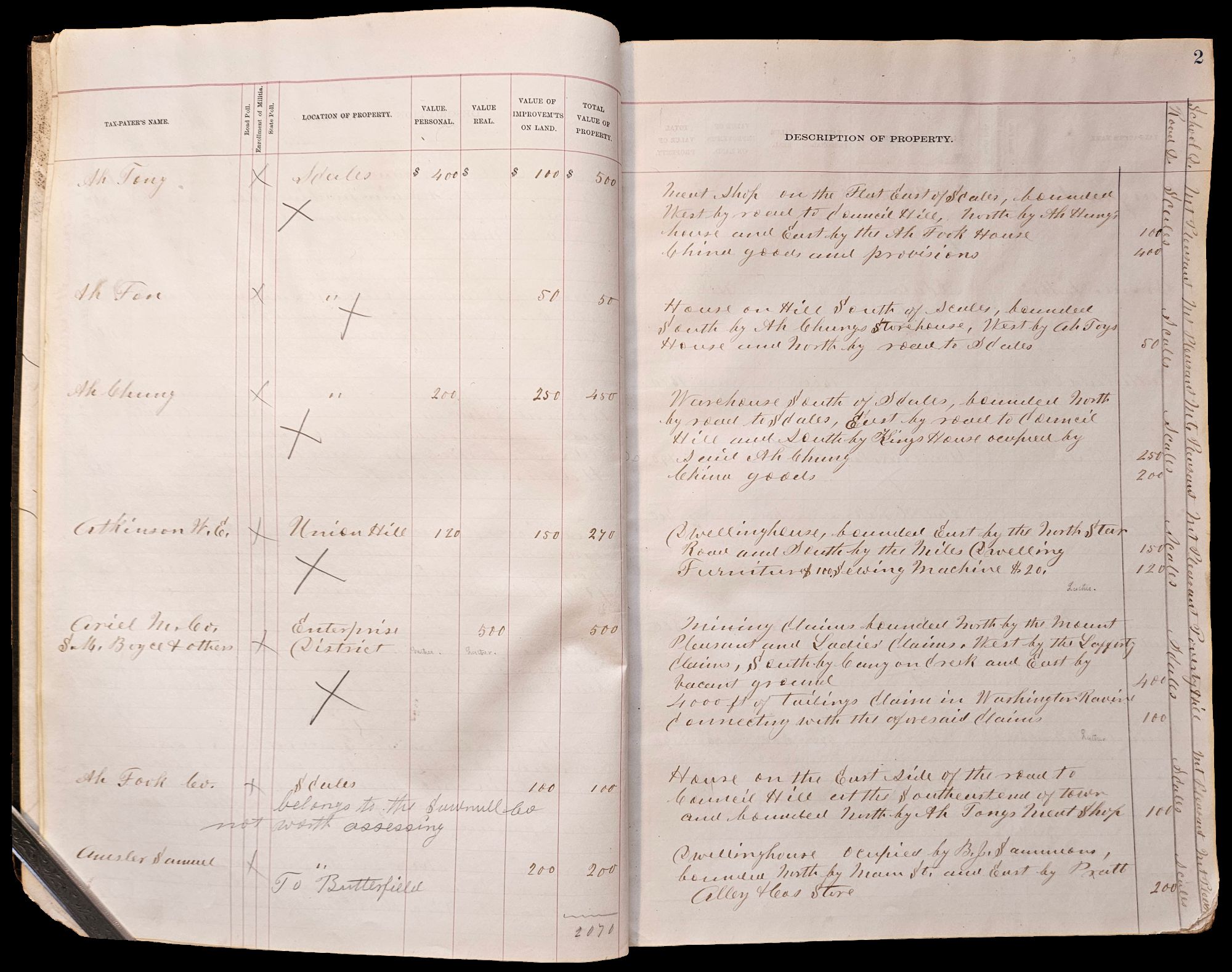
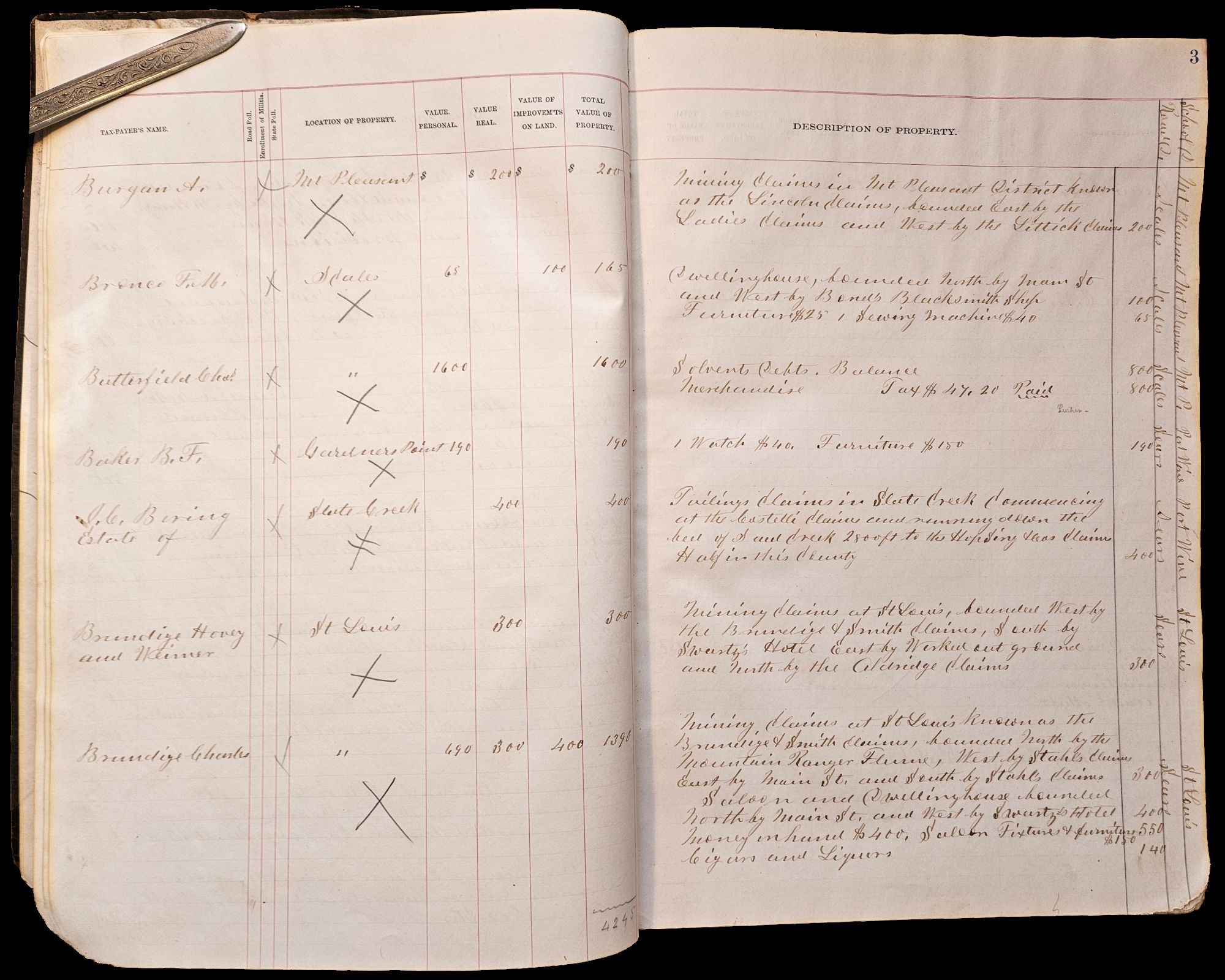
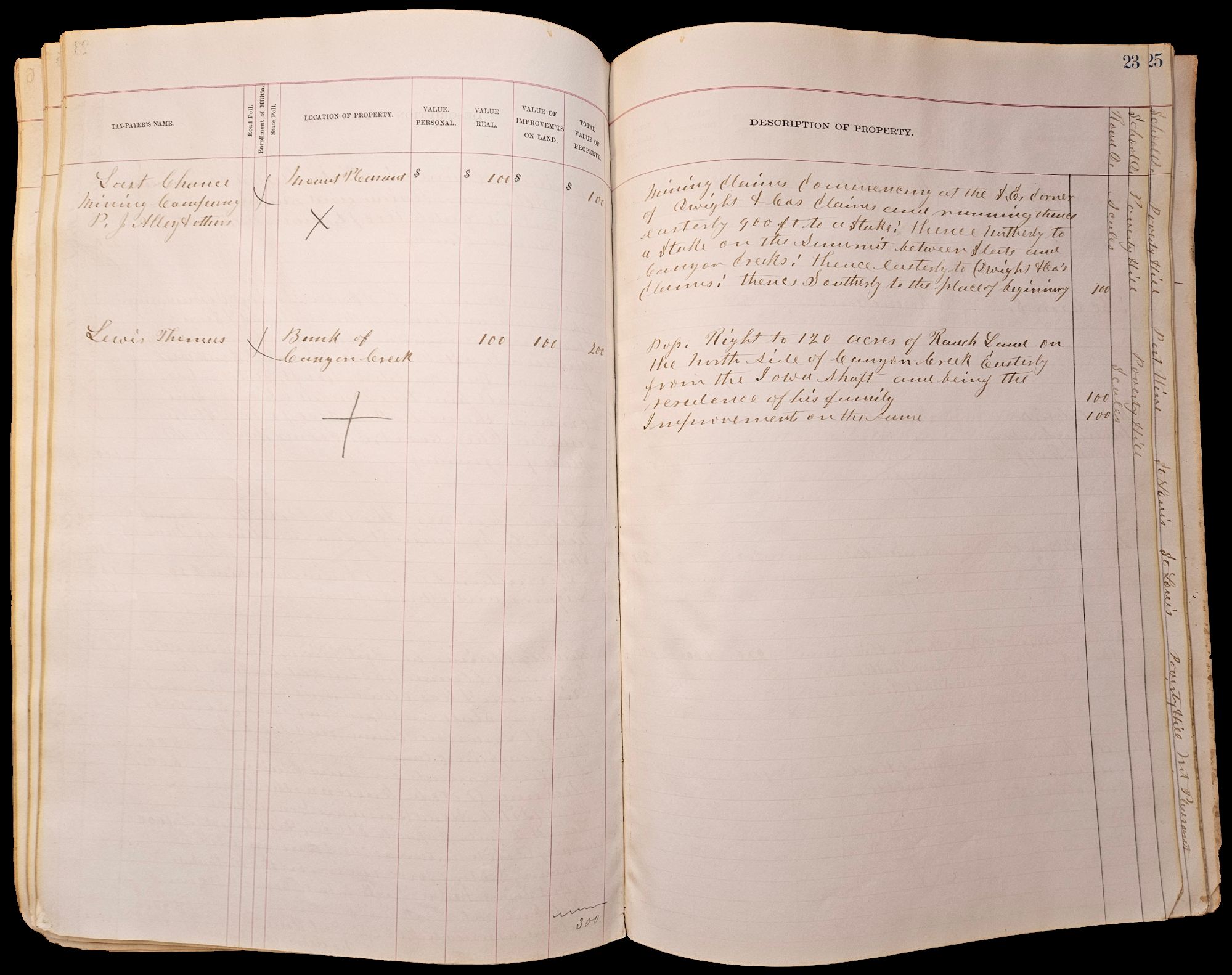
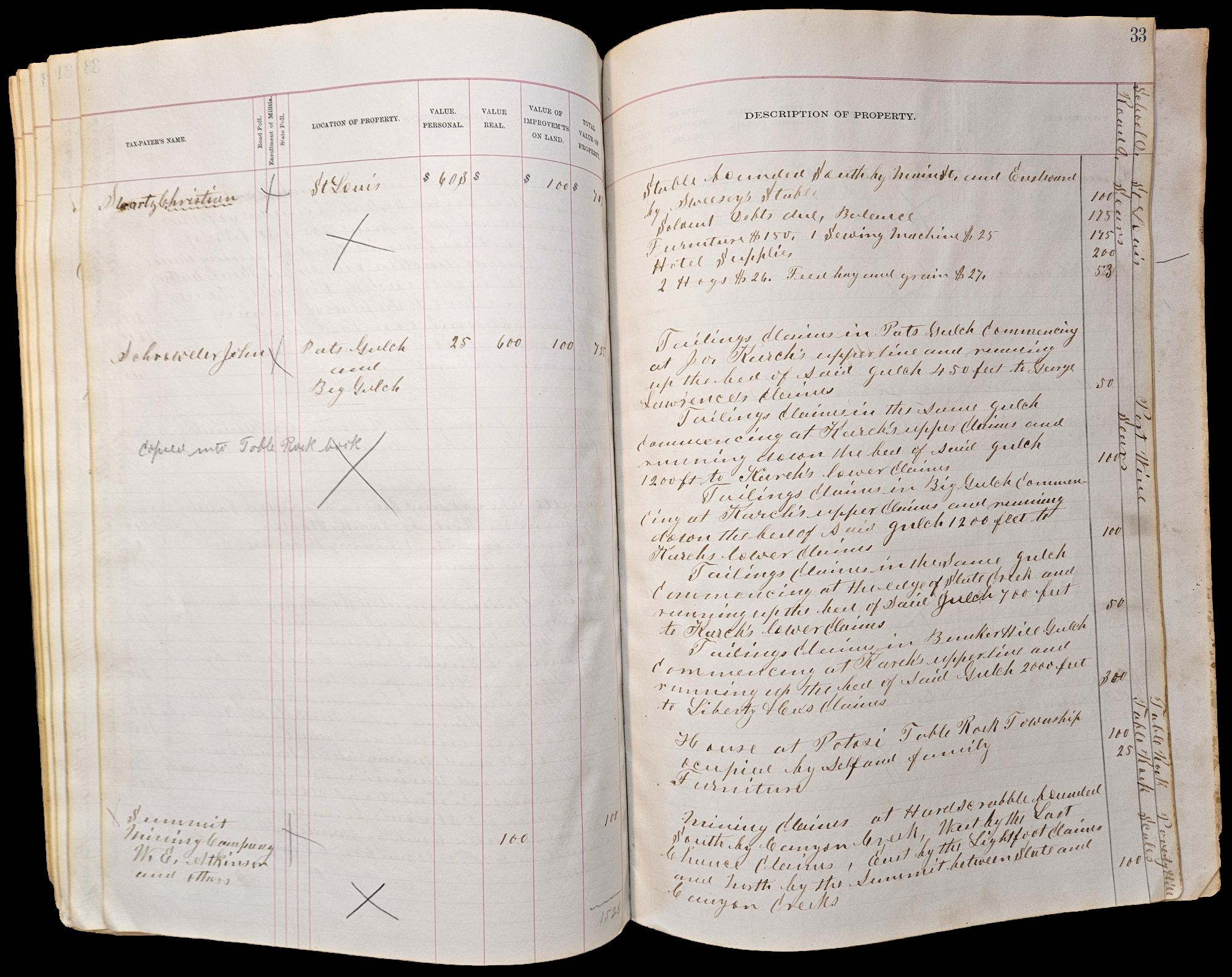
Sears Township, California, 1880. 10 ½ x 16 inch ledger, seventy-five pages. Staining and damage to corners, not affecting legibility. Very good to excellent.. A ledger of the Sears Township assessor, documenting assessment of property values. Sears Township does not appear to exist anymore, but a November 1891 census bulletin lists a Sears Township in Sierra County, with a population of 400 in 1890 and 585 in 1880. This is likely the same Sears Township, as many of the property locations in the ledger are within present-day Sierra County, such as Scales, St. Louis, Howland Flat, and others. (A later pencil marking on the first page attributes the ledger to Plumas county; this is probably incorrect.) The properties include homes, businesses, and mining claims – most are the latter.
Chinese immigrants played a significant role in the California gold rush, and the ledger indicates the presence of a number of Chinese people in the area, particularly in the town of Scales – enough of a presence that, according to the ledger, Scales had a “Chinatown.” This is given as the location of Ah Toy’s house, and a more precise location for Scales’ Chinatown could be found from the ledger’s description of Ah Toy’s residence. Many individuals listed under “Ah” owned property in Scales: Toy, Hung, Fook, and Fon owned houses, Tong owned a meat market, and Chung owned a warehouse. In addition, Hopsing Chung is listed as owning a storehouse in Scales, and the first page notes the Ah Wok Mining Company’s claim in Council Hill. Note the possibility that those listed as “Ah” are not one family; “Ah” is not necessarily a surname, but can be a sort of nickname-generating prefix (similar to “cousin” or “uncle/auntie”) that often ended up appended to Chinese immigrant’s names.
Of interest as a detailed record of the former properties and residents of some of California’s mining ghost towns.
Chinese immigrants played a significant role in the California gold rush, and the ledger indicates the presence of a number of Chinese people in the area, particularly in the town of Scales – enough of a presence that, according to the ledger, Scales had a “Chinatown.” This is given as the location of Ah Toy’s house, and a more precise location for Scales’ Chinatown could be found from the ledger’s description of Ah Toy’s residence. Many individuals listed under “Ah” owned property in Scales: Toy, Hung, Fook, and Fon owned houses, Tong owned a meat market, and Chung owned a warehouse. In addition, Hopsing Chung is listed as owning a storehouse in Scales, and the first page notes the Ah Wok Mining Company’s claim in Council Hill. Note the possibility that those listed as “Ah” are not one family; “Ah” is not necessarily a surname, but can be a sort of nickname-generating prefix (similar to “cousin” or “uncle/auntie”) that often ended up appended to Chinese immigrant’s names.
Of interest as a detailed record of the former properties and residents of some of California’s mining ghost towns.