

Letters from Rev. Josiah Selby of Ohio to His Brother William Remarking on The Know-Nothings, Rail Maulers, Wide Awakes, and the Civil War: “The Blood of the Puritan and his Western Children has Stained the Soil in Dixies Land,” Written to his Brother in California
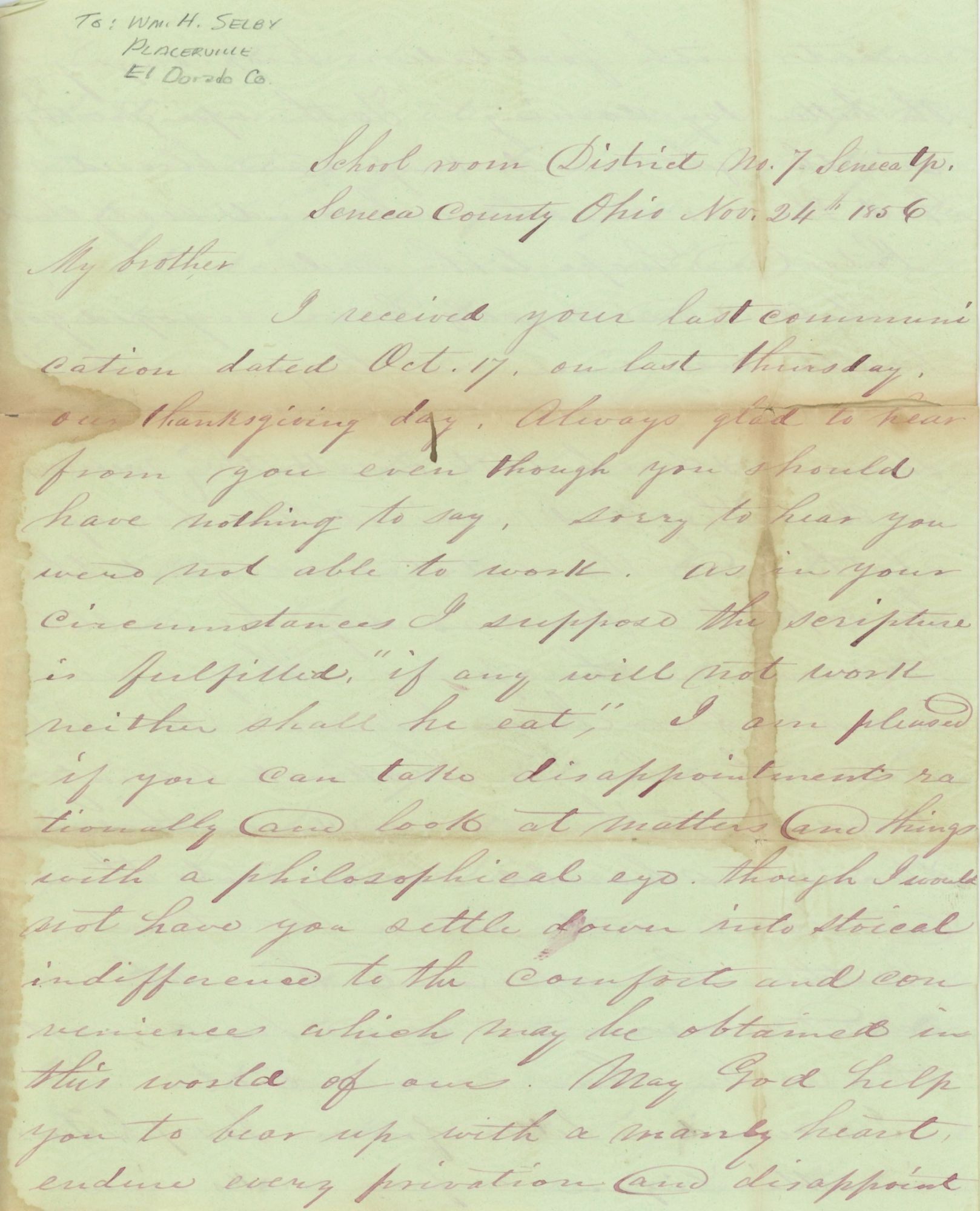
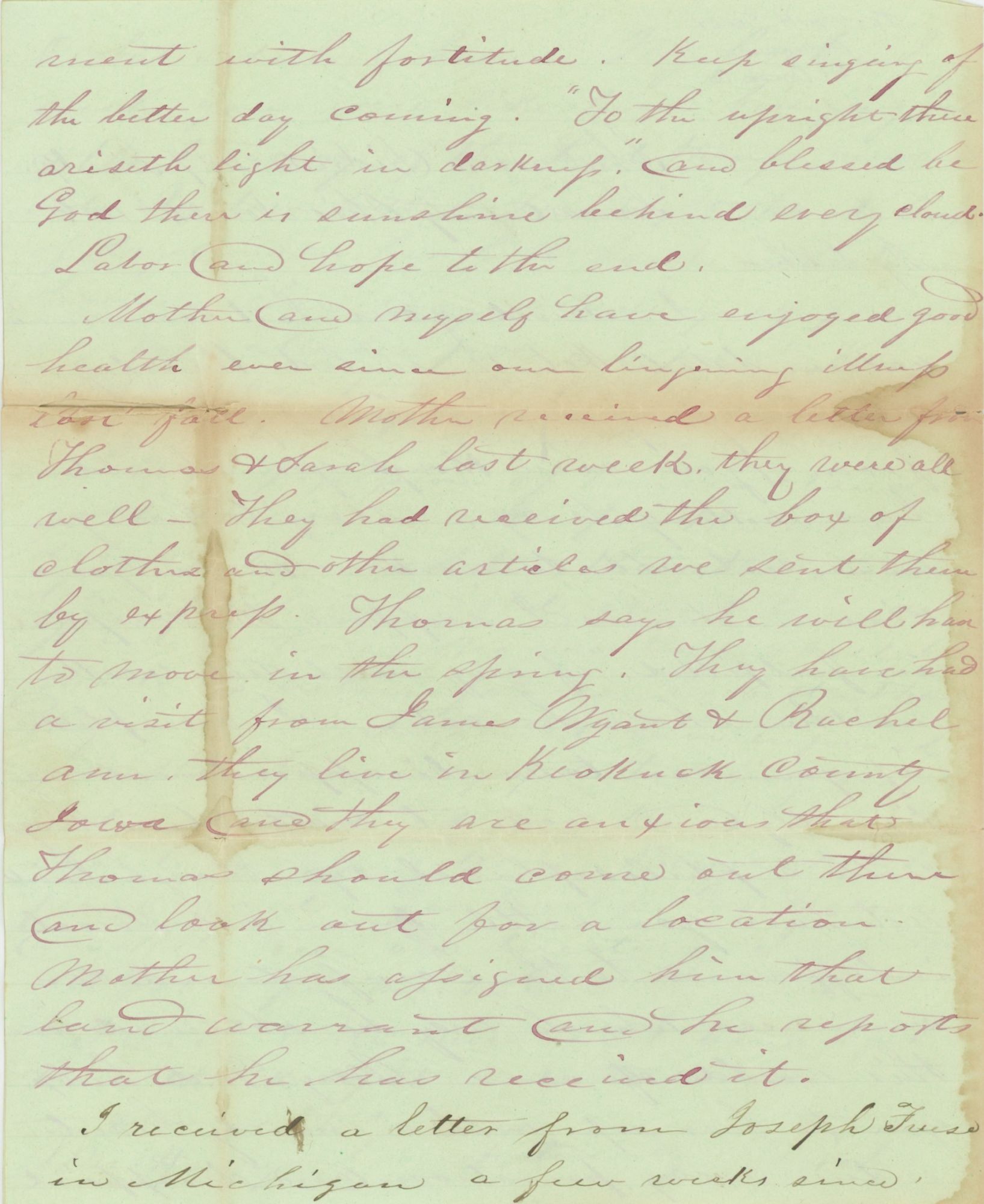
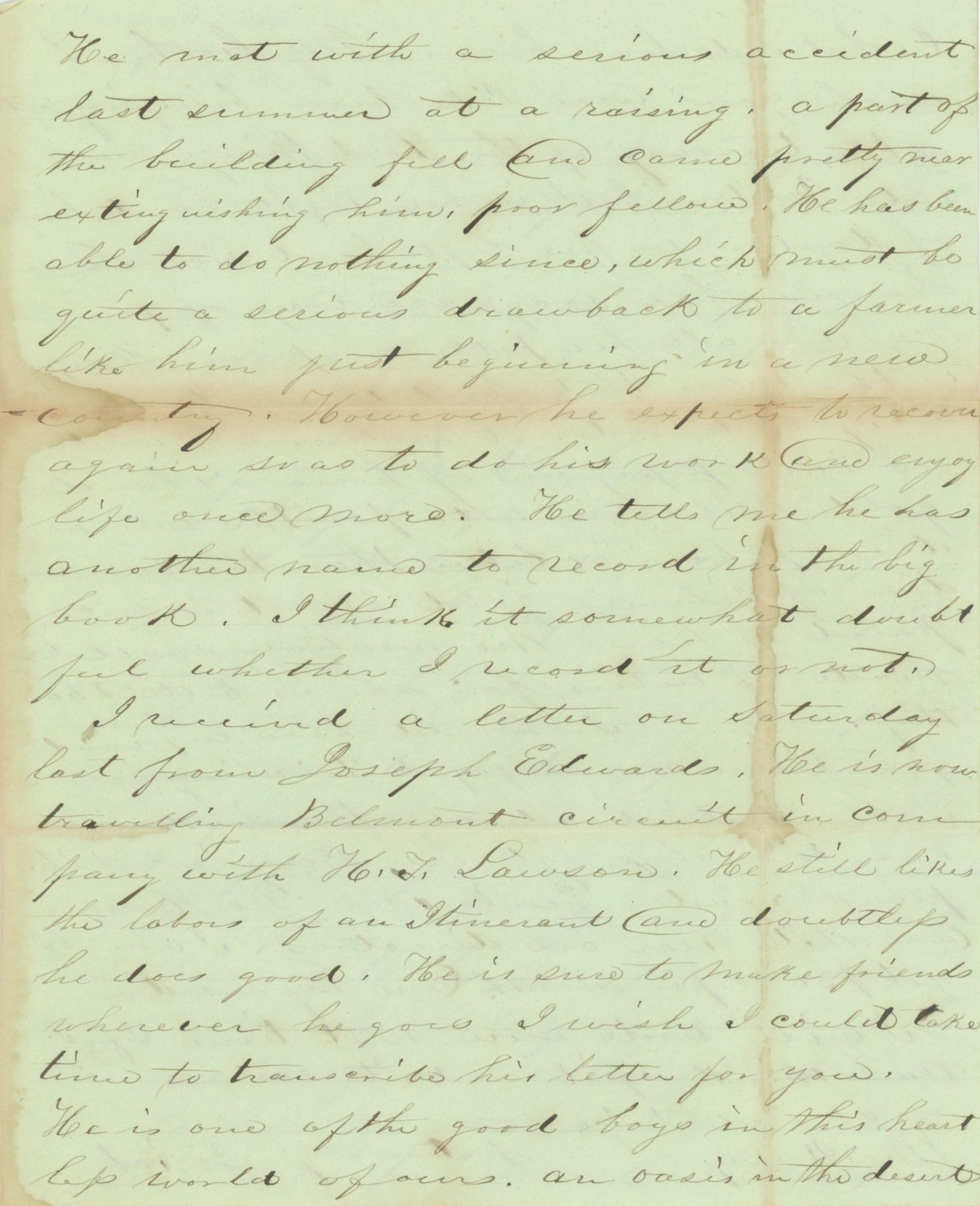
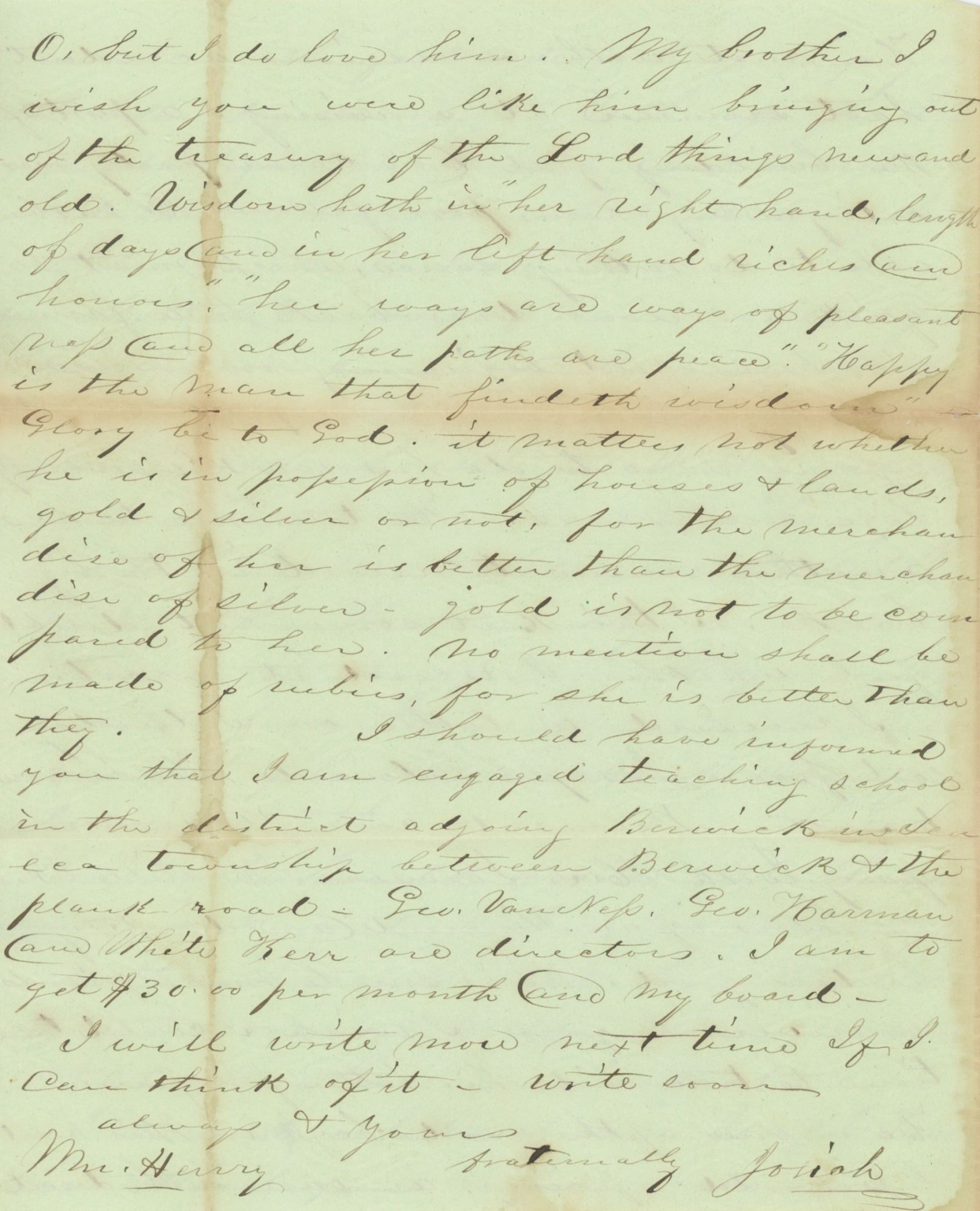
- Five letters
- Seneca County, Ohio, and Iowa City, Iowa , 1864
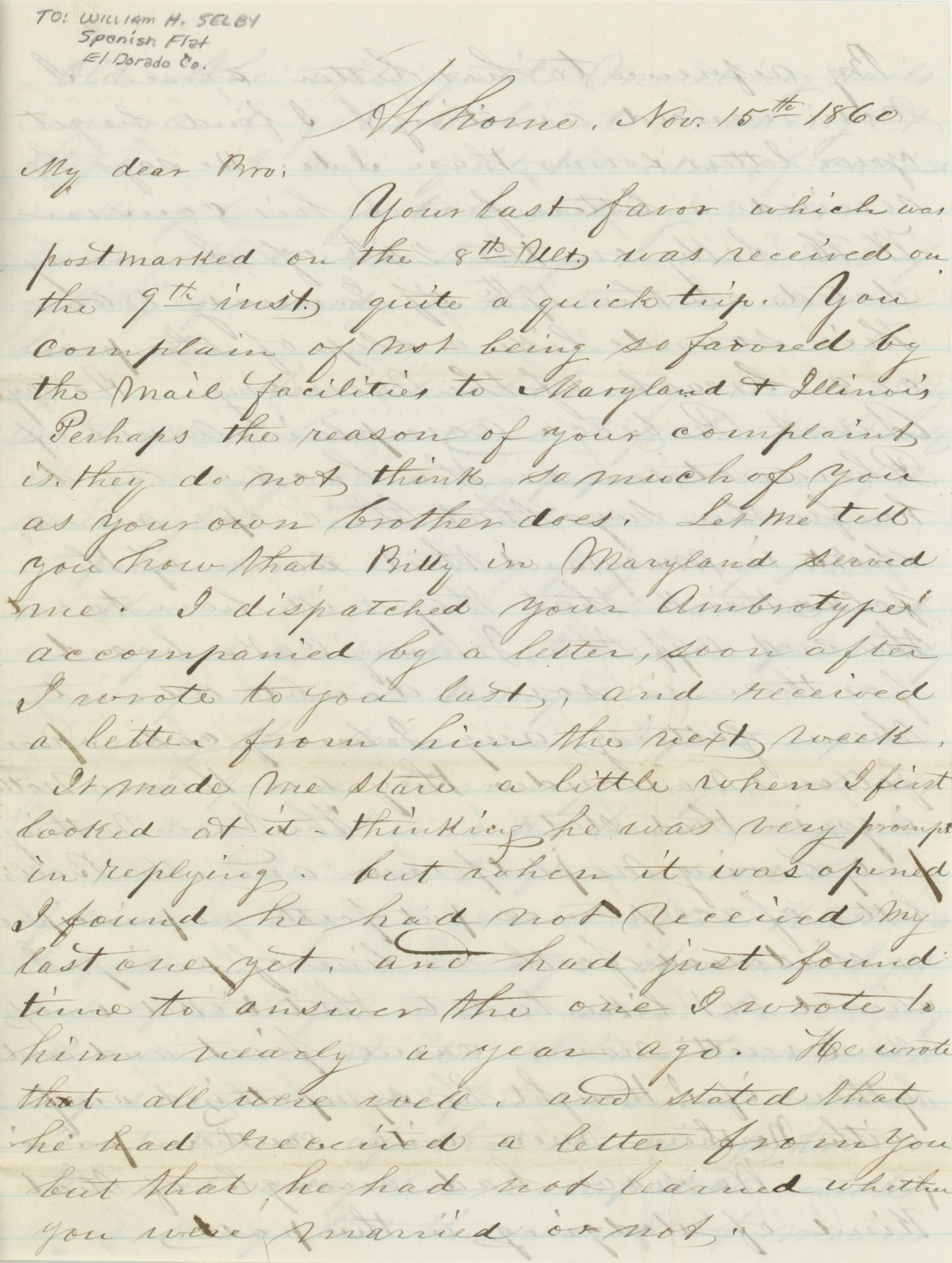
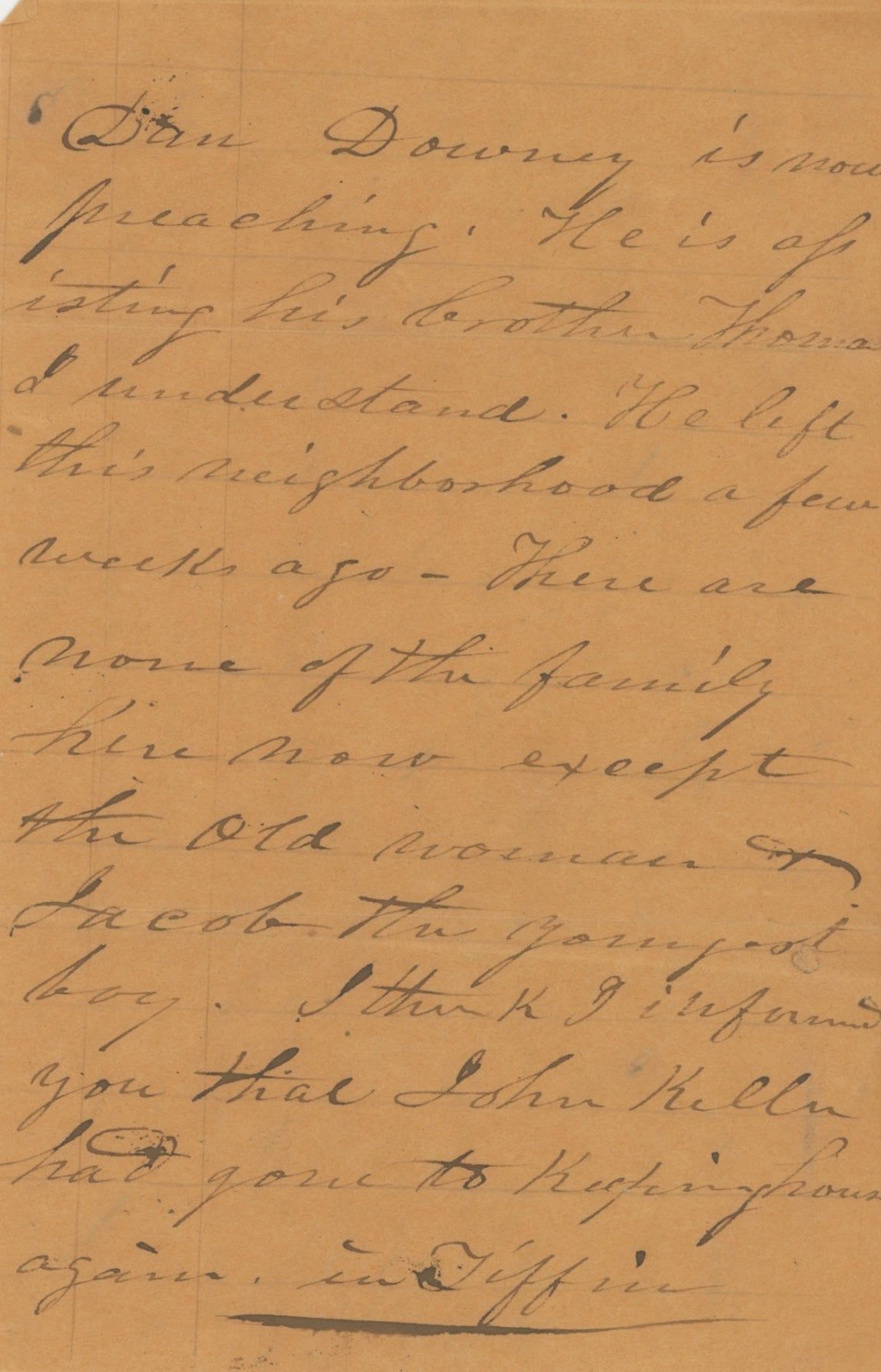
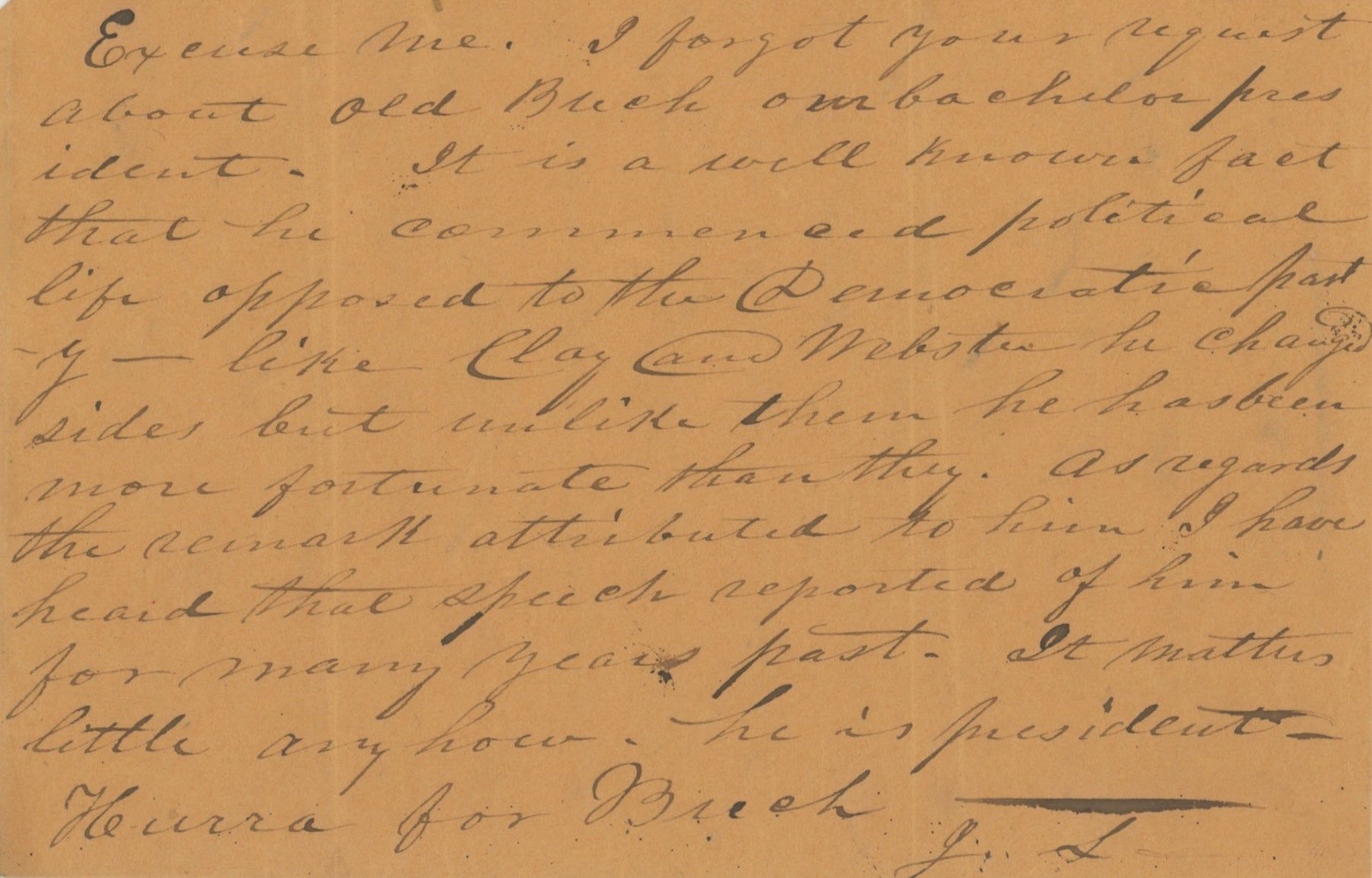
Seneca County, Ohio, and Iowa City, Iowa, 1864. Five letters. One with water stain not affecting legibility; otherwise excellent to near fine.. Offered here are five letters, dating between 1856 and 1864, from Josiah Selby (1822–1888) to his younger brother William Selby (1826–1918) in El Dorado County, California. The letters mainly consist of fairly droll commentary on politics and current events. In late 1860, Selby reports that a friend in Maryland, Billy,
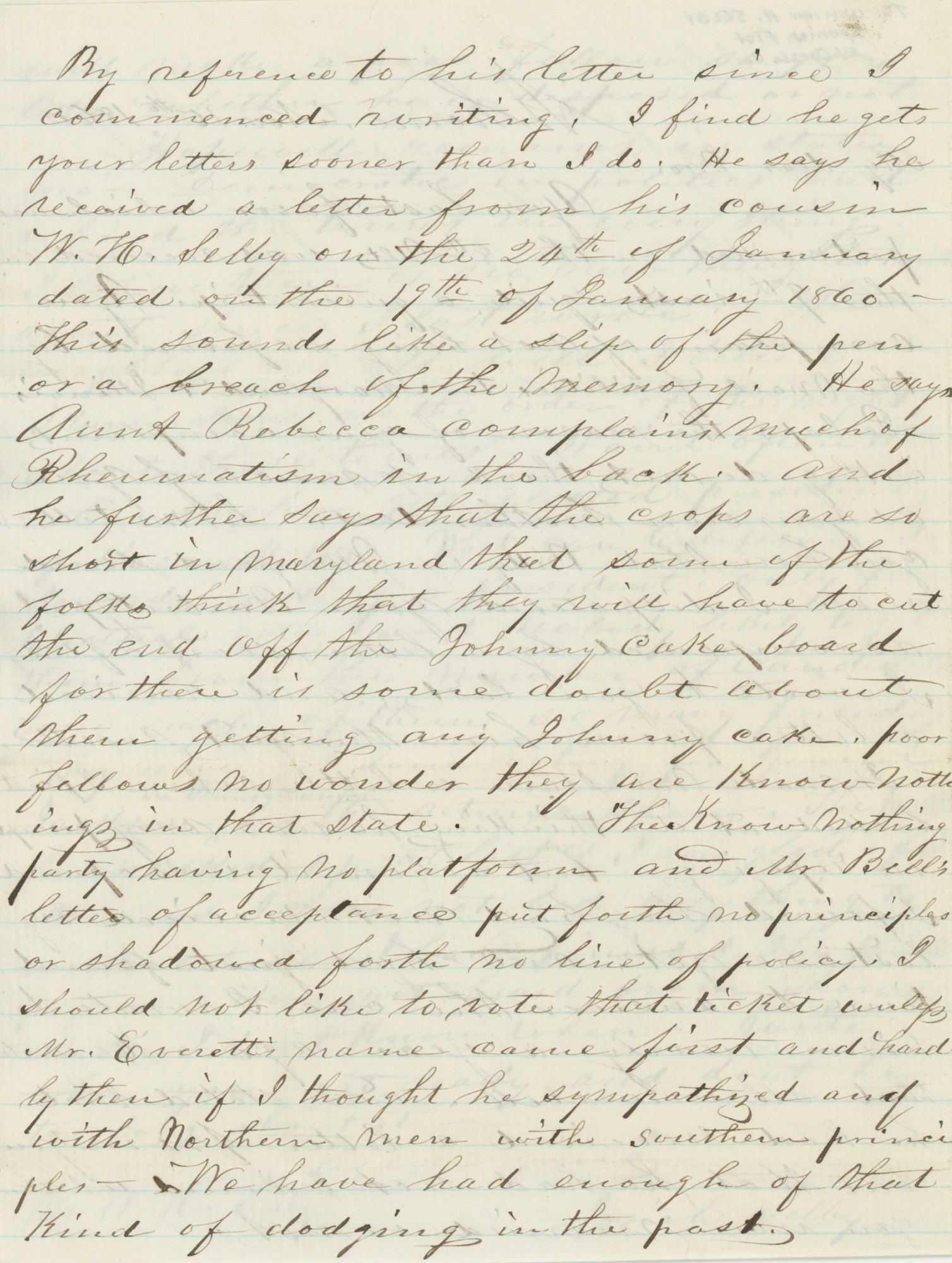
“says that the crops are so short in Maryland that some of the folks think that they will have to cut the end off the Johnny Cake board for there is some doubt about them getting any Johnny cake. Poor fellows no wonder they are know-nothings in that state. The Know Nothing party having no platform and Mr Bell’s letter of acceptance put forth no principles or shadowed forth no line of policy. I should not like to vote that ticket unless Mr. Everett’s name came first and hard by then if I thought he sympathized with any Northern men with southern principles – We have had enough of that kind of dodging in the past.” (November 15, 1860)
The “Know-Nothing” Party, also known as the American Party, was a nativist and anti-Catholic political party founded in the 1840s. By 1860 the American Party had essentially disbanded and been merged into the Constitutional Union Party, which ran John Bell and Edward Everett as its presidential ticket that year. On the topic of that year’s election, particularly Democrat candidate Stephen A. Douglas, Selby writes further:
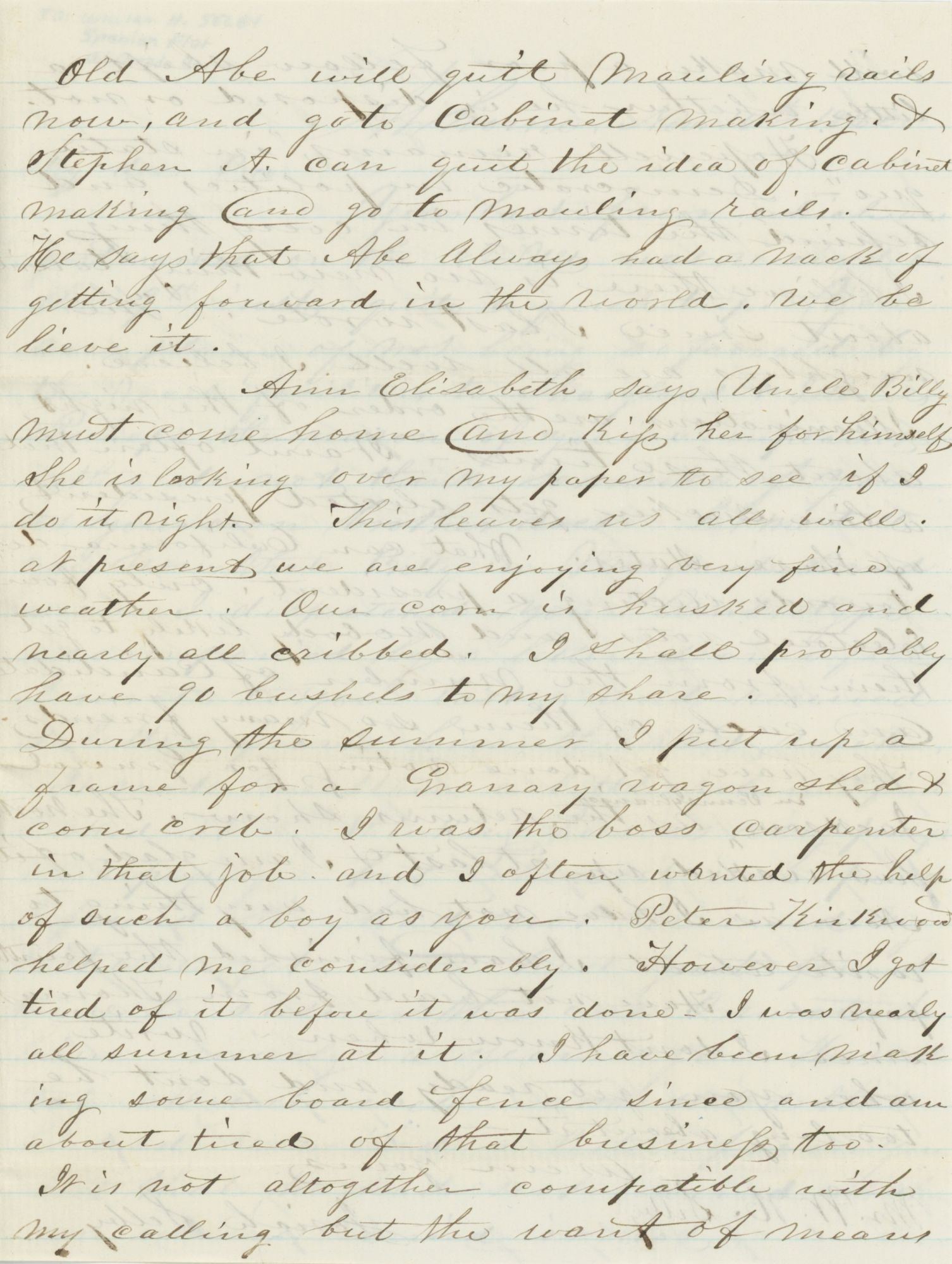
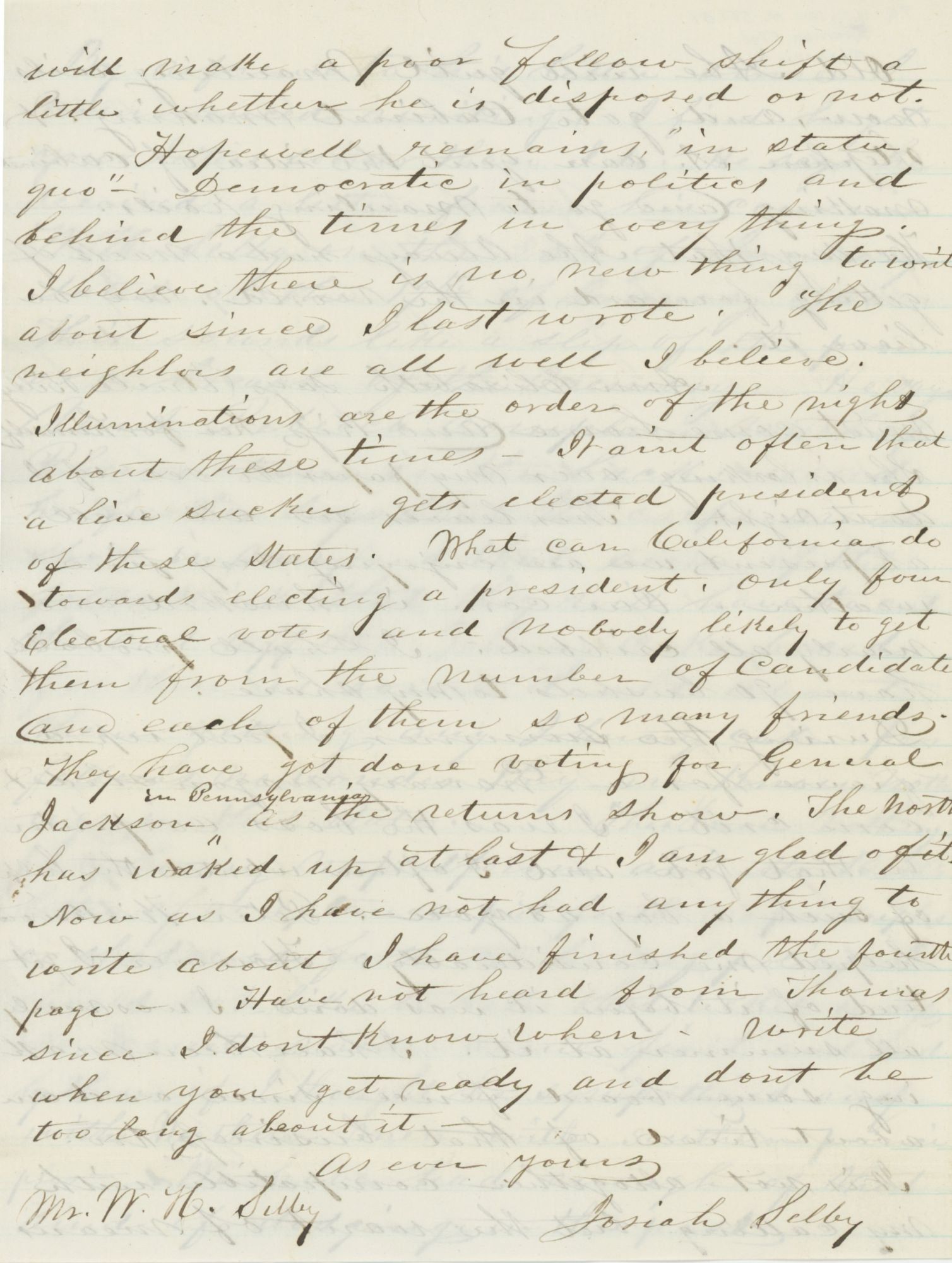
“Old Abe will quit mauling rails now, and go to Cabinet making. & Stephen A. can quit the idea of cabinet making and go to mauling rails. He says that Abe always had a [k]nack of getting forward in the world. We believe it. [...] They have got done voting for General Jackson in Pennsylvania as the returns show. The north has waked up at last & I am glad of it.”
By “mauling rails” and “waked up”, Selby is probably referring to the Rail Maulers and Wide Awakes, two Republican political clubs and soon-to-be paramilitary groups.[1] He is also making a pun about Douglas’s time as an apprentice cabinet maker and the presidential cabinet, and perhaps about Lincoln’s and Douglas’s history with railroads.
Selby writes to his brother again in 1862, with comments on the war, which he wishfully took to be “about played out” and “Rebeldom about defunct.” He reflects on the Battle of Pittsburg Landing, now typically known as the Battle of Shiloh:
“The deep bass sounded at Pittsburg landing on the Tennessee river will continue to vibrate on the cords of many a northern heart for a long time, and southern chivalry will have to make some sacrifices [...]. But every dog must have its day, and now the mighty West and North Freedom’s lair must have its dominion from sea to sea and from the polar circle to the tropics bright. Hurra for Freedom in its might. The blood of the Puritan and his western children has stained the soil in Dixies land. That seed will produce fruit on that prolific ground.” (May 15, 1862)
By 1864, as the “war still drags its slow length along”, Selby has moved to Iowa City. A year prior, Congress had passed the Enrollment Act, which enacted a military draft for the Union Army, and Selby observes young men going to extremes to evade it:
“There is a tremendous rush for the gold regions, Idaho, Colorado and California, just at present the State road from here to Marengo is lined with teams, mostly stout young men are with them, doubtless many of them are going to avoid the draft. Uncle Sam has need of the gold hunters, but they seem to think that if he will only let them alone, as Jeff Davis says, they can get along finely, without his uniform. Cousin Harry has been offered $60.00 per month and rations to work for Uncle Sam at his trade. Accordingly he took his tools and vamo[o]sed last Thursday to a warmer climate. He started for St. Louis Mo.” (April 16, 1864)
The significant gold rushes in those regions had already happened by 1864, so if Selby’s observation of another rush is accurate, his explanation of it is plausible as well. Enrollment in the Union Army was flagging and the 1863 Act—which allowed draftees to pay their way out of the draft—was extremely unpopular, most famously leading to riots in New York City.
Overall the letters provide an entertainingly written view of some better- and lesser-known Civil War-era figures and events.
[1] Kenneth M. Stampp, Indiana Politics during the Civil War (Indiana University Press: 1978), 45.
“says that the crops are so short in Maryland that some of the folks think that they will have to cut the end off the Johnny Cake board for there is some doubt about them getting any Johnny cake. Poor fellows no wonder they are know-nothings in that state. The Know Nothing party having no platform and Mr Bell’s letter of acceptance put forth no principles or shadowed forth no line of policy. I should not like to vote that ticket unless Mr. Everett’s name came first and hard by then if I thought he sympathized with any Northern men with southern principles – We have had enough of that kind of dodging in the past.” (November 15, 1860)
The “Know-Nothing” Party, also known as the American Party, was a nativist and anti-Catholic political party founded in the 1840s. By 1860 the American Party had essentially disbanded and been merged into the Constitutional Union Party, which ran John Bell and Edward Everett as its presidential ticket that year. On the topic of that year’s election, particularly Democrat candidate Stephen A. Douglas, Selby writes further:
“Old Abe will quit mauling rails now, and go to Cabinet making. & Stephen A. can quit the idea of cabinet making and go to mauling rails. He says that Abe always had a [k]nack of getting forward in the world. We believe it. [...] They have got done voting for General Jackson in Pennsylvania as the returns show. The north has waked up at last & I am glad of it.”
By “mauling rails” and “waked up”, Selby is probably referring to the Rail Maulers and Wide Awakes, two Republican political clubs and soon-to-be paramilitary groups.[1] He is also making a pun about Douglas’s time as an apprentice cabinet maker and the presidential cabinet, and perhaps about Lincoln’s and Douglas’s history with railroads.
Selby writes to his brother again in 1862, with comments on the war, which he wishfully took to be “about played out” and “Rebeldom about defunct.” He reflects on the Battle of Pittsburg Landing, now typically known as the Battle of Shiloh:
“The deep bass sounded at Pittsburg landing on the Tennessee river will continue to vibrate on the cords of many a northern heart for a long time, and southern chivalry will have to make some sacrifices [...]. But every dog must have its day, and now the mighty West and North Freedom’s lair must have its dominion from sea to sea and from the polar circle to the tropics bright. Hurra for Freedom in its might. The blood of the Puritan and his western children has stained the soil in Dixies land. That seed will produce fruit on that prolific ground.” (May 15, 1862)
By 1864, as the “war still drags its slow length along”, Selby has moved to Iowa City. A year prior, Congress had passed the Enrollment Act, which enacted a military draft for the Union Army, and Selby observes young men going to extremes to evade it:
“There is a tremendous rush for the gold regions, Idaho, Colorado and California, just at present the State road from here to Marengo is lined with teams, mostly stout young men are with them, doubtless many of them are going to avoid the draft. Uncle Sam has need of the gold hunters, but they seem to think that if he will only let them alone, as Jeff Davis says, they can get along finely, without his uniform. Cousin Harry has been offered $60.00 per month and rations to work for Uncle Sam at his trade. Accordingly he took his tools and vamo[o]sed last Thursday to a warmer climate. He started for St. Louis Mo.” (April 16, 1864)
The significant gold rushes in those regions had already happened by 1864, so if Selby’s observation of another rush is accurate, his explanation of it is plausible as well. Enrollment in the Union Army was flagging and the 1863 Act—which allowed draftees to pay their way out of the draft—was extremely unpopular, most famously leading to riots in New York City.
Overall the letters provide an entertainingly written view of some better- and lesser-known Civil War-era figures and events.
[1] Kenneth M. Stampp, Indiana Politics during the Civil War (Indiana University Press: 1978), 45.