

Collection of Esperanto Materials, Including Bulletins of the Quaker Group “The Friends’ Esperanto Society” and the Indonesian Periodical “Hinda Esperantisto”

- Sixteen pieces: two “Friends’ Esperanto Society” bulletins, 8 x 12 ½ inch each; two letters, 8 ½ x 11 inch each; seven ?
- Austria; Java, Indonesia; London, England; and Los Angeles, California , 1947
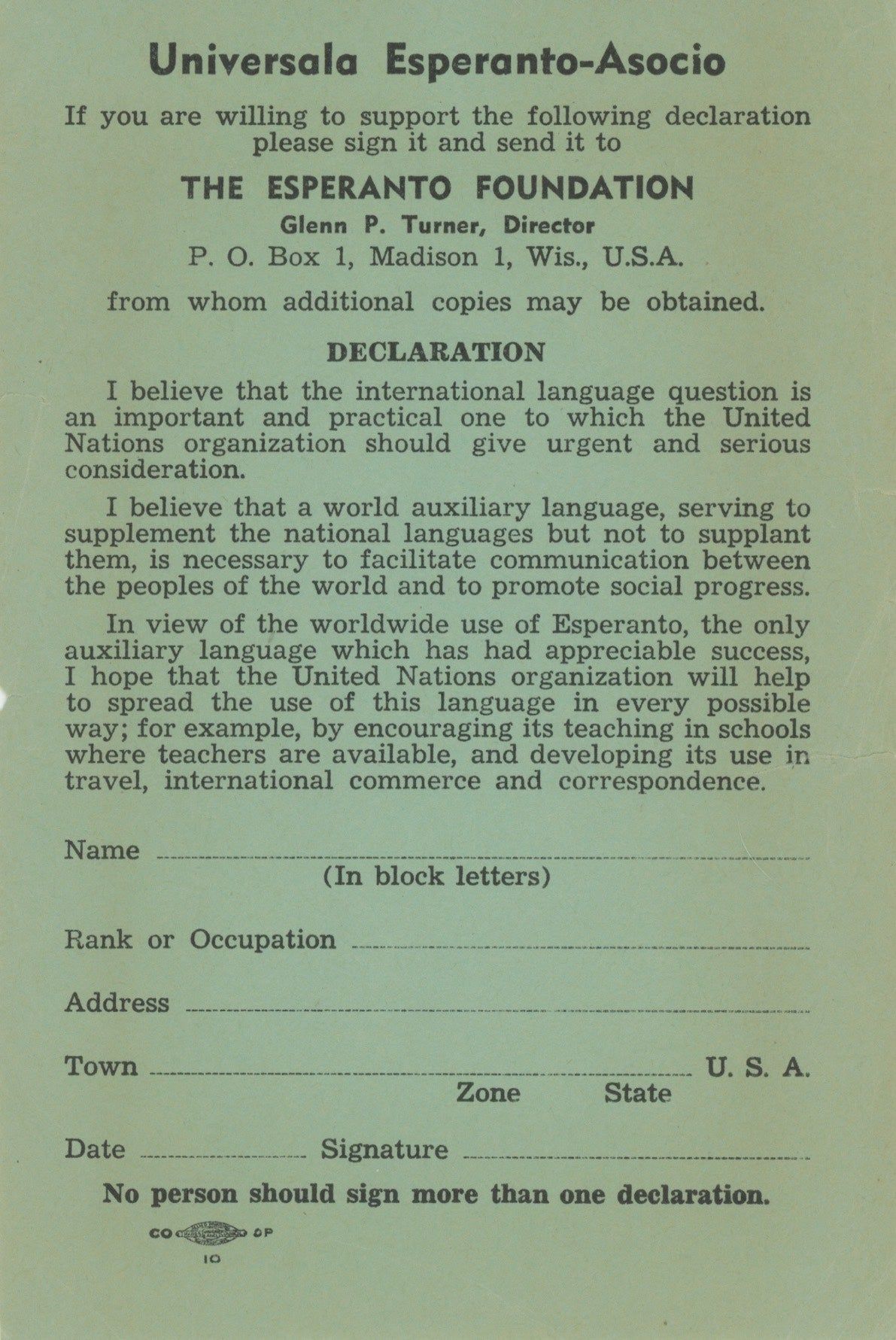
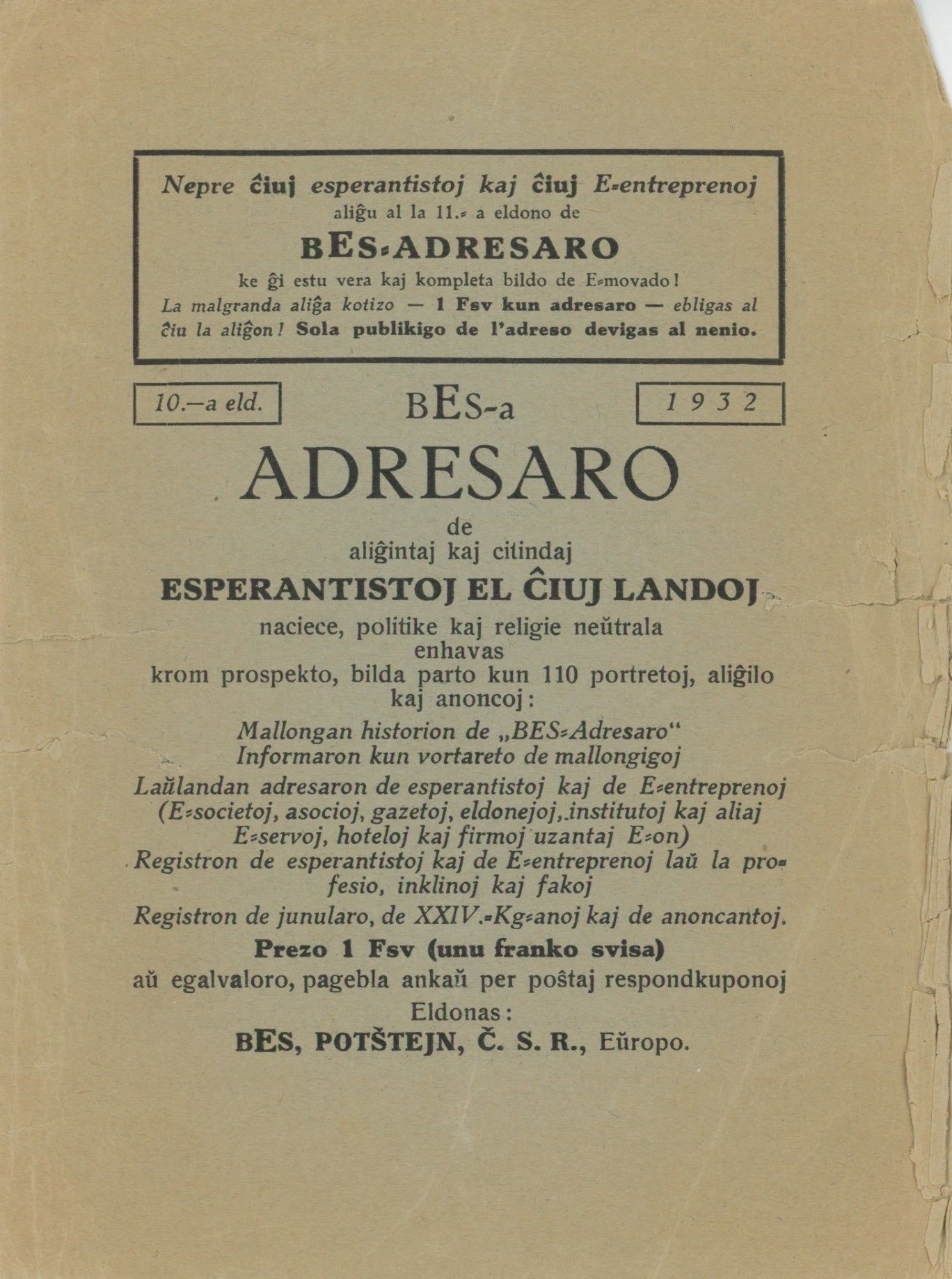
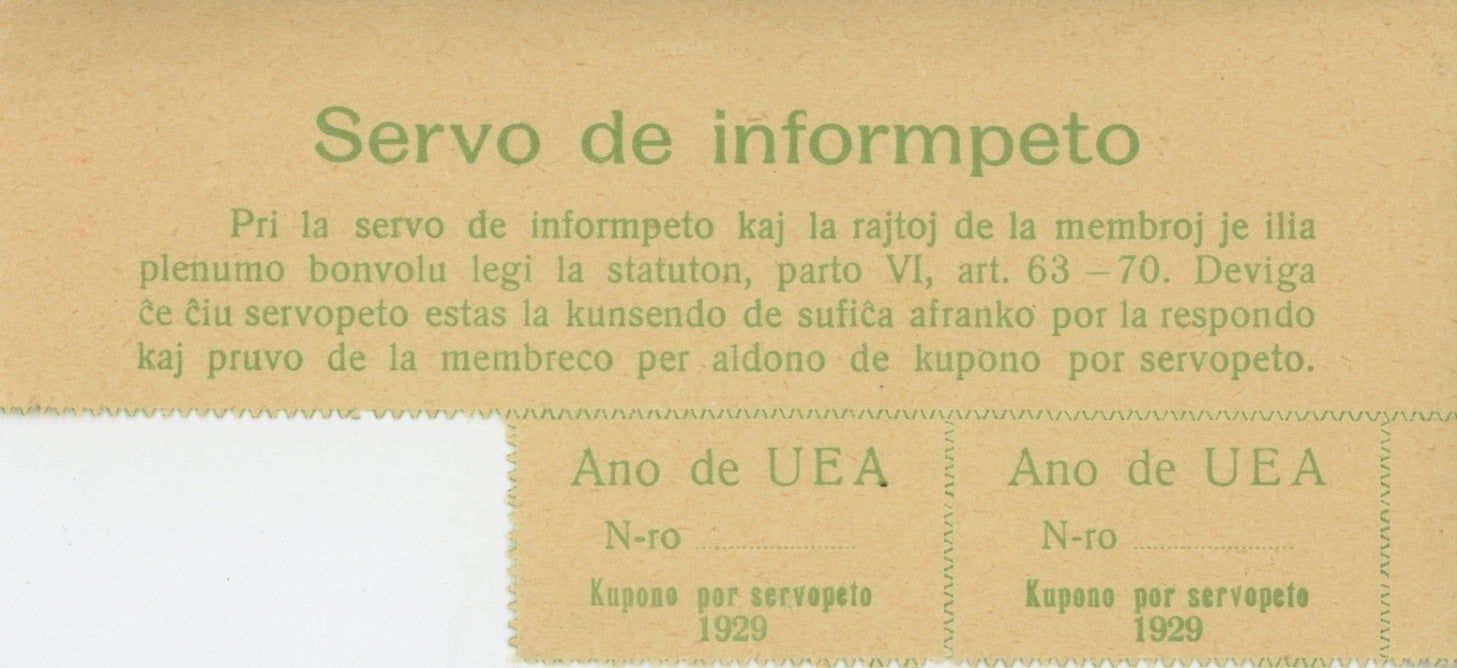
Austria; Java, Indonesia; London, England; and Los Angeles, California, 1947. Sixteen pieces: two “Friends’ Esperanto Society” bulletins, 8 x 12 ½ inch each; two letters, 8 ½ x 11 inch each; seven “Hinda Esperantisto” pamphlets, 5 ½ x 8 inch, four pages each; two “Declaration” forms, 4 x 6 inches; one BES pamphlet, 4 ½ x 6 inches, eight pages; one set of tickets for membership information, 2 x 5 inches (missing one tear-off ticket), and one “Universala Ligo” membership card for 1947, 3 x 4 ½ inches. Folded; some chipping and tearing at edges. Overall excellent to near fine.. Esperanto is an artificial language created by Polish physician Ludwik Zamenhof (1859–1917) in 1887. Zamenhof intended Esperanto to be a universal second language; his experiences growing up Jewish in the Russian Empire among Russian, Polish, German, and Yiddish speakers—all of whom regarded each other at best with suspicion—led him to believe that an easily-learned, neutral second language could by contrast inspire unity between all people. Offered here is a small collection of materials related to various Esperanto societies: the “BES” (a Czech group), the Universal Esperanto Association, the Friends’ Esperanto Society, the Esperanto Club of Los Angeles, and Hinda Esperantisto – “Indian Esperantist,” based in Java, Indonesia.
These materials, written largely in Esperanto (note that most quotes herein are translated), are mostly typical club bulletins, advertising events, announcing members’ news, and reminding the reader of upcoming fees. The BES pamphlet, besides advertising its Adresaro (member directory), solicits donations for a “living monument to Esperanto”—a headquarters—to be built in Potštejn, in Czechia,
“in the shape of a five-pointed star, which would become a real home for all those who love goodness, beauty, health, truth, and progress. The stone-like, majestic, white building will shine brightly in a beautiful circle from a moderate slope, and the fragrant forest behind it will form a charming background.” (1932)
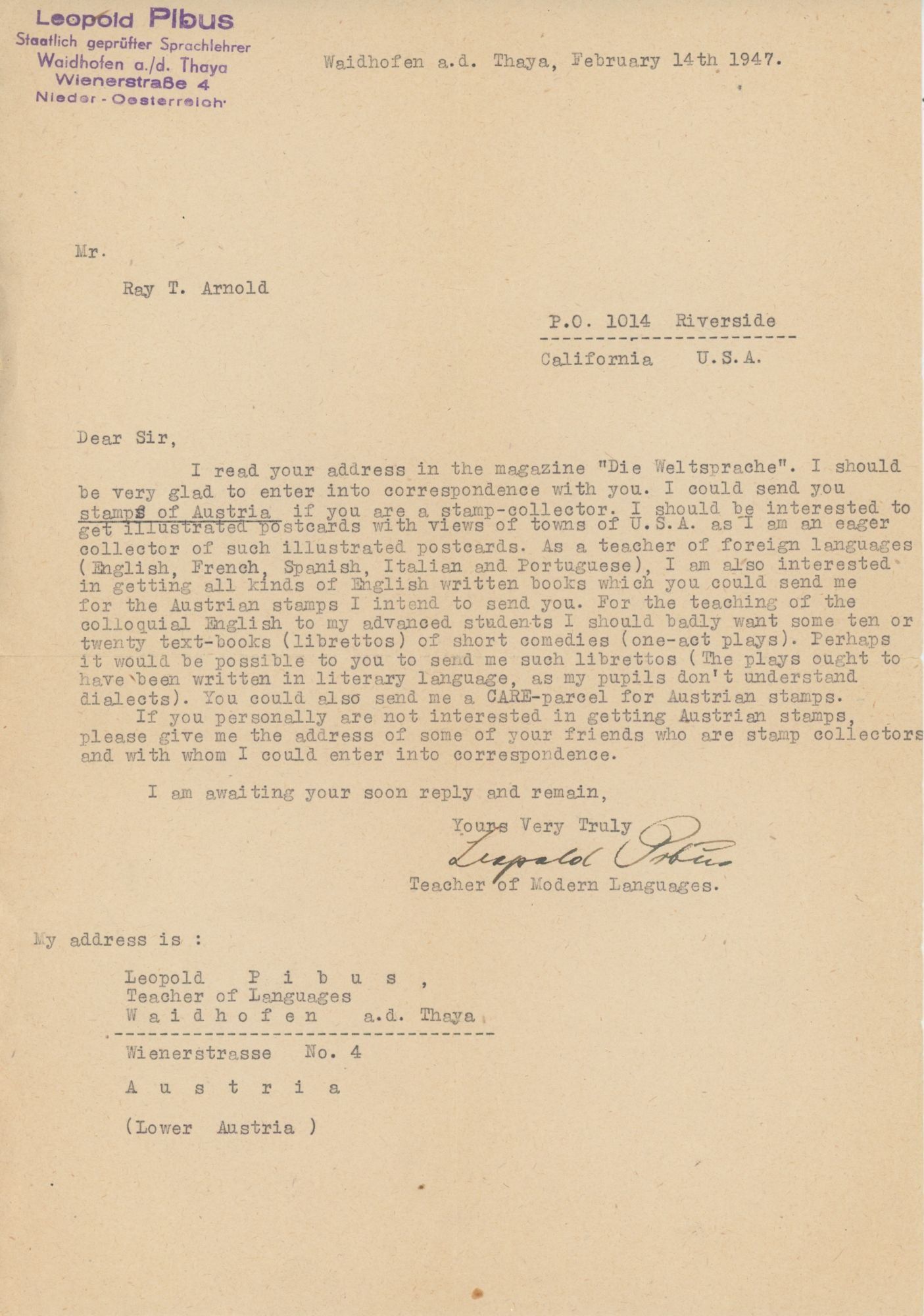
This utopian vision was likely prevented at least in part by the Nazi occupation of the country. Esperanto speakers, including Zamenhof’s family in particular, were among their many targets. The effort to purge the universal language from Europe was clearly not successful; a postwar letter from a language teacher in Austria to a gentleman in California, included in this collection, notes that the Californian’s address had been printed “in the magazine ‘Die Weltsprache’” – that is, “The World Language” (February 14, 1947).
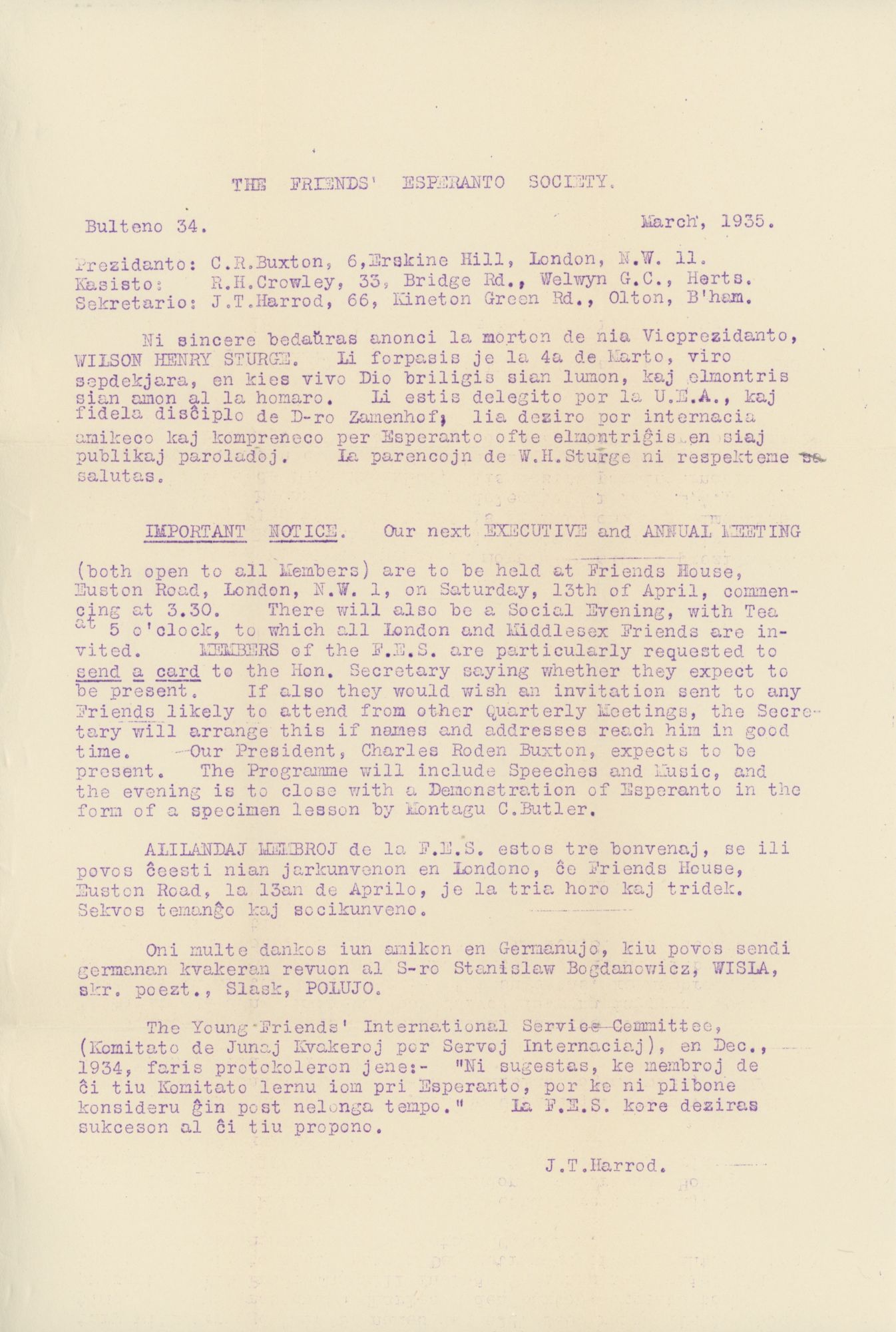
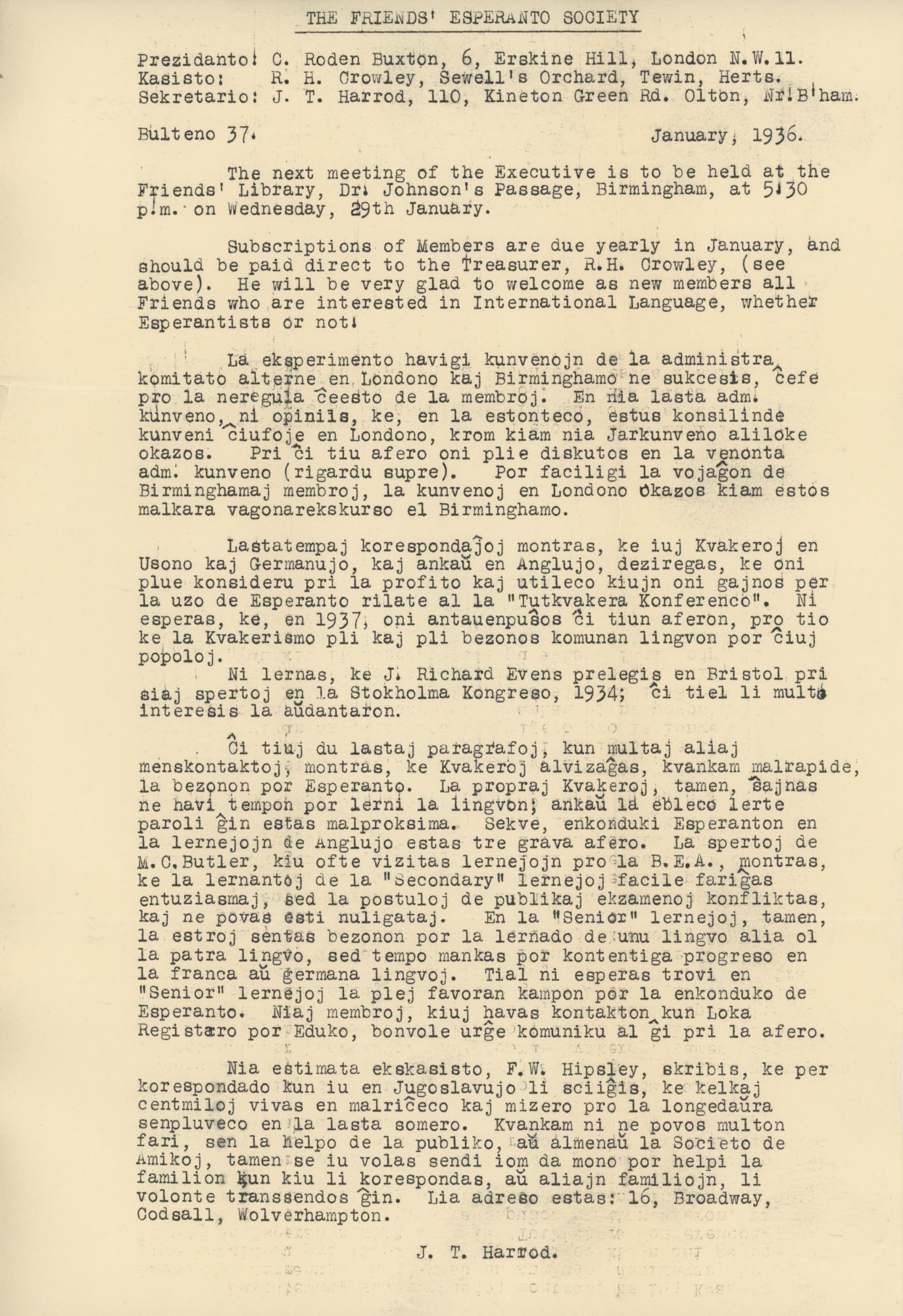
Esperanto’s egalitarian and pacifist aims form a large part of its appeal to Quakers. It is unclear whether the Friends’ Esperanto Society, which authored two of the items in this collection, is the same as the Kvakera Esperanto-Societo, which was founded in 1921 and is still active. The March 1935 bulletin announces the F.E.S.’s annual meeting at Friends House in London, the headquarters of the Religious Society of Friends in Britain. An obituary for Wilson Henry Sturge, the Society’s Vice President, remarks on “his desire for international friendship and understanding through Esperanto” (March 1935). The January 1936 bulletin calls members to petition their local Registrar of Education for Esperanto to be taught in high schools, a request echoed by the Universala Esperanto-Asocio’s declaration form calling on the United Nations to “help to spread the use of this language in every possible way”, including supporting its teaching in schools, in order “to facilitate communication between the peoples of the world and to promote social progress.”
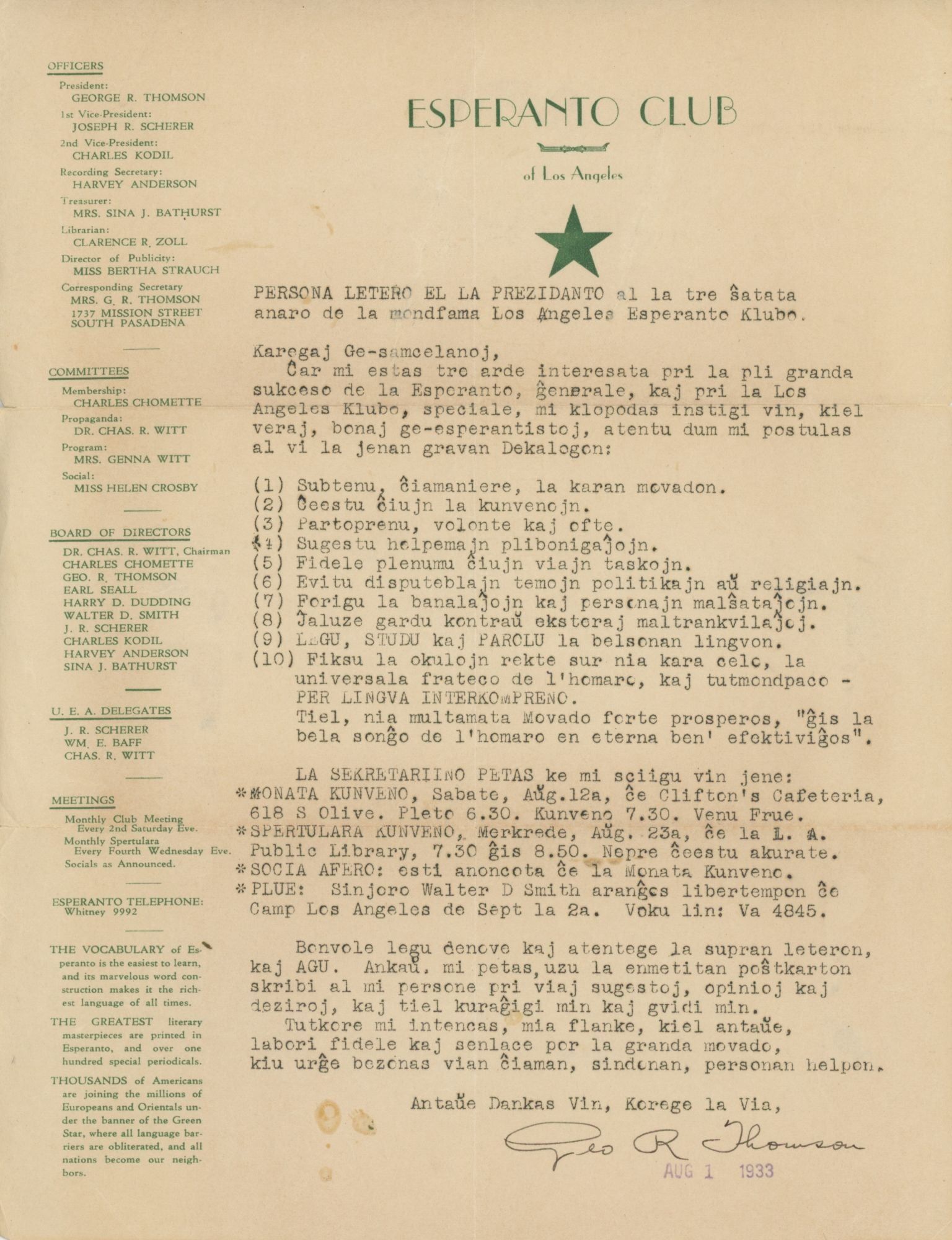
George R. Thompson’s letter to the Los Angeles Esperanto Club, as its President, strikes a similarly idealistic tone. He gives Club members his “Decalogue,” finishing with an exhortation to: “10. Fix our eyes directly on our dear goal, the universal brotherhood of humanity, and global peace – through linguistic mutual understanding” (August 1, 1933).
“Hinda Esperantisto”, written by Liem Tjong Hie, is somewhat more polemical. Its announcements include news from the Manchurian Federation of Esperantists, who proposed to make Esperanto the region’s official language and “to abolish the English language” (Jan-May 1933). It criticizes “the European progressive writers”, especially the Hungarian Esperantist Kálmán Kalocsay, for making the language more difficult for learners. Liem also writes, mysteriously:
“The world does not know that the Belgian Esperanto Institute, dir. Frans Schoofs, Antwerp, is a physically rotting company. The shamelessness of the leaders is shown by the fact that they are so heroic in victimizing distant people knowing that they cannot do anything against them. A black mark to the apparent reputation of the leaders!”
These pamphlets also include side-by-side Indonesian and Esperanto blurbs, including a review of a new book for Malaysian Esperanto learners – Esperanto caught on quickly in Asia, where it still enjoys widespread popularity.
Of interest to Esperantistoj and historians of Esperanto.
These materials, written largely in Esperanto (note that most quotes herein are translated), are mostly typical club bulletins, advertising events, announcing members’ news, and reminding the reader of upcoming fees. The BES pamphlet, besides advertising its Adresaro (member directory), solicits donations for a “living monument to Esperanto”—a headquarters—to be built in Potštejn, in Czechia,
“in the shape of a five-pointed star, which would become a real home for all those who love goodness, beauty, health, truth, and progress. The stone-like, majestic, white building will shine brightly in a beautiful circle from a moderate slope, and the fragrant forest behind it will form a charming background.” (1932)
This utopian vision was likely prevented at least in part by the Nazi occupation of the country. Esperanto speakers, including Zamenhof’s family in particular, were among their many targets. The effort to purge the universal language from Europe was clearly not successful; a postwar letter from a language teacher in Austria to a gentleman in California, included in this collection, notes that the Californian’s address had been printed “in the magazine ‘Die Weltsprache’” – that is, “The World Language” (February 14, 1947).
Esperanto’s egalitarian and pacifist aims form a large part of its appeal to Quakers. It is unclear whether the Friends’ Esperanto Society, which authored two of the items in this collection, is the same as the Kvakera Esperanto-Societo, which was founded in 1921 and is still active. The March 1935 bulletin announces the F.E.S.’s annual meeting at Friends House in London, the headquarters of the Religious Society of Friends in Britain. An obituary for Wilson Henry Sturge, the Society’s Vice President, remarks on “his desire for international friendship and understanding through Esperanto” (March 1935). The January 1936 bulletin calls members to petition their local Registrar of Education for Esperanto to be taught in high schools, a request echoed by the Universala Esperanto-Asocio’s declaration form calling on the United Nations to “help to spread the use of this language in every possible way”, including supporting its teaching in schools, in order “to facilitate communication between the peoples of the world and to promote social progress.”
George R. Thompson’s letter to the Los Angeles Esperanto Club, as its President, strikes a similarly idealistic tone. He gives Club members his “Decalogue,” finishing with an exhortation to: “10. Fix our eyes directly on our dear goal, the universal brotherhood of humanity, and global peace – through linguistic mutual understanding” (August 1, 1933).
“Hinda Esperantisto”, written by Liem Tjong Hie, is somewhat more polemical. Its announcements include news from the Manchurian Federation of Esperantists, who proposed to make Esperanto the region’s official language and “to abolish the English language” (Jan-May 1933). It criticizes “the European progressive writers”, especially the Hungarian Esperantist Kálmán Kalocsay, for making the language more difficult for learners. Liem also writes, mysteriously:
“The world does not know that the Belgian Esperanto Institute, dir. Frans Schoofs, Antwerp, is a physically rotting company. The shamelessness of the leaders is shown by the fact that they are so heroic in victimizing distant people knowing that they cannot do anything against them. A black mark to the apparent reputation of the leaders!”
These pamphlets also include side-by-side Indonesian and Esperanto blurbs, including a review of a new book for Malaysian Esperanto learners – Esperanto caught on quickly in Asia, where it still enjoys widespread popularity.
Of interest to Esperantistoj and historians of Esperanto.