

Cowles Family Archive, with Letters Written by Leman Cowles from the Philippines During the Spanish-American War and Philippine Insurrection, and Various Items Kept by Cowles During His Service Including a Scarce Map of American Military Operations in the Region
- Approximately 120 pieces: fifty-seven letters, forty postcards, five photographs, seventeen pieces of miscellaneous personal eff
- Philippines; Eldorado, Kansas; and others , 1910
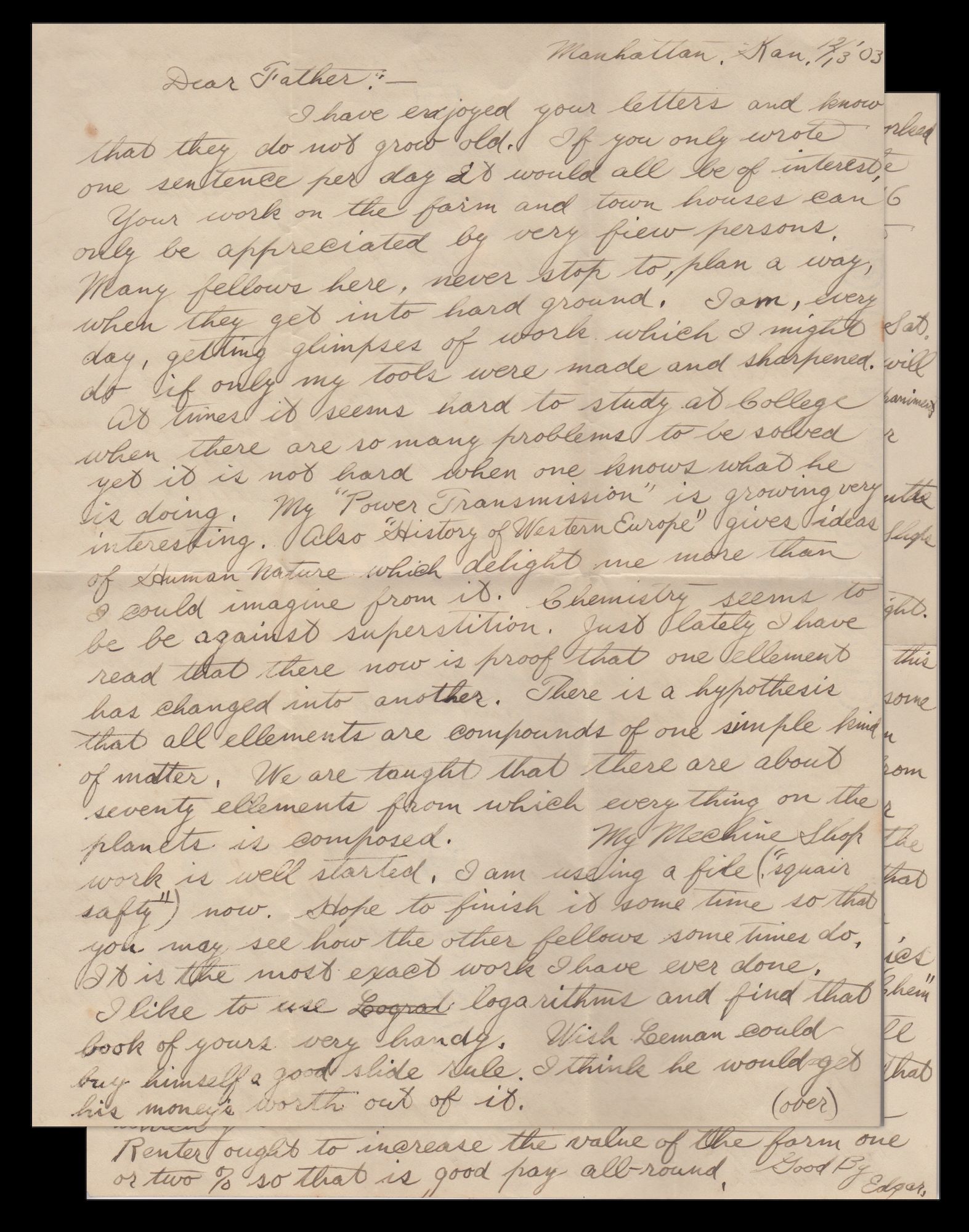
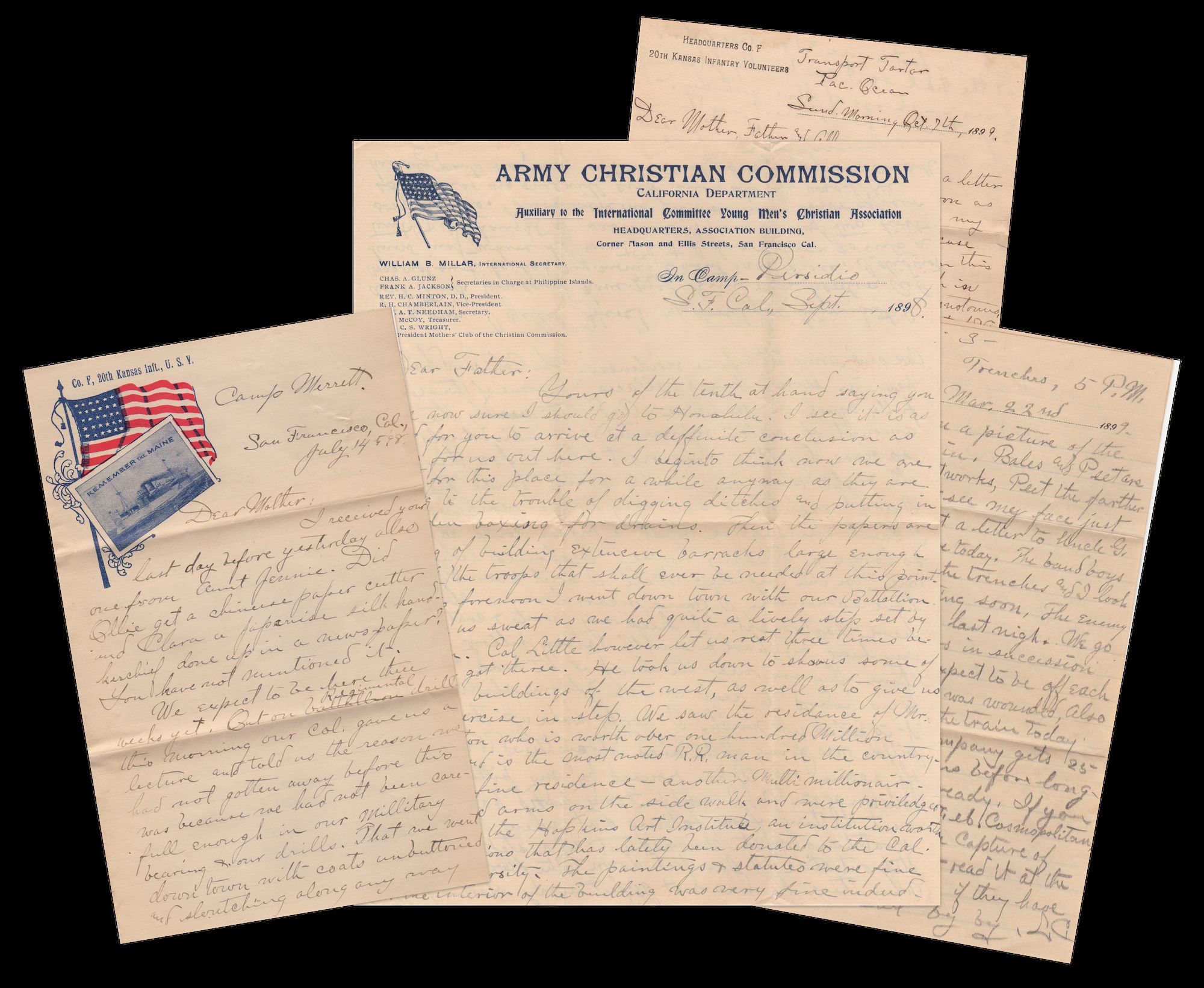
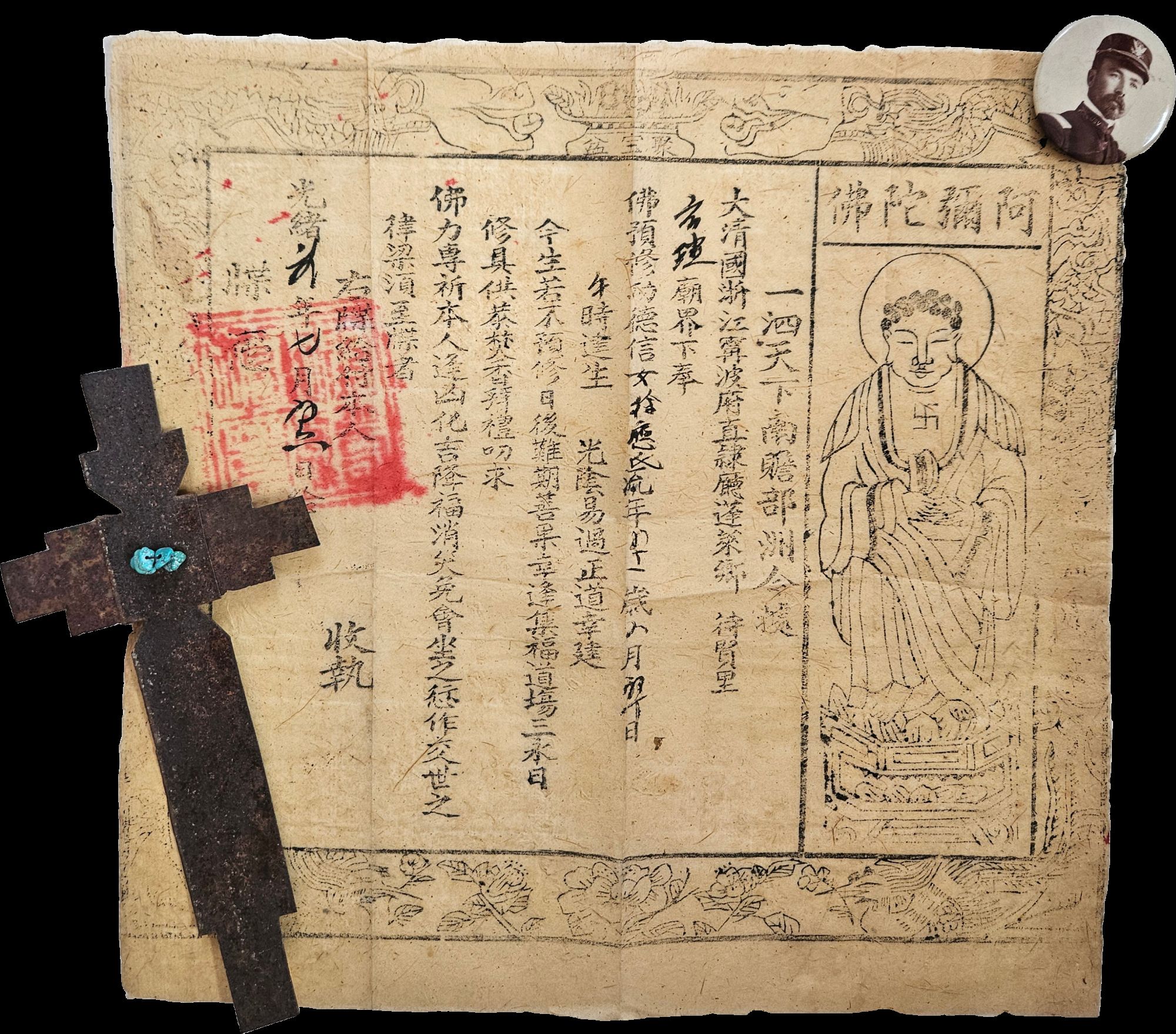
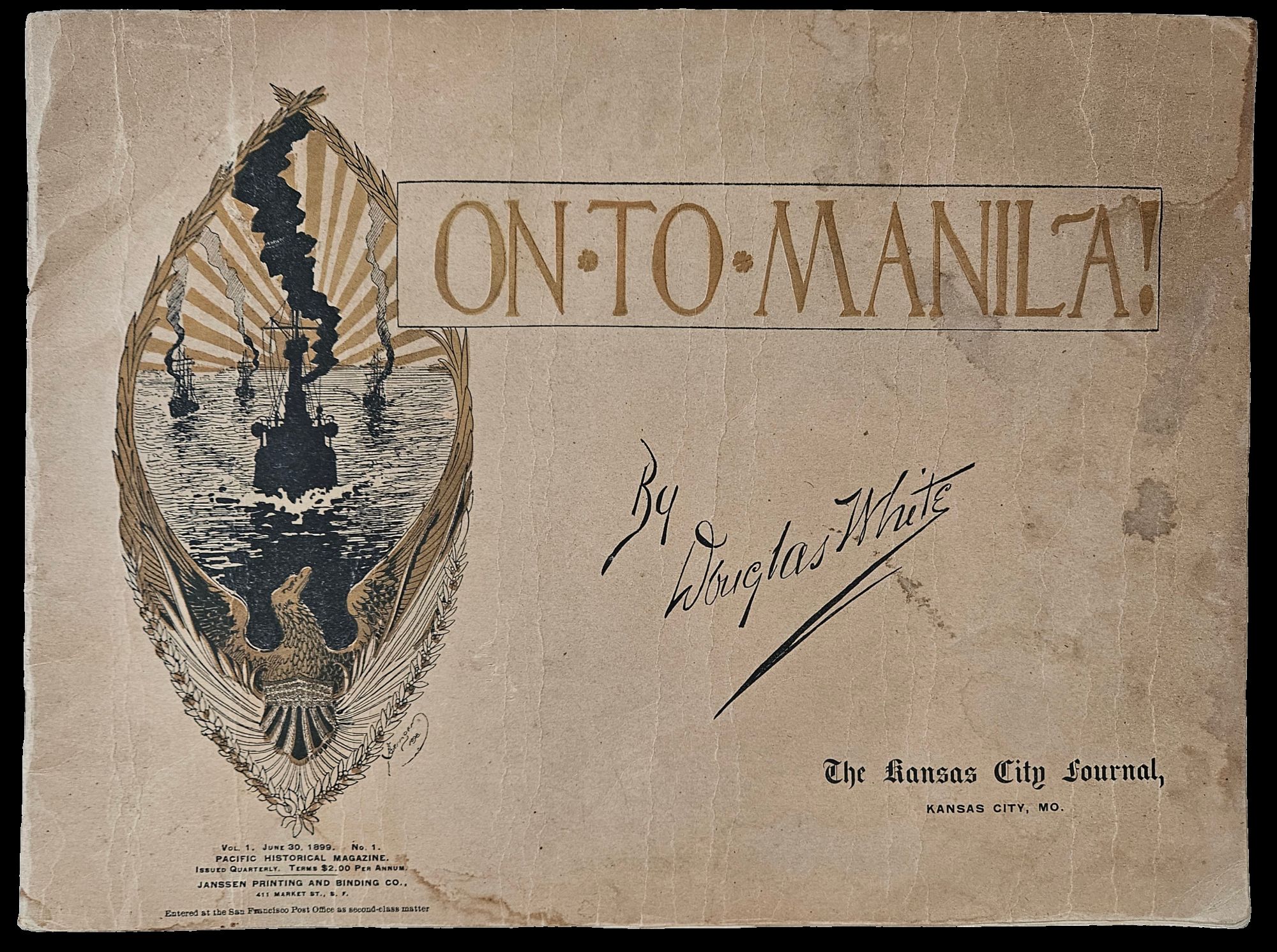
Philippines; Eldorado, Kansas; and others, 1910. Approximately 120 pieces: fifty-seven letters, forty postcards, five photographs, seventeen pieces of miscellaneous personal effects, and a map measuring 31 x 19 ¾ inches. Map attributed to Geo C. Sellner, rolled with marginal tearing, some tearing intersecting with subject; inscribed verso “L.T. Cowles. Manila, P.I. June 27 1800”; good to very good minus. Overall very good to excellent.. Leman Tracy Cowles (1868–1947) was born in Eldorado, Kansas and served in the Philippines with Company F of the 20th Kansas Volunteer Infantry. He writes here to his parents, homeopathic doctor Edwin Cowles (1820–1910) and Sarah McDuffee Cowles (1840–1912); other correspondents include Cowles siblings Olive Josephine (1873–1963), Edgar Andrew (1882–1961) and Alson Joseph (1883–1911).
Of primary interest in the group are letter and materials from Leman Cowles, who served in the Philippines during the Spanish-American War and Philippine Insurrection. His letters, most of which were written between 1898 and 1899, document daily life and combat with the “Fighting Twentieth”.
Cowles first spends five months at Camps Merritt and Merriam in San Francisco, which are hotbeds of disease and misbehavior; Cowles himself is robbed by a high-ranking enlisted man:
“I partly woke up thinking my pillow was going off the bead [bed] [...] I put my hand back to prevent the things from falling out when I realized a scratching on the canvass tent and a step on the board step out side. I jumped down to the floor + out the door when there he was not 35 feet away starting off on a run – I yelled ‘Here!’ and started for him but I don’t think you could have made him run harder. As I was not sure he had my money + watch went back to see, I did not know just where he went but I heard him go into a tent + I thought I was sure it was one of the two first sargents tents.” (September 1898)
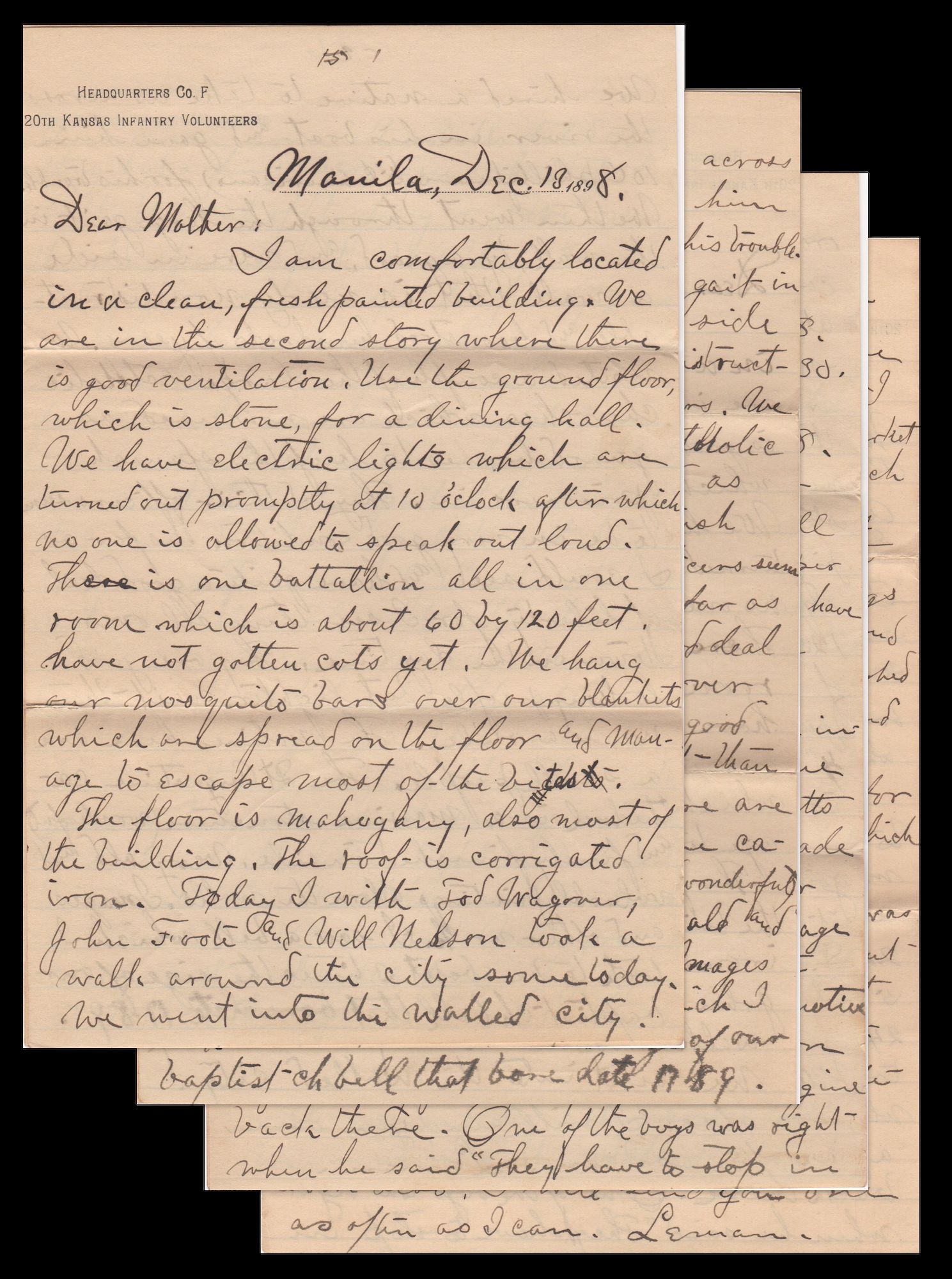
Cowles arrives in Manila in December of 1898, where the regiment spends several months; he reports seeing Spanish prisoners of war “all over town” and that they “seem to be in very good condition” and “have quite a good deal of liberty” (December 13). He next writes from Caloocan, which the Kansas regiment occupied from February to late March of 1899, and where he first describes seeing action:
“About 3-30 last night the nigs began shooting a lively tune and I was sound asleep. I tumbled out of my dog tent so fast I fell all over myself. [...] We didn’t shoot any this morning. I see a big smoke of some native bamboo shack burning in the edge of Malabon. Theres a stronger talk than ever about the enemys having a machine gun. They are yelling some this morning. Last eve something unusual seemed to be going on. What was it I heard? Can it be? Yes! Hundreds of niggers far up the line yelling at the top of their voices. But what about? It grows more distinct and the little knots of boys who are telling tales of home and younger days begin to listen, the to separate as the yells come along the line nearer our front. Now thousands of the black rascals have taken up the yell and in front of us, clear to the left it rings. [...] This morning I heard the Nebraskas had rec’d some word of their going home and expressed their feelings in cheers. The enemy took it up. Something is ‘Gwine ter drap’, as the darkey said, in a day or so the way things are shaping themselves.” (March 22, 1899)
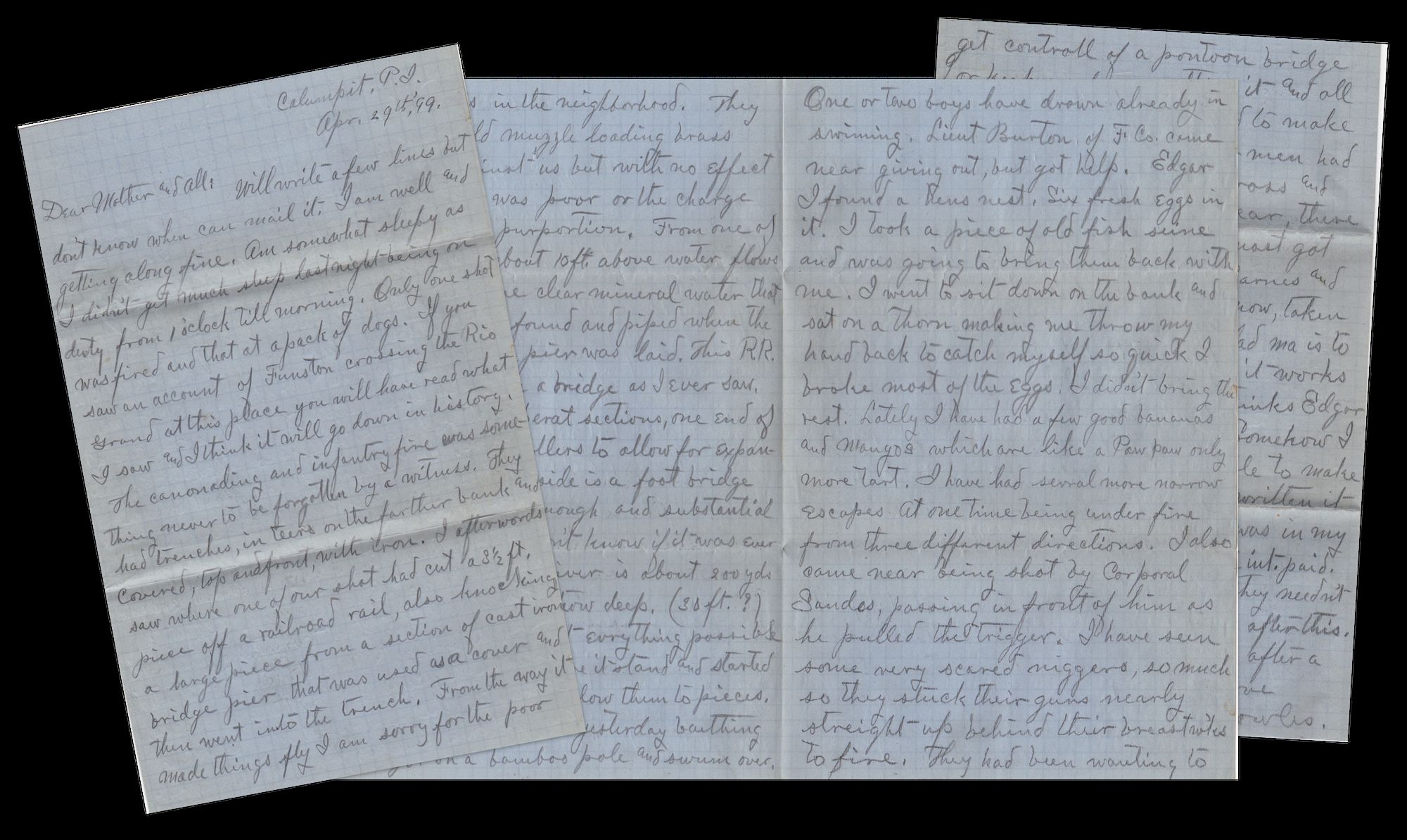
Cowles writes again in April from Calumpit about General Funston’s crossing, which he witnessed:
“If you saw an account of Funston crossing the Rio Grand [Pampanga] at this place you will have read what I saw and I think it will go down in history. The canonading and infantry fire was somthing never to be forgotten by a witness. They had trenches, [...] on the farther bank and covered, top and front, with iron. I afterwords saw where one of our shot had cut a 8 ½ ft. piece off a railroad rail, also knocking a large piece from a section of cast iron bridge pier that was used as a cover and then went into the trench. From the way it made things fly I am sorry for the poor insurrectos in the neighborhood. They used an old muzzle loading brass cannon against us but with no effect as their aim was poor or the charge of improper purportion.” (April 28, 1899)
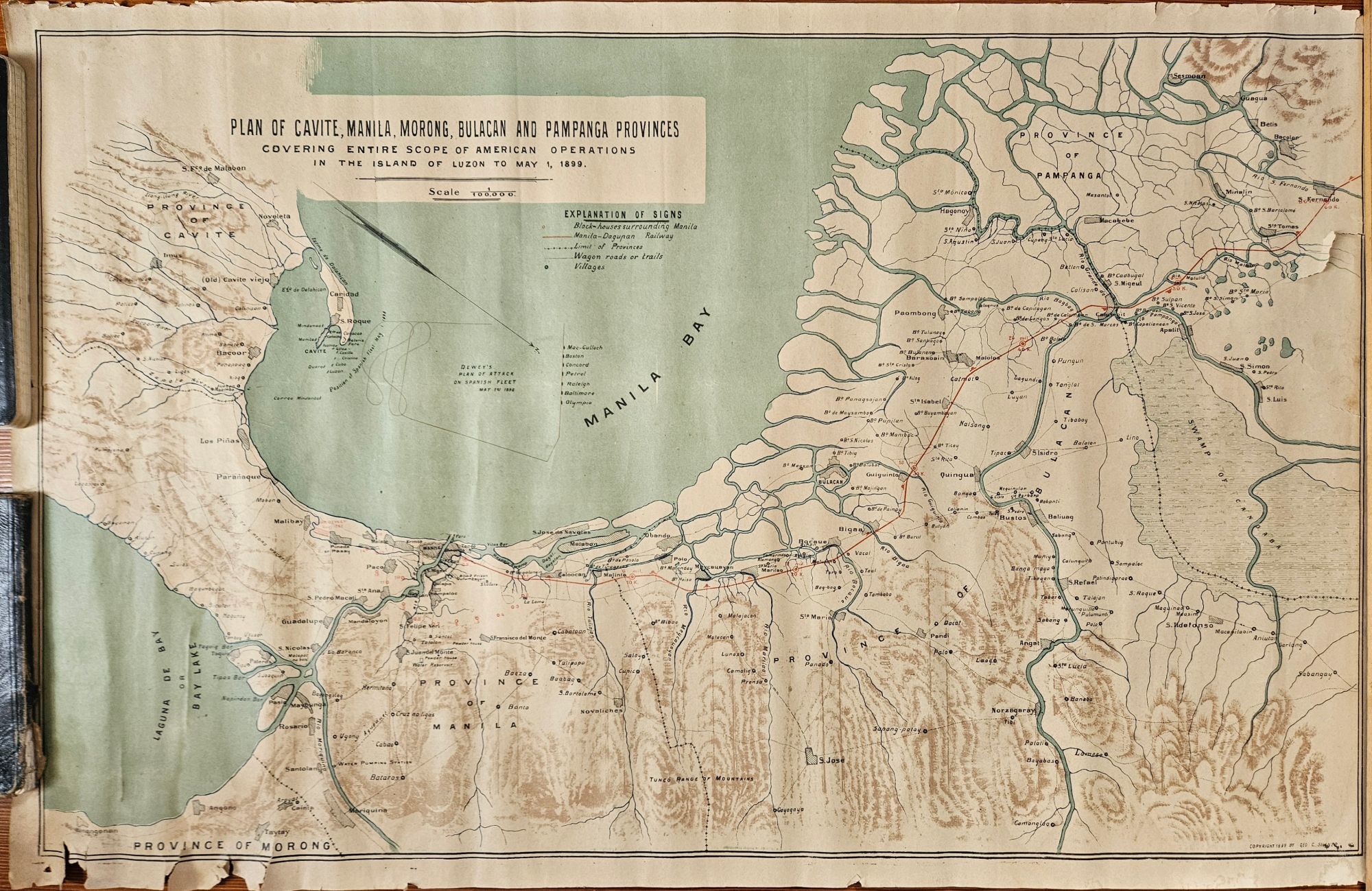
The map included in the group, belonging to Leman Cowles, is dated to around this time. It shows five provinces in Luzon, with positions of the Spanish fleet in Manila Bay and the US plan of attack on it.
Meanwhile, the three other Cowles siblings attend college: Olive at Ottawa University in Kansas, and Edgar and Alson at Kansas State University. Olive is involved with Baptist missionary work, while her brothers’ careers are more technical. Their letters mainly concern coursework, though later letters from Alson discuss his time as an electrical engineer with Allis-Chalmers.
Overall, an illuminating set of letters on the Philippine-American conflict, with the remainder of the family’s correspondence and the material on homeopathy providing additional context and breadth. Of interest to scholars of the Philippine-American War, the Kansas Volunteer Infantry, and more broadly of family histories from the region and period.
Of primary interest in the group are letter and materials from Leman Cowles, who served in the Philippines during the Spanish-American War and Philippine Insurrection. His letters, most of which were written between 1898 and 1899, document daily life and combat with the “Fighting Twentieth”.
Cowles first spends five months at Camps Merritt and Merriam in San Francisco, which are hotbeds of disease and misbehavior; Cowles himself is robbed by a high-ranking enlisted man:
“I partly woke up thinking my pillow was going off the bead [bed] [...] I put my hand back to prevent the things from falling out when I realized a scratching on the canvass tent and a step on the board step out side. I jumped down to the floor + out the door when there he was not 35 feet away starting off on a run – I yelled ‘Here!’ and started for him but I don’t think you could have made him run harder. As I was not sure he had my money + watch went back to see, I did not know just where he went but I heard him go into a tent + I thought I was sure it was one of the two first sargents tents.” (September 1898)
Cowles arrives in Manila in December of 1898, where the regiment spends several months; he reports seeing Spanish prisoners of war “all over town” and that they “seem to be in very good condition” and “have quite a good deal of liberty” (December 13). He next writes from Caloocan, which the Kansas regiment occupied from February to late March of 1899, and where he first describes seeing action:
“About 3-30 last night the nigs began shooting a lively tune and I was sound asleep. I tumbled out of my dog tent so fast I fell all over myself. [...] We didn’t shoot any this morning. I see a big smoke of some native bamboo shack burning in the edge of Malabon. Theres a stronger talk than ever about the enemys having a machine gun. They are yelling some this morning. Last eve something unusual seemed to be going on. What was it I heard? Can it be? Yes! Hundreds of niggers far up the line yelling at the top of their voices. But what about? It grows more distinct and the little knots of boys who are telling tales of home and younger days begin to listen, the to separate as the yells come along the line nearer our front. Now thousands of the black rascals have taken up the yell and in front of us, clear to the left it rings. [...] This morning I heard the Nebraskas had rec’d some word of their going home and expressed their feelings in cheers. The enemy took it up. Something is ‘Gwine ter drap’, as the darkey said, in a day or so the way things are shaping themselves.” (March 22, 1899)
Cowles writes again in April from Calumpit about General Funston’s crossing, which he witnessed:
“If you saw an account of Funston crossing the Rio Grand [Pampanga] at this place you will have read what I saw and I think it will go down in history. The canonading and infantry fire was somthing never to be forgotten by a witness. They had trenches, [...] on the farther bank and covered, top and front, with iron. I afterwords saw where one of our shot had cut a 8 ½ ft. piece off a railroad rail, also knocking a large piece from a section of cast iron bridge pier that was used as a cover and then went into the trench. From the way it made things fly I am sorry for the poor insurrectos in the neighborhood. They used an old muzzle loading brass cannon against us but with no effect as their aim was poor or the charge of improper purportion.” (April 28, 1899)
The map included in the group, belonging to Leman Cowles, is dated to around this time. It shows five provinces in Luzon, with positions of the Spanish fleet in Manila Bay and the US plan of attack on it.
Meanwhile, the three other Cowles siblings attend college: Olive at Ottawa University in Kansas, and Edgar and Alson at Kansas State University. Olive is involved with Baptist missionary work, while her brothers’ careers are more technical. Their letters mainly concern coursework, though later letters from Alson discuss his time as an electrical engineer with Allis-Chalmers.
Overall, an illuminating set of letters on the Philippine-American conflict, with the remainder of the family’s correspondence and the material on homeopathy providing additional context and breadth. Of interest to scholars of the Philippine-American War, the Kansas Volunteer Infantry, and more broadly of family histories from the region and period.