

RADICAL CHIC & MAU-MAUING THE FLAK CATCHERS [Signed]
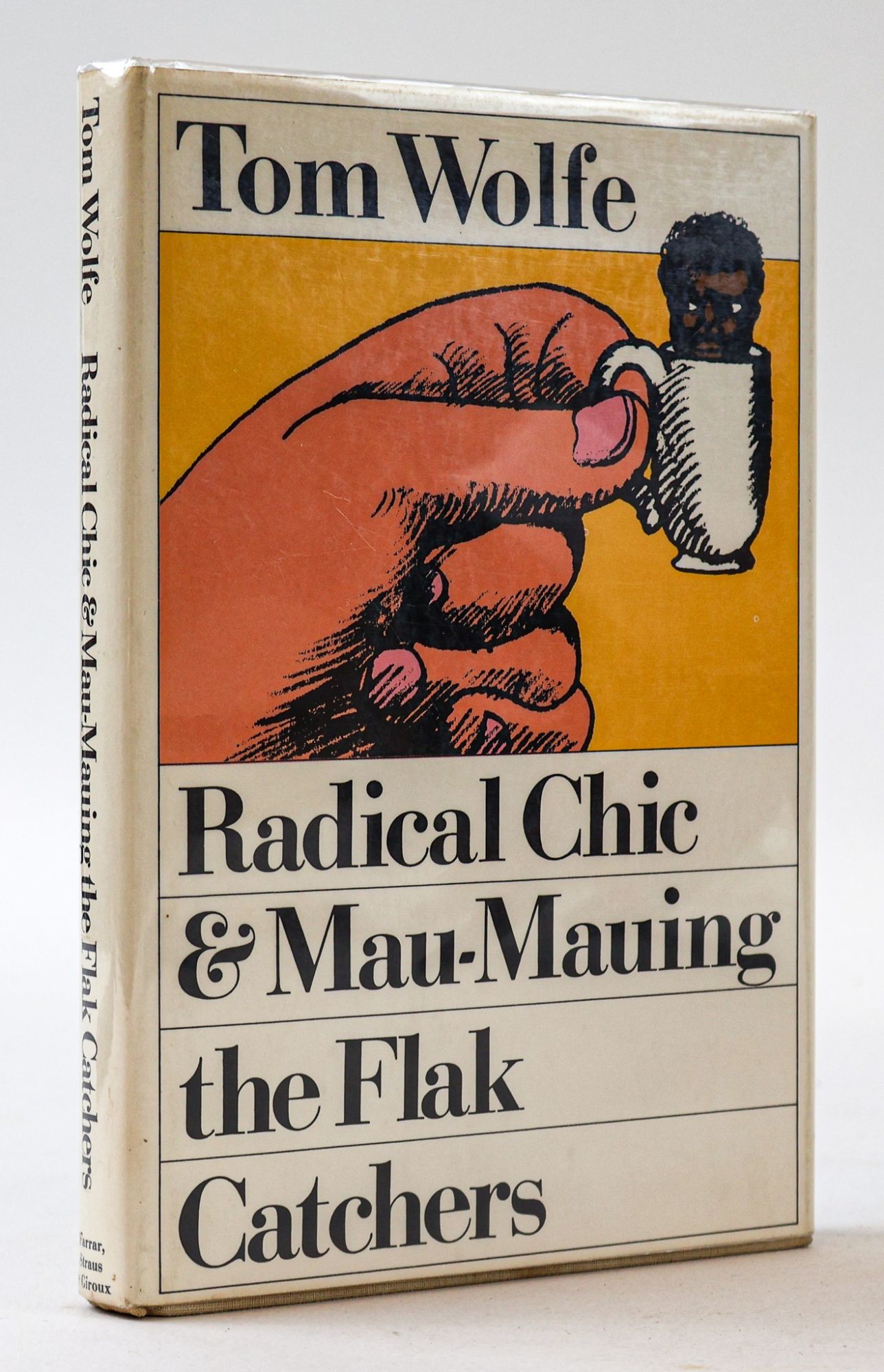


- SIGNED Hardcover
- New York, New York: Farrar, Straus & Giroux, 1970
New York, New York: Farrar, Straus & Giroux, 1970. First Edition, First Printing. Hardcover. Octavo, 153 pages. In Very Good minus condition with a Very Good condition dust jacket. Spine is white with black lettering. Dust jacket protected by mylar covering, price uncut: "$5.95" on front flap, and has mild general soiling and shelving wear along extremities. Boards have mild shelving wear along extremities, mild soiling and staining along cloth binding including rust-colored smudging along spine. Text block has mild general age toning and dust burning along head edge. Signed flat by Tom Wolfe on title page. DL Consignment. Shelved Room C. Tom Wolfe stirred the counterculture when he published his 1970 essay "Radical Chic: That Party at Lenny's" in the New Yorker magazine. In it, Wolfe describes a party at the New York penthouse of famed American conductor and composer Leonard Bernstein wherein Leonard and his actress wife Felicia hosted members of the Black Panther party amongst their white socialite friends. Bernstein, a lifelong democrat, sought to discuss how he might help the Panthers' cause, aloof towards the distinct realities of the attending groups. White South American servants offered the guests bourgeoisie canapes off silver platters, a stark contrast to the racist police brutality and political imprisonment the Panthers' experienced just before arriving. The white guilt of the entertainment celebrity guests is palpable in Wolfe's essay. Wolfe coined "radical chic" to define those wealthy white socialites who entertain radical causes purely for clout. The phrase quickly entered the cultural-political lexicon, but was not well received by all of its readers who struggled with the juxtaposition of white guilt and Black rage. In this collection, "Radical Chic" is paired with another one of Wolfe's essays addressing race, "Mau-mauing the Flak Catchers." In it, he describes the corruption of San Francisco's Office of Economic Opportunity (OEO) and the "flak catchers" who work there, government bureaucrats who fall for the intimidation tactics ("mau-mauing") of militant Black hustlers. Wolfe references the Mau Mau uprising in Kenya to allude to the intimidation of British soldiers by Kenyan freedom fighters. The essay highlights the irony of the anti-poverty programs run by the OEO, suggesting that the money never spread across the communities supposed to benefit, sowing resentment and distrust. Paired here for the first time, these humorous and provocative essays present challenges to the subculture of the 1960s that remain relevant nearly 60 years later. 1395638. Special Collections.