

Epistole Pauli
- Title in red and black. A-D⁶ E⁴ F-J⁶ K⁴ L-M⁶. [68] leaves. Extensive annotations throughout in Latin in a contemporary
- [Leipzig]: [Wolfgang Stockel], 1510
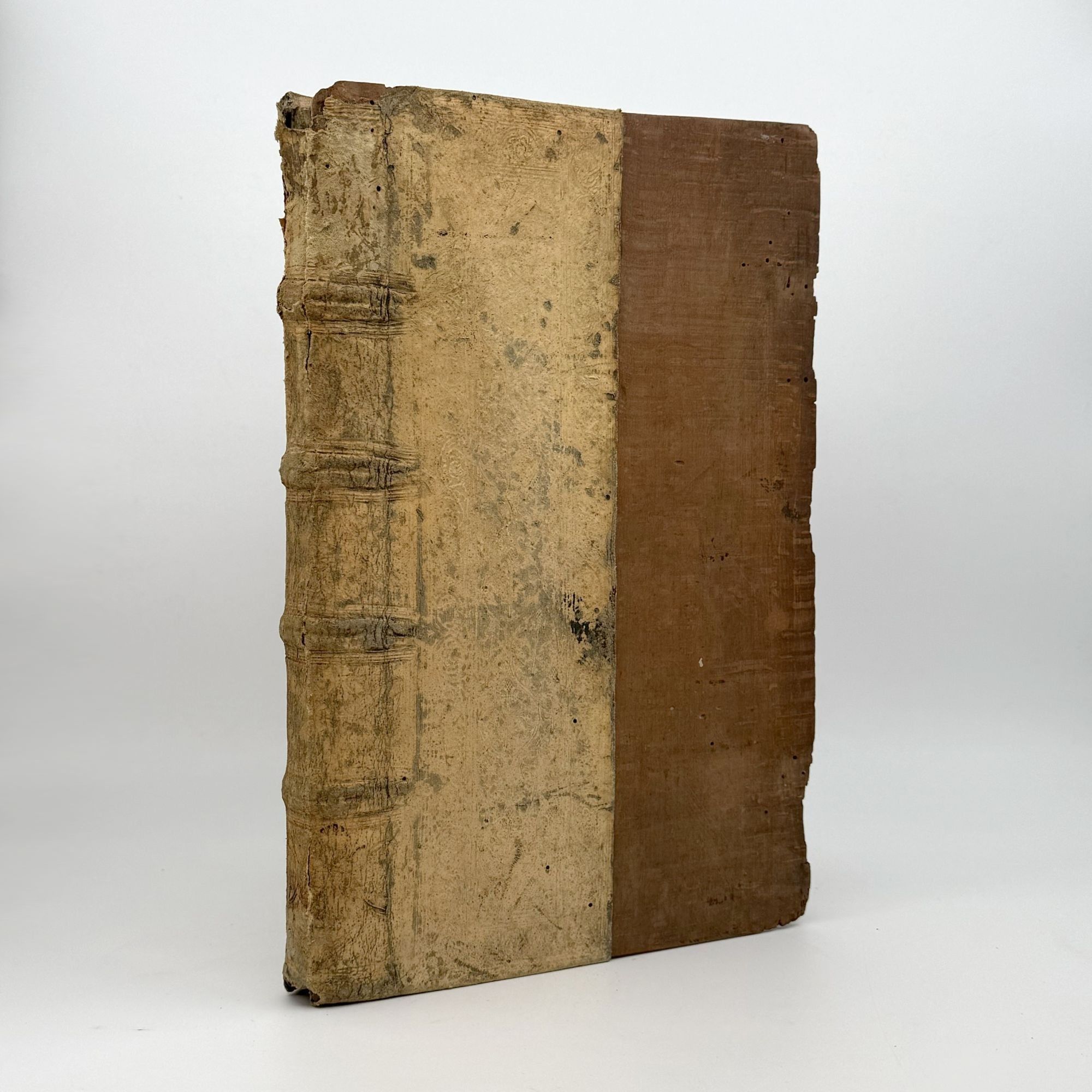
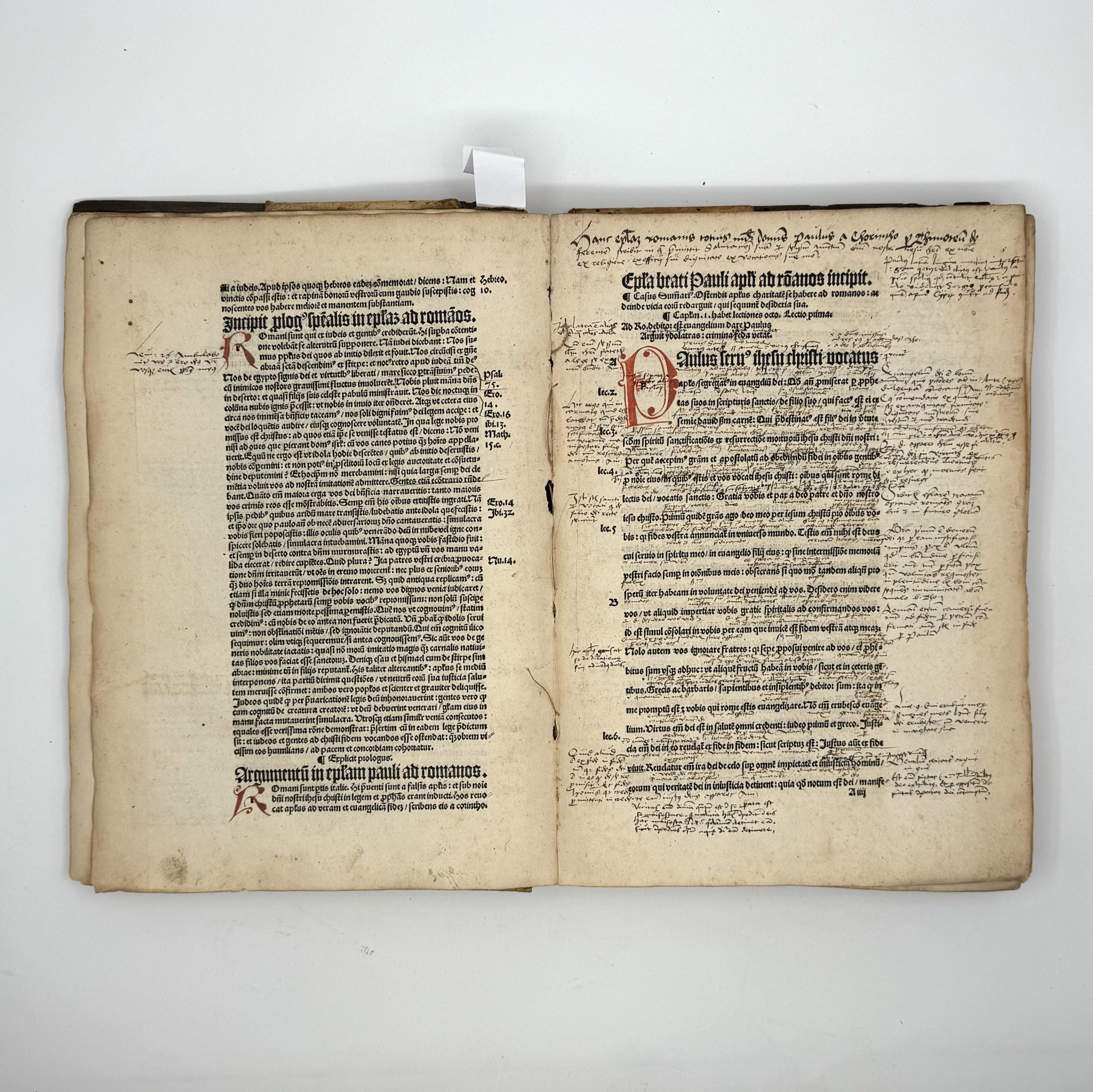
[Leipzig]: [Wolfgang Stockel], 1510. Title in red and black. A-D⁶ E⁴ F-J⁶ K⁴ L-M⁶. [68] leaves. Extensive annotations throughout in Latin in a contemporary Germanic cursive, comprising both interlinear notes and marginal gloss. 1 vols. Folio (12x8-1/2 inches). Early pigskin and oaken boards, a remboitage from a thicker volume, worn, front hinge split between A2 and A3. Housed in a blue cloth slipcase. Provenance: Duplum Bibliothecae Regiae Monacensis (pencil annotation); John Pintard (inscription, presenting the book to); General Theological Seminary (bookplate and inked stamps). Title in red and black. A-D⁶ E⁴ F-J⁶ K⁴ L-M⁶. [68] leaves. Extensive annotations throughout in Latin in a contemporary Germanic cursive, comprising both interlinear notes and marginal gloss. 1 vols. Folio (12x8-1/2 inches). Edited by Johann Kusthuert, this printing of the Epistles of Paul was intended for the student market, with the introduction addressed to studiosis sacarum litterarum tyronibus. In addition, the colophon reads: Imp[re]ssu[m] ad altissimi Dei laude[m] ac studiosoru[m] Sacre Scripture tyronu[m] p[er]fectu[m] in officina libraria p[ro]uidi viri Vuolffga[n]gi Stockel ciuis Liptz[e]n[sis], anno D[omi]ni 1510 quarto kalen[dis] Septembris.
The annotations and marginal gloss are impressive and very similar, though in a different hand, to the copy described by Rosenthal, now at the Beinecke, suggesting they are by a student at the same institution: "The present copy comes with a vast manuscript apparatus in Latin covering the entire text from St. Jerome's general preface, to the last sentence of the last epistle. The annotation ... is uniformly intense throughout. The script is a very small at times microscopic Germanic cursive and there is evidence of careful layout, especially in the marginal gloss..." Estimating the annotations to be approximately 80,000 words, Rosenthal describes the interlinear notes as "frequently far more than simole reading aids." He continues: "The marginal gloss includes an argumentum for each chapter and its subdivisions ... There are also occasional citations from authorities such as St. Thomas and Ambrose..."
It is a handsomely printed volume with the title in large red letters above an 11-line subtitle in black. The verso of the title comprises a table of contents of the Pauline epistles and is followed by an introduction by Kusthuert.
On the duplicates sold by the Munich royal library, including the present volume, see: Wagner, Bettina. “‘Duplum Bibliothecae Regiae Monacensis’: The Munich Court Library and Its Book Auctions in the Nineteenth Century.” The Papers of the Bibliographical Society of America, vol. 111, no. 3, 2017, pp. 345–77. Pintard (1759-1844) was a prominent New Yorker of Huguenot origin, patron of education and one of the earliest and staunchest advocates for the preservation and study of the history of New York and the United States. Pintard began to work towards the establishment of a historical society in the city in early 1804, and he was the leader in the organization of the New-York Historical Society in November, 1804. He was also a patron of the old French Huguenot Church of St. Esprit and the General Theological Seminary, to whom he donated this volume in 1826.
Scarce. OCLC locates three copies in Germany, the aforementioned copy at Yale described by Rosenthal and the present example. Rosenthal, B.M. Printed books with manuscript annotations, 105 (for a similarly annotated copy of the same edition); Panzer, vii, p. 169; VD16 B 4980. Not in BM STC Germany, Adams, or Darlow & Moule
The annotations and marginal gloss are impressive and very similar, though in a different hand, to the copy described by Rosenthal, now at the Beinecke, suggesting they are by a student at the same institution: "The present copy comes with a vast manuscript apparatus in Latin covering the entire text from St. Jerome's general preface, to the last sentence of the last epistle. The annotation ... is uniformly intense throughout. The script is a very small at times microscopic Germanic cursive and there is evidence of careful layout, especially in the marginal gloss..." Estimating the annotations to be approximately 80,000 words, Rosenthal describes the interlinear notes as "frequently far more than simole reading aids." He continues: "The marginal gloss includes an argumentum for each chapter and its subdivisions ... There are also occasional citations from authorities such as St. Thomas and Ambrose..."
It is a handsomely printed volume with the title in large red letters above an 11-line subtitle in black. The verso of the title comprises a table of contents of the Pauline epistles and is followed by an introduction by Kusthuert.
On the duplicates sold by the Munich royal library, including the present volume, see: Wagner, Bettina. “‘Duplum Bibliothecae Regiae Monacensis’: The Munich Court Library and Its Book Auctions in the Nineteenth Century.” The Papers of the Bibliographical Society of America, vol. 111, no. 3, 2017, pp. 345–77. Pintard (1759-1844) was a prominent New Yorker of Huguenot origin, patron of education and one of the earliest and staunchest advocates for the preservation and study of the history of New York and the United States. Pintard began to work towards the establishment of a historical society in the city in early 1804, and he was the leader in the organization of the New-York Historical Society in November, 1804. He was also a patron of the old French Huguenot Church of St. Esprit and the General Theological Seminary, to whom he donated this volume in 1826.
Scarce. OCLC locates three copies in Germany, the aforementioned copy at Yale described by Rosenthal and the present example. Rosenthal, B.M. Printed books with manuscript annotations, 105 (for a similarly annotated copy of the same edition); Panzer, vii, p. 169; VD16 B 4980. Not in BM STC Germany, Adams, or Darlow & Moule