

Narrative of Sojourner Truth, a Northern Slave, Emancipated from Bodily Servitude by the State of New York, in 1828. With a Portrait
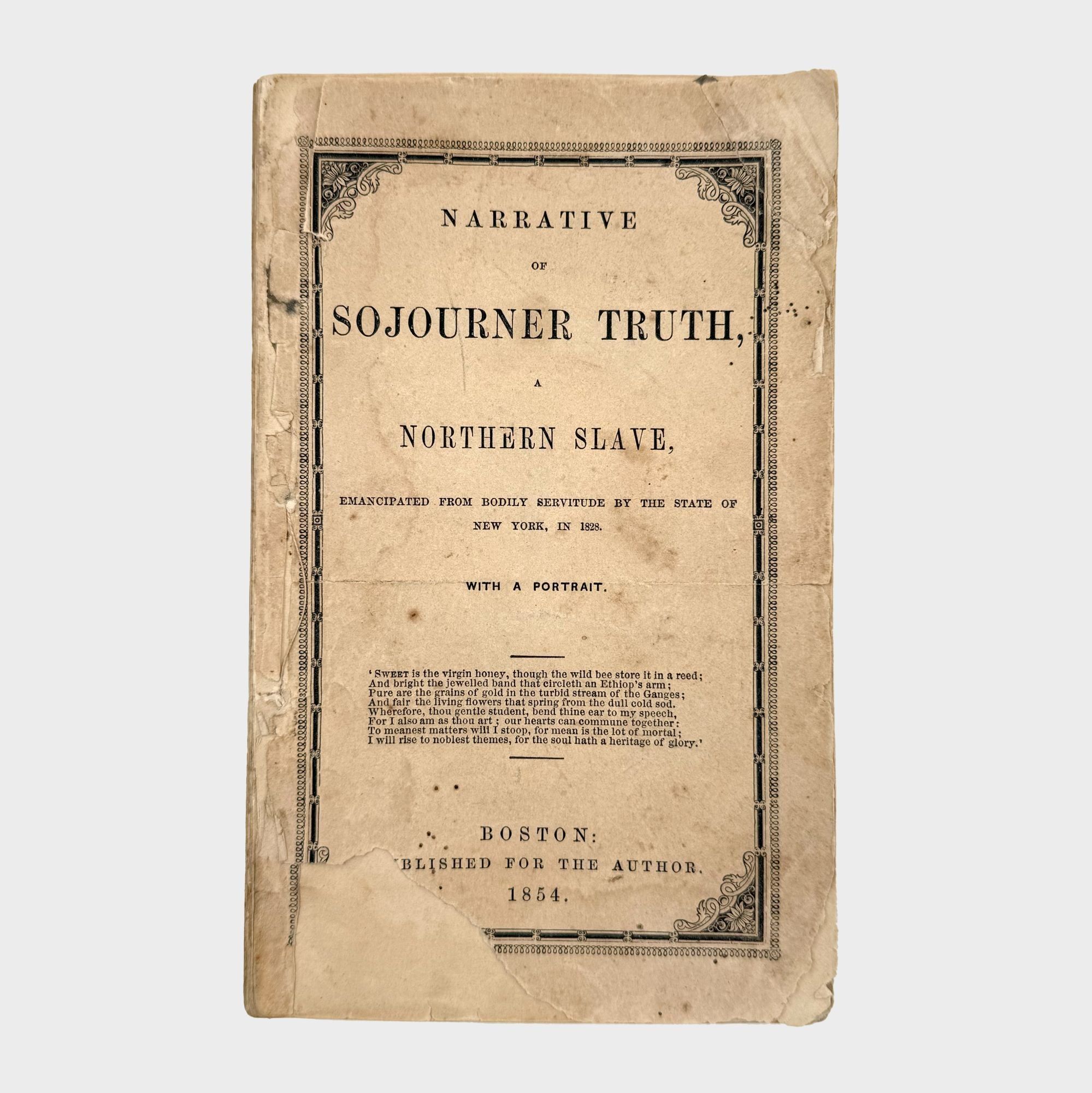
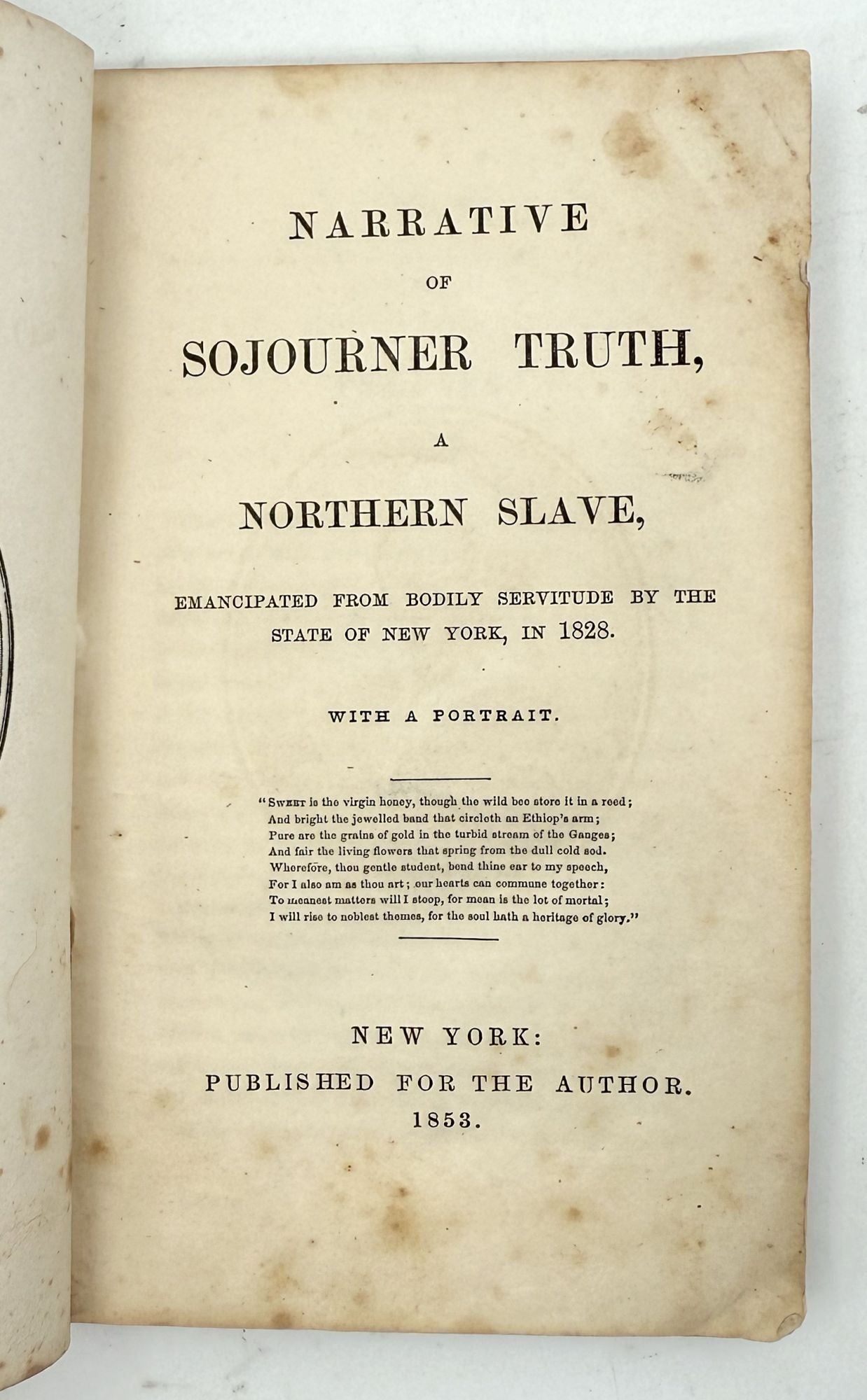
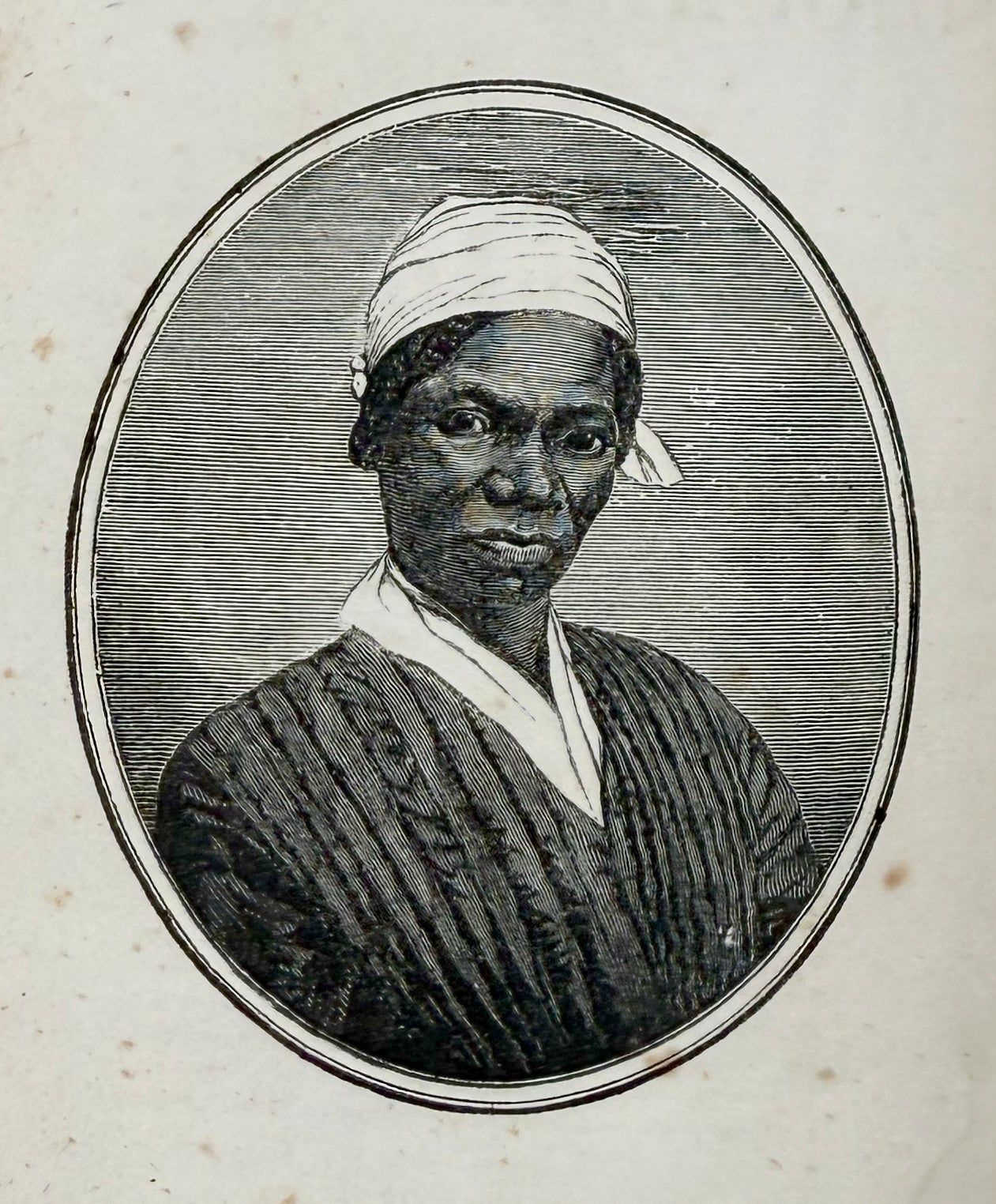
- Woodcut portrait frontispiece. 144 pp. 1 vols. 12mo
- New York: Published for the Author, 1854
New York: Published for the Author, 1854. Second edition. Woodcut portrait frontispiece. 144 pp. 1 vols. 12mo. Original printed wrappers, lacks lower wrapper, upper wrapper torn with minor loss at lower left, spine worn, restitched at an early date. Minor foxing to frontispiece and title. Second edition. Woodcut portrait frontispiece. 144 pp. 1 vols. 12mo. Sojourner Truth's Narrative is a landmark in African American and women's history. Born into slavery as Isabella Baumfree in Ulster County, New York in the late eighteenth century, she won her emancipation under New York state law in 1827 and adopted the name Sojourner Truth in 1843. After a time as a domestic in New York City she embarked on a lifelong career as an advocate for civil and women's rights, travelling and speaking widely. She lived for a time at the utopian "Northampton Association" in western Massachusetts, and dictated her story to Olive Gilbert, publishing the first edition of the Narrative in Boston in 1850.
"A legend in her own time, Sojourner Truth's indomitable will has won her a permanent place in American History" (Blockson). "In modern times she has come to stand for the conjunction of race, class, and gender in American liberal reform and symbolizes the unintimidated, articulate black woman. Acutely intelligent although totally unschooled, Truth represents a type of inspired, naive witness that has long appealed to Americans suspicious of over-education" (ANB).
From contemporary correspondence with William Lloyd Garrison, who acted as her intermediary with the printer Yerrinton, Truth paid for the printing of the work rather than work through a publisher, thus owning the printing rights but being responsible for its distribution. Travelling to speaking events throughout the northeast and midwest, Truth would sell copies at conventions, writing to Garrison to send additional and preferring copies in wrappers like the present as they were cheaper to ship and cheaper to sell. It is unclear why in 1853 she would have the work entirely reset in New York rather than print additional copies from the original stereotype plates with Yerrinton in Boston. In all likelihood, the print run had been exhausted and the original printing plates lost or damaged, necessitating the new expense. Given the date, however, one wonders whether it was cheaper to reprint the book locally for distribution at the September 6-7, 1853 Women's Rights Convention (the so-called Mob Convention) rather than print and ship additional copies from Boston. Although reset, textually the 1853 edition is substantially the same as the first edition.
Although the title is dated 1853 on this issue, the printed wrapper – resetting the title page within an ornamental border – is dated 1854 and includes a Boston imprint. OCLC records no similar copies. BAL 19381 describes an 1853 dated title like the present but dated 1855 on the wrapper. That issue, however, has differing pagination as it includes a new Introduction by Harriet Beecher Stowe. For 1853 ed.: Library Company of Philadelphia. Afro-Americana, 1553-1906 (2nd ed.), 10463
"A legend in her own time, Sojourner Truth's indomitable will has won her a permanent place in American History" (Blockson). "In modern times she has come to stand for the conjunction of race, class, and gender in American liberal reform and symbolizes the unintimidated, articulate black woman. Acutely intelligent although totally unschooled, Truth represents a type of inspired, naive witness that has long appealed to Americans suspicious of over-education" (ANB).
From contemporary correspondence with William Lloyd Garrison, who acted as her intermediary with the printer Yerrinton, Truth paid for the printing of the work rather than work through a publisher, thus owning the printing rights but being responsible for its distribution. Travelling to speaking events throughout the northeast and midwest, Truth would sell copies at conventions, writing to Garrison to send additional and preferring copies in wrappers like the present as they were cheaper to ship and cheaper to sell. It is unclear why in 1853 she would have the work entirely reset in New York rather than print additional copies from the original stereotype plates with Yerrinton in Boston. In all likelihood, the print run had been exhausted and the original printing plates lost or damaged, necessitating the new expense. Given the date, however, one wonders whether it was cheaper to reprint the book locally for distribution at the September 6-7, 1853 Women's Rights Convention (the so-called Mob Convention) rather than print and ship additional copies from Boston. Although reset, textually the 1853 edition is substantially the same as the first edition.
Although the title is dated 1853 on this issue, the printed wrapper – resetting the title page within an ornamental border – is dated 1854 and includes a Boston imprint. OCLC records no similar copies. BAL 19381 describes an 1853 dated title like the present but dated 1855 on the wrapper. That issue, however, has differing pagination as it includes a new Introduction by Harriet Beecher Stowe. For 1853 ed.: Library Company of Philadelphia. Afro-Americana, 1553-1906 (2nd ed.), 10463