

Die Schiffung mitt dem Lanndt der Gulden Insel Gefunde[n] durch hern Johan vo[n] Angliara Hawptman des Cristenlichen Kunigs vo[n] Hispania
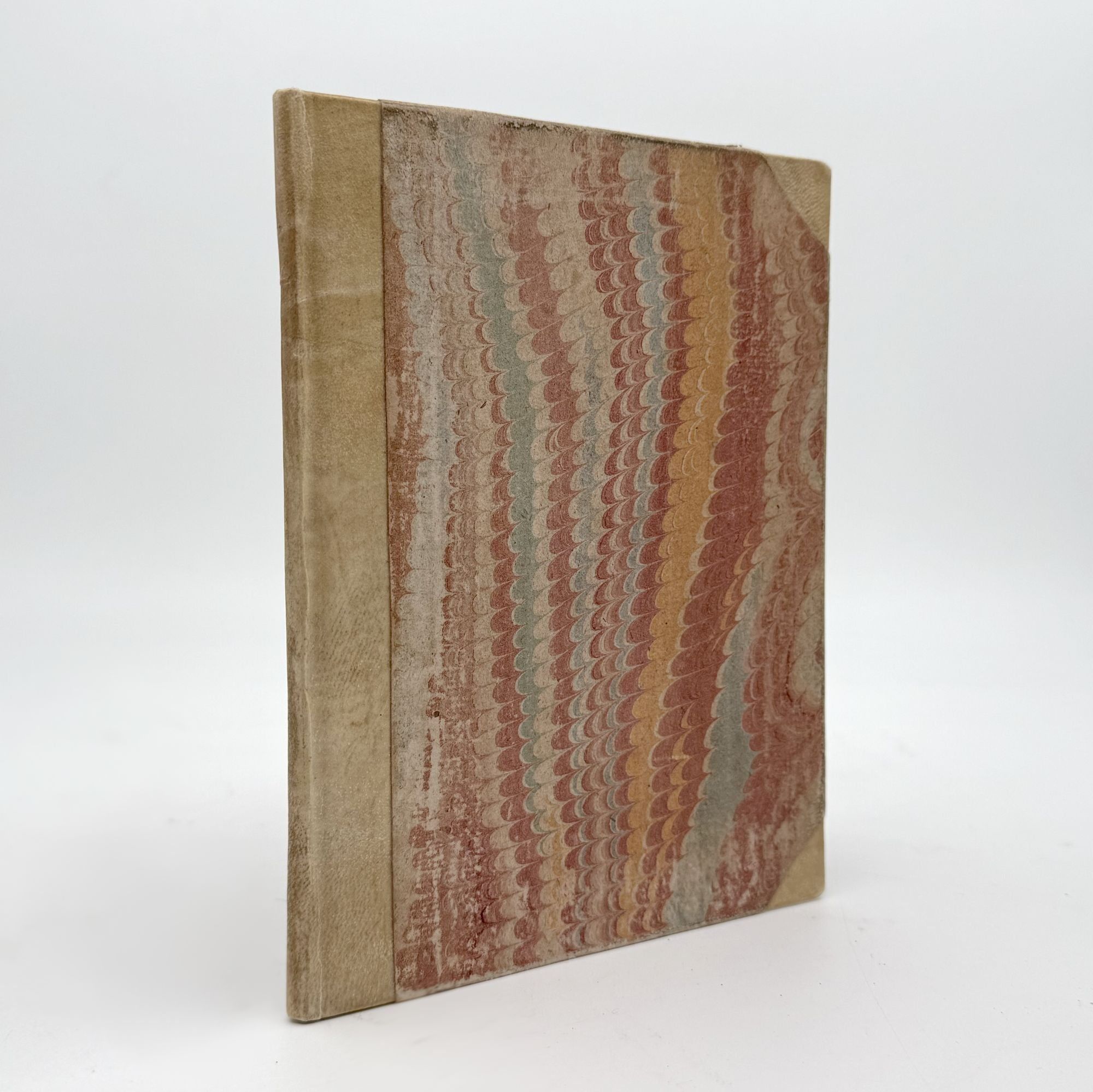
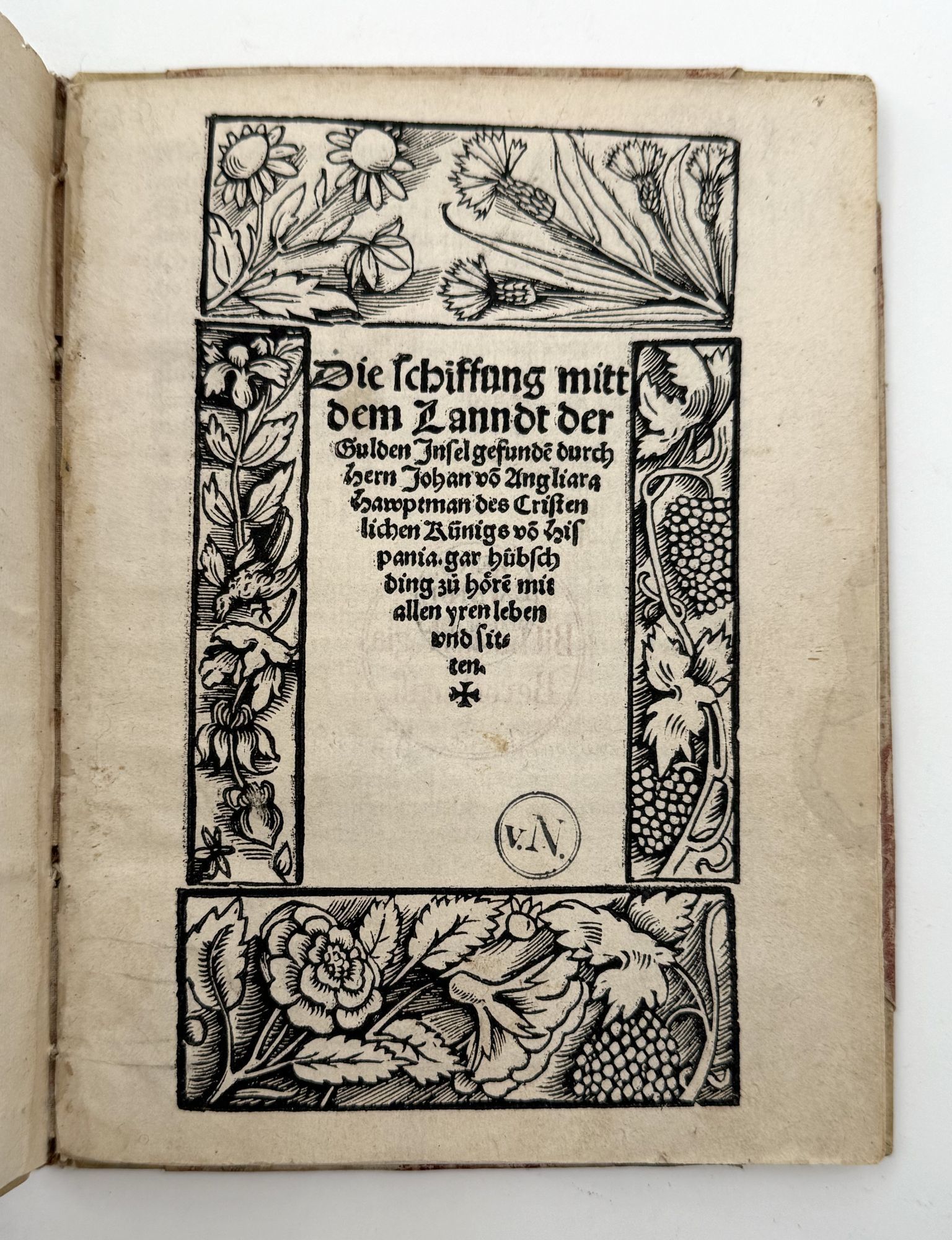
- [3] leaves. Titlepage with floral woodcut border in four sections. 4to
- [Augsburg: J. Nadler, 1520
[Augsburg: J. Nadler, 1520. [3] leaves. Titlepage with floral woodcut border in four sections. 4to. 19th-century three quarter vellum and marbled boards. In a cloth chemise and half morocco and cloth slipcase, spine gilt. Minor stains, repair to fore-edge of title. Very good. Provenance: Beroltinenti Library (stamp on verso of title, with later withdrawal stamp). [3] leaves. Titlepage with floral woodcut border in four sections. 4to. The first and only German edition of a tract ostensibly describing discovery of new lands in the New World. Of the author, wholly unknown to most bibliographers, Harrisse suggests that Peter Martyr was intended given the similarity of his Anghiera to the stated author’s “Angliara.”
The author describes himself as an Italian captain of a Spanish vessel departing for Calcutta. Following a storm, they reach an island on April 23, 1519, communicate with the inhabitants, visit a capital city full of gold, and eventually return to Spain. European Americana states that the island is possibly a description of Peru; if this were the case, it would be the earliest description of Peru in any form by several years. In fact, the text seems more closely related to the pamphlet by Juan Díaz, Littera Mandata dell Insula de Cuba de India, the first published account of Juan de Grijalva's expedition to the Yucatan, the first substantive contact between Europeans and native Americans of the mainland of North America. The Díaz account was first published in Italian and Latin in 1520. Angliara's fabulous narrative is perhaps another form of the extraordinary news of initial contact by Spanish explorers with the great civilizations of the New World.
First published in Venice the same year, the Italian edition is known only in the copy at the British Library; copies of the present German edition are located at the Huntington, Lilly Library, New York Public Library, John Carter Brown Library, and British Library.
An early Americanum of great rarity, we are aware of only a single example on the market in the last half century. Church 44; European Americana 520/3; Harrisse (BAV) 102; JCB (3) I:75; Medina (BHA) 100n; Palau 12666; Sabin 1560
The author describes himself as an Italian captain of a Spanish vessel departing for Calcutta. Following a storm, they reach an island on April 23, 1519, communicate with the inhabitants, visit a capital city full of gold, and eventually return to Spain. European Americana states that the island is possibly a description of Peru; if this were the case, it would be the earliest description of Peru in any form by several years. In fact, the text seems more closely related to the pamphlet by Juan Díaz, Littera Mandata dell Insula de Cuba de India, the first published account of Juan de Grijalva's expedition to the Yucatan, the first substantive contact between Europeans and native Americans of the mainland of North America. The Díaz account was first published in Italian and Latin in 1520. Angliara's fabulous narrative is perhaps another form of the extraordinary news of initial contact by Spanish explorers with the great civilizations of the New World.
First published in Venice the same year, the Italian edition is known only in the copy at the British Library; copies of the present German edition are located at the Huntington, Lilly Library, New York Public Library, John Carter Brown Library, and British Library.
An early Americanum of great rarity, we are aware of only a single example on the market in the last half century. Church 44; European Americana 520/3; Harrisse (BAV) 102; JCB (3) I:75; Medina (BHA) 100n; Palau 12666; Sabin 1560