

Extinction of Villenage and Slavery in England: With Somerset's..
- 1864
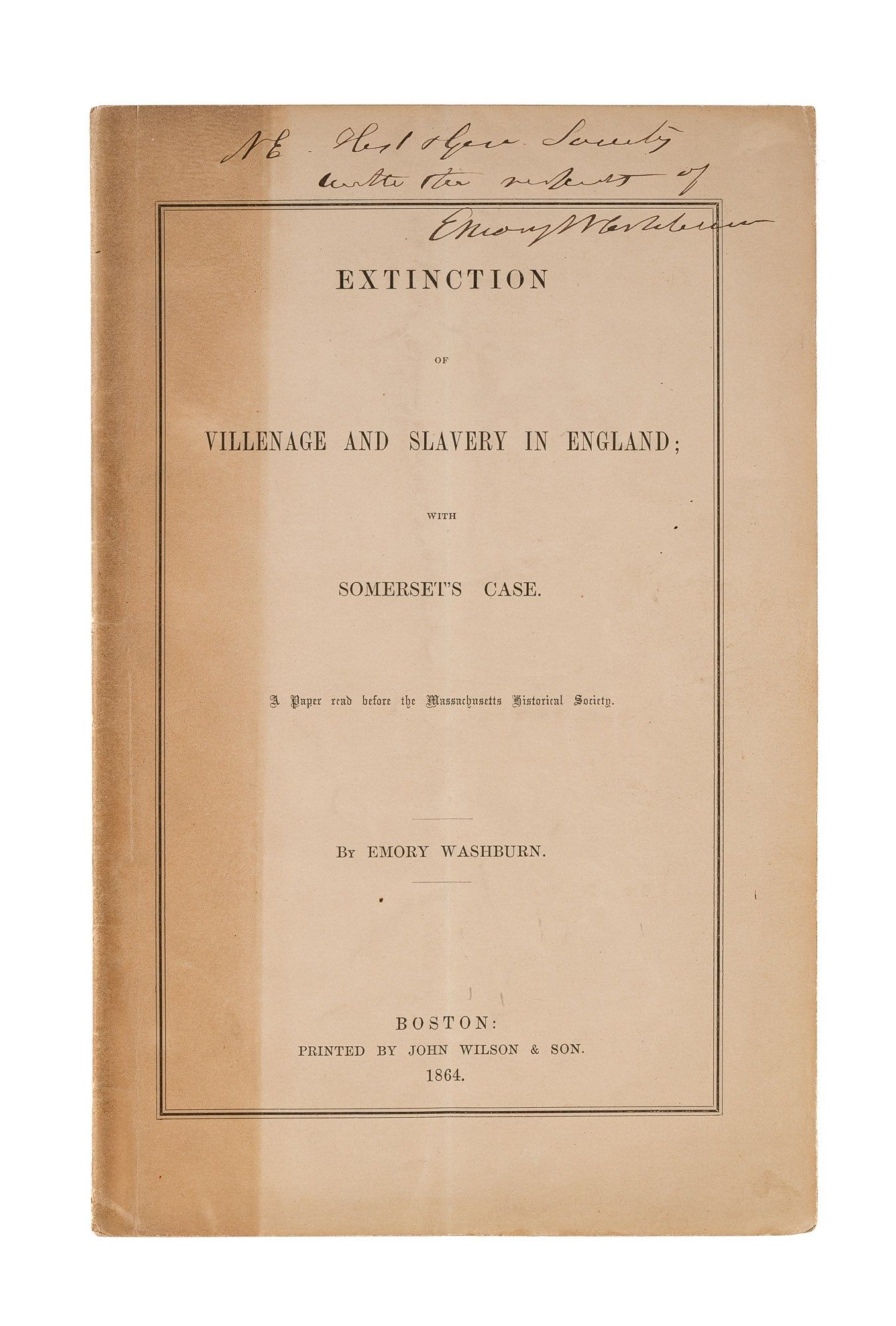
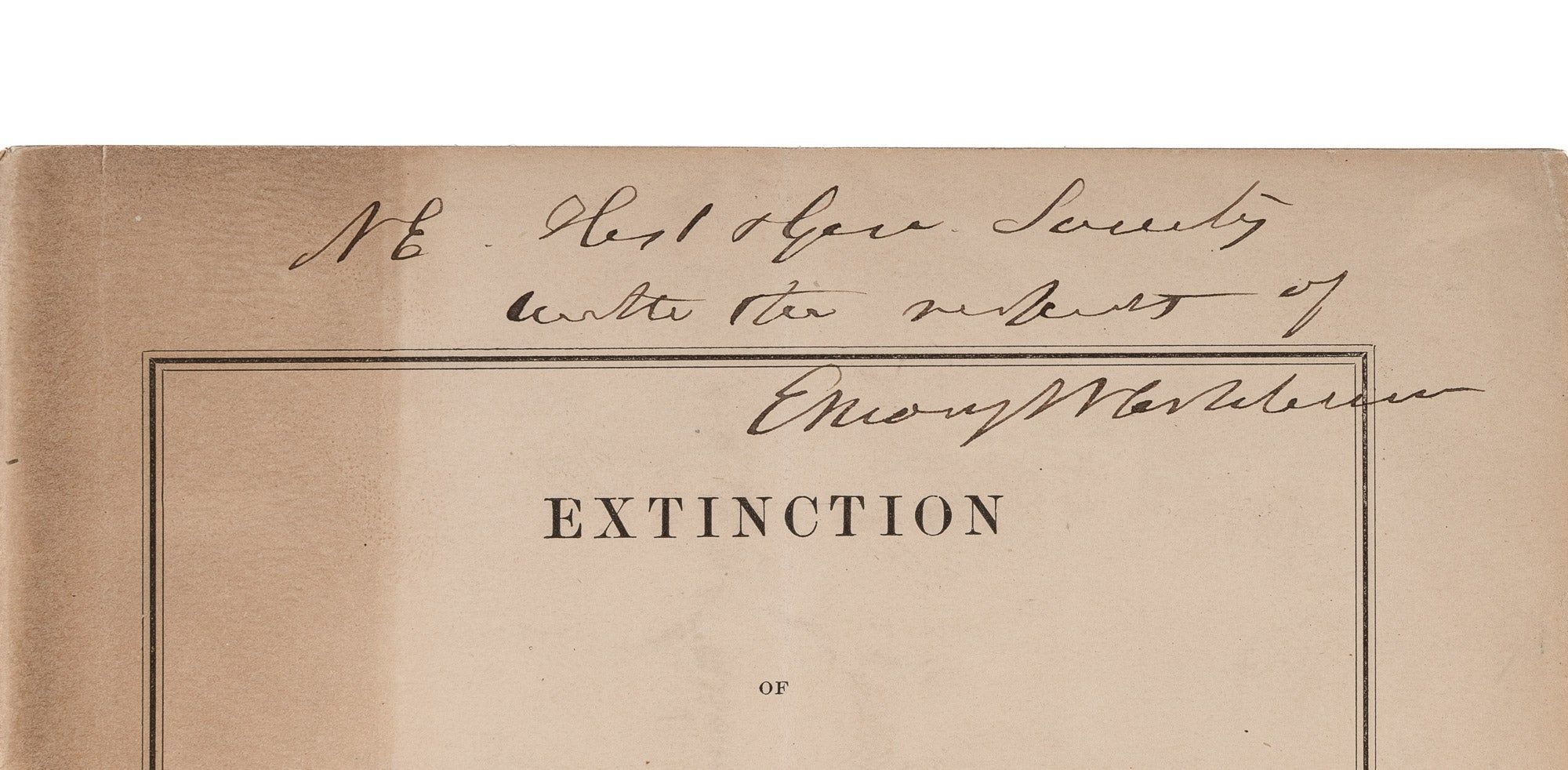
1864. Washburn, Emory, [1800-1877]. Extinction of Villenage and Slavery in England: With Somerset's Case: A Paper Read Before the Massachusetts Historical Society. Boston: John Wilson & Son, 1864. 21 pp. Printed wrappers. Moderately worn and soiled with fading to front cover. Author's presentation inscription "[NE Hist & Gene Society]/ with the respect of/ Emory Washburn" to cover. Internally clean. $125. * Provides a historical analysis of the end of servitude in England, from the medieval system of villenage to the later institution of slavery. Based on a presentation Washburn delivered to the Massachusetts Historical Society, the paper examines: The historical arc of servitude tracing how villenage, a type of feudal servitude, died out in England and how a new form of slavery later arose, particularly involving people from Africa. The Somerset case: The paper focuses on the landmark 1772 English court decision, Somerset v. Stewart. In this case, Lord Mansfield ruled that a slave could not be forcibly removed from England and sold in the colonies. Abolitionist legal theory: Washburn's work argues that the English common law was inherently hostile to the concept of slavery and that no formal statute ever needed to be passed to abolish it within England itself. As a Massachusetts lawyer and former governor, Emory Washburn [1800-1877], was writing during the American Civil War. He used the English experience to frame and complement discussions in Massachusetts about the end of slavery in his own state.