

[Arabic Manuscript] Ghazwah Khaybar [and:] Ghazwah al-Shayban
![[Arabic Manuscript] Ghazwah Khaybar [and:] Ghazwah](https://d3525k1ryd2155.cloudfront.net/h/872/911/1678911872.0.x.jpg)
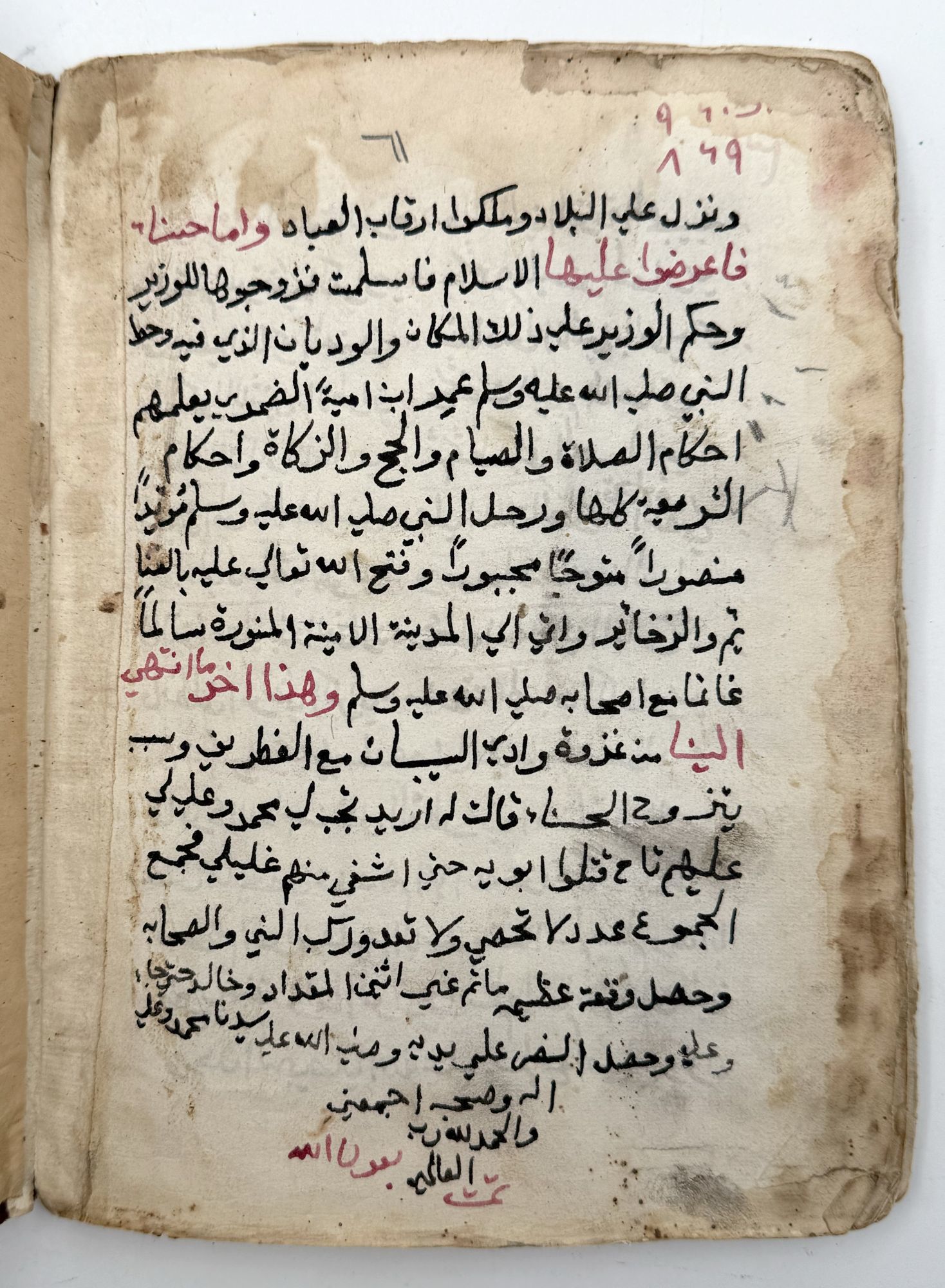
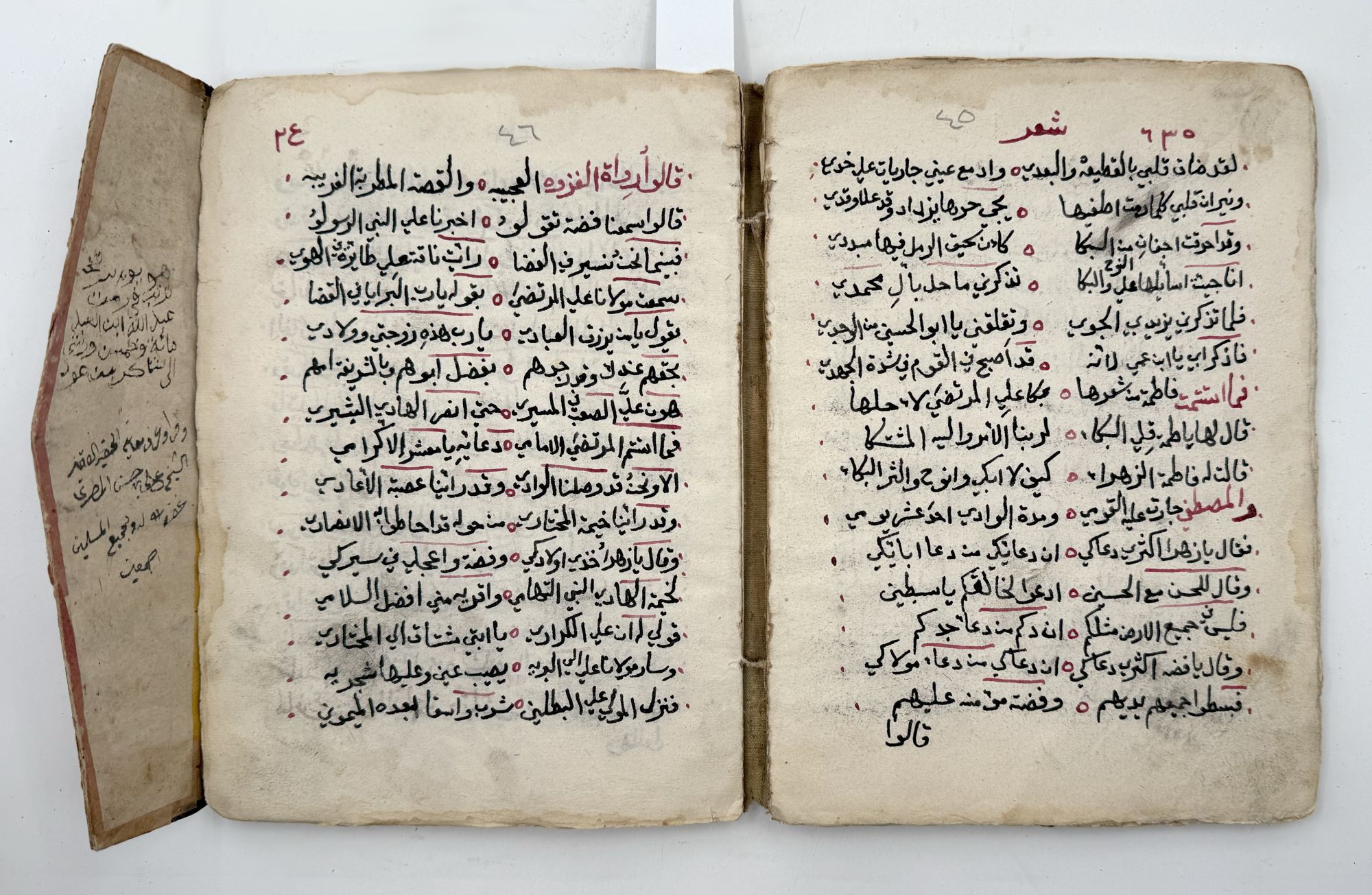
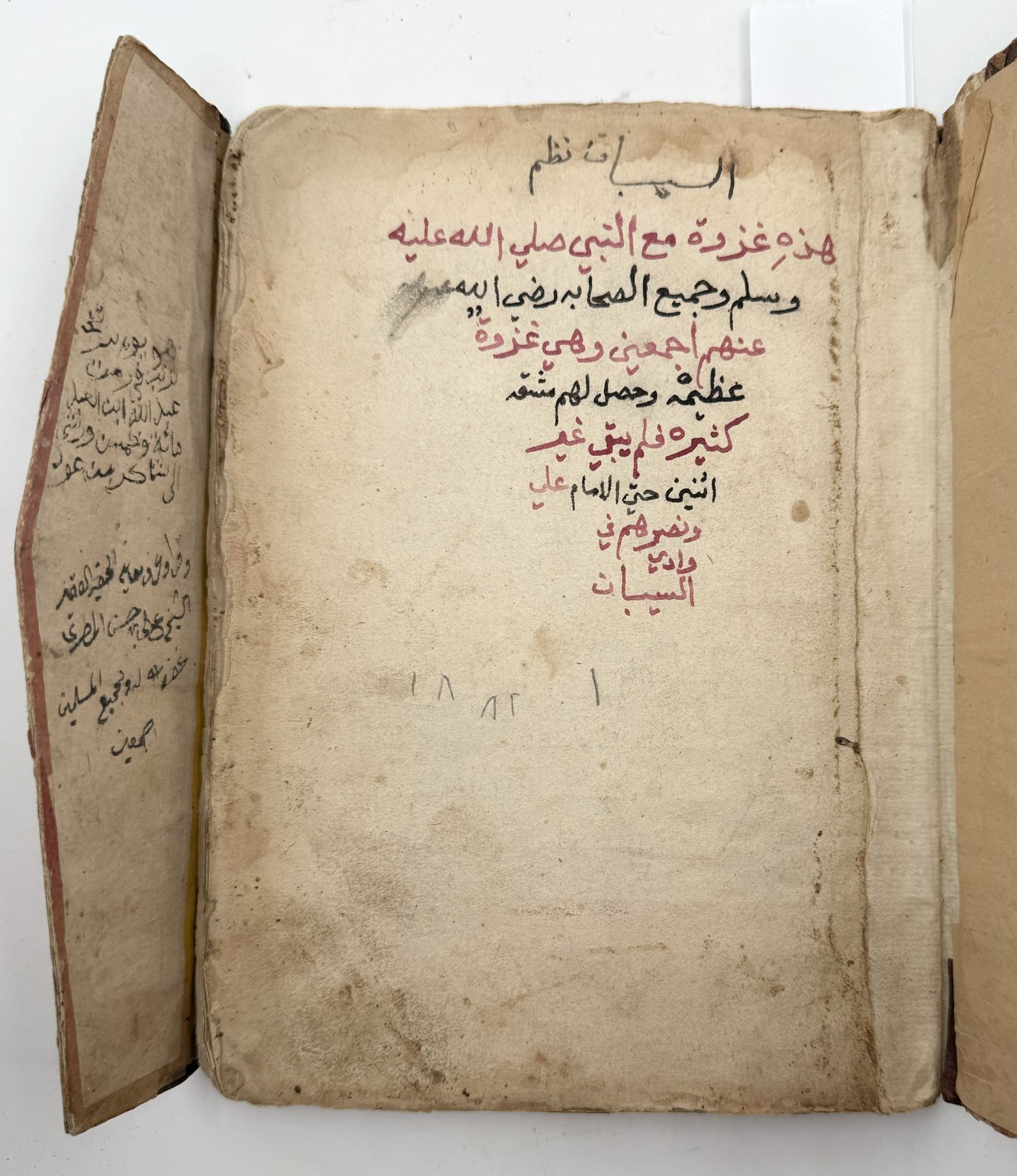
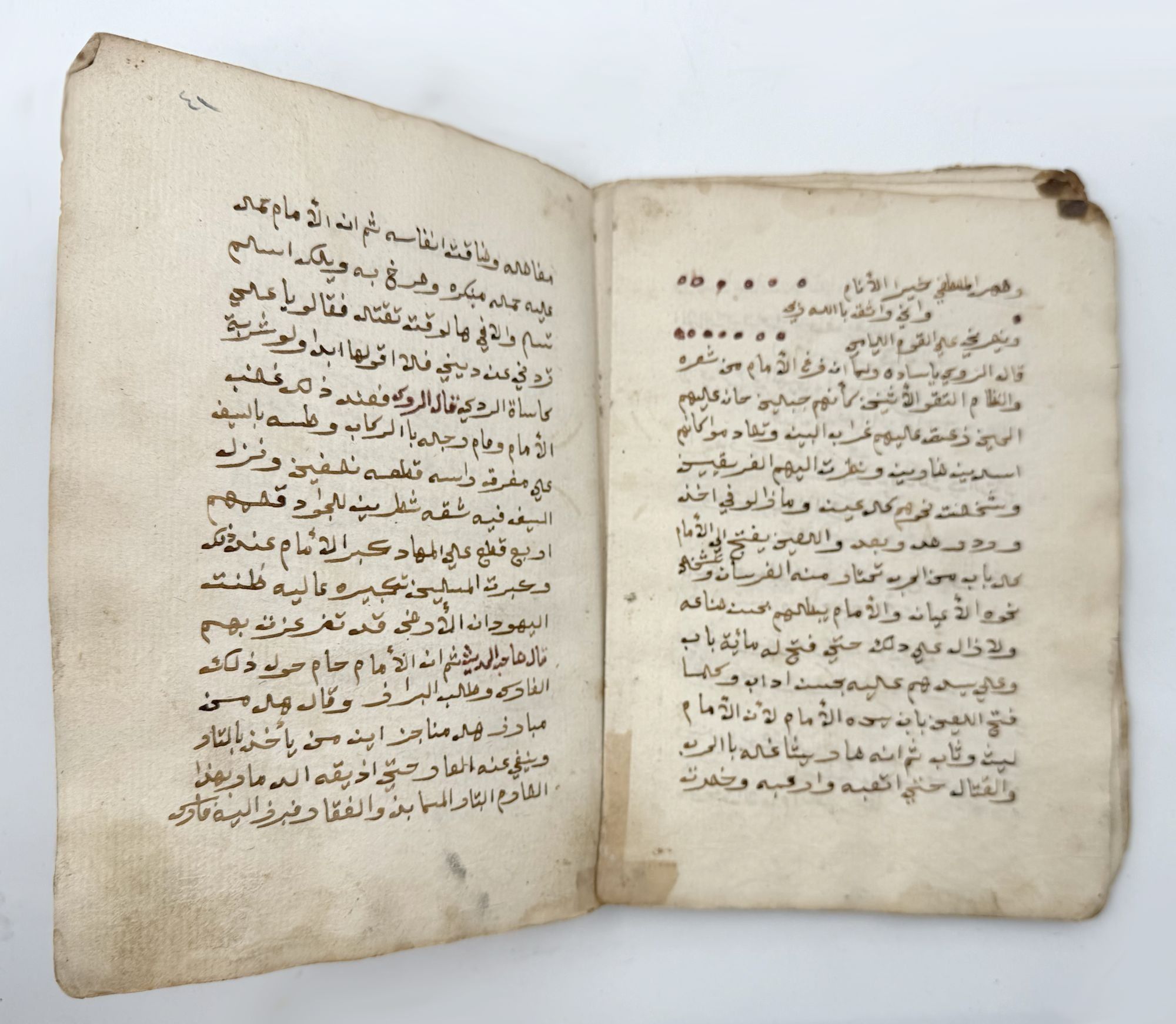
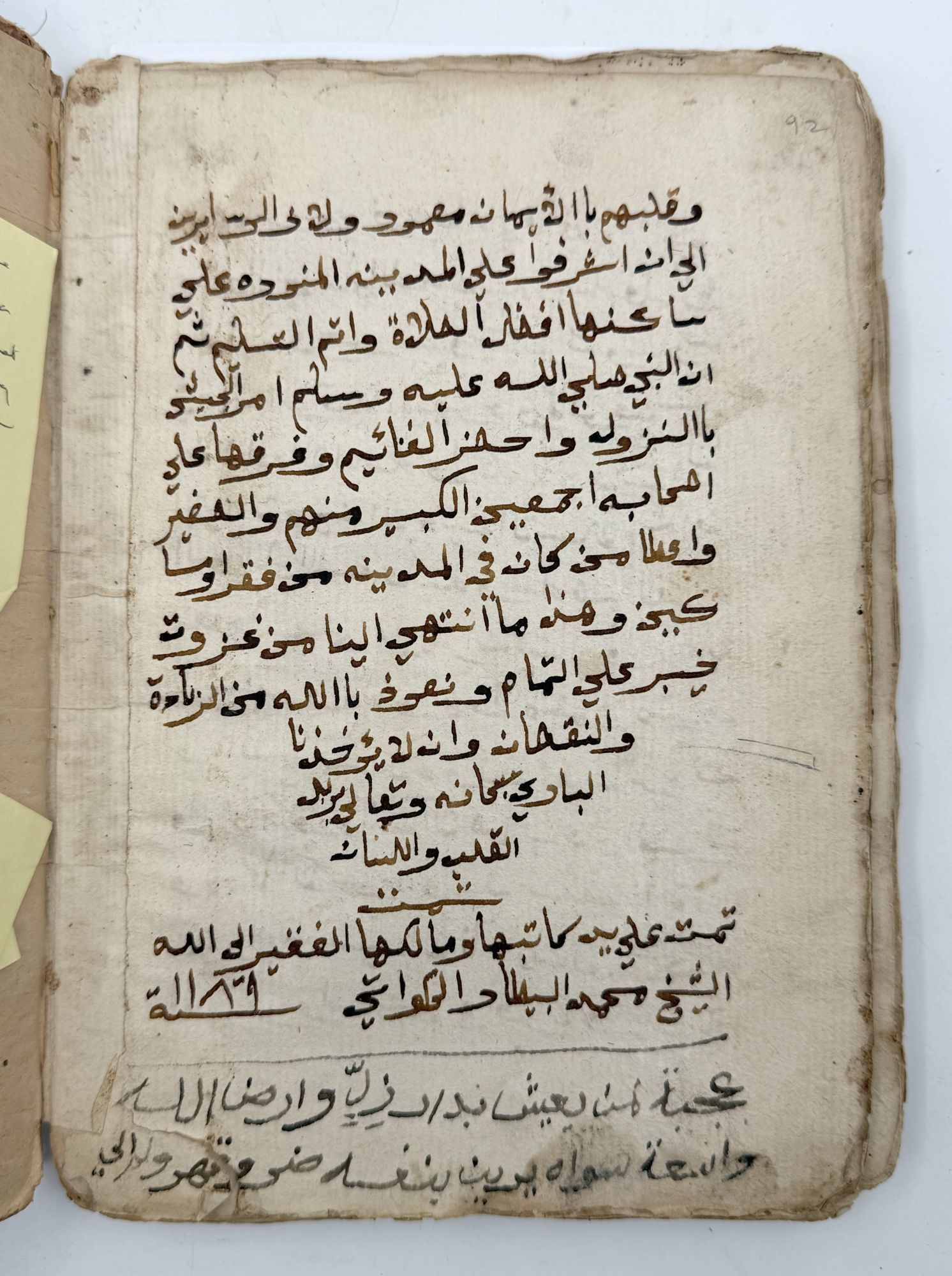
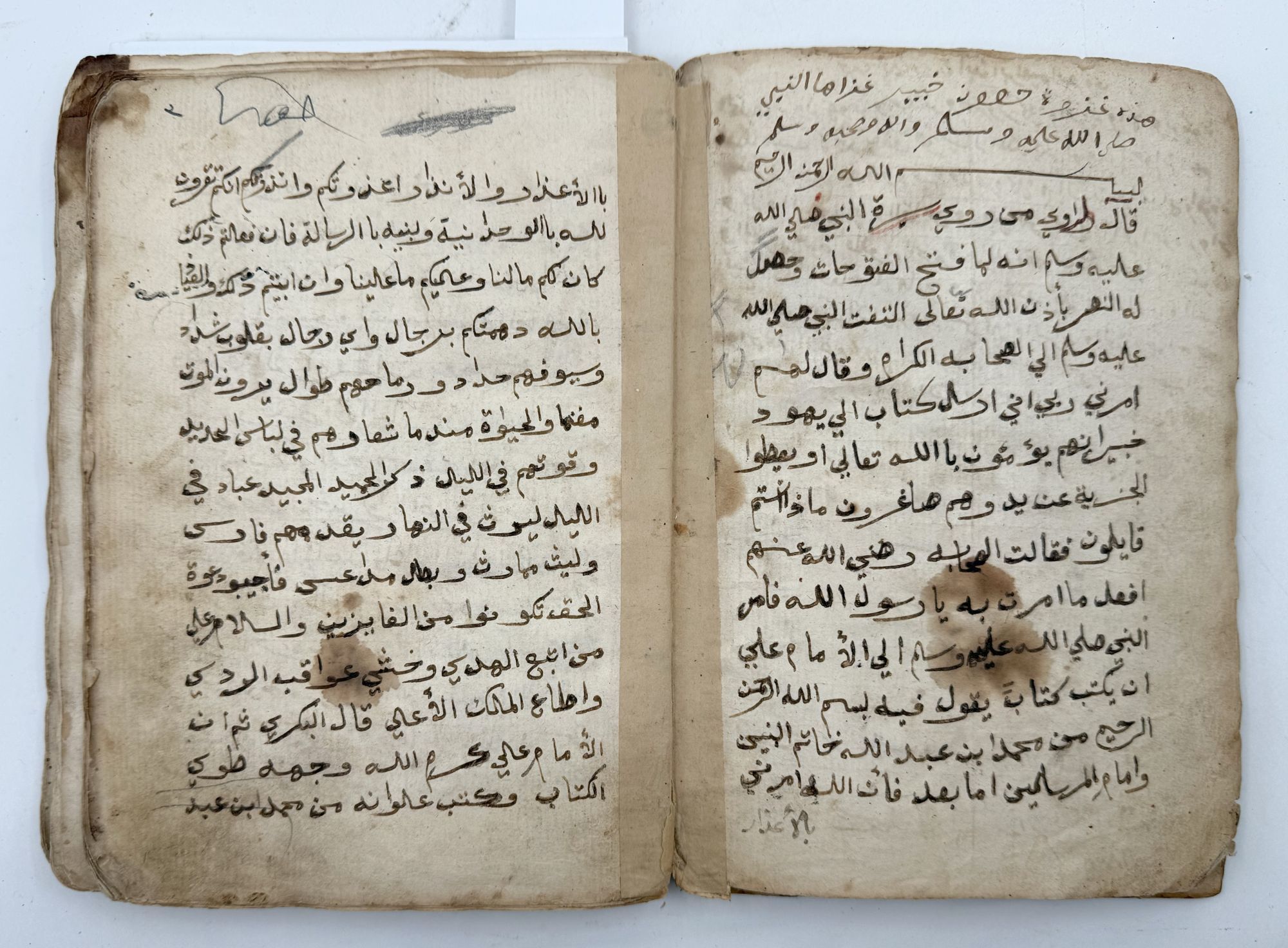
- Ink on paper, 15 lines per page. Second work with outlining and headers in red.. 92; 61 pp. 2 vols. 6-1/2 x 8-1/2 inches
- 1775
1775. Ink on paper, 15 lines per page. Second work with outlining and headers in red.. 92; 61 pp. 2 vols. 6-1/2 x 8-1/2 inches. Old leather backed boards, marbled sides, later paper labels. Vernacular repairs, various ownership inscriptions. A bit rough and edgeworn, some leaves loosened. Very good. Ink on paper, 15 lines per page. Second work with outlining and headers in red.. 92; 61 pp. 2 vols. 6-1/2 x 8-1/2 inches. A rare example of 18th-century epic poetry, documenting the legendary battles of ‘Ali ibn Abi Talib, the fourth Caliph and central to Islamic history and Shiite mythology. The first volume, Ghazwah Khaybar recounts Ali’s heroism in the conquest of Khaybar (628 C.E.), a pivotal battle that solidified his reputation as Islam’s warrior par excellence (92 pp., dated at end A.H. 1189 = 1775 C.E., with an inscription indicating that the work was authored and owned by Shaykh Muhammed Baytar). The second volume, Ghazwah al-Shaybân (61 pp., undated), narrates the struggle between Arab tribes and the Shayban clan’s allegiance to ‘Ali. Both texts, likely copied by the same scribe, are early written records of oral heroic traditions that had circulated for centuries.
These narratives played a crucial role in the mythologization of ‘Ali ibn Abi Talib, shaping popular Shi‘ite beliefs and folklore. Over time, such accounts became integral to Islamic oral culture, recited in coffeehouses and gatherings as tales of valor. This is an interesting manuscript transcription of core texts.
These narratives played a crucial role in the mythologization of ‘Ali ibn Abi Talib, shaping popular Shi‘ite beliefs and folklore. Over time, such accounts became integral to Islamic oral culture, recited in coffeehouses and gatherings as tales of valor. This is an interesting manuscript transcription of core texts.