

A Letter To the Right Reverend Edward Ld Bishop of Worcester, Concerning Passages Relating to Mr. Locke's Essay Of Human Understanding: In A Late Discourse of his Lordships, In Vindication of the Trinity
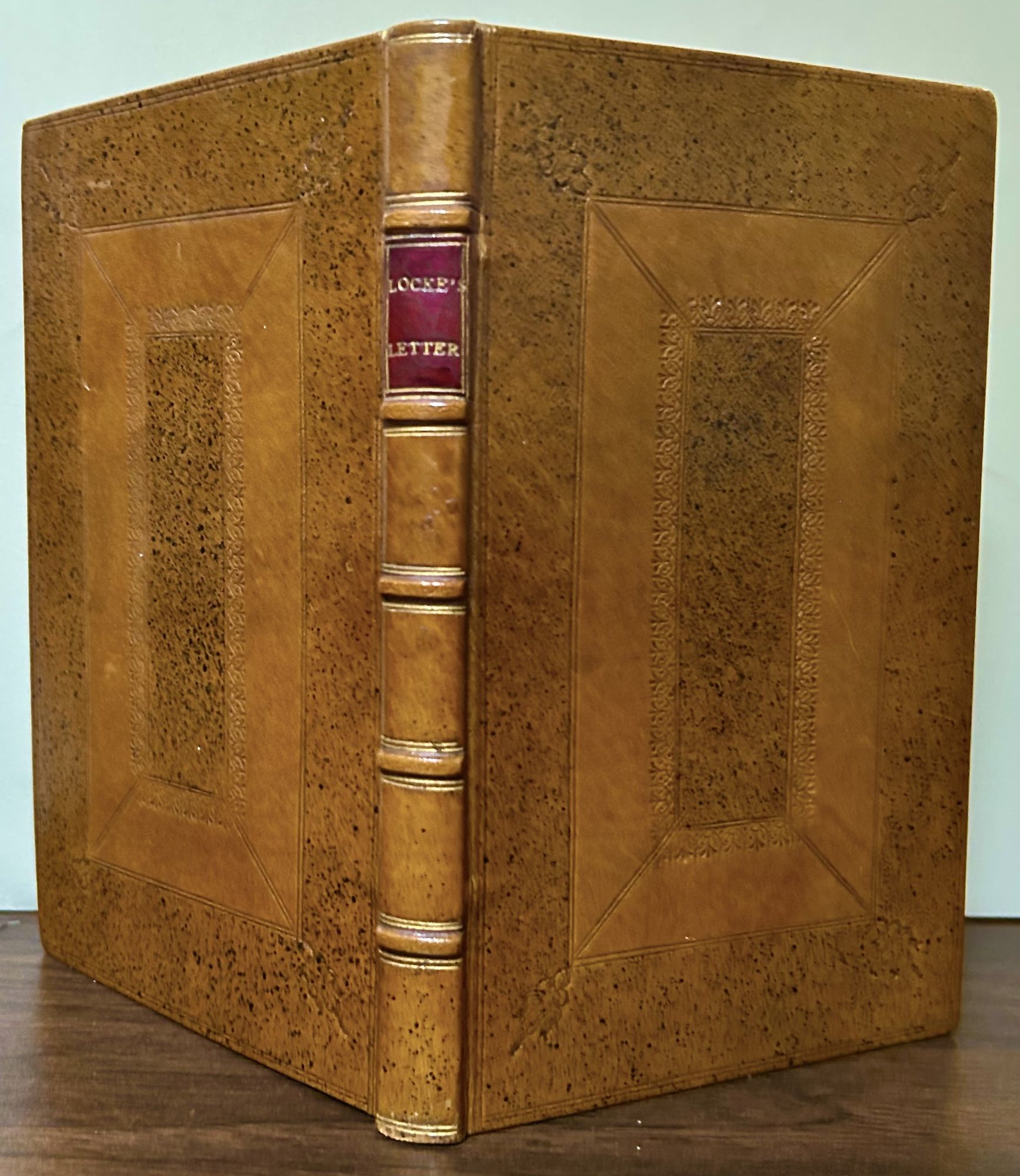
- leather_bound
- London: H. Clark for A. and J. Churchill, 1697
London: H. Clark for A. and J. Churchill, 1697. First edition. leather_bound. Modern paneled calf in period style, raised bands, red leather spine label printed in gilt. Fine. 227 pages. 18 x 11.5 cm. Second issue with cancel title page. Locke's initial criticism elicited few reactions. New criticism began to appear after his publication of his essay "Reasonableness of Christianity" and Toland's "Christianity not Mysterious" in 1696. Critics accused him of undermining religion. Dr. Stillingfleet, Bishop of Worcester said that Locke having "almost discarded substance out out of the reasonable part of the world, had thereby promoted atheism." Locke in response denied it, and repeated what he said in this essay to the effect that men's rational minds cannot conceive how ideas "should exist alone nor in one another, and so "suppose them existing in and supported by some common subject." Locke claimed one had to believe in substance, even though he could find no proof of its existence." This rebuttal by Locke ended only by the death of Stillingfleet in 1699. Interior contents fresh, clean with wide text margins. PFORZHEIMER. 608. WING L2754.