

Equal Rights for Women. A Speech by George William Curtis. Woman's Suffrage Tracts No. 2. [with:] Universal Suffrage. Female Suffrage


- Boston [and] Philadelphia: C.K. Whipple [and] J.P. Lippincott & Co, 1869
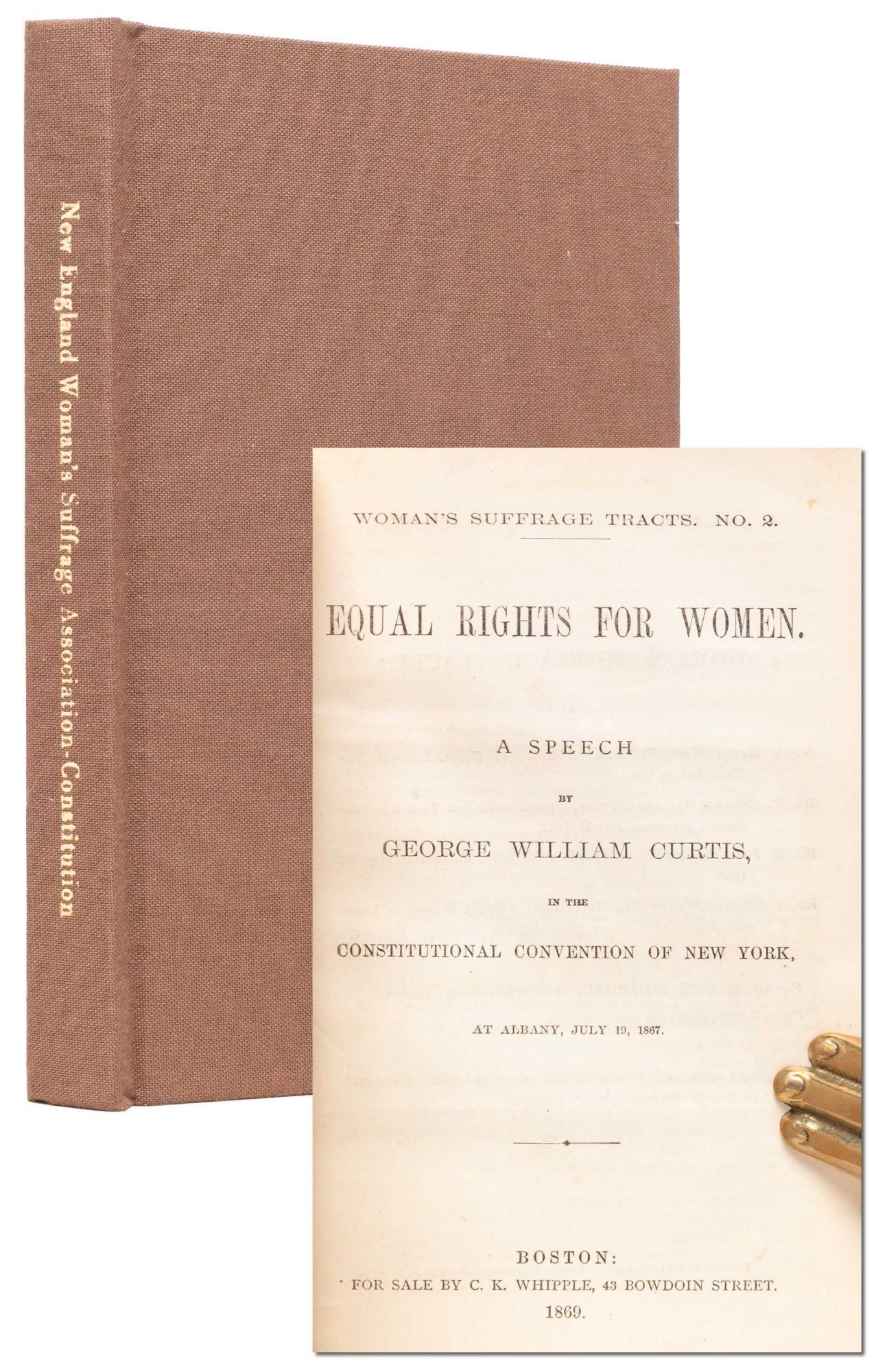
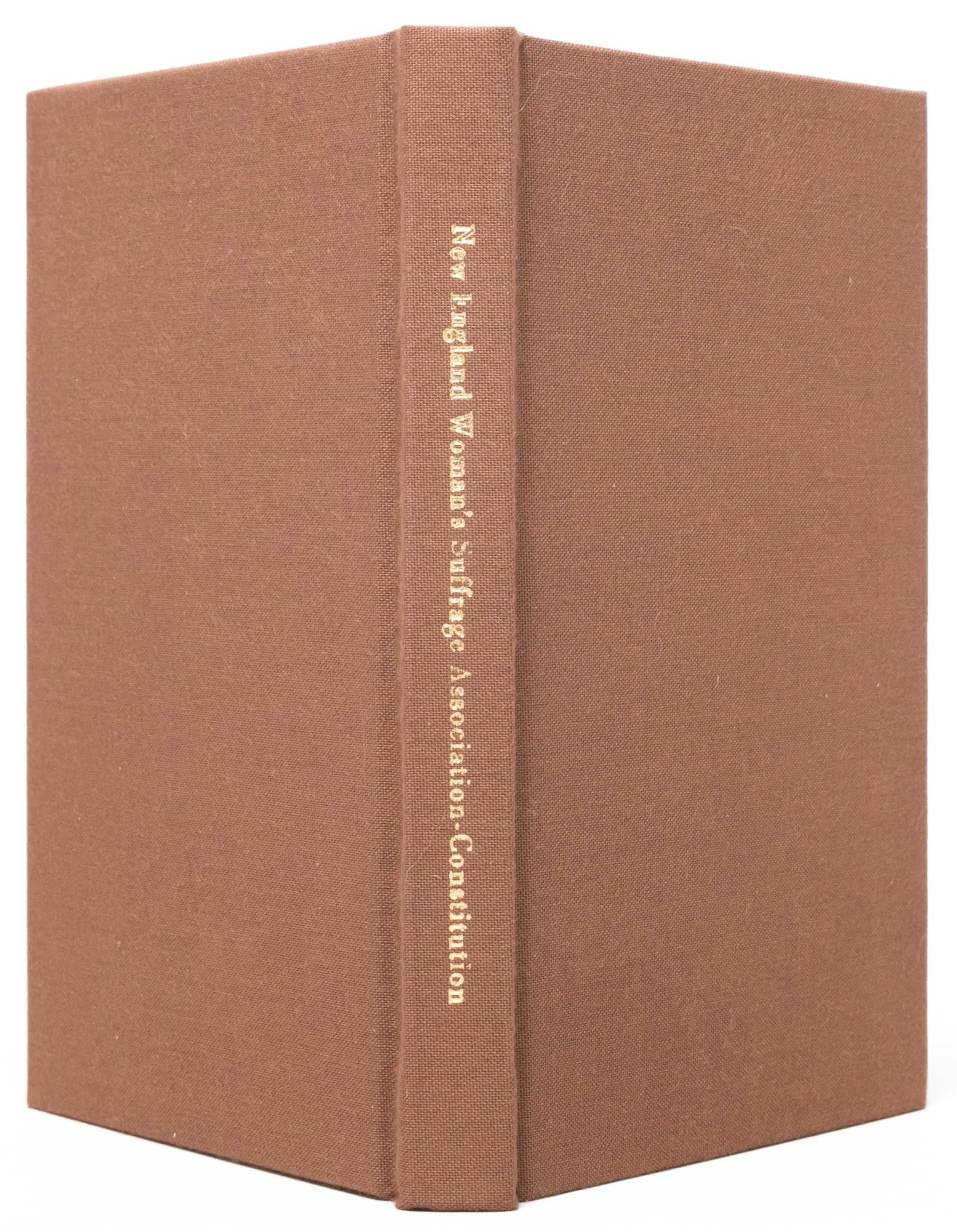
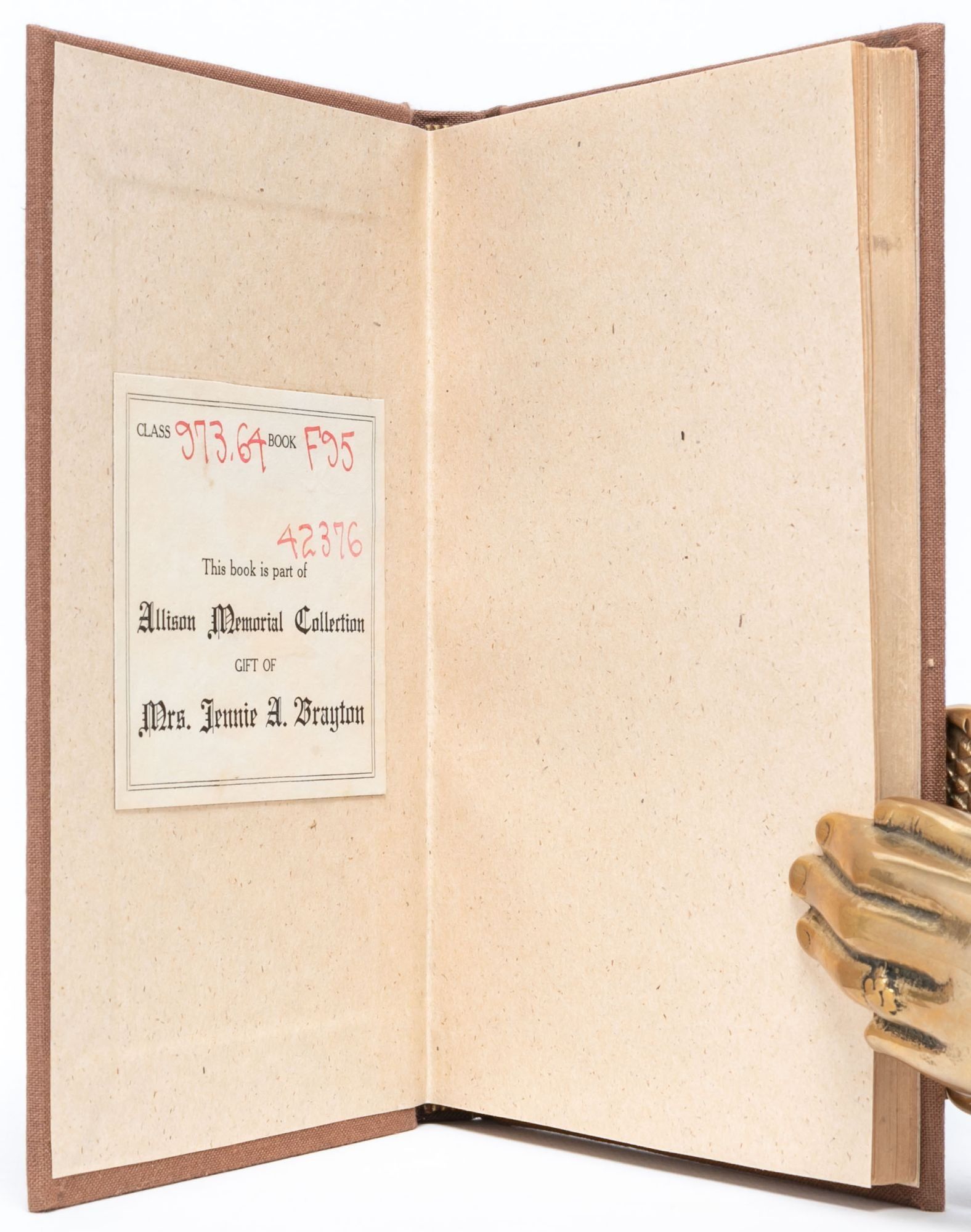
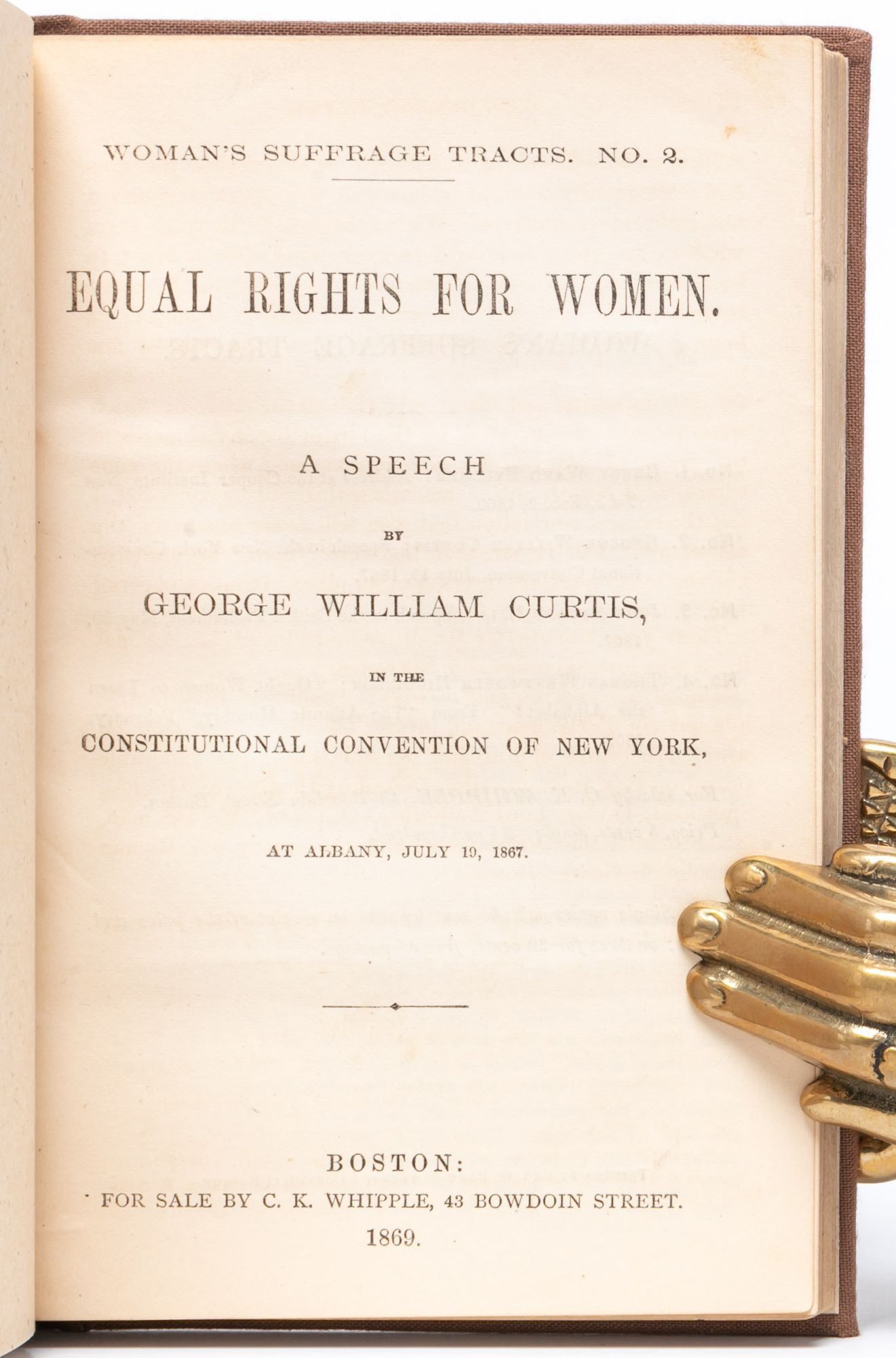
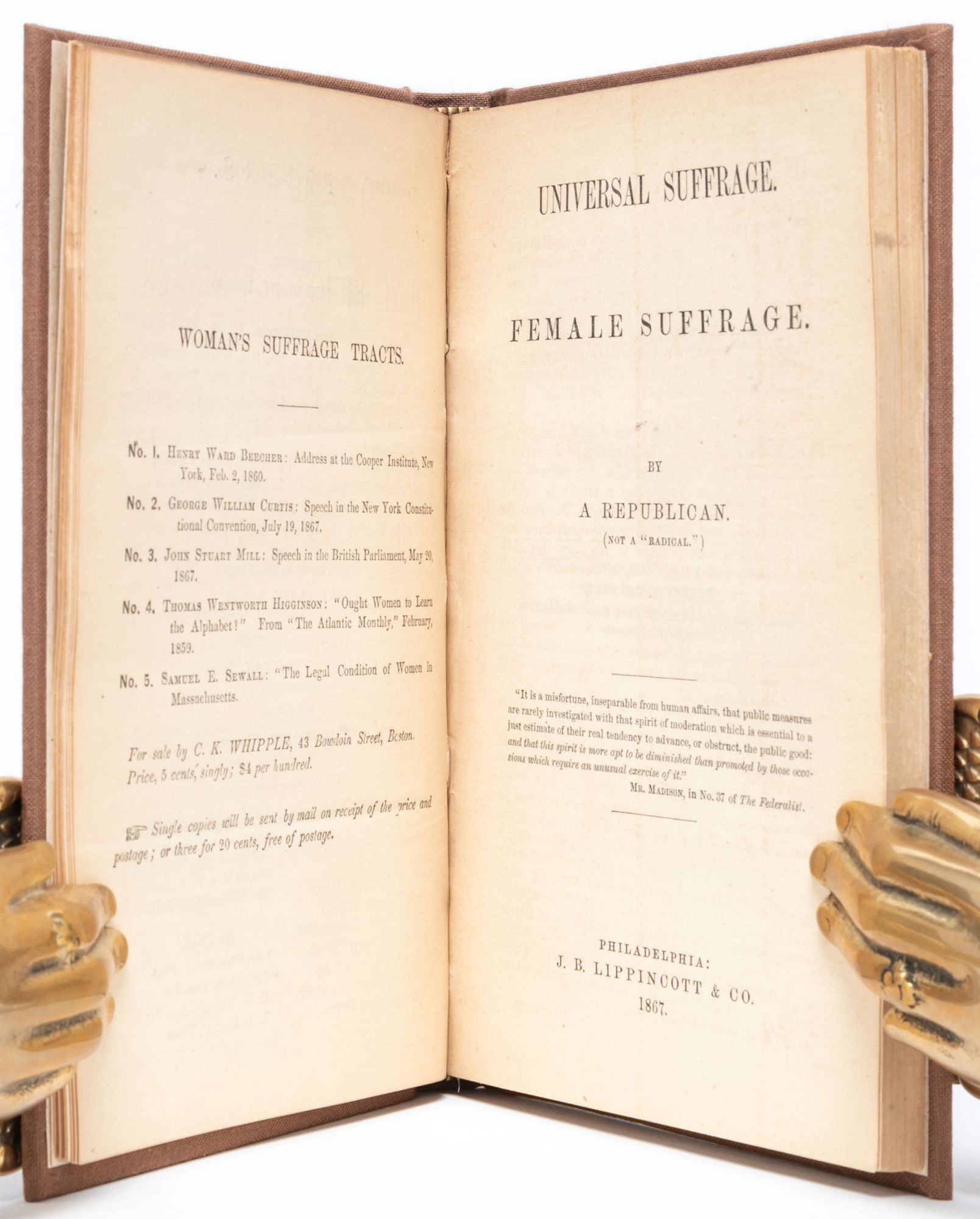
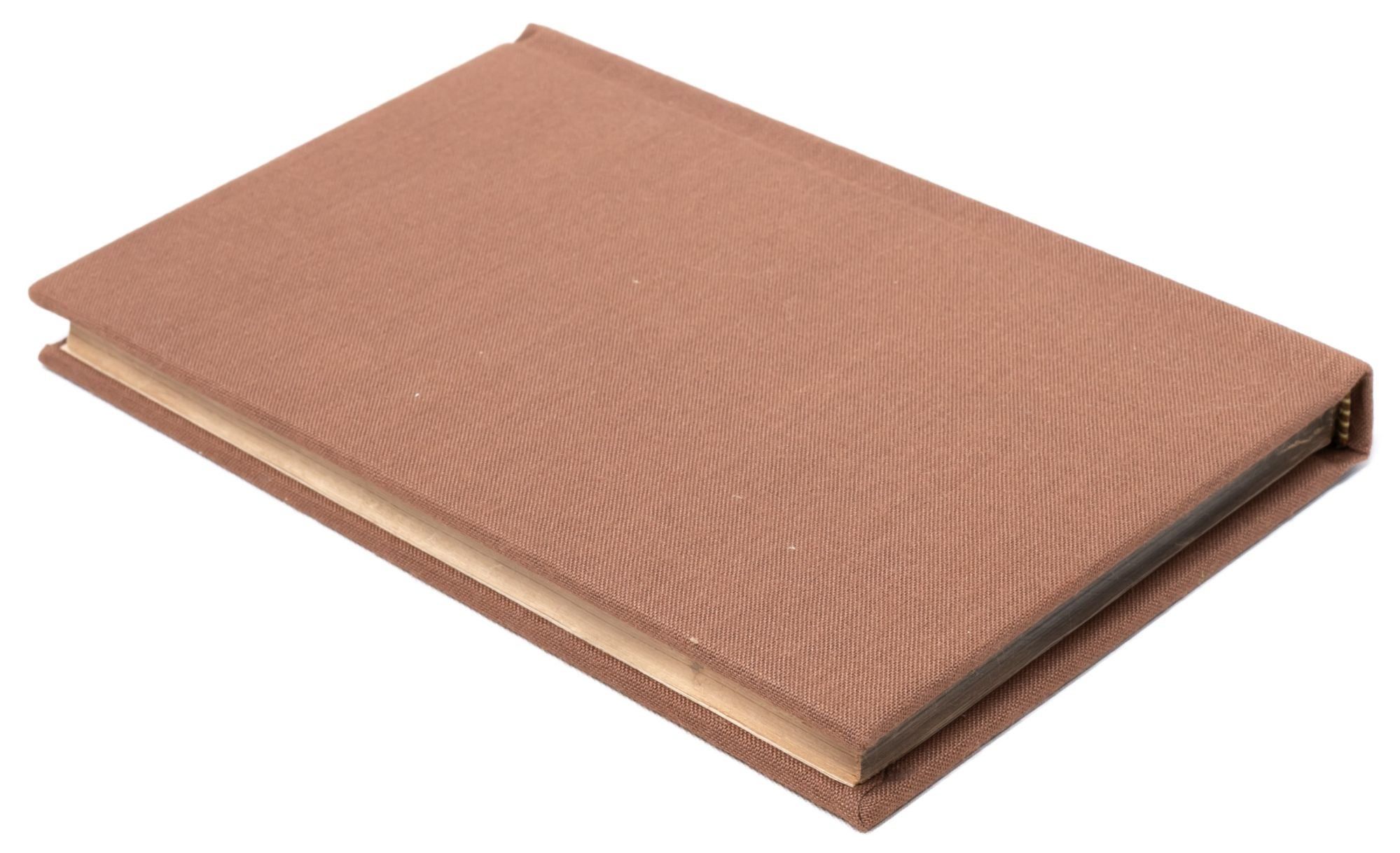
Boston [and] Philadelphia: C.K. Whipple [and] J.P. Lippincott & Co, 1869. Mixed editions. Fine. Second edition of Equal Rights for Women. A Speech by George William Curtis (Boston: C.K. Whipple, 1869) – though the first edition as part of the Woman's Suffrage Tracts series – bound with the first edition of the anonymously-published Universal Suffrage. Female Suffrage (Philadelphia: J.P. Lippincott & Co., 1867). Modern brown cloth with gilt spine. Two works bound together, twelvemo. 24, [4]; 116 pp. With a four-page New England Woman's Suffrage Association Constitution and list of officers at the end of the first work. Exceptionally fresh, Fine copy. From the library of the Iowa Republican senator William B. Allison (1829 - 1908), with bookplate to upper pastedown identifying it as part of the Allison Memorial Collection of Mrs. Jennie A. Brayton. Both of these works are scarce, these being the only examples on the market.
The New England Woman’s Suffrage Association (NEWSA) began publishing their Woman’s Suffrage Tracts earlier in 1869 with Henry Ward Beecher’s essay Woman’s Influence in Politics. The association was led at the time by Julia Ward Howe and a board of prominent abolitionists and women’s rights activists that included William Lloyd Garrison, Lydia Maria Child, and Lucy Stone. The Tracts served as the ideological mouthpiece of the organization, compiling the writing of activists fighting for the voting rights of both women and of Black men leading up to the ratification of the Fifteenth Amendment in 1870.
George William Curtis (1824 - 1892) was an abolitionist, editor, and one of the friends of Ralph Waldo Emerson who helped build the Walden Pond house. His commitment to universal suffrage made him an ideal candidate for inclusion in the Women's Suffrage Tract series: his impassioned Equal Rights for Women argues not just for women's right to vote but for their right to full participation in government, citing historical women leaders like Queen Elizabeth I. He also discusses his support for the voting rights of Black men, essentially arguing that extending access to power to marginalized groups could only improve the nation. The piece, which was originally delivered as a speech at the Constitutional Convention in New York, was first published by the American Equal Rights Association in 1867 before being reissued here.
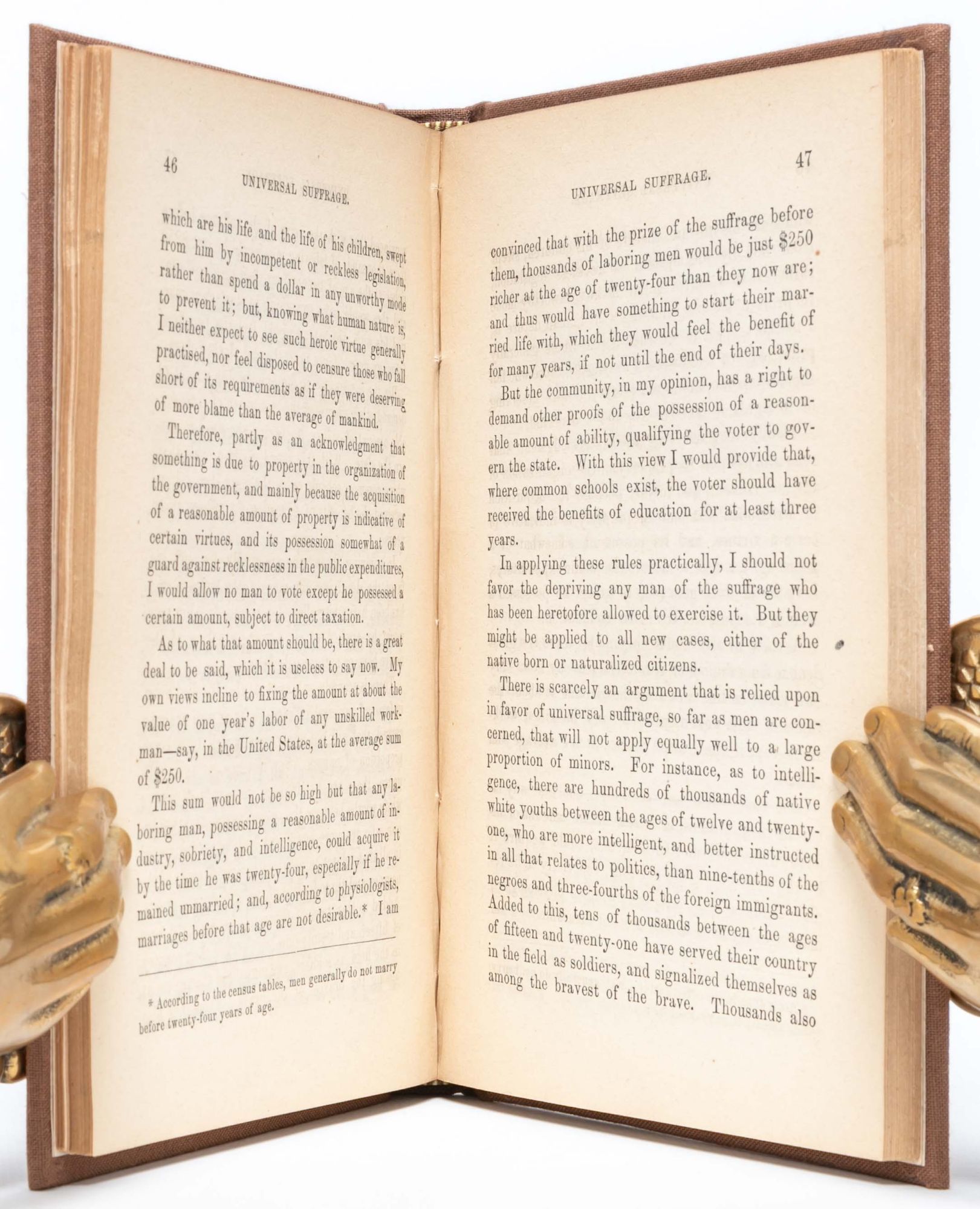
Similar in theme but taking a less liberatory perspective, Universal Suffrage. Female Suffrage considers both the voting rights of Black men (in the "Universal Suffrage" half of the work) and the voting rights of women. Presenting himself as "a Republican, not a Radical," the anonymous author (who may have been the copyright holder, Thomas W. Hartley), argues in favor of Black men gaining the vote as long as it was limited to those who held property or significant assets. In the "Female Suffrage" portion of the work, the author argues that women should be afforded full property rights, be able to achieve independence from men, and pursue education and equal employment, but should not be granted the right to vote. True to his characterization of himself, the author takes a moderate (but ultimately conservative) perspective on both issues addressed in his piece. Fine.
The New England Woman’s Suffrage Association (NEWSA) began publishing their Woman’s Suffrage Tracts earlier in 1869 with Henry Ward Beecher’s essay Woman’s Influence in Politics. The association was led at the time by Julia Ward Howe and a board of prominent abolitionists and women’s rights activists that included William Lloyd Garrison, Lydia Maria Child, and Lucy Stone. The Tracts served as the ideological mouthpiece of the organization, compiling the writing of activists fighting for the voting rights of both women and of Black men leading up to the ratification of the Fifteenth Amendment in 1870.
George William Curtis (1824 - 1892) was an abolitionist, editor, and one of the friends of Ralph Waldo Emerson who helped build the Walden Pond house. His commitment to universal suffrage made him an ideal candidate for inclusion in the Women's Suffrage Tract series: his impassioned Equal Rights for Women argues not just for women's right to vote but for their right to full participation in government, citing historical women leaders like Queen Elizabeth I. He also discusses his support for the voting rights of Black men, essentially arguing that extending access to power to marginalized groups could only improve the nation. The piece, which was originally delivered as a speech at the Constitutional Convention in New York, was first published by the American Equal Rights Association in 1867 before being reissued here.
Similar in theme but taking a less liberatory perspective, Universal Suffrage. Female Suffrage considers both the voting rights of Black men (in the "Universal Suffrage" half of the work) and the voting rights of women. Presenting himself as "a Republican, not a Radical," the anonymous author (who may have been the copyright holder, Thomas W. Hartley), argues in favor of Black men gaining the vote as long as it was limited to those who held property or significant assets. In the "Female Suffrage" portion of the work, the author argues that women should be afforded full property rights, be able to achieve independence from men, and pursue education and equal employment, but should not be granted the right to vote. True to his characterization of himself, the author takes a moderate (but ultimately conservative) perspective on both issues addressed in his piece. Fine.