

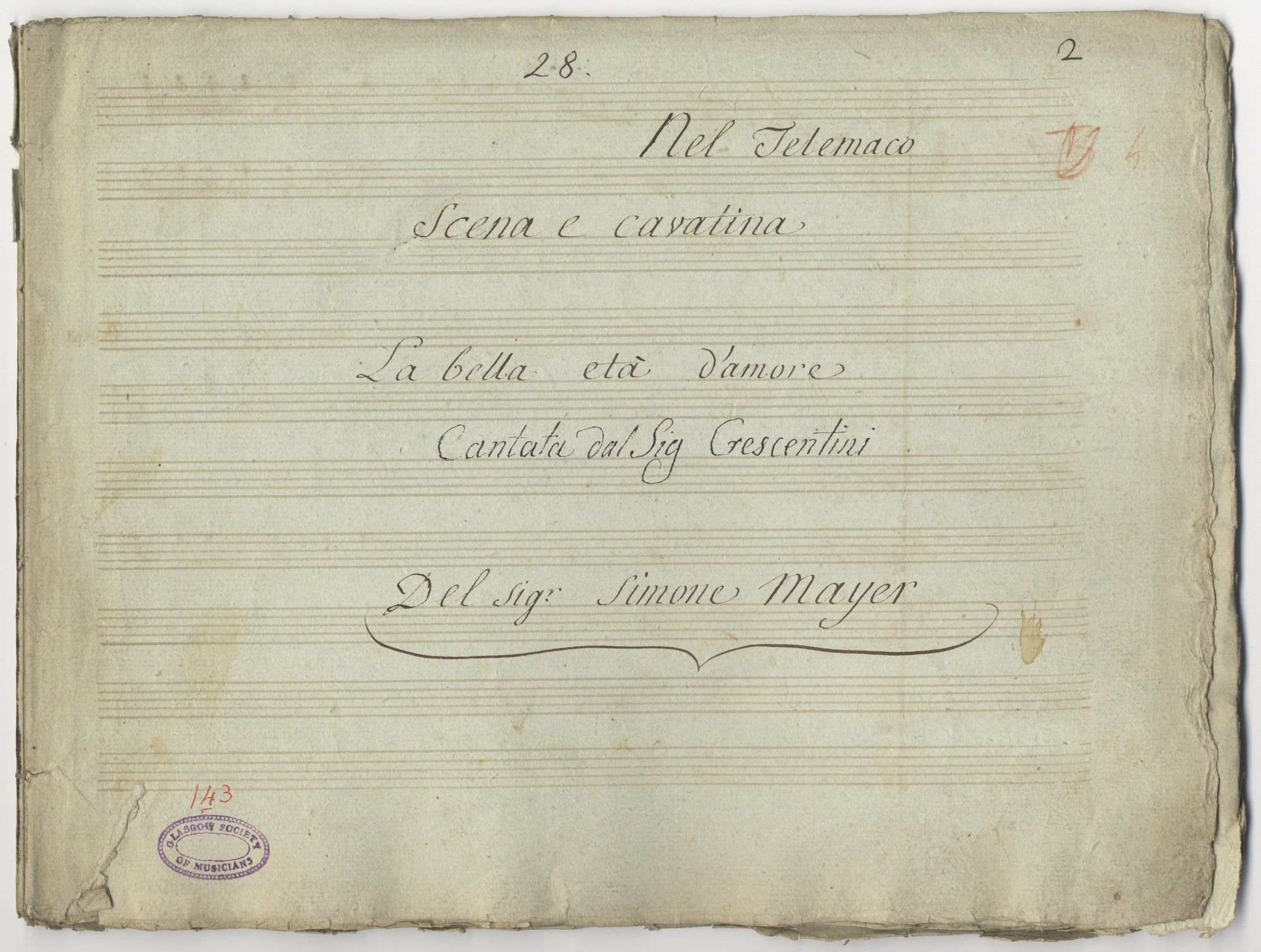
Nel Telemaco Scena e cavatina La bella età d'amore Cantata dal Sig. Crescentini. [Copyist manuscript full score]
- 1800
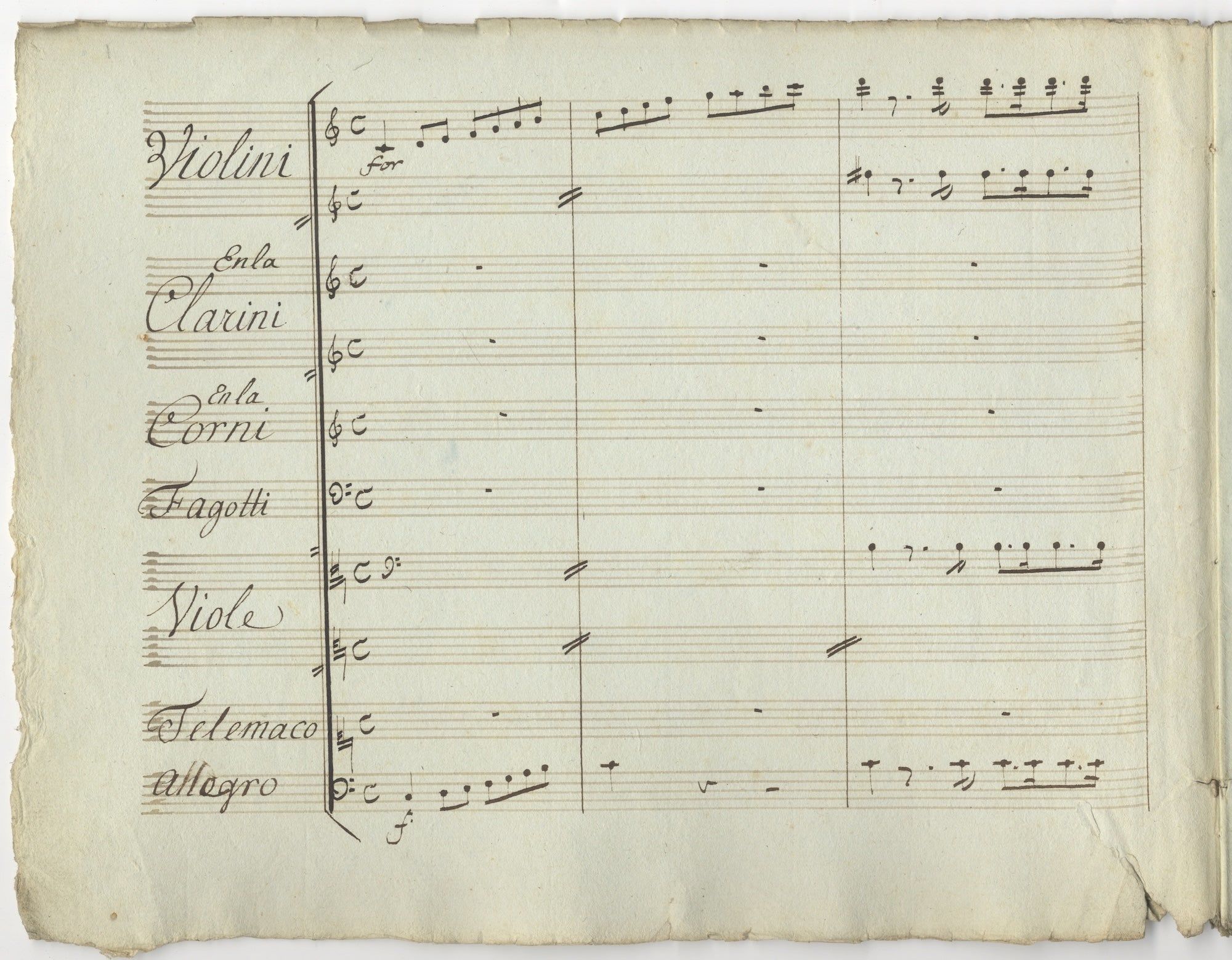
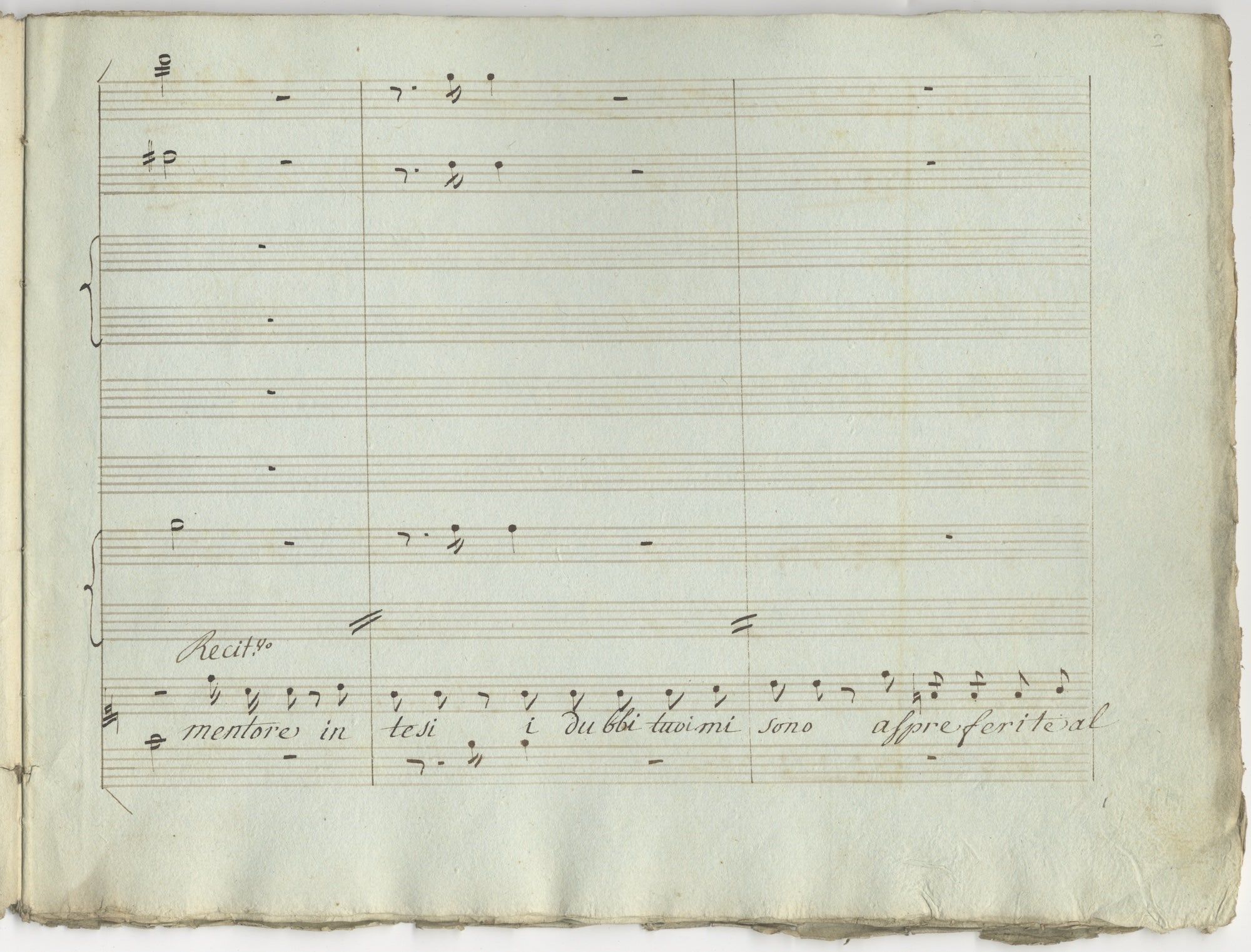
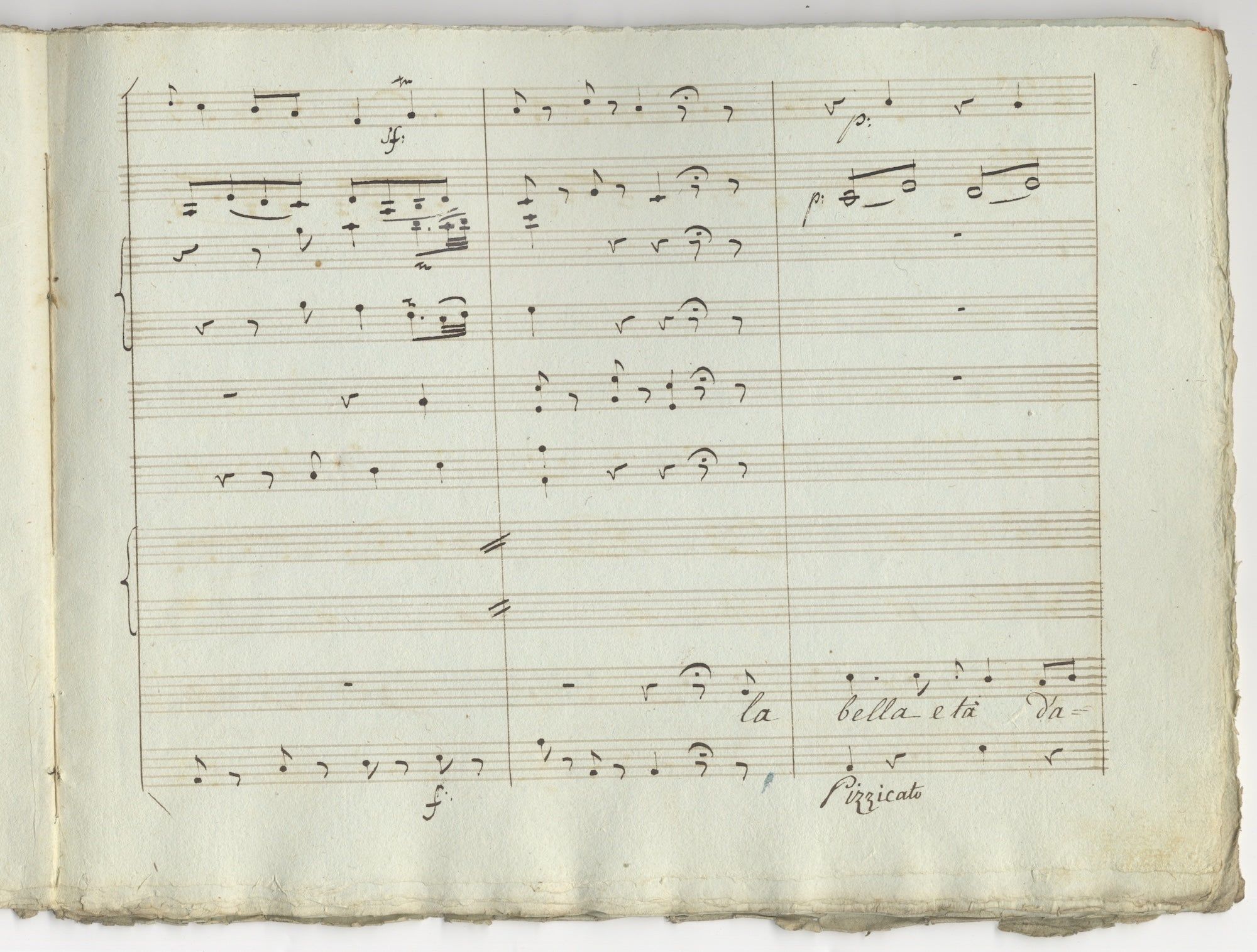
1800. Oblong folio (225 x 296 mm). Sewn. [i] (title), 32 pp. Notated in black ink on 10-stave rastrum-ruled paper.
With small oval handstamp of the Glasgow Society of Musicians to title and final page of music; "28" to upper center and "2" to upper outer corner in contemporary manuscript, each in a different hand; "143" in contemporary manuscript to lower inner corner of title.
Title and final page soiled, with tears to blank lower margins; occasional minor stains. Telemaco nell’isola di Calipso, to a libretto by Antonio Simone Sograffi, was first performed on 16 January 1797 at Carnevale in Venice, with participation of the celebrated castrato Girolamo Crescentini (1762-1846).
Mayr, a German composer, teacher, and writer on music, "was a leading figure in the development of opera seria in the last decade of the 18th century and the first two decades of the 19th." Scott L. Balthazar in Grove Music Online
Crescentini was a noted Italian soprano castrato and composer. "After his studies in Bologna under Lorenzo Gibelli he made his début in 1776, in Fano, in female roles, then in Pisa (1777) and Rome (1778–9). In 1781 he played, for the first time, the role of primo uomo in Treviso. He sang in Naples (1787–9) and in the most important Italian theatres, in London (1785) and from 1798 to 1803 in Lisbon, where he was also manager of the Teatro de S Carlos. He sang in the first performances of Catone in Utica by Paisiello (1789, Naples), Amleto by Andreozzi (1792, Padua) and Gli Orazi ed i Curiazi by Cimarosa (1796, Venice). In 1805 he was in Vienna and from 1806 to 1812 in Paris at Napoleon I’s court as singing teacher to the royal family. When he returned to Italy he was appointed singing teacher at the Bologna Conservatory and from 1825 at the Real Collegio di Musica, Naples. His style can be placed in the general return to patetico at the end of the 18th century and his ornamentation was never immoderate. Stendhal said that no composer could have written the infinitely small nuances that formed the perfection of Crescentini’s singing in his aria ‘Ombra adorata aspetta’, inserted into Zingarelli’s Giulietta e Romeo. Isabella Colbran was among his pupils.
Besides his operatic arias he composed didactic and vocal chamber works, which were famous throughout the 19th century. His vocalizzi were reprinted (by Ricordi and Lucca) up to the last decade of the century, and were used extensively by singing teachers in conservatories throughout Italy. He was a member of the Accademia di S Cecilia (Rome) and the Accademia Filarmonica of Bologna." Nicola Lucarelli in Grove Music Online.
With small oval handstamp of the Glasgow Society of Musicians to title and final page of music; "28" to upper center and "2" to upper outer corner in contemporary manuscript, each in a different hand; "143" in contemporary manuscript to lower inner corner of title.
Title and final page soiled, with tears to blank lower margins; occasional minor stains. Telemaco nell’isola di Calipso, to a libretto by Antonio Simone Sograffi, was first performed on 16 January 1797 at Carnevale in Venice, with participation of the celebrated castrato Girolamo Crescentini (1762-1846).
Mayr, a German composer, teacher, and writer on music, "was a leading figure in the development of opera seria in the last decade of the 18th century and the first two decades of the 19th." Scott L. Balthazar in Grove Music Online
Crescentini was a noted Italian soprano castrato and composer. "After his studies in Bologna under Lorenzo Gibelli he made his début in 1776, in Fano, in female roles, then in Pisa (1777) and Rome (1778–9). In 1781 he played, for the first time, the role of primo uomo in Treviso. He sang in Naples (1787–9) and in the most important Italian theatres, in London (1785) and from 1798 to 1803 in Lisbon, where he was also manager of the Teatro de S Carlos. He sang in the first performances of Catone in Utica by Paisiello (1789, Naples), Amleto by Andreozzi (1792, Padua) and Gli Orazi ed i Curiazi by Cimarosa (1796, Venice). In 1805 he was in Vienna and from 1806 to 1812 in Paris at Napoleon I’s court as singing teacher to the royal family. When he returned to Italy he was appointed singing teacher at the Bologna Conservatory and from 1825 at the Real Collegio di Musica, Naples. His style can be placed in the general return to patetico at the end of the 18th century and his ornamentation was never immoderate. Stendhal said that no composer could have written the infinitely small nuances that formed the perfection of Crescentini’s singing in his aria ‘Ombra adorata aspetta’, inserted into Zingarelli’s Giulietta e Romeo. Isabella Colbran was among his pupils.
Besides his operatic arias he composed didactic and vocal chamber works, which were famous throughout the 19th century. His vocalizzi were reprinted (by Ricordi and Lucca) up to the last decade of the century, and were used extensively by singing teachers in conservatories throughout Italy. He was a member of the Accademia di S Cecilia (Rome) and the Accademia Filarmonica of Bologna." Nicola Lucarelli in Grove Music Online.