

40 Injured in Riot at Republic Steel" Three International News Photo Images of 1937 Cleveland Steel Strike Violence
- 1937
1937. 21.5cm x 16.5cm. Three black and white original photos with "International News Photos" stamps to versos, with accompanying typewritten slug. Light scratching of the laminate to one image, and some very minor soiling to white borders, very good, clean, clear photographs.
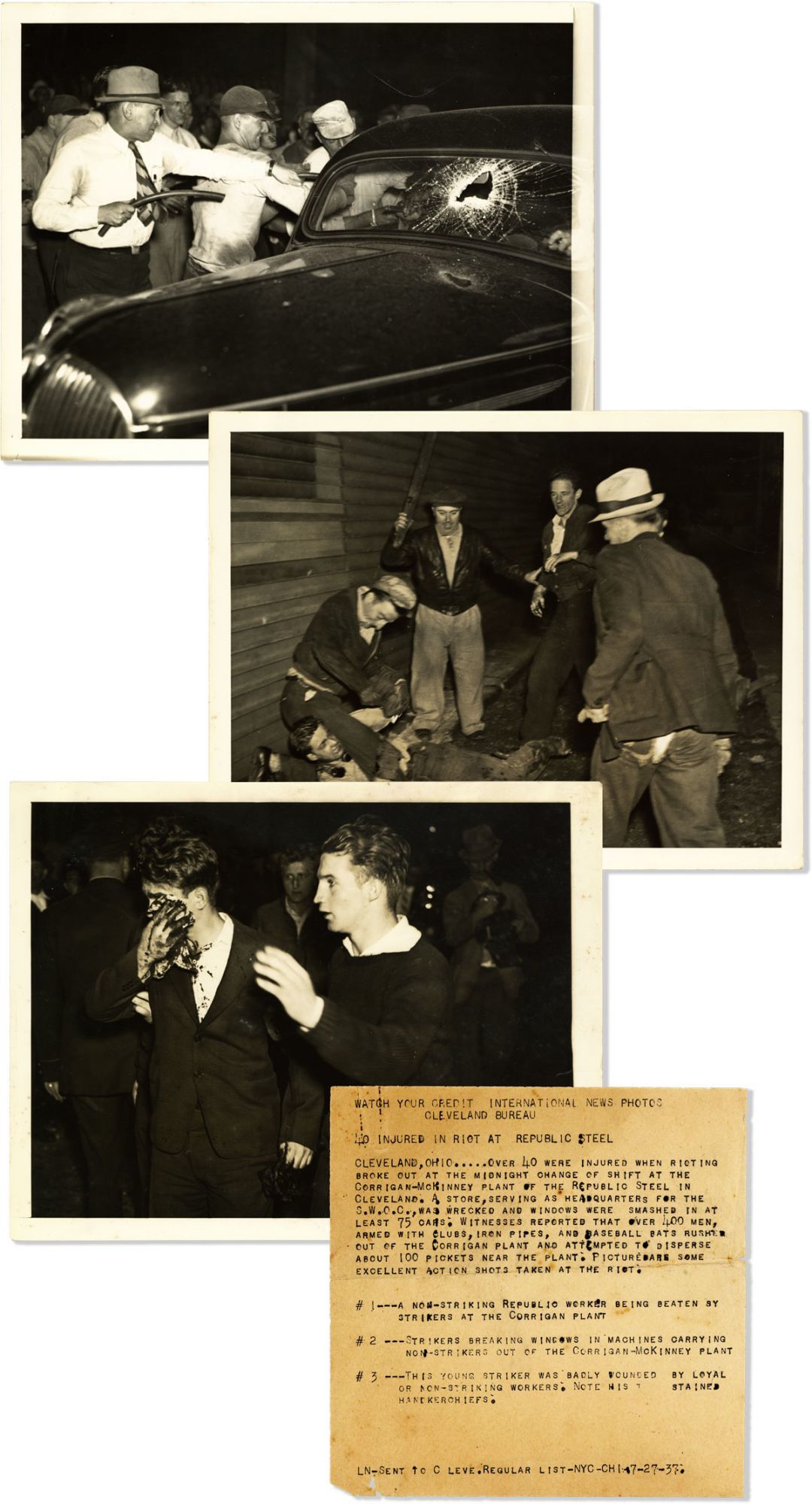
Three images from the violent clashes between Congress of Industrial Organizations union men striking for better working conditions at the "Little Steel" mills in Cleveland, and the carloads of scab workers driven in by the management to break the strike. The violence accelerated to such a level, as these images testify, that the Governor of Ohio, Martin Davey, felt the need to bring in the National Guard.
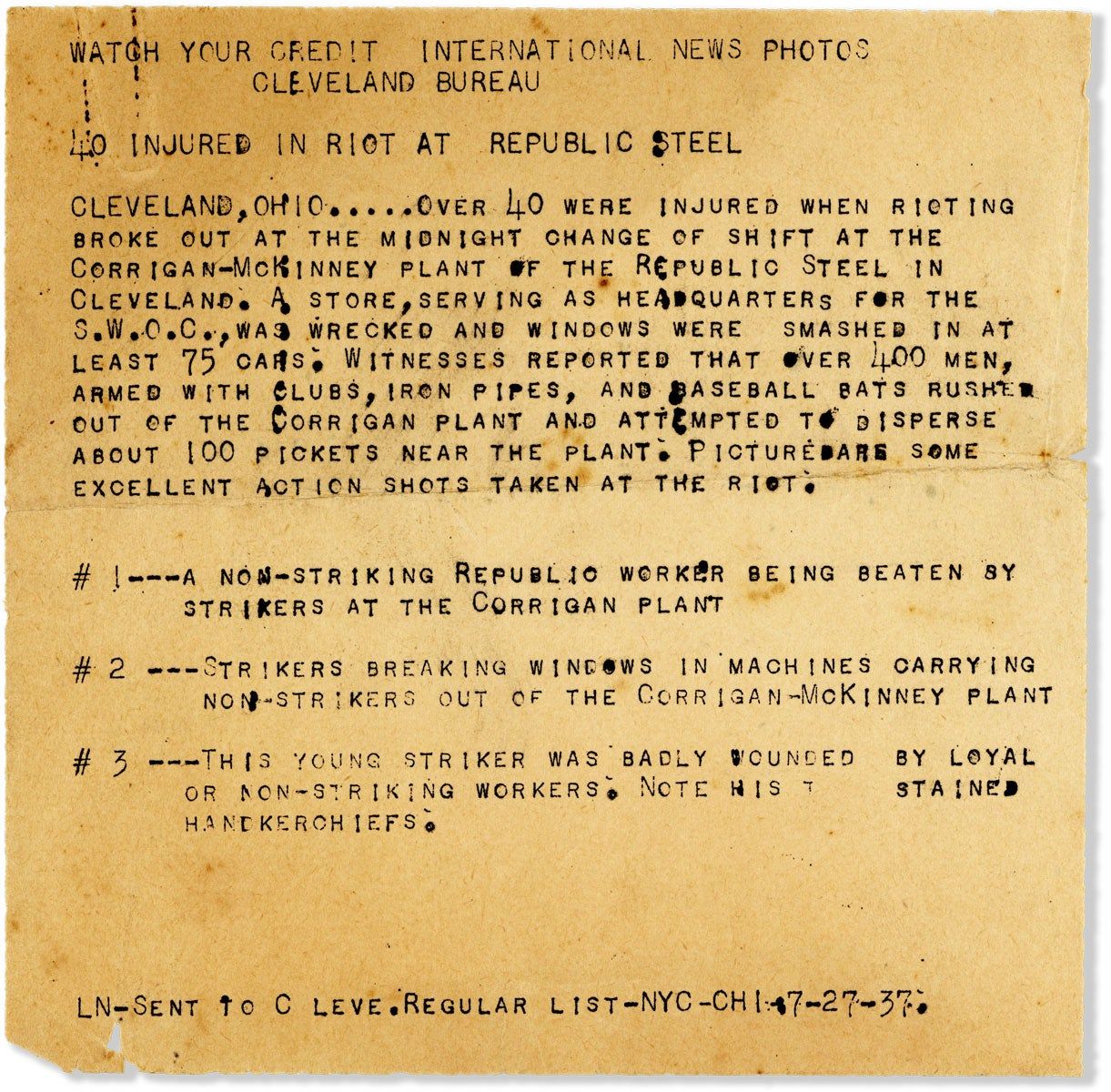
The content of the images, at least as perceived by the press at the time, is detailed on the captioned slug:
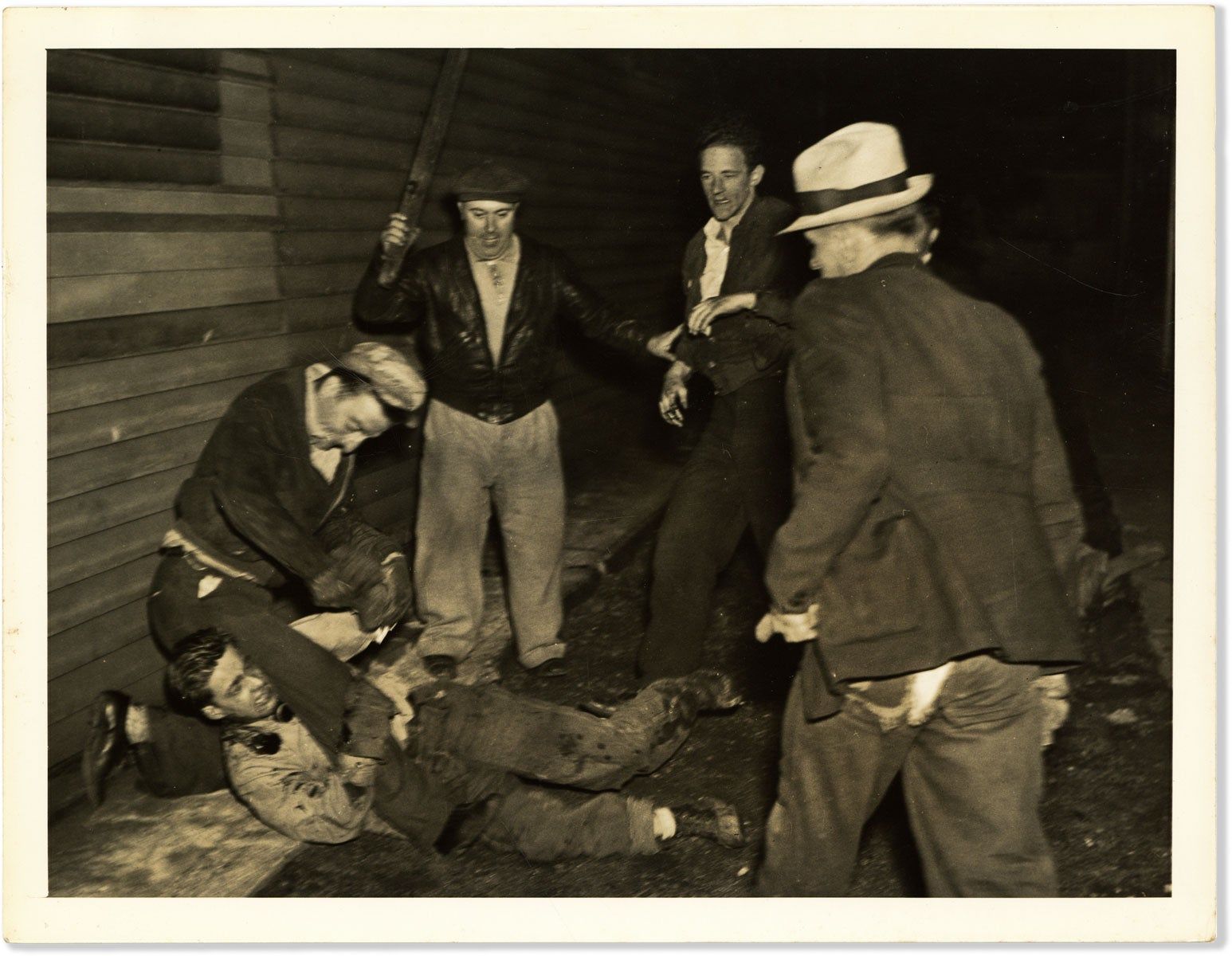
#1 A non-striking Republic Worker being beaten by strikers at the Corrigan Plant.
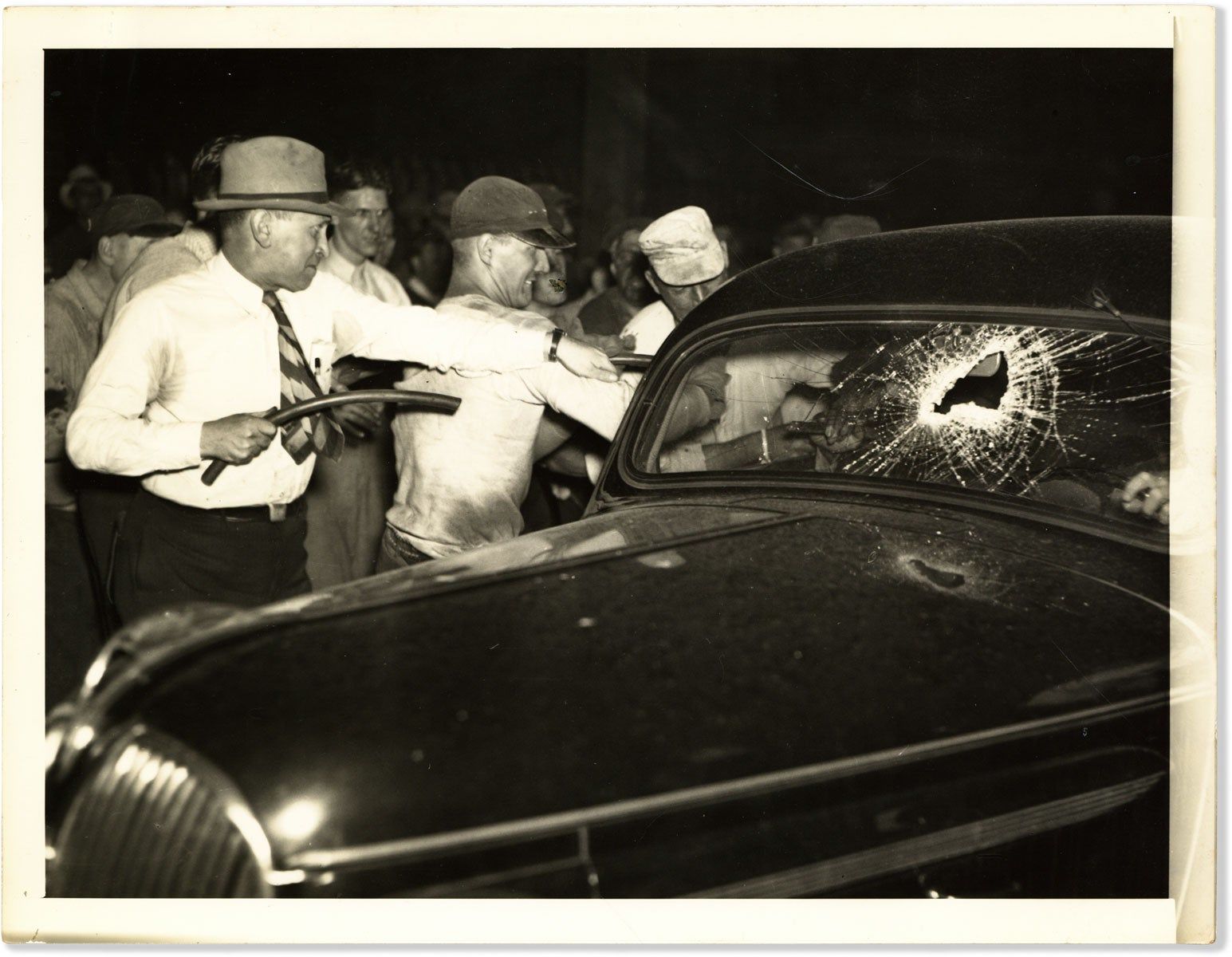
#2 Strikers breaking windows in machines carrying carrying non strikers out og the Corrigan-McKinney Plant.
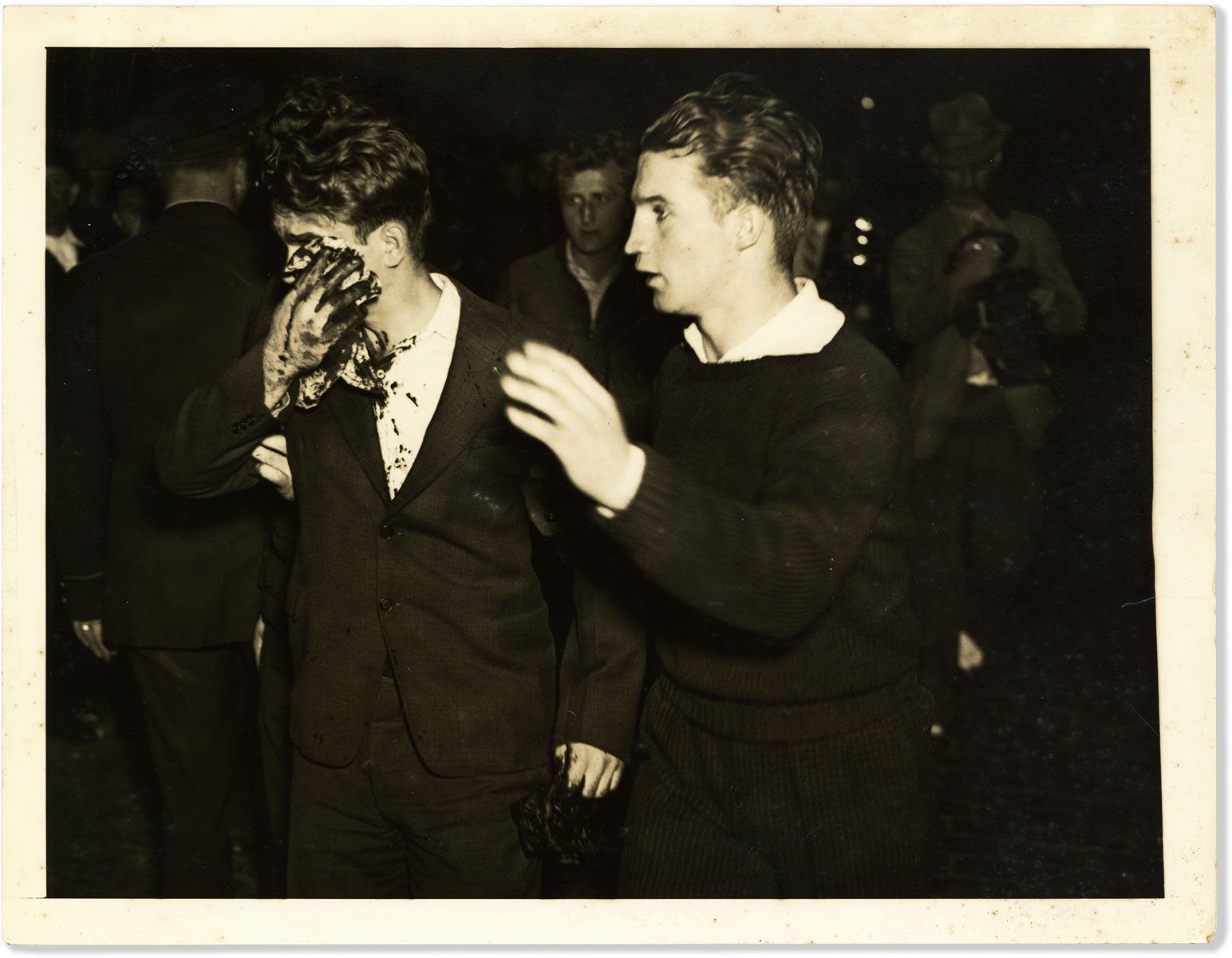
#3 This young striker was badly wounded by loyal or non striking workers. Note his stained handkerchief.
Although the details are impossible to accurately ascertain from the images (designations like "strikers", "loyal non strikers", and the assertion that workers were leaving the plant when attacked, are created purely at the whim of the press guy who typed up the slug for decent copy), they are most certainly indicative of the extreme violence of the confrontation.
Image #1 depicts a bleeding man, with what look to be welding goggles around his neck, struggling on the ground being beaten by 4 others, one of whom is wielding a two by four; #2 has a group of clearly enraged men armed with lead pipes, destroying the windshield of a car that is clearly occupied; #3, the final image of the triptych shows a young man in a dark suit bleeding heavily from the face and being escorted away by a clearly concerned comrade.
The actual facts of the violent clashes of the night of the 26th of July 1937 hinge around the fact that Republic Steel, facing months of lost revenue at Corrigan-McKinney and their other plants, built a small private army of "paramilitaries" undeterred from the backlash of the previous month's "Women's Day Massacre" where Cleveland cops had fired live ammunition into a group of strikers, killing one and injuring several others. The rented strikebreakers, armed with weapons manufactured using the mill equipment, stormed out of the factory buildings and laid into the strikers with no regard for life or limb. Eighty strikers were seriously injured, once the police arrived upwards of a dozen known union men were arrested, and the man in charge of city security in Cleveland, the fabled Elliot Ness, issued a series of empty ultimatums to the "agitators" that, if they didn't lead to the abandonment of his political ambitions, certainly contributed to his disillusionment. In a climate where people were becoming increasingly aware that their political leaders could all be bought and paid for, the brutal stamping the union men took starting looking more like abuse of power than quelling a riot. These images are certainly indicative of the brutality and violence, but how and with what purpose they would be presented to their audience is really the question.
Three images from the violent clashes between Congress of Industrial Organizations union men striking for better working conditions at the "Little Steel" mills in Cleveland, and the carloads of scab workers driven in by the management to break the strike. The violence accelerated to such a level, as these images testify, that the Governor of Ohio, Martin Davey, felt the need to bring in the National Guard.
The content of the images, at least as perceived by the press at the time, is detailed on the captioned slug:
#1 A non-striking Republic Worker being beaten by strikers at the Corrigan Plant.
#2 Strikers breaking windows in machines carrying carrying non strikers out og the Corrigan-McKinney Plant.
#3 This young striker was badly wounded by loyal or non striking workers. Note his stained handkerchief.
Although the details are impossible to accurately ascertain from the images (designations like "strikers", "loyal non strikers", and the assertion that workers were leaving the plant when attacked, are created purely at the whim of the press guy who typed up the slug for decent copy), they are most certainly indicative of the extreme violence of the confrontation.
Image #1 depicts a bleeding man, with what look to be welding goggles around his neck, struggling on the ground being beaten by 4 others, one of whom is wielding a two by four; #2 has a group of clearly enraged men armed with lead pipes, destroying the windshield of a car that is clearly occupied; #3, the final image of the triptych shows a young man in a dark suit bleeding heavily from the face and being escorted away by a clearly concerned comrade.
The actual facts of the violent clashes of the night of the 26th of July 1937 hinge around the fact that Republic Steel, facing months of lost revenue at Corrigan-McKinney and their other plants, built a small private army of "paramilitaries" undeterred from the backlash of the previous month's "Women's Day Massacre" where Cleveland cops had fired live ammunition into a group of strikers, killing one and injuring several others. The rented strikebreakers, armed with weapons manufactured using the mill equipment, stormed out of the factory buildings and laid into the strikers with no regard for life or limb. Eighty strikers were seriously injured, once the police arrived upwards of a dozen known union men were arrested, and the man in charge of city security in Cleveland, the fabled Elliot Ness, issued a series of empty ultimatums to the "agitators" that, if they didn't lead to the abandonment of his political ambitions, certainly contributed to his disillusionment. In a climate where people were becoming increasingly aware that their political leaders could all be bought and paid for, the brutal stamping the union men took starting looking more like abuse of power than quelling a riot. These images are certainly indicative of the brutality and violence, but how and with what purpose they would be presented to their audience is really the question.