

Hints for the Improvement of Early Education and Nursery Discipline
- London: Printed for J. Hatchard and Son, 1819
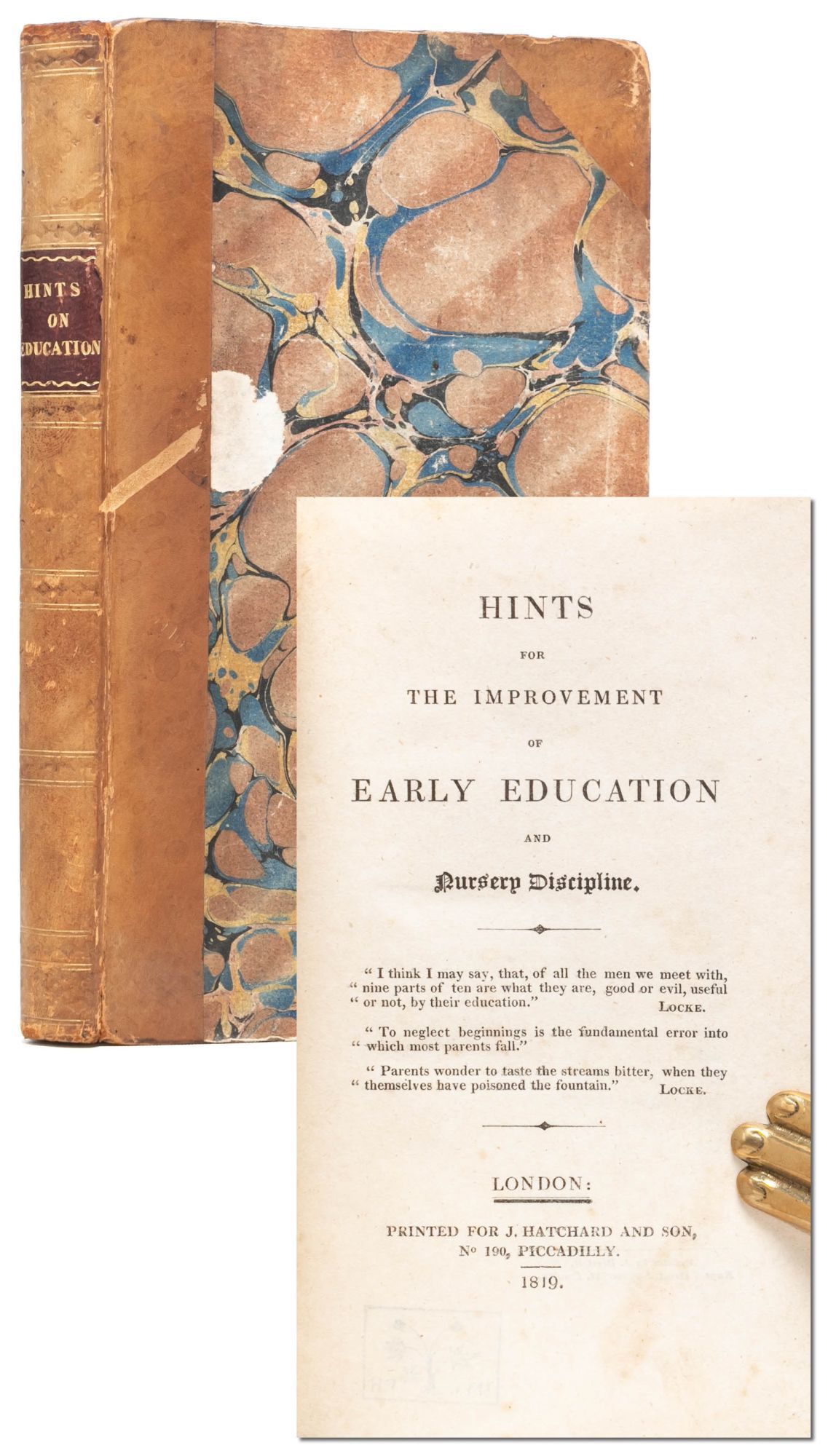
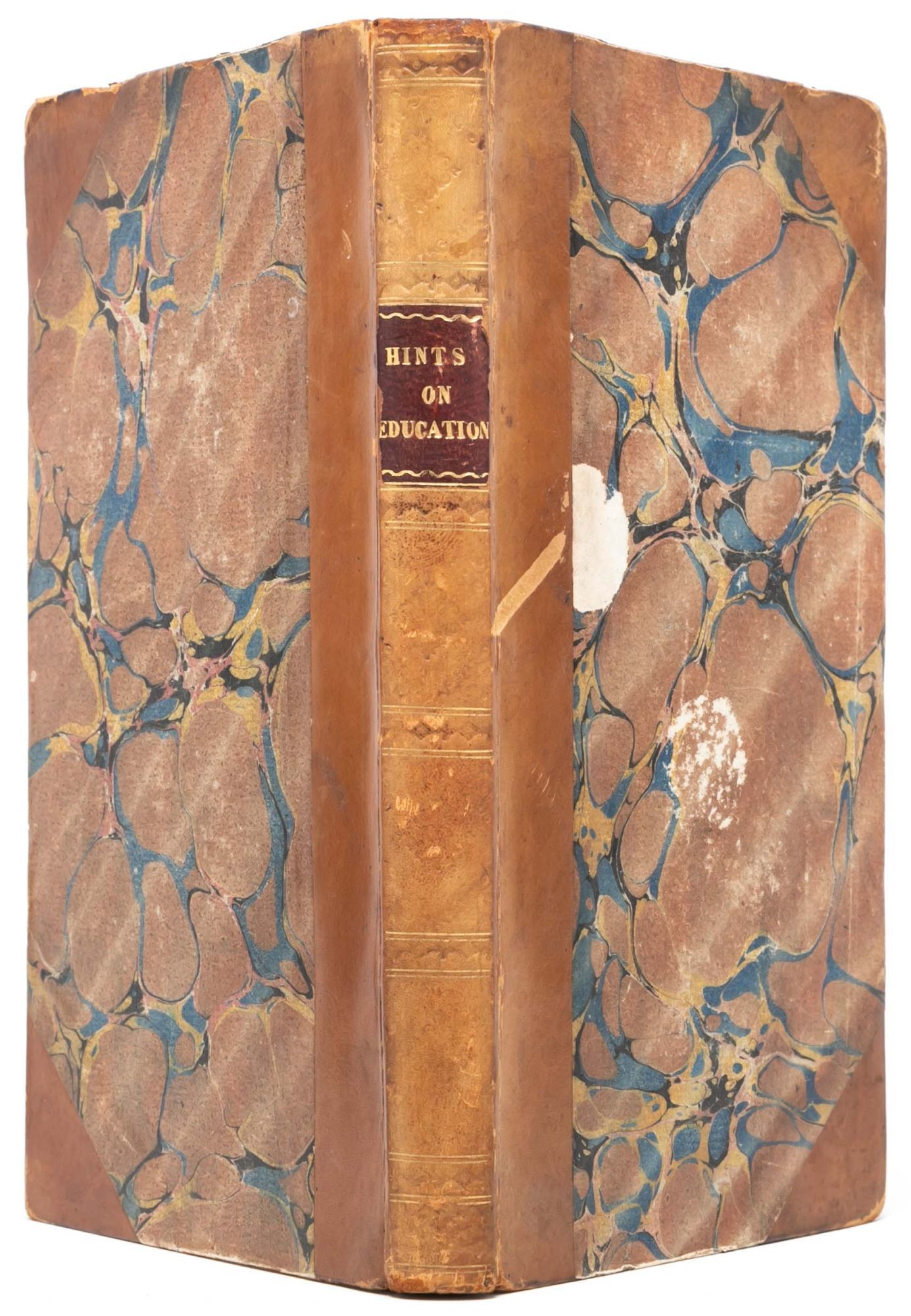
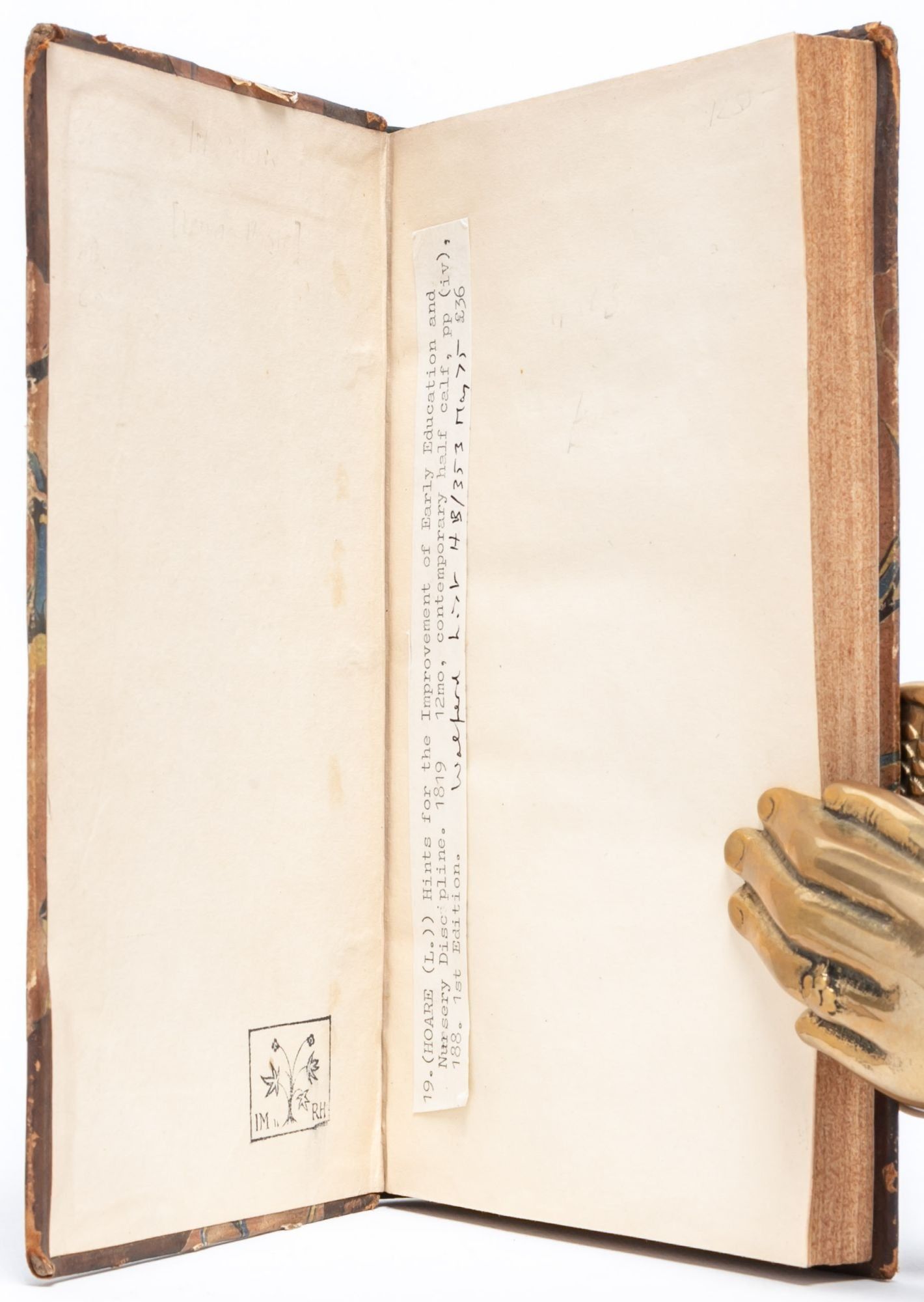
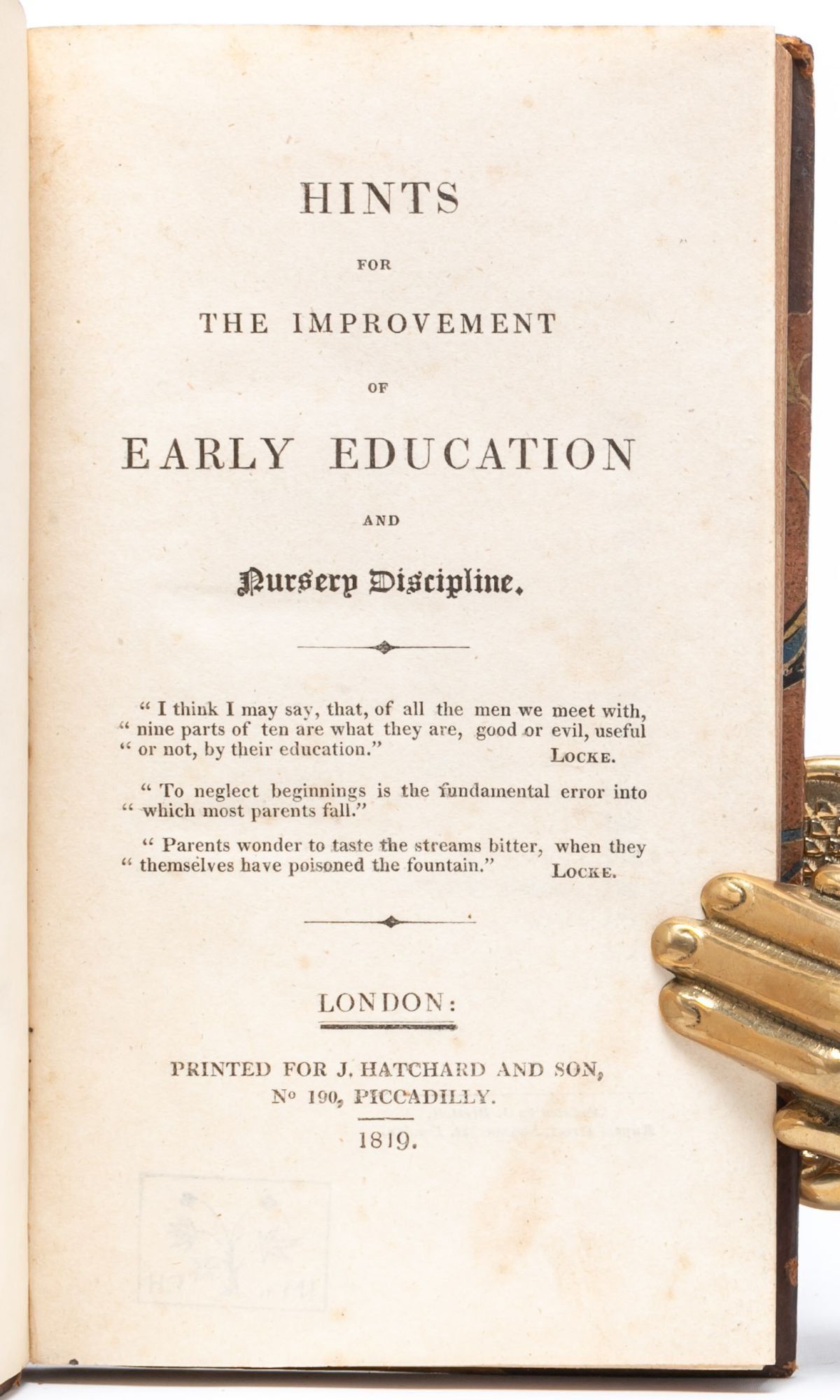
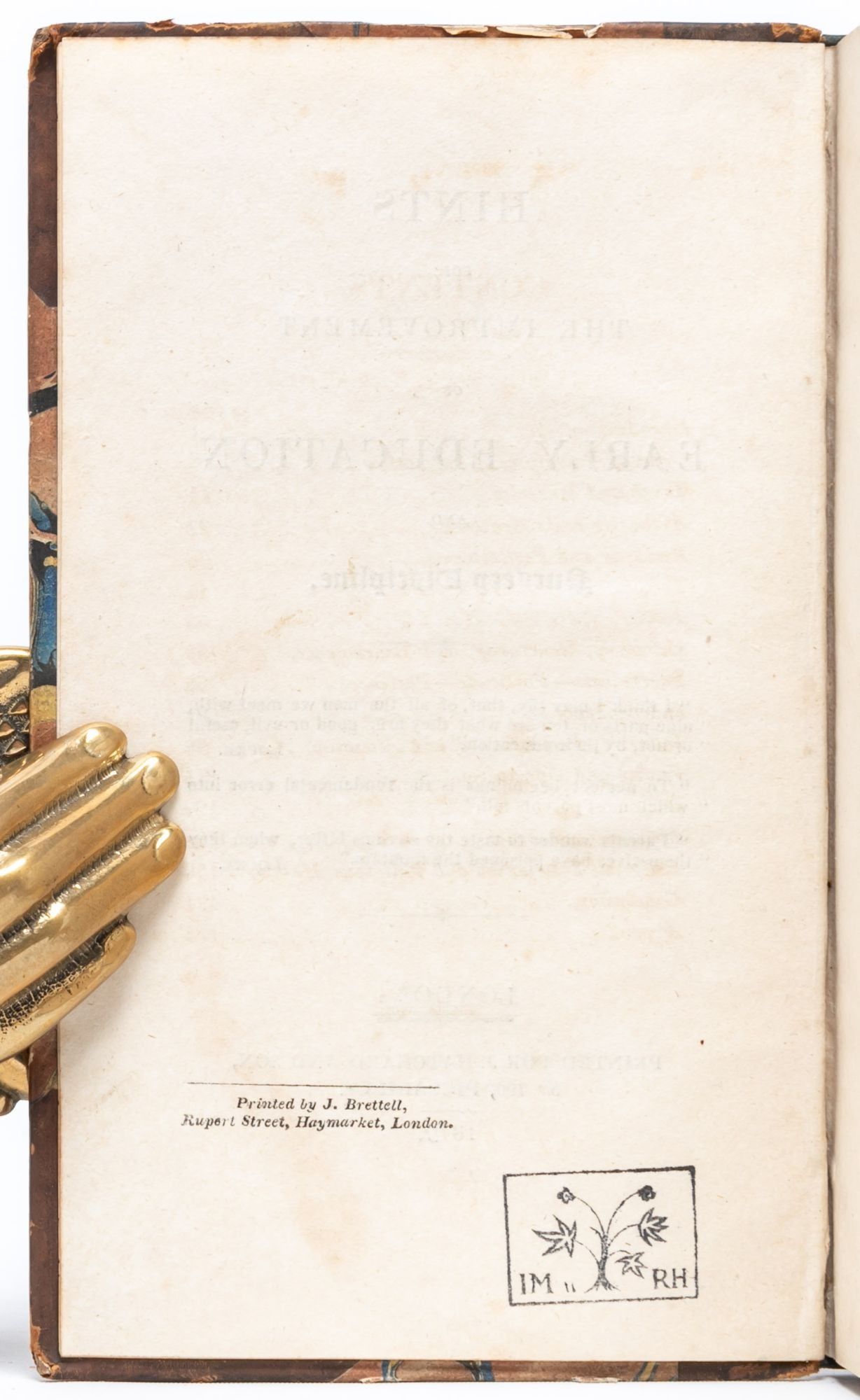
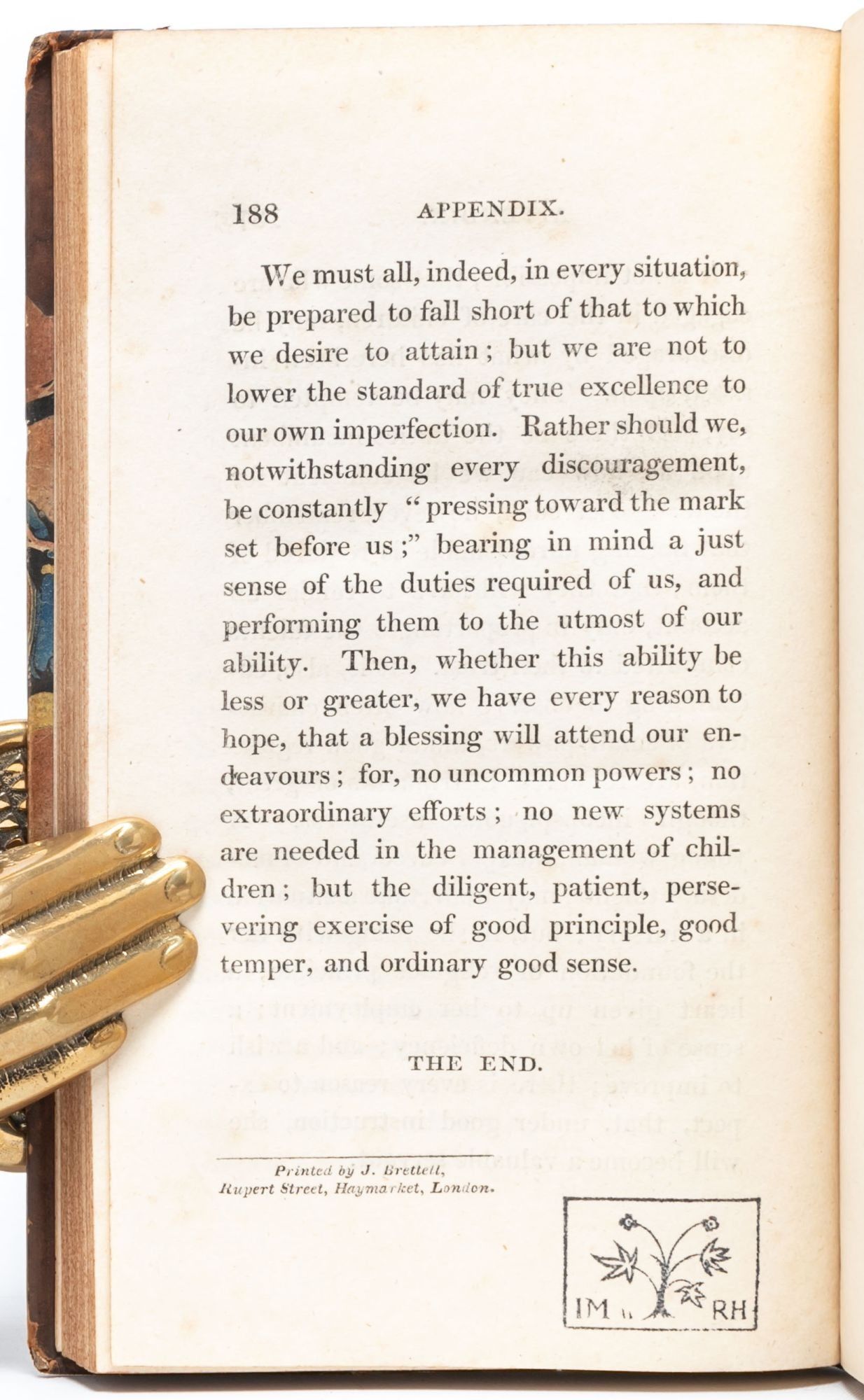
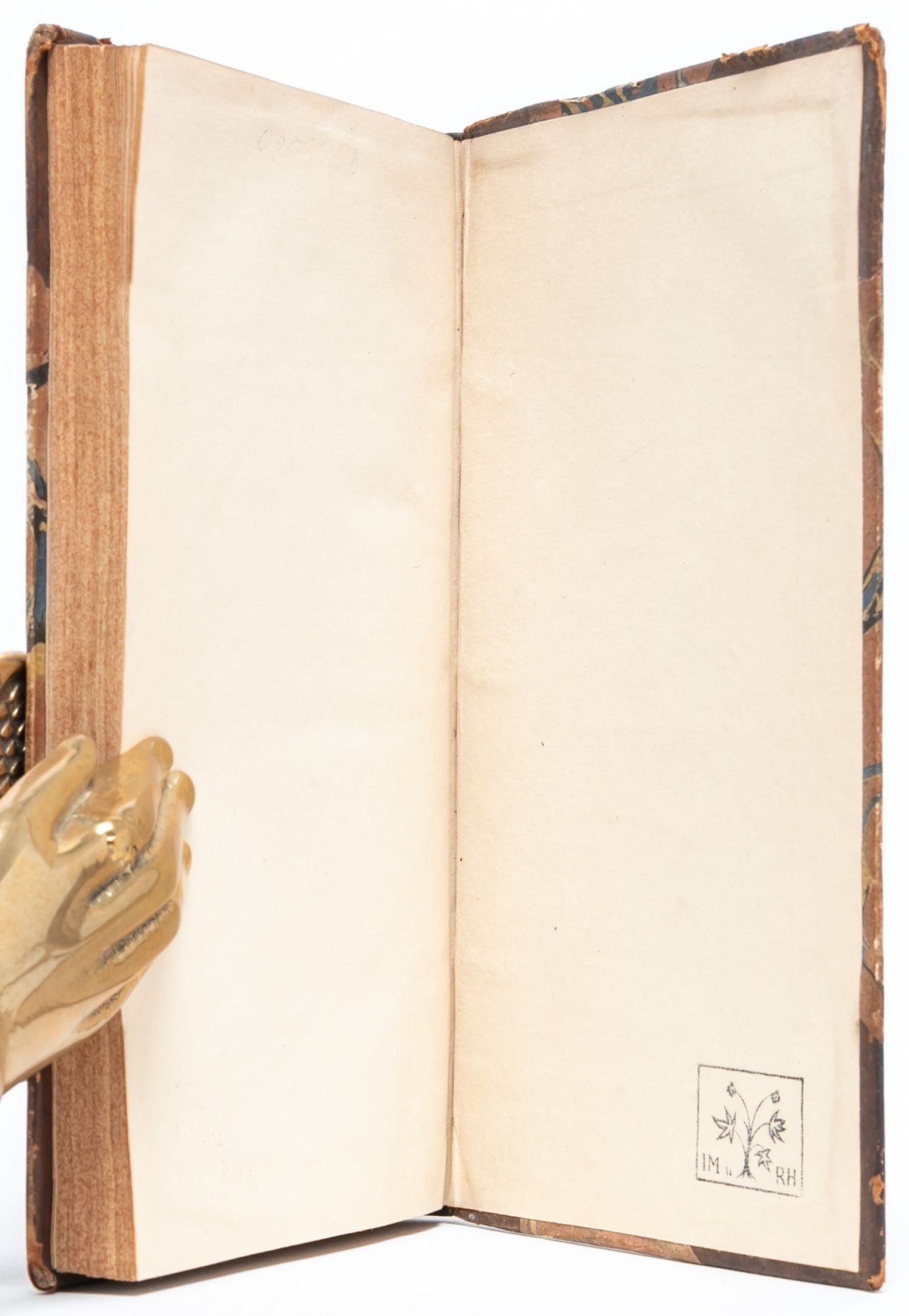
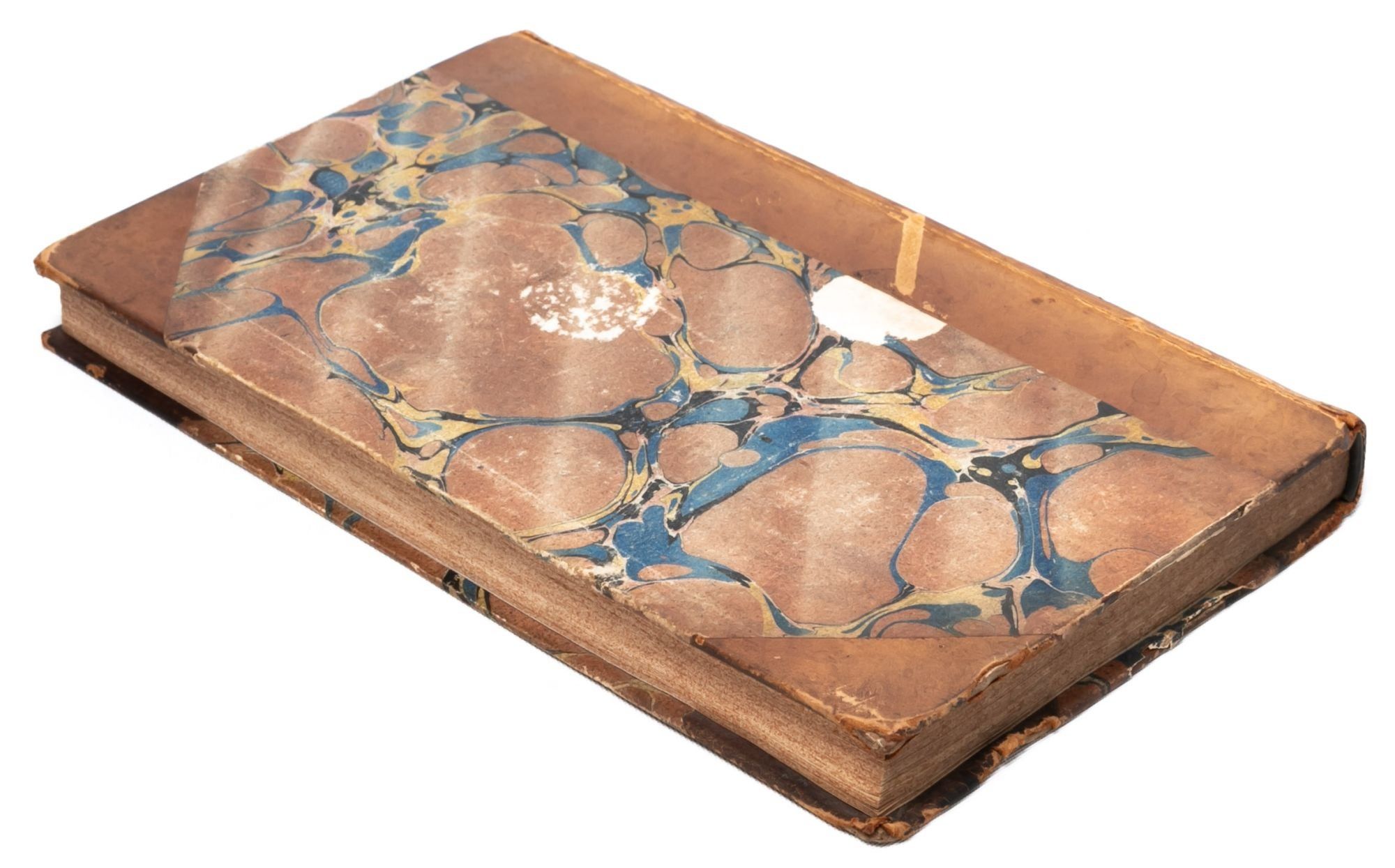
London: Printed for J. Hatchard and Son, 1819. First edition. Very Good +. Nineteenth-century half tan calf over marbled boards with gilt spine. Twelvemo. [4], 188 pp. Paper chip to upper board. With the ownership stamp of Ida MacAlpine and Richard Hunter (authors of Three Hundred Years of Psychiatry, 1525-1860) to each pastedown, verso of title-page, and foot of final page. Clipping of old bookseller's description pasted to upper flyleaf. Clean and fresh throughout, a Very Good+ copy of an uncommon work promoting the rights of children in education and the home.
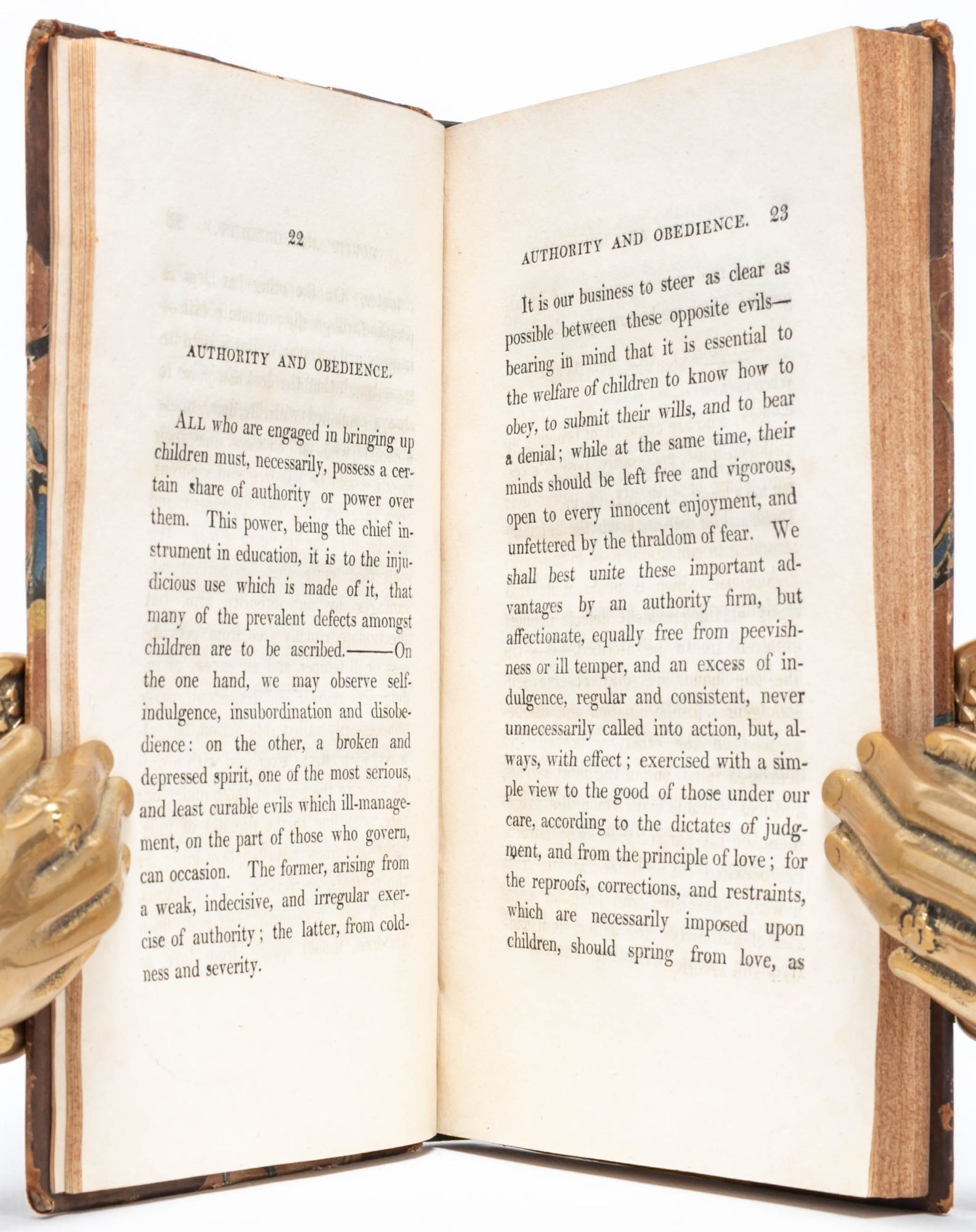
Louisa Gurney Hoare (1784 - 1836) wrote her guide to early childhood education for mothers and nannies teaching children at home. In preparation for later formal schooling, Hoare directed her readers to instruct children in proper conduct and instill the virtues of justice, independence, and perseverance while respecting their rights and individuality and avoiding harsh punishments. She criticized the common practice of “terrorizing children into obedience by threatening immediate divine retribution” and warned that parents could make religion dull and frightening if they ignored or punished children's natural curiosity into the logic of religious belief (Rosman, Evangelicals and Culture, p. 102). Hoare’s ideas were heavily influenced both by her Quaker upbringing and by writers like Samuel Johnson, Thomas Babington, and John Locke, the latter of whom she quotes twice on the title-page and several times throughout the work. Hoare was influenced both by Locke’s ideas of personal liberty and his observations on the role of education in shaping children’s futures (“I think I may say, that, of all the men we meet with, nine parts of ten are what they are, good or evil, useful or not, by their education”). Hints for the Improvement of Early Education was extremely popular, running to nineteen editions in England by the late 1870s and even more in the United States.
Hoare was born into the Gurney family, a large and prominent clan of English Quakers that included many abolitionists, reformers, and educational advocates. One of those reformers was Elizabeth Fry (1780 - 1845), Hoare's elder sister, who was best remembered for her efforts to reduce the sexual exploitation of incarcerated women, most notably the 1823 Gaols Act mandating sex-segregated prisons. Hoare's family by marriage also included prominent abolitionists like Samuel Hoare (1751 - 1825), her father-in-law, who was a founding member of the Society for the Abolition of the Slave Trade. Very Good +.
Louisa Gurney Hoare (1784 - 1836) wrote her guide to early childhood education for mothers and nannies teaching children at home. In preparation for later formal schooling, Hoare directed her readers to instruct children in proper conduct and instill the virtues of justice, independence, and perseverance while respecting their rights and individuality and avoiding harsh punishments. She criticized the common practice of “terrorizing children into obedience by threatening immediate divine retribution” and warned that parents could make religion dull and frightening if they ignored or punished children's natural curiosity into the logic of religious belief (Rosman, Evangelicals and Culture, p. 102). Hoare’s ideas were heavily influenced both by her Quaker upbringing and by writers like Samuel Johnson, Thomas Babington, and John Locke, the latter of whom she quotes twice on the title-page and several times throughout the work. Hoare was influenced both by Locke’s ideas of personal liberty and his observations on the role of education in shaping children’s futures (“I think I may say, that, of all the men we meet with, nine parts of ten are what they are, good or evil, useful or not, by their education”). Hints for the Improvement of Early Education was extremely popular, running to nineteen editions in England by the late 1870s and even more in the United States.
Hoare was born into the Gurney family, a large and prominent clan of English Quakers that included many abolitionists, reformers, and educational advocates. One of those reformers was Elizabeth Fry (1780 - 1845), Hoare's elder sister, who was best remembered for her efforts to reduce the sexual exploitation of incarcerated women, most notably the 1823 Gaols Act mandating sex-segregated prisons. Hoare's family by marriage also included prominent abolitionists like Samuel Hoare (1751 - 1825), her father-in-law, who was a founding member of the Society for the Abolition of the Slave Trade. Very Good +.