

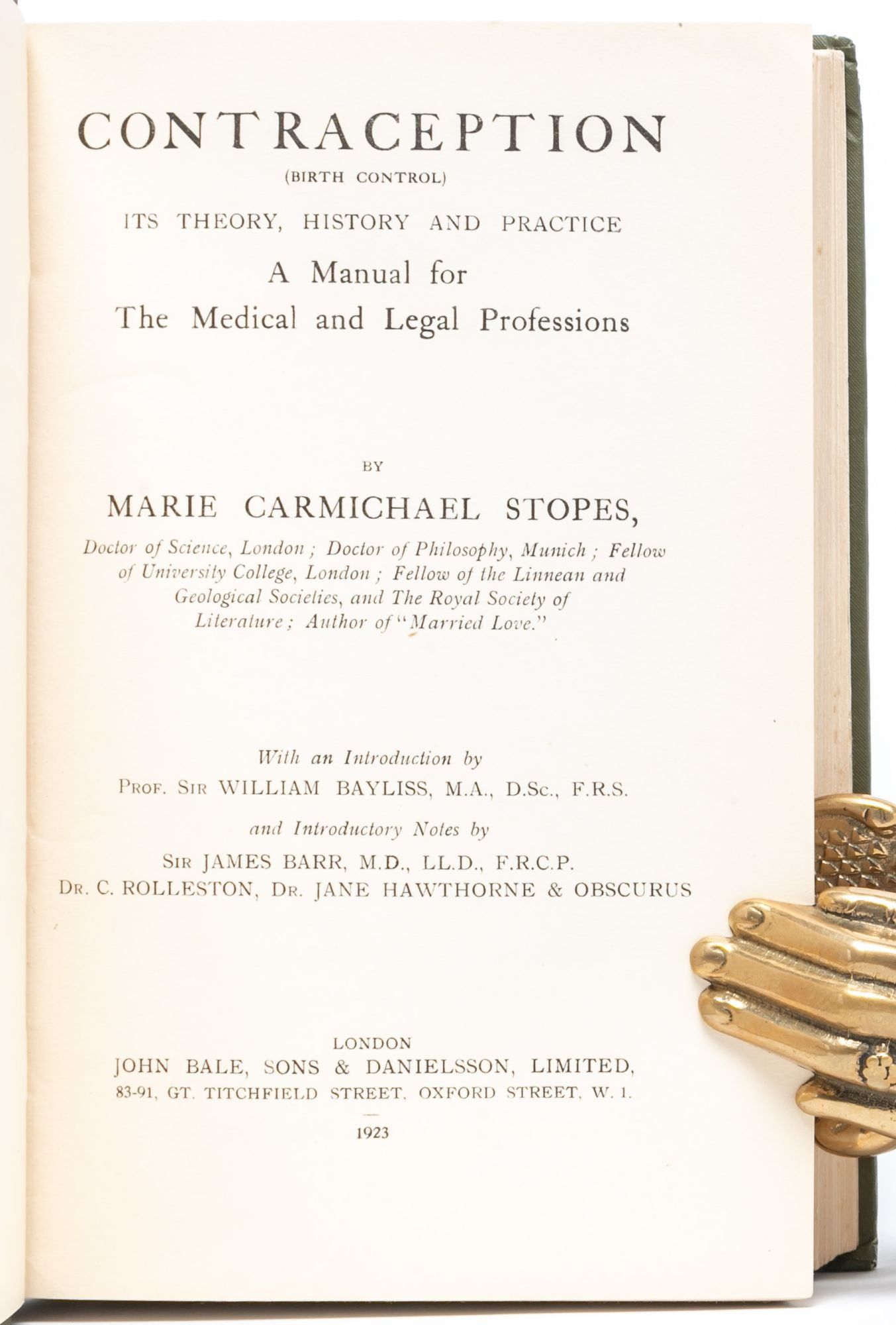
Contraception (Birth Control). Its Theory, History and Practice. A Manual for the Medical and Legal Professions

- London: John Bale, Sons & Danielsson, Limited, 1923
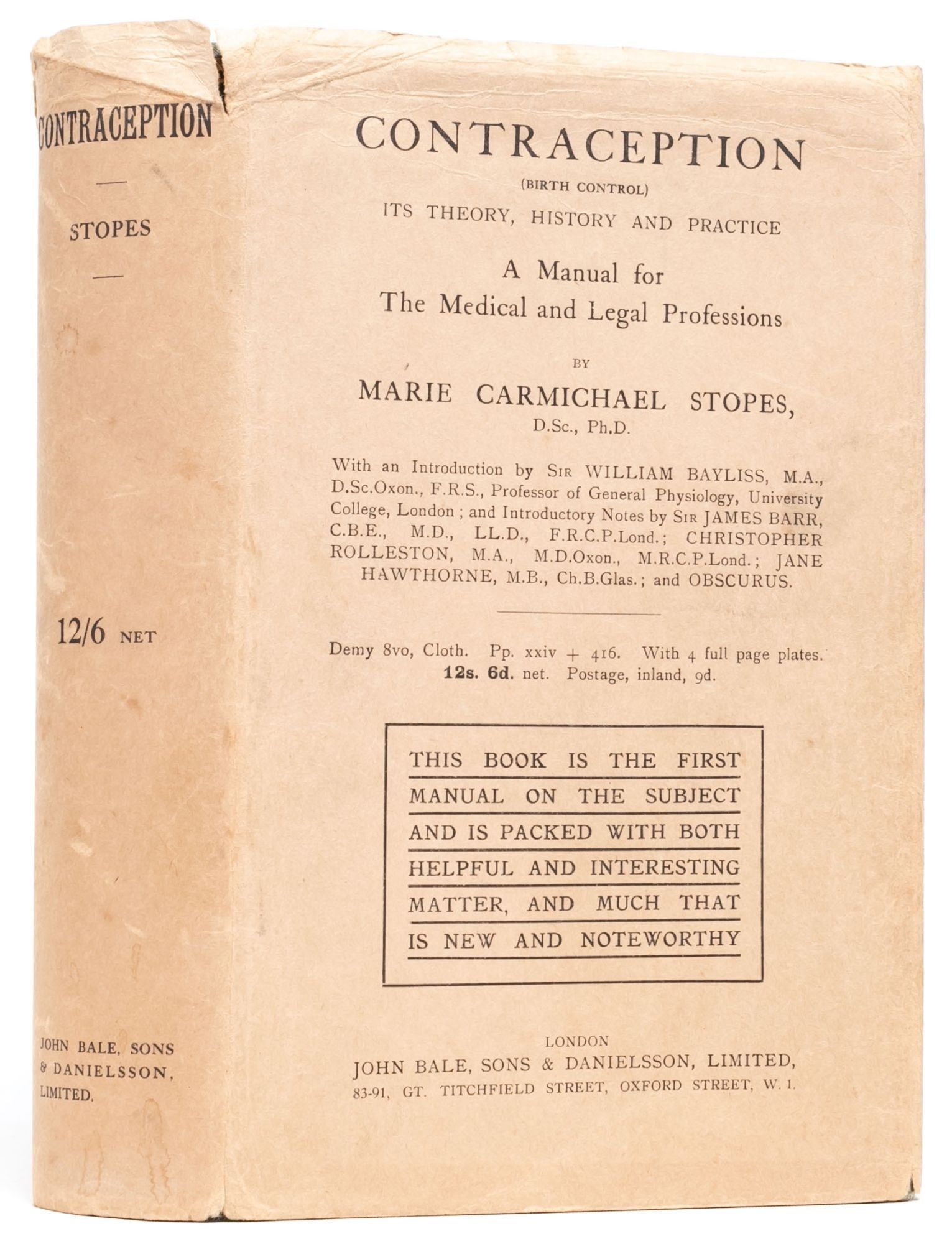
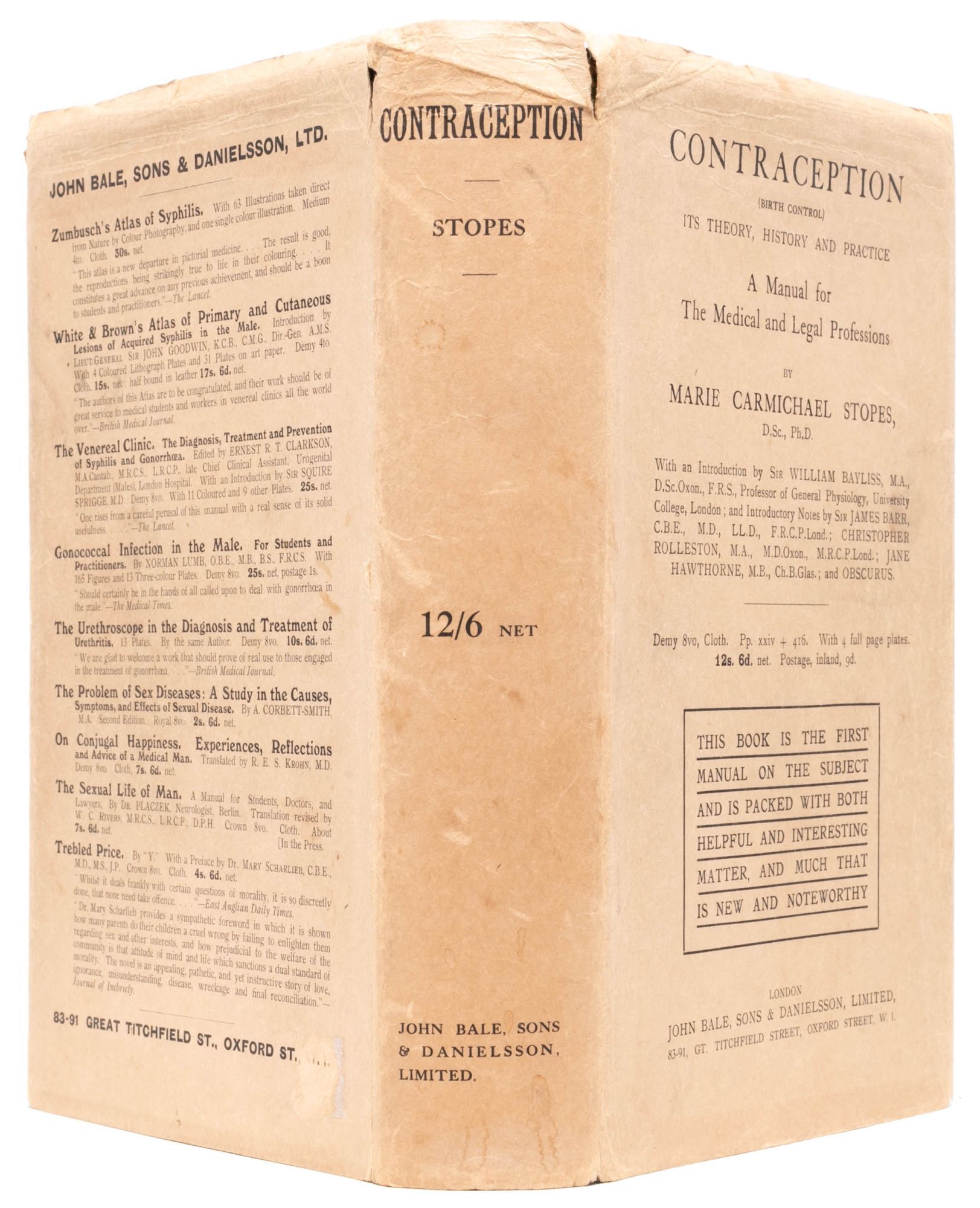
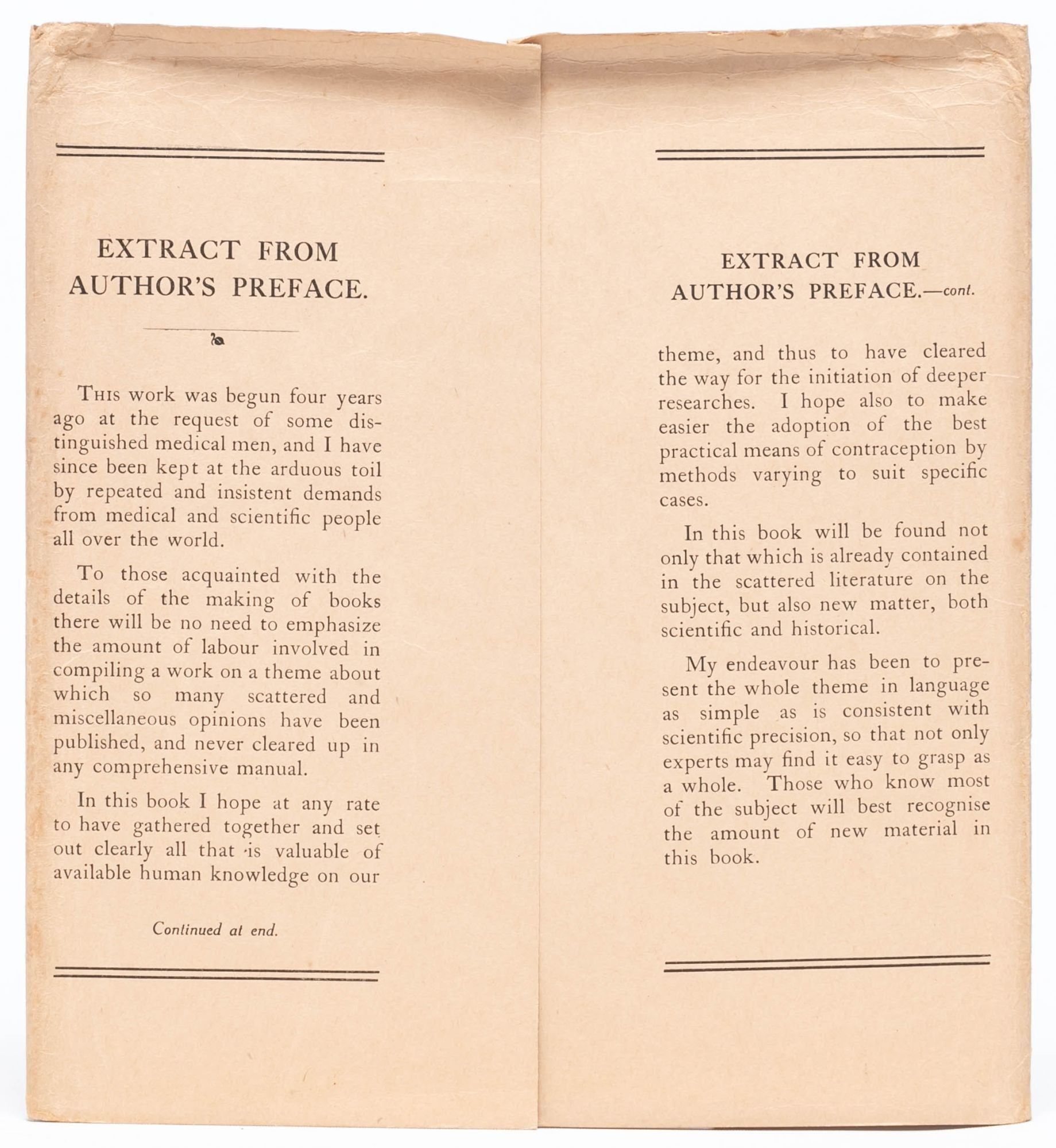
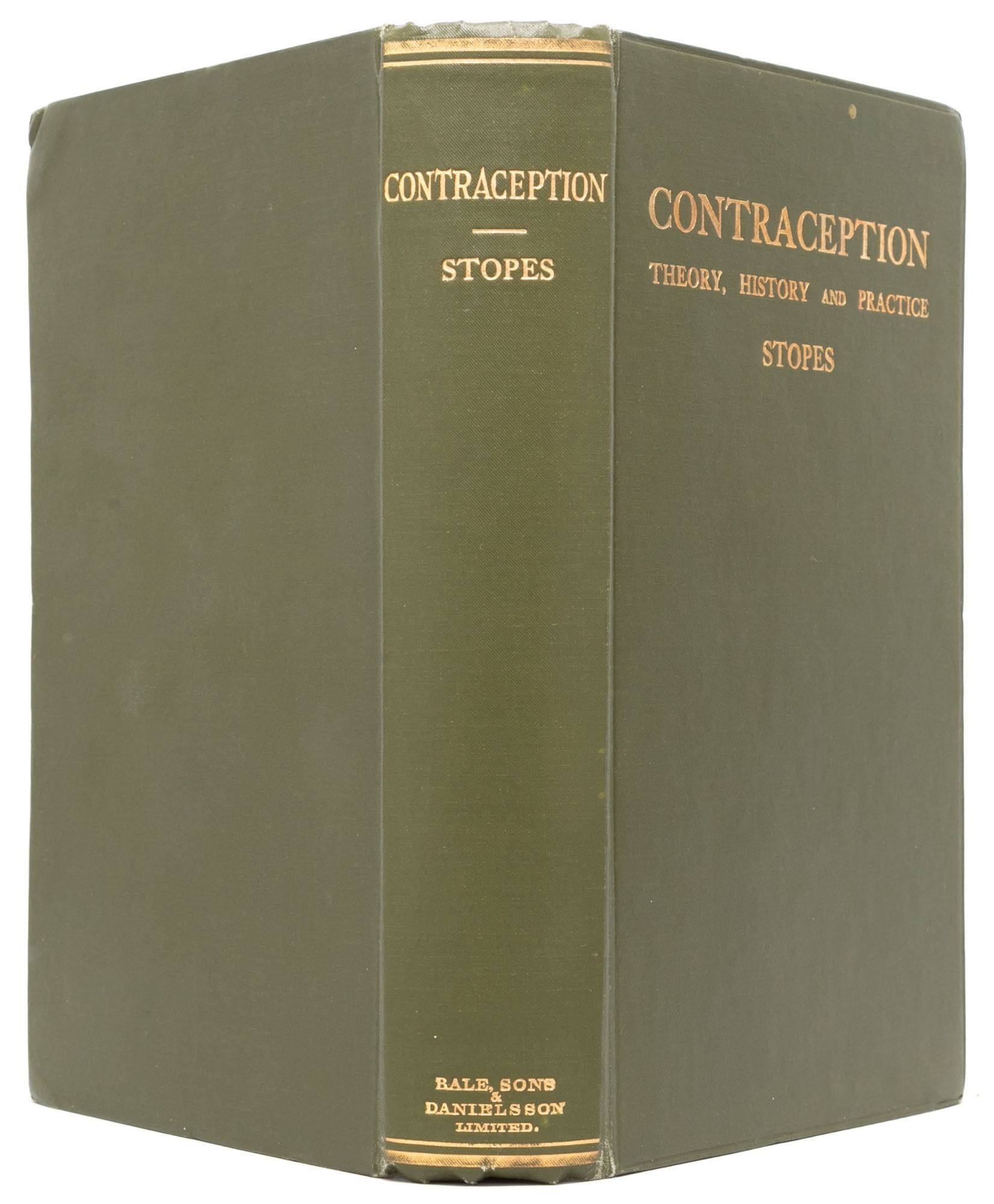
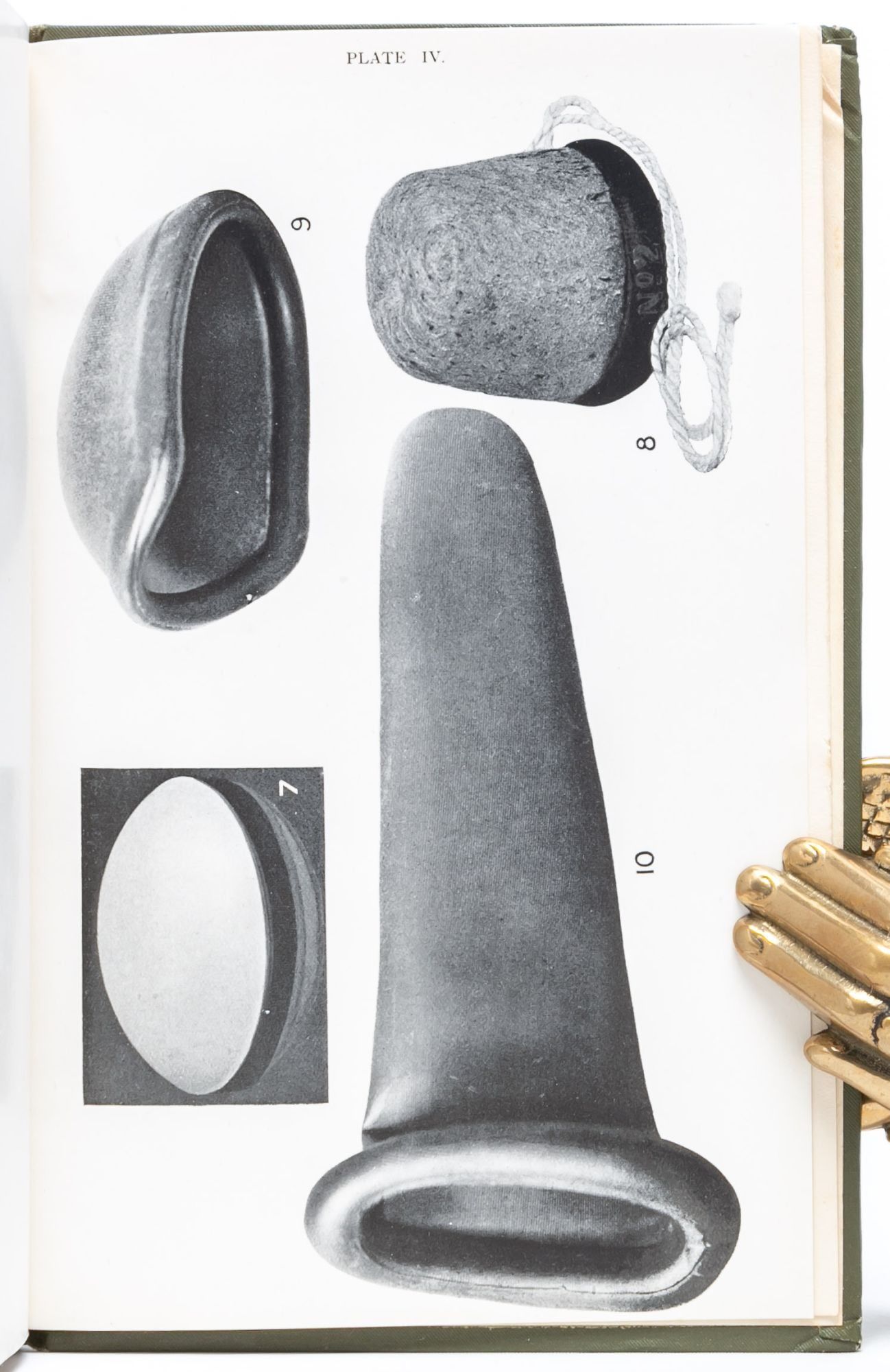
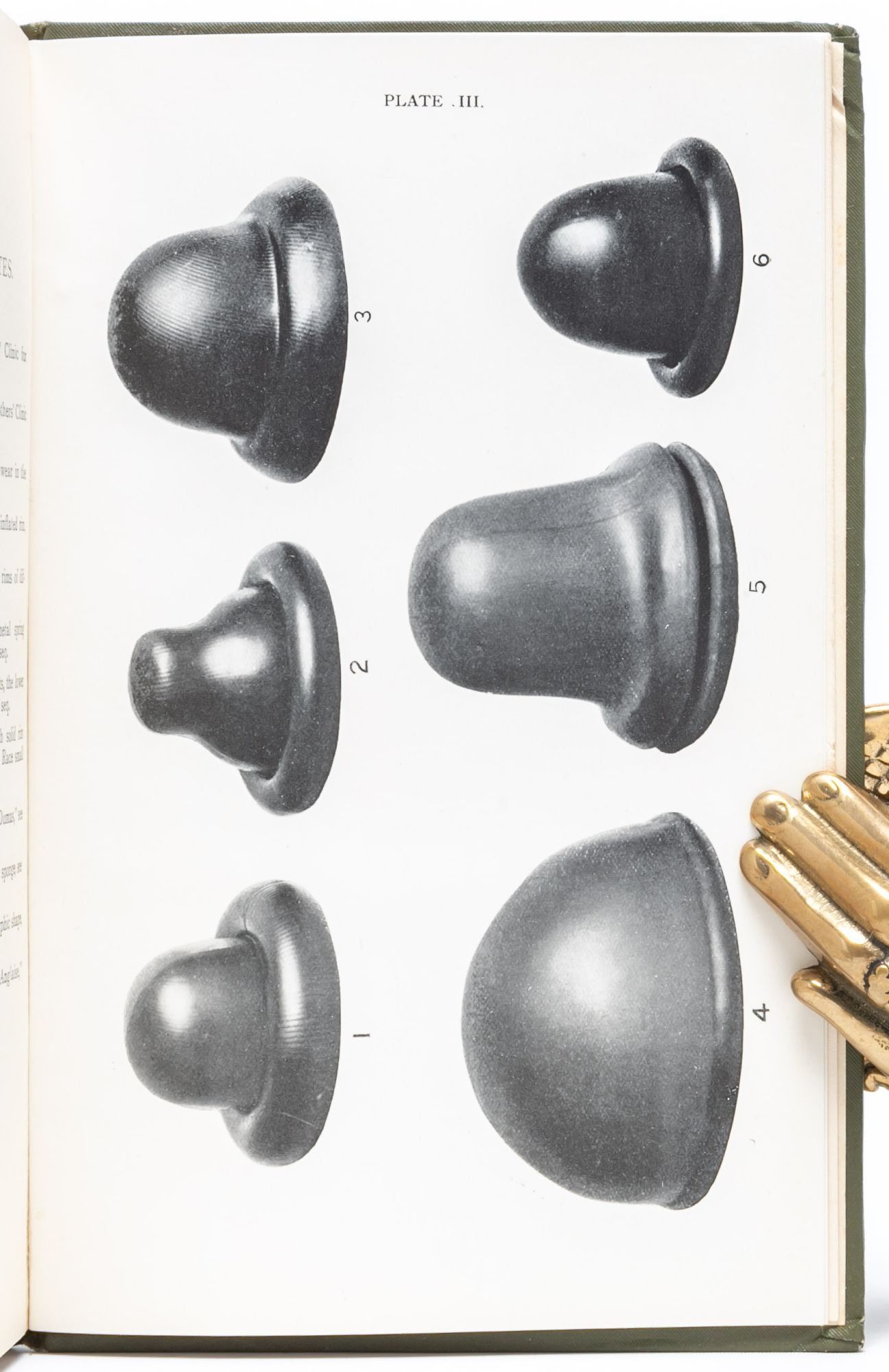
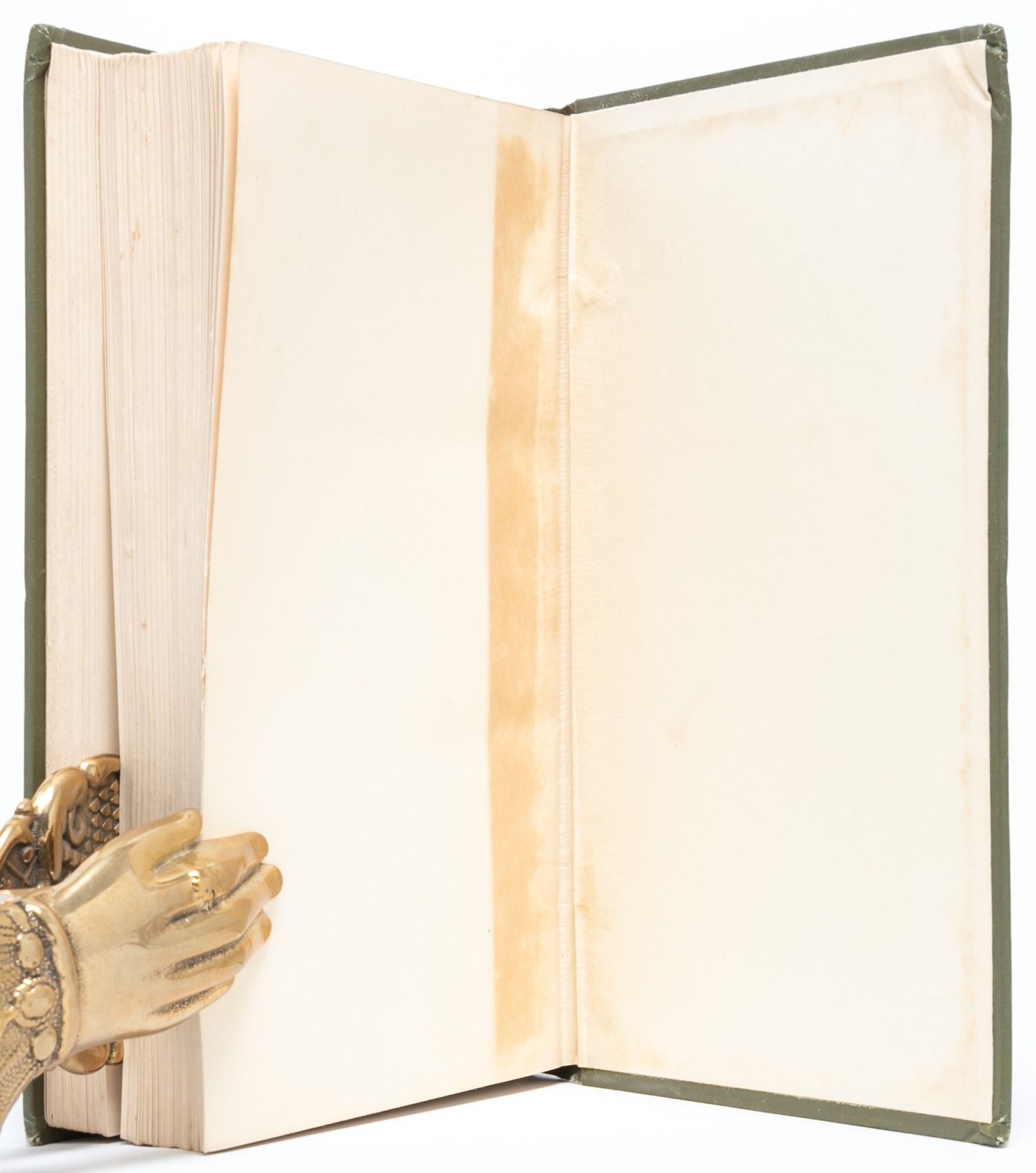
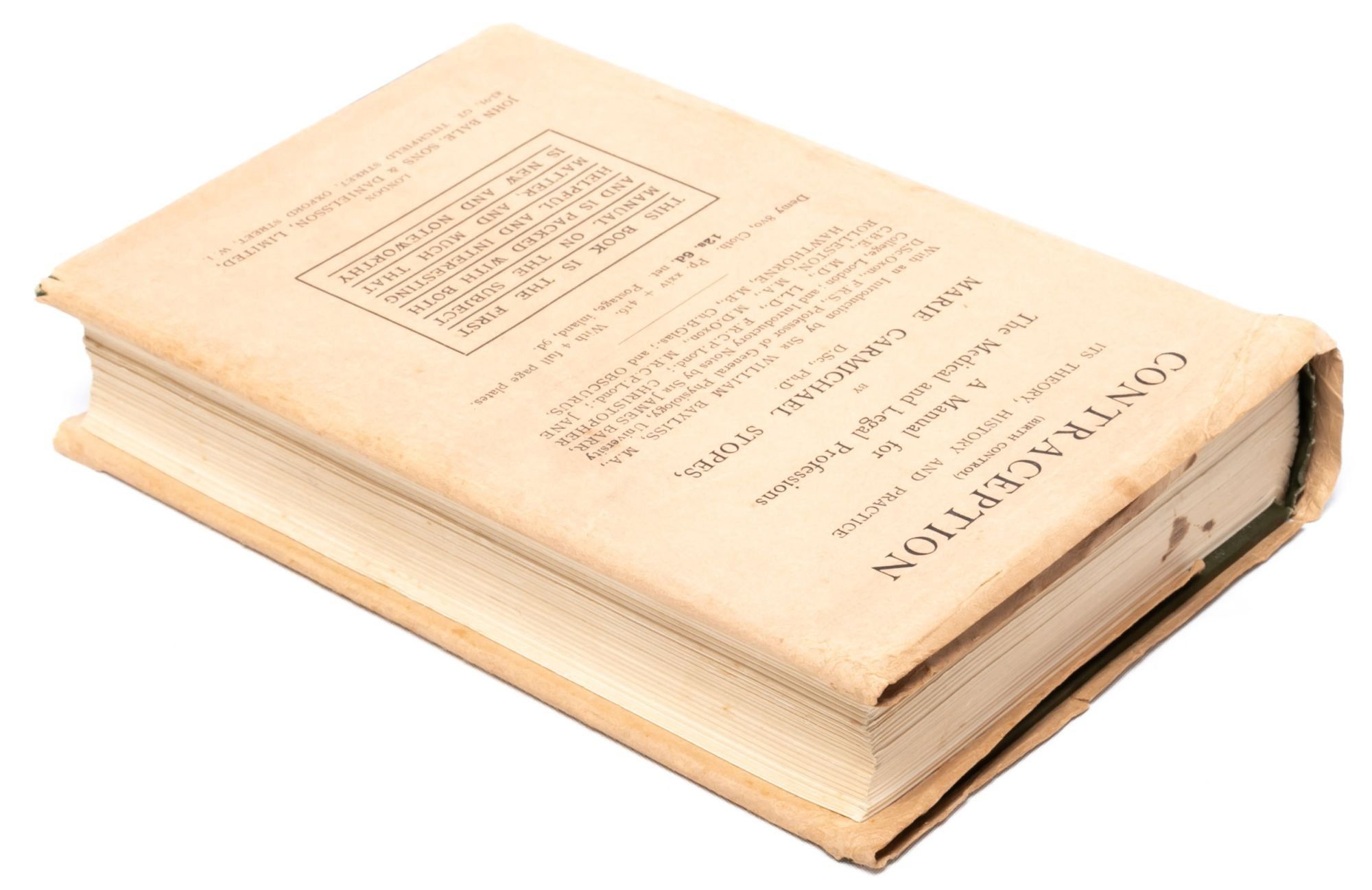
London: John Bale, Sons & Danielsson, Limited, 1923. First edition. Very Good +/Very Good +. Octavo. xxiii, [1], 418, [2] pp. Complete with four plates. Publisher's green cloth titled in gilt. Binding is very bright and clean aside from small smudge to upper board. Toning to endpapers at gutter. Neat contemporary underlining to a few leaves. In the publisher's dust jacket, a bit crinkled at edges. A bright, Very Good+ copy in like dust jacket.
Dr. Marie Carmichael Stopes (1880 – 1958) was birth control advocate, botanist, geologist educated at University College, London and the Botanical Institute in Munich. In 1905, she became the youngest doctor of science in Britain, and found employment at the British Museum, the University of Tokyo (under a grant from the Royal Society), and as a lecturer at University College. Stopes' interest in sexology developed in the early 1910s as she began working on the manuscript of what would become Married Love (1918), in part inspired by her exploration of her own sexuality. In 1915, she met Margaret Sanger, "who had fled to England to avoid imprisonment for disseminating contraceptive information...Stopes was active in getting up a petition to President Woodrow Wilson to drop the charges" (ODNB). The meeting with Sanger deepened Stopes' connection with (and enthusiasm for) the birth control movement, and she published five popular works on sex and birth control between 1918 and 1920, most notably Married Love, which "created a new genre of marriage manual...[and] literally changed lives," and Wise Parenthood (also 1918). In 1921, Stopes and her husband, Humphrey Roe, opened England's first birth control clinic and founded the Society for Constructive Birth Control. Over the course of the next few years, Stopes opened several more clinics throughout England (both in London and in more rural locations, as well as a mobile clinic) and offered training to nurses and doctors. Stopes' involvement in the birth control movement faded after the 1920s, but her work in the movement cemented her legacy as an advocate for women's bodily autonomy and healthcare access.
Stopes published Contraception in the midst of a legal battle: between 1922 and 1925, Stopes was embroiled in Stopes v. Sutherland, a protracted libel case. Stopes had brought the case against Henry Sutherland, a Catholic doctor who opposed birth control, after he accused Stopes of "taking advantage of the ignorance of the poor to subject them to experiments" in her birth control clinics and implied that she should be jailed. The case emboldened Stopes, however, and she published her textbook during the appeals process after the case was partially ruled against her.
Baskin, Five Hundred Years of Women's Work, 238. Very Good + in Very Good + dust jacket.
Dr. Marie Carmichael Stopes (1880 – 1958) was birth control advocate, botanist, geologist educated at University College, London and the Botanical Institute in Munich. In 1905, she became the youngest doctor of science in Britain, and found employment at the British Museum, the University of Tokyo (under a grant from the Royal Society), and as a lecturer at University College. Stopes' interest in sexology developed in the early 1910s as she began working on the manuscript of what would become Married Love (1918), in part inspired by her exploration of her own sexuality. In 1915, she met Margaret Sanger, "who had fled to England to avoid imprisonment for disseminating contraceptive information...Stopes was active in getting up a petition to President Woodrow Wilson to drop the charges" (ODNB). The meeting with Sanger deepened Stopes' connection with (and enthusiasm for) the birth control movement, and she published five popular works on sex and birth control between 1918 and 1920, most notably Married Love, which "created a new genre of marriage manual...[and] literally changed lives," and Wise Parenthood (also 1918). In 1921, Stopes and her husband, Humphrey Roe, opened England's first birth control clinic and founded the Society for Constructive Birth Control. Over the course of the next few years, Stopes opened several more clinics throughout England (both in London and in more rural locations, as well as a mobile clinic) and offered training to nurses and doctors. Stopes' involvement in the birth control movement faded after the 1920s, but her work in the movement cemented her legacy as an advocate for women's bodily autonomy and healthcare access.
Stopes published Contraception in the midst of a legal battle: between 1922 and 1925, Stopes was embroiled in Stopes v. Sutherland, a protracted libel case. Stopes had brought the case against Henry Sutherland, a Catholic doctor who opposed birth control, after he accused Stopes of "taking advantage of the ignorance of the poor to subject them to experiments" in her birth control clinics and implied that she should be jailed. The case emboldened Stopes, however, and she published her textbook during the appeals process after the case was partially ruled against her.
Baskin, Five Hundred Years of Women's Work, 238. Very Good + in Very Good + dust jacket.