

Letters to a Friend at Howard University Discussing Black Theater and Greek Life in 1920s Los Angeles
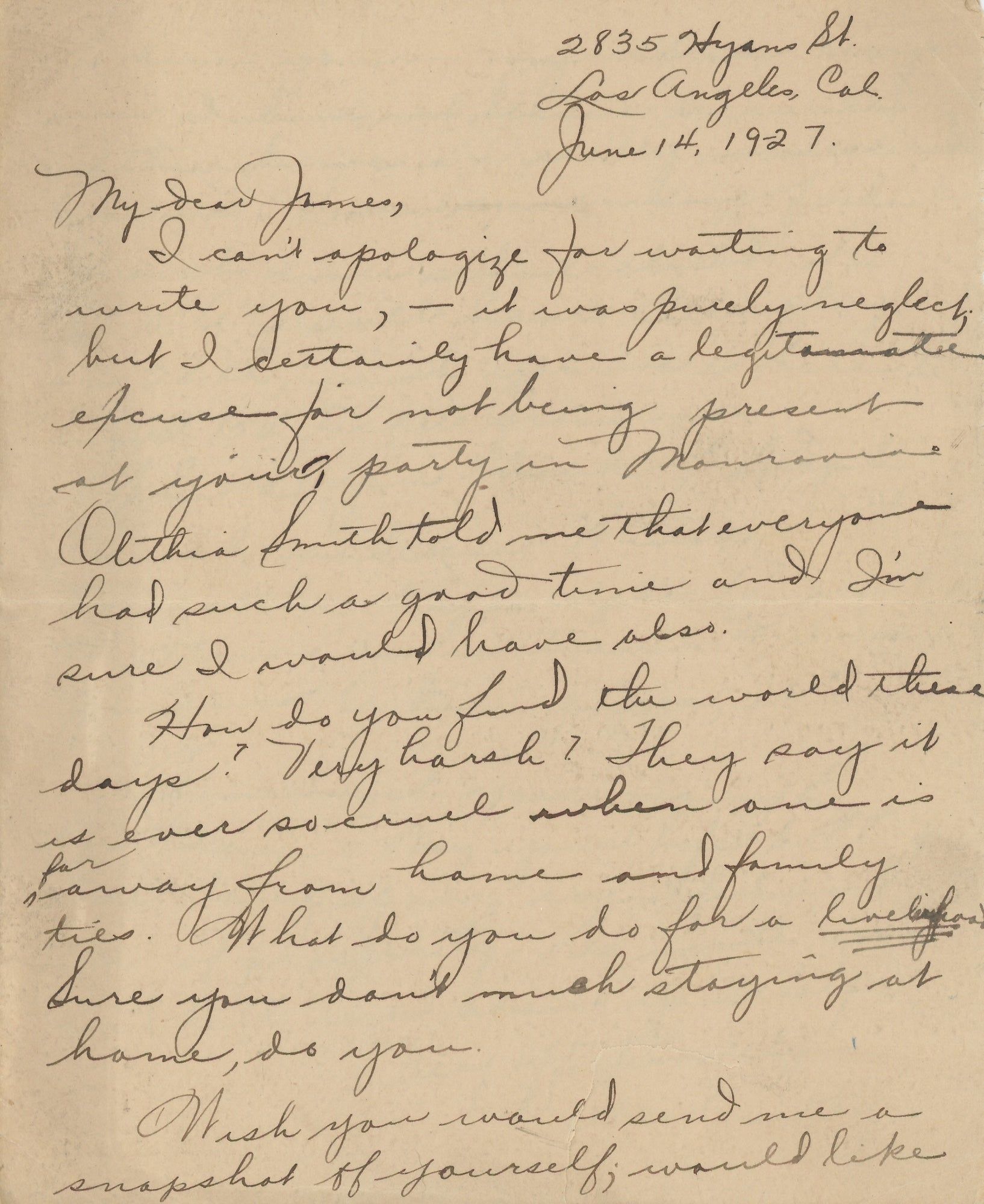
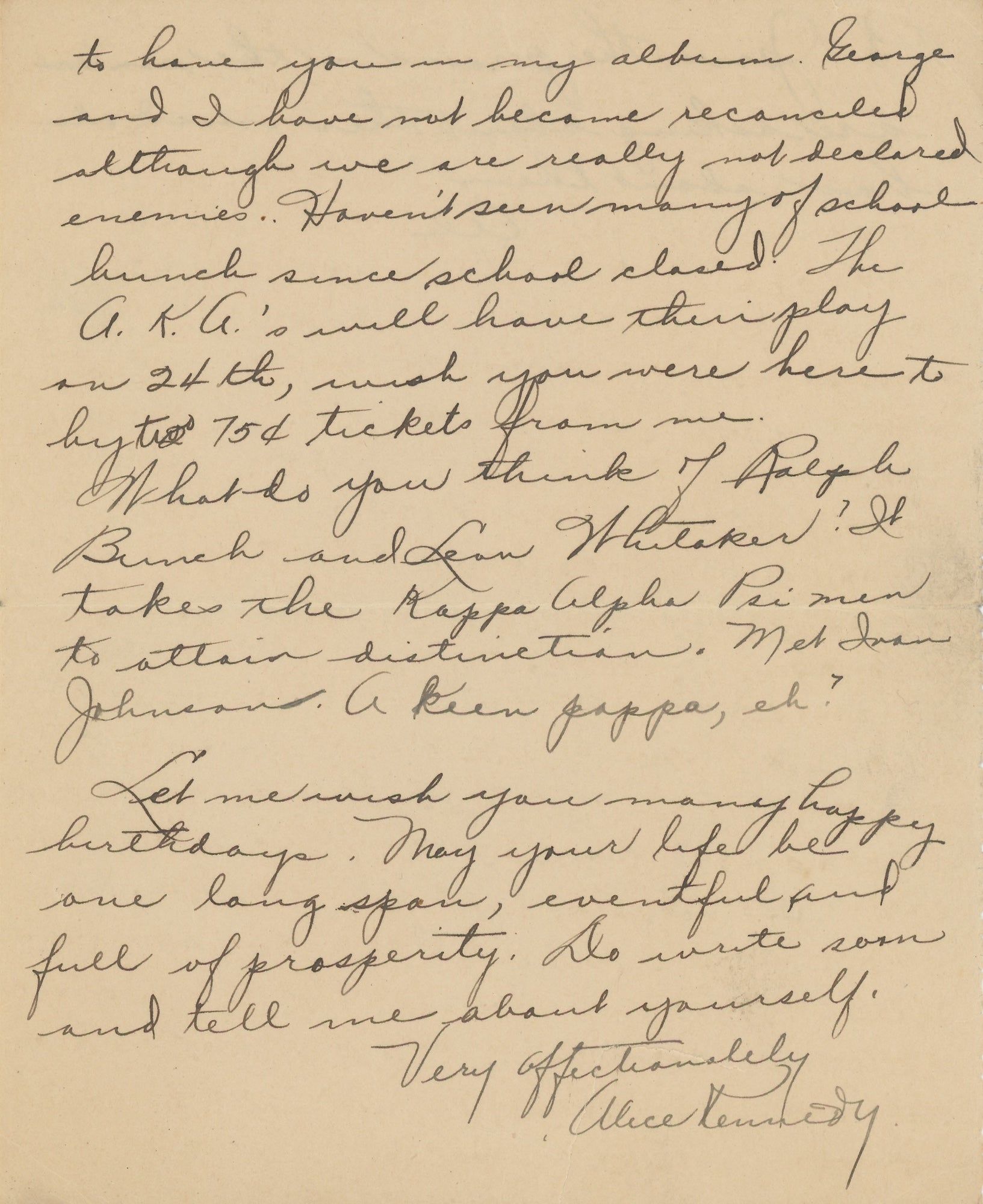
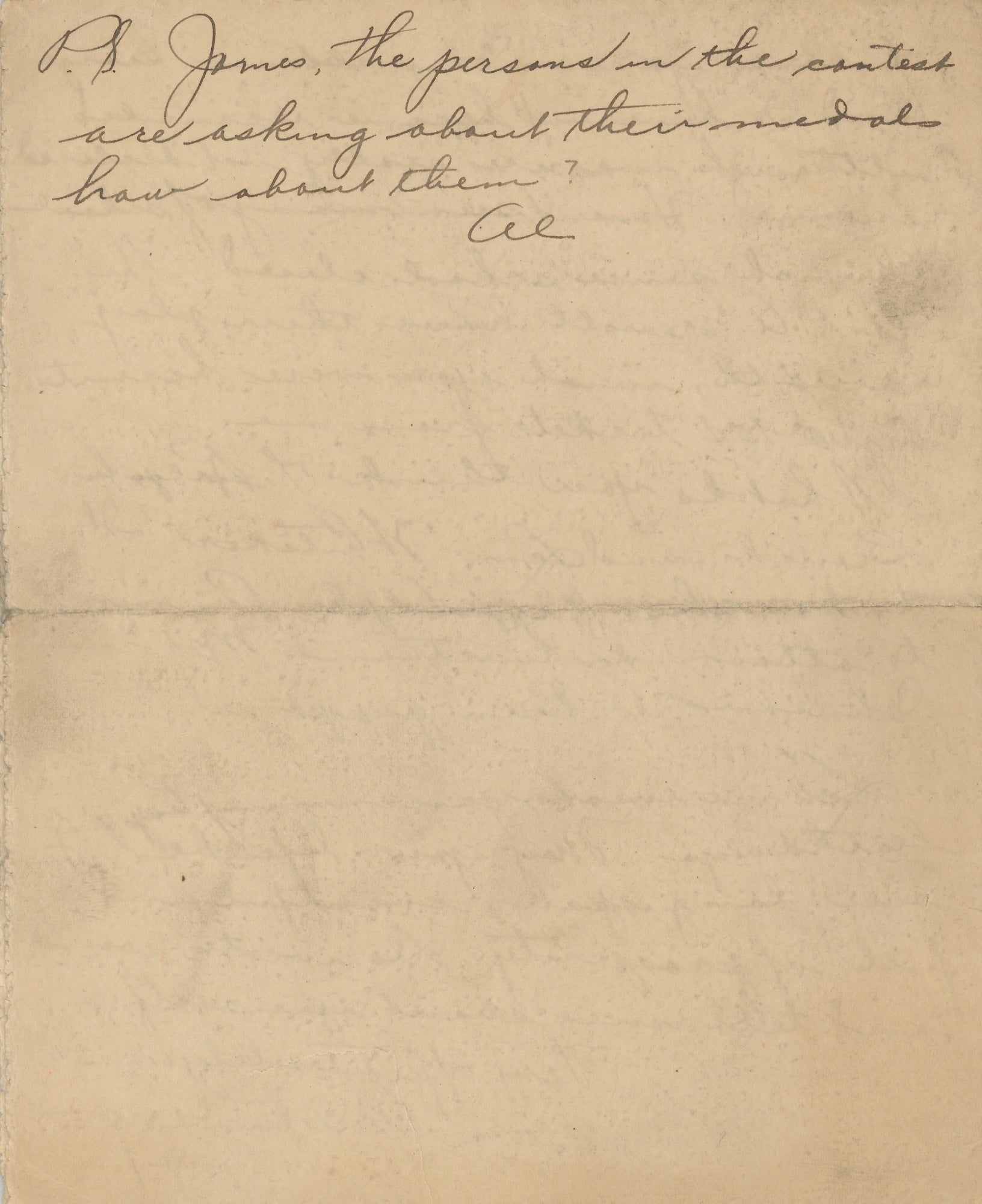
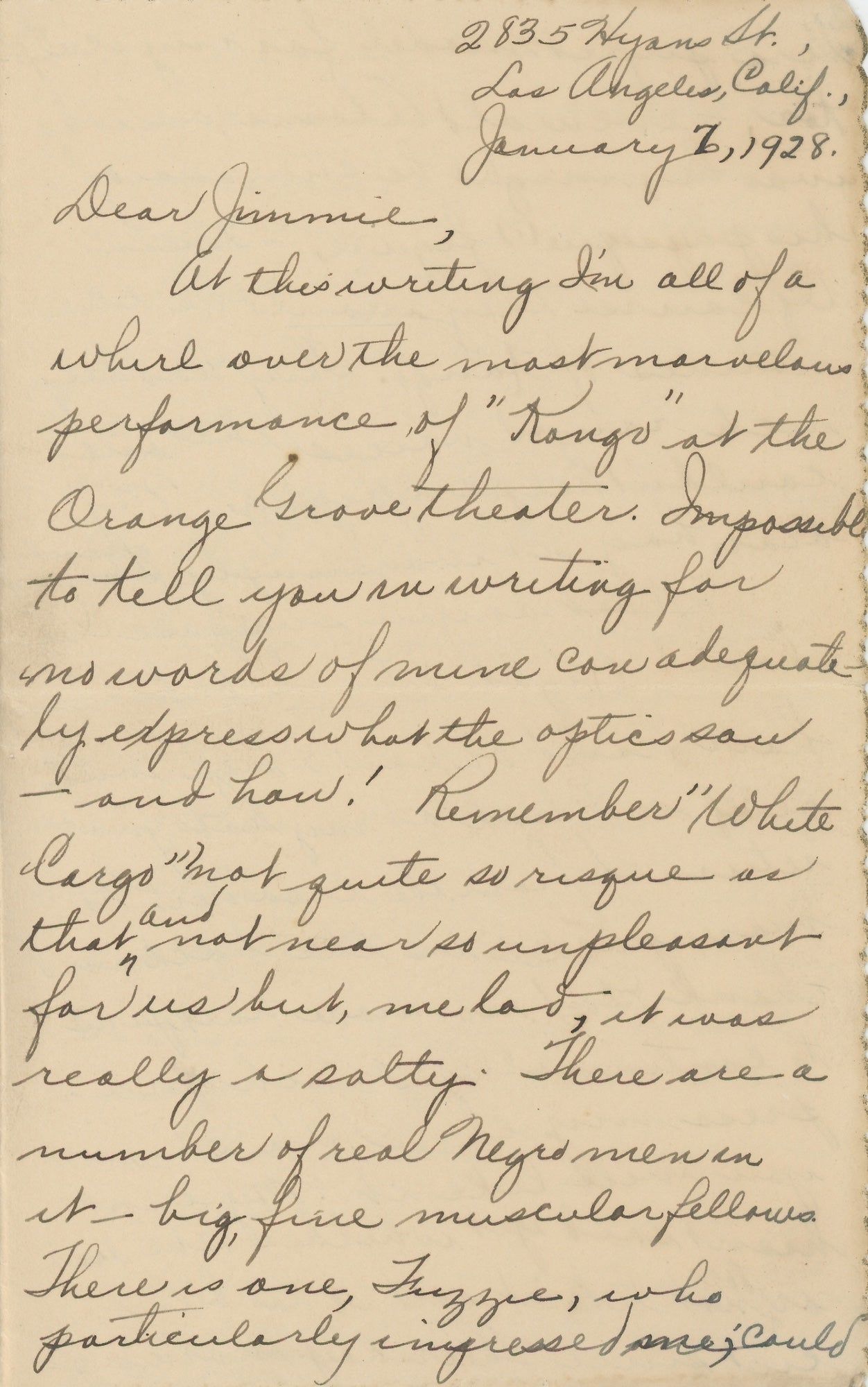


- Three letters totaling seven pages and one postcard. Two letters from 1927 and one from 1928; postcard appears to be stamped 193
- Los Angeles, California, and Albuquerque, New Mexico , 1933
Los Angeles, California, and Albuquerque, New Mexico, 1933. Three letters totaling seven pages and one postcard. Two letters from 1927 and one from 1928; postcard appears to be stamped 1933. One letter quite torn though not affecting legibility; one letter appears incomplete; remainder very good to excellent; overall very good.. Letters from friends in Los Angeles to James M. Jones, who has moved away to attend Howard University. The friends discuss African-American fraternities, including Alpha Kappa Alpha, founded at Howard in 1908, and Kappa Alpha Psi, founded at Indiana University Bloomington in 1911. The friends are very interested in theater; Alice Kennedy describes a production of Chester De Vonde and Kilbourn Gordon’s Kongo with an integrated cast:
“At this writing I’m all of a whirl over the most marvelous performance of ‘Kongo’ at the Orange Grove theater. Impossible to tell you in writing for no words of mine can adequately express what the optics saw – and how! Remember ‘White Cargo’ not quite so risque as that and not near so unpleasant for us but, me lad, it was really a salty. There are a number of real Negro men in it – big, fine, muscular fellows. There is one, Fuzzie, who particularly impressed me; could be a perfect model for any sculptor – [...] Of course they would be the natives of Kongo. They had deep, rich round voices that one couldn’t help enjoying. My dear boy, it was simply grand.” (January 7, 1928)
Kennedy is excited about the recognition that African-Americans in the arts were getting. She writes:
“Mr. DePreiss, the famous Negro tenor is in L.A. He was heralded by the California Eagle as ‘New York capitalist and singer.’ Imagine it. In the near future the élite will give a public reception in his honor at the Masonic Temple – admission 75¢ – can you bear it? My people!!!” (January 7, 1928)
Kennedy means blues musician Reese DuPree, an early OKeh Records artist. The Eagle—a Black newspaper—reported that he was spending the winter in LA and was convinced to do a twice-weekly concert on KNX radio, for which he would be paid “the highest [rate] ever paid to any other artist” for the job.[1]
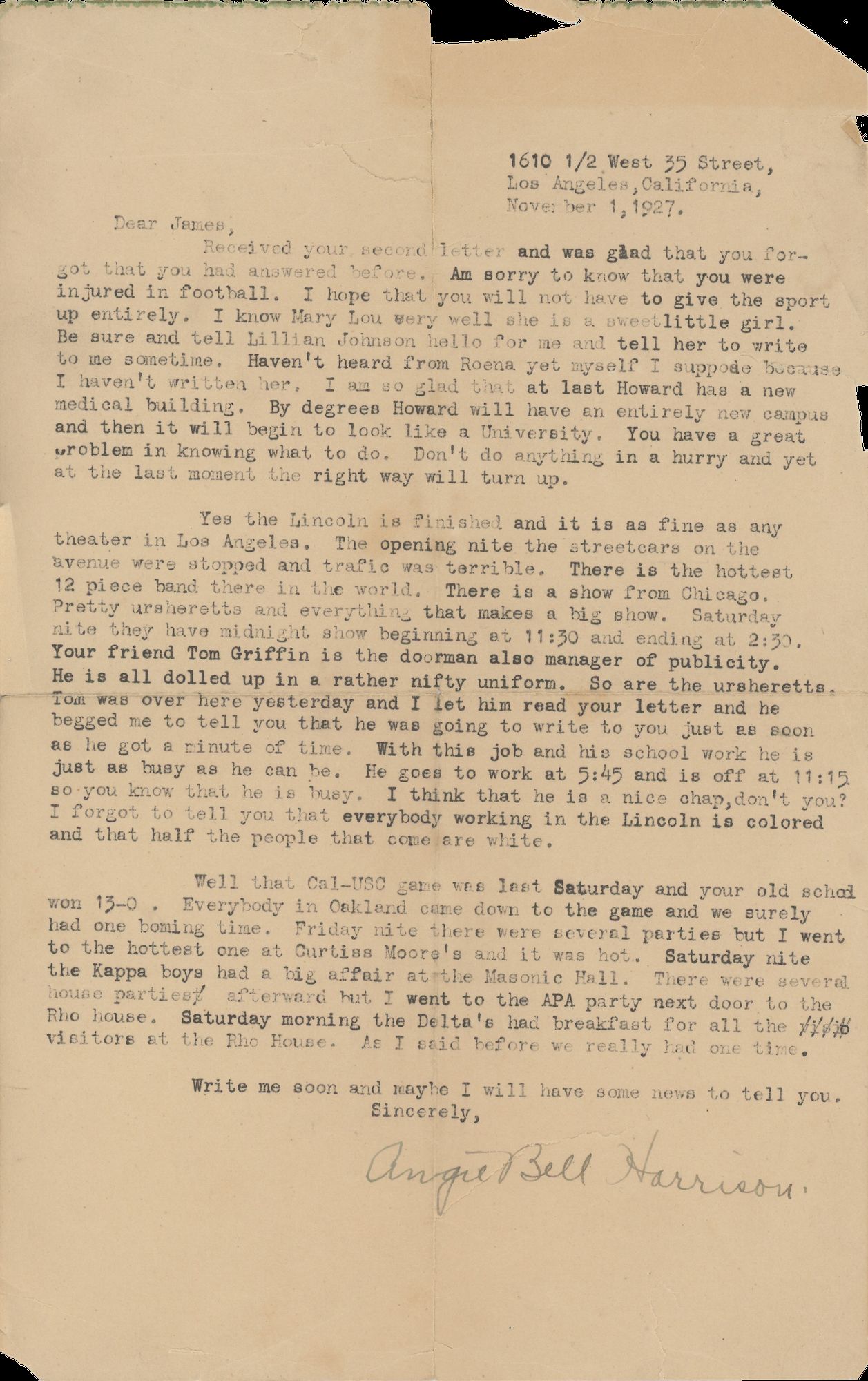
Jones’ other friend, Angie Bell Harrison, writes in 1927, commenting on Howard University’s new medical building and describing the opening of the Lincoln Theater. The Lincoln was an African-American movie theater which still stands on South Central Ave and 23rd Street:
“Yes the Lincoln is finished and it is as fine as any theater in Los Angeles. The opening nite the streetcars on the avenue were stopped and trafic was terrible. There is the hottest 12 piece band there in the world. There is a show from Chicago. Pretty ursheretts and everything that makes a big show. Saturday nite they have [a] midnight show beginning at 11:30 and ending at 2:30. Your friend Tom Griffin is the doorman also manager of publicity. He is all dolled up in a rather nifty uniform. So are the ursheretts. [...] I forgot to tell you that everybody working in the Lincoln is colored and that half the people that come are white.” (November 1, 1927)
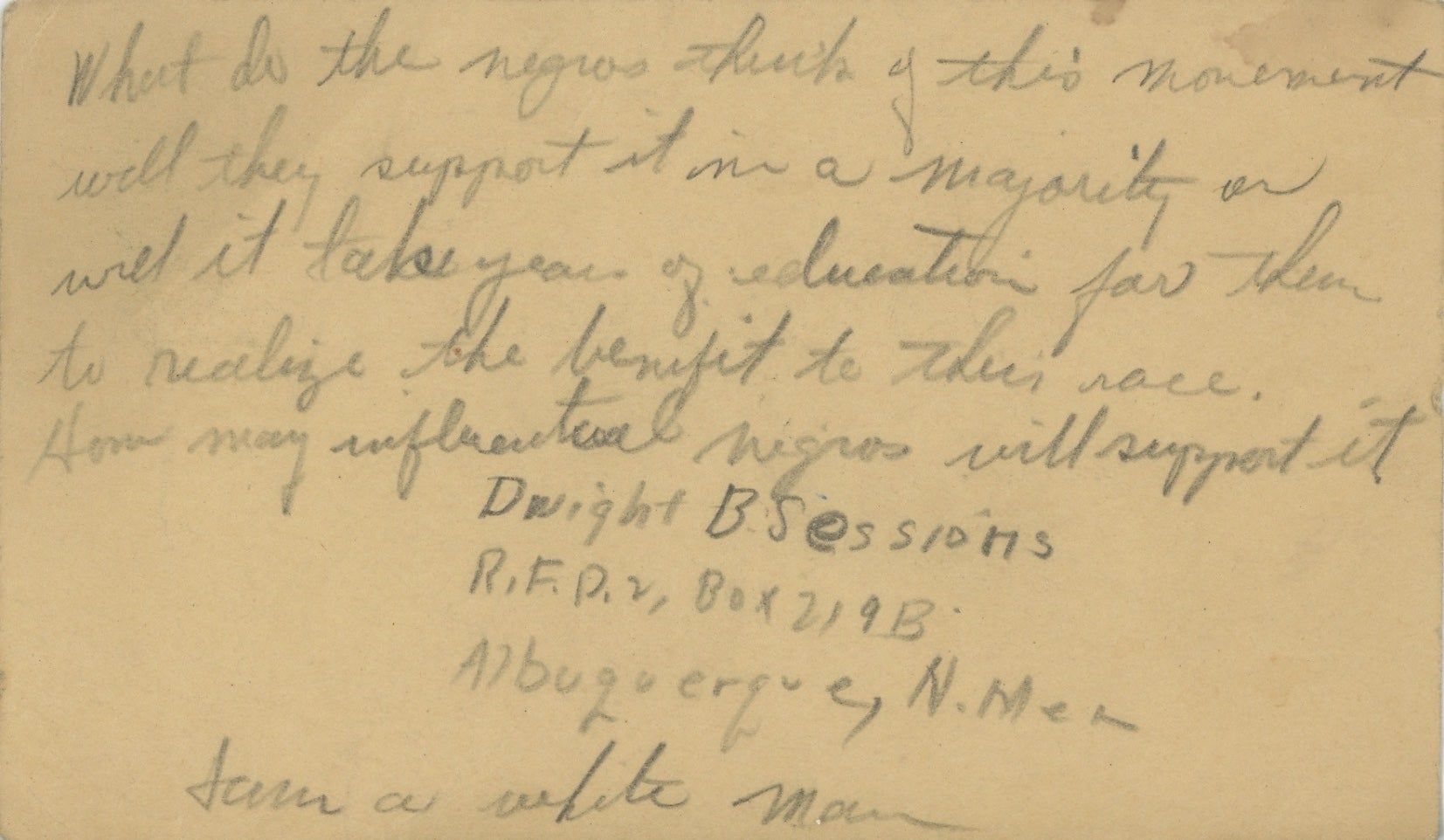
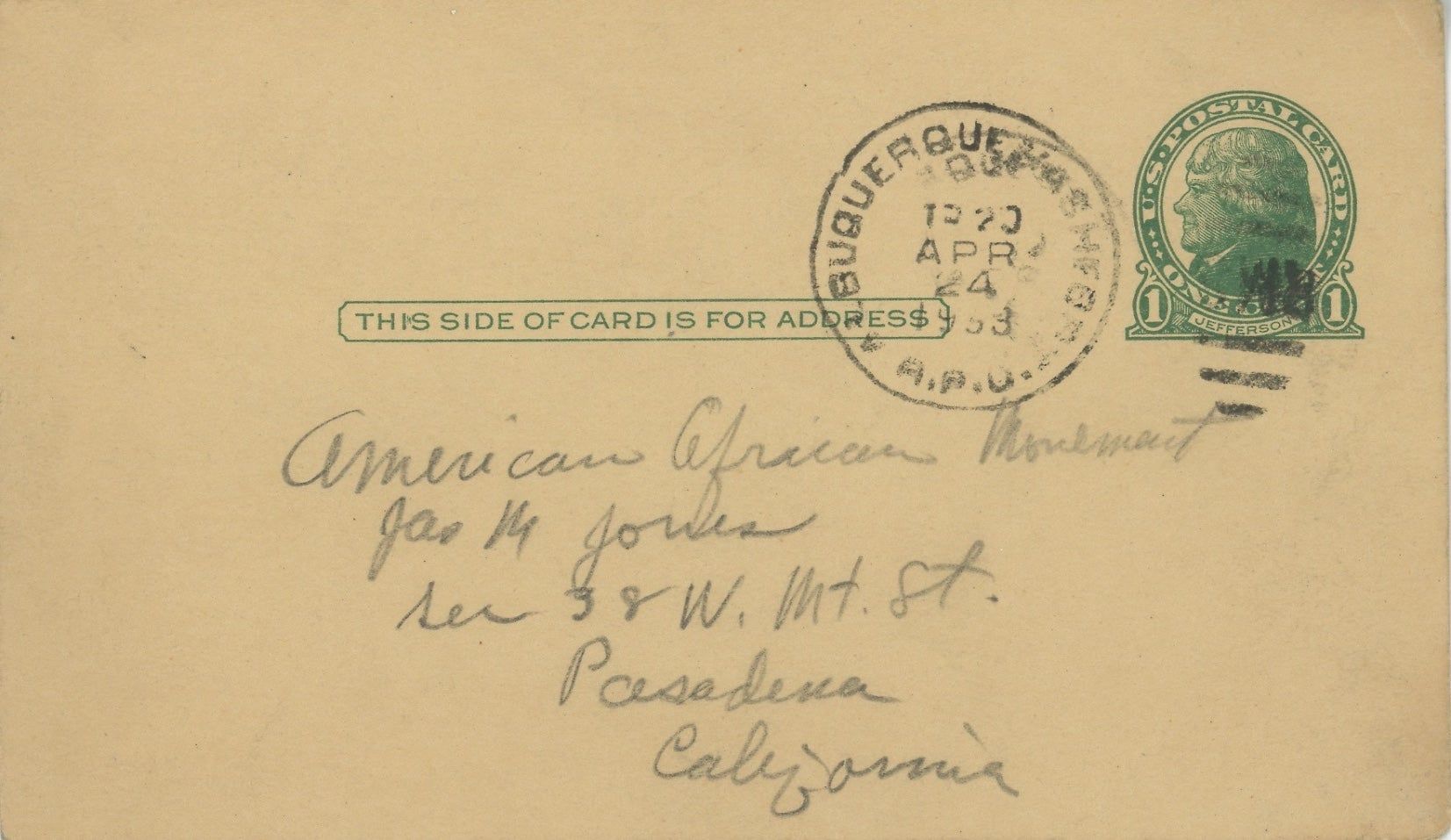
The Lincoln’s opening night included appearances from Allen “Farina” Hoskins of Our Gang and Willis Tyler, a lawyer and civil rights activist. Also included in the collection is a later postcard from Dwight B. Sessions, “a white man” in Albuquerque who asks Jones what “the negros think” of the “American African Movement”. Though it is unclear who James Jones is (the University of Delaware social psychologist of the same name is too young), this does suggest that, following his time at Howard, he had a role in Black activism.
[1] “Mr. Reese DuPree to Broadcast Two Programs Weekly,” California Eagle, December 30, 1927, 1.
“At this writing I’m all of a whirl over the most marvelous performance of ‘Kongo’ at the Orange Grove theater. Impossible to tell you in writing for no words of mine can adequately express what the optics saw – and how! Remember ‘White Cargo’ not quite so risque as that and not near so unpleasant for us but, me lad, it was really a salty. There are a number of real Negro men in it – big, fine, muscular fellows. There is one, Fuzzie, who particularly impressed me; could be a perfect model for any sculptor – [...] Of course they would be the natives of Kongo. They had deep, rich round voices that one couldn’t help enjoying. My dear boy, it was simply grand.” (January 7, 1928)
Kennedy is excited about the recognition that African-Americans in the arts were getting. She writes:
“Mr. DePreiss, the famous Negro tenor is in L.A. He was heralded by the California Eagle as ‘New York capitalist and singer.’ Imagine it. In the near future the élite will give a public reception in his honor at the Masonic Temple – admission 75¢ – can you bear it? My people!!!” (January 7, 1928)
Kennedy means blues musician Reese DuPree, an early OKeh Records artist. The Eagle—a Black newspaper—reported that he was spending the winter in LA and was convinced to do a twice-weekly concert on KNX radio, for which he would be paid “the highest [rate] ever paid to any other artist” for the job.[1]
Jones’ other friend, Angie Bell Harrison, writes in 1927, commenting on Howard University’s new medical building and describing the opening of the Lincoln Theater. The Lincoln was an African-American movie theater which still stands on South Central Ave and 23rd Street:
“Yes the Lincoln is finished and it is as fine as any theater in Los Angeles. The opening nite the streetcars on the avenue were stopped and trafic was terrible. There is the hottest 12 piece band there in the world. There is a show from Chicago. Pretty ursheretts and everything that makes a big show. Saturday nite they have [a] midnight show beginning at 11:30 and ending at 2:30. Your friend Tom Griffin is the doorman also manager of publicity. He is all dolled up in a rather nifty uniform. So are the ursheretts. [...] I forgot to tell you that everybody working in the Lincoln is colored and that half the people that come are white.” (November 1, 1927)
The Lincoln’s opening night included appearances from Allen “Farina” Hoskins of Our Gang and Willis Tyler, a lawyer and civil rights activist. Also included in the collection is a later postcard from Dwight B. Sessions, “a white man” in Albuquerque who asks Jones what “the negros think” of the “American African Movement”. Though it is unclear who James Jones is (the University of Delaware social psychologist of the same name is too young), this does suggest that, following his time at Howard, he had a role in Black activism.
[1] “Mr. Reese DuPree to Broadcast Two Programs Weekly,” California Eagle, December 30, 1927, 1.