

[Japanese-Americana – Southern California – Labor History – Women] Unknown Photographer Ten Photographs of Japanese Immigrants and Laborers in California in the Early 1900s
- Ten photographs measuring 8 x 10 inches and smaller, with most measuring 5 x 7 inches. Brown Brothers stamps and manuscript capt
- Southern California , 1910
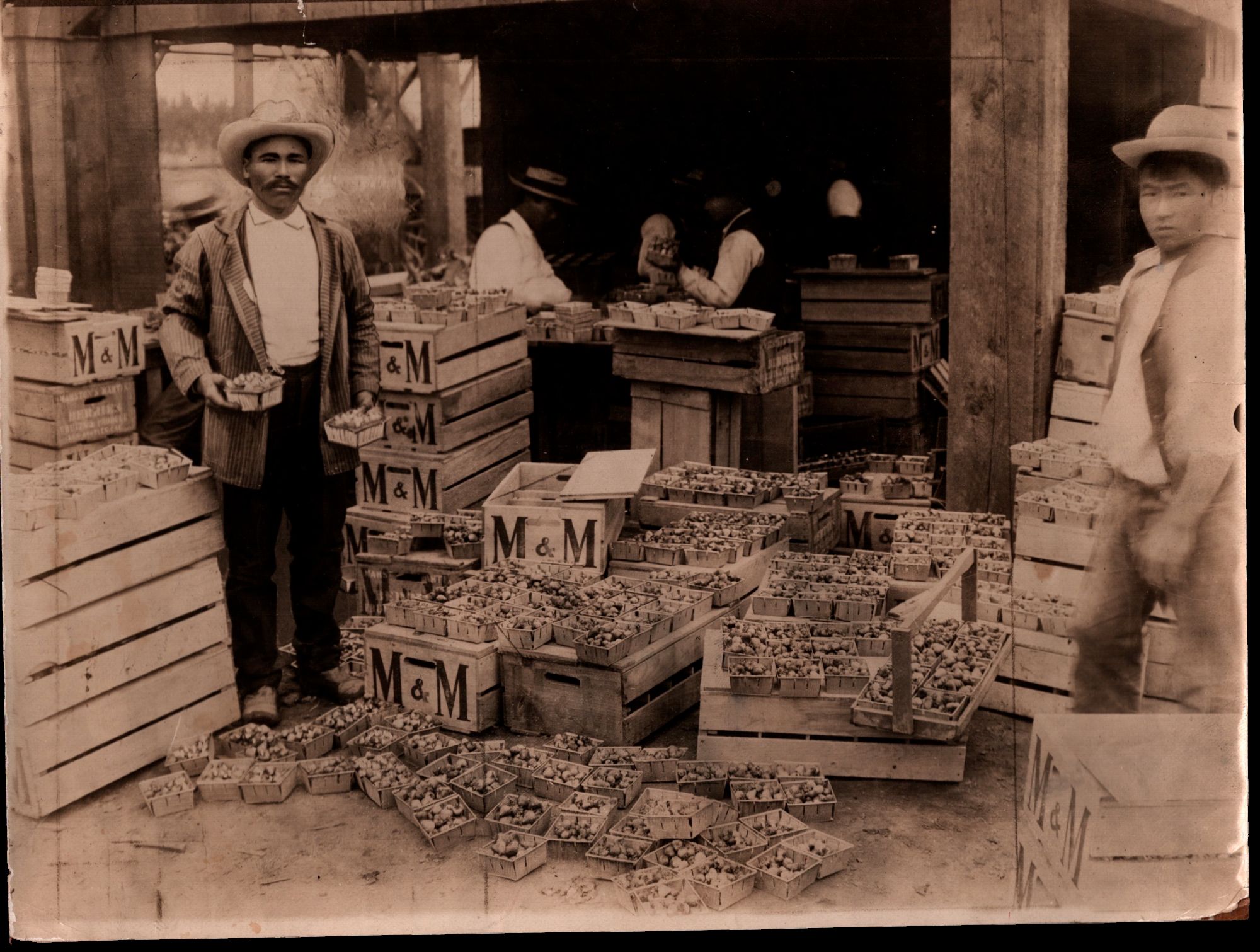
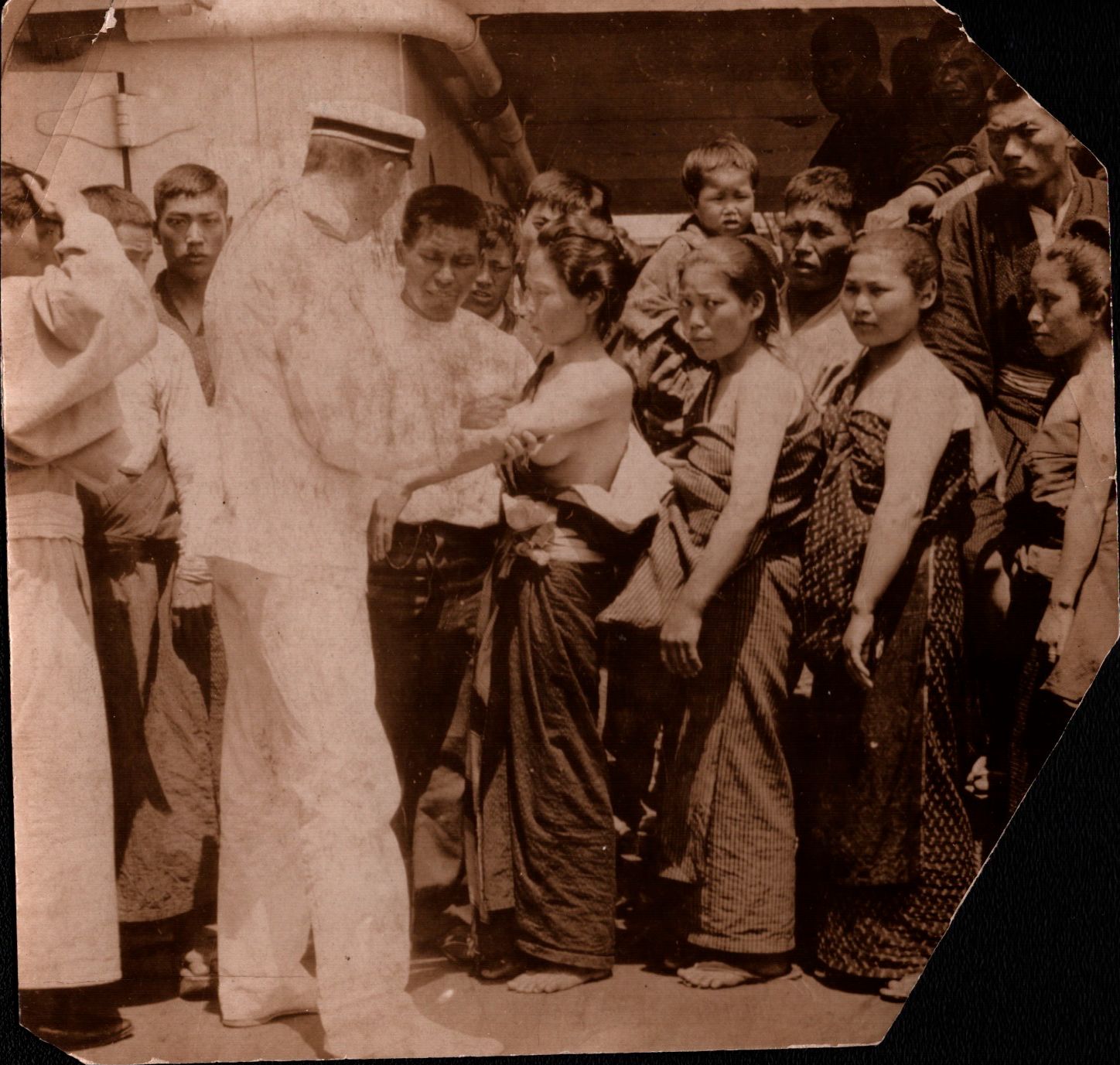
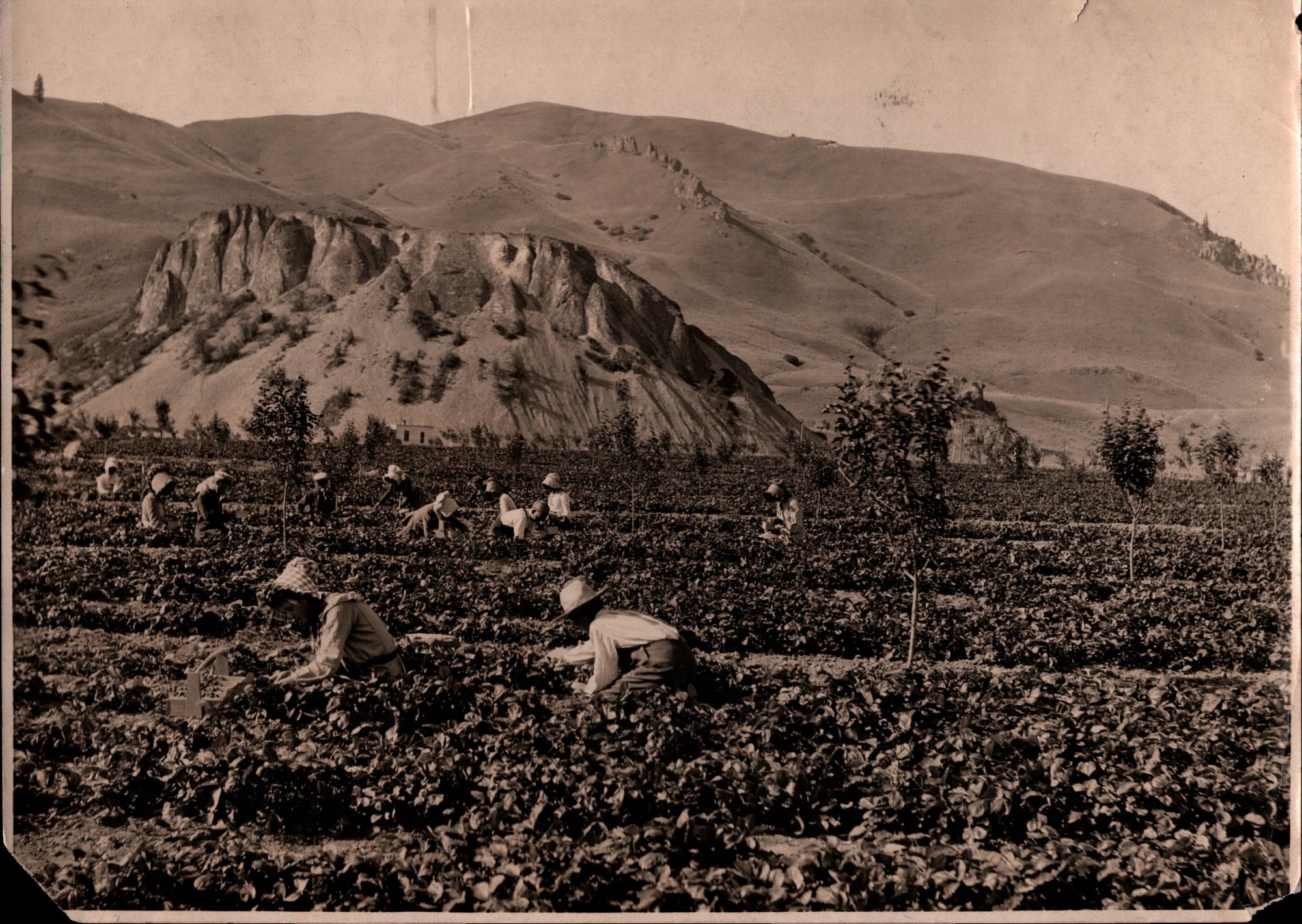
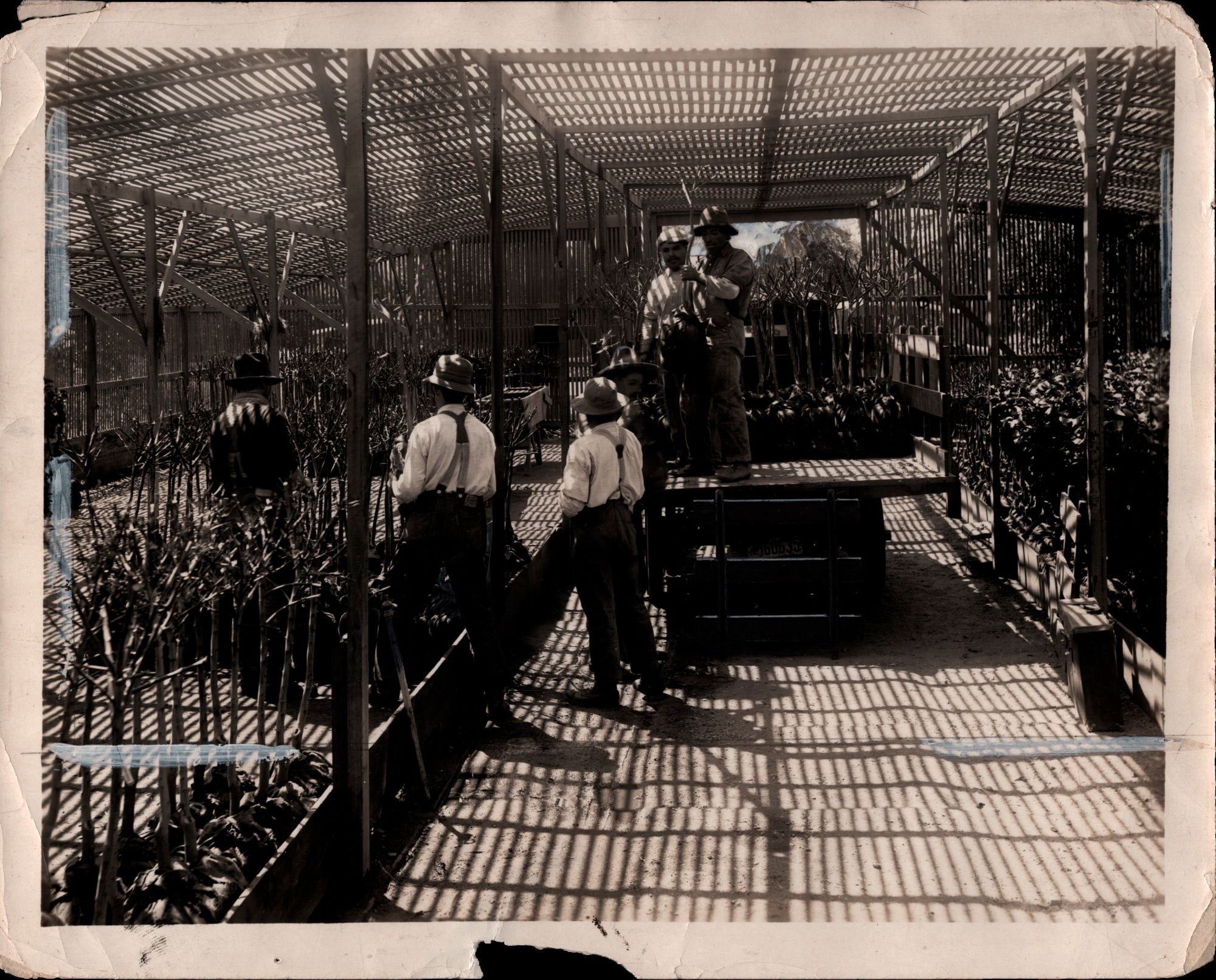
Southern California, 1910. Ten photographs measuring 8 x 10 inches and smaller, with most measuring 5 x 7 inches. Brown Brothers stamps and manuscript captions verso; some with editorial overpainting; some mounted on heavy cardstock. Marginal damage with some tears and corners missing; very good.. Japanese immigration to the US began at a large scale following the midcentury loosening of Japan’s emigration laws and the US’s 1882 Chinese Exclusion Act. Most Japanese immigrants entered through the west coast, especially San Francisco, Portland, and Seattle, and settled in central and southern California.
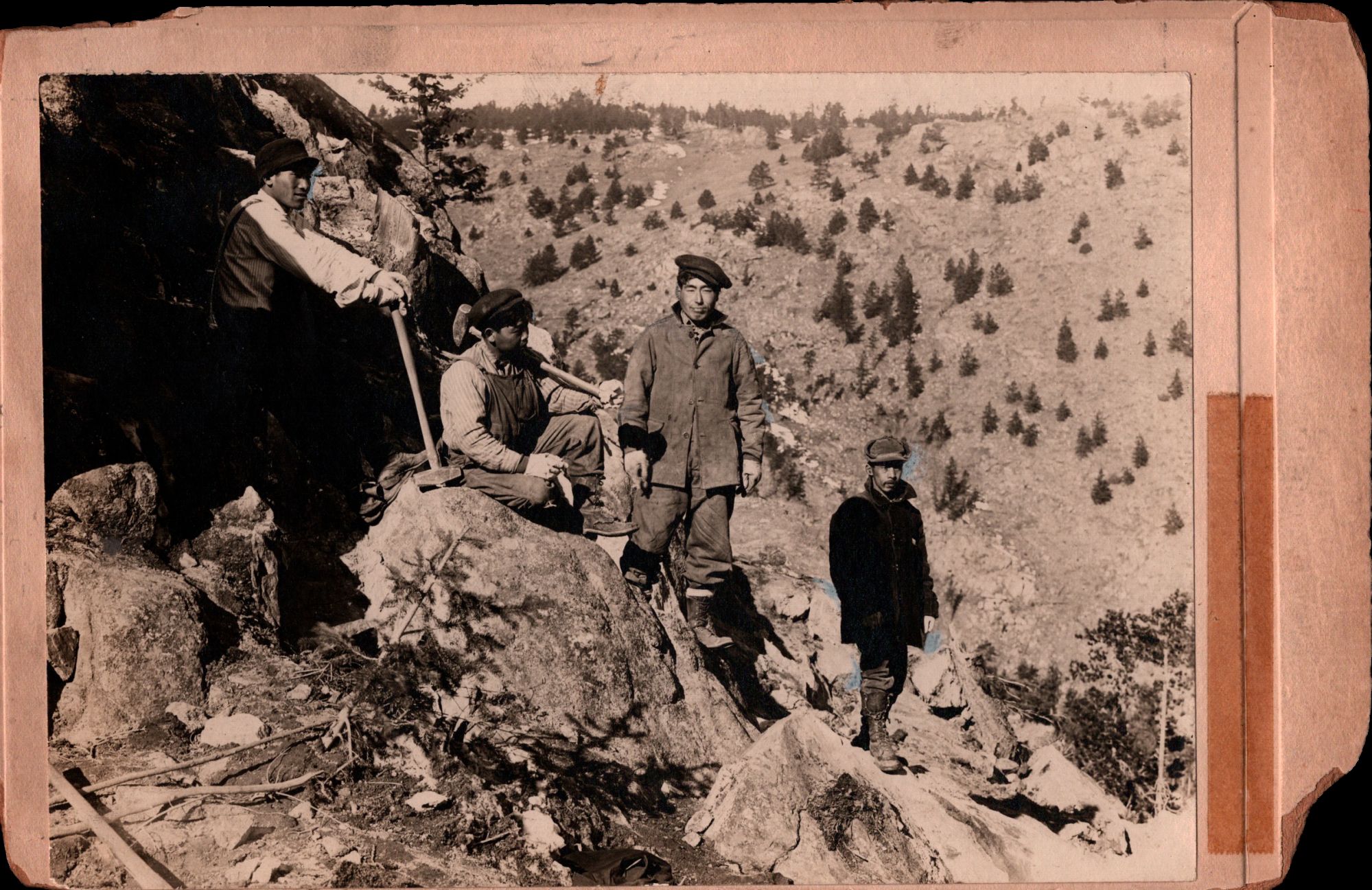
Offered here are ten photographs of Japanese immigrants and laborers in California (likely taken between 1900 and 1910, as one is dated 1903). Their work is mainly agricultural, though one photograph possibly depicts miners: four men holding sledgehammers stand on a mountainside. Two show newly-arriving immigrants; in one, women are lined up to receive a vaccine. Interestingly, three of the photographs include women subjects—prior to the 1907 Gentlemen’s Agreement, the Japanese population in some California counties had gender ratios of over 100 men to one woman, and some simply had no female Japanese residents at all.[1] One photograph that shows a woman at work in a cranberry field is identified as having been taken in Moneta, California, and the caption states that the cranberry farm was “leased by Japs”. Moneta actually had the least skewed gender ratio of any Japanese-American settlement at the time, in part because its Issei residents were relatively economically better off and, as the caption suggests, could afford to lease or buy farmland.[1]
Of interest to historians of Japanese immigration to California and the Japanese-American labor force around the turn of the century.
[1] Lane Ryo Hirabayashi & George Tanaka, “The Issei Community in Moneta and the Gardena Valley, 1900–1920,” Southern California Quarterly 70, no 2 (Summer 1988): 127–158.
Offered here are ten photographs of Japanese immigrants and laborers in California (likely taken between 1900 and 1910, as one is dated 1903). Their work is mainly agricultural, though one photograph possibly depicts miners: four men holding sledgehammers stand on a mountainside. Two show newly-arriving immigrants; in one, women are lined up to receive a vaccine. Interestingly, three of the photographs include women subjects—prior to the 1907 Gentlemen’s Agreement, the Japanese population in some California counties had gender ratios of over 100 men to one woman, and some simply had no female Japanese residents at all.[1] One photograph that shows a woman at work in a cranberry field is identified as having been taken in Moneta, California, and the caption states that the cranberry farm was “leased by Japs”. Moneta actually had the least skewed gender ratio of any Japanese-American settlement at the time, in part because its Issei residents were relatively economically better off and, as the caption suggests, could afford to lease or buy farmland.[1]
Of interest to historians of Japanese immigration to California and the Japanese-American labor force around the turn of the century.
[1] Lane Ryo Hirabayashi & George Tanaka, “The Issei Community in Moneta and the Gardena Valley, 1900–1920,” Southern California Quarterly 70, no 2 (Summer 1988): 127–158.