

Portfolio of Drawings and Memoir Documenting a Forty-Day Internment at Ellis Island While Fleeing Nazi Persecution in 1941

- Thirty-three sketches, mainly measuring 6 x 8 or 8 x 10 inches, affixed to black construction paper. Sketches are pen and ink or
- New York City , 1941
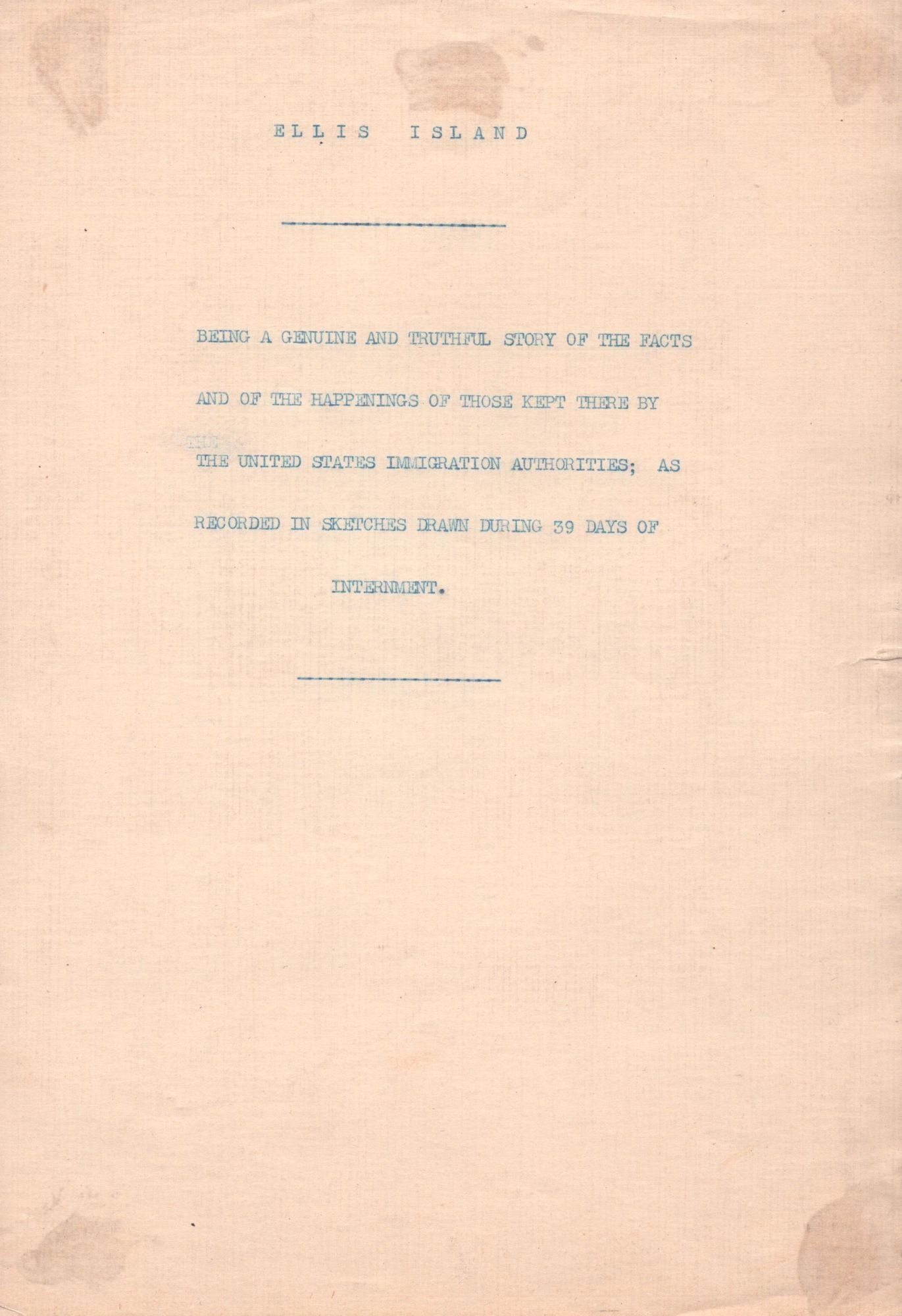
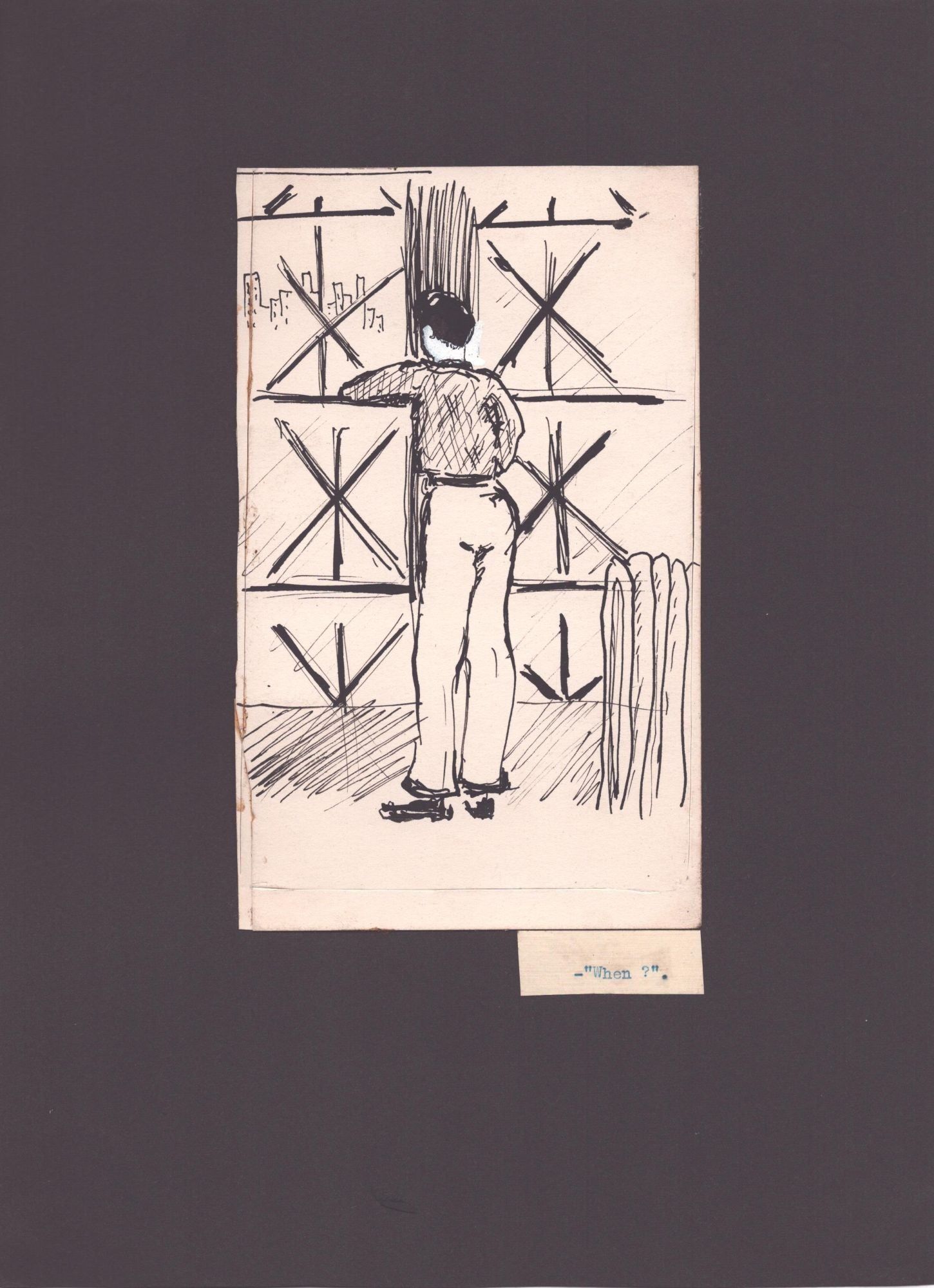
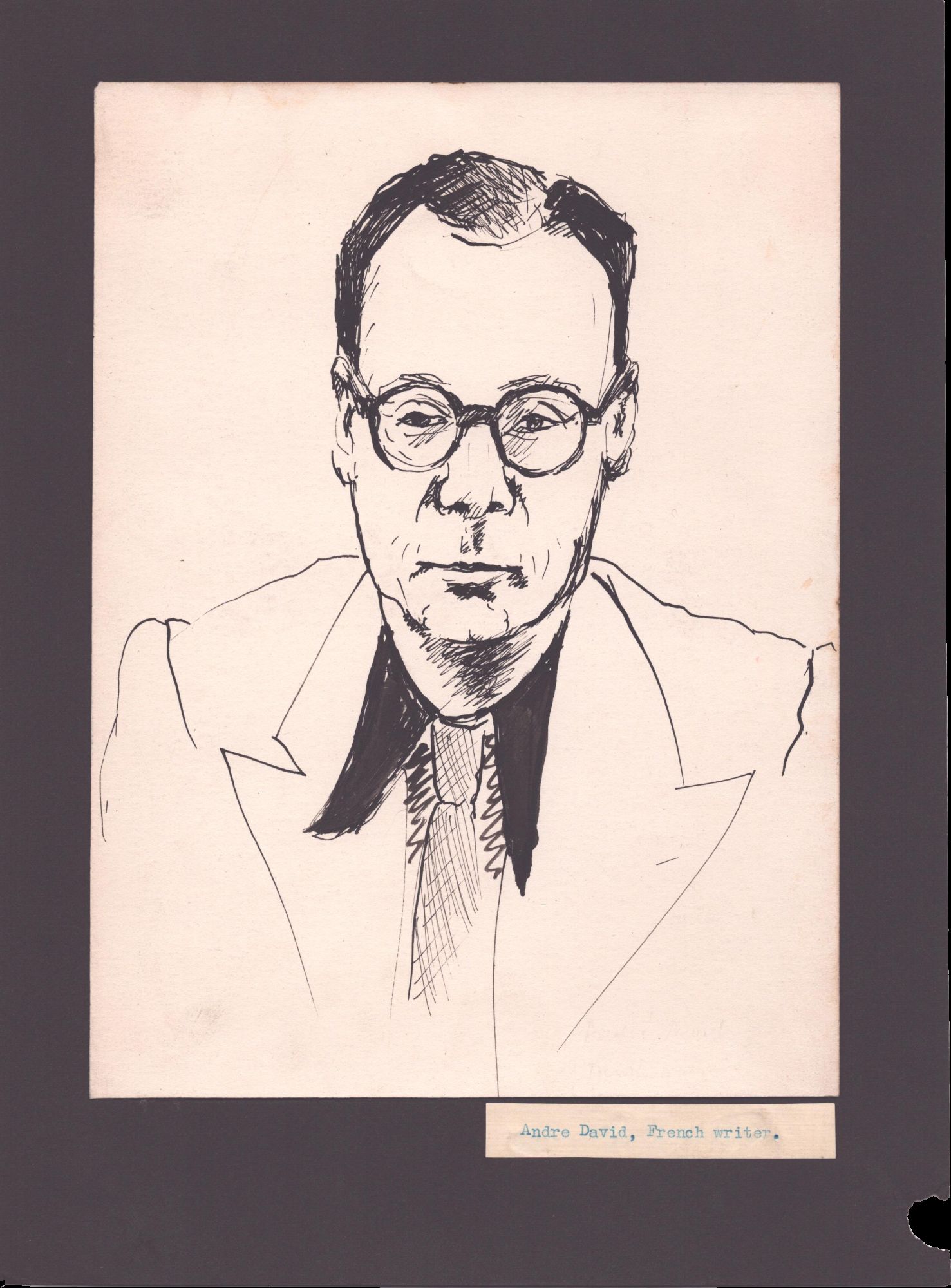
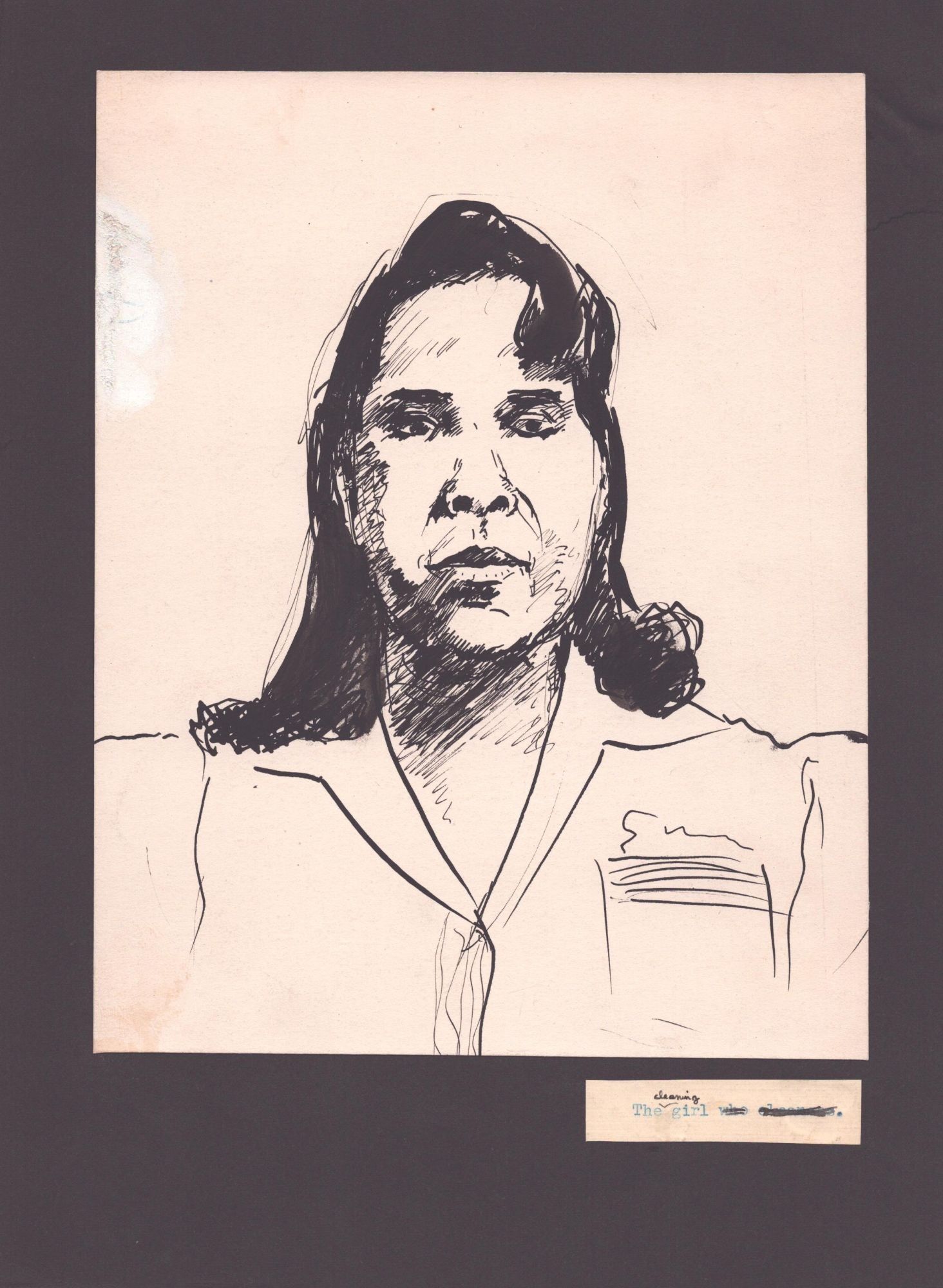
New York City, 1941. Thirty-three sketches, mainly measuring 6 x 8 or 8 x 10 inches, affixed to black construction paper. Sketches are pen and ink or pencil, some with captions. With seventeen typed pages, mainly measuring 6 ½ x 7 inches. In an 11 x 14 ½ inch portfolio. Spine of portfolio missing, all pages separated; sketches excellent, construction paper with much marginal chipping; typed pages with adhesive verso else excellent. Overall very good to excellent.. Bitia Rosendor (1920–2011) was a Jewish artist, born in Jerusalem and raised in Antwerp, Belgium. Rosendor studied painting and sculpture at the Koninklijke Academie voor Schone Kunsten in Antwerp, but her studies were interrupted by the outbreak of World War II. The Rosendor family fled Europe via Portugal in 1941 and were detained at Ellis Island, where these sketches were produced.
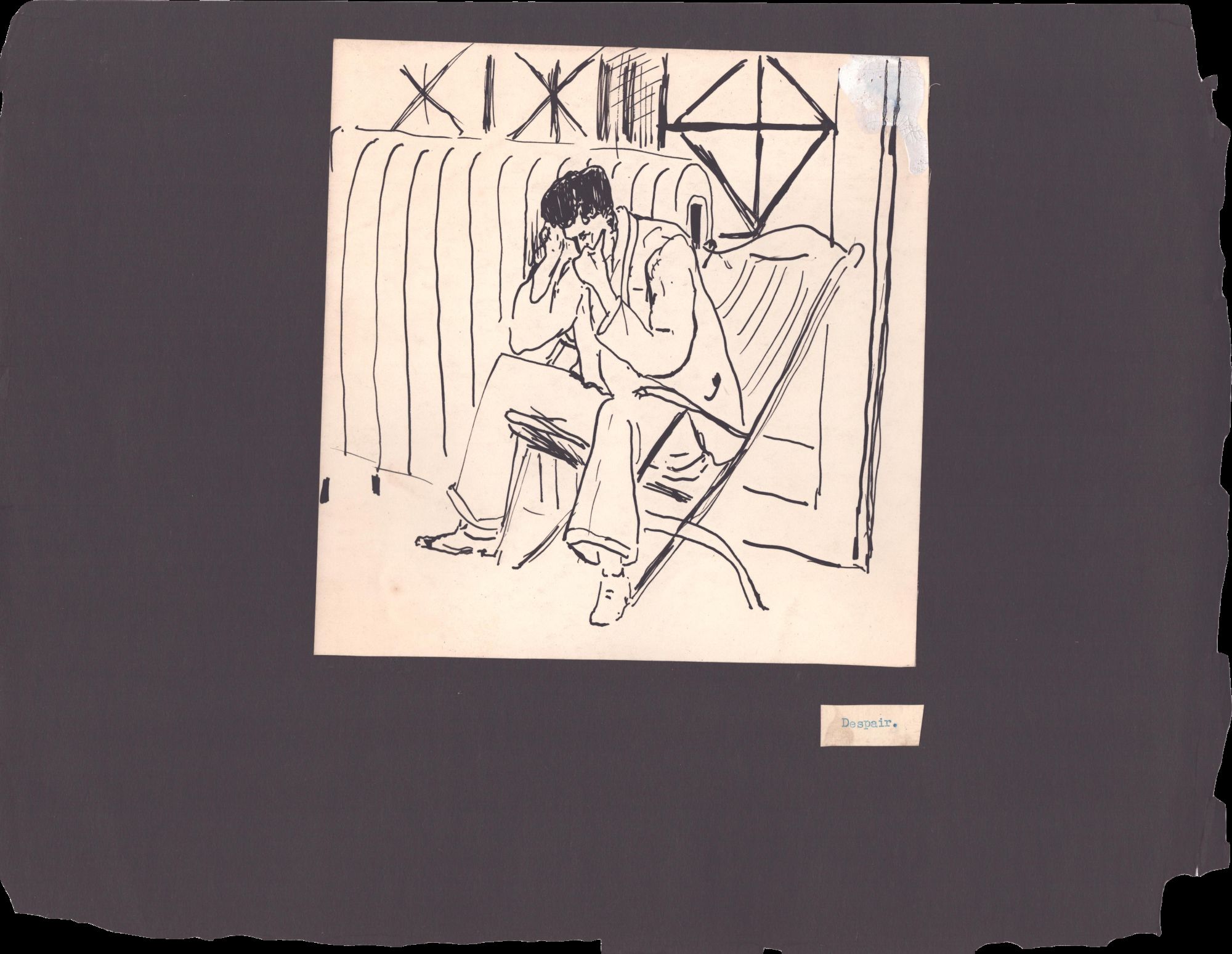
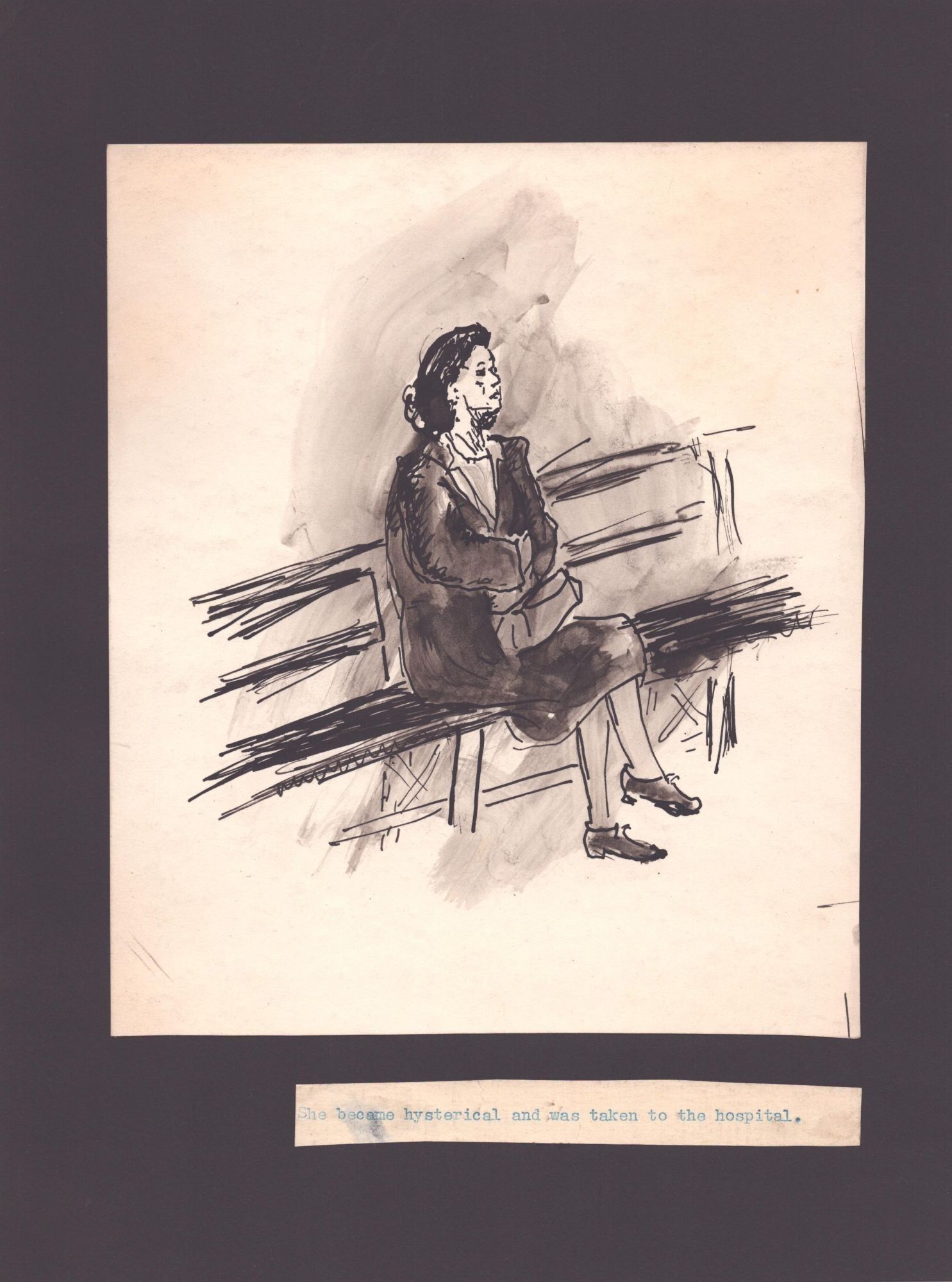
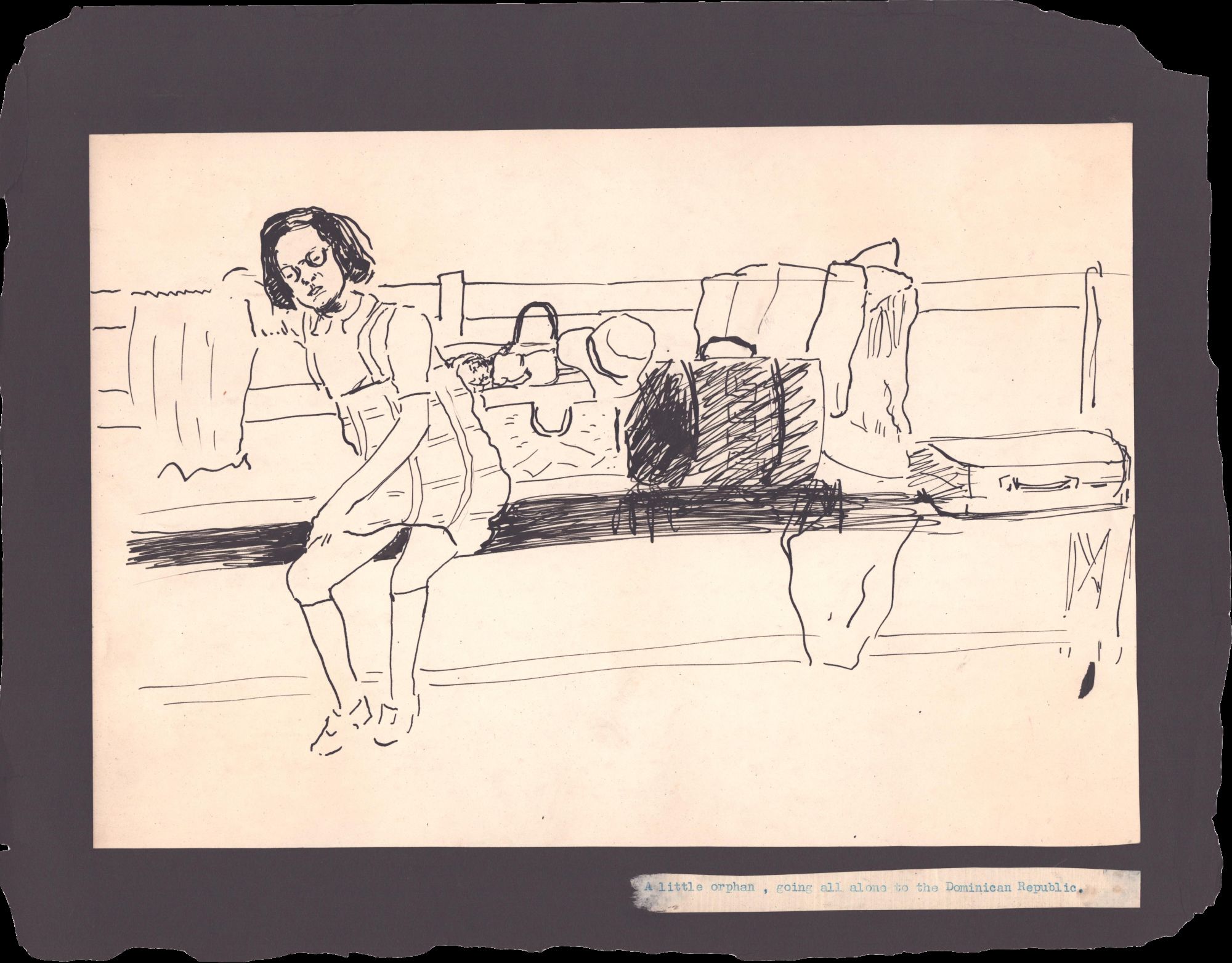
The sketches include portraits of other detainees and immigration employees and views from the island. Most have captions, including brief notes about the subjects such as “She became hysterical and was taken to the hospital”, “A little orphan, going all alone to the Dominican Republic”, and “‘Liberty’, through bars”—the latter on an illustration of the Statue of Liberty seen through the bars on the internment center’s windows.
The typed text describes Rosendor’s experience waiting for the family’s Visa to be approved. The ordeal is mostly one of boredom; she writes:
“Everyone had the same endless day to pass, but everyone passed it differently. There was no possible way to be original, but each of us retained her or his personality. The emptiness of the hours was heavy to bear.”
The boredom, though, is punctuated by “incidents”; some negative, as when “Once a Chinese girl wept for three days uninterrupted, refused to eat, refused everything”, and some positive as when “A friend seen last time at the Antipodes” disembarks “from a newly entered ship [...] and suddenly: ‘YOU’! -’YOU’”.
Rosendor would live with her family in Brooklyn until the 1950s, when she returned to Europe with her husband, Jewish-American painter Martin Reisberg, a fellow immigrant whom she met in the city. The pair returned to Belgium where they ran a gallery and created exhibitions together until Rosendor’s death in 2011.
Of interest to scholars of the Holocaust, American immigration, and the Jewish immigrant experience in the 1940s.
The sketches include portraits of other detainees and immigration employees and views from the island. Most have captions, including brief notes about the subjects such as “She became hysterical and was taken to the hospital”, “A little orphan, going all alone to the Dominican Republic”, and “‘Liberty’, through bars”—the latter on an illustration of the Statue of Liberty seen through the bars on the internment center’s windows.
The typed text describes Rosendor’s experience waiting for the family’s Visa to be approved. The ordeal is mostly one of boredom; she writes:
“Everyone had the same endless day to pass, but everyone passed it differently. There was no possible way to be original, but each of us retained her or his personality. The emptiness of the hours was heavy to bear.”
The boredom, though, is punctuated by “incidents”; some negative, as when “Once a Chinese girl wept for three days uninterrupted, refused to eat, refused everything”, and some positive as when “A friend seen last time at the Antipodes” disembarks “from a newly entered ship [...] and suddenly: ‘YOU’! -’YOU’”.
Rosendor would live with her family in Brooklyn until the 1950s, when she returned to Europe with her husband, Jewish-American painter Martin Reisberg, a fellow immigrant whom she met in the city. The pair returned to Belgium where they ran a gallery and created exhibitions together until Rosendor’s death in 2011.
Of interest to scholars of the Holocaust, American immigration, and the Jewish immigrant experience in the 1940s.