

1845 Letter Discussing Maine State Politics
- Two 7 ½ x 9 ¾ inch pages
- Kennebunk, Maine , 1845
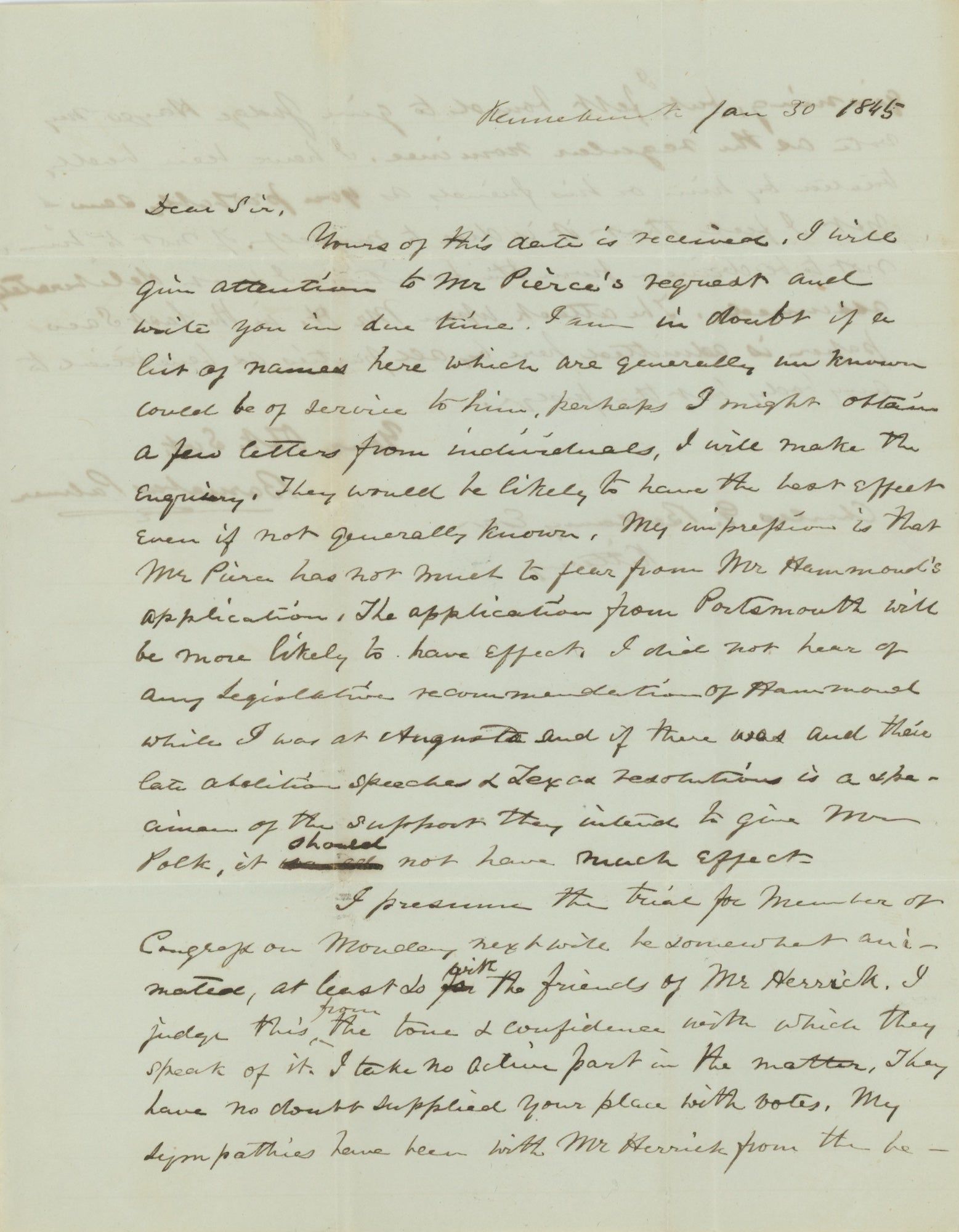
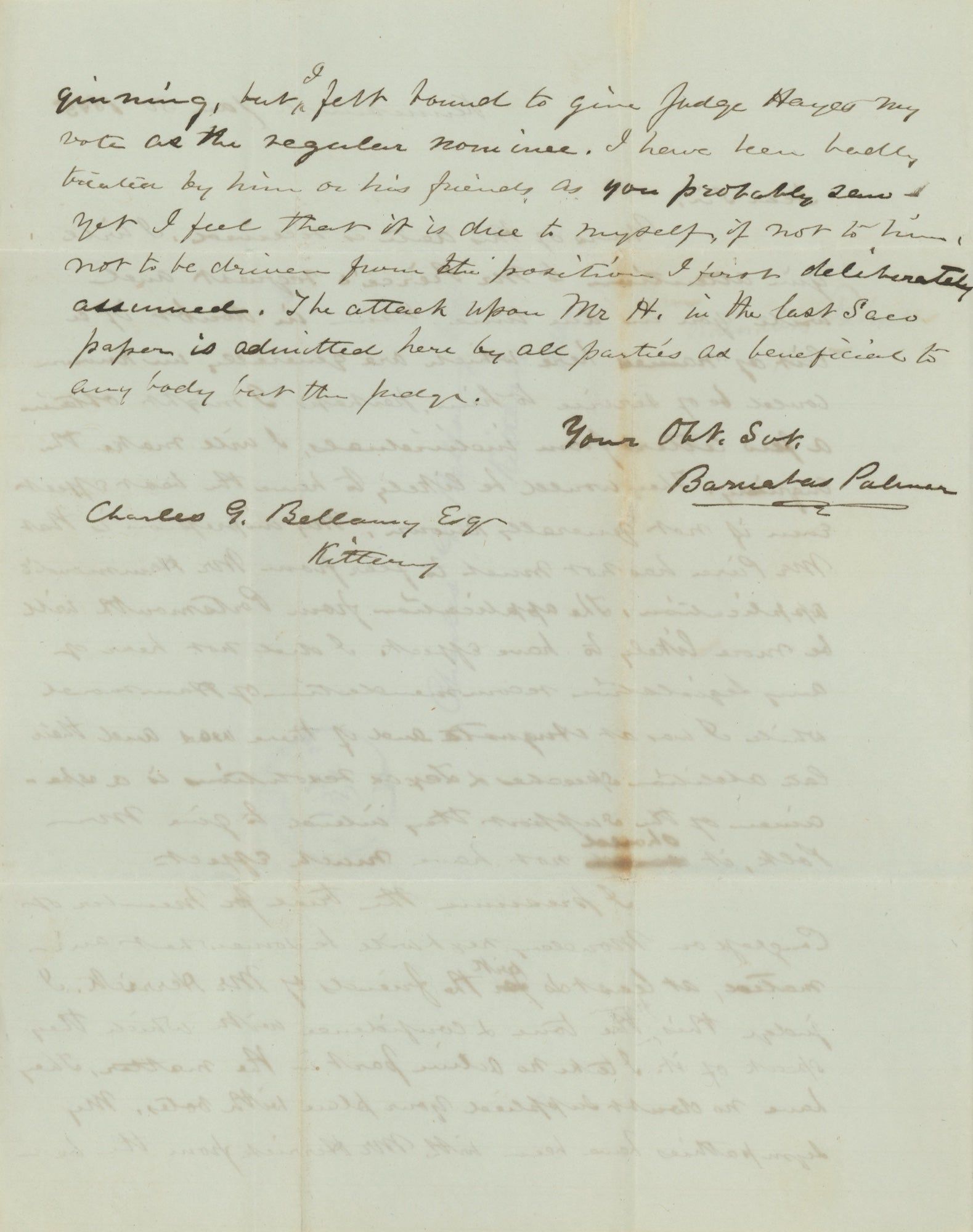
Kennebunk, Maine, 1845. Two 7 ½ x 9 ¾ inch pages. Near fine.. A letter from Barnabas Palmer in Kennebunk to Charles G. Bellamy, Esquire, in Kittery. Bellamy (1811–1892/1899) was a captain in the Maine militia, a member of the Maine House of Representatives (1842–3) and State Senate (1846–7), York County Sheriff, and then Inspector of Timber at the Navy Yard in Portsmouth.[1] Palmer (1791–1867) may have been military; he appears in Maine state records as an agent for the Kennebunk Gun House, which is listed in other records as under the purview of the Quartermaster General.
Palmer gives Bellamy his opinion on the political prospects of “Pierce” versus “Hammond”, commenting:
“I did not hear of any legislative recommendation of Hammond while I was at Augusta and if there was and their late abolition speeches & Texan resolutions is a specimen of the support they intend to give Mr Polk, it should not have much effect.”
The US under President Polk had not yet annexed Texas, and Palmer is apparently underwhelmed by Maine’s support for the cause. He also remarks on Joshua Herrick’s (1793–1874) bid for re-nomination to Congress; though he feels that he had “been badly treated” by Herrick’s competition, “Judge Hayes”, Palmer nonetheless feels compelled to vote for Hayes over Herrick. Of interests to historians of Maine state politics.
[1] John E. Frost, Colonial Village (Gundalow Club: 1948), 28.
Palmer gives Bellamy his opinion on the political prospects of “Pierce” versus “Hammond”, commenting:
“I did not hear of any legislative recommendation of Hammond while I was at Augusta and if there was and their late abolition speeches & Texan resolutions is a specimen of the support they intend to give Mr Polk, it should not have much effect.”
The US under President Polk had not yet annexed Texas, and Palmer is apparently underwhelmed by Maine’s support for the cause. He also remarks on Joshua Herrick’s (1793–1874) bid for re-nomination to Congress; though he feels that he had “been badly treated” by Herrick’s competition, “Judge Hayes”, Palmer nonetheless feels compelled to vote for Hayes over Herrick. Of interests to historians of Maine state politics.
[1] John E. Frost, Colonial Village (Gundalow Club: 1948), 28.