

1857 Letter from Minnesota Territory Discussing Democrats and African-American Suffrage
- Single three-page letter measuring 8 x 10 inches
- Henderson, Minnesota Territory , 1857
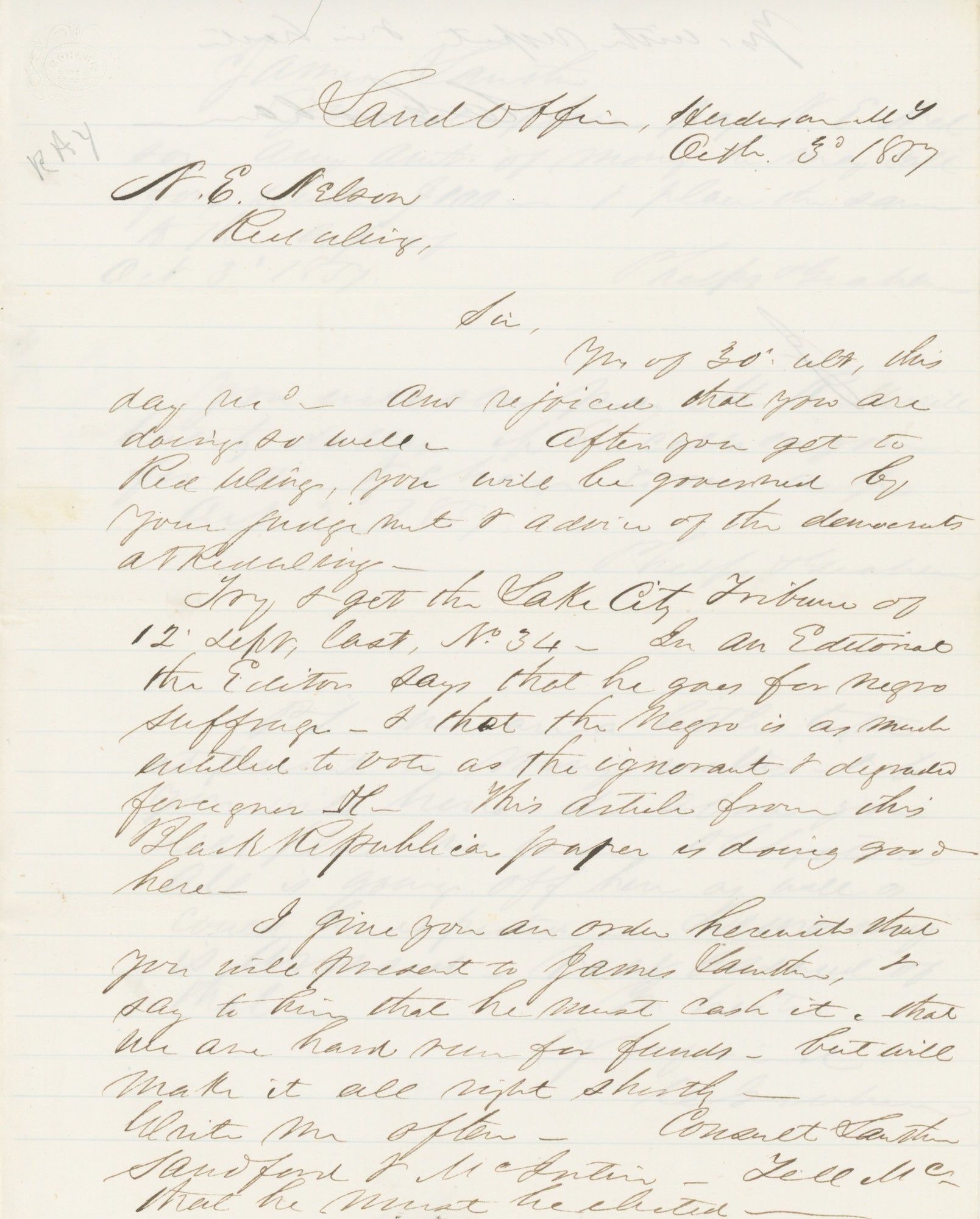
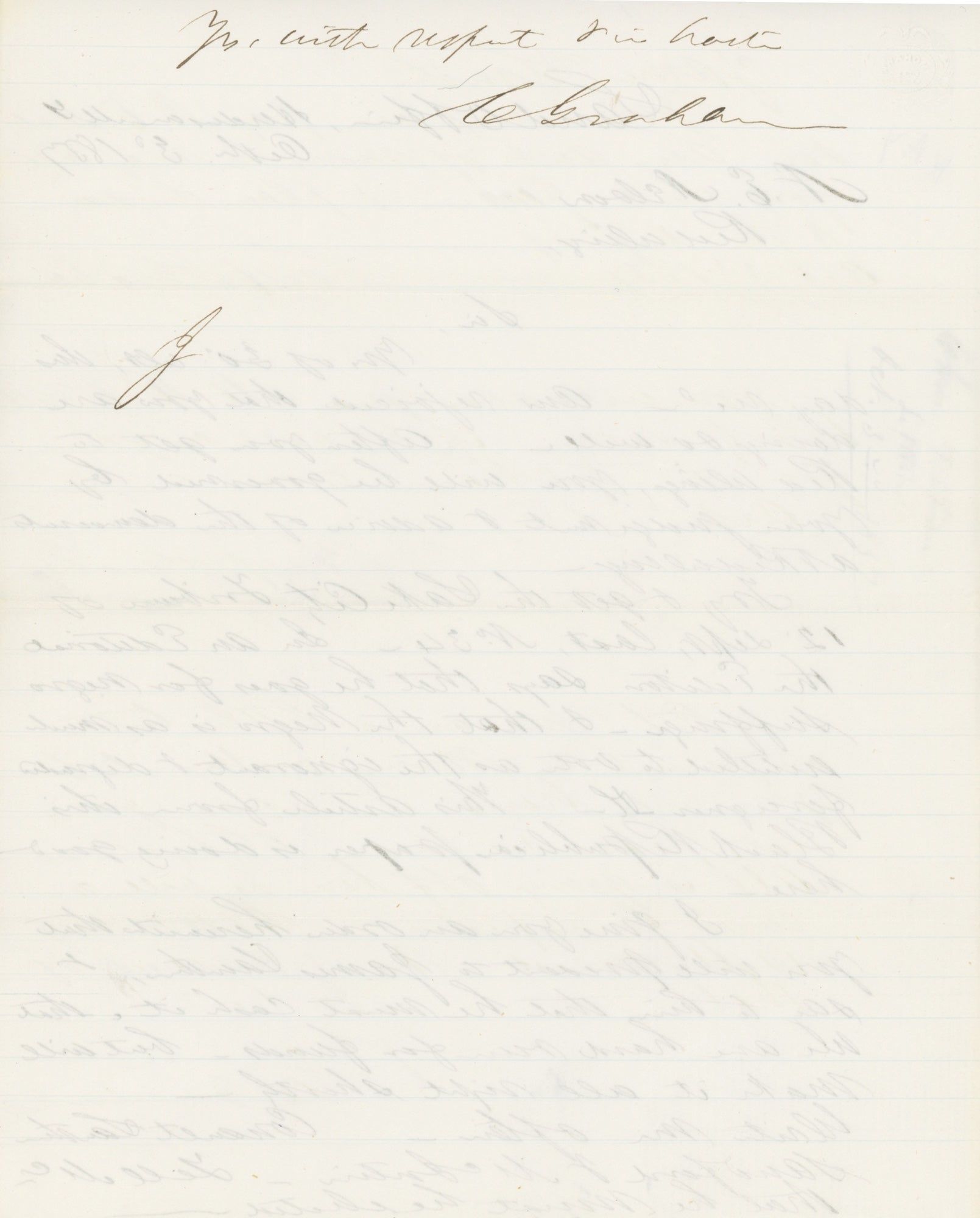
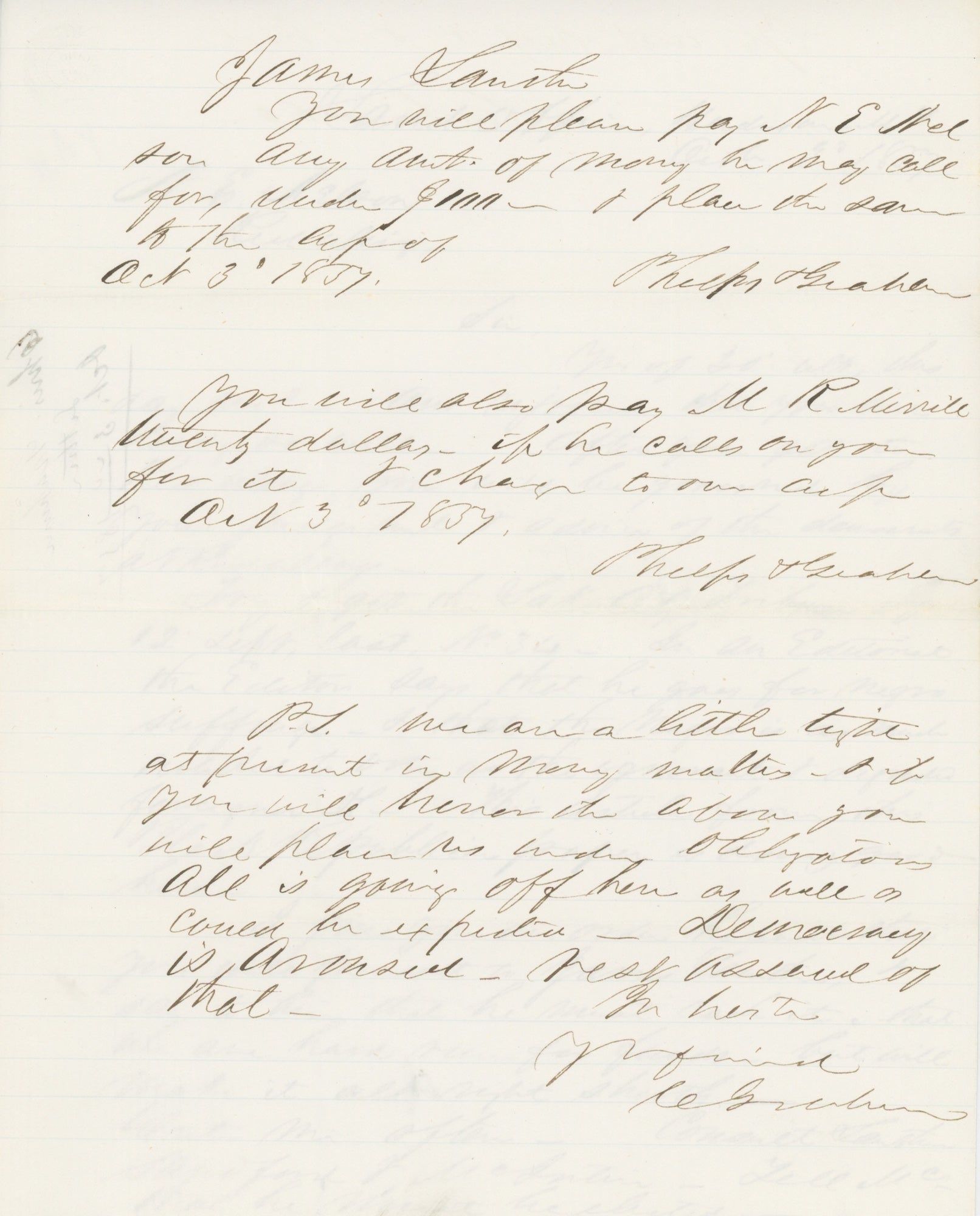
Henderson, Minnesota Territory, 1857. Single three-page letter measuring 8 x 10 inches. Fine.. A letter written shortly before Minnesota’s statehood concerning territorial politics, particularly African-American suffrage. The author, C. Graham, writes to N. E. Nelson:
“After you get to Red Wing, you will be governed by your judgment & advice of the democrats at Red wing – Try & get the Lake City Tribune of 12 Sept. last, No. 34. In an Editorial the Editor says that he goes for negro suffrage & that the Negro is as much entitled to vote as the ignorant & degraded foreigner &c.”
The Minnesota Territory had a complicated relationship with race and rights. At the time, its largely Yankee elite were ostensibly anti-slavery despite the fact that slaves could be kept there—the infamous Dred Scott case had been decided earlier that year. Earlier in the decade, voting rights had been extended to certain Indigenous people; and Catholics, particularly Irish Catholic immigrants, were allowed to vote but barred from much of the region’s economic life.[1] The latter in particular at least partly drove the surge in popularity of the Democratic party with working class whites in the territory. Unfortunately, this edition of the Lake City Tribune newspaper has not been archived online at the time of writing.
[1] William Davis Green, A Peculiar Imbalance: The Fall and Rise of Racial Equality in Early Minnesota (Minnesota Historical Society Press, 2007).
“After you get to Red Wing, you will be governed by your judgment & advice of the democrats at Red wing – Try & get the Lake City Tribune of 12 Sept. last, No. 34. In an Editorial the Editor says that he goes for negro suffrage & that the Negro is as much entitled to vote as the ignorant & degraded foreigner &c.”
The Minnesota Territory had a complicated relationship with race and rights. At the time, its largely Yankee elite were ostensibly anti-slavery despite the fact that slaves could be kept there—the infamous Dred Scott case had been decided earlier that year. Earlier in the decade, voting rights had been extended to certain Indigenous people; and Catholics, particularly Irish Catholic immigrants, were allowed to vote but barred from much of the region’s economic life.[1] The latter in particular at least partly drove the surge in popularity of the Democratic party with working class whites in the territory. Unfortunately, this edition of the Lake City Tribune newspaper has not been archived online at the time of writing.
[1] William Davis Green, A Peculiar Imbalance: The Fall and Rise of Racial Equality in Early Minnesota (Minnesota Historical Society Press, 2007).