

Brocéliande. Poème. [Series title:] Les poètes des Cahiers du Rhône III
![Brocéliande. Poème. [Series title:] Les poètes des](https://d3525k1ryd2155.cloudfront.net/h/410/277/1689277410.0.x.jpg)
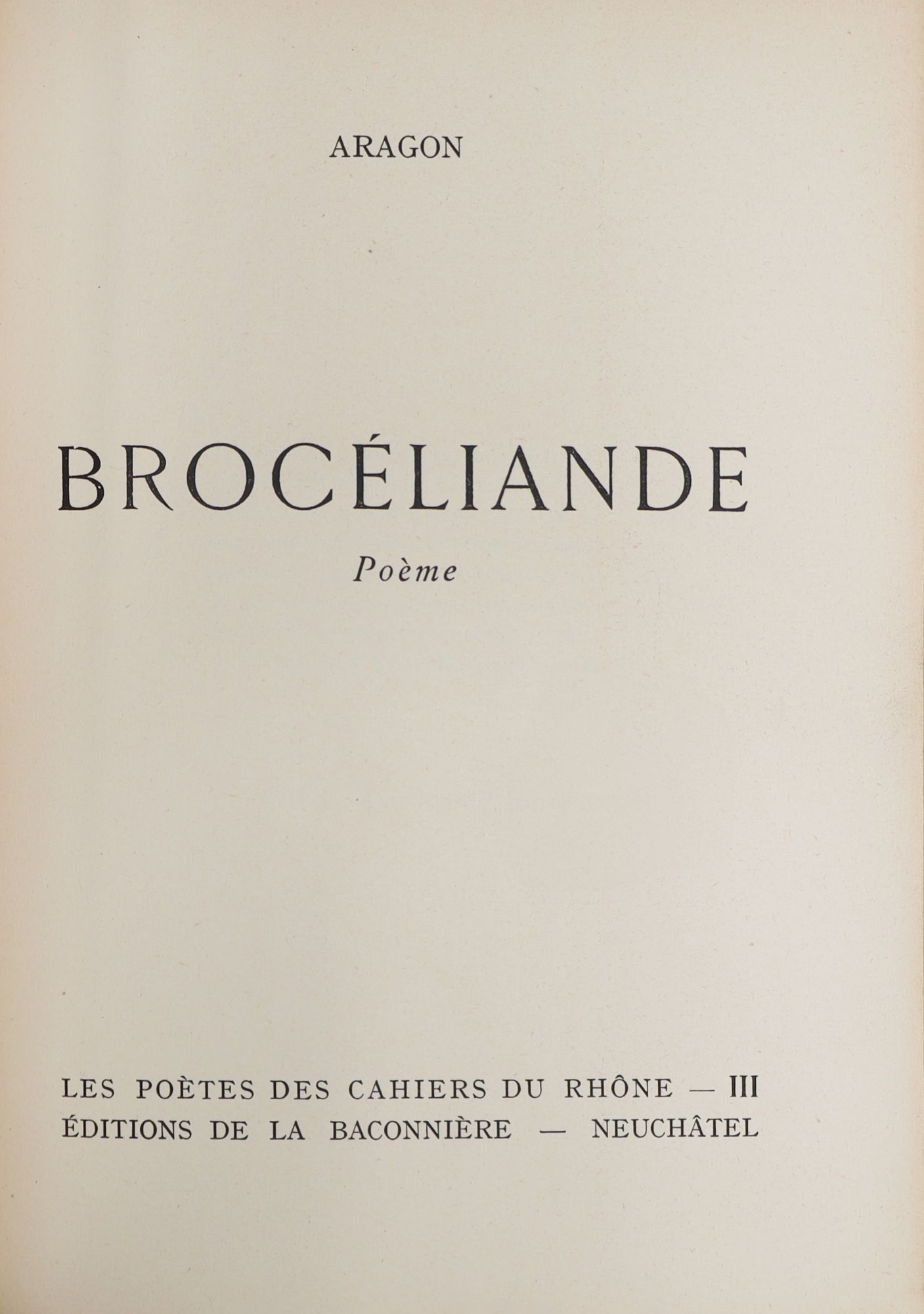
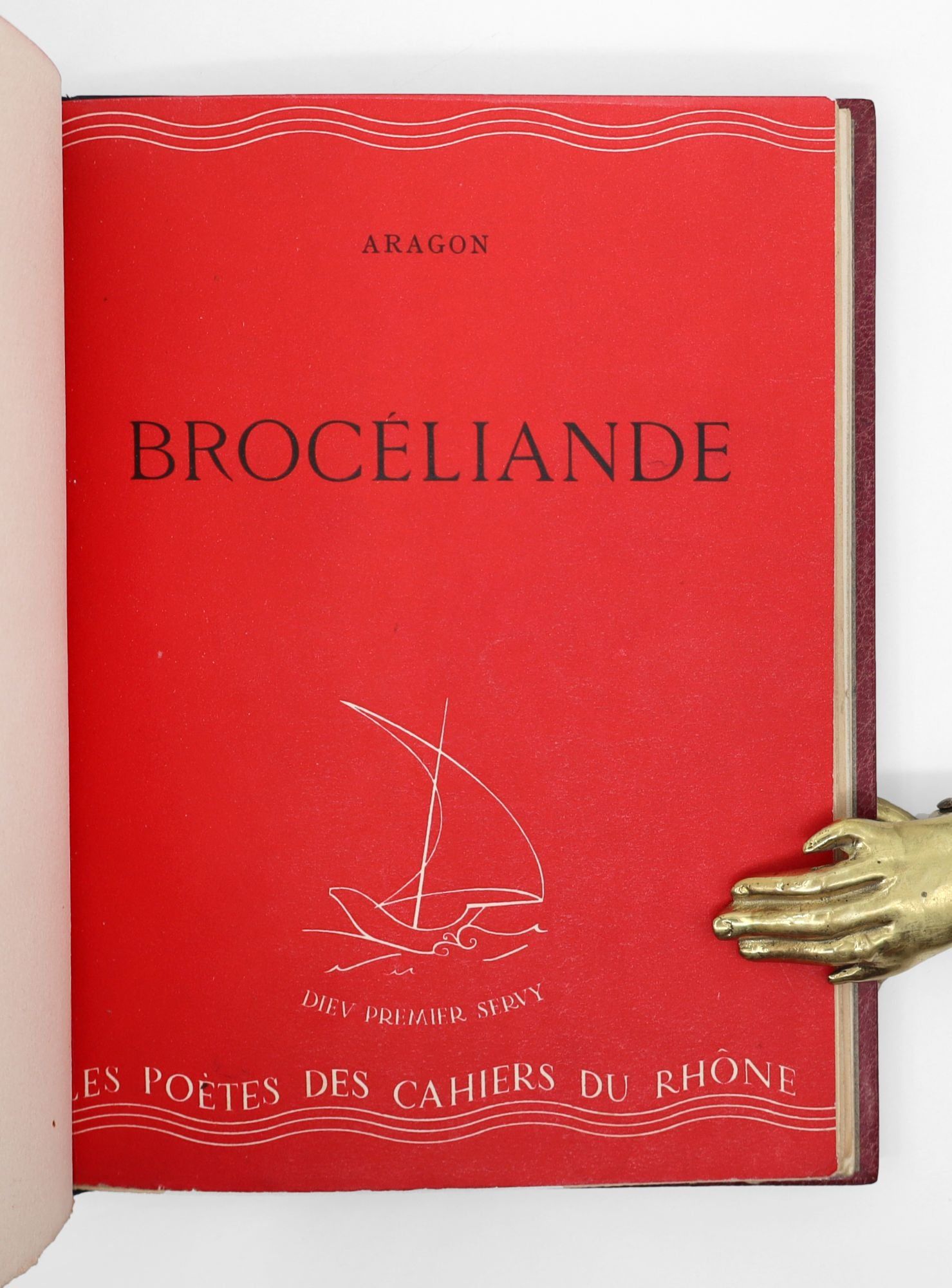
- Frontispiece portrait of Aragon after a drawing by Matisse. 55, [1], [8] pp. 8vo
- Neuchâtel: Éditions de la Baconn¡ère, 1942
Neuchâtel: Éditions de la Baconn¡ère, 1942. First edition, no. 1993 of the trade issue (edition of 4080). Frontispiece portrait of Aragon after a drawing by Matisse. 55, [1], [8] pp. 8vo. Decorative purple and black morocco boards, stamped in silver on spine, original wrappers bound in, signed Leroux at front turn-in. Fine. Flannel-lined chemise. First edition, no. 1993 of the trade issue (edition of 4080). Frontispiece portrait of Aragon after a drawing by Matisse. 55, [1], [8] pp. 8vo. This long-form Aragon poem, divided into seven sections, was the third iteration of Éditions de la Baconniere's "rouge" series, "Les poètes de Cahiers du Rhône," notable for their red wrappers and limited issue.
This copy is further distinguished by a custom morocco binding n purple and black morocco by the celebrated book artist Georges Leroux, who had been a poet prior to becoming a binder in 1959, A pencil note on an interior page cites a 1914 Pablo Picasso painting titled "Tête," but the design does not correspond to work of that title or imagery from that period. Instead it very closely resembles Picasso's 1958 painting, "Tête de femme" — subsequently reworked as a series of linocut prints of the same name in 1962 — a timeframe which also aligns more closely with the start of Leroux's bookbinding career.
A gorgeous example of French bespoke binding, by a master of the craft.
This copy is further distinguished by a custom morocco binding n purple and black morocco by the celebrated book artist Georges Leroux, who had been a poet prior to becoming a binder in 1959, A pencil note on an interior page cites a 1914 Pablo Picasso painting titled "Tête," but the design does not correspond to work of that title or imagery from that period. Instead it very closely resembles Picasso's 1958 painting, "Tête de femme" — subsequently reworked as a series of linocut prints of the same name in 1962 — a timeframe which also aligns more closely with the start of Leroux's bookbinding career.
A gorgeous example of French bespoke binding, by a master of the craft.