

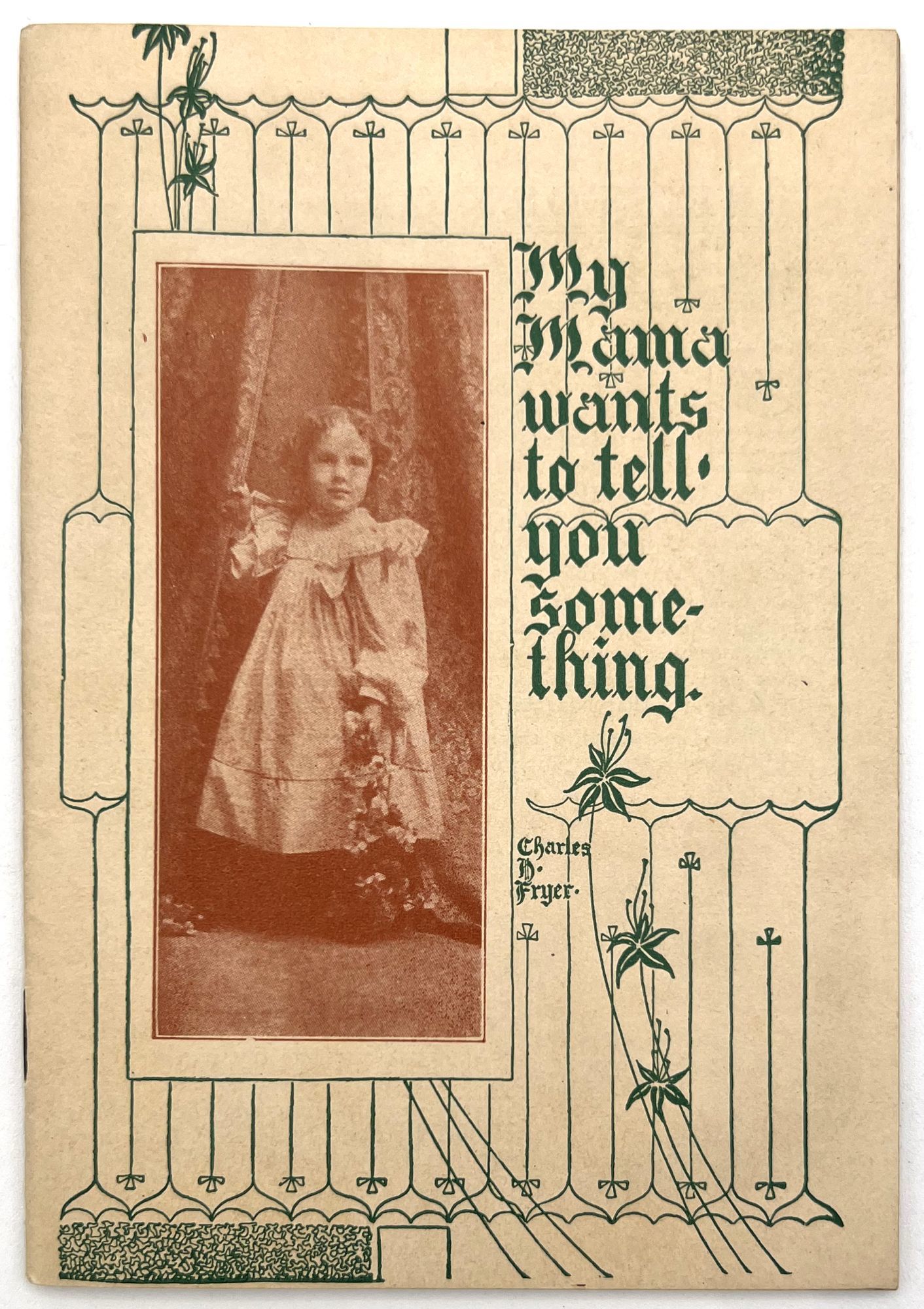
My Mama wants to tell you something" - Booklet Advertising Patent Medicine for Women
- Buffalo, New York: Dr. J.H. Dye Medical Institute, 1900
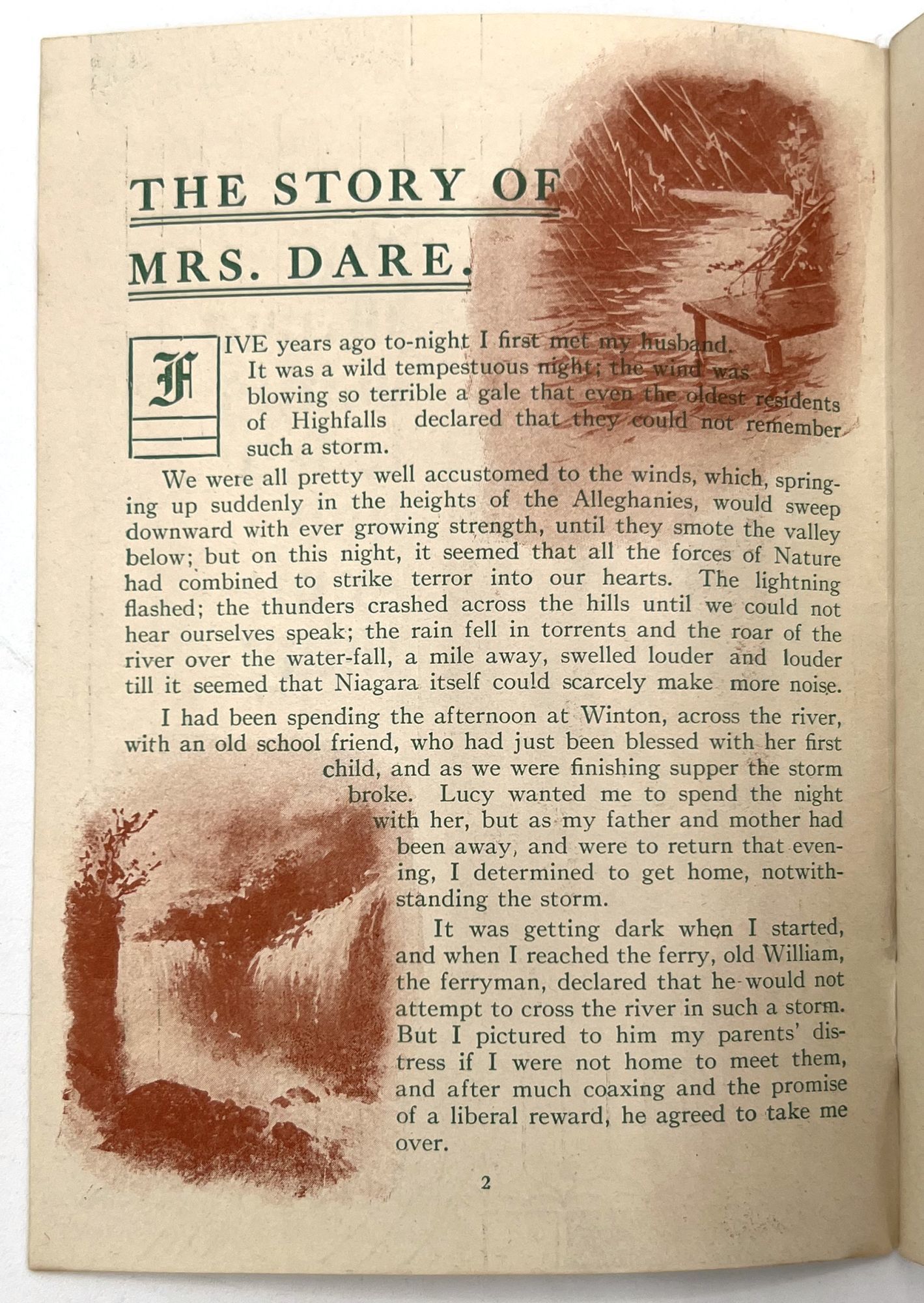
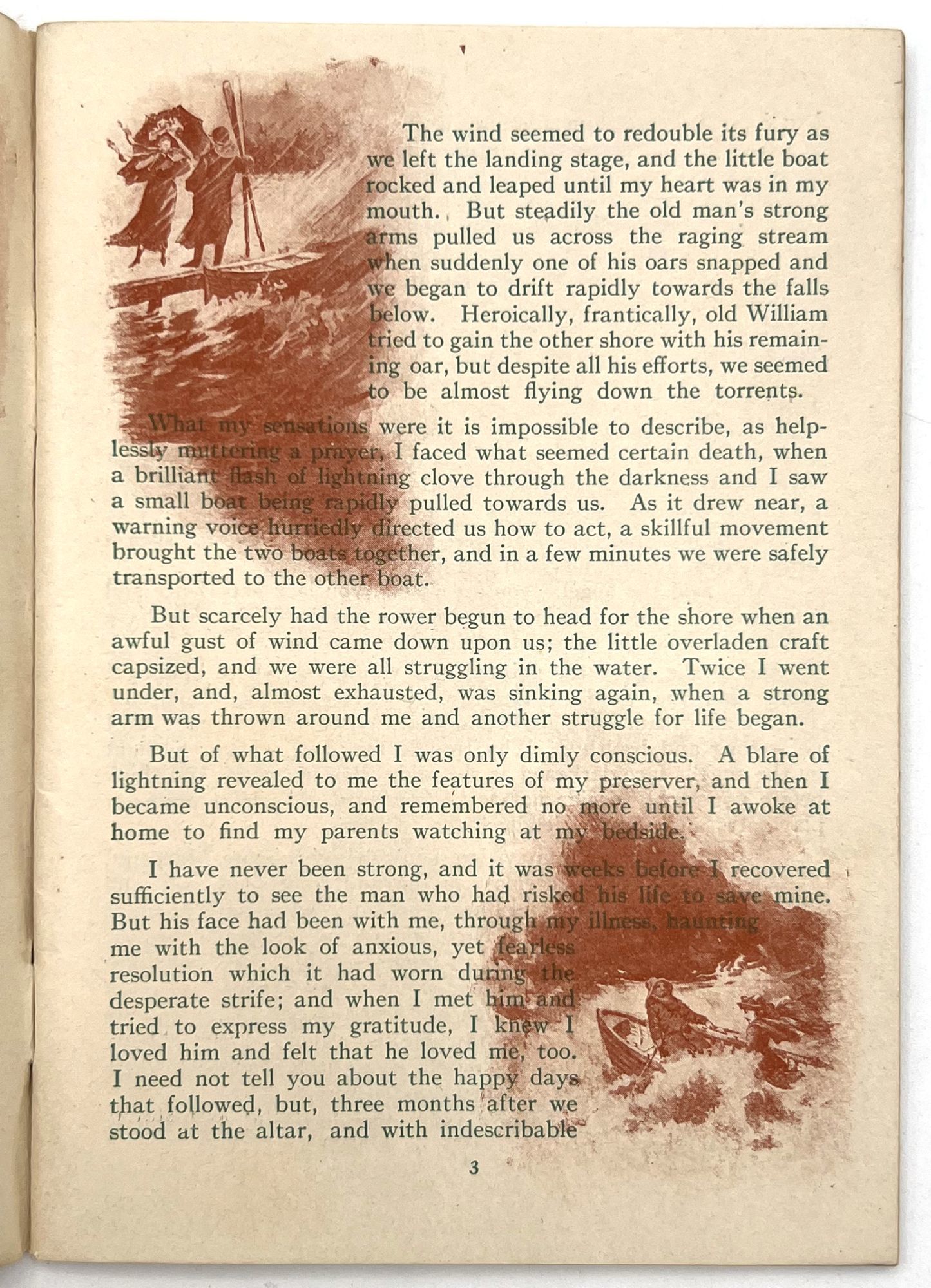
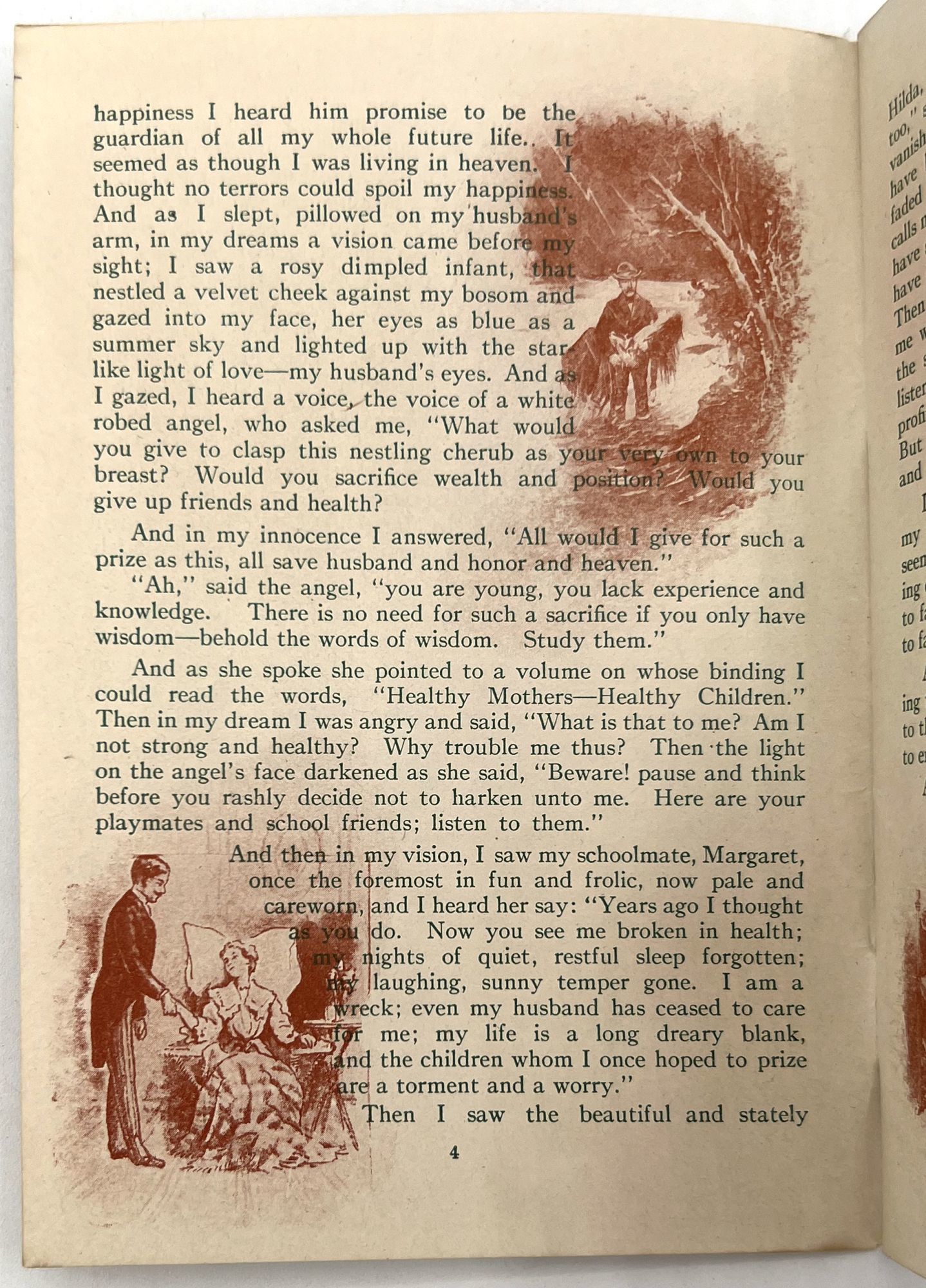
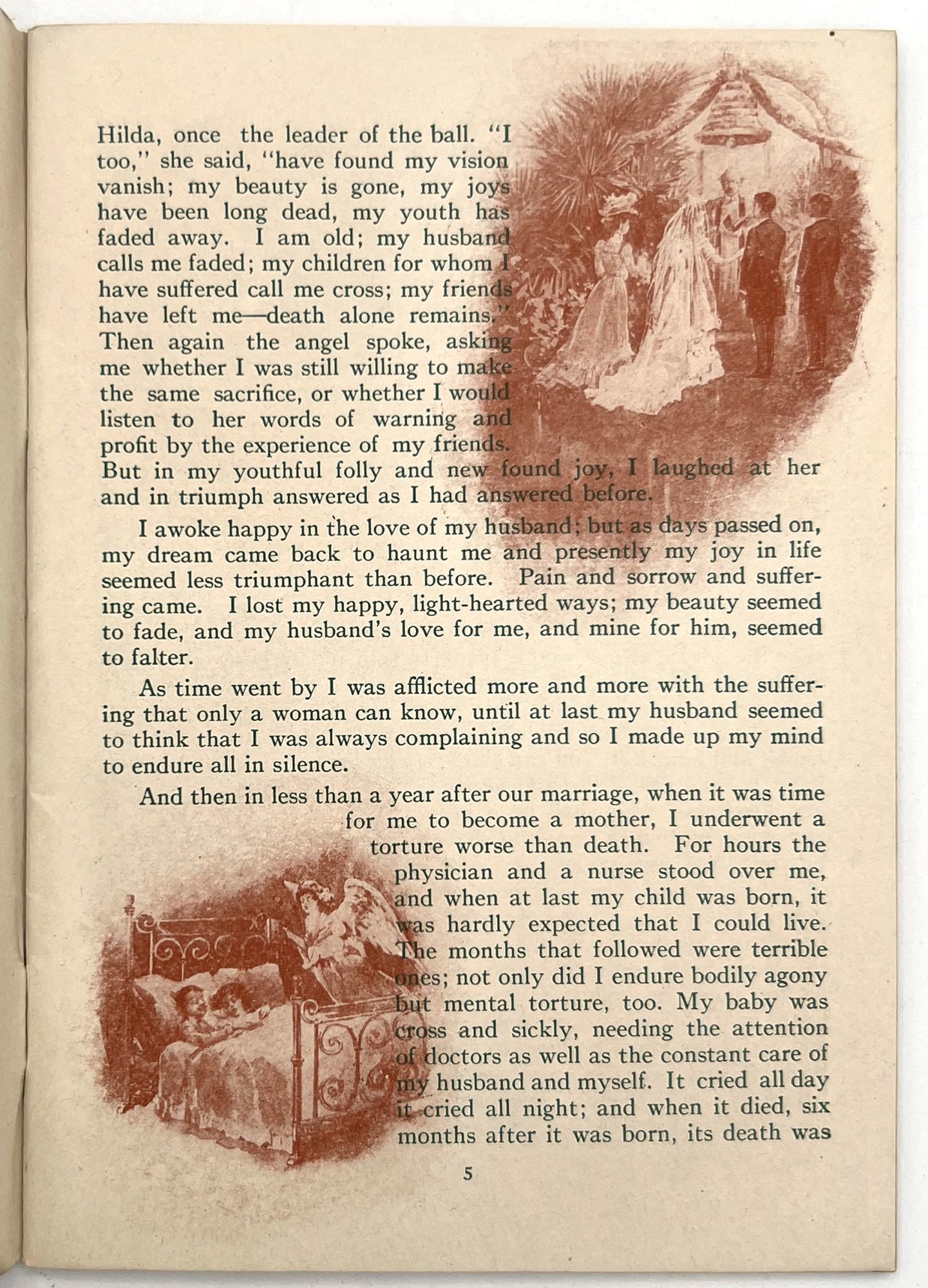
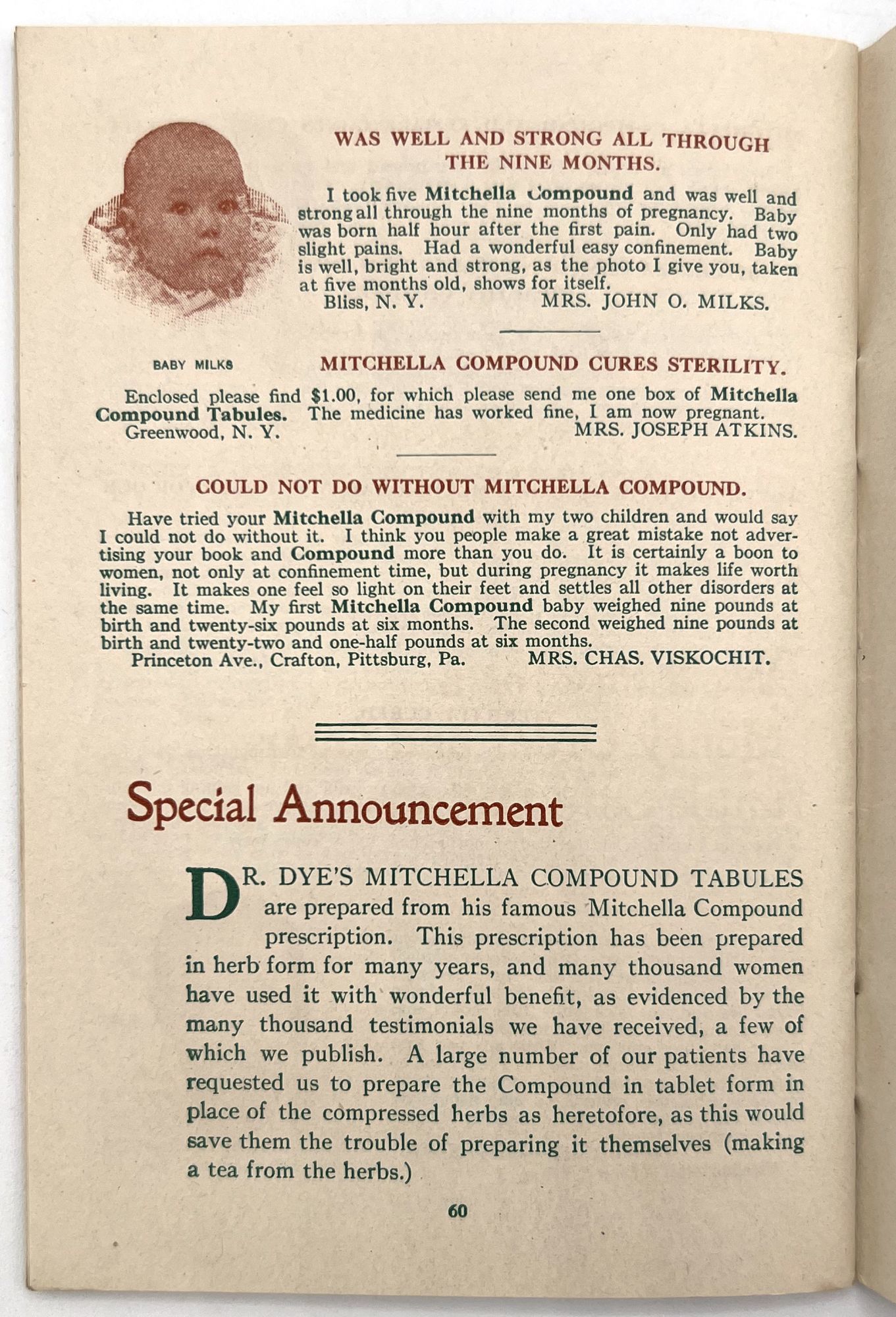
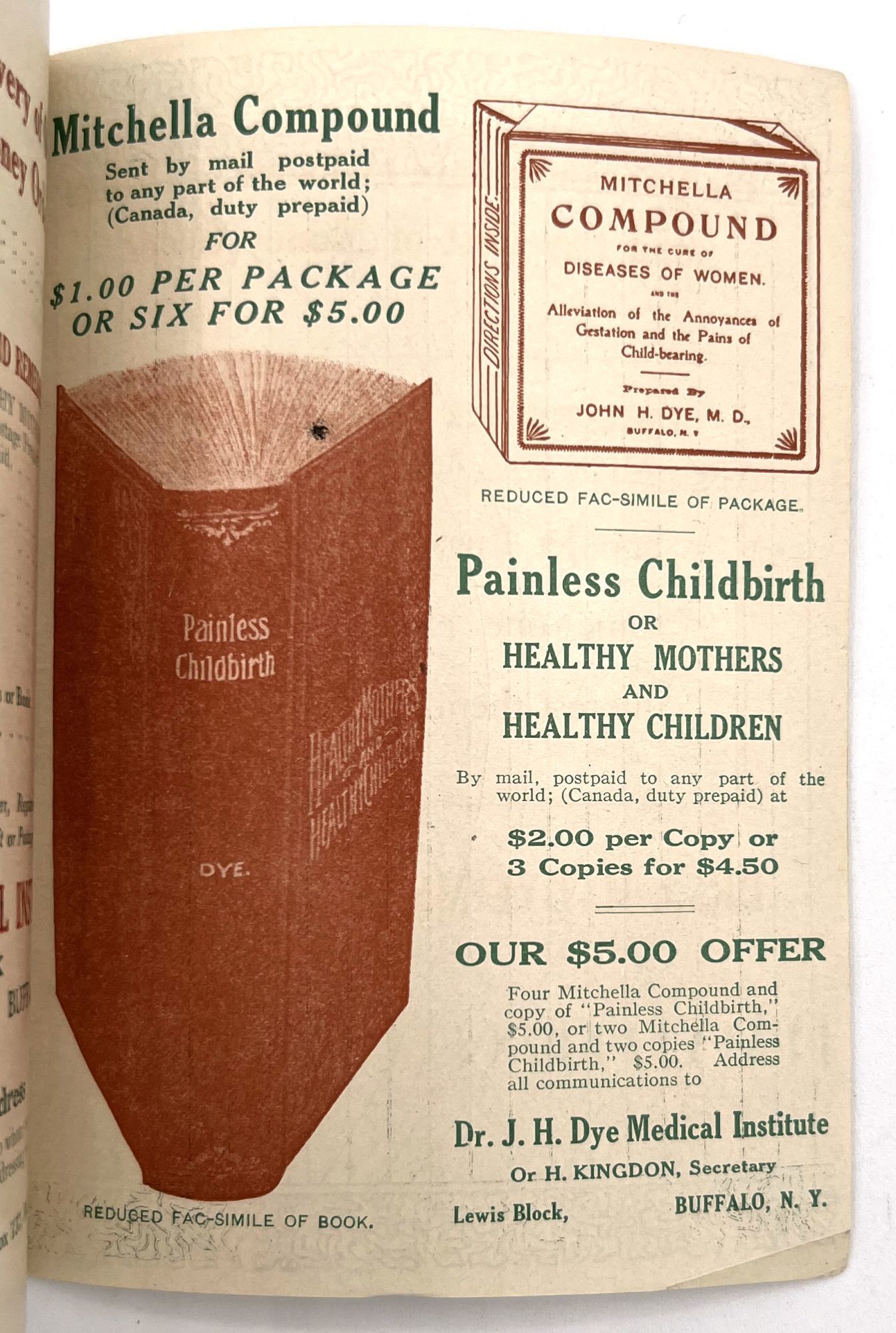
Buffalo, New York: Dr. J.H. Dye Medical Institute, 1900. Very good. Toned.. A slightly later edition of a booklet advertising Dr. J.H. Dye's Mitchella Compound, a patent medicine that claims to cure diseases specific to women and promote painless childbirth. Marketed towards women, it begins with the ten-page "Story of Mrs. Dare", which is soaked in sentiment and reads like a melodrama. The main character, Mrs. Dare, recounts meeting her future husband in a tempestuous storm, and the happiness they found in marriage before she fell pregnant and experienced "sufferings that only a woman can know, until at last my husband seemed to think that I was always complaining and so I made up my mind to endure all in silence" (p. 5). A literal angel appears in a dream after childbirth to inform Mrs. Dare that her sickly baby, pain, and sufferings are the "result of her own folly" (p. 6) and that she should have taken Mitchella Compound throughout her pregnancy. Mrs. Dare awakens and takes the medicine: "Soon all trace of disease left me, my mirth and beauty returned, my husband once more seemed to love me as at first, and when my second child was born, I scarcely had a pain" (p. 7). Thank goodness for pharmaceuticals!
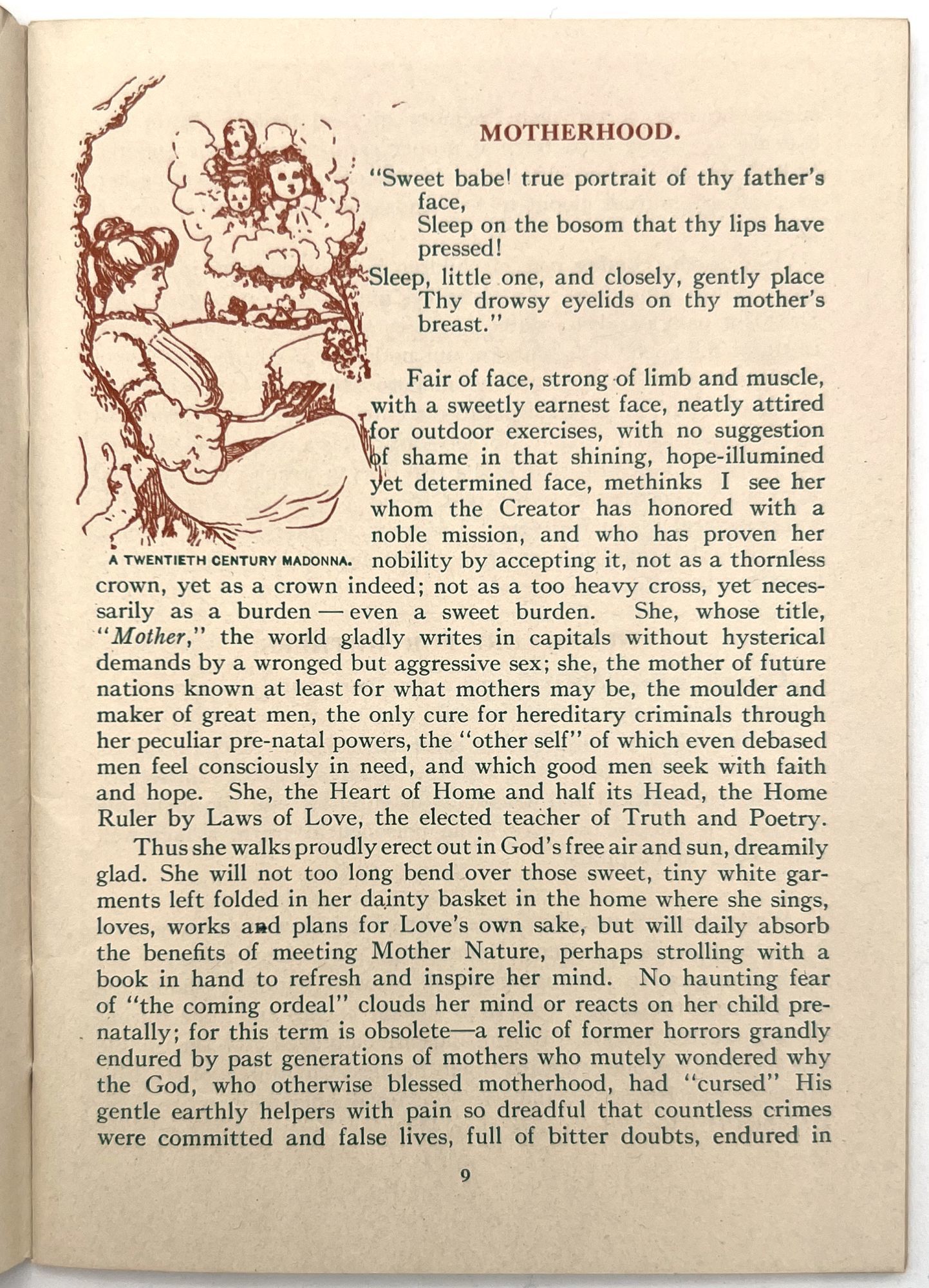
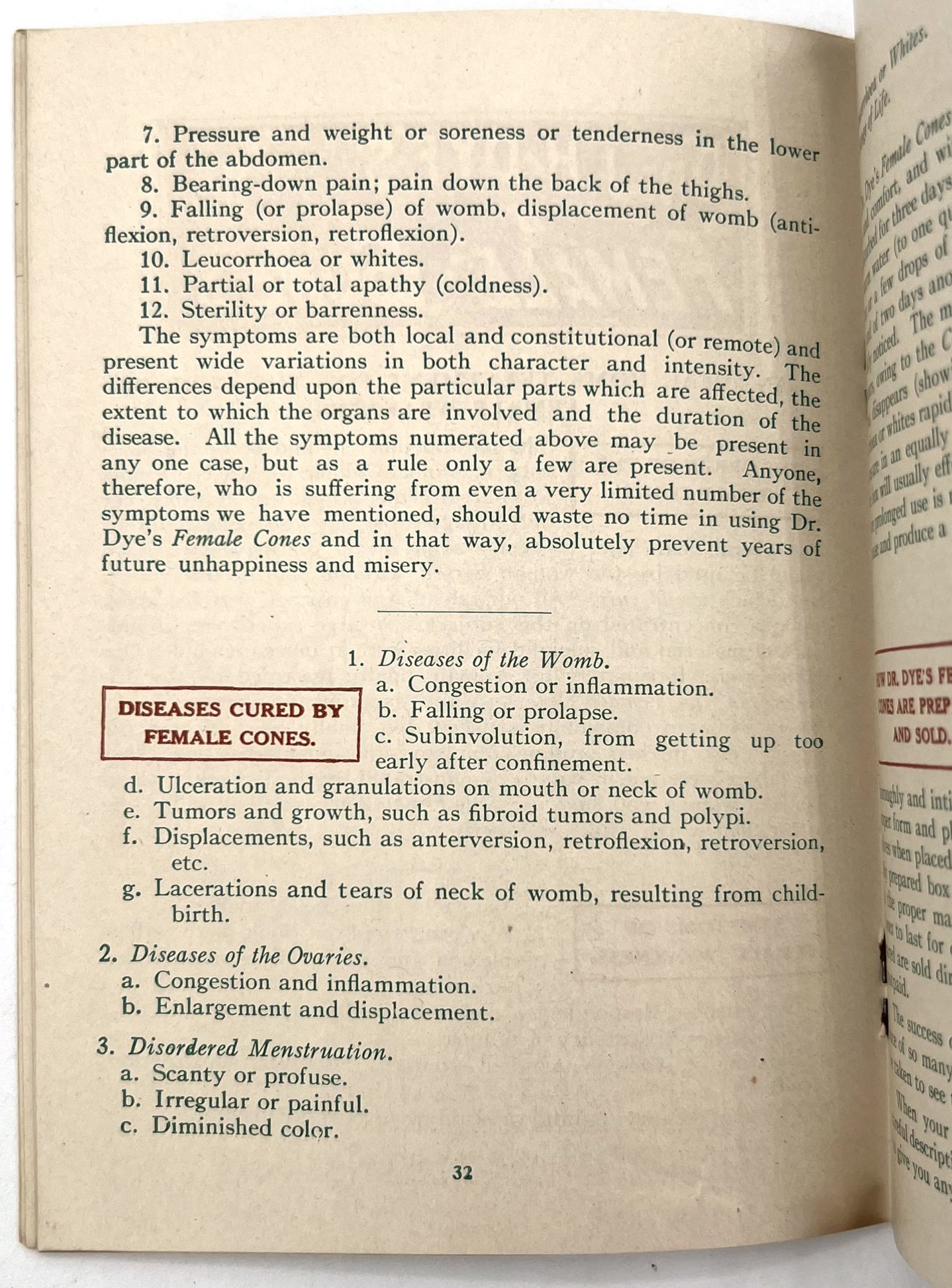
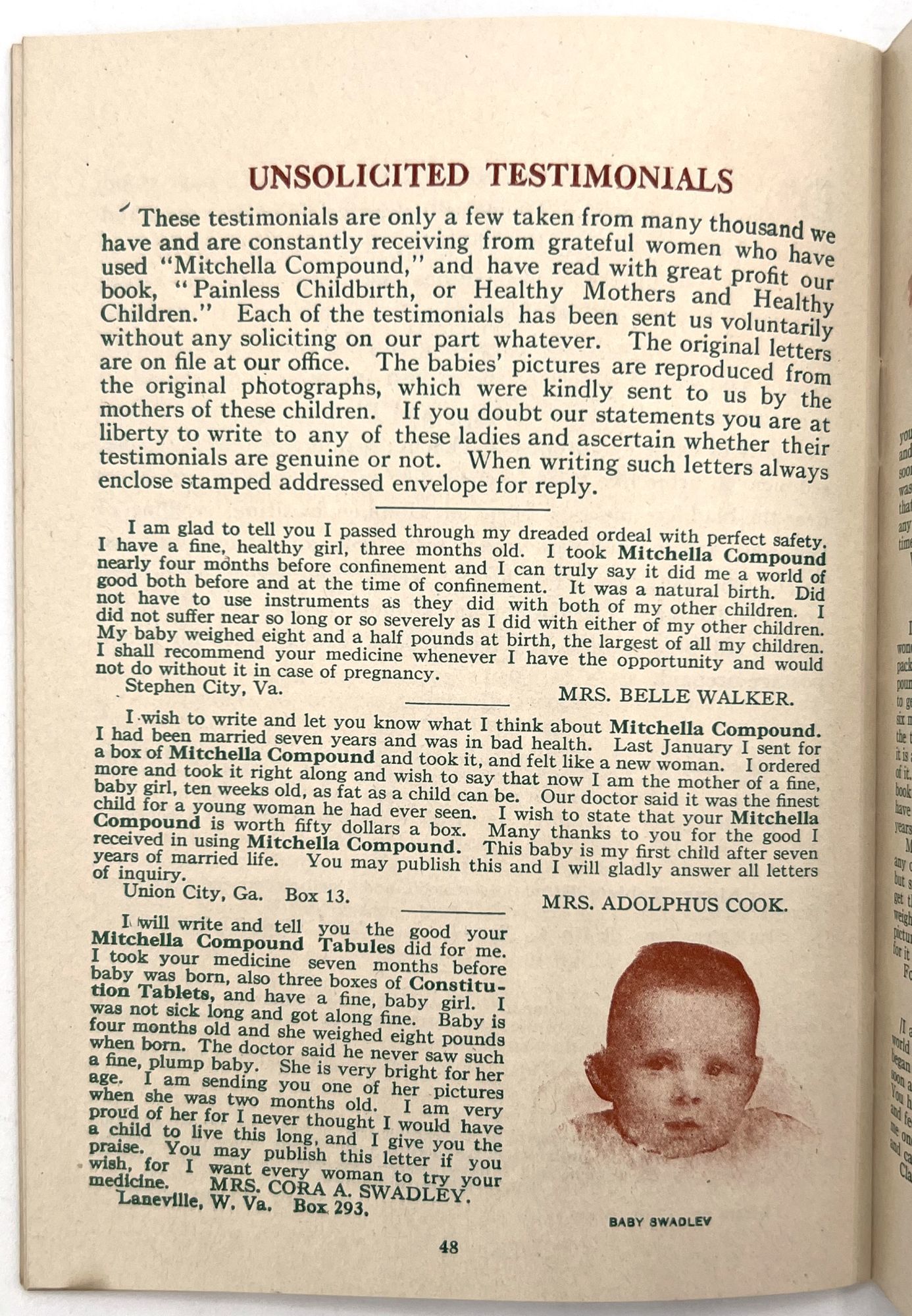
Following the "Story of Mrs. Dare" is several pages further describing the benefits of taking Mitchella Compound, focusing heavily on the trope of women who bring suffering upon themselves, and reinforcing the erroneous notion that sterility, pain, and "sickly" babies are the result of a woman's own failings. The final eight pages are comprised of testimonials punctuated by photos of healthy, cherubic-faced infants whose mothers presumably benefitted from the product. Single vol. (6" by 4.25"), pp. 64, illus., stapled in original illustrated self wrappers.
Following the "Story of Mrs. Dare" is several pages further describing the benefits of taking Mitchella Compound, focusing heavily on the trope of women who bring suffering upon themselves, and reinforcing the erroneous notion that sterility, pain, and "sickly" babies are the result of a woman's own failings. The final eight pages are comprised of testimonials punctuated by photos of healthy, cherubic-faced infants whose mothers presumably benefitted from the product. Single vol. (6" by 4.25"), pp. 64, illus., stapled in original illustrated self wrappers.