

Education for Struggle: The American Labor Colleges of the 1920s and 1930s
- Hardcover
- Philadelphia, PA: Temple University Press, 1990
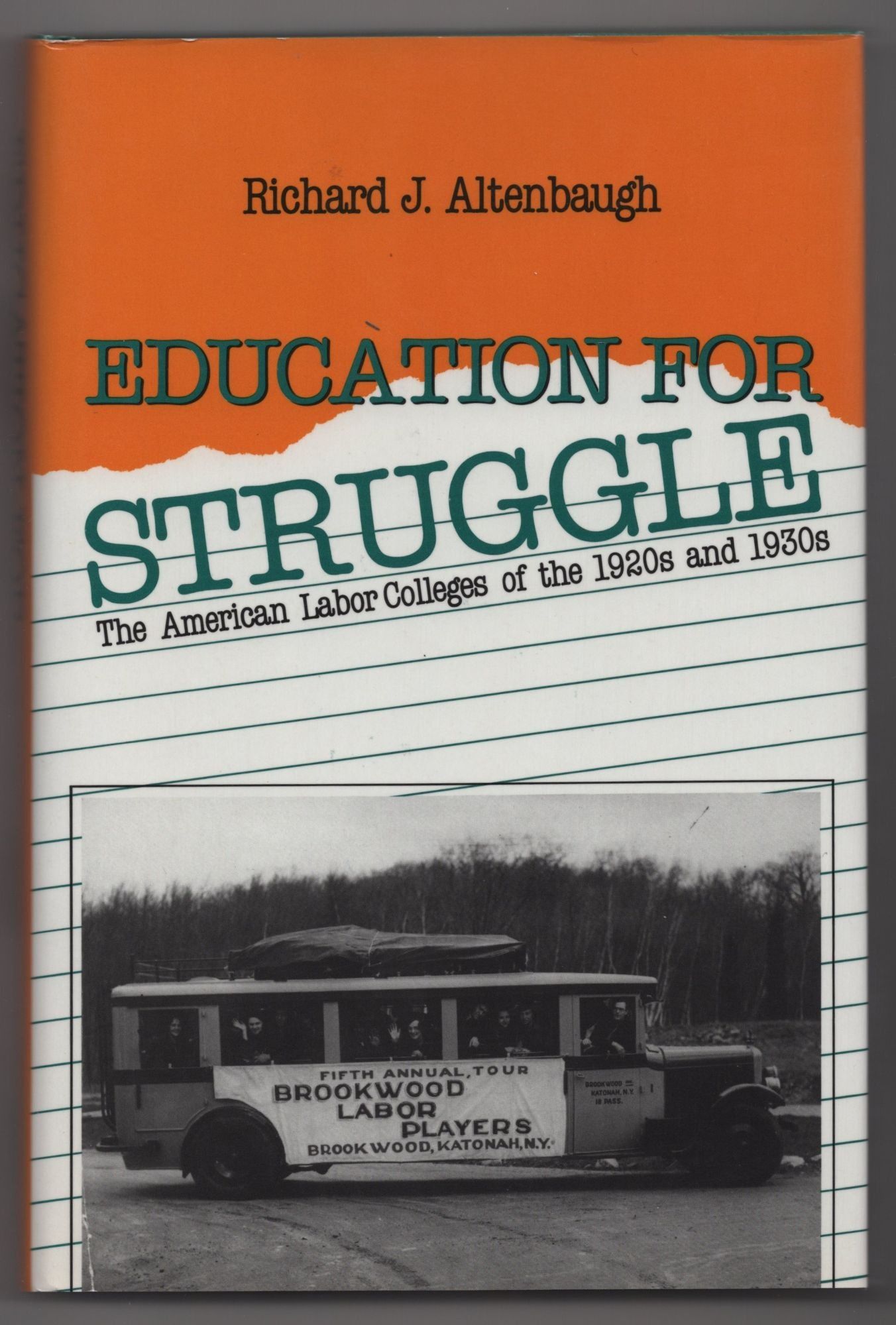
Philadelphia, PA: Temple University Press, 1990. First edition. Hardcover. Near Fine/Near Fine. xi, 339 pp. Octavo [23 cm]; full green cloth with gilt stamped titling to spine. Pictorial dust jacket. With extensive notes, bibliography, and index at the rear. A nice copy with just a hint of shelfwear. Thoroughly covers three of the schools of the American labor college movement: the Work People's College (in Duluth, Minnesota,1904-1941), the Brookwood Labor College (in Katonah, New York, 1921-1937), and the Commonwealth College (near Mena, Arkansas, 1923-1941). These three schools were selected by the author particularly because of their longevity, notoriety, geographical diversity, and abundant archives.
"The workers' education movement in the United States grew out of the political and economic struggles of American workers in the early 1900s. Workers created these labor colleges because they perceived the need for education and training to facilitate their struggles. [...] Unlike the formal educational system, the labor colleges upheld working-class culture and provided adult worker-students with knowledge and skills necessary to serve the labor movement. Avoiding traditional teaching methods, they relied on progressive, democratic pedagogy to train labor organizers and activists. Despite the ideological fervor and left-wing support for the labor colleges, a number of factors led to their closing. The fragmentation of the political left doomed the schools to petty factionalism. The combined opposition by business, the conservative right, and the AFL contributed to the repression of the labor programs. And the colleges' insistence on independence from other institutions to avoid the implication of political alignment sealed their fate. While the schools never achieved the 'new social order' that was envisioned, this study evaluates the significance of their brief existence and the lessons that can be applied to the mature but ailing labor movement today.
"The workers' education movement in the United States grew out of the political and economic struggles of American workers in the early 1900s. Workers created these labor colleges because they perceived the need for education and training to facilitate their struggles. [...] Unlike the formal educational system, the labor colleges upheld working-class culture and provided adult worker-students with knowledge and skills necessary to serve the labor movement. Avoiding traditional teaching methods, they relied on progressive, democratic pedagogy to train labor organizers and activists. Despite the ideological fervor and left-wing support for the labor colleges, a number of factors led to their closing. The fragmentation of the political left doomed the schools to petty factionalism. The combined opposition by business, the conservative right, and the AFL contributed to the repression of the labor programs. And the colleges' insistence on independence from other institutions to avoid the implication of political alignment sealed their fate. While the schools never achieved the 'new social order' that was envisioned, this study evaluates the significance of their brief existence and the lessons that can be applied to the mature but ailing labor movement today.