

The Shorter Catechism With Proof Texts. Compiled, And Translated By, Rev. A. N. Chamberlin. [Proof Sheets]
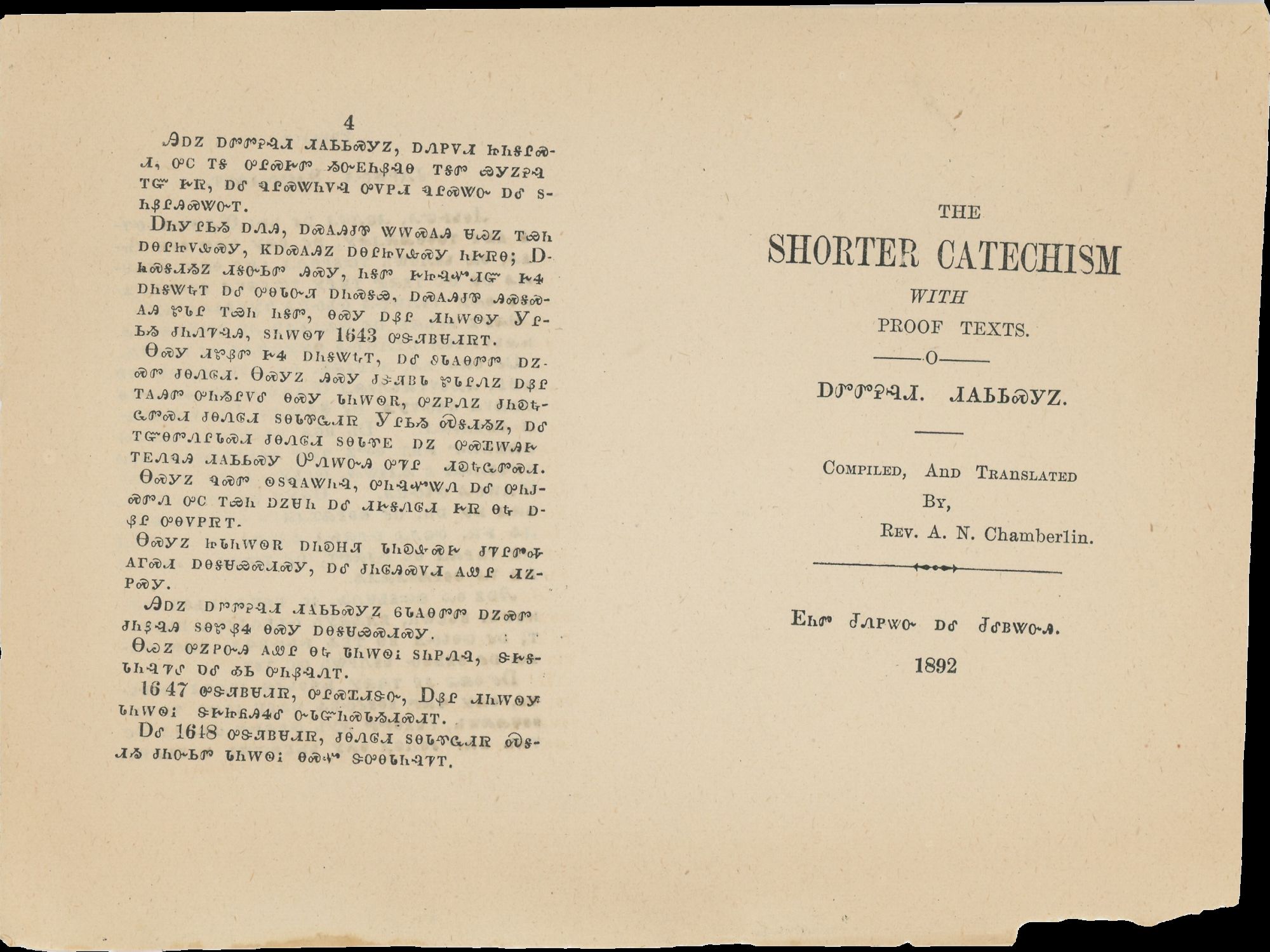
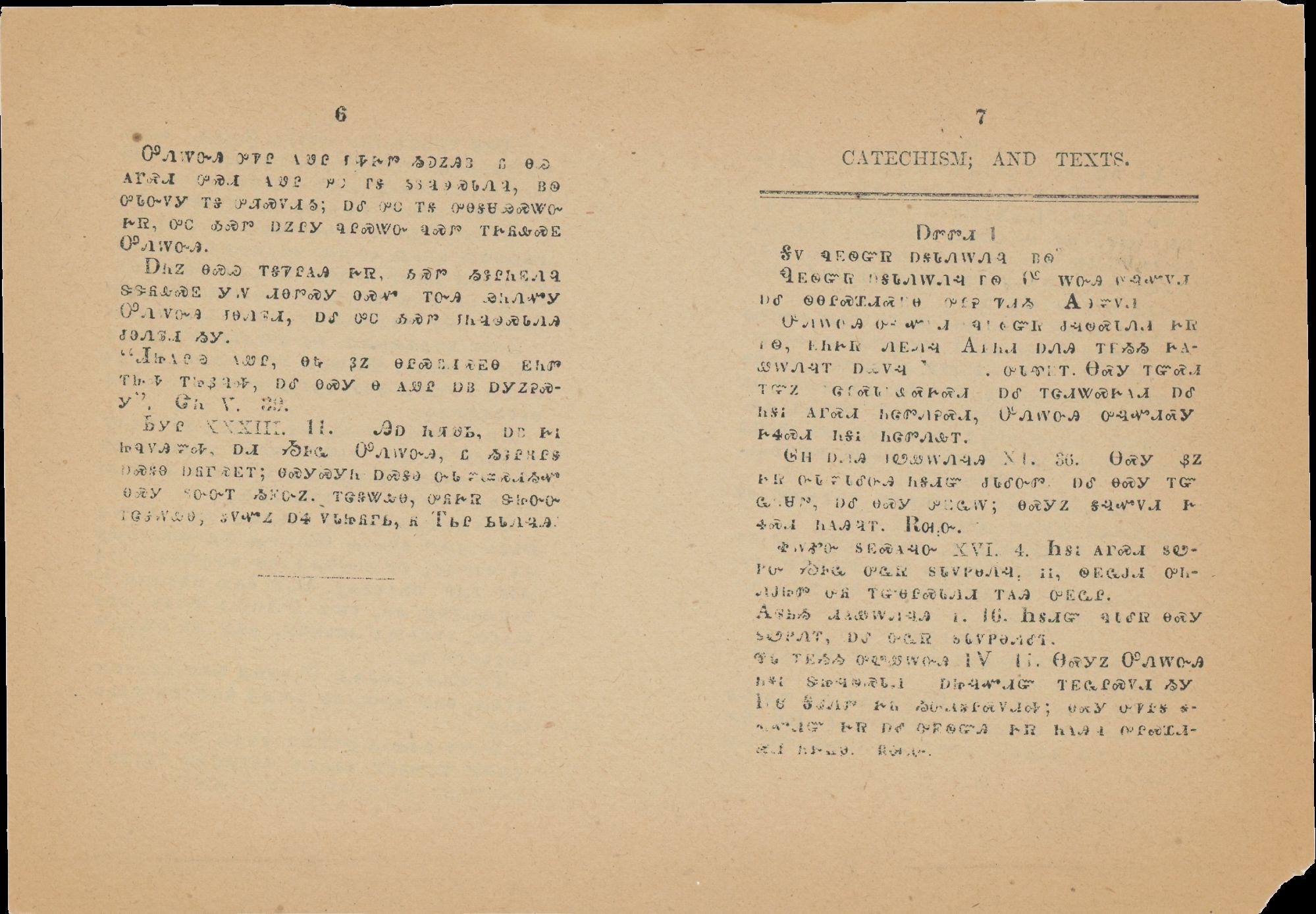
- Folio of eleven unbound sheets (forty-four pages) measuring approximately 6 x 8 inches
- Indian Territory: N.p., 1892
Indian Territory: N.p., 1892. Folio of eleven unbound sheets (forty-four pages) measuring approximately 6 x 8 inches. Marginal damage and fading to text; excellent.. Amory Nelson Chamberlin (1821–1894) was born on Brainerd Mission in what is now Chattanooga, Tennessee, the son and grandson of missionaries. Fluent in both English and Cherokee, Chamberlin worked as an interpreter and served under General Stand Watie in the Confederate States Army.[1] After the war, Chamberlin established the Pheasant Hill Mission near Vinita, Indian Territory, with Reverend Hamilton Balentine, preaching in Cherokee and English.[2]
Offered here is a Cherokee-language version of the Shorter Catechism, translated by Chamberlin. The Cherokee written language is a syllabary—a writing system in which symbols represent whole syllables—developed in the early 19th century by Sequoyah, a Cherokee leader and inventor. It was one of the first writing systems for an Indigenous American language and significantly increased Cherokee literacy within a short time of its adoption in the 1820s.[3]
We find fifteen copies of Chamberlin’s catechism in OCLC. Of interest to historians of the Cherokee nation, its language, and its Christian missionaries.
[1] Lon H. Eakes, “Rev. Amory Nelson Chamberlin, 1821–1894,” Chronicles of Oklahoma 12, no. 1 (1934): 97–102.
[2] O.B. Campbell, Vinita, I.T.: The Story of a Frontier Town of the Cherokee Nation 1871–1907 (The Oklahoma Publishing Co., 1909).
[3] Willard Walker and James Sarbaugh, “The Early History of the Cherokee Syllabary,” Ethnohistory 40, no. 1 (Winter 1993): 70–94.
Offered here is a Cherokee-language version of the Shorter Catechism, translated by Chamberlin. The Cherokee written language is a syllabary—a writing system in which symbols represent whole syllables—developed in the early 19th century by Sequoyah, a Cherokee leader and inventor. It was one of the first writing systems for an Indigenous American language and significantly increased Cherokee literacy within a short time of its adoption in the 1820s.[3]
We find fifteen copies of Chamberlin’s catechism in OCLC. Of interest to historians of the Cherokee nation, its language, and its Christian missionaries.
[1] Lon H. Eakes, “Rev. Amory Nelson Chamberlin, 1821–1894,” Chronicles of Oklahoma 12, no. 1 (1934): 97–102.
[2] O.B. Campbell, Vinita, I.T.: The Story of a Frontier Town of the Cherokee Nation 1871–1907 (The Oklahoma Publishing Co., 1909).
[3] Willard Walker and James Sarbaugh, “The Early History of the Cherokee Syllabary,” Ethnohistory 40, no. 1 (Winter 1993): 70–94.