

Letters to William H. Sharp, A Student at California Military Academy and Merchant in Oregon
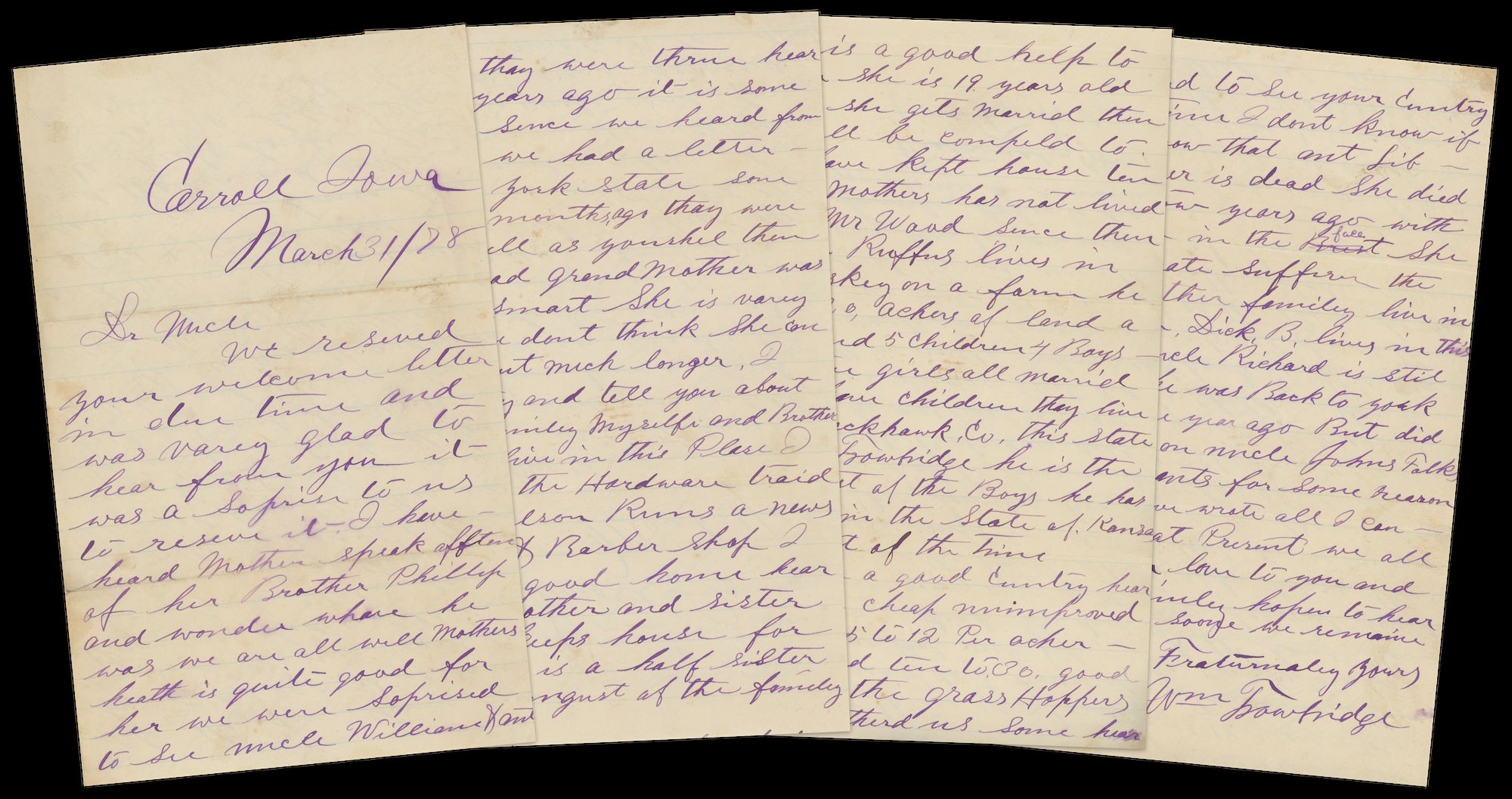
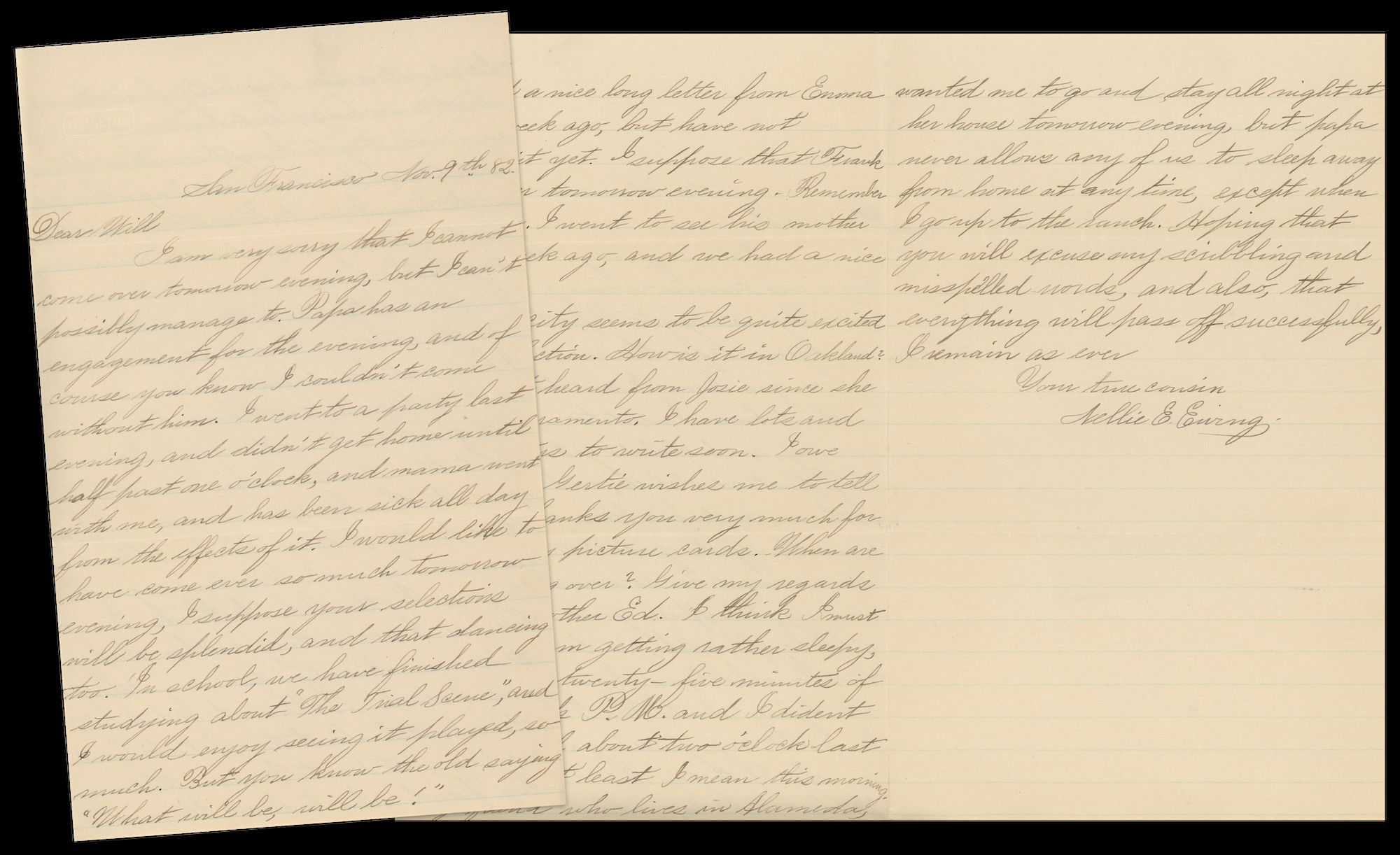
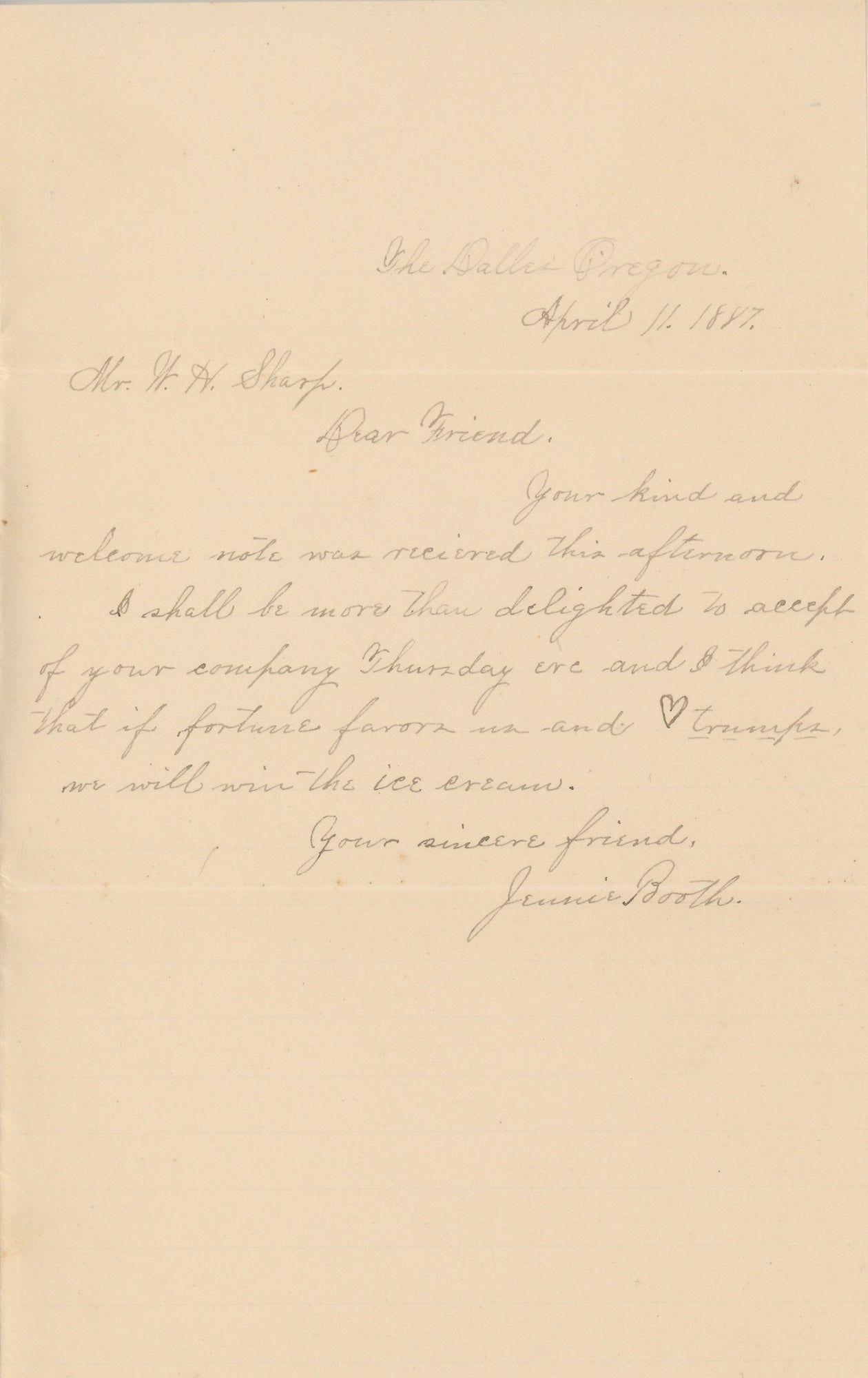
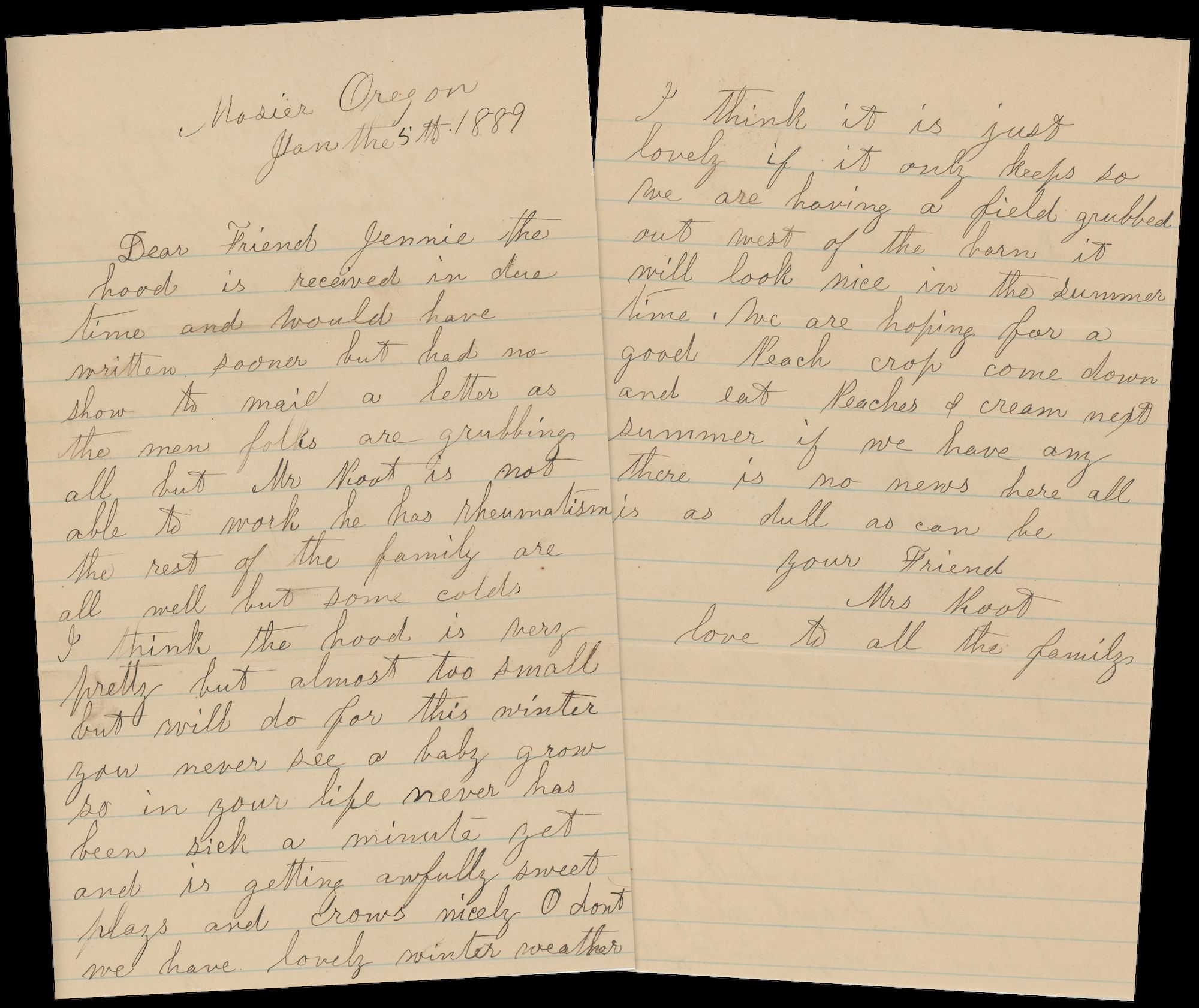
- Sixty-five items: sixty-two letters, mainly dating from 1887 (eleven letters), 1888 (nineteen letters), and 1889 (fourteen lette
- California, Oregon, Iowa, and New York , 1889
California, Oregon, Iowa, and New York, 1889. Sixty-five items: sixty-two letters, mainly dating from 1887 (eleven letters), 1888 (nineteen letters), and 1889 (fourteen letters); and three playbills from the CMA Dramatic Club. Overall excellent.. William H. Sharp (1863–deceased) was born in Washington and lived in The Dalles, Oregon. He attended the California Military Academy in Oakland from 1880 to 1883 and then returned to The Dalles. There, he worked as a commission merchant and ran for county clerk.
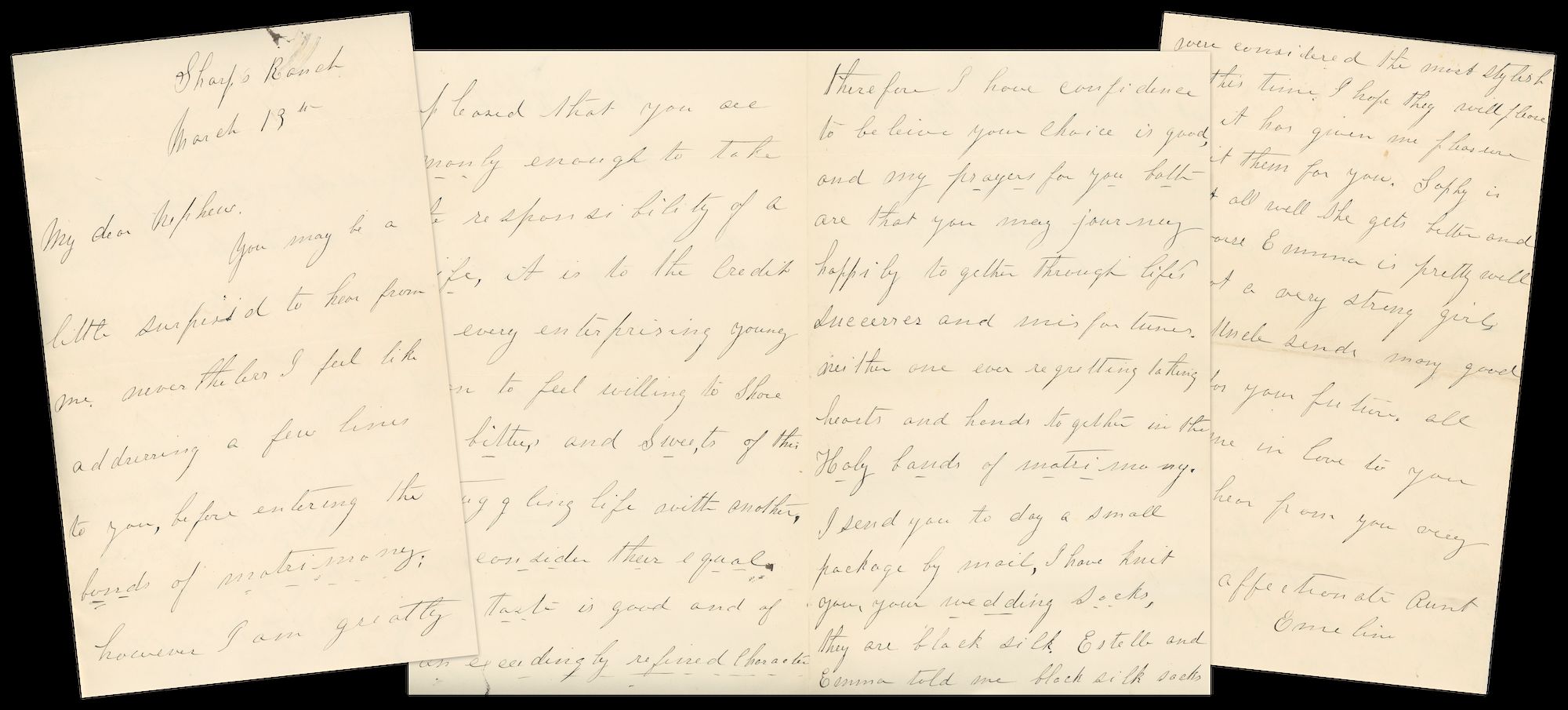
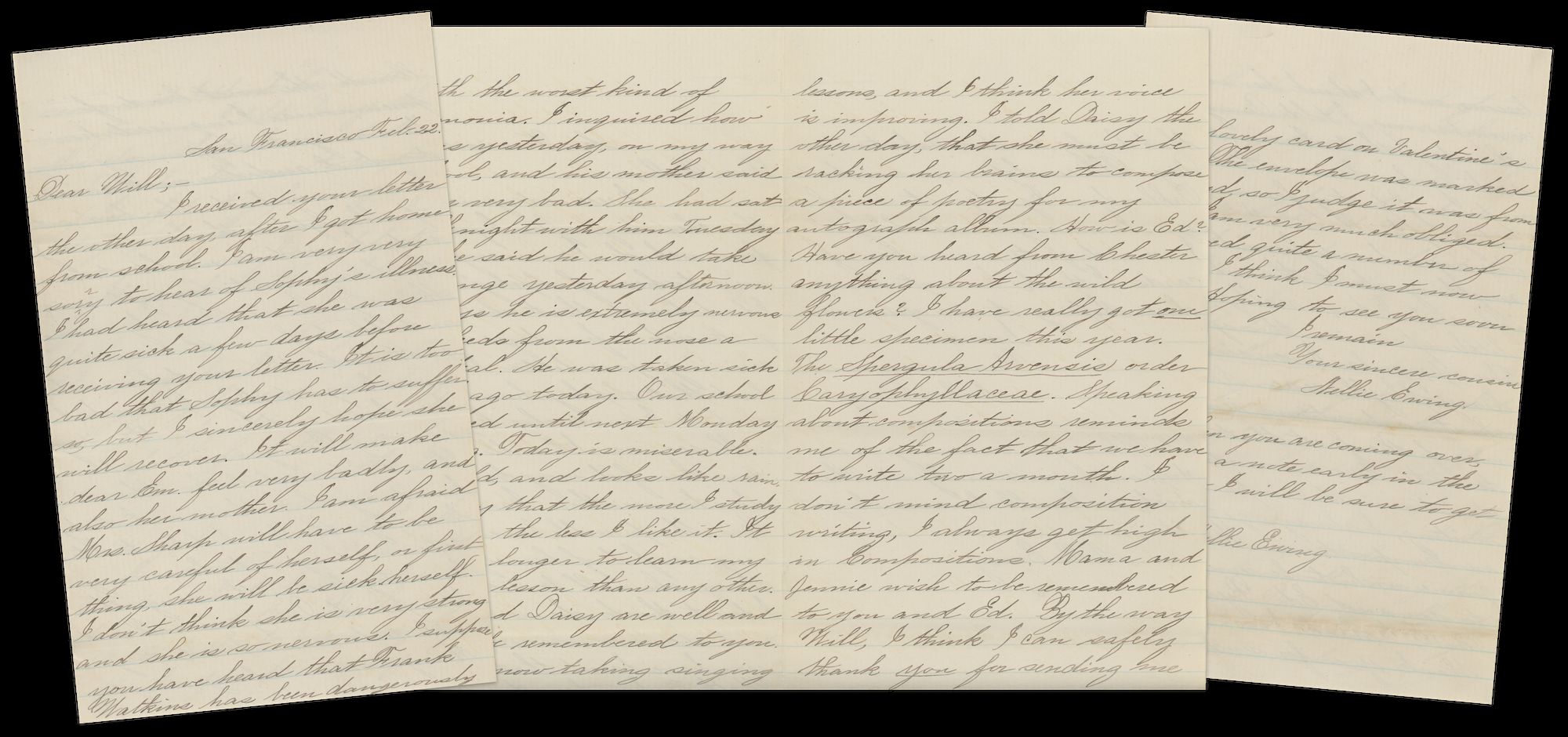
Offered here is a collection of letters mainly to, with some from, William Sharp. The letters are from friends and family—Sharp had many cousins with whom he corresponded regularly—and cover his time at the California Military Academy (CMA) and back in The Dalles.
The CMA was founded in 1865 by Rev. David McClure, and combined college preparatory education with military drills, including firearm training, with the aim to “give the youth of the remote West an opportunity to acquire an education such as could not otherwise be obtained.”[1] His attendance put a financial strain on the family; his mother, Mary Sharp, reminds him that “we have to scrach hard to keep you at school” as she scolds him for his poor performance (April 8, 1882). Mary Sharp also worried about conditions at the Academy:
“Willie I hope you will be kind to all new comers & comfort them all you can I read of two boys being killed by ill treatment at boarding schools, one they took out of a warm bed & pumped cold water on him in a cold night untill he died the other they tied a [?] & triped him so he fell [?] hurt his head & killed him I hope the boys do not play such tricks at your school”. (November 12, 1880)
The CMA promised not to admit any boys who were “morally bad, as the institution is not designed to reform vicious boys”.[1] However, a letter from C.W. Chapman, Sharp’s friend and former roommate, suggests that the school’s rigorous drilling was not necessarily successful. Chapman writes from Nevada City, a mining town in central California:
“I’m working hard as usual; but I expect you don’t care anything about that. I’m having lots of fun too, if that interests you. You don’t know one half as many girls as I go to see every evening. And they are the kind of girls that you can have fun with too. [...] I am making up for lost time. [...] I haven’t had my fingers in anybody else’s pie yet, and maybe I haven’t had them in anybody’s anything else either. But that’s some more trash. [...] How do you fellows treat the little dears now? I hope you don’t deal with them as harshly as you did when I was down there.” (January 10, 1883)
Later letters are mainly between Sharp and his wife-to-be, Jennie Booth. He mentions attending a temperance meeting, updates her on business, which is “not overly brisk” but “good enough” (October 6, 1888), and describes hiring a “mongolian” cook who is “a very fair specimen of the celestial race” (October 5, 1887). Booth describes Oregon City on a visit there as “very picturesque” but primitive: “it has only one street that is passable the rest are so rocky that you can’t get over them with a conveyance.” (August 17, 1888).
Around this time, Sharp runs for county clerk as a Republican; a W.T. McPhire writes from Mosier:
“I am glad to know you are in the field for the clerkship, which as you state is a very desirable office. Now I can and will say this much, (although opposing you in politics) that if you receive the nomination for this office against any one in my party that is not an honest sober and industrious man, I will willingly do all in my power to help elect you to the office.” (March 12, 1888)
Despite this bipartisan support, Sharp lost to a man named Thompson. Sharp and Booth married and lived together in The Dalles, and Sharp remained in his career as a farmer and merchant.
Of interest to scholars of Oregon history and of 19th-century military education.
[1] “California Military Academy,” Mariposa Gazette, June 30, 1887, 4.
Offered here is a collection of letters mainly to, with some from, William Sharp. The letters are from friends and family—Sharp had many cousins with whom he corresponded regularly—and cover his time at the California Military Academy (CMA) and back in The Dalles.
The CMA was founded in 1865 by Rev. David McClure, and combined college preparatory education with military drills, including firearm training, with the aim to “give the youth of the remote West an opportunity to acquire an education such as could not otherwise be obtained.”[1] His attendance put a financial strain on the family; his mother, Mary Sharp, reminds him that “we have to scrach hard to keep you at school” as she scolds him for his poor performance (April 8, 1882). Mary Sharp also worried about conditions at the Academy:
“Willie I hope you will be kind to all new comers & comfort them all you can I read of two boys being killed by ill treatment at boarding schools, one they took out of a warm bed & pumped cold water on him in a cold night untill he died the other they tied a [?] & triped him so he fell [?] hurt his head & killed him I hope the boys do not play such tricks at your school”. (November 12, 1880)
The CMA promised not to admit any boys who were “morally bad, as the institution is not designed to reform vicious boys”.[1] However, a letter from C.W. Chapman, Sharp’s friend and former roommate, suggests that the school’s rigorous drilling was not necessarily successful. Chapman writes from Nevada City, a mining town in central California:
“I’m working hard as usual; but I expect you don’t care anything about that. I’m having lots of fun too, if that interests you. You don’t know one half as many girls as I go to see every evening. And they are the kind of girls that you can have fun with too. [...] I am making up for lost time. [...] I haven’t had my fingers in anybody else’s pie yet, and maybe I haven’t had them in anybody’s anything else either. But that’s some more trash. [...] How do you fellows treat the little dears now? I hope you don’t deal with them as harshly as you did when I was down there.” (January 10, 1883)
Later letters are mainly between Sharp and his wife-to-be, Jennie Booth. He mentions attending a temperance meeting, updates her on business, which is “not overly brisk” but “good enough” (October 6, 1888), and describes hiring a “mongolian” cook who is “a very fair specimen of the celestial race” (October 5, 1887). Booth describes Oregon City on a visit there as “very picturesque” but primitive: “it has only one street that is passable the rest are so rocky that you can’t get over them with a conveyance.” (August 17, 1888).
Around this time, Sharp runs for county clerk as a Republican; a W.T. McPhire writes from Mosier:
“I am glad to know you are in the field for the clerkship, which as you state is a very desirable office. Now I can and will say this much, (although opposing you in politics) that if you receive the nomination for this office against any one in my party that is not an honest sober and industrious man, I will willingly do all in my power to help elect you to the office.” (March 12, 1888)
Despite this bipartisan support, Sharp lost to a man named Thompson. Sharp and Booth married and lived together in The Dalles, and Sharp remained in his career as a farmer and merchant.
Of interest to scholars of Oregon history and of 19th-century military education.
[1] “California Military Academy,” Mariposa Gazette, June 30, 1887, 4.