

Poems. By the Incomparable, Mrs. K.P.
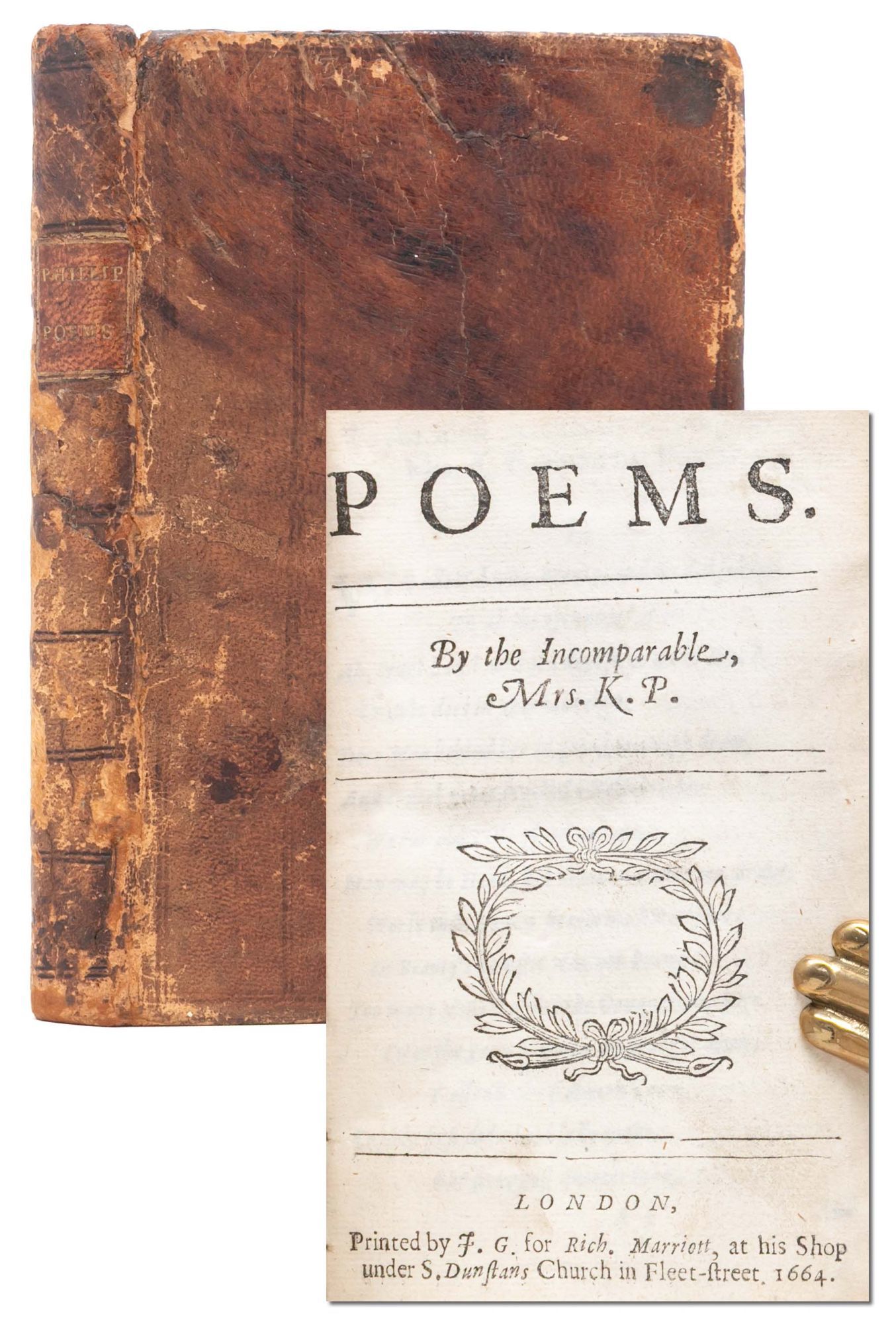


- London: Printed by J.G. for Rich. Marriott, 1664
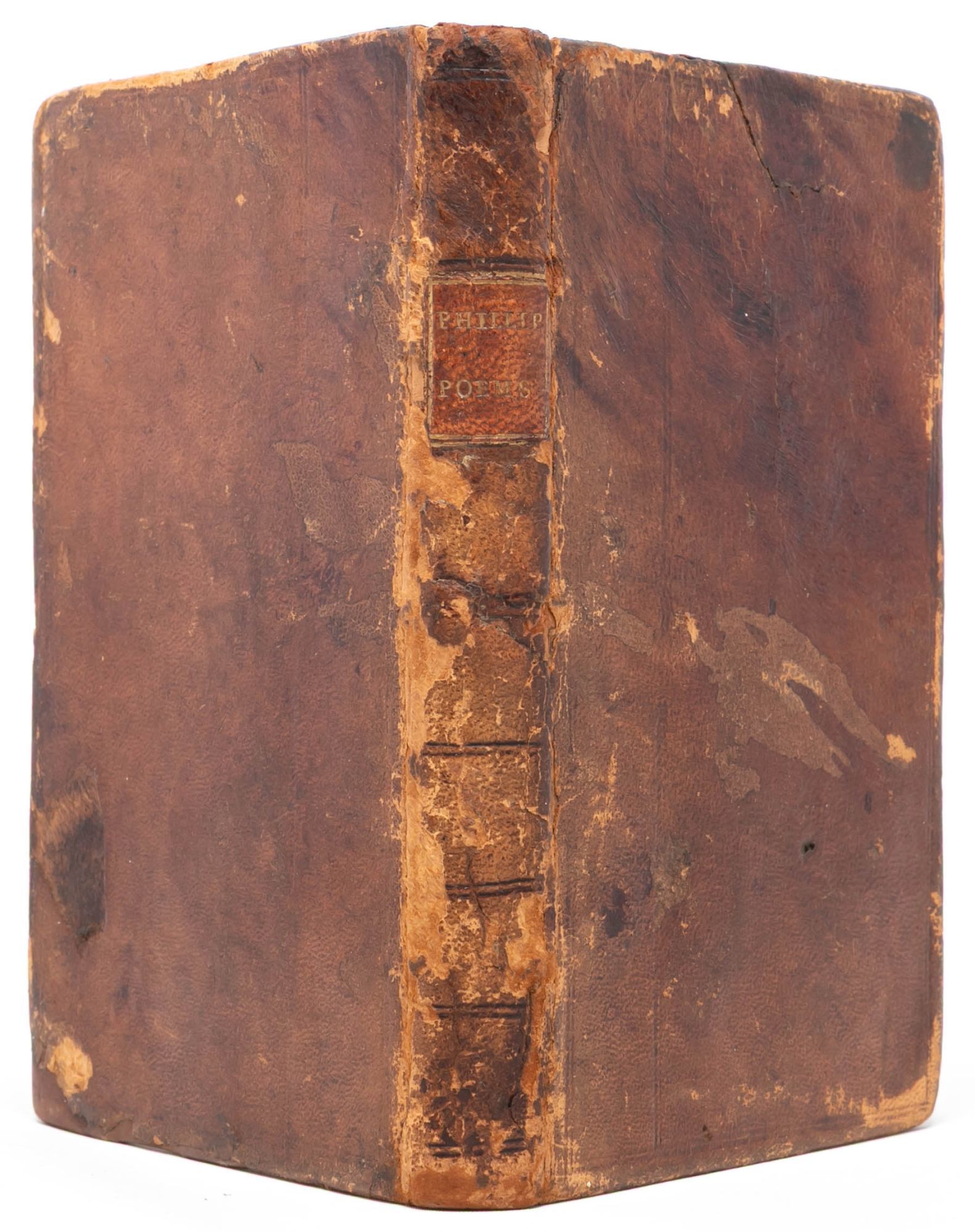
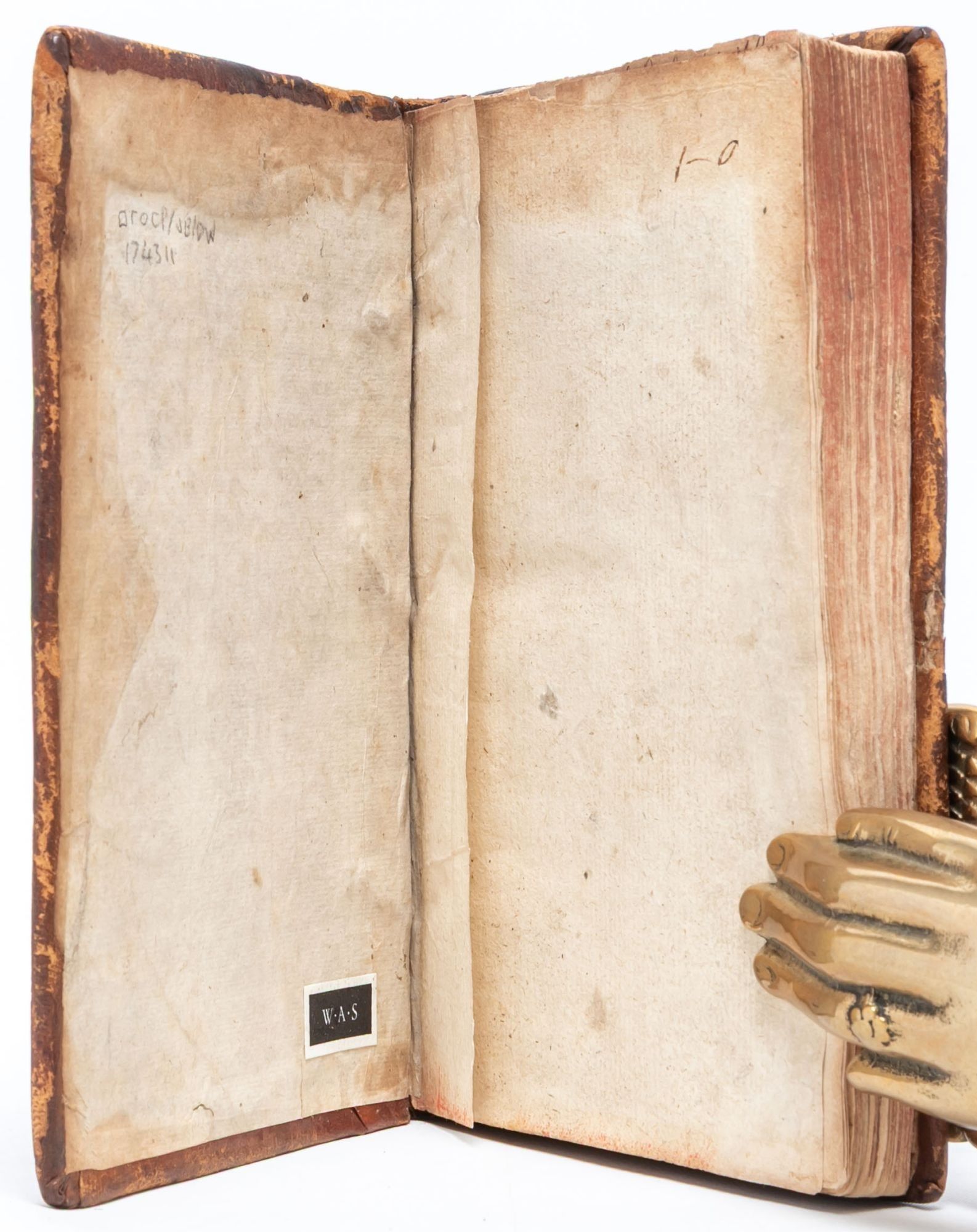
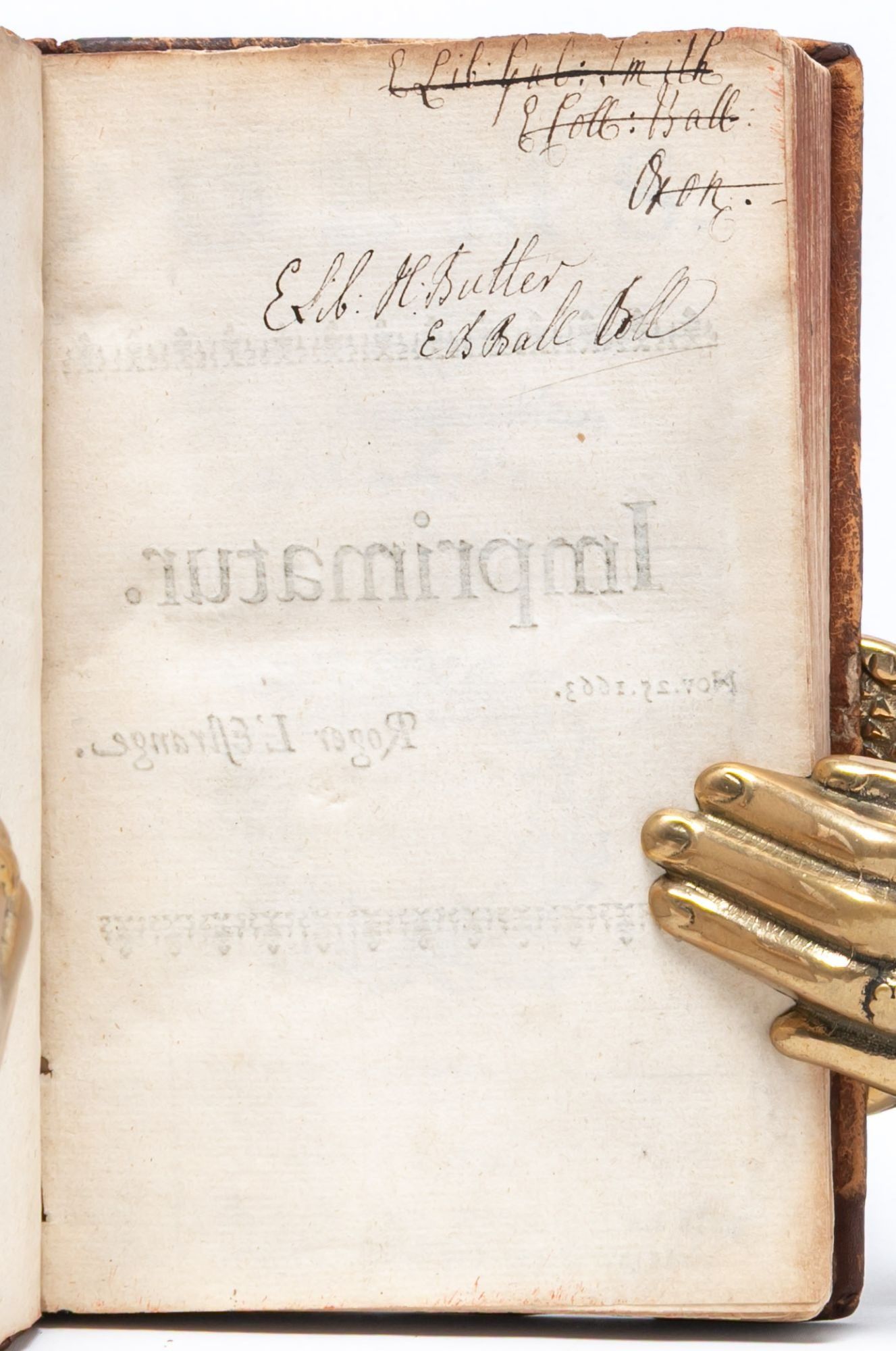
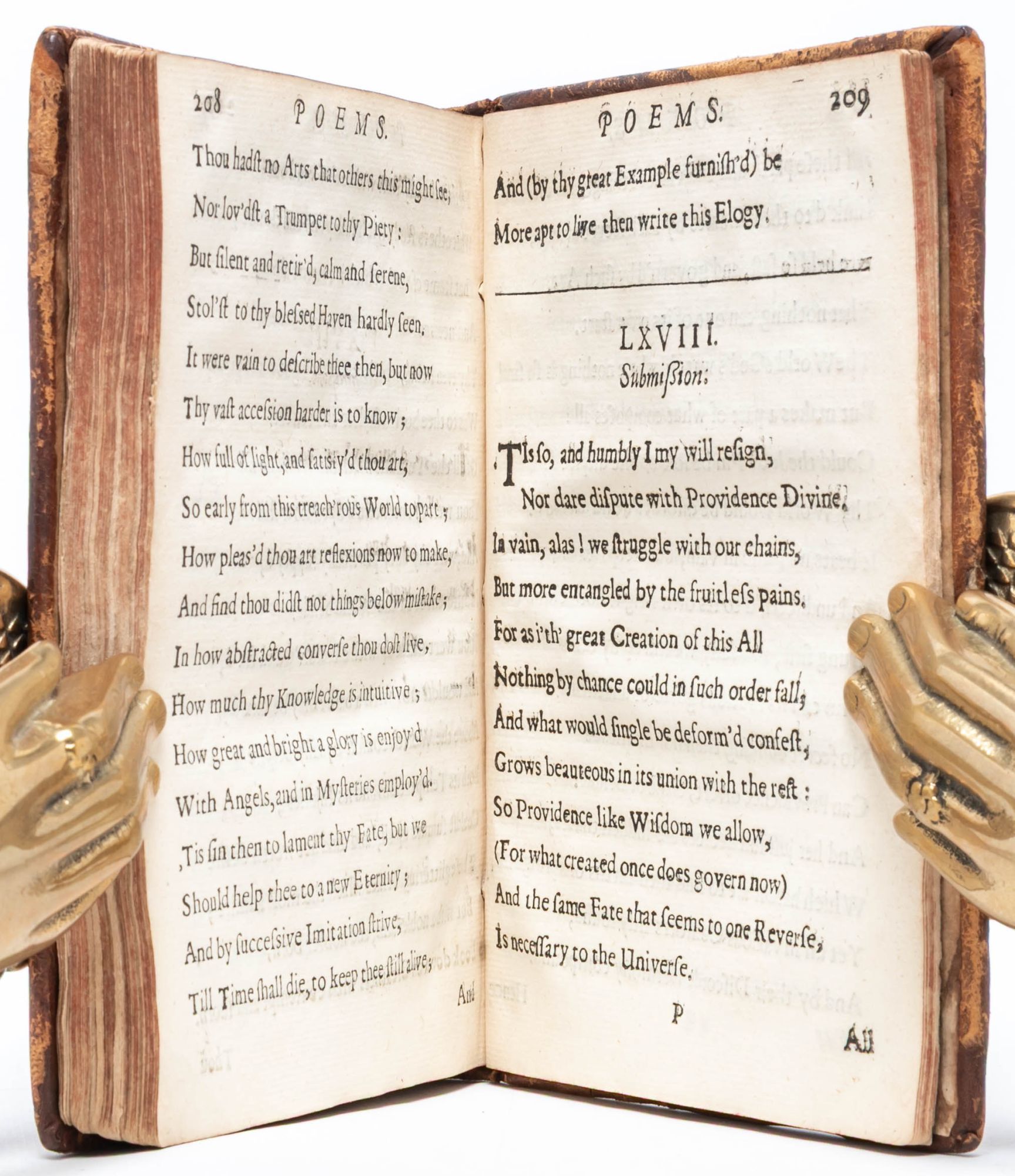
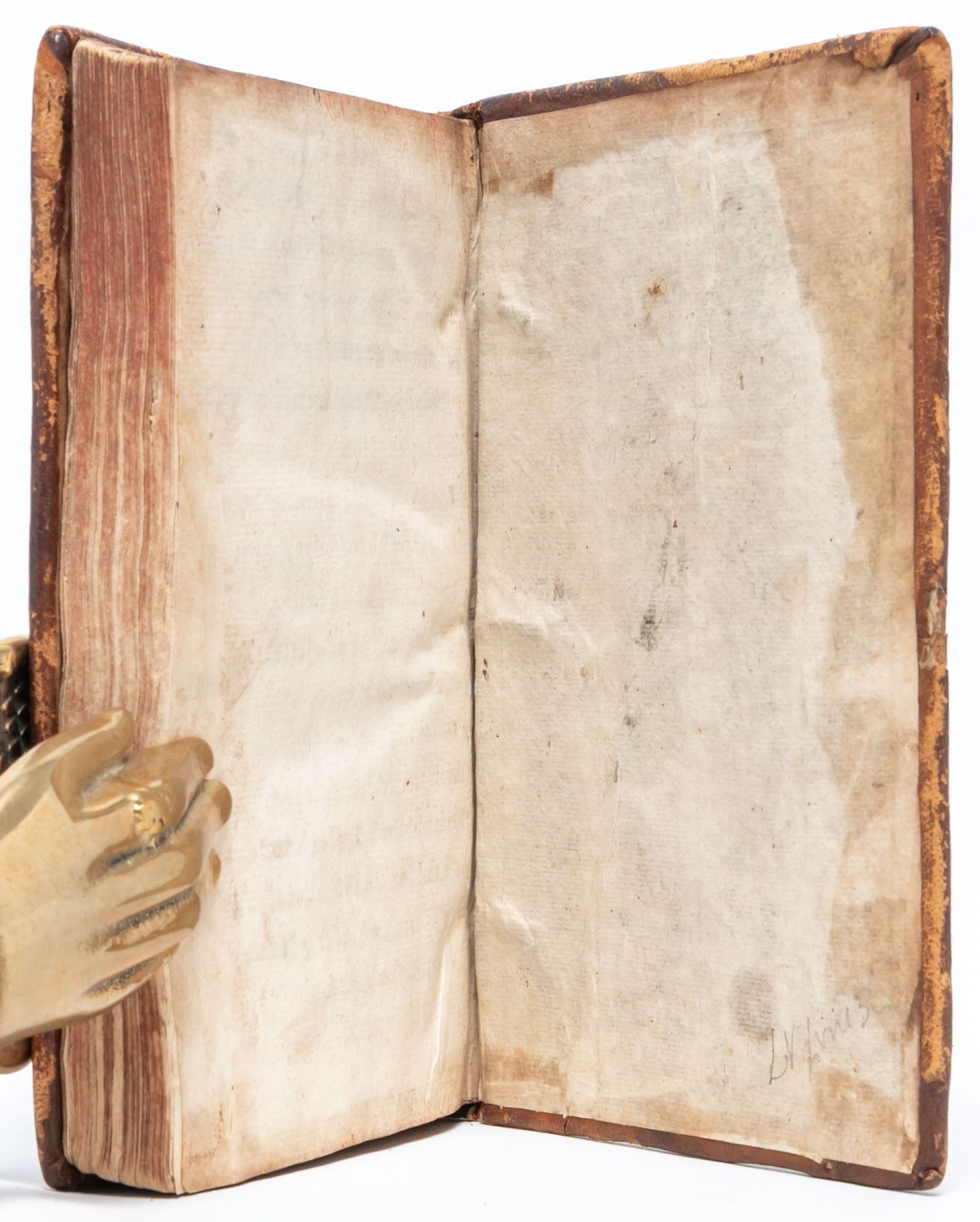
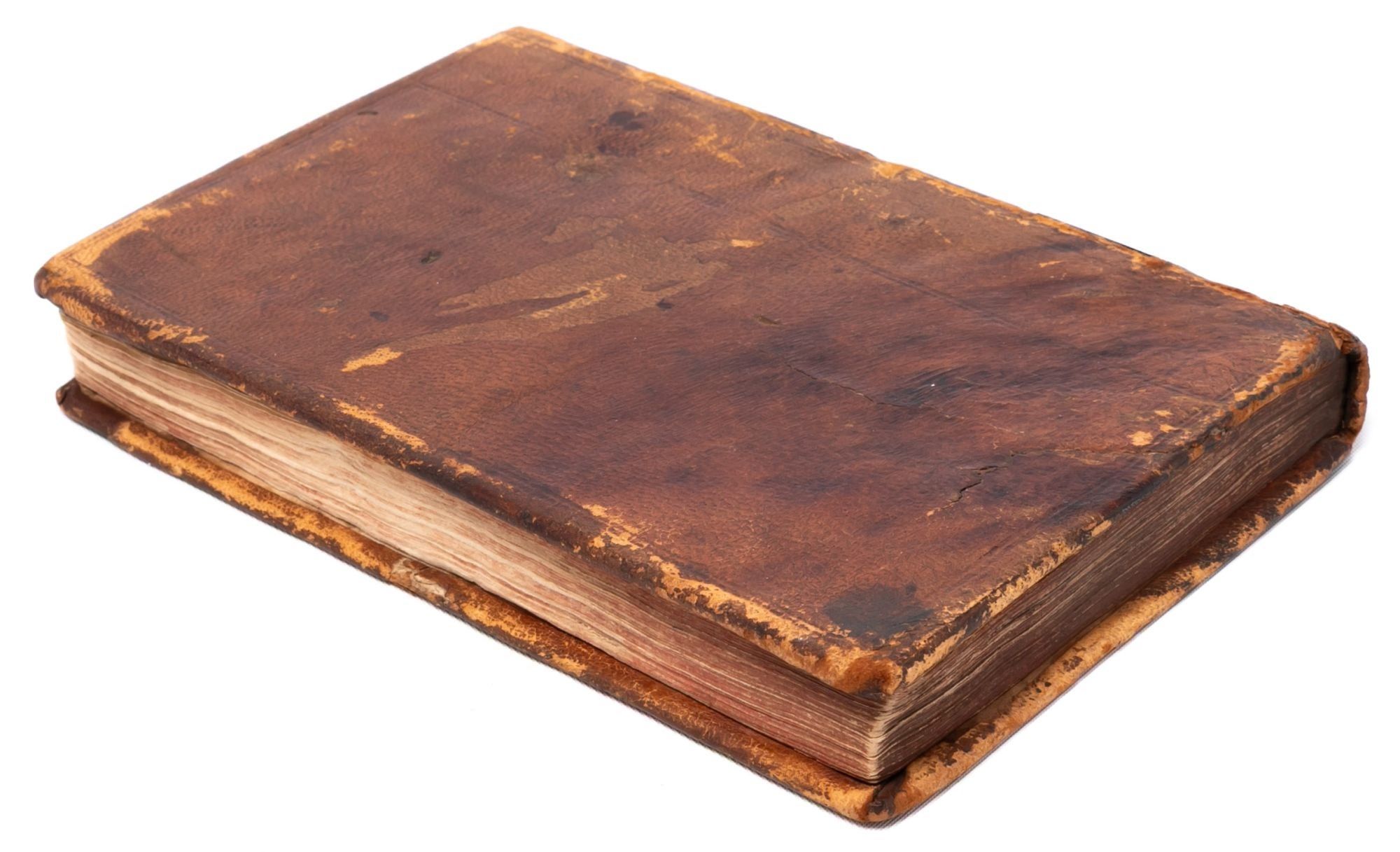
London: Printed by J.G. for Rich. Marriott, 1664. First edition. Very Good. Small octavo (168 x 112 mm): A-Q8 R4; 130 leaves, pp. [xvi], 242, [2]. Contemporary English blind-ruled sheep, 18th-century brown morocco label. Woodcut wreath device to title, woodcut initial to B1. Early ownership inscriptions of William Smith (struck through) and H. Butler, both of Balliol College, Oxford, to A1r; book label of William A. Strutz (1934-2024) to front pastedown. A few abrasions and spots of wear to sheep, front free endpaper partly excised, occasional small stains and light finger-soiling to contents. A very good copy.
First edition of the collected poems of the Anglo-Welsh royalist, known to her friends and admirers as the "Matchless Orinda" and the "English Sappho", a nod her intense poetic celebrations of female love and companionship. This controversial unauthorized edition was published in January 1664 and withdrawn by the publisher the same month. "Primarily a manuscript poet, Philips (1631/2-1664) had established an extensive coterie of readers and writers among her Welsh and London contacts during the 1650s [known as the Society of Friendship]. She became widely known for her innovative use of Donnean poetics to express passionate female friendship, her occasional verses on private friends and public figures, and her moral and political acuity" (Losocco). Her formal commentary on public affairs covered the execution of Charles I, the Restoration of Charles II, and profiles of numerous female members of the royal family. Although Philips never compared herself to Sappho, other writers often did, partly as a result of the intimate poems addressed from Orinda to Lucasia and Rosania, the pseudo-classical names of fellow Society of Friendship members Anne Owen and Mary Aubrey. Although her poems circulated in manuscript among a large and influential network, Philips wrote that she "never writ any line in my life with an intention to have it printed". She was outraged by this pirate edition; the publisher, Richard Marriott, expressed his regret in the London Intelligencer and promised to cease selling the book. Despite Philips's misgivings, the text of the 1664 Poems closely follows that of the manuscripts she circulated and differs only slightly from the 1667 authorized edition, which Philips began preparing but did not live to see through the press. Philips's poetry has had many notable admirers over the centuries and has enjoyed renewed scholarly interest in the last 40 years. John Dryden claimed to be a distant relation, writing that Philips was one "to whom I had the Honour to be related, and also to be known". John Keats, over a century later, celebrated Philips in a letter to John Hamilton Reynolds, describing how he was "gladdened in the extreme on opening the other day a book of poetry written by one beautiful Mrs. Philips", copying out her poem "To Mrs. M. A. at Parting" and praising the "most delicate fancy" of her work. The present copy includes the "Imprimatur" leaf A1 and the errata and blank leaves Q7-8 bound as printed; in some copies, these leaves are bound at the rear after the final poem "Upon Mr. Abraham Cowley's Retirement".
Grolier, Wither to Prior 668; Wing P2032. Paula Losocco, ed., Katherine Philips (1631/2-1664): Printed Poems 1667, 2017. Very Good.
First edition of the collected poems of the Anglo-Welsh royalist, known to her friends and admirers as the "Matchless Orinda" and the "English Sappho", a nod her intense poetic celebrations of female love and companionship. This controversial unauthorized edition was published in January 1664 and withdrawn by the publisher the same month. "Primarily a manuscript poet, Philips (1631/2-1664) had established an extensive coterie of readers and writers among her Welsh and London contacts during the 1650s [known as the Society of Friendship]. She became widely known for her innovative use of Donnean poetics to express passionate female friendship, her occasional verses on private friends and public figures, and her moral and political acuity" (Losocco). Her formal commentary on public affairs covered the execution of Charles I, the Restoration of Charles II, and profiles of numerous female members of the royal family. Although Philips never compared herself to Sappho, other writers often did, partly as a result of the intimate poems addressed from Orinda to Lucasia and Rosania, the pseudo-classical names of fellow Society of Friendship members Anne Owen and Mary Aubrey. Although her poems circulated in manuscript among a large and influential network, Philips wrote that she "never writ any line in my life with an intention to have it printed". She was outraged by this pirate edition; the publisher, Richard Marriott, expressed his regret in the London Intelligencer and promised to cease selling the book. Despite Philips's misgivings, the text of the 1664 Poems closely follows that of the manuscripts she circulated and differs only slightly from the 1667 authorized edition, which Philips began preparing but did not live to see through the press. Philips's poetry has had many notable admirers over the centuries and has enjoyed renewed scholarly interest in the last 40 years. John Dryden claimed to be a distant relation, writing that Philips was one "to whom I had the Honour to be related, and also to be known". John Keats, over a century later, celebrated Philips in a letter to John Hamilton Reynolds, describing how he was "gladdened in the extreme on opening the other day a book of poetry written by one beautiful Mrs. Philips", copying out her poem "To Mrs. M. A. at Parting" and praising the "most delicate fancy" of her work. The present copy includes the "Imprimatur" leaf A1 and the errata and blank leaves Q7-8 bound as printed; in some copies, these leaves are bound at the rear after the final poem "Upon Mr. Abraham Cowley's Retirement".
Grolier, Wither to Prior 668; Wing P2032. Paula Losocco, ed., Katherine Philips (1631/2-1664): Printed Poems 1667, 2017. Very Good.