

The Past is Ours
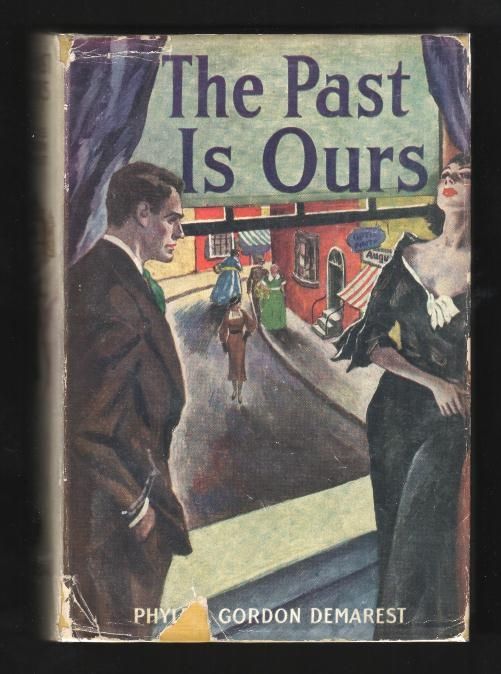
- Hardcover
- New York: The Macaulay Company, (c.1934)
New York: The Macaulay Company. Very Good+ in Very Good dj. (c.1934). Later Printing (?) (see Notes). Hardcover. (price-clipped) [modest shelfwear, a bit of soiling to the top edge of the text block, otherwise a nice clean copy; the jacket is a bit edgeworn, with a small chip at the bottom of the front panel and another at the top of the spine, with various bits of creasing and a few other small tears, bits of paper loss at several corners, and some light soiling to the rear panel]. Romantic-triangle story set in New York and Berlin, about a young architect who flees to Europe "in a desperate attempt to escape the bitter tang of self-inflicted unhappiness," and there meets "the tragic figure of Sybill Nash, who like himself was too young to have a past." Meanwhile, back in the States there's still Una, "who had loved [him] and whom he had loved with all his soul." What ensues is "the drama of those who love too well, without the capacity of forgetting, and the inevitable havoc it wreaks not only upon their own lives, but upon the lives of others as well," with questions galore, e.g.: "What ending could such a love as theirs have that waited always just outside the borders of the separate life each had made?" The author was the daughter of noted Jewish-English novelist and playwright Samuel Gordon; her mother, a British-born violinist, moved to the U.S. after her divorce from Gordon, where she performed under the name "Estelle Collette," and became the vaudeville partner (and eventual first wife) of comedian and future popular movie and TV character actor William Demarest. (Regarding the edition: the dust jacket has a printed note at the top of the front flap (partially trimmed away) referring to "these popular priced editions" being available because of the author's acceptance of a reduced royalty, etc., which would suggest that this wasn't the first printing; on the book itself there is no indication of a later printing, however, and all the books listed in the rear jacket panel were also published by Macaulay in the same year, 1934 -- so if, in fact, this is a "later printing" of the first edition, it's not *much* later.) .