

White Collar: A Novel in Linocuts



- Paperback
- [San Francisco, CA] , 1940
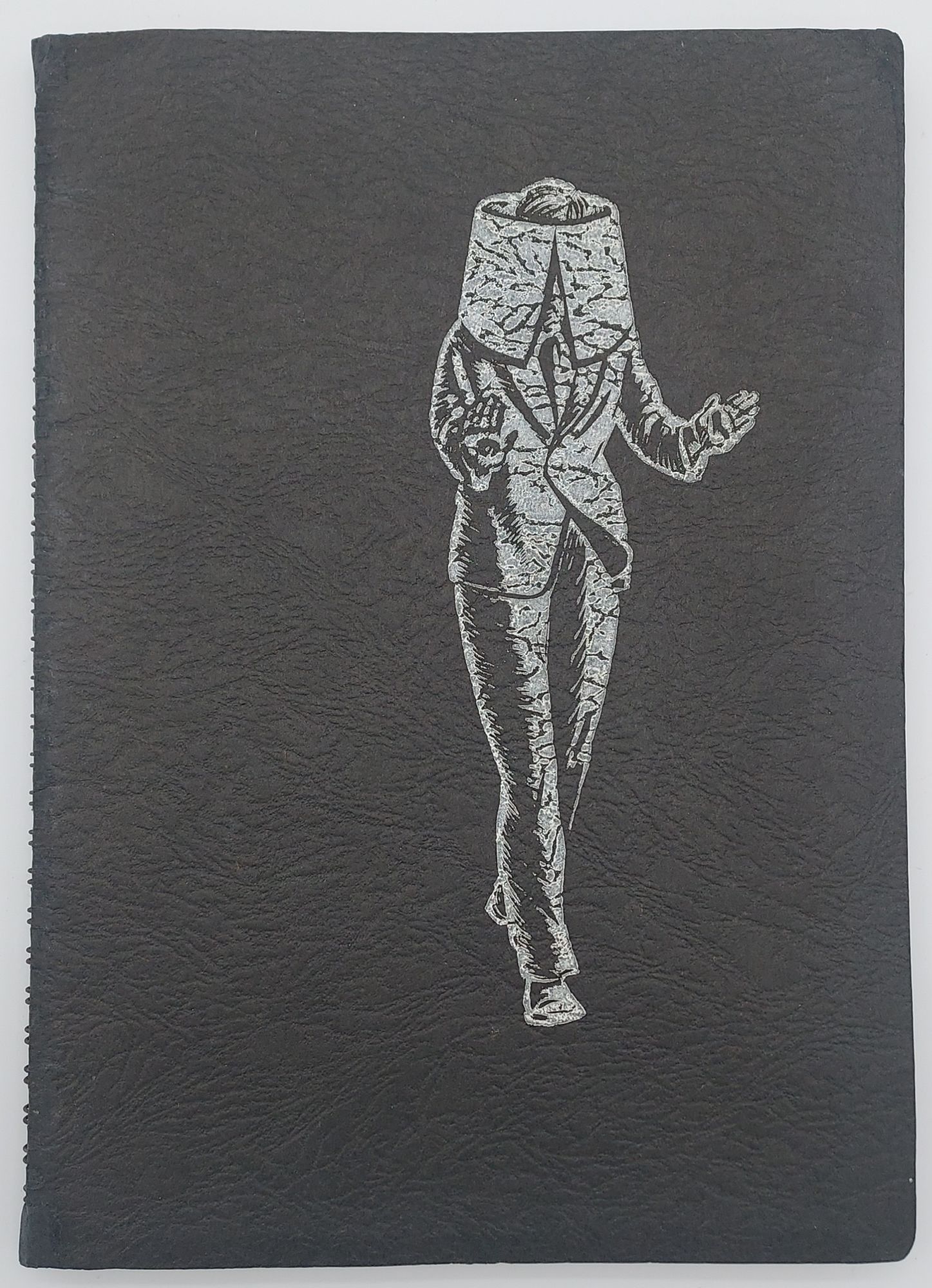
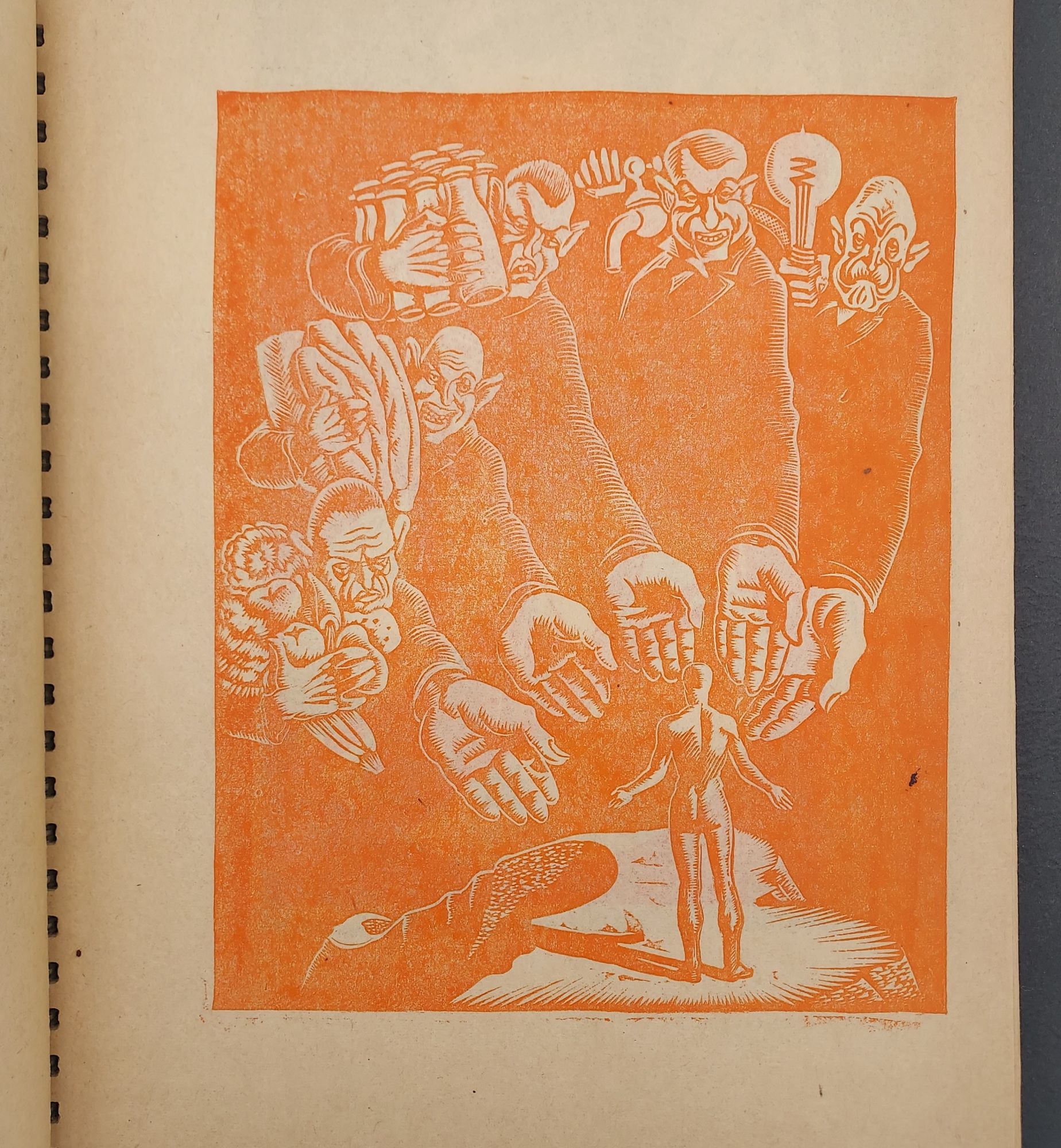
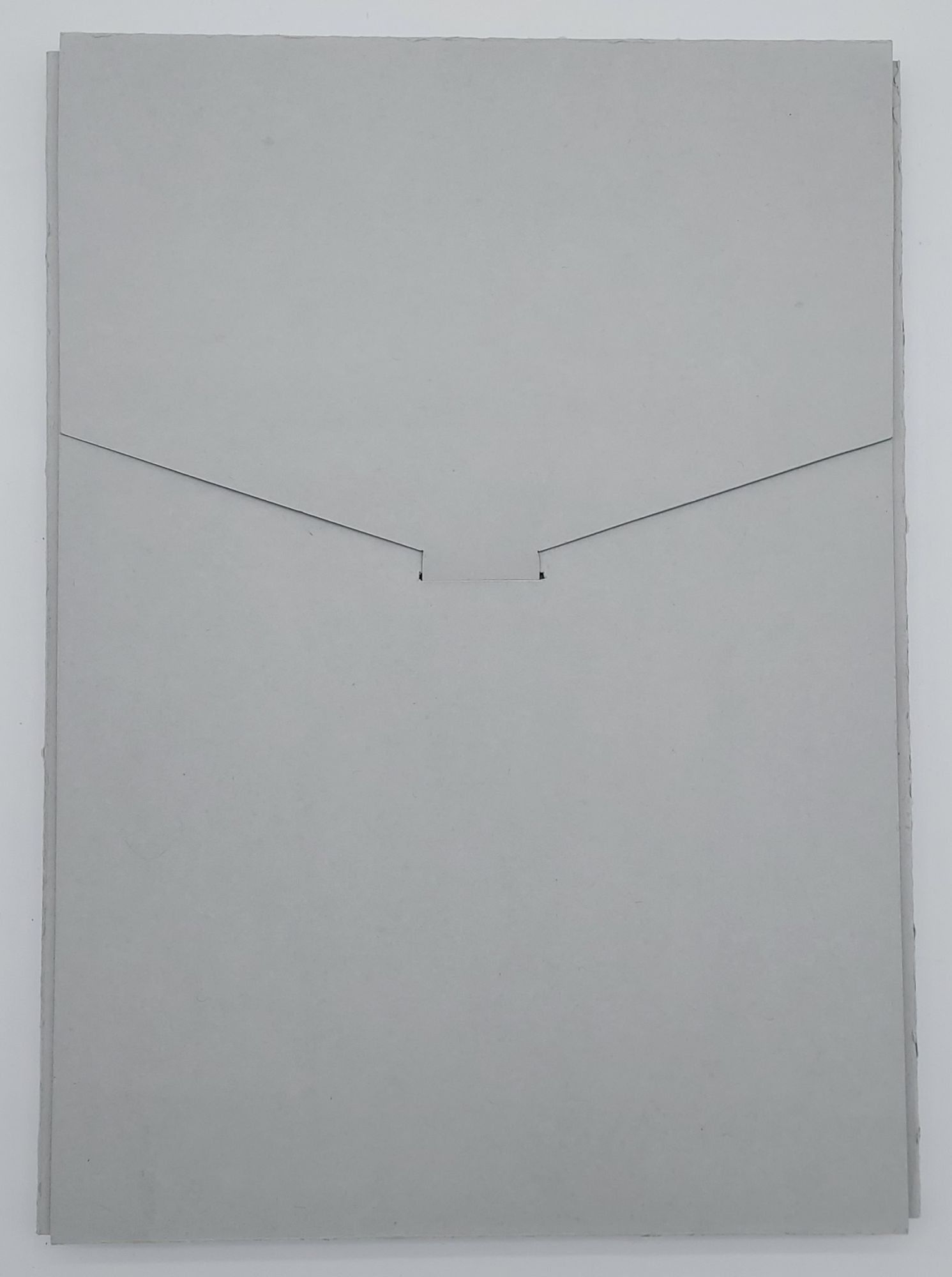
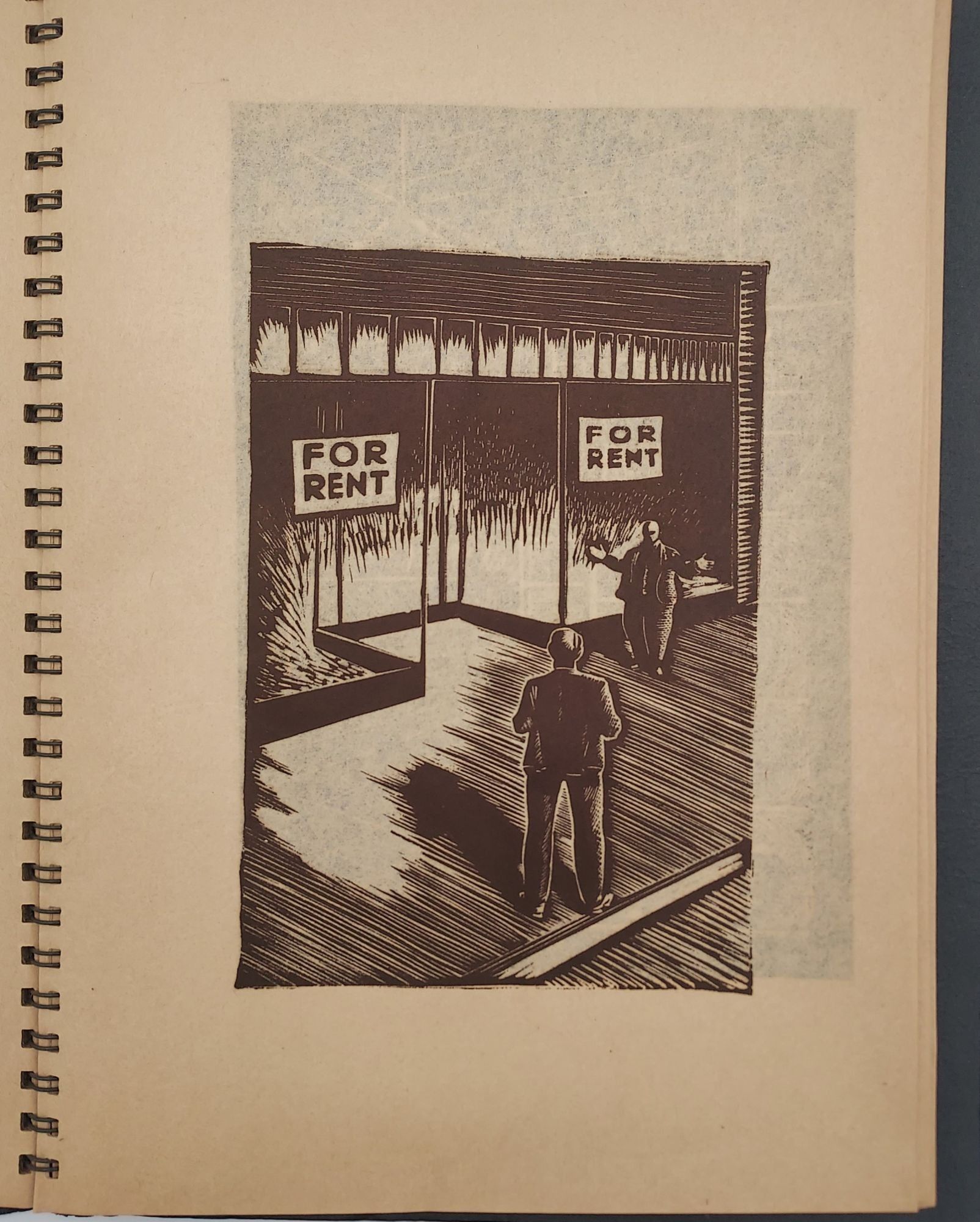
[San Francisco, CA], 1940. Second handmade edition. Paperback. Very Good +. Quarto [26.5 cm] in textured black wraps with the image of the man with the "white collar" printed in white on front wrap. Metal comb binding. The leaves are of a fine thin paper tissue. Covers professionally and very expertly reattached. Corners of wraps and spine ends skillfully restored. Very subtle discoloration to the top and bottom edges of the inside of the wraps. In a custom thin card tuxedo box. No afterword by John L. Lewis. It was likely excised, as some considered his style of running the United Mine Workers of America to be a bit dictatorial. A chronicle of the aftermath of the 1929 stock market crash. The second of two editions hand-made and assembled by Patri. Contains a page with the simple orange linocut stating: "Second Edition". This page precedes a page reading "A Home Made Book". With an introduction by Rockwell Kent. The linocuts differ from the first published edition in that they are here printed in brown and orange, not black and gray. Very rare.
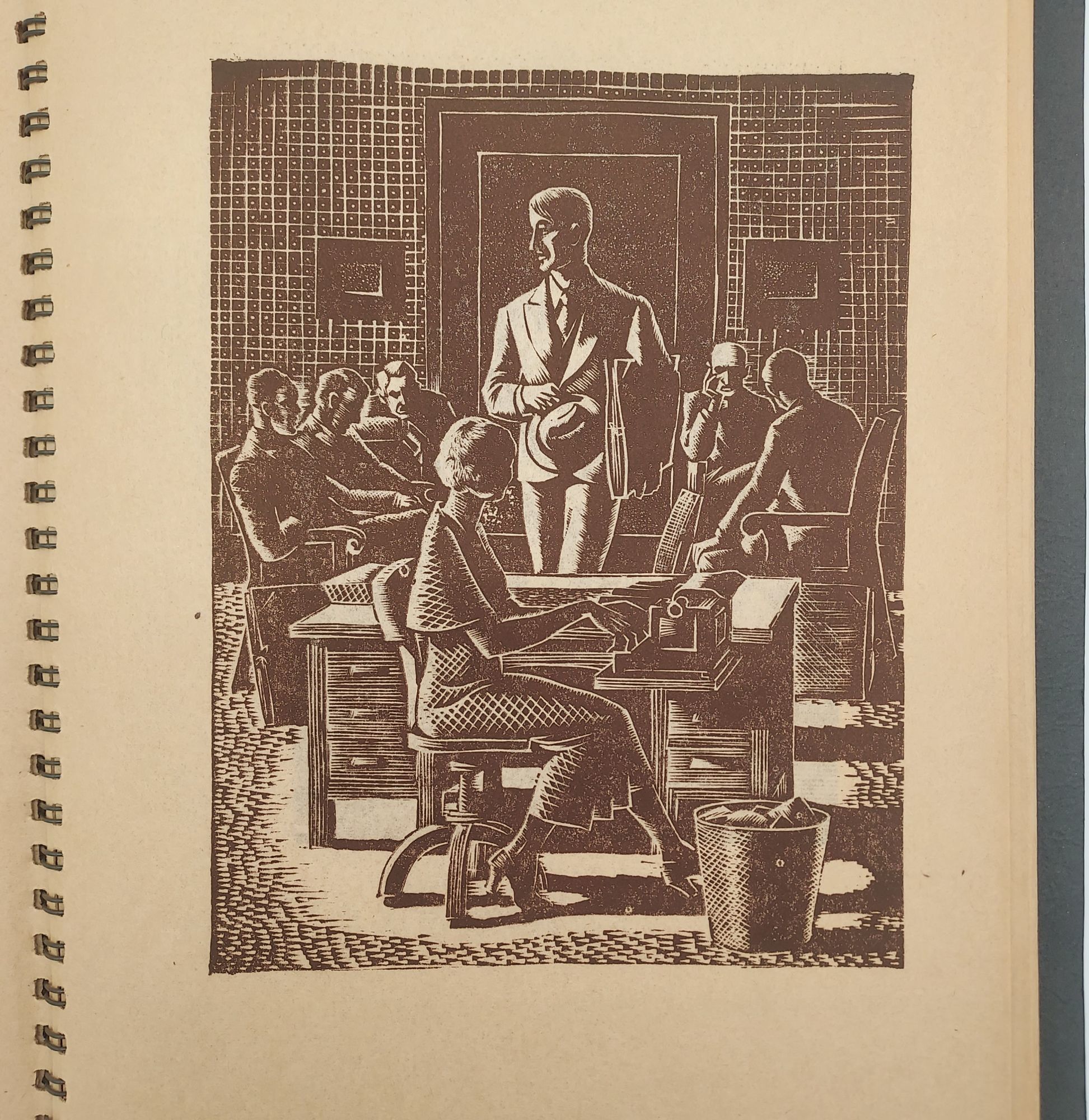
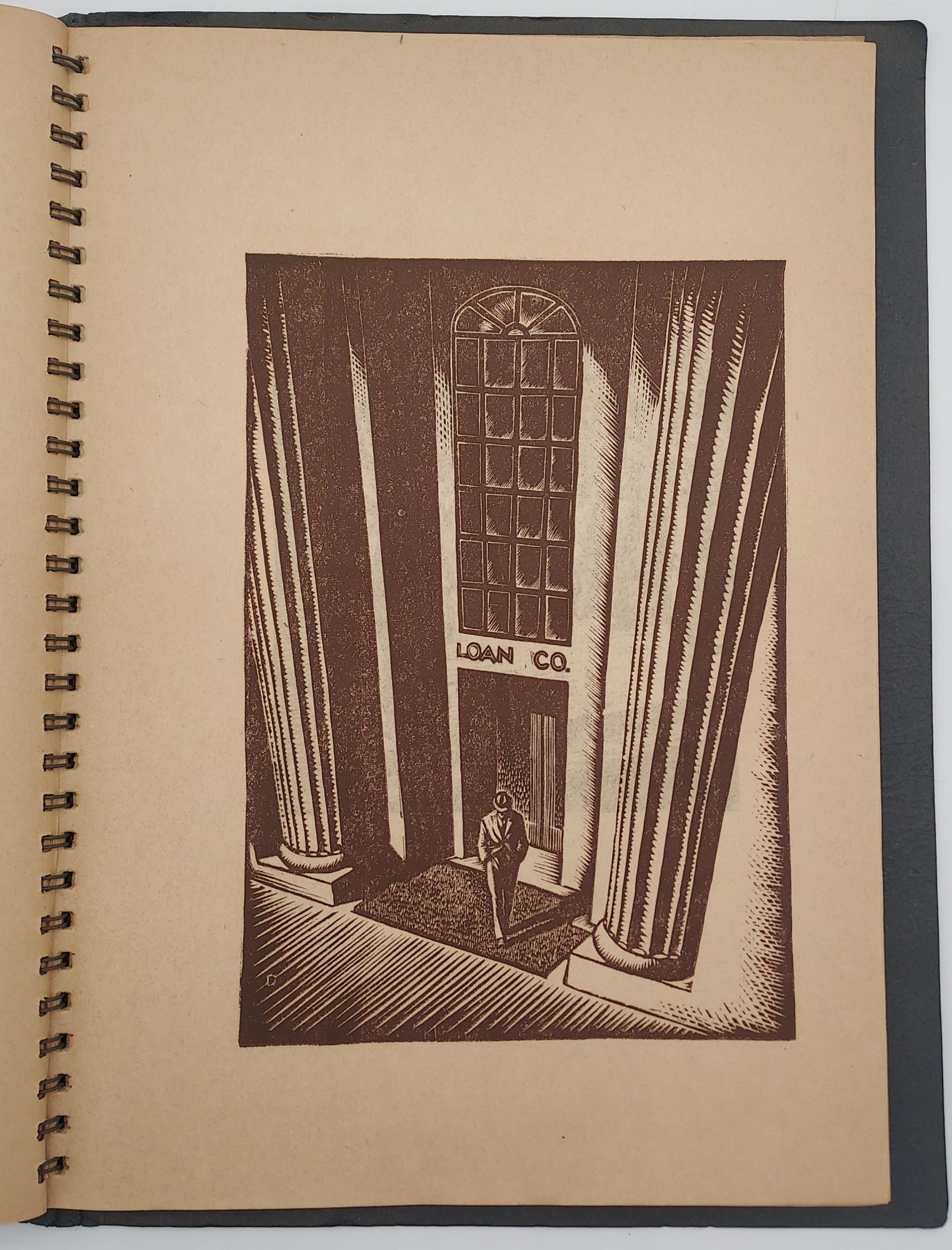
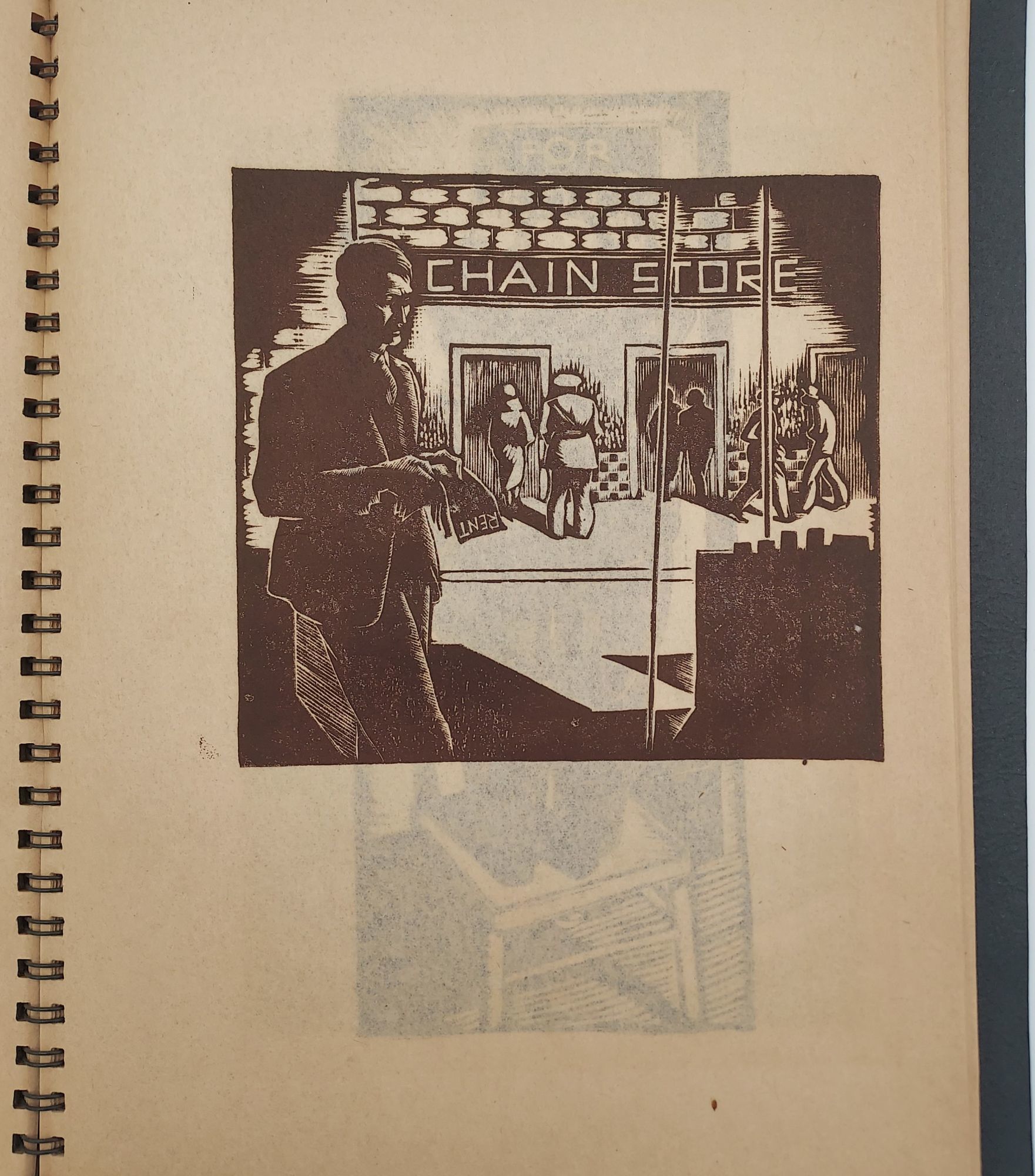
A classic from the Great Depression and one of the finest examples of a 'wordless novel'. This work consists of 122 linocuts similar in style to the work of Frans Masereel or early Lynd Ward. Patri was inspired by the stock market crash of 1929 to create something that would help to unify (and unionize) the working classes. He began work on White Collar in 1930 and finally completed the book ten years later.
"White Collar was to be my contribution to, what I believed then, an indispensable understanding of the necessity of unity among all American workers and voters. I was not a writer, so illustrations in sequence were I thought the answer.
"I had a printing press and lots of linoleum to use for linoleum cuts, so I set to work the idea of doing the entire job myself. I was young, naive and in a hurry, but I soon discovered that a book, a story, an ideal, each is a slow process, even with some help from the family. It took several years to engrave, print, bind and distribute a book that was seen by a very few people who did not need convincing." - Giacomo Patri - June,1975.
A classic from the Great Depression and one of the finest examples of a 'wordless novel'. This work consists of 122 linocuts similar in style to the work of Frans Masereel or early Lynd Ward. Patri was inspired by the stock market crash of 1929 to create something that would help to unify (and unionize) the working classes. He began work on White Collar in 1930 and finally completed the book ten years later.
"White Collar was to be my contribution to, what I believed then, an indispensable understanding of the necessity of unity among all American workers and voters. I was not a writer, so illustrations in sequence were I thought the answer.
"I had a printing press and lots of linoleum to use for linoleum cuts, so I set to work the idea of doing the entire job myself. I was young, naive and in a hurry, but I soon discovered that a book, a story, an ideal, each is a slow process, even with some help from the family. It took several years to engrave, print, bind and distribute a book that was seen by a very few people who did not need convincing." - Giacomo Patri - June,1975.