

The History of Japan: Giving an Account of The antient and present State and Government of that Empire
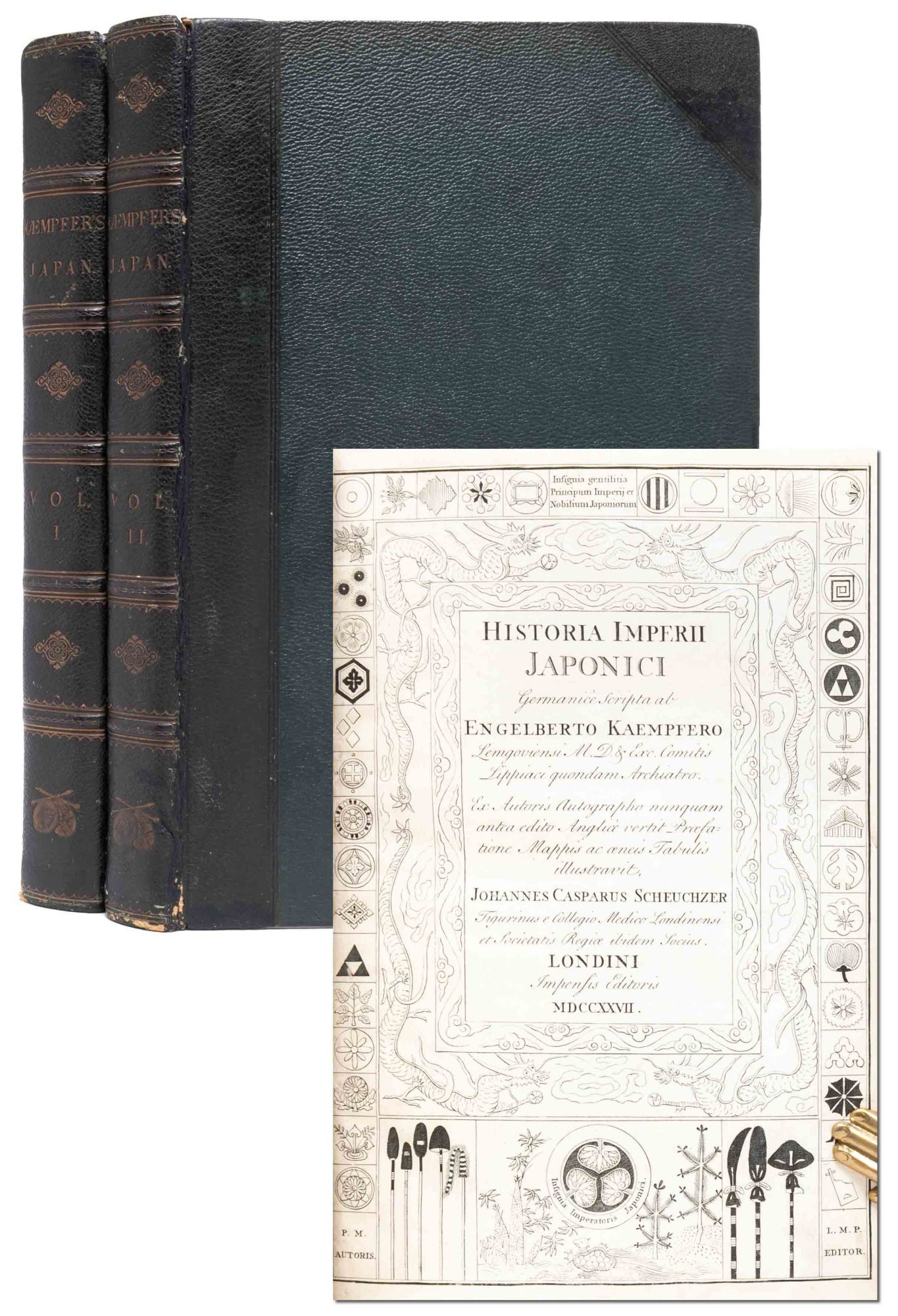
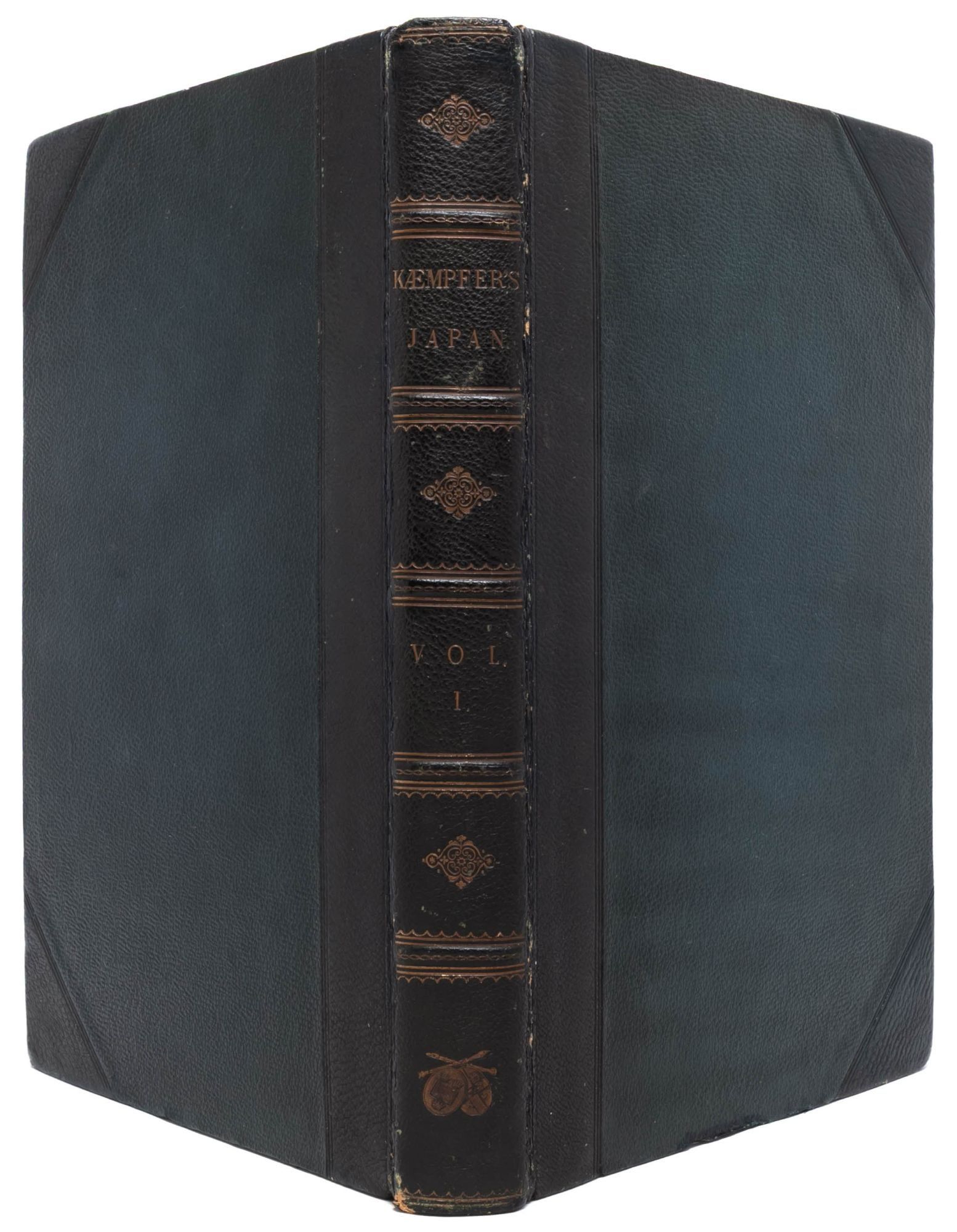
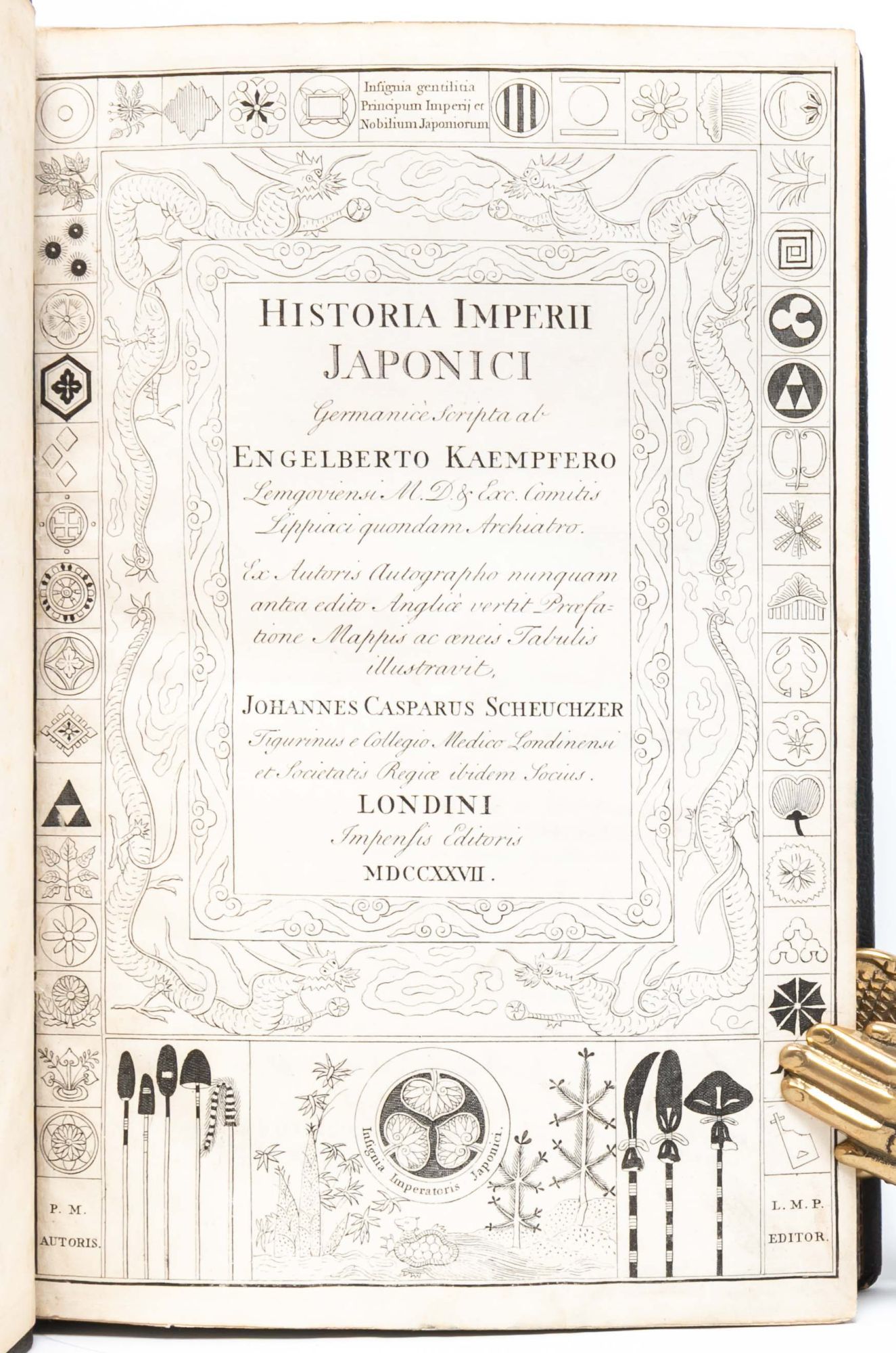
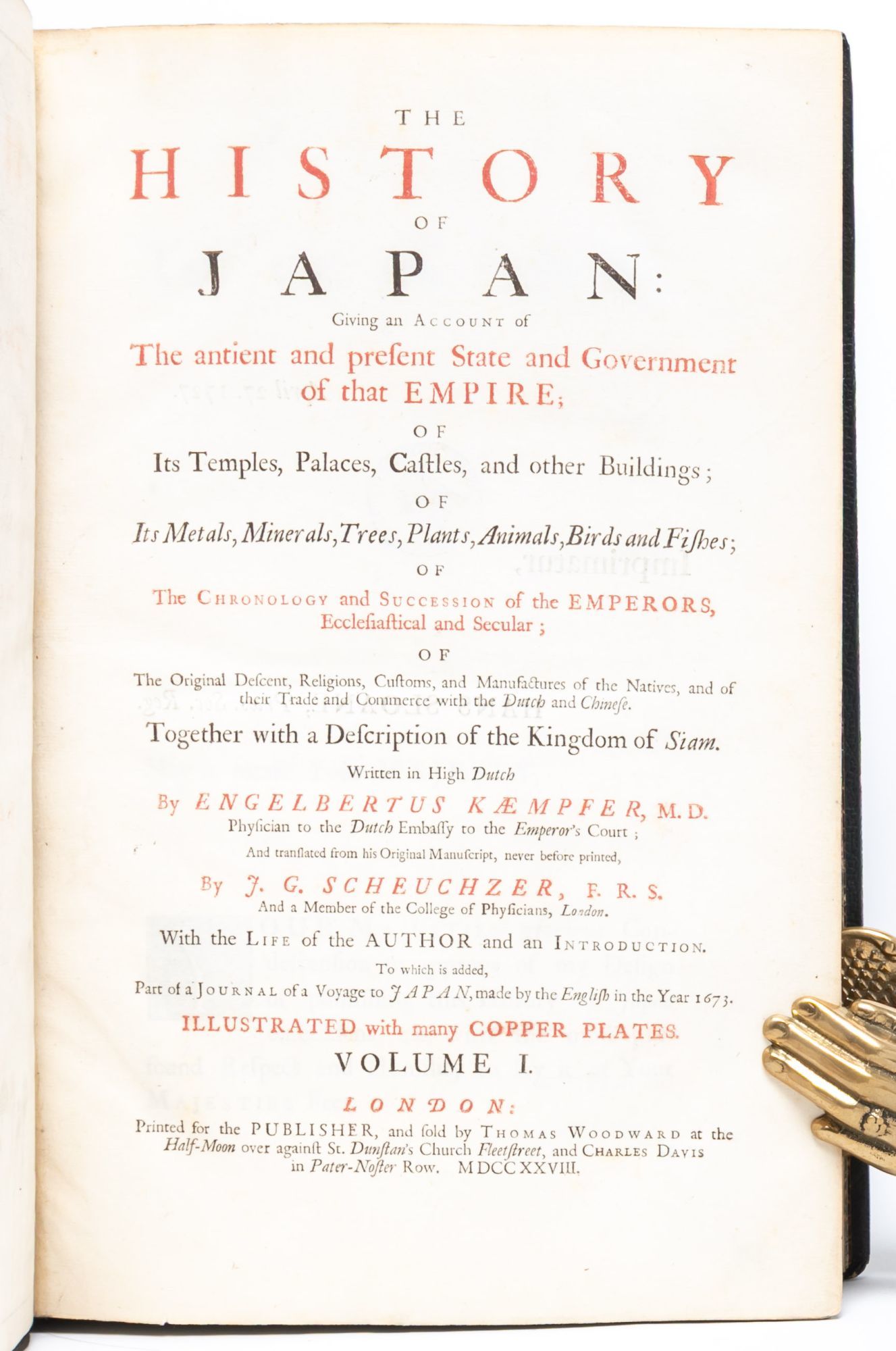
- London: Printed for the Publisher, and sold by Thomas Woodward… and Charles Davis, 1728
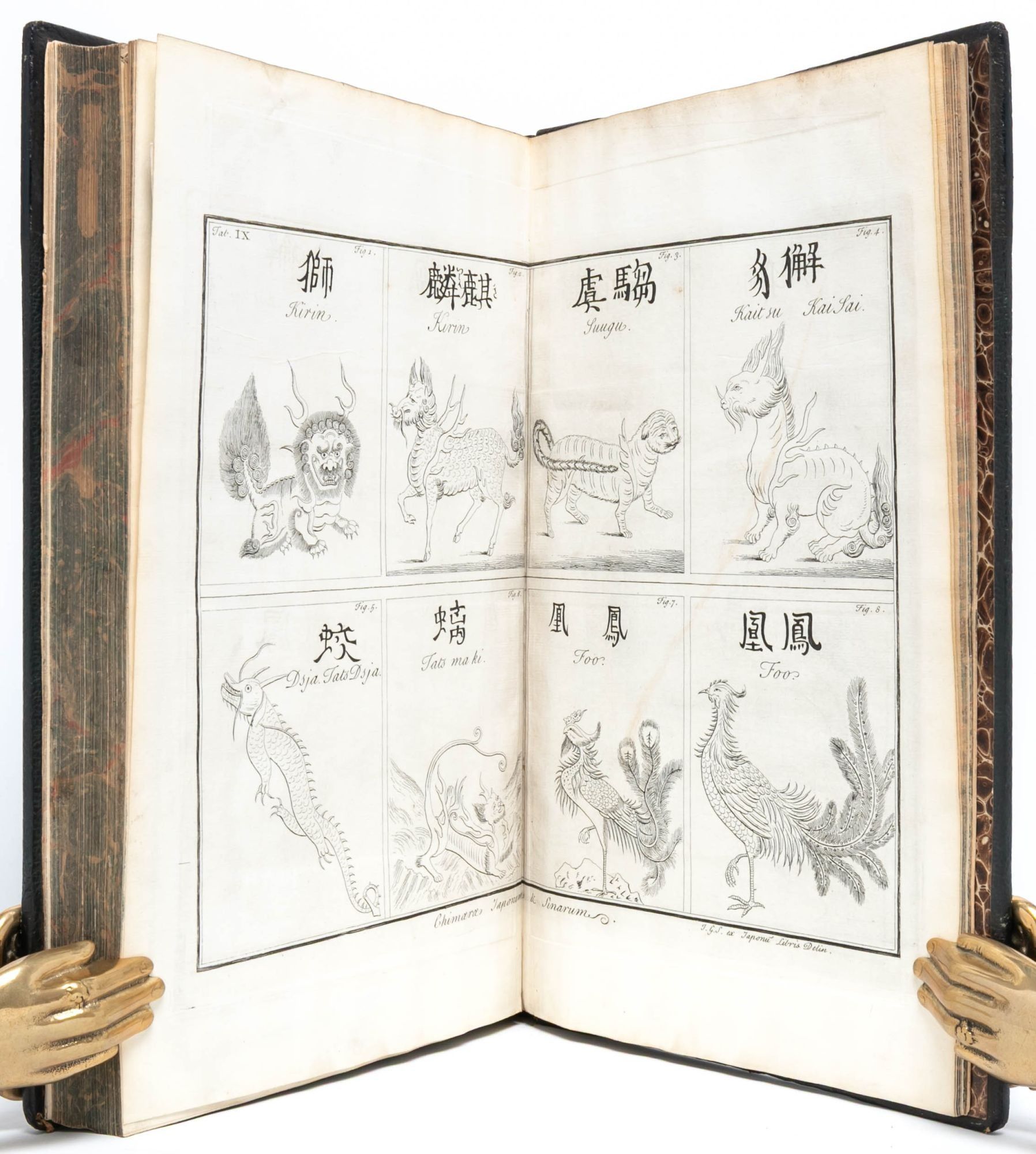
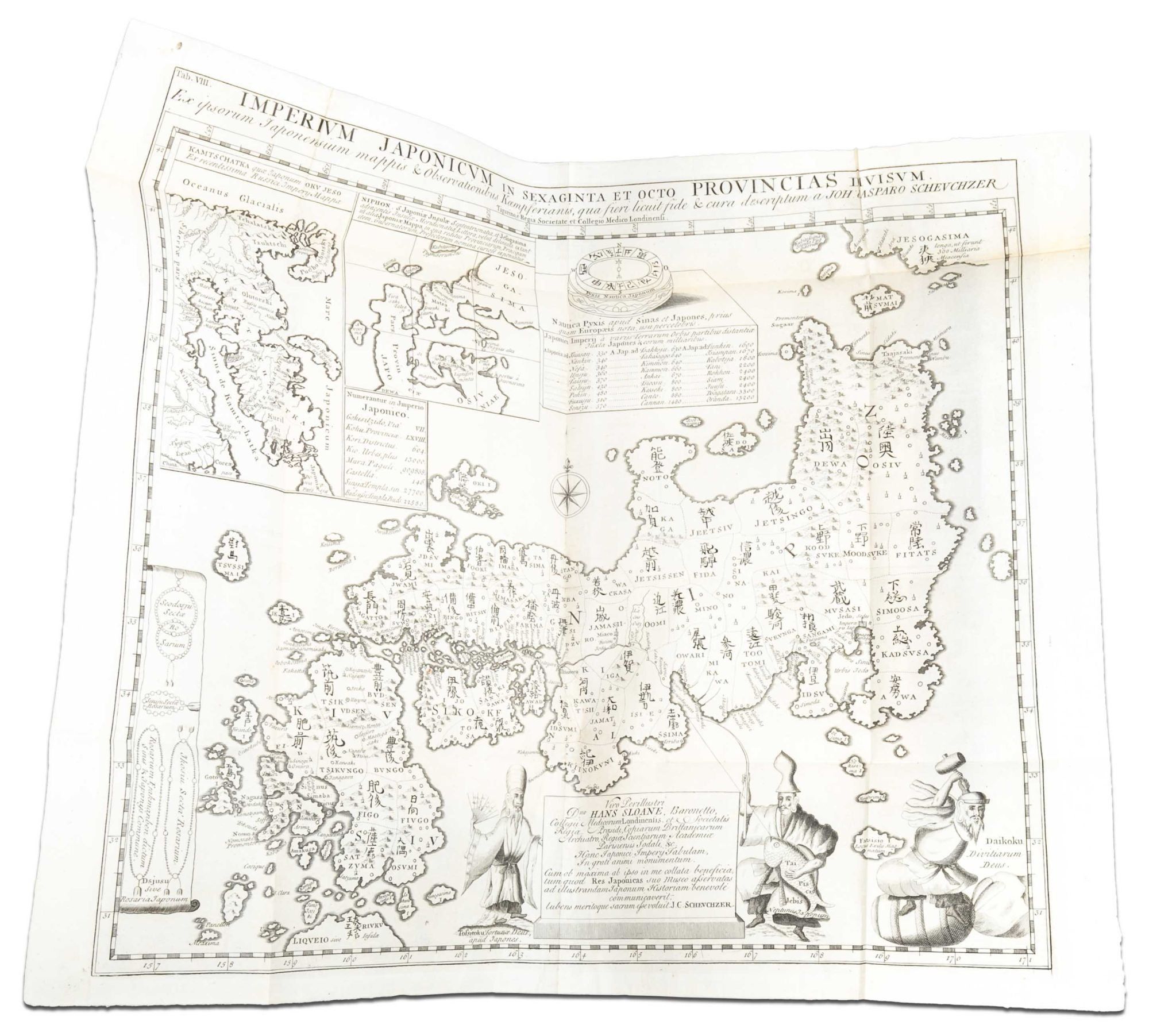
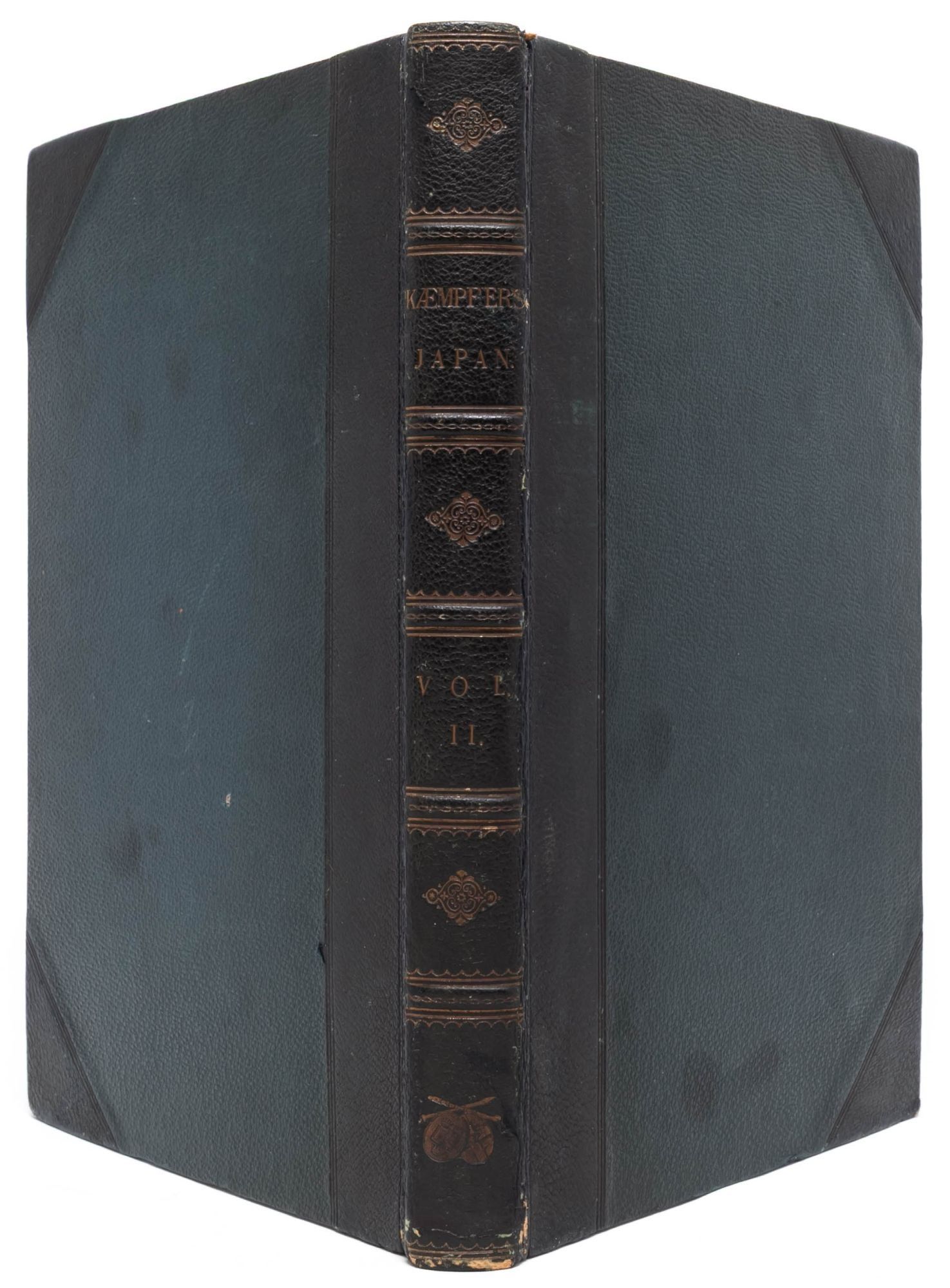
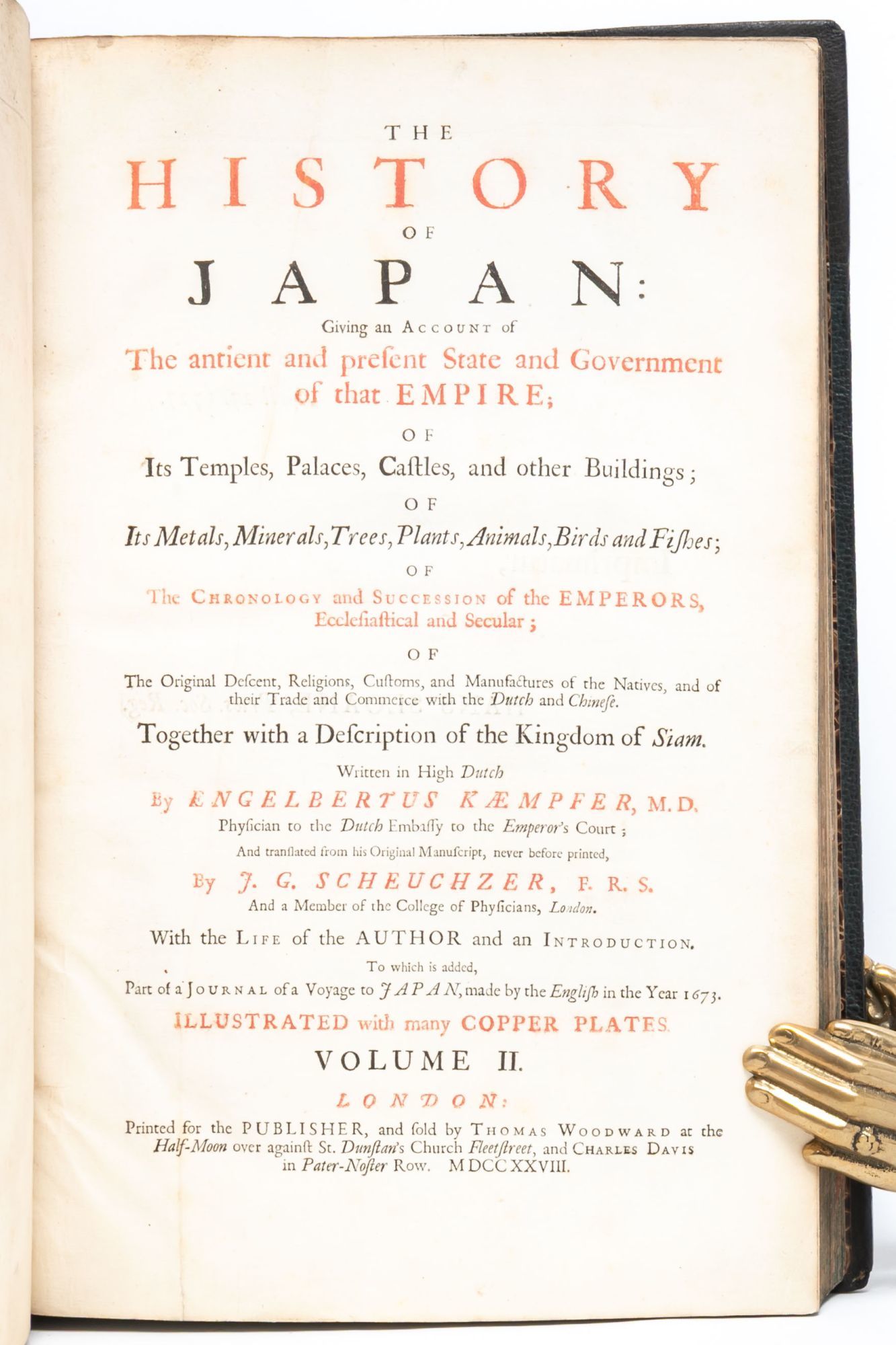
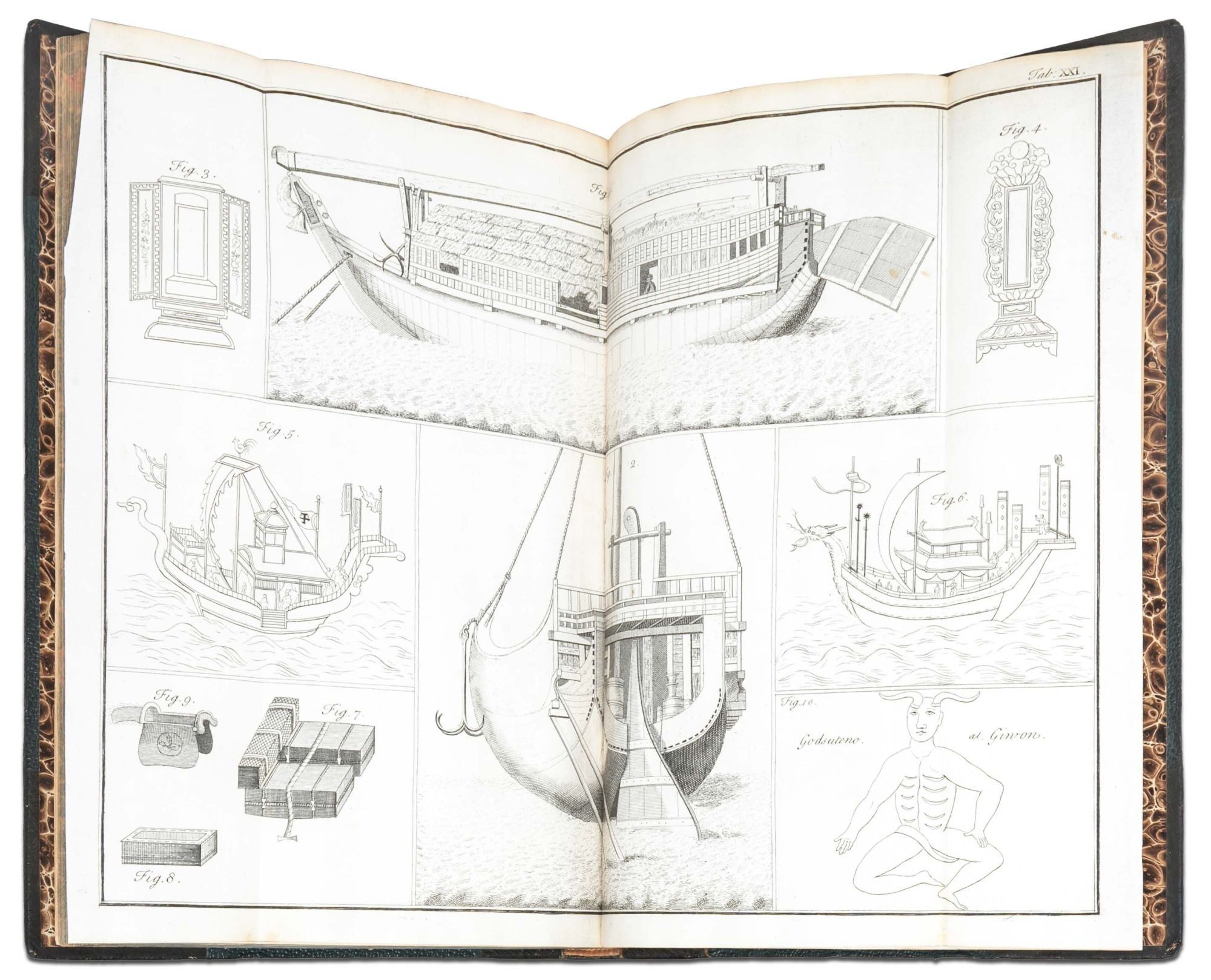
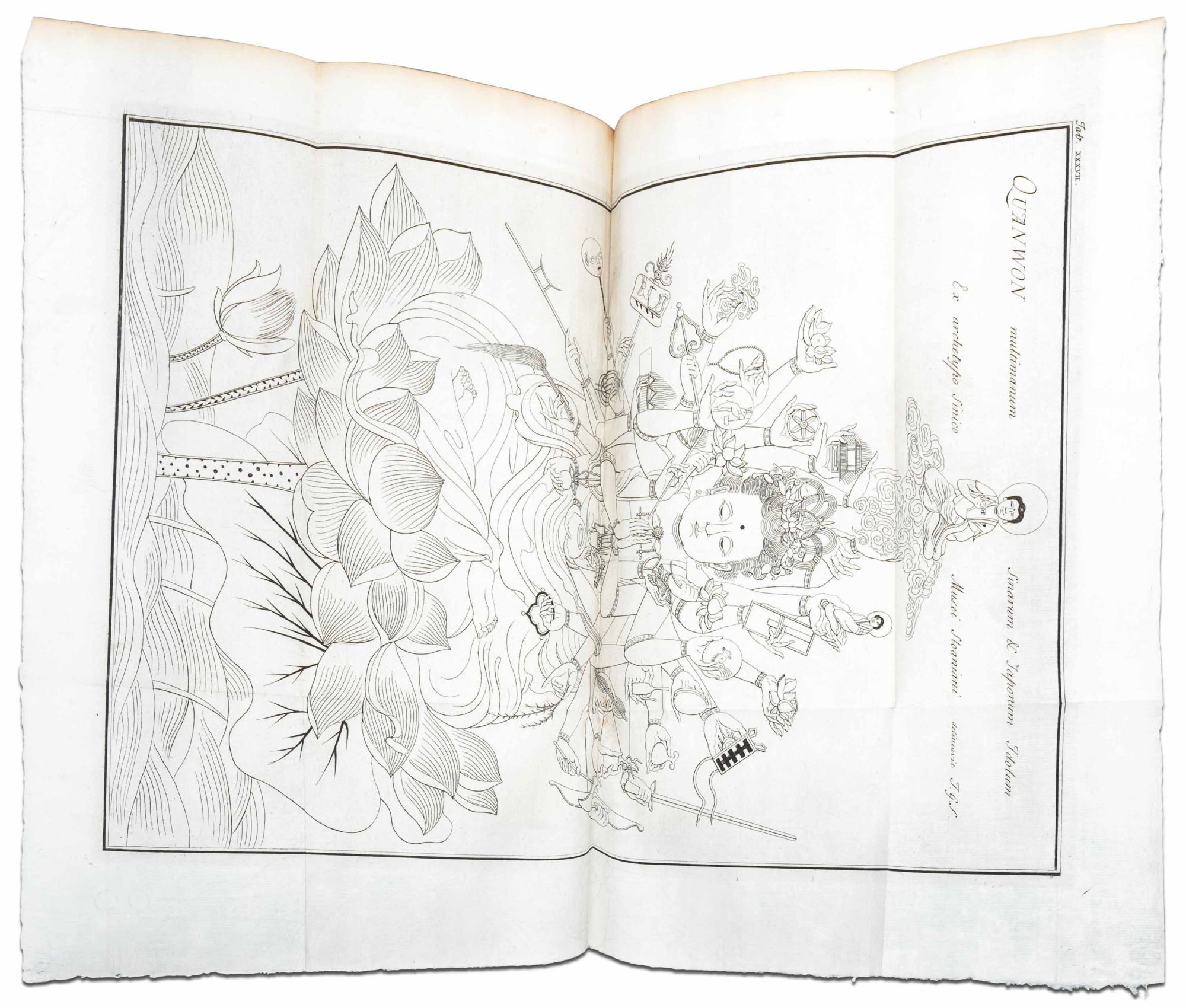
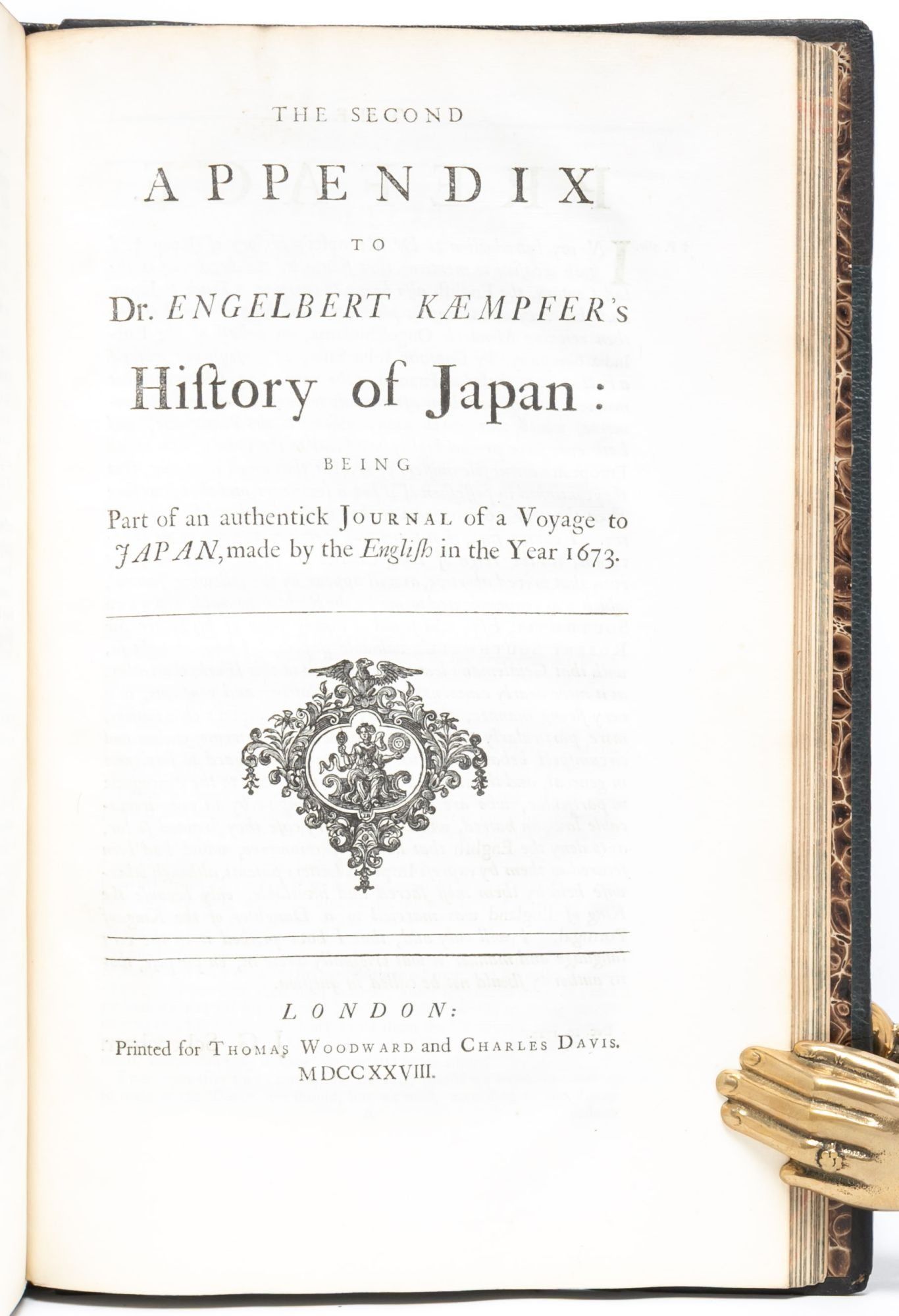
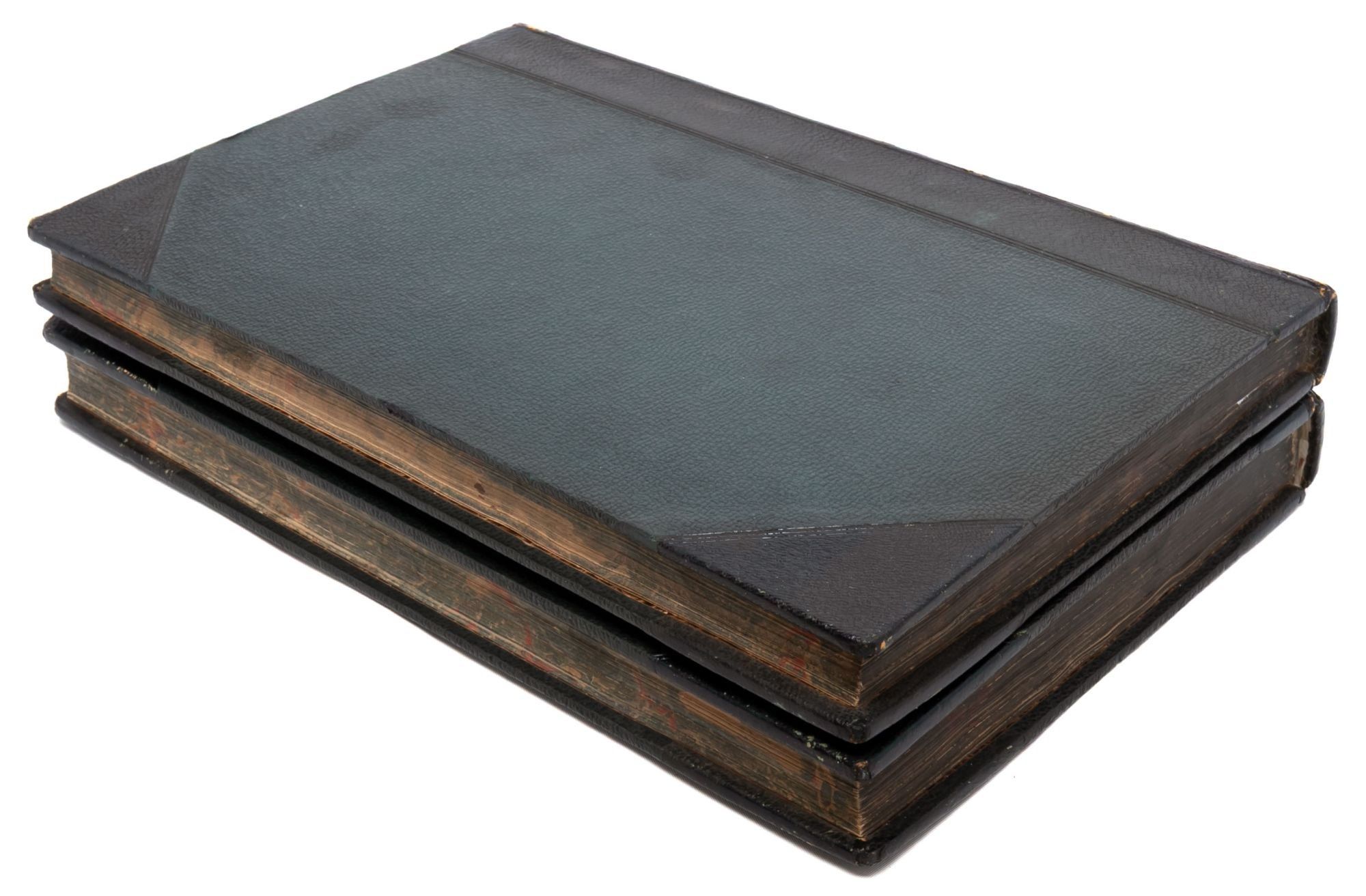
London: Printed for the Publisher, and sold by Thomas Woodward… and Charles Davis, 1728. Second edition in English. Near Fine. London: Printed for the Publisher, and sold by Thomas Woodward… and Charles Davis, 1728. Second edition in English and the first to include the Appendix on the 1673 English voyage to Japan. The first English edition was published in 1727 and is identical with the exception of the Appendix on the English voyage. Two volumes, folio (338 x 219 mm). [12], lii, [1]-391, [1, blank], [4, explanation of the plates]; [4], 393-612, 75, [1, blank], [2], 11, [1, blank], [4], [6] pp. Complete with engraved title-page (dated 1727) in volume one and forty-five engraved plates, of which two are folding, six are single-page, and the remainder are double-page. Bound ca. 1850 for Harrison of 59 Pall Mall, London. Three-quarter dark green morocco over green pebbled cloth boards, ruled in blind. Extremities a little rubbed. Inner hinges expertly reinforced and some tissue reinforcement to versos of plates. With the small circular stamp of the Oxford & Cambridge University Club on the verso of both title-pages. The text and plates remarkably clean. A fresh, Near Fine copy of this important work.
“Kaempfer (1651 - 1716) was a well known German physician and naturalist with a passion for travelling. Before his arrival in Japan, he had accompanied the Swedish embassy under Louis Fabricius to Persia…then engaging as surgeon with the Dutch fleet, visited India and Batavia, and at length reached Japan, where he stayed three years collecting material for his work. Here he secured the good will of the authorities so completely that he was allowed to travel where and as he pleased. He returned to Europe in 1693 and published an account of his travels under the title of Amoenitates Exoticae. His History of Japan has long been recognized as the most authoritative account of that country published at the time” (Cox).
"Some knowledge of Japan had been disseminated to Europe in the sixteenth century through the accounts of Roman Catholic missionaries such as Francis Xavier. However, following the restriction of trade from the 1620s, first-hand information about the country was largely available to Europeans only via VOC (Dutch East India Company) merchants stationed at the ‘Japan factory’ at Deshima. Dutch accounts at this time evoked romantic images of an isolated country with mysterious customs, views that coloured western notions of Japan during the ‘closed country’ (sakoku) period. The term sakoku in fact owes its existence to Engelbert Kaempfer’s History of Japan. It was coined by the Nagasaki translator Shizuki Tadao in his 1801 Japanese-language edition of the work. Before this time, the policy was known as kaikin or ‘maritime restrictions’. Kaempfer served as surgeon at Deshima in 1690 – 92 and was able to gather extensive notes on the history, culture and natural history of the country, primarily during his two excursions accompanying the annual Dutch procession to the capital, Edo. Returning to Europe in 1695, Kaempfer began to make arrangements to publish his findings. He produced a survey of Japanese botany, Amoenitatum exoticarum, in 1712, but died before he was able to publish his history of the country itself. Fortunately, his manuscript notes survived and were purchased by the botanist and collector Sir Hans Sloane (1660 –1753) who passed them to his librarian, Gaspar Scheuchzer (1702– 29), to translate into English. The resulting two-volume publication, of which this is a copy, was dedicated to George II. It was the most comprehensive European account of Japan for over a century and the first such work in English. Kaempfer’s History also contained plates taken from authentic Japanese woodblock prints, including...the first contemporary depiction of Edo to appear in European literature. The book’s influence was wide-ranging and it remained an important account of Japan and Japanese life until well into the nineteenth century" (Royal Collection Trust).
Cordier, Japonica, pp. 414-415; Cox I, p. 332; Garrison-Morton 6374; Wellcome III, p. 376. Near Fine.
“Kaempfer (1651 - 1716) was a well known German physician and naturalist with a passion for travelling. Before his arrival in Japan, he had accompanied the Swedish embassy under Louis Fabricius to Persia…then engaging as surgeon with the Dutch fleet, visited India and Batavia, and at length reached Japan, where he stayed three years collecting material for his work. Here he secured the good will of the authorities so completely that he was allowed to travel where and as he pleased. He returned to Europe in 1693 and published an account of his travels under the title of Amoenitates Exoticae. His History of Japan has long been recognized as the most authoritative account of that country published at the time” (Cox).
"Some knowledge of Japan had been disseminated to Europe in the sixteenth century through the accounts of Roman Catholic missionaries such as Francis Xavier. However, following the restriction of trade from the 1620s, first-hand information about the country was largely available to Europeans only via VOC (Dutch East India Company) merchants stationed at the ‘Japan factory’ at Deshima. Dutch accounts at this time evoked romantic images of an isolated country with mysterious customs, views that coloured western notions of Japan during the ‘closed country’ (sakoku) period. The term sakoku in fact owes its existence to Engelbert Kaempfer’s History of Japan. It was coined by the Nagasaki translator Shizuki Tadao in his 1801 Japanese-language edition of the work. Before this time, the policy was known as kaikin or ‘maritime restrictions’. Kaempfer served as surgeon at Deshima in 1690 – 92 and was able to gather extensive notes on the history, culture and natural history of the country, primarily during his two excursions accompanying the annual Dutch procession to the capital, Edo. Returning to Europe in 1695, Kaempfer began to make arrangements to publish his findings. He produced a survey of Japanese botany, Amoenitatum exoticarum, in 1712, but died before he was able to publish his history of the country itself. Fortunately, his manuscript notes survived and were purchased by the botanist and collector Sir Hans Sloane (1660 –1753) who passed them to his librarian, Gaspar Scheuchzer (1702– 29), to translate into English. The resulting two-volume publication, of which this is a copy, was dedicated to George II. It was the most comprehensive European account of Japan for over a century and the first such work in English. Kaempfer’s History also contained plates taken from authentic Japanese woodblock prints, including...the first contemporary depiction of Edo to appear in European literature. The book’s influence was wide-ranging and it remained an important account of Japan and Japanese life until well into the nineteenth century" (Royal Collection Trust).
Cordier, Japonica, pp. 414-415; Cox I, p. 332; Garrison-Morton 6374; Wellcome III, p. 376. Near Fine.