

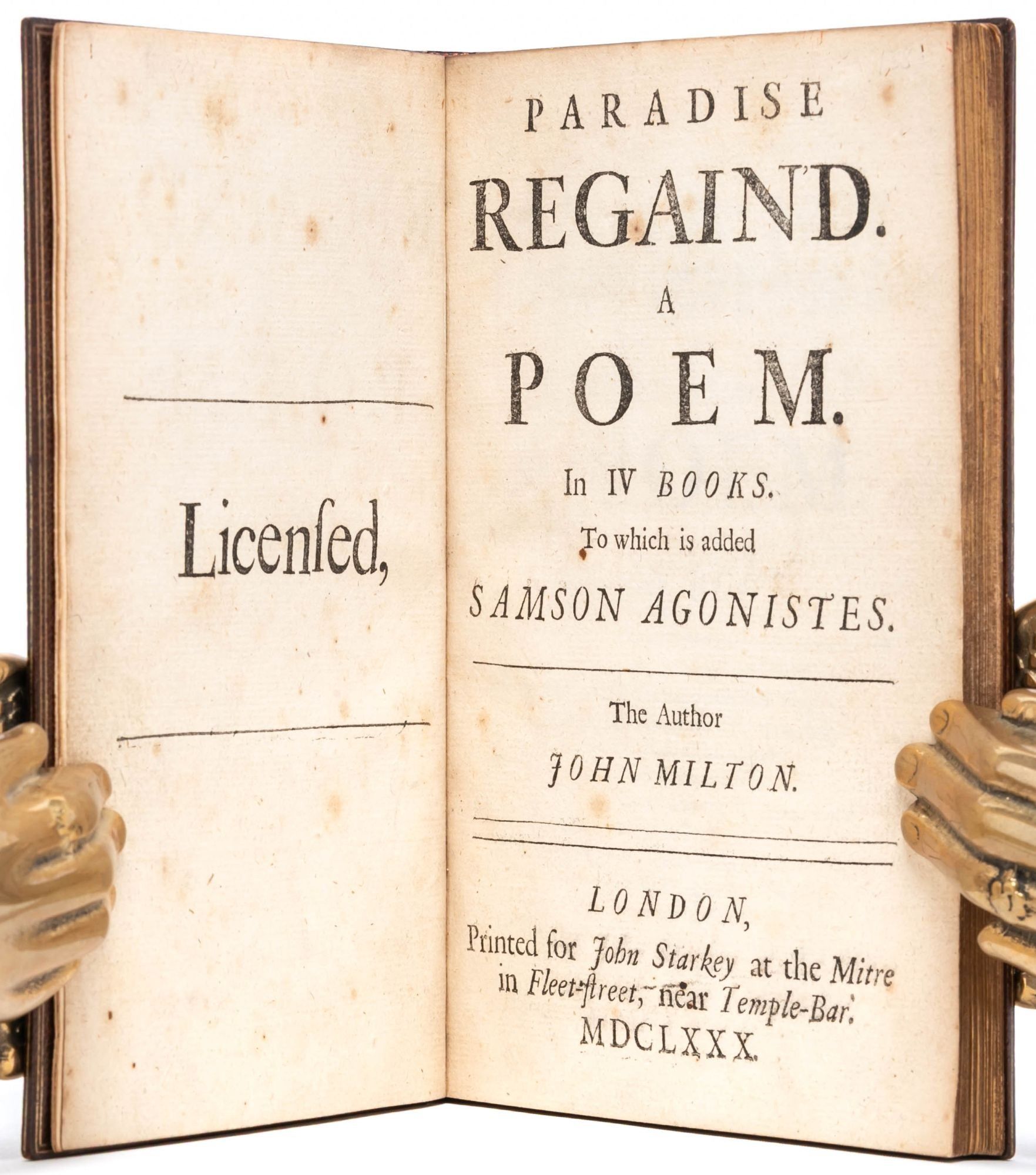
Paradise Regain'd. A Poem in IV Books. To which is added Samson Agonistes
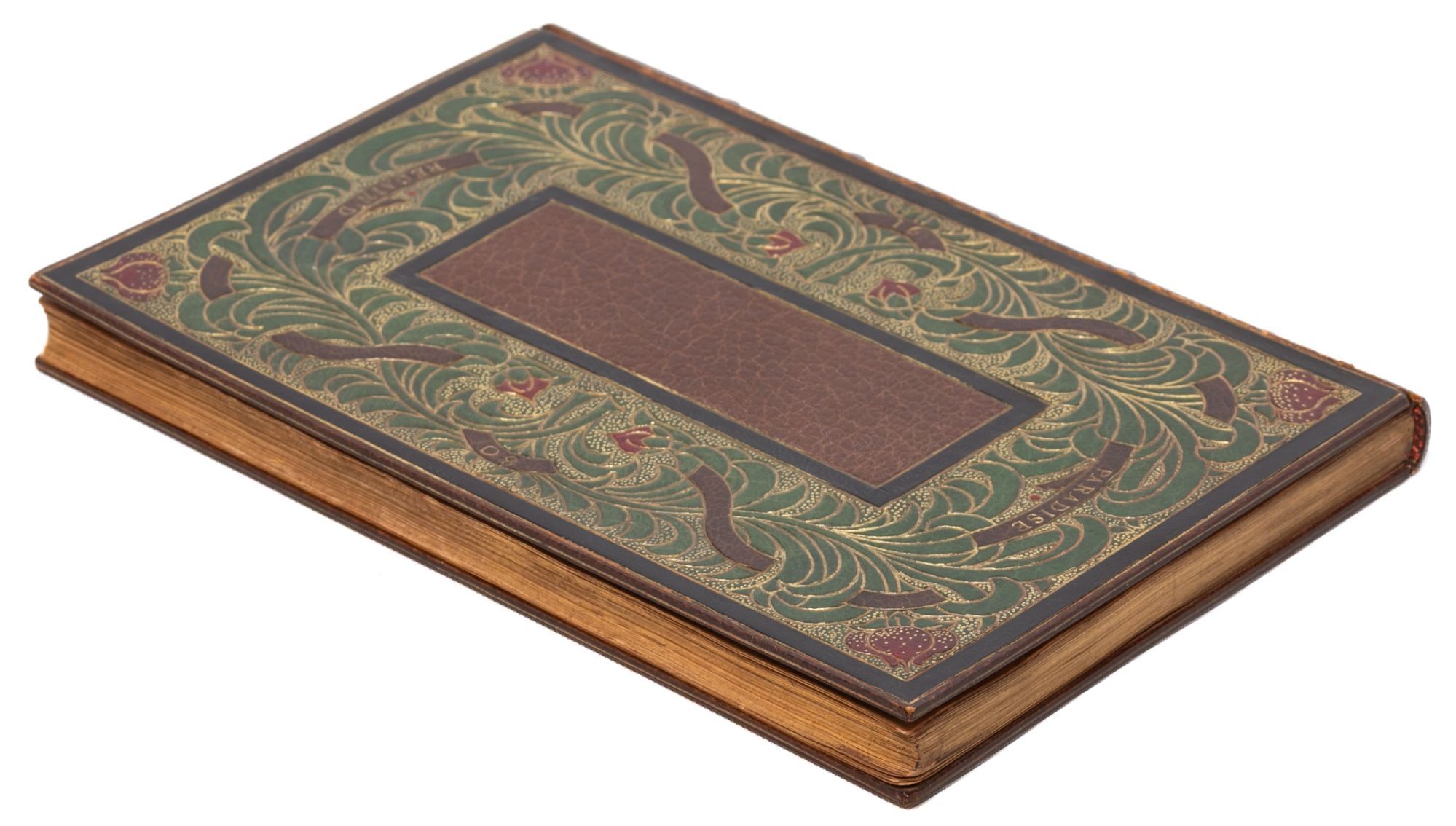
- London: John Starkey, 1680
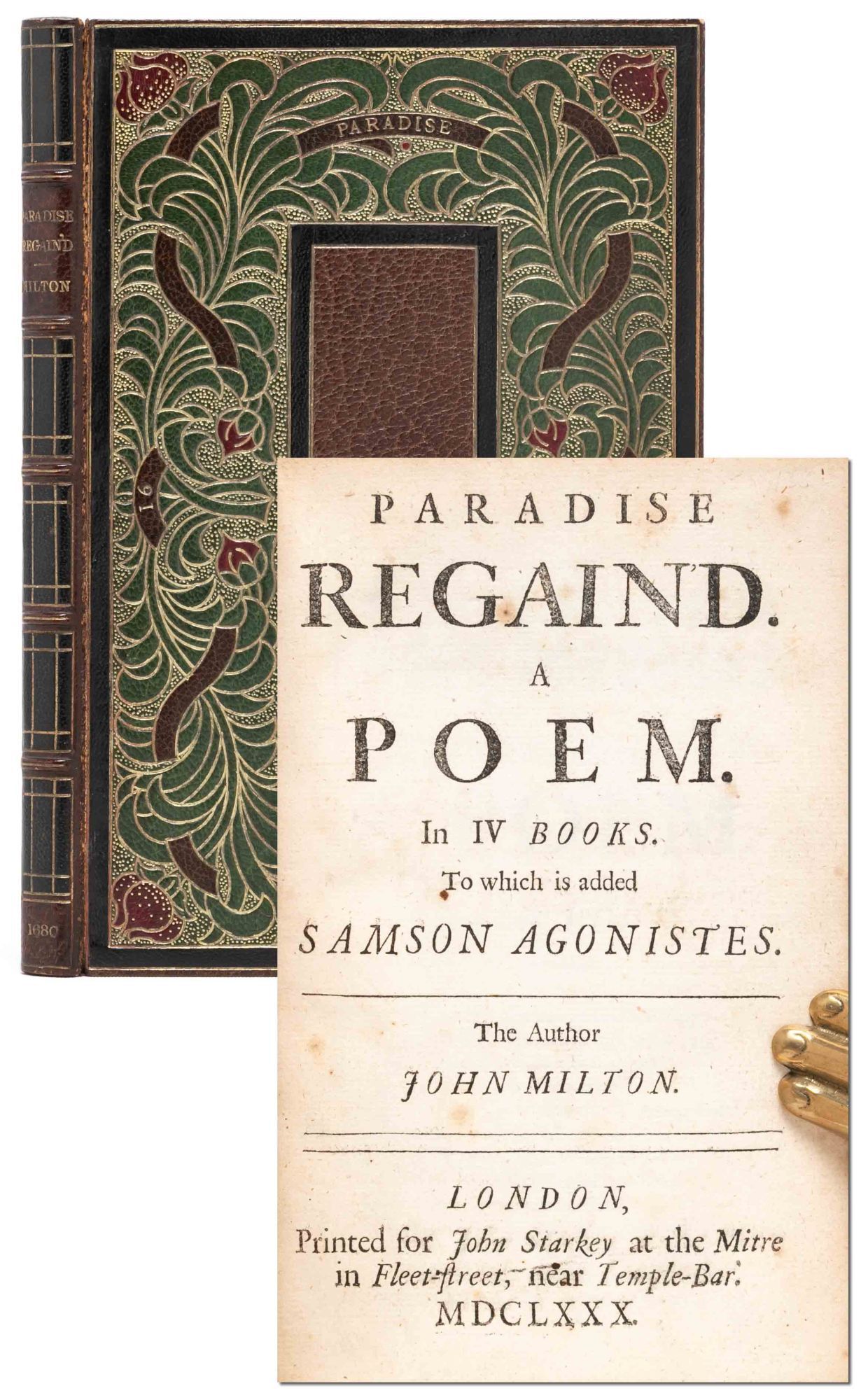
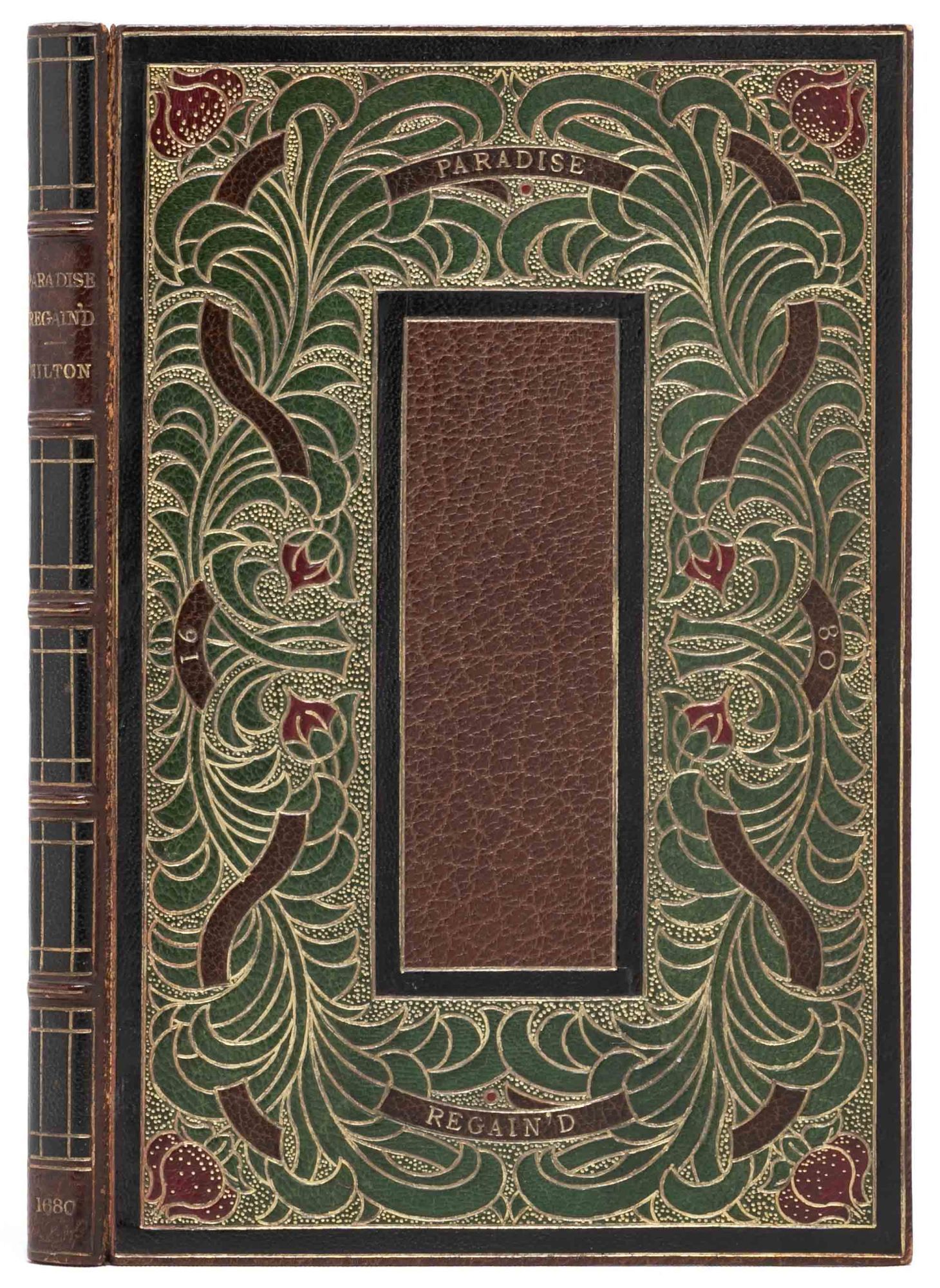
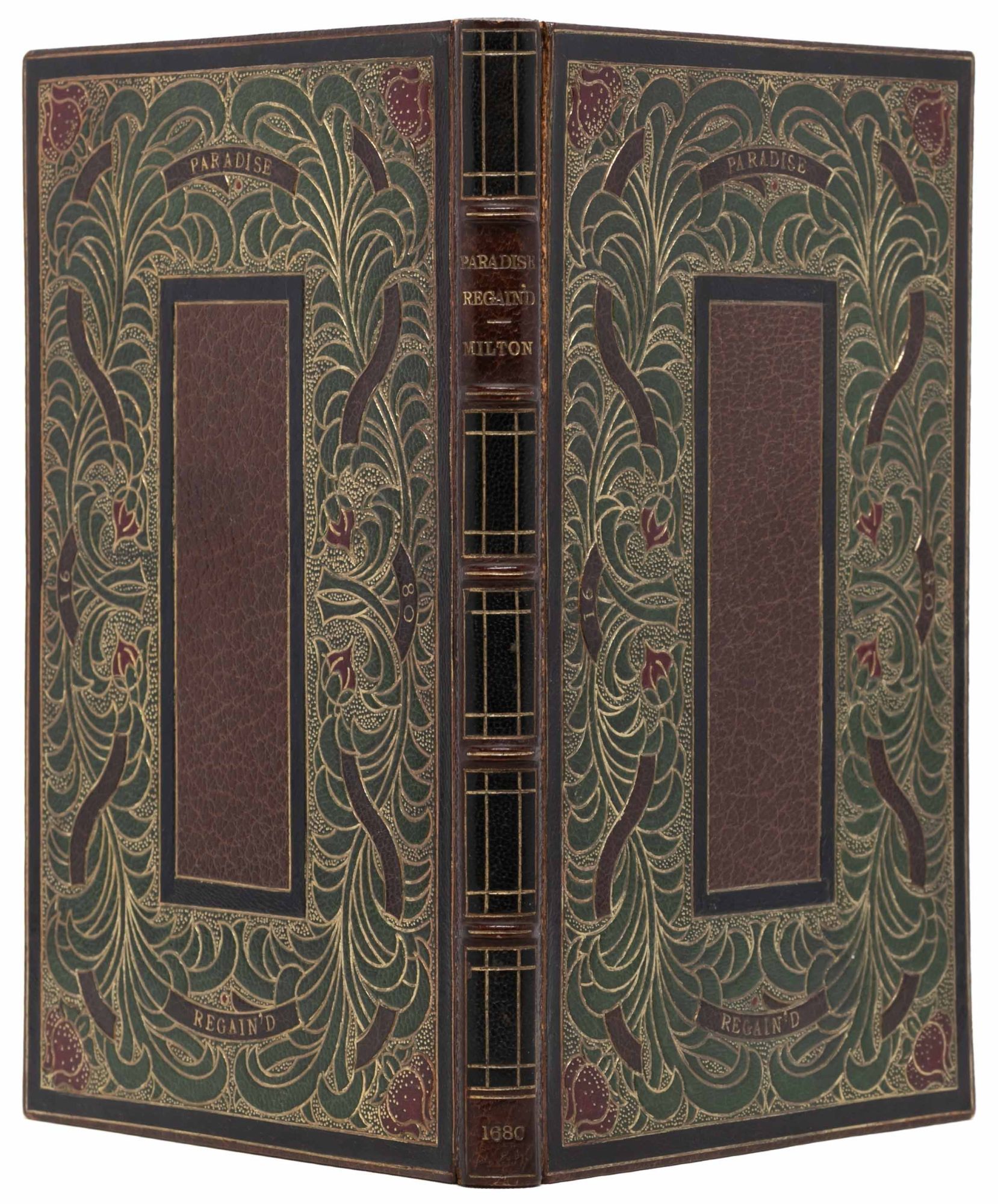
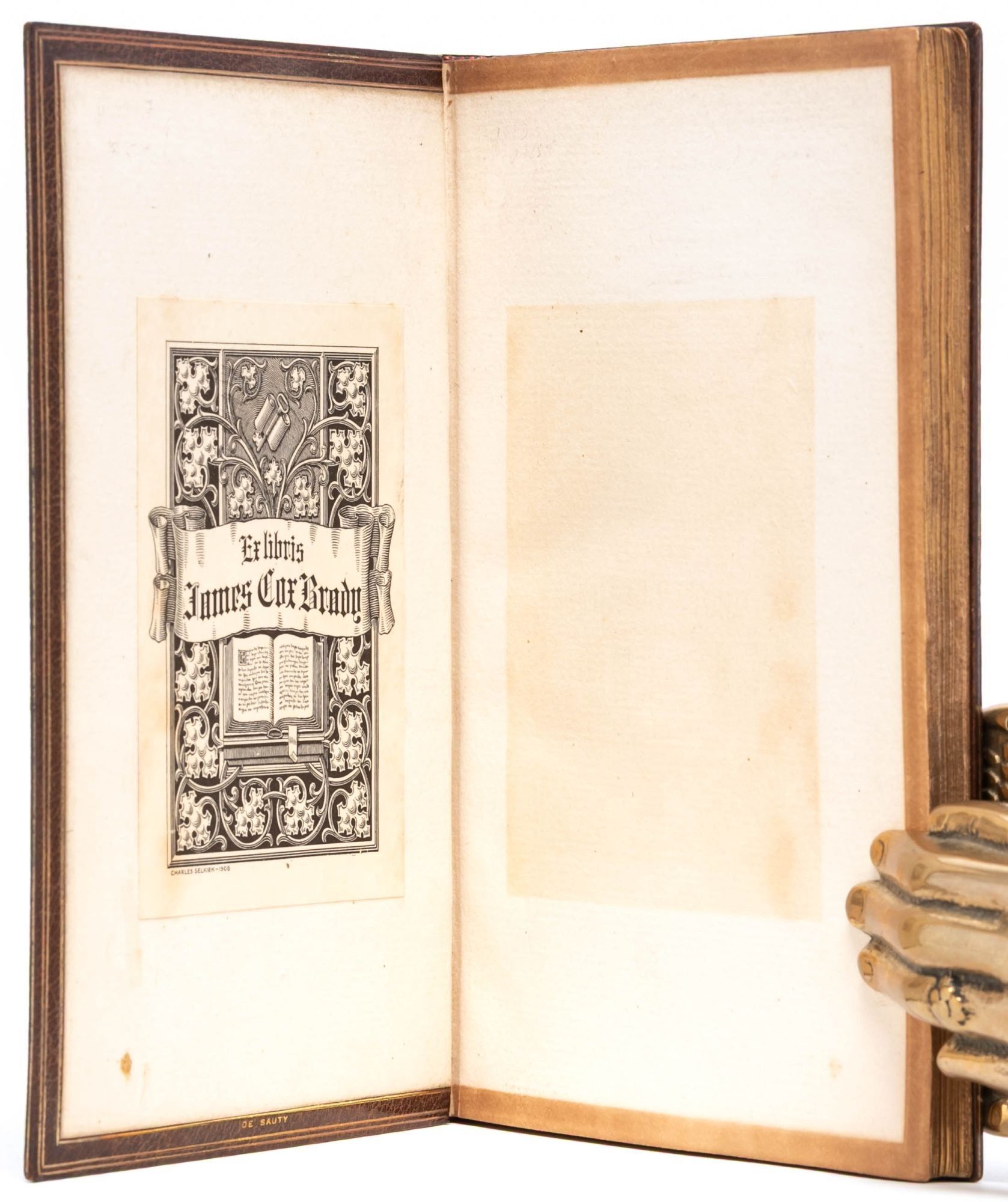
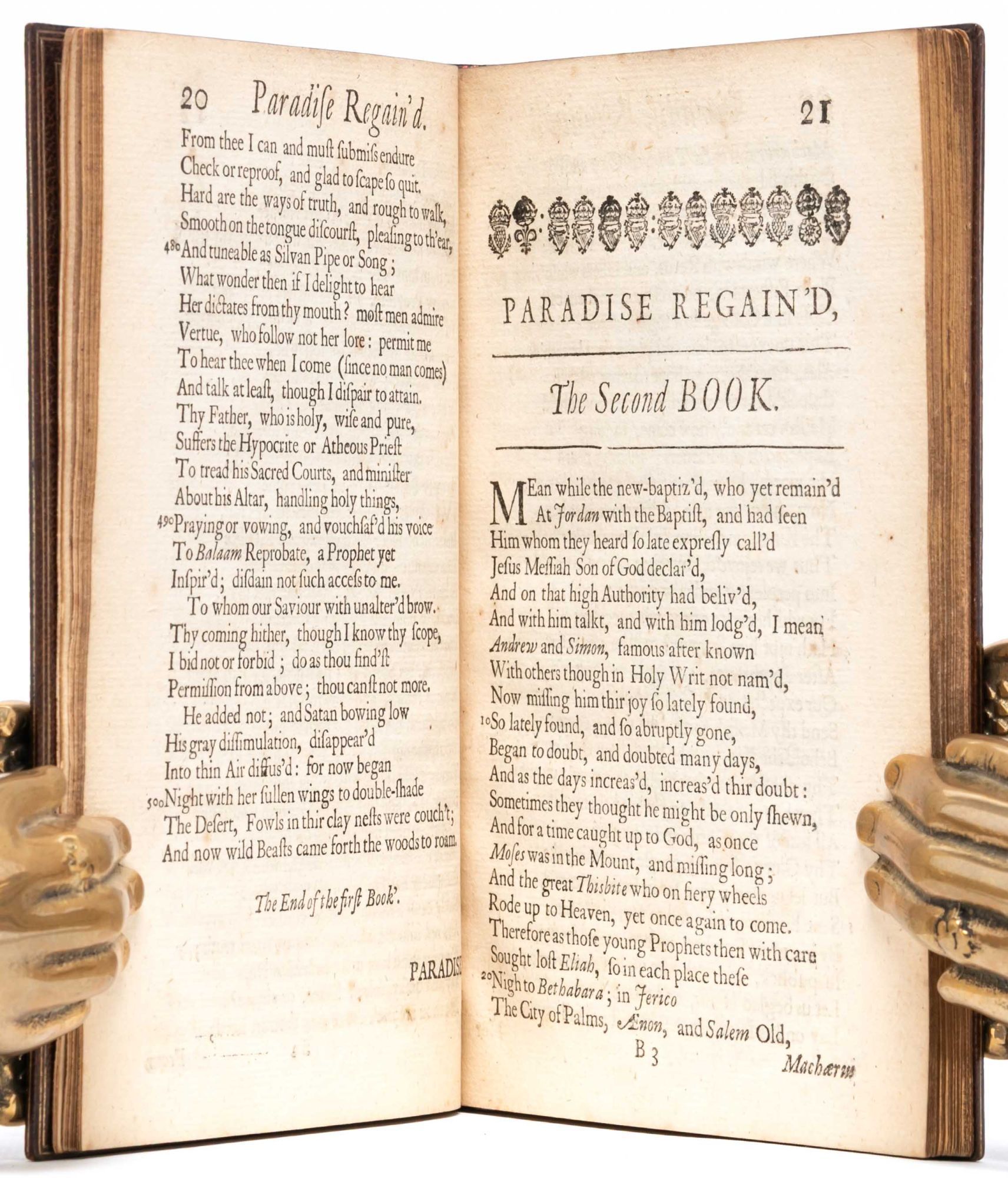
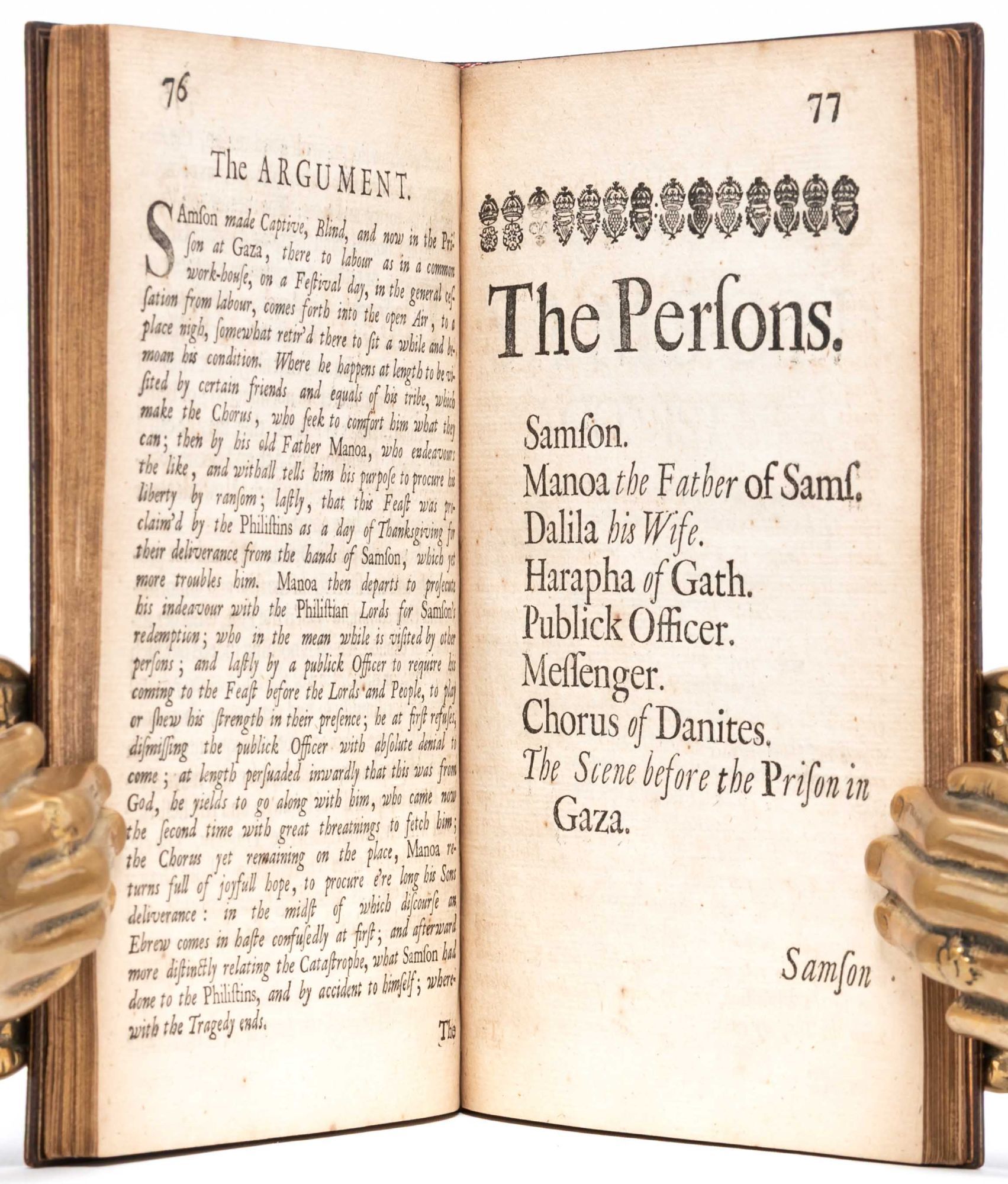
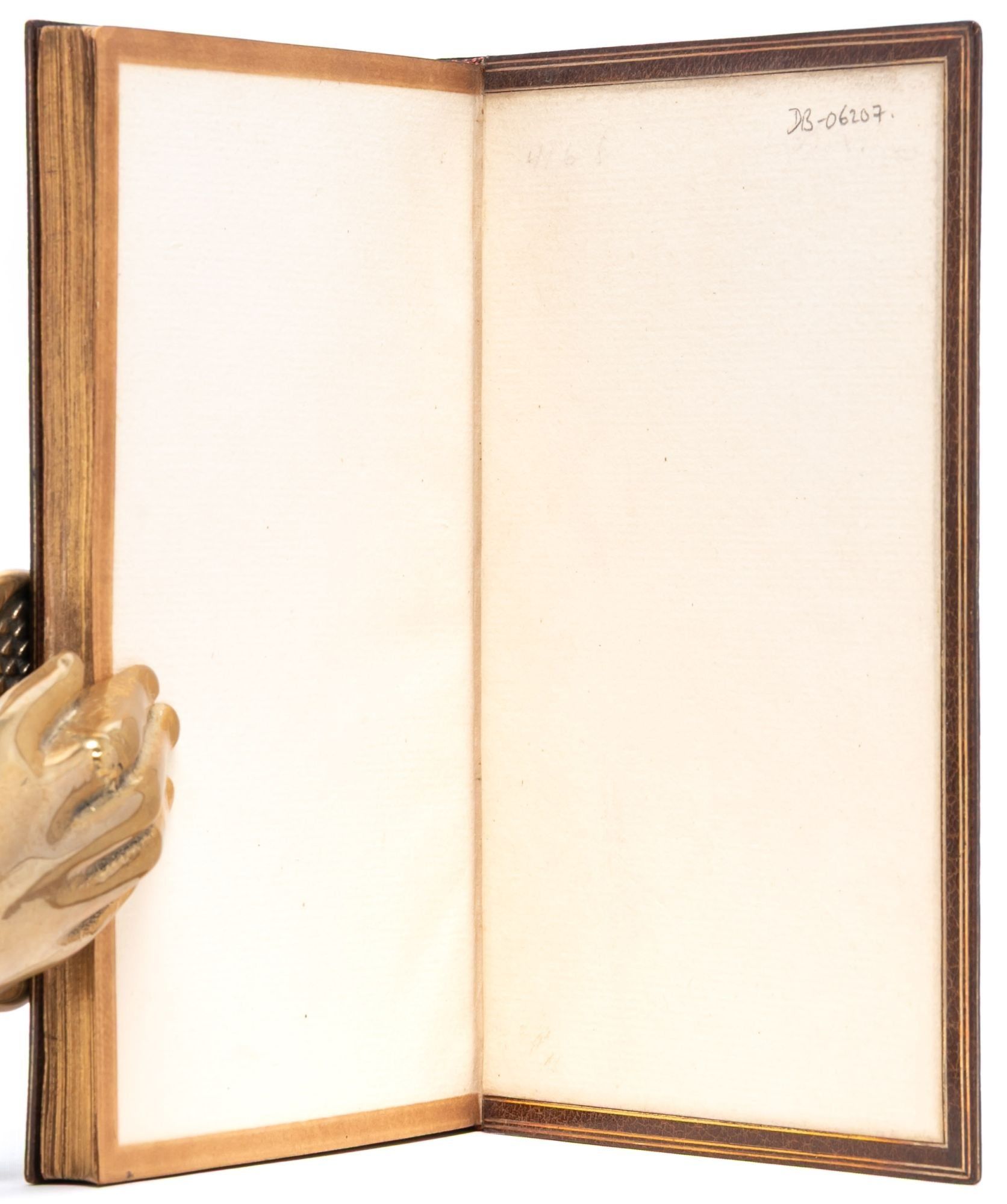
London: John Starkey, 1680. Second edition. Fine. With a separate title-page for Samson Agonistes. Octavo (6 1/2 x 4 1/4 inches; 165 x 108 mm.). [1]-132, [4 publisher's catalog] pp. A8-G8, I4. Leaf A1 with license printed verso before title. Bound ca. 1900 by Alfred De Sauty (stamp signed in gilt on front turn-in) in full brown morocco with a green morocco inlay background. Splitting to upper joint at head of spine (still holding firm overall). Otherwise a lovely, Fine copy. With the bookplate of James Cox Brady on front paste-down.
A more hopeful conclusion following the devastation depicted in his epic Paradise Lost, the pairing of Paradise Regain'd and Samson Agonistes offered readers two paths to human salvation. Posed as Adam and Eve were with temptation and the opportunity to defy God's commandment, the Son instead maintains his purity and fulfills his duty to sacrifice himself for humanity's original sin. "Paradise Regain'd dramatizes for the reader the inner workings of the mind of Jesus, his perception, and the interplay of faith and reason in his debates with Satan" (Britannica). Though the Son reveals his humanity and his doubts, his ability to perfectly complete his mission is ultimately possible due to his position as God on Earth. Milton counterbalances this ideal with the very problematic, very human hero of Samson Agonistes. Samson's ego, doubt, and depression are relatable to readers who recognize their inability to fully live up to Christ's example; and Samson's efforts to heal and find grace amid tragedy provide a different model marked by imperfection. "Eyeless in Gaza" and at the depths of his fall from grace, Samson narrates his inner thoughts, experiences, and anguish. In doing so, he is able to regenerate himself and regain his faith, "gradually recovering his trust in God, and becoming a free moral agent capable of one final heroic act" of sacrifice (Langer).
"Alfred de Sauty (1870 - 1949) was a bookbinder who produced tooled bindings of exceptional delicacy. De Sauty was active in London from approximately 1898 to 1923 and in Chicago from 1923 to 1935. His finest work is thought to be have been accomplished between 1905 and 1914. Many aspects of his life are poorly documented. For instance, scholars are unsure whether, when in London, de Sauty worked independently, for the firm of Rivière & Sons, or both. While in London, he may also have been a designer for the Hampstead Bindery and a teacher at the Central School of Arts and Crafts. When he lived in Chicago, de Sauty worked for the hand bindery of R. R. Donnelley & Sons. He signed his work at the foot of the front doublure, if present, and at the center of the bottom turn-in of the front upper board, if not. Works he produced in London are signed 'de S or 'De Sauty.' Works he produced in Chicago are signed with his employer's name, 'R. R. Donnelly'" (Bound in Intrigue, Harvard Botany Libraries Online Exhibit).
A sumptous binding from the famous Howard T. Goodwin sale, known as a collector of the “rarest books and the most sumptuous editions of the works of favorite authors” and was considered the “finest collection of books ever offered at public sale, either in Europe of America” (See Henkels catalogue remarks). Provenance: Sold at the Henkels sale of the “Magnificent Library of the late Howard T. Goodwin”, 22–23rd October 1903, lot 256; James Cox Brady (bookplate), a famous New York traction magnate and the largest shareholder of the American Tobacco Company making him one of the thirty richest Americans in 1918.
ESTC, R300; Grolier, Wither to Prior 614; Wing, M2153. Tidcombe, “The Mysterious Mr. De Sauty” in For the Love of the Binding: Studies in Bookbinding History Presented to Mirjam Foot (2000), pp. 329-36. Fine.
A more hopeful conclusion following the devastation depicted in his epic Paradise Lost, the pairing of Paradise Regain'd and Samson Agonistes offered readers two paths to human salvation. Posed as Adam and Eve were with temptation and the opportunity to defy God's commandment, the Son instead maintains his purity and fulfills his duty to sacrifice himself for humanity's original sin. "Paradise Regain'd dramatizes for the reader the inner workings of the mind of Jesus, his perception, and the interplay of faith and reason in his debates with Satan" (Britannica). Though the Son reveals his humanity and his doubts, his ability to perfectly complete his mission is ultimately possible due to his position as God on Earth. Milton counterbalances this ideal with the very problematic, very human hero of Samson Agonistes. Samson's ego, doubt, and depression are relatable to readers who recognize their inability to fully live up to Christ's example; and Samson's efforts to heal and find grace amid tragedy provide a different model marked by imperfection. "Eyeless in Gaza" and at the depths of his fall from grace, Samson narrates his inner thoughts, experiences, and anguish. In doing so, he is able to regenerate himself and regain his faith, "gradually recovering his trust in God, and becoming a free moral agent capable of one final heroic act" of sacrifice (Langer).
"Alfred de Sauty (1870 - 1949) was a bookbinder who produced tooled bindings of exceptional delicacy. De Sauty was active in London from approximately 1898 to 1923 and in Chicago from 1923 to 1935. His finest work is thought to be have been accomplished between 1905 and 1914. Many aspects of his life are poorly documented. For instance, scholars are unsure whether, when in London, de Sauty worked independently, for the firm of Rivière & Sons, or both. While in London, he may also have been a designer for the Hampstead Bindery and a teacher at the Central School of Arts and Crafts. When he lived in Chicago, de Sauty worked for the hand bindery of R. R. Donnelley & Sons. He signed his work at the foot of the front doublure, if present, and at the center of the bottom turn-in of the front upper board, if not. Works he produced in London are signed 'de S or 'De Sauty.' Works he produced in Chicago are signed with his employer's name, 'R. R. Donnelly'" (Bound in Intrigue, Harvard Botany Libraries Online Exhibit).
A sumptous binding from the famous Howard T. Goodwin sale, known as a collector of the “rarest books and the most sumptuous editions of the works of favorite authors” and was considered the “finest collection of books ever offered at public sale, either in Europe of America” (See Henkels catalogue remarks). Provenance: Sold at the Henkels sale of the “Magnificent Library of the late Howard T. Goodwin”, 22–23rd October 1903, lot 256; James Cox Brady (bookplate), a famous New York traction magnate and the largest shareholder of the American Tobacco Company making him one of the thirty richest Americans in 1918.
ESTC, R300; Grolier, Wither to Prior 614; Wing, M2153. Tidcombe, “The Mysterious Mr. De Sauty” in For the Love of the Binding: Studies in Bookbinding History Presented to Mirjam Foot (2000), pp. 329-36. Fine.